
REVIEW · TOKYO
Imperial Palace to Tokyo Station Historical Walking Tour
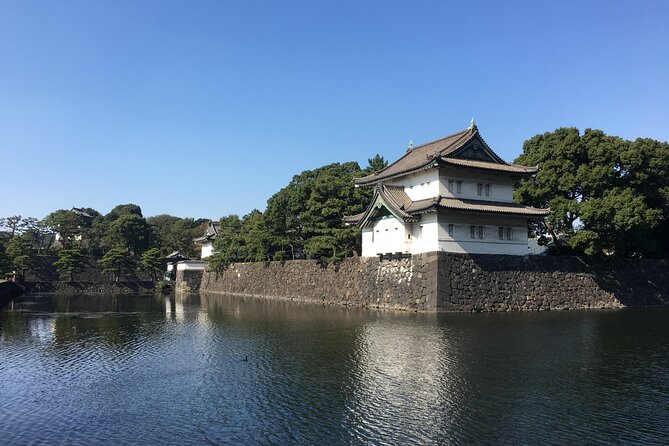
Tokyo’s past sits beside its future. This 2.5-hour walk links the Imperial Palace East Gardens, former Edo Castle sites, Marunouchi’s modern streets, and Tokyo Station in one tidy route through central Tokyo. I like the way the tour moves from stone walls and samurai guardhouses to polished towers and a red-brick railway landmark. I also like the small group limit of 12, which should make it easier to ask questions.
The main consideration is that the walk does not enter the Inner Palace, and palace access can change on holidays or other closure days. You’ll see gates, gardens, ruins, bridges, and exterior views instead. At $39.09 per person, the price is fair if you want a guide to explain what you’re seeing, but less compelling if you prefer to wander the gardens alone.
Key reasons to consider this Tokyo walk
- A clear route through two eras: Follow Edo Castle sites into the modern Marunouchi business district and finish at Tokyo Station.
- Several surviving castle details: See Ōte-mon Gate, the Hyakunin Bansho guardhouse, Fujimi-yagura, stone foundations, and gate ruins.
- A calm garden break: Ninomaru Garden, Suwa-no-chaya, and Bairinzaka add ponds, seasonal plants, and quieter paths.
- Useful for first-time visitors: The route begins near Wadakura Fountain Park and ends at Tokyo Station, a practical place for trains, food, and shopping.
- Personal guiding is a strength: Guides including Naoki, Masa-san, Mitsuko Shirai, and Ms. Futami have been praised for clear explanations, patience, and friendly answers.
- A manageable small-group format: With no more than 12 people, the walk should feel more personal than a large coach tour.
Why this route works for a first look at central Tokyo
I like this tour because it gives you a sensible story rather than a random collection of sights. You begin with the Tokugawa shogunate and Edo Castle, learn how the castle was defended and organized, then move toward the imperial capital and modern Tokyo.
The route also has a useful visual rhythm. The East Gardens offer open space, trees, stonework, and water. Marunouchi brings office towers, shops, art installations, and carefully maintained streets. Tokyo Station supplies the grand finale, with its restored red-brick exterior and busy interior.
That contrast is the point. You are not simply looking at old buildings. You are seeing how Tokyo changed from the seat of samurai power into the political, commercial, and transport centre of modern Japan.
The walk lasts about two hours and 30 minutes. That is enough time for explanation without taking up an entire day. Still, you should expect a steady outdoor walk with repeated stops, garden paths, and some time on your feet. Comfortable shoes make sense.
More Palace Walking Tours in Japan
- Tokyo: Imperial Palace and Shogun Historical Walking Tour
★ 5.0 · 2,251 reviews - Tokyo Castle & Imperial PalaceーShogun Walking Tour
★ 4.7 · 1,068 reviews - Tokyo: Imperial Palace Japanese History Walking Tour
★ 4.9 · 987 reviews
Starting at Wadakura Fountain Park
The meeting point is the Starbucks Coffee near Wadakura Fountain Park in Kokyogaien. This is a practical place to meet because it is close to the Imperial Palace grounds and easy to identify.
The park itself is a brief first stop, but it sets the mood. Created in 1961 to mark the marriage of Emperor Akihito, it features elegant fountains and open views near the palace area. I would not book this tour just for the fountains, but they provide a pleasant introduction before the heavier castle history begins.
Your guide is the main reason this opening matters. A good explanation here can help you understand the difference between the Imperial Palace, the former Edo Castle, the East Gardens, and the outer public areas. That orientation prevents the common mistake of thinking you are about to enter the private palace grounds.
Ōte-mon Gate and the castle defenses
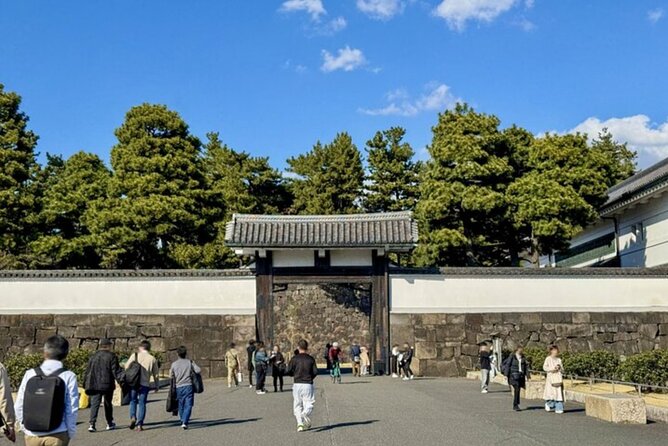
The walk then reaches Ōte-mon Gate, the main entrance to the Imperial Palace East Gardens. This imposing entrance once served as a major approach to Edo Castle, and it gives you an immediate sense of scale and security.
From here, the route adds the Ote-San’no Gate ruins. The remains are modest compared with the full castle that once occupied this area, but they help you read the site as a defensive system. Ask your guide how the gates controlled movement and why access to the inner areas mattered so much.
Next comes the Hyakunin Bansho guardhouse. Its name refers to the hundred samurai assigned to protect the castle’s most restricted sections. This is one of the more memorable stops because it connects an ordinary-looking historic building with the strict order of the Edo period.
I like this part of the tour for its practical history. Instead of hearing only about famous leaders, you get a sense of how people entered, moved through, and guarded the castle. The drawback is that some remains require imagination. You are seeing fragments, not a complete palace complex.
Ninomaru Garden and Suwa-no-chaya
After the gates and guardhouse, the route slows in Ninomaru Garden. This is a classic Japanese garden with seasonal plants, winding paths, and water features. It provides a welcome change from stone walls and military history.
The garden is likely to be one of the most pleasant parts of the walk if you enjoy design and quiet scenery. Your guide can point out how the paths, water, plants, and viewing points work together. Seasonal timing matters here. Plum blossoms at Bairinzaka are especially attractive during their flowering period, but the garden can still be worthwhile outside that season.
Suwa-no-chaya is a historic teahouse within the gardens. It is not operating as a tea stop, so do not expect food, drinks, or a tea ceremony. Its value is visual and historical. It helps show how the castle grounds also included spaces for culture and ceremony, not only walls and guards.
Food and drinks are not included anywhere on the tour. Plan to buy them separately before or after the walk. Since the route ends near Tokyo Station, you will have many options afterward, but you should not count on a scheduled meal break during the tour.
More Royal Palace Tours in Japan
- Tokyo: Imperial Palace and Shogun Walking Tour
★ 4.9 · 935 reviews - Imperial Palace East Garden and Edo Castle Walking Tour in Tokyo
★ 5.0 · 510 reviews - Tokyo: Imperial Palace East Gardens Walking Tour
★ 4.8 · 353 reviews - Tokyo: Imperial Palace, Sensō-ji Temple, & Tokyo Tower Tour
★ 4.5 · 339 reviews
Bairinzaka and the former Edo Castle keep
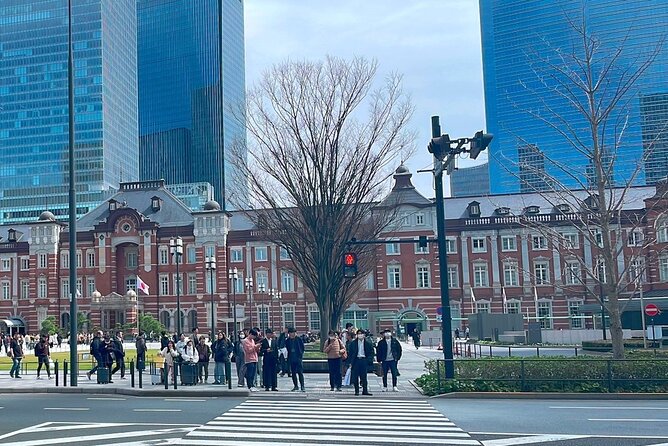
Bairinzaka, or Plum Tree Hill, brings a seasonal note to the route. Plum trees line the area, and during bloom they provide flowers, fragrance, and a pleasing view across the garden. This is a short stop, but it can be one of the more photogenic moments of the morning or afternoon.
The walk continues to the Edo Castle Takehashi Gomon ruins and the former main keep site. The original keep is gone, yet the stone foundations and walls show how large and important the Tokugawa seat of power once was.
A scale model of the original Edo Castle keep helps fill in the missing pieces. Historical drawings and records informed the model, giving you a better idea of the towering structure that once dominated the castle grounds. I find this kind of model useful because it turns scattered stones into a readable place.
You also visit Fujimi-yagura, one of the remaining watchtowers from Edo Castle. The tower’s defensive role makes it different from the garden stops. It shows how the castle used height, sightlines, and thick construction for surveillance and protection.
The Honmaru area completes this section. It was the central compound of Edo Castle and served as the Tokugawa shogunate’s main residence and political headquarters. Today, the open space requires your guide to supply much of the story. That is exactly where a small-group tour earns its fee.
Leaving the gardens for Kokyo Gaien
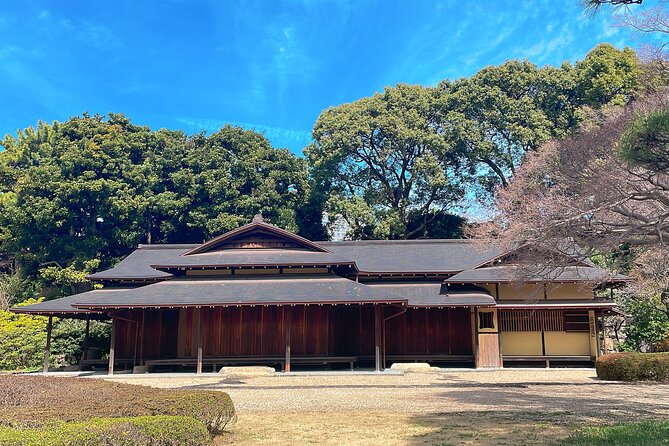
The route exits the East Gardens into Kokyo Gaien National Garden. This broad open area gives you a different view of the palace grounds, including outer structures and the famous Nijubashi Bridge.
The spacious plaza is useful for photos because the views are less enclosed than those inside the garden. It also gives your feet a brief change after the narrower paths and historic sites.
You should keep expectations realistic. Nijubashi is an exterior view, not a promise of access to private palace buildings. The Inner Palace is not open to the public as part of this tour. The experience is about public gardens, castle remains, outer views, and historical explanation.
That limitation is not a flaw if you want an overview of the palace district. It could disappoint you if your main goal is to enter the private palace interior. Check the planned date carefully, since access to some public areas can be affected by holidays.
Marunouchi’s modern streets and architecture
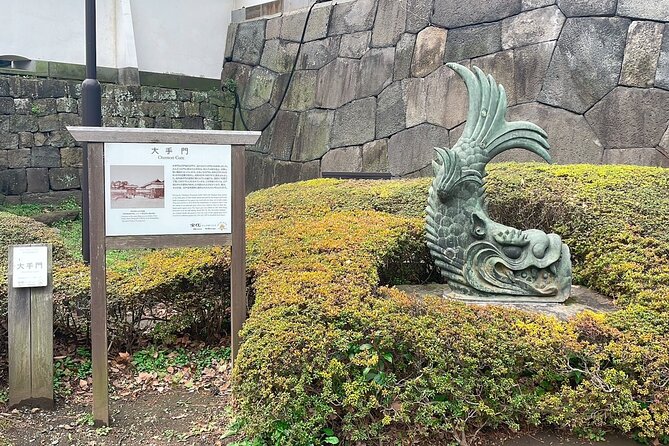
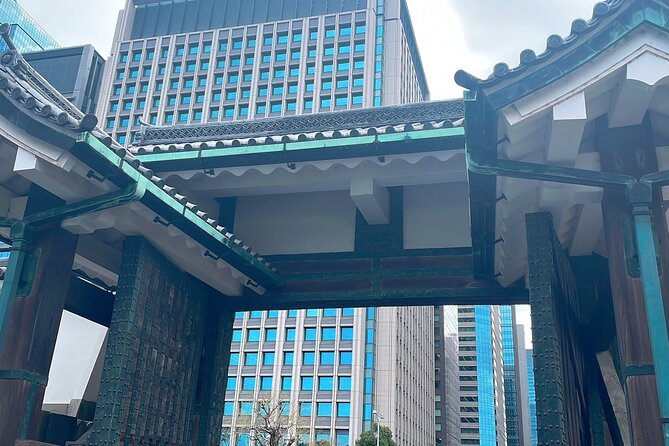
From Kokyo Gaien, the walk moves into Marunouchi, Tokyo’s polished business district. This is where the tour changes character. Glass and steel towers rise beside older structures, upscale shops, restaurants, and art installations.
I appreciate this transition because it prevents the tour from becoming a narrow lesson in samurai history. You see the same central area as a living part of Tokyo, not a preserved museum zone. Marunouchi also shows how close the old castle grounds are to the city’s modern business core.
The supplied route details do not assign a precise stop length to every part of Marunouchi, so the guide may adjust the pace depending on the group and the day. Expect the district to function as the connecting section between the palace gardens and the station.
This section may appeal most to visitors who enjoy architecture and city planning. If you only want traditional gardens, the office district may feel less special. For me, the contrast makes the overall route stronger.
Ending at Tokyo Station’s red-brick façade
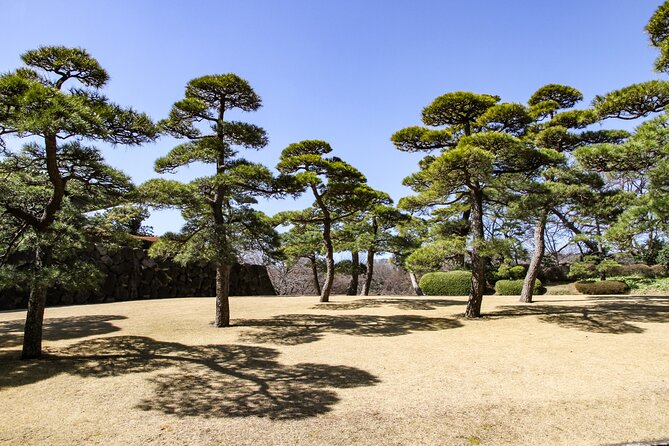
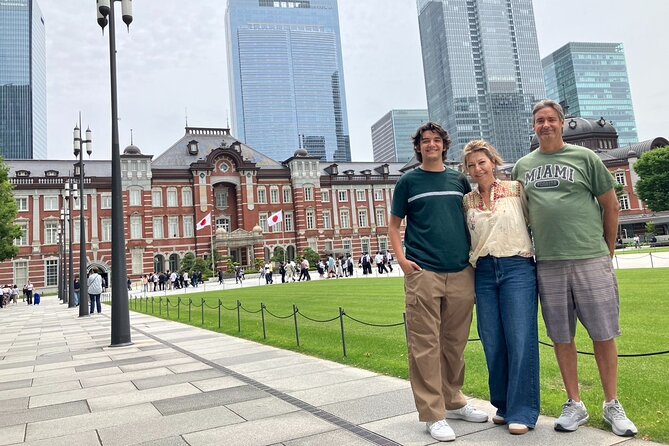
The final stop is Tokyo Station, known for its distinctive red-brick exterior restored to its 1914 appearance. The station is more than a place to catch a train. It is a symbol of Tokyo’s transformation and a fitting endpoint for a walk that began with Edo Castle.
Inside, the station becomes practical again. You can find shops, restaurants, and transport connections, making it easy to continue your day. Your guide can also help with directions or recommendations after the tour.
The station stop lasts about 20 minutes. That is enough for an introduction and a look at the exterior, but it is not a full station tour. If you want to explore the interior details, shop, or eat, plan extra time after the group finishes.
Ending here is a real advantage. You are not left in a remote garden or required to retrace your route. Tokyo Station gives you a clear next step, with trains, dining, and shopping close at hand.
How much value do you get for $39.09?
At $39.09 per person, the tour offers reasonable value for a 2.5-hour guided walk, especially with a maximum of 12 people. You are paying for structure, historical context, and the chance to ask questions while moving through a complicated part of Tokyo.
The value is strongest if you are visiting Tokyo for the first time, have limited time, or find castle history difficult to follow without help. The route includes many free-access areas, so the fee is not buying expensive admission. It is paying for the guide’s interpretation and for a carefully connected route.
If you already know the history of Edo Castle and enjoy reading signs at your own pace, you may find the price harder to justify. You can visit the public gardens without this tour. The guide becomes most useful at places where only foundations, ruins, or open spaces remain.
The small-group limit helps. A group of up to 12 is not private, but it should be easier to hear explanations and ask about architecture, gardens, or the Tokugawa period. Private tours are also mentioned in the feedback, with Masa-san receiving especially warm praise for adapting the pace to a family with teenage boys. That option may suit you if your budget allows and your group wants more control.
Guide quality and the human side of the walk
The guides are a major part of this experience. Naoki is praised for patience and clear answers, while Ms. Futami is described as friendly, engaging, and well informed. Mitsuko Shirai is also singled out for kindness and strong explanations. Masa-san helped make the history and architecture accessible to a family with teenagers.
Those details matter because this route contains many short stops. A guide who can explain a gate in a few clear sentences is more useful than someone who delivers a long lecture at every location. You want enough context to understand the place, then enough time to look around.
The reported feedback is consistently positive, but the sample is small. I would treat the guide quality as a strong reason to book, not a guarantee that every tour will feel identical. Ask questions as you go. The format is designed to be responsive, and the small group should help.
Who should book this walk?
I would recommend this experience to:
- First-time visitors who want a clear introduction to central Tokyo
- History fans interested in Edo Castle, samurai administration, and imperial sites
- Families who want an educational walk with room for questions
- Architecture fans who enjoy the shift from castle walls to Marunouchi towers
- Visitors who want to finish near trains, restaurants, and shops
- People who prefer a short guided outing rather than a full-day tour
I would think twice if you want access to the Inner Palace, a food-focused tour, or a private experience at the listed price. The route is mostly about public spaces and exterior views. It is informative and well organized, but it does not offer an inside look at private palace rooms.
Book at least 24 hours ahead if your plans may change, since cancellation is free until that point and later changes are not accepted. The tour is near public transport, service animals are allowed, and most people can participate. Confirmation arrives at booking, and the mobile ticket keeps check-in simple.
My verdict on the Imperial Palace to Tokyo Station walk
I would book this tour if you want Tokyo’s history explained as you walk through it. The best parts are the well-connected route, the surviving castle details, the calm East Gardens, and the finish at Tokyo Station.
The tour is not a palace interior visit, and the public sites are free, so its value depends on how much you want a guide. For me, the fee makes sense when you consider the route’s many layers and the chance to ask questions from guides such as Naoki, Ms. Futami, Mitsuko Shirai, or Masa-san.
Choose it early in your Tokyo stay. The walk gives you useful bearings for the Imperial Palace district, Marunouchi, and Tokyo Station, then leaves you in one of the city’s best-connected areas for the rest of your day.
FAQ
How long does the Imperial Palace to Tokyo Station tour last?
The walk lasts approximately 2 hours and 30 minutes.
Where does the tour begin?
It begins at Starbucks Coffee near Wadakura Fountain Park, at 3-1 Kōkyogaien, Chiyoda City, Tokyo 100-0002, Japan.
Where does the tour end?
The tour ends at Tokyo Station, at 1 Chome-9 Marunouchi, Chiyoda City, Tokyo 100-0005, Japan.
Is admission to the Imperial Palace included?
The tour includes access to the public Imperial Palace East Gardens and related outdoor sites listed on the route. Access to the Inner Palace is not included and is not open to the public.
Are food and drinks included?
No. Lunch, food, and drinks are not included, so you must purchase them individually.
How many people can join the tour?
The group has a maximum of 12 people.
Can I cancel for a full refund?
Yes. You can cancel at least 24 hours before the start time for a full refund. Cancellations or changes made less than 24 hours before the start time are not accepted for a refund.
More Royal Palace Tours in Tokyo
- Tokyo: Edo Castle & East Garden of the Imperial Palace Tour
★ 4.7 · 112 reviews - Tokyo Private Tour! Edo Castle & Imperial Palace East Gardens
★ 5.0 · 105 reviews - Full Tokyo: Meiji Shrine, Imperial Palace, Asakusa & Skytree
★ 5.0 · 78 reviews - Tokyo: Imperial Palace, the history of Japan (ENGLISH GUIDE)
★ 5.0 · 77 reviews
More Palace Walking Tours in Tokyo
- Tokyo Castle & Imperial PalaceーShogun Walking Tour
★ 5.0 · 724 reviews - Tokyo Castle, Imperial Palace, Shogun & Garden Walking Tour
★ 5.0 · 211 reviews - Tokyo: Edo Castle and Imperial Palace Guided Walking Tour
★ 5.0 · 6 reviews - Tokyo Imperial Palace:Guided Walking Tour of East Gardens
★ 5.0 · 5 reviews
Just added around Tokyo
- From the Imperial Palace to Odaiba : Time travel to Tokyo★ 5.0 · 5 reviews
- Tokyo Skytree, Asakusa, and Imperial Palace 1/2-Day Private Tour★ 5.0 · 3 reviews
- Imperial Palace Tour: Discover Samurai History with a Local Guide★ 5.0 · 20 reviews
- Tokyo Imperial Palace with Kagurazaka Alley Tour★ 5.0 · 54 reviews
- Cherry Blossom Highlights, Asakusa, Ueno, Imperial Palace Garden★ 4.5 · 4 reviews
- Tokyo’s Imperial Palace & Nihonbashi Tour★ 4.5 · 38 reviews
- Private Tour – History, Art and Nature at the Imperial Palace★ 5.0 · 24 reviews
- Tokyo Imperial Palace and Heritage of Edo Castle Private Tour★ 5.0 · 3 reviews
Palace Walking Tours, compared.
Doge’s Palace and St Mark’s Basilica Walking Tour
Read our review →

Walking Tour of Split and Diocletian’s Palace
Read our review →
Grand Palace and Wat Phra Kaew Guided Walking Tour
Read our review →
Imperial Palace and Shogun Historical Walking Tour
Read our review →
Madrid Old Town & Royal Palace Walking Tour Skip the Line Ticket
Read our review →
Knossos: Knossos Palace Skip-the-Line Guided Walking Tour
Read our review →
Browse the lists this tour appears in