REVIEW · TOKYO
Imperial Palace East Garden and Edo Castle Walking Tour in Tokyo
Tokyo’s samurai story begins outdoors. This 2.5-hour walk pairs the calm water features of Wadakura Fountain Park with the ruins and gardens of Edo Castle, giving you a useful introduction to Tokyo’s imperial and shogun-era past. I like the small group size, capped at 12, and the chance to hear stories from guides such as Kenta, Sato, Kei, and Glenda.
I also like the price: $25 per person is fair for a guided history walk in central Tokyo, especially when the guide helps you make sense of stone walls, castle remnants, gardens, and royal history. The main drawback is clear: you do not enter the Imperial Palace buildings, and some people may find the gardens less dramatic than expected outside spring flowers or autumn color.
Key points to know before you go
- Wadakura Fountain Park begins the tour with a quiet 30-minute look at its fountains and royal connections.
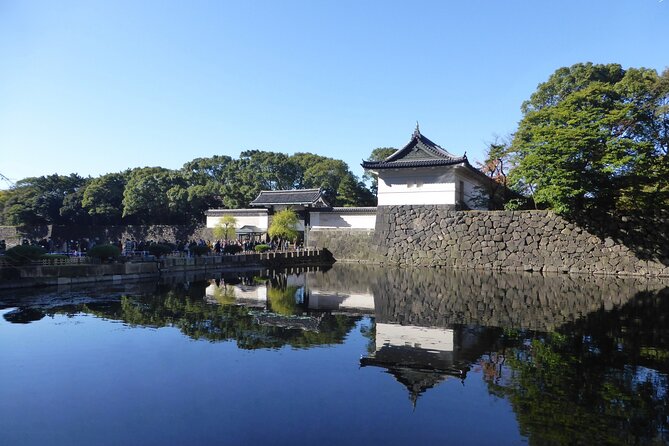
- Edo Castle’s former grounds take up about two hours, with gardens, ponds, stonework, and castle ruins.
- No palace interiors are included, since the buildings are not open to the public.
- The group is limited to 12 people, making questions and guide interaction easier.
- The walk includes some hills, though one guide described the route as having no stairs.
- Rain can affect the outing, and poor weather may lead to a new date or a full refund.
Why this $25 walk makes sense in Tokyo
Tokyo can feel hard to read at first. Modern towers, train lines, palace walls, and old religious sites often sit close together, but the story linking them is not always obvious. This tour gives you a simple way to understand one of the city’s most important historic areas.
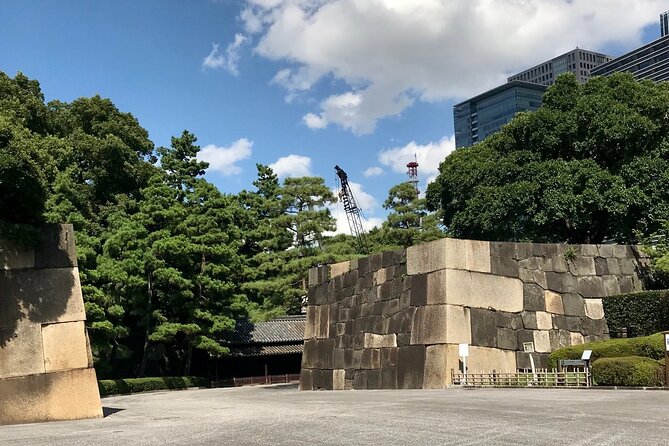
For $25, you are paying mainly for explanation. Admission to the two stops is free, so the value depends on how much you want a guide to point out what you are seeing and explain why it matters. A castle foundation can look like a pile of large stones if you do not know its purpose. A guide can turn it into a clue about power, defense, rank, and the design of Edo, the old name for Tokyo.
The small group helps here. With no more than 12 people, you are less likely to be lost in a crowd, and it should be easier to ask about the shogun, samurai, the emperor, or the gardens. Several guides are praised for speaking clearly, using humor, and bringing visual pages or photographs to explain buildings and former castle structures.
The tour lasts about two and a half hours, not one hour or a quick stroll. Plan your day around that full block of time. The route ends back at the meeting point, which makes it easier to continue sightseeing nearby, but the length may cause trouble if you have booked another activity soon afterward.
More Palace Gardens and Grounds in Japan
- Tokyo: Imperial Palace East Gardens Walking Tour
★ 4.8 · 353 reviews - Tokyo Castle, Imperial Palace, Shogun & Garden Walking Tour
★ 5.0 · 211 reviews - Tokyo: Edo Castle & East Garden of the Imperial Palace Tour
★ 4.7 · 112 reviews
Meeting at Wadakura Fountain Park
The tour begins at the Starbucks Coffee in Kokyo Gaien Wadakura Fountain Park, at 3-1 Kōkyogaien, Chiyoda City. This is a practical meeting point near the Imperial Palace grounds, and the tour description says the guide is easy to find there.
The first 30 minutes focus on Wadakura Fountain Park. It is a designed public space with fountains and a quiet tone, a useful change from Tokyo’s traffic and dense streets. The park was first built in 1961 to mark the royal wedding of Emperor Akihito and Empress Michiko. It was later redesigned and reopened in 1995 for the wedding of Crown Prince Naruhito and Crown Princess Masako.
That detail gives the opening stop more meaning than a simple photo pause. You are not just looking at water features. You are seeing a public place tied to Japan’s modern royal family and its ceremonial life.
Still, keep your expectations in check. Wadakura is not a major palace monument by itself. Its value comes from the setting, the fountains, and the explanation that connects it to the monarchy. If you want grand architecture right away, the opening stop may feel modest.
Walking into the East Gardens and Edo Castle grounds
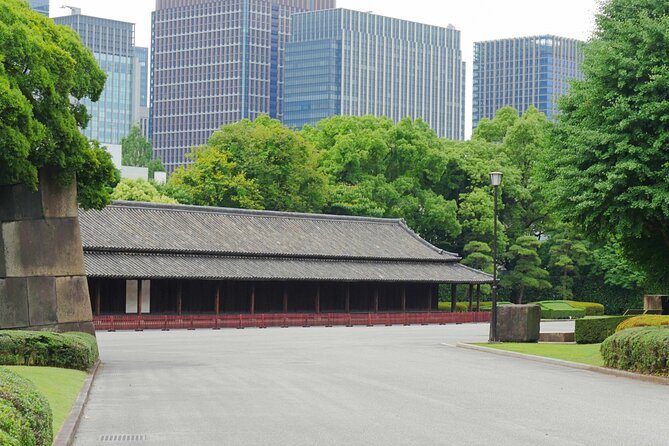
The main part of the tour takes about two hours in the Imperial Palace East Gardens. These grounds once formed part of Edo Castle, the seat of shogun power during Japan’s feudal period. Today, you walk through open gardens, ponds, lawns, stone walls, and the remains of the former castle.
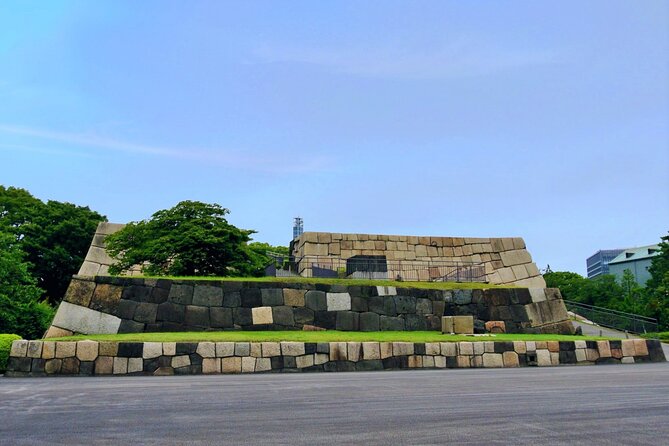
The Honmaru area is one of the key places to understand the former castle layout. Castle remnants help you picture the scale and importance of the site, even though the original buildings are gone. The Ninomaru Garden offers a different mood, with traditional Japanese scenery, carefully maintained plantings, and water features.
This combination is the tour’s strongest feature. You get history under your feet, then a quieter garden setting where the pace naturally slows. The setting is especially pleasant in spring, when cherry blossoms may be present, and in autumn, when foliage can add color.
Season matters here. A garden tour does not promise flowers at every visit. One October visit had plenty of green and neatly kept plantings but little fall color or blooming flowers. If you visit outside a strong seasonal display, the grounds may appeal more for their order, calm, and history than for showy flowers.
The carp in the ponds can also add a small visual reward when sunlight catches them. That is not the main reason to book, but it is the sort of detail that makes a slow walk more enjoyable.
What the guide adds to the castle ruins
The guide is the real reason to choose this experience over walking through the East Gardens alone. Several guides, including Kenta, Glenda, Miko, Sato, Kei, Miki, Kaz, and Satoko, have been praised for clear explanations and friendly conversation. Your guide will depend on the date and schedule, so do not assume you will receive a particular person.
The strongest guide style here appears to combine dates and facts with human stories. You may hear about samurai, shoguns, emperors, castle life, and the role of the palace grounds in Japanese history. The tour also covers the current emperor and family, giving you a bridge between the older Edo period and modern Japan.
Kenta has been praised for humor, strong preparation, and visual materials that show the group what former buildings and castle areas looked like. Miko has used photographs to explain the gardens, castle grounds, and former castle tower. Glenda is praised for speaking clear, measured English and for connecting the history of emperors, shoguns, and samurai.
That variety matters if you are visiting Japan for the first time. You do not need to arrive with background reading. A good guide gives you enough context to understand the site without turning every stop into a lecture.
The tour also allows questions. Guides such as Sato and Miki have been singled out for responding thoughtfully and keeping the amount of information manageable. That is helpful for families and mixed-age groups, since not everyone wants the same level of detail.
More Palace Walking Tours in Japan
- Tokyo: Imperial Palace and Shogun Historical Walking Tour
★ 5.0 · 2,251 reviews - Tokyo Castle & Imperial PalaceーShogun Walking Tour
★ 4.7 · 1,068 reviews - Tokyo: Imperial Palace Japanese History Walking Tour
★ 4.9 · 987 reviews - Tokyo: Imperial Palace and Shogun Walking Tour
★ 4.9 · 935 reviews
Walking conditions, weather, and comfort
Wear comfortable shoes. This is a walking tour, and two and a half hours on garden paths can feel longer than the distance suggests. Some sections may be steep, though one description notes hills rather than stairs. If you have trouble with slopes or tiring, keep that in mind before booking.
The pace can adjust to conditions. One guide kept the group moving comfortably during rain and used sheltered locations while continuing the discussion. Another account describes a guide helping obtain a wheelchair when a member of the group became tired and dizzy. That shows a caring approach, but you should not treat it as a promise that equipment or special assistance will always be available.
The activity is near public transportation, and most people can participate. Service animals are allowed. Since the route is outdoors, weather is important. The experience requires good conditions, and if poor weather cancels it, you are offered another date or a full refund.
Bring water if you need it, since snacks are not included. There is no need to budget for entrance tickets, as the listed stops have free admission and the tour includes all fees and taxes.
What you will not see inside the palace
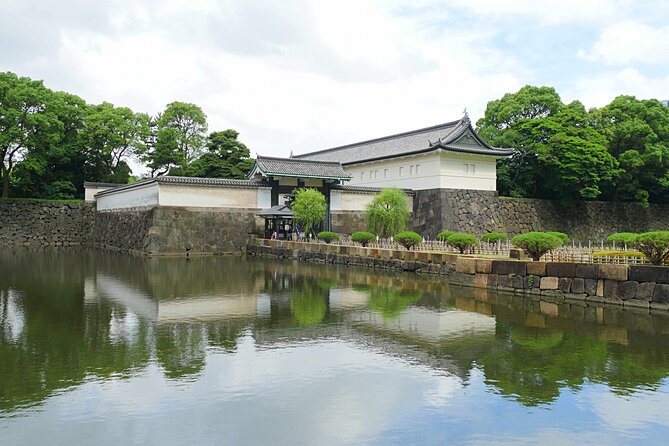
The most important limitation is also the easiest one to miss: you do not go inside the Imperial Palace buildings. The public cannot enter those interiors as part of this activity.
Instead, you explore the East Gardens and nearby grounds. You can still see historic remains, garden areas, stonework, ponds, and good places for photographs, but you will not tour royal rooms or interior palace halls.
This distinction should guide your decision. If your main goal is to see the emperor’s residence from inside, this is not the right activity. If you want the wider grounds and a guide to explain Edo Castle, the walk fits much better.
The lack of interiors may disappoint some people, particularly if they picture a traditional palace tour. On the other hand, the outdoor setting gives the experience room to breathe. You are walking through the former castle area rather than moving quickly from one enclosed room to another.
Who will get the most from this tour
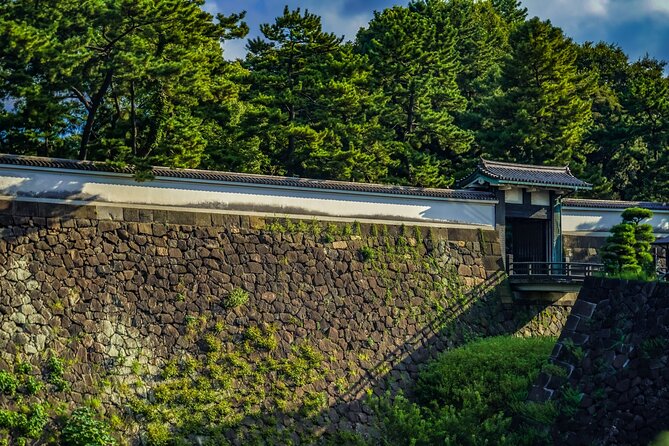
I would recommend this walk to a first-time visitor who wants an easy introduction to Japanese political and royal history. It is also a good fit if you prefer learning through conversation rather than reading signs on your own.
Families can benefit from the short stories, visual aids, and the mix of open space and historical sights. One guide was especially patient with children, and another answered questions from a group with different needs. The small group limit also makes it less formal than a large sightseeing bus tour.
History fans should enjoy the connection between samurai-era Edo Castle and the modern Imperial Palace. You will not see a complete castle, but the remaining foundations and grounds provide enough material for a useful lesson.
Garden lovers may enjoy the Ninomaru area, ponds, and orderly plantings, especially during a seasonal display. Still, I would not book this solely for flowers. The gardens can be attractive without being at their best in every month.
You should think twice if you dislike outdoor walking, slopes, uncertain weather, or tours that return to the same meeting point. You should also skip it if palace interiors are essential to your plans.
Timing the tour with the rest of your day

Because the activity lasts approximately 2 hours and 30 minutes, it works best as a morning or early afternoon anchor. Do not schedule a tight lunch reservation or another timed attraction immediately afterward.
The route starts and ends at the same meeting point, which is convenient. You can arrange your next activity after the tour without dealing with a distant drop-off, but allow extra time for the final questions, walking pace, or weather-related delays.
The mobile ticket keeps the booking simple. Confirmation arrives when you book, and cancellation is free up to 24 hours before the start time for a full refund. Changes or cancellations inside that 24-hour window are not accepted, so check your plans before the cutoff.
My verdict on the Imperial Palace East Garden walk
Book this tour if you want the Imperial Palace area to make sense. At $25, the cost is modest, the group stays small, and the guide adds context that free entry alone cannot provide. The best parts are the Edo Castle remains, the stories about samurai and shoguns, and the chance to compare older power with Japan’s modern imperial family.
Skip it if you expect palace interiors, a grand architectural tour, or a flower show in every season. The gardens can be understated, and the two-and-a-half-hour length is a real commitment.
For most first visits to Tokyo, I think it is a sensible choice, especially with a guide such as Kenta, Glenda, Sato, Kei, or Miko leading the walk. You will leave with a clearer picture of what Edo Castle was, how the grounds changed, and why this quiet central park matters.
FAQ
Does this tour enter the Imperial Palace buildings?
No. The tour does not enter the palace buildings. It visits the Imperial Palace East Gardens and surrounding grounds, including the former Edo Castle area.
How long does the walking tour last?
The tour lasts approximately 2 hours and 30 minutes. The itinerary includes about 30 minutes at Wadakura Fountain Park and about two hours in the East Gardens.
Where does the tour begin?
It begins at Starbucks Coffee in Kokyo Gaien Wadakura Fountain Park, at 3-1 Kōkyogaien, Chiyoda City, Tokyo 100-0002, Japan.
Where does the tour end?
The activity ends back at the meeting point.
How much does the experience cost?
The listed price is $25 per person.
Are entrance fees included?
Yes. All fees and taxes are included, and the listed stops have free admission.
How many people can join the tour?
The tour has a maximum of 12 travelers.
Is the tour suitable for people with limited mobility?
Most people can participate, but the walk includes some hills. One description notes no stairs, and service animals are allowed. The route is outdoors, so consider your comfort with extended walking and slopes.
What happens if the weather is poor?
The experience requires good weather. If it is canceled because of poor weather, you will be offered another date or a full refund.
More Royal Palace Tours in Japan
- Kyoto: Imperial Palace & Nijo Castle Guided Walking Tour
★ 4.7 · 453 reviews - Tokyo: Imperial Palace, Sensō-ji Temple, & Tokyo Tower Tour
★ 4.5 · 339 reviews - Kyoto: Nijo Castle and Kyoto Imperial Palace Guided Tour
★ 4.6 · 98 reviews - Kyoto: Discover Every Bit of Kyoto Imperial Palace
★ 4.4 · 21 reviews
Just added around Japan
- Kyoto: Discover Every Bit of Kyoto Imperial Palace★ 4.4 · 21 reviews
- Kyoto: Nijo Castle and Kyoto Imperial Palace Guided Tour★ 4.6 · 98 reviews
- Imperial Palace Tour: Discover Samurai History with a Guide★ 5.0 · 12 reviews
- Full Tokyo: Meiji Shrine, Imperial Palace, Asakusa & Skytree★ 4.7 · 16 reviews
- Tokyo: Edo Castle & East Garden of the Imperial Palace Tour★ 4.7 · 112 reviews
- Tokyo Castle, Imperial Palace, Shogun & Garden Walking Tour★ 5.0 · 211 reviews
- Tokyo: Imperial Palace East Gardens Walking Tour★ 4.8 · 353 reviews
- Tokyo: Imperial Palace, Sensō-ji Temple, & Tokyo Tower Tour★ 4.5 · 339 reviews
Palace Gardens and Grounds, compared.
Versailles Palace and Gardens Full Access Ticket
Read our review →
Skip-the-Line Tour of Palace and Gardens Access
Read our review →
Schönbrunn Palace & Gardens Skip-the-Line Tour
Read our review →
Alhambra & Gardens Tour w/Nasrid Palaces Option
Read our review →
Versailles Palace & Gardens with Transportation
Read our review →
Skip-the-Line Schönbrunn Palace & Gardens Tour
Read our review →
Versailles Palace Guided Tour & Gardens Access
Read our review →