
REVIEW · TOKYO
Tokyo: Pvt. Tour – Edo Castle & Imperial Palace East Gardens
History hides behind Tokyo’s office towers. This private two-hour walk brings you into the Imperial Palace East Gardens, built on the former grounds of Edo Castle, where stone walls, moats, guardhouses, and a traditional garden tell the story of Japan’s shoguns. I especially like the private format and the guides’ patient, clear explanations. You also get a calm green break from central Tokyo without leaving the city center.
The main drawback is simple: you cannot enter the Imperial Palace itself, where the Emperor resides. The flowers can also be a little late or early depending on the season. One April visitor found the cherry blossoms were not yet open, while other spring visits were praised for their beauty.
Key points to know before booking
- A private English-language walk: Your group has its own guide, with time to ask questions and set a comfortable pace.
- Edo Castle remains: See immense stone walls, moats, a guardhouse, and the site of the former keep.
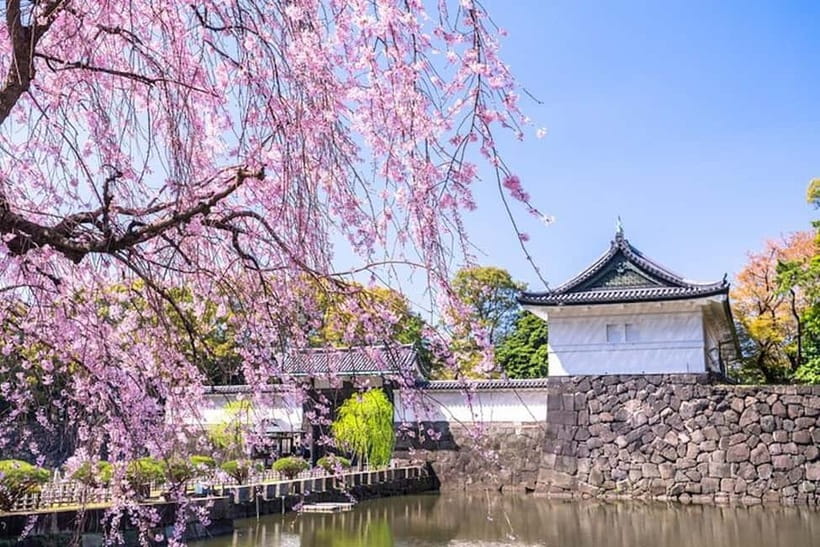
- Ninomaru Garden: Seasonal flowers include cherry blossoms, irises, and autumn leaves.
- Easy central meeting point: Meet at Starbucks in Wadakura Fountain Park, about three minutes from Otemachi Station’s D2 exit.
- A palace visit without palace access: You explore the East Gardens, not the Inner Palace or the Emperor’s residence.
- Bring light luggage: Every entrant faces a baggage inspection, and knives or similar purchases must be stored before the tour.
What this East Gardens tour really offers
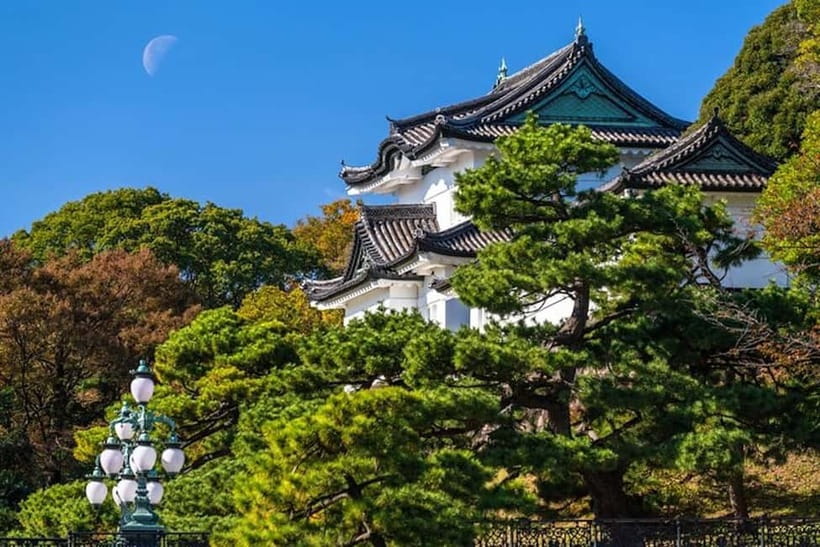
This is not a grand palace-interior visit. It is a walking lesson in how power shaped Tokyo, using gardens, stonework, and surviving castle features rather than lavish rooms.
The East Gardens occupy part of the old Edo Castle grounds. During the shogunate, Edo Castle was the political heart of Japan. Today, the setting is more restrained. You walk through broad open spaces, clipped greenery, seasonal plantings, old defensive structures, and remnants that need a guide’s explanation to make full sense.
That last point matters. On your own, you can admire the walls and flowers, but you may miss why the site was built as it was. The private guide can connect the scenery to the Edo period, Japanese culture, and the Imperial Palace’s past.
The experience has earned a 4.8 rating from 63 bookings, and the praise is unusually consistent on the points that matter most: friendly guides, strong English, a comfortable pace, and useful historical explanation. Guides named in the feedback include Yoshi, Masahito, Mari, Yuji, Naoko, Ishida, Maru, and Hiroshito. That does not mean you can select a particular guide, but it does suggest a reliable local guiding team.
More Palace Gardens and Grounds in Japan
- Imperial Palace East Garden and Edo Castle Walking Tour in Tokyo
★ 5.0 · 510 reviews - Tokyo: Imperial Palace East Gardens Walking Tour
★ 4.8 · 353 reviews - Tokyo Castle, Imperial Palace, Shogun & Garden Walking Tour
★ 5.0 · 211 reviews
Meeting at Wadakura Fountain Park
The meeting point is in front of Starbucks in Wadakura Fountain Park. This is a practical choice because it is close to major transport links and easy to identify in central Tokyo.
From Tokyo Metro Otemachi Station, use exit D2 and allow about three minutes on foot. From Tokyo Station’s Marunouchi Central Exit, allow roughly ten minutes. Look for a guide holding a sign marked gotcha.
I would arrive a little early. Tokyo Station and Otemachi are large, busy transport areas, and a few extra minutes gives you time to locate the right exit and reach the fountain park without rushing. The tour begins outside, so you should also check the weather before leaving your hotel.
Because this is a private group, you are not joining a large crowd of strangers. That changes the rhythm of the walk. Your guide can slow down for photographs, explain a point again, or adjust the pace for your family. Several people specifically praised guides for being flexible and attentive to the group’s walking speed.
The Main Gate and the first glimpse of castle power
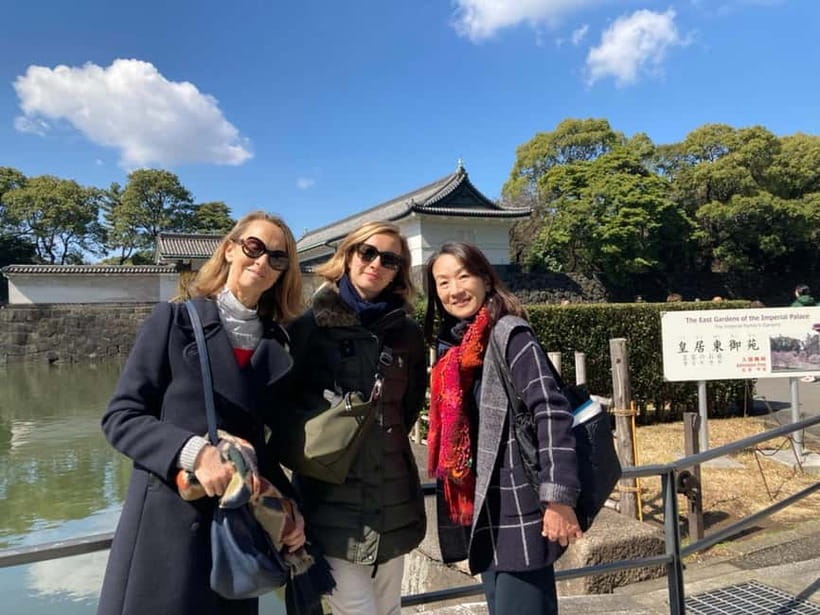
The walk takes you toward the historic Main Gate, with its traditional guardhouse and a curious mix of old architecture and modern security.
This is a good introduction to the site. Edo Castle was not simply a residence. It was a fortified center of government, and the approach system mattered. Guardhouses, gates, moats, and stone walls controlled movement and helped protect the castle complex.
Your guide can help you read these details rather than treating them as background scenery. The modern security presence also reminds you that this is still an important official site, not just an open-air museum.
Do not expect a preserved medieval castle with furnished rooms. Much of Edo Castle no longer survives above ground. The interest comes from the scale of the grounds and the traces that remain. For many people, that makes the guide more useful, not less.
Edo Castle ruins and the scale of the old compound
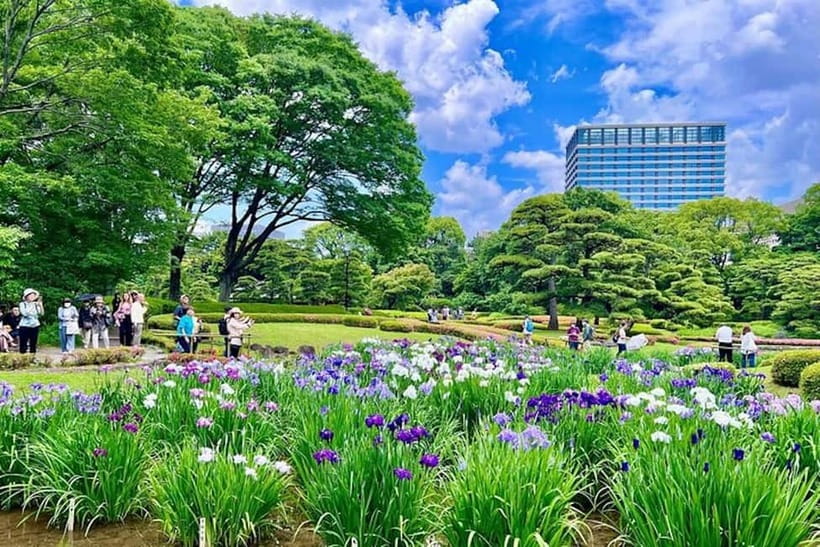
The castle ruins are the historical center of the walk. You will see ancient stone walls, moats, and the site of a massive keep. These remains show how large and defensive Edo Castle once was.
The stonework is especially important because it gives the tour a physical sense of the shogun’s world. A short explanation can turn a wall from a simple photo stop into evidence of military planning, hierarchy, and the reach of the Tokugawa government.
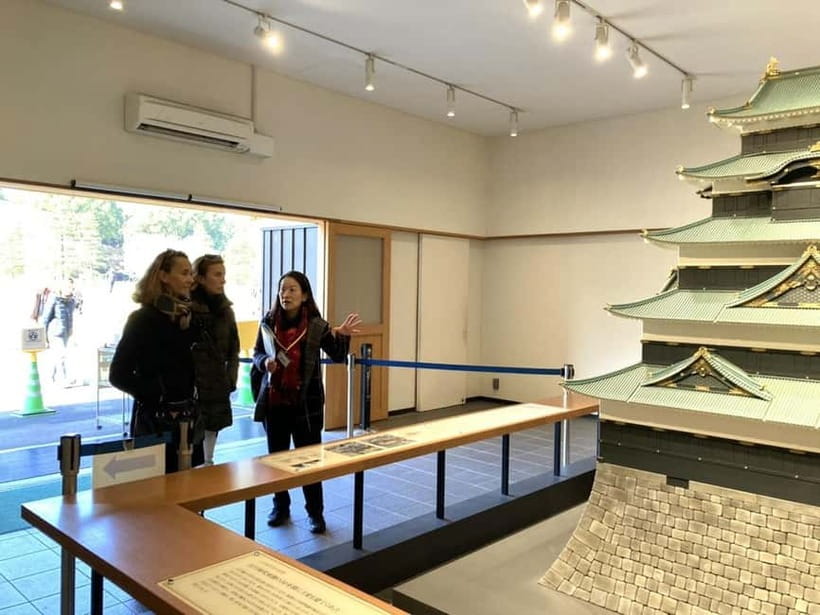
The former keep is no longer a complete building, so manage your expectations. You are not touring a restored interior or climbing a surviving tower. Instead, you are standing among foundations and castle remains while your guide explains what occupied this ground and why it mattered.
Masahito was praised for explaining the castle and gardens clearly and for checking an answer with another guide when a question required more detail. That kind of response is valuable on a historical walk. You do not need a lecture packed with dates. You need someone who can answer the question in front of you and keep the story connected to what you can see.
More Royal Palace Tours in Japan
- Tokyo: Imperial Palace and Shogun Historical Walking Tour
★ 5.0 · 2,251 reviews - Tokyo: Imperial Palace Japanese History Walking Tour
★ 4.9 · 987 reviews - Tokyo: Imperial Palace and Shogun Walking Tour
★ 4.9 · 935 reviews - Tokyo: Imperial Palace, Sensō-ji Temple, & Tokyo Tower Tour
★ 4.5 · 339 reviews
Ninomaru Garden and the changing seasons
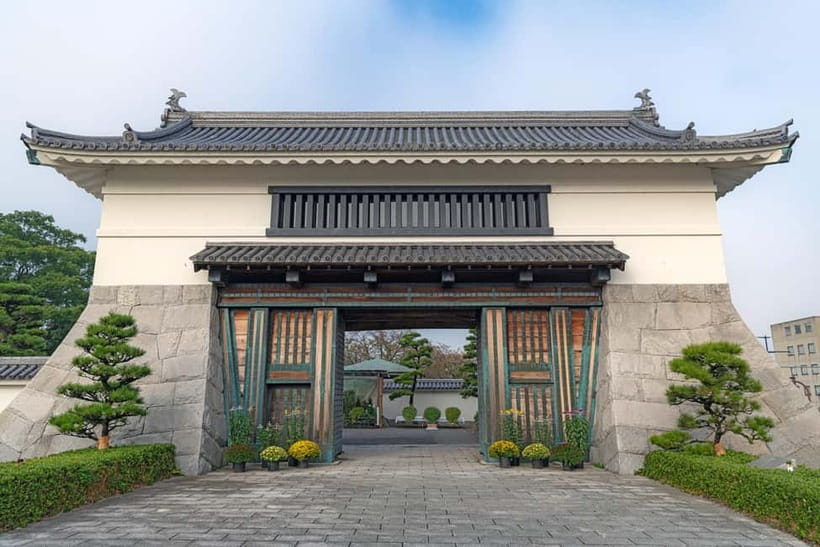
The Ninomaru Garden offers a gentler side of the former castle grounds. It is a traditional Japanese garden with seasonal plantings, including cherry blossoms in spring, irises in summer, and autumn leaves later in the year.
The timing of your visit will shape the experience. Spring may bring cherry blossoms, but flowering dates vary, and one April visit found that the blossoms and flowers had not fully opened. That is not a fault in the tour, but it is worth knowing before you book around a precise floral display.
The garden still has value outside peak blossom season. Its appeal comes from the arrangement of plants, water, open views, and quiet paths, along with the contrast between carefully maintained nature and the office towers beyond. In summer, irises provide a different focus. In autumn, changing leaves replace spring flowers as the main attraction.
Naoko was praised for explaining the buildings, former inhabitants, koi, and garden planting. That detail gives you an idea of the tour’s range. The guide is not limited to a basic castle story. You can ask about the garden’s design, the people connected with the site, and features that are easy to pass without noticing.
Why a private guide makes a difference
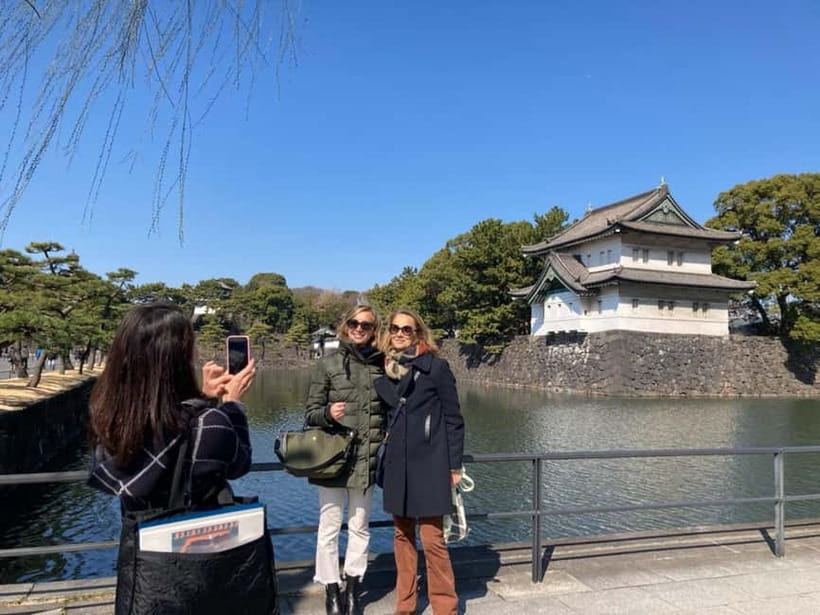
The East Gardens are open to the public, so you can visit without booking a private tour. The real question is what you want from the visit.
If you mainly want a pleasant walk and photographs, going alone may be enough. If you want to understand the connection between Edo Castle, the shogunate, Imperial history, and modern Tokyo, the guide adds clear value.
The private format is particularly helpful for families and first-time visitors to Japan. Feedback repeatedly praises guides who were friendly, well organized, flexible, and easy to understand in English. Yuji was singled out for walking at a comfortable pace and pointing out details the family might otherwise have missed. Another guide helped with onward sightseeing and gave directions for returning to the station after the tour.
This is not a rigid performance where you simply follow someone from stop to stop. The strongest reports describe a relaxed walk with room for questions. You can ask about architecture, flowers, castle life, or Japanese culture as the setting prompts your curiosity.
The tour lasts two hours, which is long enough for context but short enough to fit into a full Tokyo day. You will still have time afterward for Marunouchi, Tokyo Station, Ginza, or another central district.
What the $63 price means
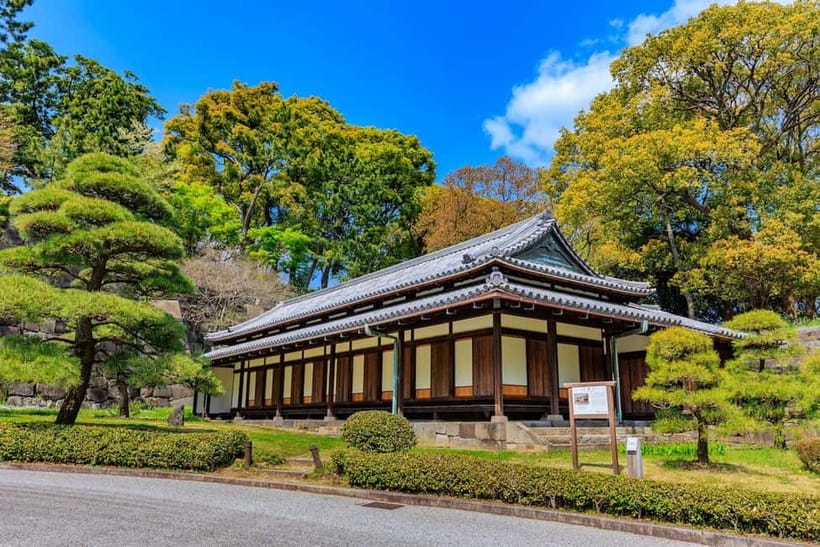
At $63 per person, this tour costs more than entering the gardens alone, because you are paying for a private English-speaking guide rather than admission or transport.
For one person, the price may feel high for a two-hour walk. For a couple, family, or small private group, the value improves because the cost buys personal attention and a pace suited to your party. The strongest reason to pay is not access to a restricted interior. It is the interpretation of a site that can otherwise feel scattered.
I would consider the price fair if you care about Japanese history, have limited time in Tokyo, or prefer asking questions instead of reading signs. I would skip the private guide if you are happy to explore independently and mainly want garden photographs.
The booking terms also make planning easier. You can reserve now and pay later, and cancellation is free up to 24 hours in advance for a full refund. Starting times vary, so you need to check availability for your chosen date.
Important baggage and security rules
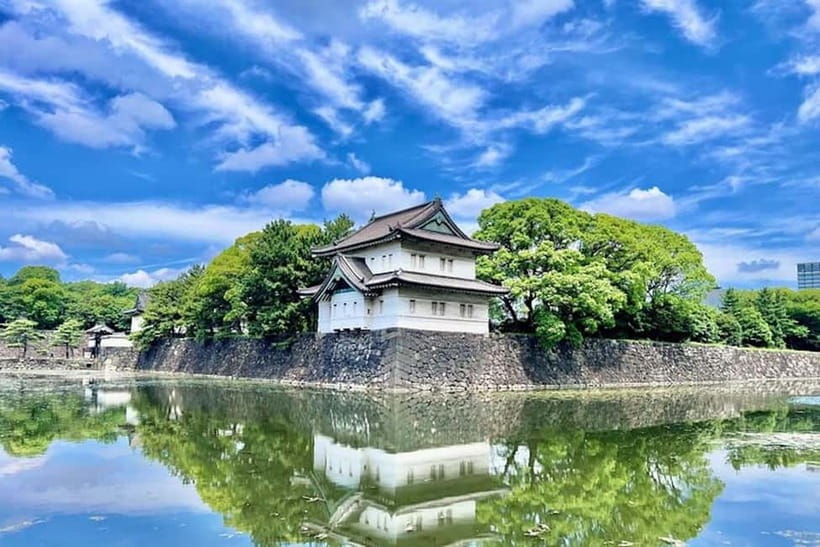
Before entering the palace grounds, expect a baggage inspection. Keep your belongings simple and easy to check.
There is one unusually useful warning. If you plan to buy Japanese knives or other objects that could be used as weapons at Tsukiji, Asakusa, or elsewhere, do not bring them to the meeting point. Store them in a coin locker or another secure place before the tour.
This rule is easy to overlook if you are combining sightseeing and shopping on the same day. Plan your route so those purchases happen after the tour, or leave them stored before you meet the guide.
The supplied information does not list a separate accessibility plan, so you should ask the operator directly if your group has specific mobility needs. The experience is a walking tour through gardens and historic grounds, and the guide can discuss the route details before you go.
Who will enjoy this walk most
I would recommend this tour to:
- First-time visitors who want a clear introduction to Edo-period and Imperial history
- Families that prefer a flexible private pace
- Couples who want a quieter central Tokyo activity
- History fans interested in shoguns, castle defenses, and Japanese gardens
- Visitors who enjoy asking questions rather than following a fixed audio guide
- People with only two hours to spare near Tokyo Station or Otemachi
You may not need it if your main goal is entering the Imperial Palace itself. That is not part of the experience. You should also avoid booking solely for cherry blossoms, since seasonal flowers depend on timing and weather.
Should you book the Edo Castle East Gardens tour?
Book it if you want the East Gardens to make sense, not just look pretty. The private setting, English-speaking guide, manageable two-hour length, and central meeting point make it an easy addition to a Tokyo itinerary.
I especially like that the experience combines three things that are often separated: castle remains, Japanese garden design, and modern Imperial history. The guides also appear to be the main strength, with repeated praise for clear English, warmth, flexibility, and careful pacing.
Do not book it expecting palace rooms or a glimpse inside the Emperor’s residence. Book it for the grounds, the Edo Castle ruins, the Ninomaru Garden, and the stories that connect them. At $63 per person, it is best value for a small group that wants context and personal attention.
FAQ
How long is the tour?
The tour lasts two hours.
Where does the tour meet?
Meet in front of Starbucks in Wadakura Fountain Park.
How far is the meeting point from Otemachi Station?
The meeting point is about a three-minute walk from Tokyo Metro Otemachi Station exit D2.
How far is it from Tokyo Station?
It is about a ten-minute walk from Tokyo Station’s Marunouchi Central Exit.
Is the tour private?
Yes. It is a private group tour with an English-speaking live guide.
Does the tour enter the Imperial Palace?
No. The tour visits the Imperial Palace East Gardens and does not enter the Inner Palace or the area where the Emperor resides.
Will my baggage be inspected?
Yes. Visitors are subject to a baggage inspection when entering the Imperial Palace grounds.
Can I bring Japanese knives purchased before the tour?
No. If you purchase Japanese knives or similar items that could be used as weapons, store them in a coin locker or another suitable place before meeting the guide.
More Royal Palace Tours in Tokyo
- Full Tokyo: Meiji Shrine, Imperial Palace, Asakusa & Skytree
★ 5.0 · 78 reviews - Tokyo: Imperial Palace, the history of Japan (ENGLISH GUIDE)
★ 5.0 · 77 reviews - Tokyo Imperial Palace with Kagurazaka Alley Tour
★ 5.0 · 54 reviews - Tokyo’s Imperial Palace & Nihonbashi Tour
★ 4.5 · 38 reviews
More Palace Gardens and Grounds in Tokyo
- Tokyo: Edo Castle & East Garden of the Imperial Palace Tour
★ 4.7 · 112 reviews - Tokyo Private Tour! Edo Castle & Imperial Palace East Gardens
★ 5.0 · 105 reviews - Tokyo: Imperial Palace East Gardens and Tokyo Station Tour
★ 5.0 · 16 reviews - Tokyo: Edo Castle Ruins & Imperial Palace East Garden Tour
★ 4.4 · 13 reviews
Just added around Tokyo
- From the Imperial Palace to Odaiba : Time travel to Tokyo★ 5.0 · 5 reviews
- Tokyo Skytree, Asakusa, and Imperial Palace 1/2-Day Private Tour★ 5.0 · 3 reviews
- Imperial Palace Tour: Discover Samurai History with a Local Guide★ 5.0 · 20 reviews
- Tokyo Imperial Palace with Kagurazaka Alley Tour★ 5.0 · 54 reviews
- Tokyo’s Imperial Palace & Nihonbashi Tour★ 4.5 · 38 reviews
- Cherry Blossom Highlights, Asakusa, Ueno, Imperial Palace Garden★ 4.5 · 4 reviews
- Private Tour – History, Art and Nature at the Imperial Palace★ 5.0 · 24 reviews
- Tokyo Imperial Palace and Heritage of Edo Castle Private Tour★ 5.0 · 3 reviews
Palace Gardens and Grounds, compared.
Versailles Palace and Gardens Full Access Ticket
Read our review →
Skip-the-Line Tour of Palace and Gardens Access
Read our review →
Schönbrunn Palace & Gardens Skip-the-Line Tour
Read our review →
Alhambra & Gardens Tour w/Nasrid Palaces Option
Read our review →
Versailles Palace & Gardens with Transportation
Read our review →
Skip-the-Line Schönbrunn Palace & Gardens Tour
Read our review →
Versailles Palace Guided Tour & Gardens Access
Read our review →
Versailles Palace and Gardens Tour from Paris
Read our review →Browse the lists this tour appears in