
REVIEW · TOKYO
Tokyo: Imperial Palace East Gardens and Tokyo Station Tour
History hides in plain sight here. This 150-minute walk links the Imperial Palace East Gardens with Tokyo Station, pairing castle ruins and quiet gardens with the polished streets of Marunouchi. I like the clear contrast between old Edo and modern Tokyo, and I like that the tour ends at the handsome red-brick station rather than sending you back to where you started.
The guide adds real value, especially if you want more than pretty photos. Yuki has earned praise for making castle history easy to picture, using humor and vivid stories about life 400 years ago. The main drawback is the moderate amount of walking, much of it outdoors, so comfortable shoes, water, sunscreen, and weather-ready clothing matter.
Key points to know before you book
- Edo Castle becomes easier to picture: See the Ote-mon Gate, Hyakunin Bansho Guardhouse, former Honmaru area, Fujimi-yagura watchtower, and a scale model of the castle keep.
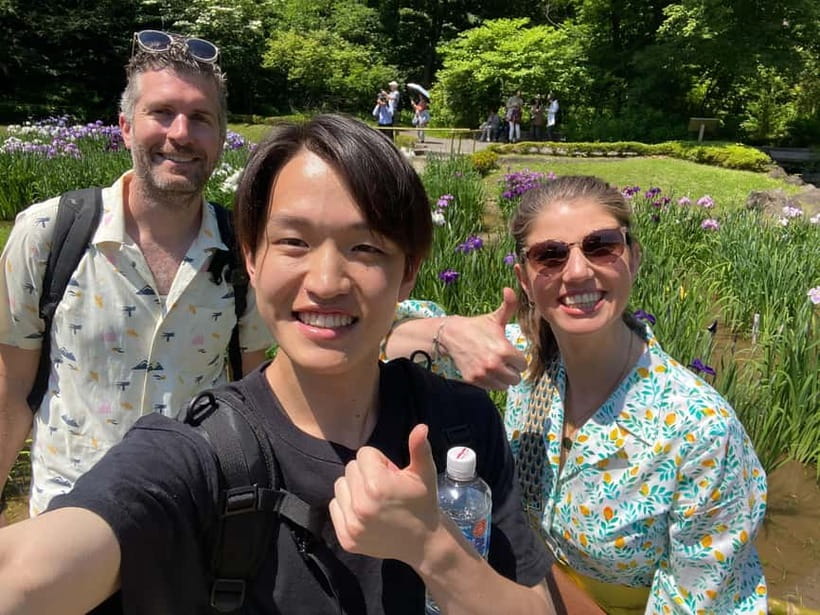
- Ninomaru Garden slows the pace: Garden design, ponds, trees, and carefully arranged views offer a calm break from central Tokyo.
- Marunouchi supplies the modern contrast: The route shifts from moats and stone walls to office towers, public art, and polished streets.
- Nijubashi adds a classic palace view: You get scenic views connected with Japan’s imperial center and Kokyo Gaien National Garden.
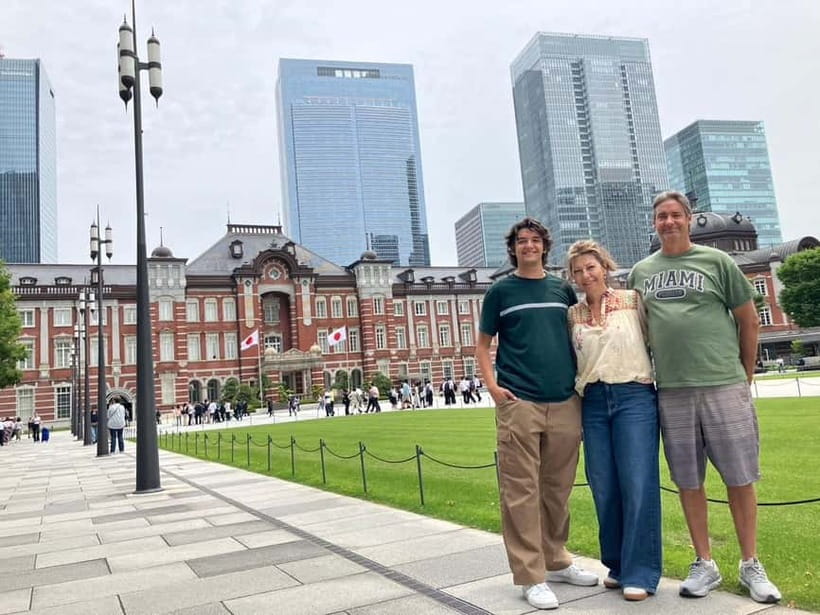
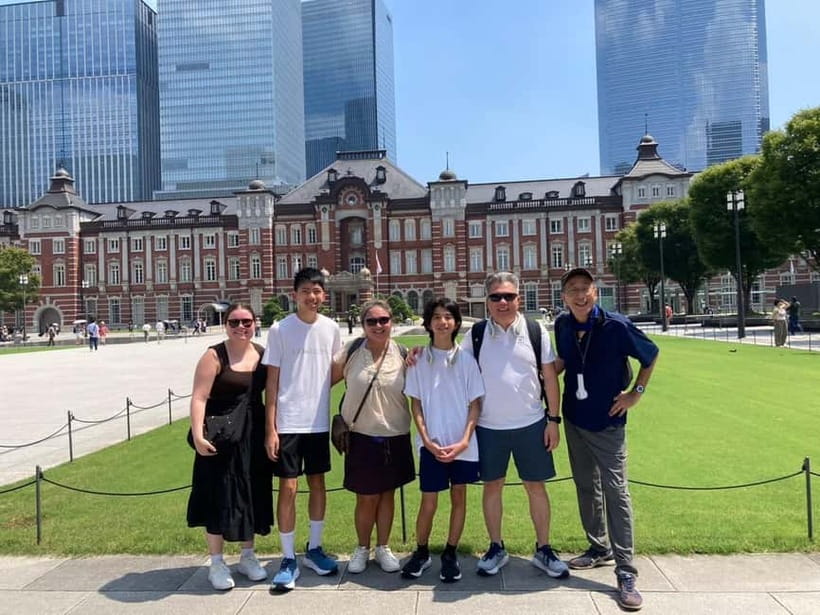
- Tokyo Station is the finale: The restored red-brick exterior gives the walk a strong visual ending and places you beside one of Tokyo’s best-known landmarks.
- The guide is the heart of the experience: Yuki’s humor, organization, and ability to explain the Edo period received especially warm praise.
Why this palace-to-station walk works
Tokyo can feel hard to read at first. One block has a quiet moat and a stone foundation from the shogunate era, while the next has glass offices and commuters moving toward Tokyo Station. This walk gives you a simple way to understand that change.
You begin near the Imperial Palace and finish at Tokyo Station, covering a compact part of the city with several layers of history. The route is not built around a single spectacular monument. Instead, it shows how the old center of power became part of present-day Tokyo.
At $38 per person, the price is fair if you want an English-speaking guide to explain what you are seeing. The palace grounds themselves require no admission fee, so you are paying mainly for interpretation, structure, and the convenience of connecting several sights on foot.
I would not book this solely to enter grand palace interiors. The focus is outdoor history, gardens, ruins, city views, and the exterior of Tokyo Station. If you like context and visual contrasts, the cost makes sense. If you prefer to wander quietly without commentary, you may find the self-guided option more appealing.
More Palace Gardens and Grounds in Japan
- Imperial Palace East Garden and Edo Castle Walking Tour in Tokyo
★ 5.0 · 510 reviews - Tokyo: Imperial Palace East Gardens Walking Tour
★ 4.8 · 353 reviews - Tokyo Castle, Imperial Palace, Shogun & Garden Walking Tour
★ 5.0 · 211 reviews
Starting at Wada Kurayama Fountain Park Starbucks
The meeting point is the Starbucks Coffee Imperial Palace Outer Garden Wada Kurayama Fountain Park store. That gives you a recognizable place to begin, near the open spaces of Kokyo Gaien and the palace area.
Starting here is practical because you can arrive early, use the surrounding public spaces, and prepare for the walk. I would meet the guide with water already in hand and avoid bringing a large backpack. Backpacks are not allowed, so pack lightly and check the rules before setting out.
The opening moments help set the scene. The Imperial Palace is not simply a royal residence in the modern sense. The grounds also occupy the former center of Edo Castle, the seat of the Tokugawa shogunate. That connection gives the tour its main question: how did a military government’s castle grounds become part of the imperial and modern capital?
Ote-mon Gate and the old castle defenses
The route takes you toward Ote-mon Gate, one of the key entrances to the former Edo Castle. Gates mattered in samurai-era castles. They controlled movement, offered protection, and helped separate ordinary traffic from the inner stronghold.
You will also see the Hyakunin Bansho Guardhouse. Its name points to its role as a guard post staffed by many sentries. This is the kind of stop that benefits from a guide because the building alone may look modest. With an explanation, you can better understand how rules, rank, and security shaped daily life inside the castle.
I like this part because it gives you something more useful than a list of dates. You begin to see the castle as a working political center, not just a picturesque ruin. The stone walls, gates, and controlled passages show power through design.
The ground can be uneven in historic areas, and the walk includes outdoor paths. Wheelchair access is available, but anyone with mobility concerns should still be ready for a moderate amount of walking and changing surfaces.
Ninomaru Garden and the art of a Japanese stroll
Ninomaru Garden brings a change in mood. After the gates and military defenses, you move into a garden setting shaped by Japanese ideas about balance, season, water, and framed views.
The garden is one of the tour’s quieter pleasures. I would take a moment here to notice how the path controls what you see next. Garden design often works through pauses and partial views rather than one giant reveal. The guide’s explanation helps connect those choices with the culture of the period.
This is also a good place for photographs, though flash photography is not allowed. Bring a camera if you like, but do not let it keep you from looking at the arrangement of ponds, plantings, and open space.
The garden can be especially useful for anyone who finds castle history too abstract. You are not only hearing about the Edo period. You are seeing how a powerful household used space for beauty, ceremony, and retreat.
More Royal Palace Tours in Japan
- Tokyo: Imperial Palace and Shogun Historical Walking Tour
★ 5.0 · 2,251 reviews - Tokyo: Imperial Palace Japanese History Walking Tour
★ 4.9 · 987 reviews - Tokyo: Imperial Palace and Shogun Walking Tour
★ 4.9 · 935 reviews - Tokyo: Imperial Palace, Sensō-ji Temple, & Tokyo Tower Tour
★ 4.5 · 339 reviews
Thirty minutes inside the Imperial Palace East Gardens
The guided visit to the East Gardens lasts about 30 minutes, though the full experience continues beyond this area. The gardens include historic sites connected with Edo Castle, the former Honmaru area, and the Fujimi-yagura watchtower.
Honmaru was the central section of the castle compound. Today, the area does not present a fully intact fortress, and that is important to understand before you go. You are visiting remains, open spaces, foundations, walls, and surviving structures rather than a complete castle interior.
The Fujimi-yagura is one of the visual highlights. A watchtower had a defensive purpose, but it also gave the castle a strong profile. Its name is associated with views toward Mount Fuji, though the experience here is about seeing the structure within the old castle grounds rather than expecting a guaranteed mountain view.
A scale model of the former Edo Castle main keep adds useful detail. Since the keep is no longer standing in its original form, the model helps you understand the scale and arrangement of the vanished building. I find this kind of display valuable because ruins can be difficult to read without a visual aid.
The guide also discusses the Edo period and the shogunate. The most praised part of Yuki’s approach is her ability to make the past feel concrete. Her explanations have been described as clear, humorous, and easy to picture, with stories that help you imagine Tokyo several centuries ago.
Nijubashi and Kokyo Gaien views
The route includes scenic views of Nijubashi Bridge and a walk through Kokyo Gaien National Garden. This area gives you a wider sense of the imperial center, with open space between the historic grounds and the city around them.
Nijubashi is one of the most recognizable palace views in Tokyo. You may have seen photographs of its stone arches and the bridge approach, but a guide can explain why this view matters within the palace complex and Japan’s imperial story.
Kokyo Gaien also provides breathing room. Tokyo is a city of tight sidewalks, train platforms, and dense buildings, so an open garden near the palace feels like a useful pause. Bring a hat and sunscreen in sunny weather because the tour spends much of its time outside.
The views are scenic, but this is not a long photography stop with unlimited free time. The tour has a fixed 150-minute length, and the guide needs to keep the group moving toward Marunouchi and Tokyo Station.
Ten minutes from palace grounds to Marunouchi
The walk from the palace area to Marunouchi takes about ten minutes. It is a short transition, but it changes the feel of the tour quickly.
You leave behind moats, garden paths, and castle walls and enter one of Tokyo’s most polished business districts. Marunouchi is a useful place to see how the capital rebuilt and modernized around its old centers of power.
The contrast is the point. Tokyo does not keep its history in one isolated old quarter. Historic traces sit beside offices, shops, roads, and major transport links. This short walk lets you watch that change happen without taking a train across town.
You should still think of the entire route as a walking tour, not a sightseeing bus with occasional stops. Wear shoes that can handle roughly two and a half hours of standing and walking, and carry water.
Marunouchi’s modern architecture and public art
In Marunouchi, the guide turns your attention to modern architecture, public spaces, and art. This section keeps the tour from becoming only a castle lesson. It shows the present-day city that grew around the palace district.
The architecture is polished and businesslike, but the value comes from comparing it with what you have just seen. The castle used walls, gates, and watchtowers to express authority. Modern Marunouchi uses height, stone, glass, broad avenues, and carefully designed public areas to express a different kind of power.
You may appreciate this part most if you are interested in urban design. It is not a museum visit, and no specific interior attractions are included. The guide focuses on what you can see while walking through the district.
This is also where the tour feels most useful for first-time visitors. Tokyo can seem like a collection of unrelated neighborhoods. The palace, Marunouchi, and station form a clear line through the city’s political, commercial, and transport history.
Tokyo Station’s red-brick finish
The tour ends at Tokyo Station, where the exterior provides a strong final image. The beautifully restored red-brick building is very different from the palace gardens, but it belongs to the same story of Tokyo’s transformation.
Tokyo Station is more than a place to catch a train. Its architecture marks the city’s modern development and its connection to national rail travel. Ending here makes practical sense too. You can continue to another part of Tokyo, find food nearby, or use the station as your next transport point.
I like this ending because it does not leave you at an arbitrary street corner. The route begins with an old imperial and shogunate center and closes at a major symbol of modern Tokyo. The shift is easy to see in one walk.
The station stop is an exterior visit, so adjust your expectations. You will not be getting a long guided tour of the inside or a separate rail-history program. The strength is the building’s appearance and its place in the larger story.
What the guide adds to the price
The strongest feature is the guide. Yuki is repeatedly praised for clear explanations, kindness, humor, and good organization. That combination matters because Japanese history can involve unfamiliar titles, political systems, and place names.
A dry explanation of the shogunate might lose you quickly. A guide who can describe what the castle looked and felt like 400 years ago gives the ruins a human scale. Yuki’s style appears especially suited to people visiting the Imperial Palace area for the first time.
The tour offers live guiding in English, Japanese, Spanish, Chinese, and French. Check the available language when selecting your time, since the experience depends heavily on following the commentary.
At $38, I see the best value for first-time visitors, history fans, and anyone who wants a planned route through several connected sights. The price is less compelling if you already know the palace grounds well and prefer to read signs at your own pace.
Practical advice for a comfortable visit
Plan for outdoor conditions. Wear comfortable shoes, bring water, and use sunscreen and a hat in strong sun. Weather-appropriate clothing is important because the experience is not primarily indoors.
Leave the large backpack at your accommodation or use another permitted arrangement. Backpacks are not allowed, and flash photography is also prohibited. Smoking is not allowed during the experience.
The tour is wheelchair accessible, which makes it a practical option for many visitors, but the stated walking level is moderate. If you need very short distances or frequent sitting breaks, confirm the details before booking.
Free cancellation is available up to 24 hours before the start time, and you can reserve now while paying later. Those options are useful when your Tokyo plans are still changing. The duration is 150 minutes, so avoid scheduling another fixed activity too tightly afterward.
Who should book this tour
I would recommend it to you if you want a compact introduction to Tokyo’s political and imperial center. It suits history fans, first-time visitors, photographers, and anyone curious about how traditional Japan and modern city life occupy the same few blocks.
It also works well if you want a guide to explain details you might otherwise miss, such as the purpose of the guardhouse, the shape of the old castle compound, and the role of garden design.
I would be more cautious if you dislike walking in sun or rain, need a fully indoor activity, or want extensive free time at every stop. The tour has a clear route and a fixed finish, so you trade some independence for a better-organized story.
Should you book the Imperial Palace and Tokyo Station walk?
Book it if you want history with a visible before-and-after contrast. The East Gardens, Ote-mon Gate, guardhouse, Ninomaru Garden, castle remains, Fujimi-yagura, Nijubashi, Marunouchi, and Tokyo Station make a strong two-and-a-half-hour introduction to central Tokyo.
The guide is the deciding factor. Yuki’s clear, humorous explanations have made the Edo period easier to picture for many participants, and that is exactly what this setting needs. At $38, the tour offers good value when you want background, direction, and a coherent route rather than a simple walk past famous buildings.
Skip it if you want a slow, private garden visit or a tour focused on palace interiors. For most culturally curious visitors, though, this is a sensible way to connect Tokyo’s samurai-era foundations with its modern city center.
FAQ
How long does the tour last?
The tour lasts 150 minutes, or two and a half hours.
Where does the tour begin?
It begins at Starbucks Coffee Imperial Palace Outer Garden Wada Kurayama Fountain Park store.
Where does the tour finish?
It finishes at Tokyo Station.
Is admission to the Imperial Palace East Gardens included?
Entry to the Imperial Palace East Gardens is included, and no admission fee is required.
Which languages are available?
Live guiding is available in English, Japanese, Spanish, Chinese, and French.
Is the tour wheelchair accessible?
Yes, the activity is listed as wheelchair accessible. It also involves a moderate amount of walking.
What should I bring?
Bring comfortable shoes, a hat, a camera, sunscreen, water, and clothing suited to the weather. Backpacks, smoking, and flash photography are not allowed.
More Royal Palace Tours in Tokyo
- Full Tokyo: Meiji Shrine, Imperial Palace, Asakusa & Skytree
★ 5.0 · 78 reviews - Tokyo: Imperial Palace, the history of Japan (ENGLISH GUIDE)
★ 5.0 · 77 reviews - Tokyo Imperial Palace with Kagurazaka Alley Tour
★ 5.0 · 54 reviews - Tokyo’s Imperial Palace & Nihonbashi Tour
★ 4.5 · 38 reviews
More Palace Gardens and Grounds in Tokyo
- Tokyo: Edo Castle & East Garden of the Imperial Palace Tour
★ 4.7 · 112 reviews - Tokyo Private Tour! Edo Castle & Imperial Palace East Gardens
★ 5.0 · 105 reviews - Tokyo: Pvt. Tour – Edo Castle & Imperial Palace East Gardens
★ 4.8 · 63 reviews - Tokyo: Edo Castle Ruins & Imperial Palace East Garden Tour
★ 4.4 · 13 reviews
Just added around Tokyo
- From the Imperial Palace to Odaiba : Time travel to Tokyo★ 5.0 · 5 reviews
- Tokyo Skytree, Asakusa, and Imperial Palace 1/2-Day Private Tour★ 5.0 · 3 reviews
- Imperial Palace Tour: Discover Samurai History with a Local Guide★ 5.0 · 20 reviews
- Tokyo Imperial Palace with Kagurazaka Alley Tour★ 5.0 · 54 reviews
- Tokyo’s Imperial Palace & Nihonbashi Tour★ 4.5 · 38 reviews
- Cherry Blossom Highlights, Asakusa, Ueno, Imperial Palace Garden★ 4.5 · 4 reviews
- Private Tour – History, Art and Nature at the Imperial Palace★ 5.0 · 24 reviews
- Tokyo Imperial Palace and Heritage of Edo Castle Private Tour★ 5.0 · 3 reviews
Palace Gardens and Grounds, compared.
Versailles Palace and Gardens Full Access Ticket
Read our review →
Skip-the-Line Tour of Palace and Gardens Access
Read our review →
Schönbrunn Palace & Gardens Skip-the-Line Tour
Read our review →
Alhambra & Gardens Tour w/Nasrid Palaces Option
Read our review →
Versailles Palace & Gardens with Transportation
Read our review →
Skip-the-Line Schönbrunn Palace & Gardens Tour
Read our review →
Versailles Palace Guided Tour & Gardens Access
Read our review →
Versailles Palace and Gardens Tour from Paris
Read our review →Browse the lists this tour appears in