
REVIEW · TOKYO
Tokyo, Edo Castle & East Garden of the Imperial Palace Tour
History sits quietly behind Tokyo’s towers. This two-hour walk through the Imperial Palace East Garden pairs old bridges, castle grounds, and Japanese gardens with a guide who explains what you are seeing. I like the calm change of pace from central Tokyo and the chance to connect the present-day city with Japan’s imperial past. I also like that guides such as Masahito have been praised for clear, detailed explanations.
The main catch is simple: you do not enter the Inner Palace. The garden is also closed on Mondays and Fridays, and the listed group size can reach 50 people. At $43.11 per person, this is not a cheap admission ticket, since entry to the garden is free. You are paying for the guided context, which matters most if you want history rather than a quiet walk on your own.
Key points at a glance
- Wadakura Fountain National Park meeting point: Begin at 3-1 Kōkyogaien in Chiyoda City, then return to the same place after roughly two hours.
- East Garden access: See historic grounds, gardens, an old bridge, and castle-related architecture, but not the Inner Palace.
- Strong guide element: Masahito received special praise for explaining the imperial family and palace history from its origins to the present.
- A calmer side of Tokyo: The gardens offer a slower setting after time among the city’s traffic, shops, and busy train stations.
- Baggage inspection required: Leave Japanese knives and similar items in a coin locker before meeting the group.
- Best for first-time visitors: The tour gives you a useful introduction to Tokyo’s central imperial district without taking a full day.
What this Imperial Palace East Garden tour actually offers
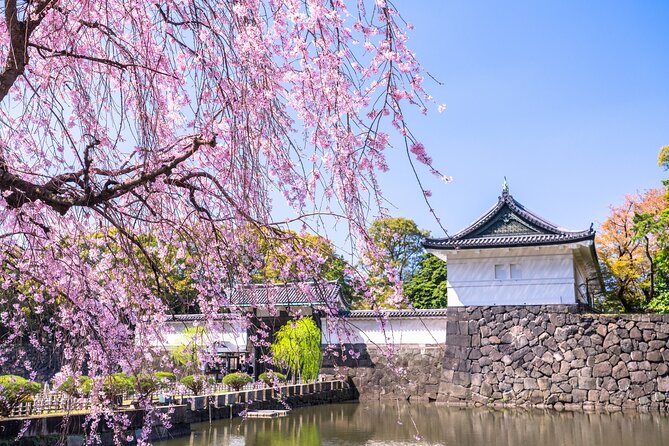
This is a guided walk, not an inside look at the working Imperial Palace. That distinction matters. The East Garden forms part of the former Edo Castle grounds, so the focus is on outdoor spaces, historic traces, gardens, bridges, and buildings connected with Japan’s rulers.
You meet at Wadakura Fountain National Park, at 3-1 Kōkyogaien, Chiyoda City. The tour then takes you around the accessible Imperial Palace grounds before ending back at the meeting point. The listed duration is about two hours, enough time for a focused introduction without turning your day into a history lecture marathon.
I see the tour as a useful middle ground. You get more than a self-guided stroll because someone explains the significance of the sites. At the same time, you are not signing up for a long museum-style program. The route is outdoors, so comfortable shoes and sensible weather planning matter, though no special equipment is listed.
The garden admission itself is free. Your $43.11 goes toward the guide and the organized experience. That price makes the most sense if you value explanation, questions, and historical context. If you mainly want to take pictures of greenery and old stonework, visiting independently may offer better value.
More Palace Gardens and Grounds in Japan
- Imperial Palace East Garden and Edo Castle Walking Tour in Tokyo
★ 5.0 · 510 reviews - Tokyo: Imperial Palace East Gardens Walking Tour
★ 4.8 · 353 reviews - Tokyo Castle, Imperial Palace, Shogun & Garden Walking Tour
★ 5.0 · 211 reviews
Starting at Wadakura Fountain National Park
The meeting point gives the tour a clear beginning in the broad outer palace area. You should allow enough time to reach Wadakura Fountain National Park, especially if you are still learning Tokyo’s train and subway system. The exact meeting instructions identify the park and address, so check them carefully before leaving your hotel.
The group returns to this same meeting point at the end. That is handy if you want to continue sightseeing nearby, but it also means the tour does not function as a one-way transfer to another Tokyo district. Plan your next stop around the starting point rather than assuming you will finish near a different station or attraction.
Before entering the palace grounds, expect a baggage inspection. This is an important practical detail. If you have bought Japanese knives or another item that could be treated as a weapon at Tsukiji, Asakusa, or elsewhere, put it in a coin locker or similar storage first. Do not arrive carrying a souvenir that creates a problem at the entrance.
The inspection is not a reason to avoid the tour, but it can catch you off guard if you have been shopping earlier in the day. Keep your belongings simple and easy to check.
Walking through former Edo Castle grounds
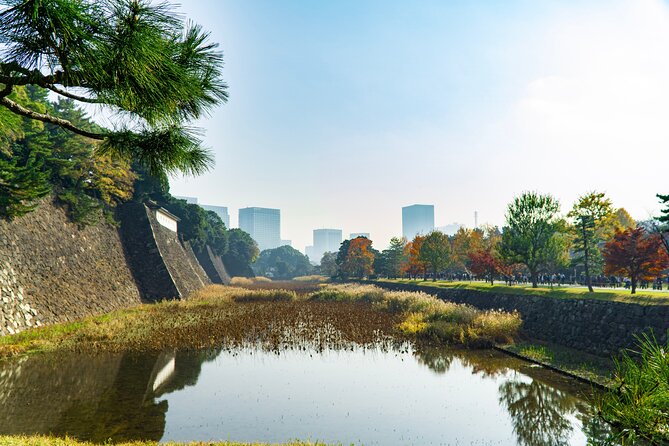
The East Garden is valuable because it connects modern Tokyo with the city’s earlier political center. You are walking through grounds associated with Edo Castle, while nearby towers, offices, and train lines remind you that Tokyo has grown around this old seat of power.
The route includes Japanese garden scenery, an old bridge, and historic buildings or remains. The exact sequence of stops can vary with the guide and conditions, so you should think of this as a guided area walk rather than a fixed performance with timed indoor entries.
I like this format for first-time visitors. You can see the physical setting of power instead of only reading names and dates on a sign. A guide can point out why a bridge, wall, garden feature, or building matters, then place it within the wider story of Japan’s imperial family and political past.
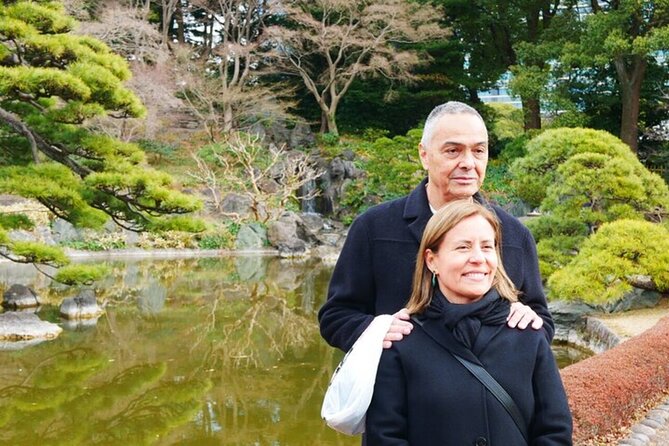
The scenery also gives the tour a gentler rhythm. Tokyo can demand constant attention: crowds, signs, traffic, shopping streets, and train connections. Here, the pace shifts toward gardens and open space. One review described the experience as a welcome change from the busy Tokyo metro, and that is exactly the appeal.
Do not expect untouched wilderness or a remote rural garden. This is a central Tokyo site with a strong historic purpose. The pleasure comes from seeing nature and old architecture in the middle of the capital, not from escaping the city completely.
The guide makes the difference
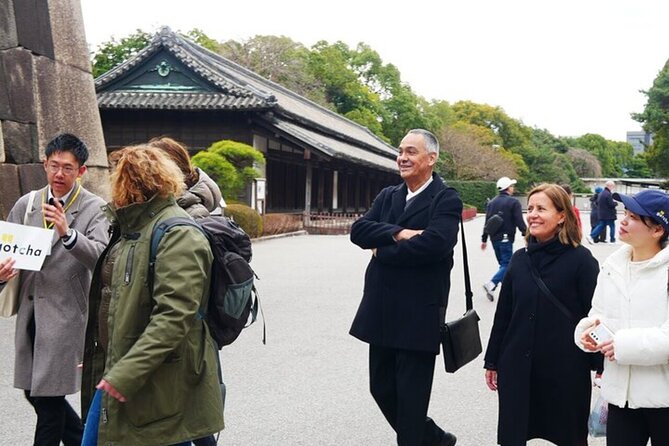
At $43.11, the guide is the reason to book. Without that human explanation, the garden admission is free and the area can be visited without this tour. You are paying to have the sites interpreted and to ask questions as you walk.
Guide quality may shape your experience more than any other factor. Masahito was praised for a detailed account of the palace and imperial family, from their early origins through the present day. That sort of broad explanation can turn a pleasant walk into a useful introduction to Japanese history.
Another positive account described two instructors who went beyond the posted signs, answered questions about history and culture, and took pictures at different stops. Those details are particularly helpful if you want a tour that feels personal rather than like someone simply reading information aloud.
English ability may not be perfectly consistent across every guide. One dissatisfied participant felt that communication and palace knowledge were not strong enough for the format, even while describing the guide as kind and hardworking. That is the clearest caution in the available feedback. Most of the praise focuses on friendly, capable instruction, but you should still keep expectations realistic in a group tour.
The maximum group size is listed as 50 people. That is large enough that you may not receive constant one-to-one attention. If the group is near capacity, stay close, listen carefully, and ask questions at natural pauses. The strongest experience will come when the guide can be heard clearly and the group keeps moving together.
More Royal Palace Tours in Japan
- Tokyo: Imperial Palace and Shogun Historical Walking Tour
★ 5.0 · 2,251 reviews - Tokyo: Imperial Palace Japanese History Walking Tour
★ 4.9 · 987 reviews - Tokyo: Imperial Palace and Shogun Walking Tour
★ 4.9 · 935 reviews - Tokyo: Imperial Palace, Sensō-ji Temple, & Tokyo Tower Tour
★ 4.5 · 339 reviews
What you will learn about the imperial family
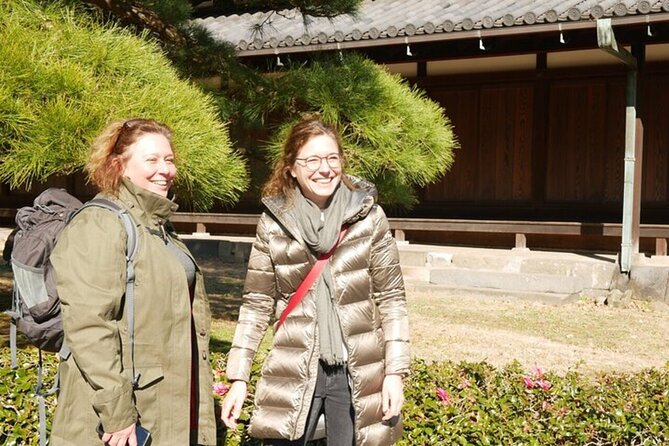
The tour promises more than a look at gardens. It follows the footsteps of successive emperors and introduces the role of the palace and imperial family in Japan’s story.
The supplied information does not provide a detailed list of every teaching point, so I would not book this expecting a guaranteed lecture on specific emperors or buildings. What you can reasonably expect is a broad explanation of the grounds, the palace setting, and the royal family’s place in Japanese history.
This is where a guide adds real value. Signs can identify a structure, but they rarely explain how a place fits into centuries of change. A good guide can give you a sequence: what the site was used for, how the palace grounds developed, and why the area still matters today.
The experience may suit you especially well if Japanese history is new to you. A first visit to Tokyo can feel scattered because the city offers so many neighborhoods and periods at once. Two hours at the Imperial Palace gives you a firm historical anchor before you move on to modern districts.
If you already have a strong background in Edo-era and imperial history, the tour may feel introductory. Ask questions when the chance comes, since the guide’s answers may provide more value than the basic route itself.
The Inner Palace limitation is important
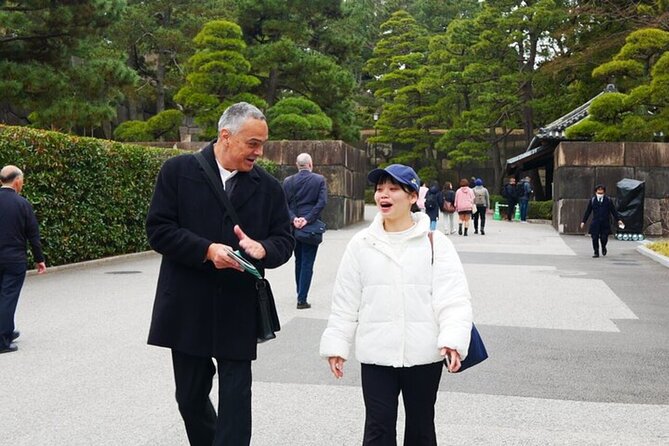
The most important expectation to set is that this tour does not enter the Inner Palace. The description is clear on this point, yet the words Imperial Palace can easily suggest access to royal interiors or private buildings.
You will remain in the accessible garden and outdoor grounds. That still provides a meaningful visit, especially if you care about old castle features, gardens, bridges, and historical setting. But it is not an opportunity to see private palace rooms or areas closed to the public.
If entering the working palace is your main goal, this is the wrong experience. If you want a guided walk around the East Garden and former castle grounds, the limitation is less serious.
The East Garden is closed on Mondays and Fridays. Check the day before you book, and do not assume a public holiday or schedule change will make those days available. The tour cannot simply substitute an indoor palace visit, since the experience is built around the garden grounds.
Is $43.11 good value?
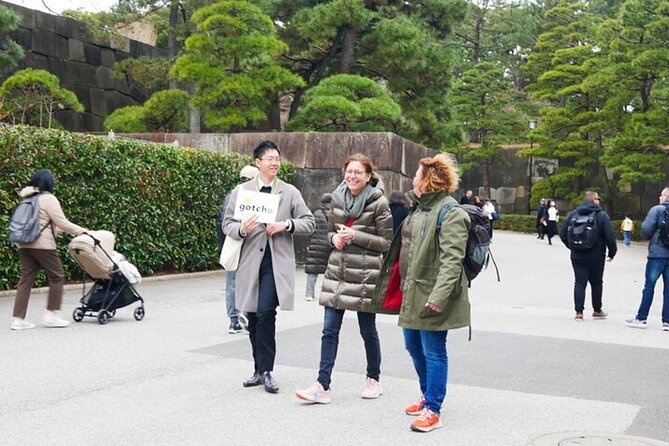
The price is reasonable only if the explanation matters to you. Entry is free, and the tour lasts about two hours, so the cost is not paying for admission, reserved access, or a long list of included attractions. It pays for a guide-led experience.
For a first visit to Tokyo, that can be worthwhile. You receive a structured route, historical background, and help noticing details you might otherwise pass without understanding. The short duration also limits your financial and time commitment. You can fit it between other activities rather than giving away half a day.
The value drops if you prefer to walk alone, read signs, or spend as long as you like at one garden feature. You may also find a large group less satisfying if you want an intimate conversation about the imperial family.
Group discounts are available, which may improve the price for families or parties booking together. The activity accepts mobile tickets, so you do not need to manage a printed voucher. Confirmation is provided at booking, and free cancellation is available up to 24 hours before the start time. Changes or cancellations inside that window are not refundable.
The experience requires a minimum number of participants. If that minimum is not met, you are offered another date or experience, or a full refund. That policy offers some protection, though it can introduce a change to your plans.
Who should book this walk?
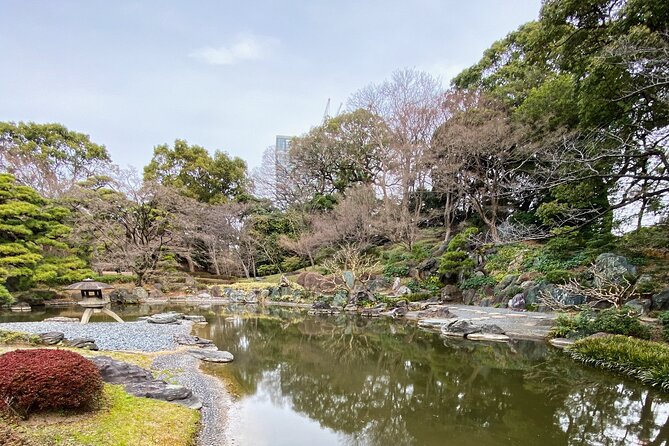
I would recommend it to first-time visitors who want a calm and useful introduction to Japan’s imperial past. It also fits anyone who has spent several days in modern Tokyo and wants to add gardens, old architecture, and a slower outdoor stop.
It is a good choice if you enjoy asking questions. The best comments focus on guides who explained more than the signs, spoke English well, and connected history with culture. That is the part you should seek out and make use of.
Families and mixed-age groups may appreciate the two-hour length. The tour is long enough to feel substantial but short enough to fit around meals and other plans. Most people can participate, and service animals are allowed. The experience is near public transportation, though no specific station or travel time is supplied, so you should check your route before setting out.
You may want to skip it if you need guaranteed access inside the palace, dislike group walks, or prefer a completely self-directed visit. The possibility of up to 50 participants also makes this less suitable for anyone seeking a private, quiet tour.
Practical details before you go
Keep the day simple. Wear shoes suitable for walking outdoors, and bring only what you need because all visitors face a baggage inspection at the palace grounds.
Do not carry knives or similar purchases from Tsukiji, Asakusa, or another shopping stop. Store them first in a coin locker or comparable facility. This one step can prevent an awkward delay at the entrance.
The tour starts and finishes at Wadakura Fountain National Park. Since the route returns to its starting point, you can plan another activity afterward, but leave yourself enough time if you have a fixed reservation elsewhere.
The group maximum is 50 people. Arrive ready to listen and remain with the guide. If you want pictures, take them during natural pauses so you do not lose track of the group.
Should you book the Imperial Palace East Garden tour?
Book it if you want the history behind the scenery, not just a pleasant garden walk. The price is fair for a short guided introduction, and the strongest guide feedback points to clear explanations, cultural context, and a friendly tone. Masahito appears to be especially strong at presenting the palace and imperial family as a connected story.
Skip it if the Inner Palace is your main reason for visiting, or if you would rather explore the free East Garden at your own pace. Also check the calendar carefully, since Mondays and Fridays are not available.
For most first-time visitors with two spare hours, this is a sensible way to slow down, see an older side of Tokyo, and understand why these central grounds still matter.
FAQ
How long is the Tokyo Imperial Palace East Garden tour?
The tour lasts approximately two hours.
Where does the tour start?
It starts at Wadakura Fountain National Park, 3-1 Kōkyogaien, Chiyoda City, Tokyo 100-0002, Japan.
Where does the tour end?
The activity ends back at the meeting point at Wadakura Fountain National Park.
Does the tour enter the Inner Palace?
No. The tour does not go inside the Inner Palace.
Is admission to the East Garden included?
The tour information lists admission as free. The experience includes a tour guide.
Which days is the East Garden closed?
The East Garden is closed on Mondays and Fridays.
Is there a baggage inspection?
Yes. Visitors are subject to a baggage inspection when entering the Imperial Palace grounds.
Can I bring Japanese knives from Tsukiji or Asakusa?
You should leave Japanese knives and other items that could be used as weapons in a coin locker or similar storage before the meeting.
What happens if I need to cancel?
You can cancel at least 24 hours before the start time for a full refund. Cancellations or changes made less than 24 hours before the experience are not refunded or accepted.
More Royal Palace Tours in Tokyo
- Full Tokyo: Meiji Shrine, Imperial Palace, Asakusa & Skytree
★ 5.0 · 78 reviews - Tokyo: Imperial Palace, the history of Japan (ENGLISH GUIDE)
★ 5.0 · 77 reviews - Tokyo Imperial Palace with Kagurazaka Alley Tour
★ 5.0 · 54 reviews - Tokyo’s Imperial Palace & Nihonbashi Tour
★ 4.5 · 38 reviews
More Palace Gardens and Grounds in Tokyo
- Tokyo: Edo Castle & East Garden of the Imperial Palace Tour
★ 4.7 · 112 reviews - Tokyo Private Tour! Edo Castle & Imperial Palace East Gardens
★ 5.0 · 105 reviews - Tokyo: Pvt. Tour – Edo Castle & Imperial Palace East Gardens
★ 4.8 · 63 reviews - Tokyo: Imperial Palace East Gardens and Tokyo Station Tour
★ 5.0 · 16 reviews
Just added around Tokyo
- From the Imperial Palace to Odaiba : Time travel to Tokyo★ 5.0 · 5 reviews
- Tokyo Skytree, Asakusa, and Imperial Palace 1/2-Day Private Tour★ 5.0 · 3 reviews
- Imperial Palace Tour: Discover Samurai History with a Local Guide★ 5.0 · 20 reviews
- Tokyo Imperial Palace with Kagurazaka Alley Tour★ 5.0 · 54 reviews
- Cherry Blossom Highlights, Asakusa, Ueno, Imperial Palace Garden★ 4.5 · 4 reviews
- Tokyo’s Imperial Palace & Nihonbashi Tour★ 4.5 · 38 reviews
- Private Tour – History, Art and Nature at the Imperial Palace★ 5.0 · 24 reviews
- Tokyo Imperial Palace and Heritage of Edo Castle Private Tour★ 5.0 · 3 reviews
Palace Gardens and Grounds, compared.
Versailles Palace and Gardens Full Access Ticket
Read our review →
Skip-the-Line Tour of Palace and Gardens Access
Read our review →
Schönbrunn Palace & Gardens Skip-the-Line Tour
Read our review →
Alhambra & Gardens Tour w/Nasrid Palaces Option
Read our review →
Versailles Palace & Gardens with Transportation
Read our review →
Skip-the-Line Schönbrunn Palace & Gardens Tour
Read our review →
Versailles Palace Guided Tour & Gardens Access
Read our review →
Versailles Palace and Gardens Tour from Paris
Read our review →Browse the lists this tour appears in