

REVIEW · TOKYO
Tokyo Castle & Imperial PalaceーShogun Walking Tour
History gets physical here. This two-hour walk brings Tokyo’s shoguns, samurai, emperors, gates, guardhouses, and gardens into one compact outing. I like the small-group format of up to 10 people, which should make it easier to hear the guide and ask questions. I also like the price, about $23.88 per person, for a tour that visits several major sites without charging admission.
The main consideration is that this is an outdoor walk with slopes, stairs, and exposed paths. The Emperor’s residence is not open to the public, and some stops are ruins or viewed from outside rather than grand interior rooms. The English-only format also means you should be comfortable following spoken English for two hours.
Key points before you book
- Edo Castle’s defenses take center stage: You will see gates, walls, towers, and guardhouses while learning how the shogun’s fortress was protected.
- The walking route covers nine meaningful stops: It includes the East Gardens, former castle ruins, samurai guardhouses, a watchtower, and Ninomaru Garden.
- The tour connects two eras of Japan: Your guide explains both the Tokugawa shogunate and the long-running imperial system.
- Guides add much of the value: K, Keiko, Ai, Shin, Yuuki, Nana, and others have been praised for clear explanations, humor, pictures, and patience.
- The walk is short but not effortless: Allow about two hours, wear comfortable shoes, carry water, and prepare for stairs and strong sun.
- The price is good for history-focused visitors: At $23.88, you are paying mainly for interpretation, not admission tickets.
Why Edo Castle is a useful starting point for Tokyo
Modern Tokyo can feel enormous and fast. The Imperial Palace grounds offer a different pace, but without context, you may see only stone walls, trimmed trees, a pond, and a few old structures. This tour helps explain why those pieces matter.
Edo Castle was the seat of the shogun, the military ruler who governed Japan for centuries. The route shows how power was protected through layers of gates, controlled entrances, guard posts, moats, and watchtowers. You are not simply looking at an old wall. You are learning how a castle worked as a political and military machine.
The tour also explains the contrast between the shogun and the emperor. That distinction matters because the Imperial Palace today occupies ground once dominated by the Tokugawa shoguns. The story moves from military rule to the continuing imperial system, described here as having a 2,600-year legacy.
A strong guide makes that shift easier to follow. Several guides have earned praise for making the subject lively, including K, who was described as funny and passionate, and Keiko, who used laminated images of earlier castle layouts, guard towers, and the royal family. Those visual aids are especially useful when the original buildings no longer exist.
More Palace Walking Tours in Japan
- Tokyo: Imperial Palace and Shogun Historical Walking Tour
★ 5.0 · 2,251 reviews - Tokyo Castle & Imperial PalaceーShogun Walking Tour
★ 4.7 · 1,068 reviews - Tokyo: Imperial Palace Japanese History Walking Tour
★ 4.9 · 987 reviews
Sakurada Tatsumi Yagura and the first look at castle security
The walk begins at Sakurada Tatsumi Yagura, a surviving turret from the Edo period. This is a good first stop because it gives you a real piece of the old castle before the tour moves into explanations of walls, gates, and open grounds.
Here, your guide discusses the security systems that still protect the Imperial Palace. The turret helps you picture the castle as a guarded stronghold rather than a ceremonial residence. You will have about 20 minutes at this stop, the longest single stop on the route.
The structure is a visual highlight, but do not expect to enter it. The value comes from seeing the surviving architecture and hearing how it fit into the larger defensive plan. If you enjoy military design, this opening section may be one of the most satisfying parts of the walk.
Otemon Gate shows how a castle controlled movement
At Kokyo Otemon Gate, you will see two large gates and massive stone walls from the original castle. The tour explains how these layers helped protect the shogun.
This stop lasts about 10 minutes, which is enough for an explanation and photographs. The important idea is control. A castle gate was not just an entrance. It regulated who could enter, how quickly they could move, and how exposed they might be while passing from one section to the next.
The stonework also gives you a sense of the scale of Edo Castle. Much of the original complex is gone, so surviving walls and gate structures do a lot of the visual work. Your guide’s explanation helps you read details that you might otherwise walk past.
Three guardhouses reveal the samurai chain of command
The route then visits Constable Guardhouse, Hyakunin Bansho Guardhouse, and Obansho Guardhouse. These stops are close in theme, but they are not interchangeable. Together, they explain how castle security depended on people of different ranks and duties.
At the Constable Guardhouse, you learn about lower-ranking samurai and why this modest post mattered. It is a useful reminder that castle life was not carried out only by famous generals and powerful lords. Everyday security depended on many people watching entrances and maintaining order.
Hyakunin Bansho Guardhouse was a larger post where many samurai were stationed. Its name and scale help convey the manpower required to protect the castle. The guide discusses their role in security, giving you a clearer picture of how the outer and inner sections were watched.
At Obansho Guardhouse, the focus shifts to higher-ranking samurai near the inner gate. Their responsibilities differed from those of the lower-ranking guards. This progression makes the route more than a collection of buildings. You are following the castle’s social and defensive structure from one post to the next.
Each stop takes about 10 minutes. That keeps the pace moving, though you should not expect long, quiet periods at any one site. If you prefer a slow architectural study, the schedule may feel brisk. If you want a clear introduction without spending half a day on one complex, the timing works well.
Same place, a different set of state rooms:
- Kyoto: Nijo-jo Castle and Ninomaru Palace Guided Tour
★ 4.7 · 1,020 reviews - Tokyo: Imperial Palace and Shogun Walking Tour
★ 4.9 · 935 reviews - Imperial Palace East Garden and Edo Castle Walking Tour in Tokyo
★ 5.0 · 510 reviews - Kyoto: Imperial Palace & Nijo Castle Guided Walking Tour
★ 4.7 · 453 reviews
Fujimi-yagura brings the castle upward
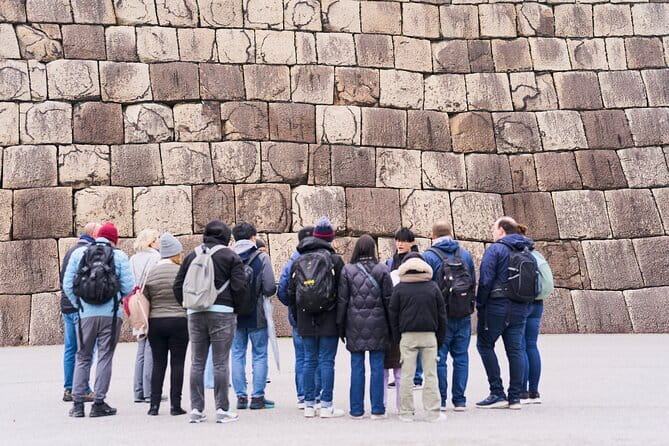
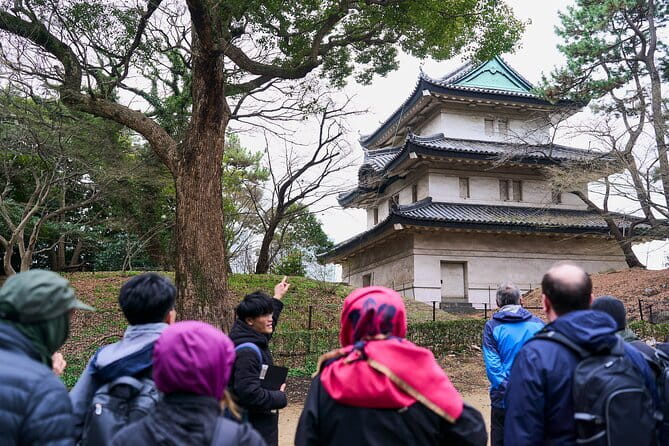
Fujimi-yagura is an old watchtower overlooking the area. Here, the guide explains its former role and what made it special.
Watchtowers help you understand the castle from above. They offered a place to observe movement and defend key areas, but they also carried symbolic weight as part of the shogun’s imposing residence. The stop lasts about 10 minutes, with time to look and take pictures.
The route includes steep slopes and stairs, so this is one point where footwear matters. Most people can participate, but the walk is not completely flat. If you have trouble with inclines, plan your pace and tell the guide if you need a moment.
The Shozokan model fills in what disappeared
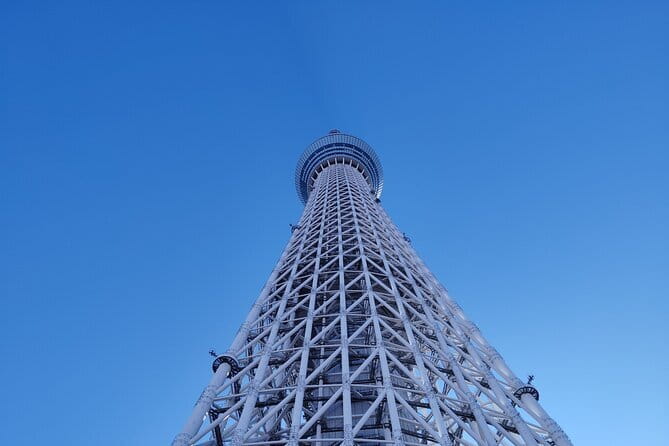
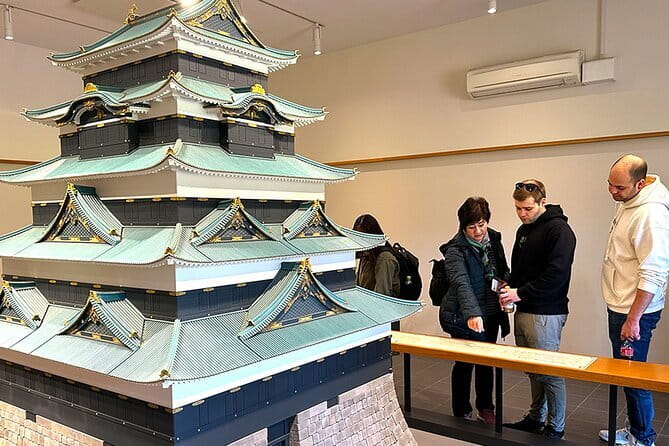
At Kokyo Sannomaru Shozokan, you can see a scale model of the former Edo Castle and visit a souvenir shop with palace-related goods. The model is especially useful because the castle’s main structures are no longer standing in their original form.
I like this stop for practical reasons. A model can show the relationship between gates, walls, towers, and inner areas more clearly than a view from ground level. It gives you the full picture after you have already seen several parts of the site.
The stop is listed at about 10 minutes. That is enough for a quick look, but you may want to ask your guide to point out the areas you have just visited. The souvenir shop adds a small commercial break, though the main value remains the scale model and the visual connection to the past.
The East Gardens explain the missing castle tower

The East Gardens of the Imperial Palace include the former site of Edo Castle’s main tower. Your guide explains why the tower is no longer standing and what remains.
This is one of the most important historical moments of the tour. You are standing on the site of the castle’s central tower, but you will not see a complete keep rising above the trees. That absence is part of the story. The guide helps you understand the changes that left the grounds in their present form.
The stop lasts about 15 minutes. It is long enough to discuss the site without turning the tour into a lecture. I find this kind of visit more rewarding when the guide explains what is missing, since ruins and foundations can be hard to interpret on your own.
Do not expect access to the Emperor’s residence. That area is closed to the public, and the tour focuses on the surrounding historic grounds and gardens instead.
Ninomaru Garden offers a welcome change of pace
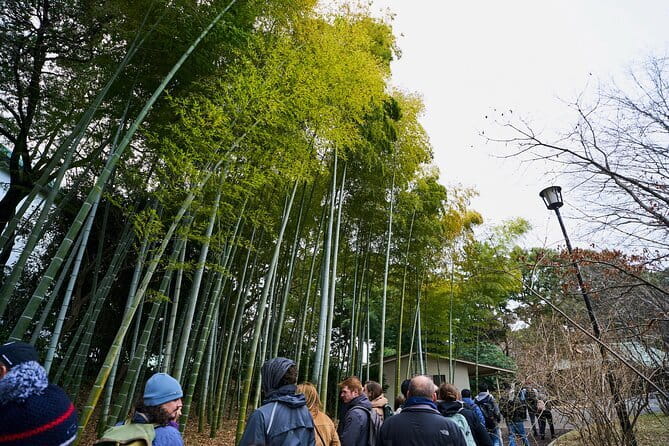
After gates, walls, ranks, and defensive planning, Ninomaru Garden gives the walk a quieter side. It includes seasonal plants and a pond with koi. The tour allows about 15 minutes here.
This is likely to be one of your favorite stops if you want photographs and a pause from the military story. The garden shows how the former castle grounds were also designed for beauty and calm. The pond, trees, and seasonal planting create a clear contrast with the heavy stone defenses.
The garden is still part of the historical route, not a separate attraction tacked on at the end. That matters because it rounds out the picture of castle life. Power in Edo was expressed through walls and guards, but also through carefully arranged gardens and controlled spaces.
One practical note: the walk can be hot. A guest on a particularly warm day appreciated the guide offering sweets and menthol napkins, but you should still bring your own water and sun protection. Another detailed account advised a hat or umbrella, since much of the route is exposed.
Finishing near Tokyo Station
The route concludes in front of the ginkgo-lined avenue stretching toward Tokyo Station. The tour returns to the meeting point area, beginning near the Starbucks Coffee at Kokyo Gaien Wadakura Fountain Park, 3-1 Kōkyogaien, Chiyoda City.
This ending is useful for seeing the Imperial Palace in relation to central Tokyo. You finish near a major city landmark rather than in an isolated historical district. The contrast between the old castle grounds and the modern station area makes the location easier to place during the rest of your visit.
The meeting point is near public transportation, and the tour uses a mobile ticket. Confirmation is provided when you book. You should still allow a little extra time to find the exact starting spot in the park.
What the guides add to the price
The admission cost at the listed stops is free, so the $23.88 price is mainly paying for the guide’s interpretation. That makes the tour’s value depend heavily on the quality of the explanation.
The strongest guide experiences described for this tour share a few traits. K was praised for clear English, humor, passion, and the ability to answer questions. Keiko used laminated images to make vanished buildings and old layouts easier to picture. Shin was singled out for helping a late participant after another guide failed to appear, then delivering a strong explanation of the Imperial grounds and Edo period.
Other guides, including Ai, Anju, Tomo, Yuuko, Dai, Mayuko, Nana, Yuta, Franky, Mako, and Yuuki, were praised for friendly explanations, patience, research, and enthusiasm. One guide even made an extremely hot day easier by handing out small comforts.
You should keep expectations realistic. Guide quality can vary, and one participant left after finding the guide’s English difficult to follow. The tour is conducted in English only, so clear communication is central to the experience. The overall rating is 4.9 from 725 ratings, with 99 percent recommending it, but no group tour can guarantee the same guide or the same chemistry every time.
Walking conditions, group size, and timing
The experience lasts about two hours. That is a useful length for a first day in Tokyo or for a morning or afternoon between larger sights. It is long enough to build a story, but short enough that you can continue to another part of the city afterward.
The tour is advertised for a small group of up to 10 people, which should help with questions and visibility around the guide. The activity information also gives a maximum of 60 participants, so confirm the group size at booking if a small group is important to you.
You will walk on outdoor paths, slopes, and stairs. Most people can take part, but this is not a suitable choice if you need a completely level route or indoor shelter. There are no stated health restrictions, yet sun, heat, and walking surfaces remain practical concerns.
A security check is required to enter the Imperial Palace grounds. Do not bring knives or alcohol. Comfortable shoes, water, and sun protection are sensible additions, especially in warm weather.
Who should book this Tokyo history walk
I would choose this tour if you want a clear introduction to Edo Castle and the Imperial Palace grounds without committing to a full-day history program. It suits first-time visitors who want to understand the shogun era, samurai roles, and the imperial system before exploring more of Tokyo.
Families may appreciate the short stops and the changing scenery, particularly if the guide uses visual materials. The scale model, guardhouses, garden, and surviving towers give the story variety. History fans will get the most from the explanations of defense and rank.
You may want to skip it if you only want to enter grand palace interiors, since the Emperor’s residence is closed and many sites are viewed from outside. It is also less suitable if hot weather, stairs, or two hours of walking would be difficult for you.
Is the Tokyo Castle and Imperial Palace Shogun Walking Tour worth it?
Yes, for most visitors interested in Tokyo’s past. At about $23.88, the tour offers a lot of historical context for a modest price, especially since the route includes free-access sites that are easy to misunderstand on your own.
Book it for the guide, not for palace-room access. You will see surviving walls, gates, guardhouses, a tower, ruins, a scale model, and a beautiful garden, but the real payoff is learning how those pieces fit together. Choose a cooler part of the day if possible, wear good shoes, and arrive ready for an English-language walk with some sun and stairs.
FAQ
How long is the Tokyo Castle and Imperial Palace Shogun Walking Tour?
The tour lasts approximately two hours.
How much does the tour cost?
The listed price is $23.88 per person.
Is the tour conducted in English?
Yes. The tour is conducted in English only, and Japanese-language support is not available.
Where does the tour begin?
It begins at Starbucks Coffee in Kokyo Gaien Wadakura Fountain Park, 3-1 Kōkyogaien, Chiyoda City, Tokyo 100-0002, Japan.
Where does the tour end?
The activity ends back at the meeting point area, near the ginkgo-lined avenue stretching toward Tokyo Station.
Is the Emperor’s residence open to the public?
No. The Emperor’s residence is not open to the public. The tour visits surrounding historic grounds, gardens, gates, guardhouses, and castle ruins.
Are there security rules for entering the Imperial Palace grounds?
Yes. A security check is required. You should not bring knives or alcohol.
Is the tour suitable for people who can participate in most walking activities?
Most people can participate, but the route includes steep slopes and stairs. Comfortable footwear is recommended.
Can I cancel for a full refund?
Yes. You can cancel at least 24 hours before the experience start time for a full refund. Changes or cancellations made less than 24 hours before the start time are not accepted for a refund.
Just added around Japan
- Kyoto: Discover Every Bit of Kyoto Imperial Palace★ 4.4 · 21 reviews
- Kyoto: Nijo Castle and Kyoto Imperial Palace Guided Tour★ 4.6 · 98 reviews
- Imperial Palace Tour: Discover Samurai History with a Guide★ 5.0 · 12 reviews
- Full Tokyo: Meiji Shrine, Imperial Palace, Asakusa & Skytree★ 4.7 · 16 reviews
- Tokyo Castle, Imperial Palace, Shogun & Garden Walking Tour★ 5.0 · 211 reviews
- Tokyo: Edo Castle & East Garden of the Imperial Palace Tour★ 4.7 · 112 reviews
- Tokyo: Imperial Palace East Gardens Walking Tour★ 4.8 · 353 reviews
- Tokyo: Imperial Palace, Sensō-ji Temple, & Tokyo Tower Tour★ 4.5 · 339 reviews
Palace Walking Tours, compared.
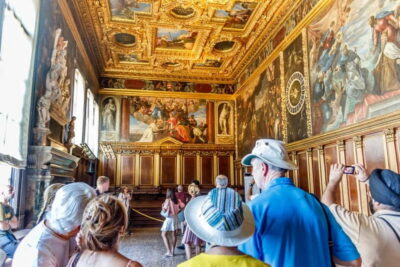
Doge’s Palace and St Mark’s Basilica Walking Tour
Read our review →

Walking Tour of Split and Diocletian’s Palace
Read our review →
Grand Palace and Wat Phra Kaew Guided Walking Tour
Read our review →
Imperial Palace and Shogun Historical Walking Tour
Read our review →
Madrid Old Town & Royal Palace Walking Tour Skip the Line Ticket
Read our review →
Knossos: Knossos Palace Skip-the-Line Guided Walking Tour
Read our review →
Browse the lists this tour appears in