
REVIEW · TOKYO
Tokyo: Edo Castle Ruins & Imperial Palace East Garden Tour
History gets real behind castle walls. This two-hour Edo Castle and Imperial Palace East Garden tour connects shogun-era defenses, royal gardens, and modern Tokyo in a compact walk. I especially like the route through Otemon Gate and the chance to see the old guardhouses, and I like the quiet Ninomaru Garden with its koi pond. The main drawback is clear: you do not enter the palace buildings or the Imperial Family’s inner grounds.
The live English guide can make a major difference. Guides such as Mari-san and Isao have been praised for warmth, patience, and detailed answers, while one less successful outing felt like a simple park walk with little explanation. This is best for adults and older children who want historical context, not for anyone expecting palace interiors or a slow, fully accessible stroll.
Key points to know before booking
- The walk begins at Wadakura Free Rest Area, where your guide waits outside with a yellow sign.
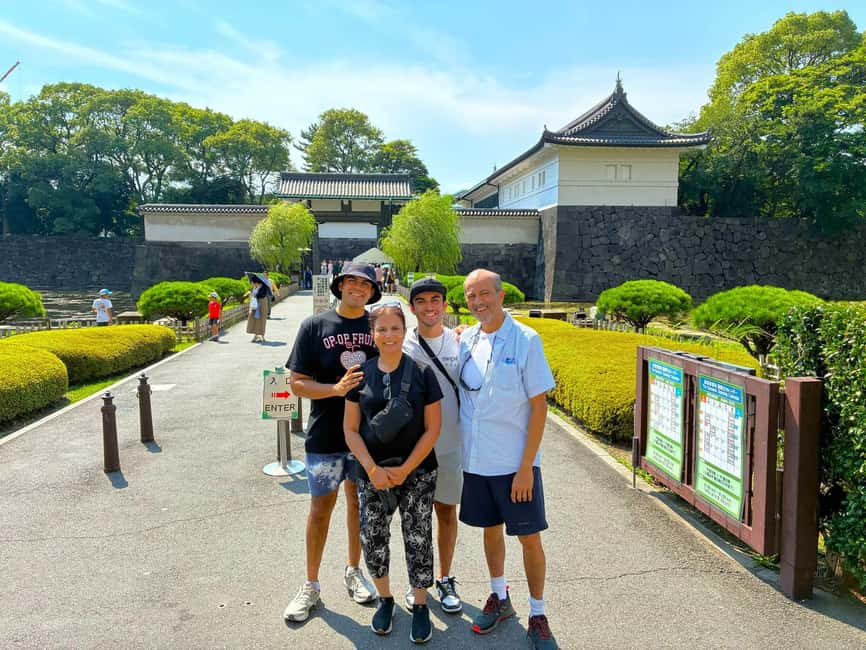
- Otemon Gate, guardhouses, and castle ruins show how Edo Castle was protected and controlled.
- The Imperial Palace buildings are not part of the visit, since the Imperial Family still lives there.
- The Tenshu-dai provides broad views, while a model explains the former castle keep.
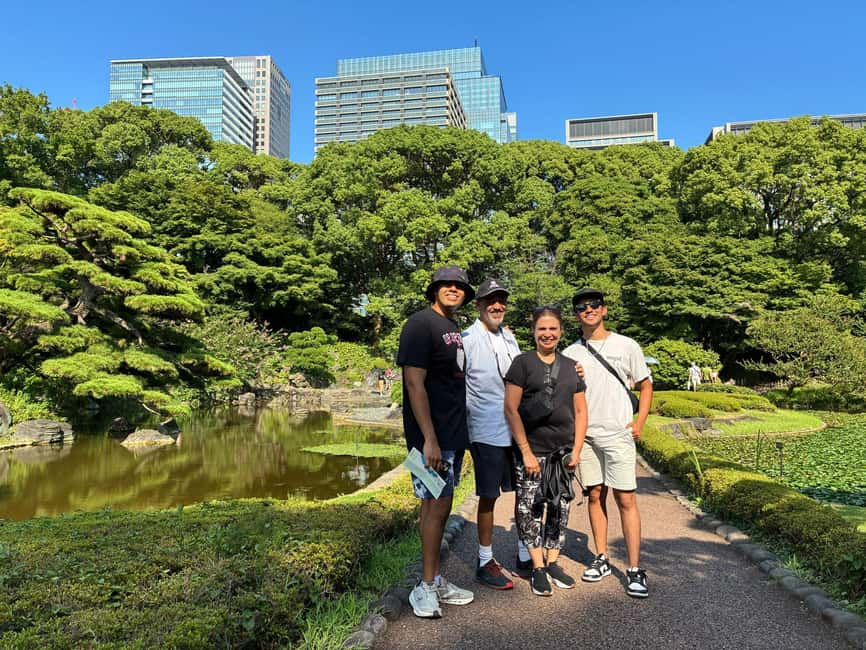
- Ninomaru Garden is the calmest stop, with traditional scenery and koi in the pond.
- The $37 price includes admission and a guide, but not food, drinks, transport, or personal costs.
Why this Edo Castle walk is worth your time
At $37 per person, this is not a bargain if you only want to wander through a public park. You can see parts of the East Gardens without a guide. The fee makes more sense if you want the scattered stones, gates, and guardhouses explained as parts of one powerful castle complex.
Edo Castle was the center of shogun rule, and the grounds can otherwise feel like a series of lawns, trees, walls, and empty spaces. A good guide helps you picture the buildings that once filled those spaces and explains why each gate mattered.
The tour lasts two hours and returns to its starting point, which keeps it easy to fit into a Tokyo day. It is also offered privately or in a small group, so you may have more room to ask questions than on a large coach tour. Still, the quality depends heavily on the guide. Isao has been praised for his friendly manner and patient replies, while Mari-san has received warm praise for making the past clear and enjoyable.
I would book this for a first visit to Tokyo if you want a short history lesson outdoors. I would not book it as your main Imperial Palace experience, because the palace buildings are off-limits.
More Palace Gardens and Grounds in Japan
- Imperial Palace East Garden and Edo Castle Walking Tour in Tokyo
★ 5.0 · 510 reviews - Tokyo: Imperial Palace East Gardens Walking Tour
★ 4.8 · 353 reviews - Tokyo Castle, Imperial Palace, Shogun & Garden Walking Tour
★ 5.0 · 211 reviews
Starting at Wadakura Fountain and Moat
Meet outside the Wadakura Free Rest Area, in front of the entrance. Look for the guide holding a yellow sign. The meeting point is indoors nearby, which is useful if Tokyo weather is unpleasant, but you should still arrive ready for a walk.
The first stop is Wadakura Fountain National Park. The fountain was built to mark a royal wedding, giving your guide an opening to explain the connection between the modern Imperial family and this part of central Tokyo. This is not the grandest stop on the route, but it sets up an important theme: the grounds reflect both the old shogunate and today’s monarchy.
The tour then moves to the Wadakura Moat. Moats were practical defenses, not decorative ponds, and this short stop helps you see the castle grounds as a military site. The five-minute explanation is brief, so do not expect a long historical lecture here. Its value comes from placing the water, walls, and gates into a defensive plan.
Passing through Otemon Gate
Otemon Gate is the first major visual marker of the former castle. Its scale gives you a better sense of how controlled entry once was. This was not a casual opening into a public garden. It was a guarded approach to the seat of shogun power.
Your guide explains the gate during a ten-minute stop. That is enough time to understand its role without spending the entire visit on one structure. I like this part of the route because it moves from broad political history to physical evidence you can see and touch with your eyes: heavy masonry, controlled passage, and the layered approach to the castle center.
At Ote-San-no-mon Gate Ruins, only the remains survive, but that absence is part of the lesson. You are not looking at a preserved palace town with every building intact. You are tracing an older capital through foundations, stonework, open spaces, and a few surviving structures.
Reading the castle through its guardhouses
The Doshin Bansho and Hyakunin Bansho guardhouses help explain how people moved through Edo Castle. These were not just waiting rooms or charming old buildings. They were part of a system that checked people, watched entrances, and protected the shogun’s compound.
Hyakunin Bansho is especially useful for imagining the human side of castle security. The name points to a guardhouse associated with a large number of guards, and the stop connects samurai service with the daily business of controlling access.
I appreciate this section because it gives the tour a practical focus. Instead of hearing only about famous rulers, you learn how ordinary castle operations worked. A guardhouse can look modest beside a huge gate, but it tells you how power was enforced minute by minute.
The downside is that these stops may feel understated if you want grand interiors or elaborate displays. The tour is mostly outdoors, and much of the story must be supplied by the guide. That is why a talkative guide matters so much.
More Royal Palace Tours in Japan
- Tokyo: Imperial Palace and Shogun Historical Walking Tour
★ 5.0 · 2,251 reviews - Tokyo: Imperial Palace Japanese History Walking Tour
★ 4.9 · 987 reviews - Tokyo: Imperial Palace and Shogun Walking Tour
★ 4.9 · 935 reviews - Tokyo: Imperial Palace, Sensō-ji Temple, & Tokyo Tower Tour
★ 4.5 · 339 reviews
Edo Castle ruins and the Honmaru site
The route continues into the Edo Castle ruins and the site of Honmaru, the main hall area. Honmaru was the heart of the castle compound, so this is where the scale of the former complex becomes easier to grasp.
You will not see the original main hall standing in full form. Instead, the guide uses the open grounds and remaining traces to explain what once occupied the area. This can be rewarding if you enjoy reconstructing the past in your mind. If you need intact rooms and rooflines to make history feel real, the visit may seem sparse.
The tour includes about fifteen minutes at the wider Edo Castle ruins and another ten minutes at the Honmaru site. That pacing gives you enough time to hear the main story without turning the outing into a long academic lecture.
A restoration model of the Edo Castle keep adds a useful visual aid. The keep itself is gone, but the model helps you picture the structure that once dominated the castle. This is one of the better moments for anyone who finds ruins hard to read. You can compare the model with the site and understand the difference between the castle as it appears now and the fortress that once occupied it.
The Tenshu-dai and Tokyo views
The Tenshu-dai is the former base of the castle keep. The remaining platform offers panoramic views of the surrounding area. From here, the contrast between historic castle grounds and present-day Tokyo becomes the point of the stop.
The view is not simply a photo opportunity. It helps you understand how the castle occupied a central position in the city. You can look across the modern surroundings while standing on one of the old foundations of power.
There is also a stop marked 都道府県の木, referring to the trees associated with Japan’s prefectures. The tour gives about ten minutes here. This part may appeal to you if you enjoy Japanese cultural details and plant displays, though it is less essential for someone focused only on castle history.
The route includes Suwa-no-Chaya, a traditional tea house setting. The stop adds a softer, more refined note after the defensive gates and ruins. It also helps show that these grounds are not only military remains. They include gardens, ceremonial spaces, trees, and places designed for quiet enjoyment.
The East Gardens and Ninomaru Garden
The Imperial Palace East Gardens are the scenic heart of the walk. The gardens occupy part of the former castle grounds, so you get history and greenery together rather than a succession of stone remains.
The gardens are open and calm, but that does not mean the tour becomes empty or aimless. Your guide can connect the paths and planting areas to the former castle layout and to the continuing role of the Imperial Palace site.
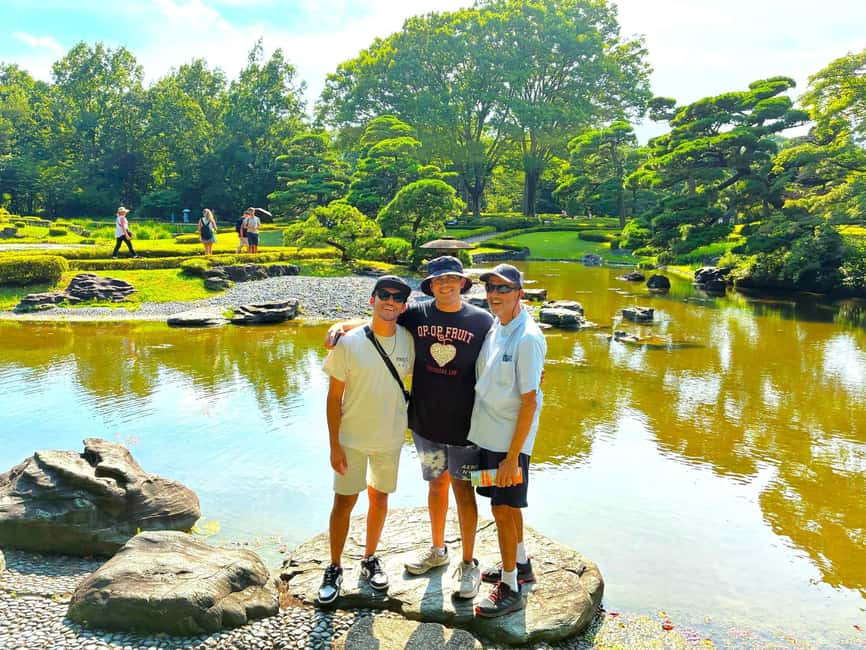
Ninomaru Garden is the final major stop and receives about fifteen minutes. This is where I would slow down, even if the group schedule keeps moving. The pond contains koi, and the garden offers a peaceful change from gates, walls, and military history.
The garden may be your favorite part if you need a quiet pause during a busy Tokyo itinerary. It is also a good place for photographs, though flash photography is not allowed. Bring a camera, but use it respectfully and keep your attention on the setting rather than treating the garden as a quick backdrop.
The tour then returns to Wadakura Free Rest Area. Ending where you began makes the outing simple to combine with other central Tokyo plans.
What the guide adds, and where the tour can fall short
This tour succeeds or fails on explanation. The physical route is attractive, but you could walk much of it without paying for a guide. The added value comes from understanding the castle’s layers: shogun government, samurai security, the Honmaru compound, the lost keep, and the Imperial Palace that occupies the site today.
The best guide style here is patient and conversational. Isao has been praised for answering questions with a smile, while Mari-san has been praised for sharing plenty of information. Another guide was described as passionate and willing to spend extra time explaining the palace and Japan’s past.
You should also allow for variation. One low-rated experience felt like an ordinary park walk because the guide said very little. That is a useful warning. If your guide is quiet, ask questions early. Ask about the castle’s defenses, the lost buildings, the shogun’s residence, or the meaning of the garden features. The tour is designed to support questions, and a small or private group gives you a better chance to shape the conversation.
Practical details that affect your decision
Wear comfortable shoes. The walk includes gates, ruins, gardens, and several stops spread across the grounds. Water is also sensible, since food and drinks are not included.
The experience is offered in English. Private and small-group options are available, which can matter if you want a more personal pace or have a list of questions. The tour is not suitable for children under six, people with mobility impairments, or wheelchair users.
Do not expect hotel pickup or drop-off. You meet at the Wadakura Free Rest Area and finish there. Admission to Edo Castle and the Imperial Palace grounds is included, along with a commemorative photo opportunity.
The palace buildings themselves are not open to the public. You also cannot enter the inner grounds where the Imperial Family resides. That limitation should not come as a surprise, but it changes the nature of the outing. You are touring the gardens and former Edo Castle site, not the private palace residence.
Free cancellation is available up to 24 hours before the start time, and you can reserve now and pay later. Those terms are helpful if your Tokyo schedule is still changing.
Is the $37 price fair?
I think the price is fair for a strong guide, especially in a private or small group. The admission is included, and the route covers many separate points in only two hours. You are paying for interpretation and structure, not just entry to a garden.
The value drops if you already know Edo-period history or prefer exploring at your own pace. You may be happy with a self-guided walk through the East Gardens, especially if you do not need the guardhouses and ruins explained.
The rating of 4.4 from 13 ratings suggests a generally positive experience, but not a flawless one. The pattern is easy to understand: warm, informed guides create a memorable visit, while a quiet guide can make the same route feel ordinary.
Should you book this Edo Castle tour?
Book it if you want a short, guided introduction to Tokyo’s shogun-era center, with a peaceful garden finish. It is especially useful early in your Japan trip, when the terms shogun, samurai, Honmaru, and Imperial Palace are still taking shape.
Skip it if you want to enter palace buildings, see lavish interiors, or avoid walking on uneven historic grounds. Also skip it if you prefer to read signs and explore alone.
For most history-minded visitors, I would book the private or small-group option if available and come prepared with questions. The gates and ruins provide the setting, but the guide provides the story. That is what turns a pleasant garden walk into a meaningful look at how Tokyo’s rulers lived, governed, and protected their power.
FAQ
Where does the Edo Castle tour meet?
Meet outside the Wadakura Free Rest Area, in front of the entrance. The guide will be holding a yellow sign.
How long does the tour last?
The tour lasts two hours and returns to the Wadakura Free Rest Area.
Is the tour offered in English?
Yes. The live tour guide speaks English.
Can I enter the Imperial Palace buildings?
No. The palace buildings are not open to the public, and the tour does not enter the inner grounds where the Imperial Family resides.
What does the tour price include?
The price includes a live tour guide, admission to Edo Castle and the Imperial Palace grounds, and a commemorative photo opportunity.
Are food and drinks included?
No. Food, drinks, and personal expenses are not included.
What should I bring?
Bring comfortable shoes, water, and a camera. Flash photography is not allowed.
Is the tour suitable for wheelchair users?
No. The tour is not suitable for wheelchair users or people with mobility impairments. Children under six are also not suitable for this activity.
More Royal Palace Tours in Tokyo
- Full Tokyo: Meiji Shrine, Imperial Palace, Asakusa & Skytree
★ 5.0 · 78 reviews - Tokyo: Imperial Palace, the history of Japan (ENGLISH GUIDE)
★ 5.0 · 77 reviews - Tokyo Imperial Palace with Kagurazaka Alley Tour
★ 5.0 · 54 reviews - Tokyo’s Imperial Palace & Nihonbashi Tour
★ 4.5 · 38 reviews
More Palace Gardens and Grounds in Tokyo
- Tokyo: Edo Castle & East Garden of the Imperial Palace Tour
★ 4.7 · 112 reviews - Tokyo Private Tour! Edo Castle & Imperial Palace East Gardens
★ 5.0 · 105 reviews - Tokyo: Pvt. Tour – Edo Castle & Imperial Palace East Gardens
★ 4.8 · 63 reviews - Tokyo: Imperial Palace East Gardens and Tokyo Station Tour
★ 5.0 · 16 reviews
Just added around Tokyo
- From the Imperial Palace to Odaiba : Time travel to Tokyo★ 5.0 · 5 reviews
- Tokyo Skytree, Asakusa, and Imperial Palace 1/2-Day Private Tour★ 5.0 · 3 reviews
- Imperial Palace Tour: Discover Samurai History with a Local Guide★ 5.0 · 20 reviews
- Tokyo Imperial Palace with Kagurazaka Alley Tour★ 5.0 · 54 reviews
- Tokyo’s Imperial Palace & Nihonbashi Tour★ 4.5 · 38 reviews
- Cherry Blossom Highlights, Asakusa, Ueno, Imperial Palace Garden★ 4.5 · 4 reviews
- Private Tour – History, Art and Nature at the Imperial Palace★ 5.0 · 24 reviews
- Tokyo Imperial Palace and Heritage of Edo Castle Private Tour★ 5.0 · 3 reviews
Palace Gardens and Grounds, compared.
Versailles Palace and Gardens Full Access Ticket
Read our review →
Skip-the-Line Tour of Palace and Gardens Access
Read our review →
Schönbrunn Palace & Gardens Skip-the-Line Tour
Read our review →
Alhambra & Gardens Tour w/Nasrid Palaces Option
Read our review →
Versailles Palace & Gardens with Transportation
Read our review →
Skip-the-Line Schönbrunn Palace & Gardens Tour
Read our review →
Versailles Palace Guided Tour & Gardens Access
Read our review →
Versailles Palace and Gardens Tour from Paris
Read our review →Browse the lists this tour appears in