

REVIEW · TOKYO
Tokyo Castle & Imperial PalaceーShogun Walking Tour
Tokyo’s past is hiding in plain sight. This two-hour Imperial Palace walk turns moats, stone walls, gates, and gardens into a clear story about samurai power, shoguns, emperors, and the making of modern Tokyo. I like the small group size, capped at 10, and the way guides such as Anju, Fuma, Yuka, Tomo, and Keiko make room for questions rather than rushing through a script.
I also like the price: $23 per person is fair for a live English guide and access to the palace grounds and East Gardens. The main drawback is that much of the tour is outdoors, and the palace itself is not a fully open castle interior. You come for walls, gardens, ruins, views, and stories, not rooms filled with original furniture.
Key points to know before booking
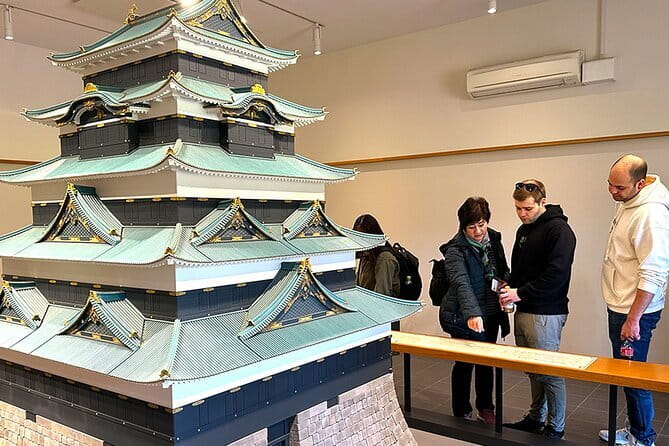
- Edo Castle survives as walls, gates, moats, and ruins, so your guide provides the missing picture of the huge fortress that once occupied central Tokyo.
- The group is limited to 10 people, which makes it easier to hear explanations and ask questions.
- The tour connects samurai rule with the modern Imperial Palace, giving you both Edo-period history and present-day context.
- Ninomaru Garden and the East Gardens add beauty and breathing room, with seasonal plants, special koi, and trees from across Japan.
- English is the only tour language, with no Japanese-language support.
- The walk is weather-dependent in comfort, so shoes, sun protection, and rain gear matter.
Why Edo Castle matters in modern Tokyo
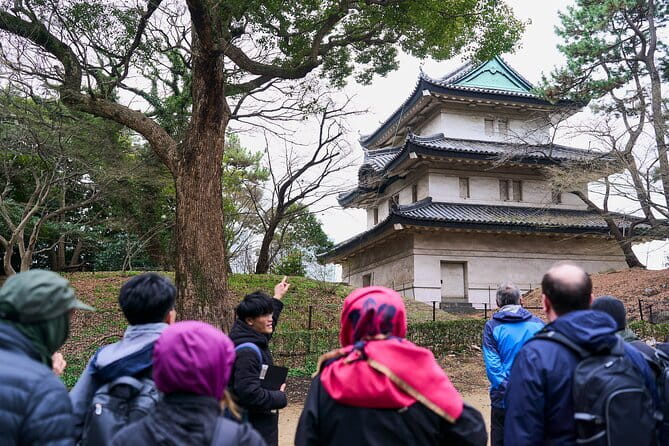
The Imperial Palace can seem like a quiet green island surrounded by office towers and wide roads. The calm is real, but the ground beneath your feet once held Edo Castle, the great power center of the Tokugawa shoguns.
This was not a small hilltop fort. Your guide explains how large the castle complex was and how its moats, gates, walls, and layered defenses made entry difficult. That physical design helps explain the long peace of the Tokugawa era, when Japan experienced roughly 260 years of shogunal rule.
I find this approach useful because Tokyo’s history can feel like a stack of disconnected dates. Here, the defenses explain the politics. The gardens explain court life. The ruins show how little remains of a structure that once controlled the country.
The tour also links the shogunate to Japan’s imperial system, described during the walk as a tradition extending back 2,600 years. That long timeline is a lot to absorb in two hours, but a good guide gives you a basic framework: imperial authority, samurai government, the shogun’s role, and the palace’s place in today’s Japan.
More Palace Walking Tours in Japan
- Tokyo: Imperial Palace and Shogun Historical Walking Tour
★ 5.0 · 2,251 reviews - Tokyo: Imperial Palace Japanese History Walking Tour
★ 4.9 · 987 reviews - Tokyo: Imperial Palace and Shogun Walking Tour
★ 4.9 · 935 reviews
Meeting at Wadakura Fountain Park
The meeting point is in front of Starbucks Coffee Kōkyo Gaien Wadakura Fountain Park Store at 3-1 Kōkyo Gaien, Chiyoda City. Look for a guide holding a Local Guide Stars sign.
This is a practical starting point because you meet near the palace grounds rather than wasting tour time on a long transfer. Still, give yourself enough time to find the correct Starbucks. The Japanese name is long, and the palace area has several open spaces where an arriving group could otherwise be easy to miss.
The guide conducts the tour in English only. English ability appears to vary slightly by guide, but the strongest praise goes to guides who explain clearly, answer questions, and keep the pace comfortable. Anju is repeatedly singled out for her warmth and clear storytelling. Fuma receives praise for his energy and amusing historical facts. Tomo, Yuka, Keiko, Ai, Koyo, Kosei, and others are also described as friendly, patient, and well prepared.
That range matters. A walking tour can be excellent or merely adequate depending on the person leading it. Here, the guide is the main reason to book rather than simply stroll through the free public grounds alone.
Sakurada Tatsumi Yagura and the first castle clues
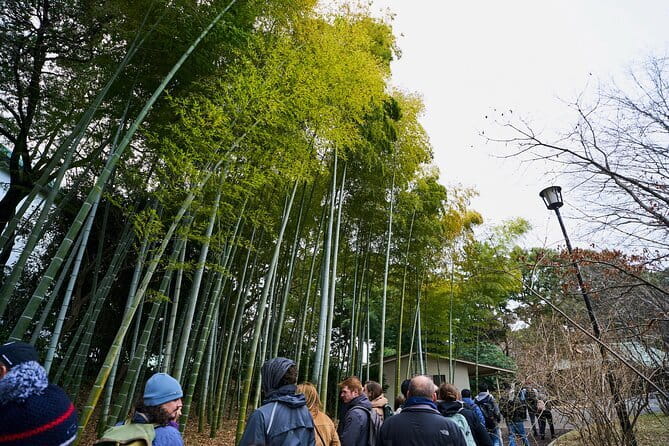
The first stop is Sakurada Tatsumi Yagura, a historic corner turret and a good introduction to the defensive thinking behind Edo Castle. You stop for about five minutes, hear the basic story, and begin to see the palace grounds as a fortress rather than just a park.
Do not expect a long visit inside the turret. This is a photo stop and a visual lesson. The value comes from noticing how thick walls, elevated positions, and water defenses worked together.
A guide can point out details you might otherwise pass without a second thought. One useful theme brought out during the tour is that the palace defenses were layered. Gates were not simply openings in a wall. They formed part of a system designed to slow, control, and expose anyone trying to enter.
This is a short stop, but it sets the tone. You are learning to read the site.
Ote-Mon Gate shows how power controlled entry
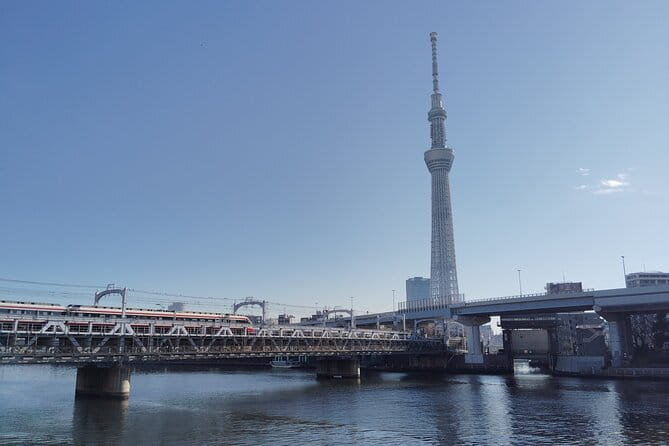
The tour spends about 15 minutes at Ote-Mon Gate, one of the most important surviving entrances. This is where the scale and security of the old castle become easier to understand.
Your guide explains the gate’s purpose, construction, and place in the wider defense system. The stop is longer than the first because there is more to see and more questions to answer. You may also get some of the best group photos here, with the massive stonework providing a strong backdrop.
I especially like this part for first-time visitors to Tokyo. Without context, an old gate can look like one more attractive Japanese structure. With context, it becomes evidence of a government built around access, rank, and protection.
The stone walls deserve a close look. Their careful construction and sheer scale remind you that Edo Castle was not just a residence. It was an administrative and military center.
Same place, a different set of state rooms:
- Kyoto: Nijo-jo Castle and Ninomaru Palace Guided Tour
★ 4.7 · 1,020 reviews - Tokyo Castle & Imperial PalaceーShogun Walking Tour
★ 5.0 · 724 reviews - Imperial Palace East Garden and Edo Castle Walking Tour in Tokyo
★ 5.0 · 510 reviews - Kyoto: Imperial Palace & Nijo Castle Guided Walking Tour
★ 4.7 · 453 reviews
The Imperial Palace connects old authority with present Japan
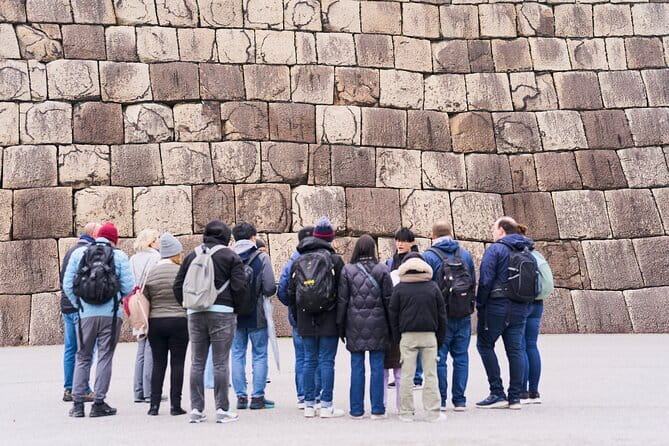
The Imperial Palace stop lasts about 20 minutes and brings the historical story into the present. The palace is the residence of Japan’s emperor, though the tour does not turn into a visit through private imperial rooms.
Instead, you learn how the site changed from the shogun’s castle to the imperial center. That transition is one of the most useful parts of the tour because it prevents a common mistake: treating samurai rule and imperial rule as the same thing.
Your guide also explains the endurance of Japan’s imperial system and how it fits into the country’s long political story. The subject can be complex, especially when several centuries and major changes are covered in one walk, but the live format lets you ask for clarification.
A miniature structure of the former palace is included among the sights. This is valuable because much of the original castle is gone. A model gives you a more concrete idea of what the former buildings looked like than bare foundations can provide.
Do keep your expectations realistic. The Imperial Palace is not an open museum in the usual sense, and the tour is mainly about exterior spaces, historical traces, and interpretation.
Ninomaru Garden brings a gentler side of the story
After fortifications and politics, Ninomaru Garden changes the mood. The visit lasts about 15 minutes and introduces the carefully planned garden side of palace life.
Here, the pleasure is slower. You can look at seasonal plantings, paths, water, and traditional design while your guide explains how the grounds relate to the people who lived and worked here. The garden is not merely decoration. It helps show how power was expressed through controlled beauty as well as walls and weapons.
Several people praise the relaxed pace of the tour, and this stop is where that pacing pays off. You are not pushed from one photo point to the next. There is time to look around and ask a question.
The garden’s appearance will change with the season, so do not expect exactly the same view year-round. That is part of its appeal, but it also means the experience depends somewhat on weather and timing.
Edo Castle ruins make absence part of the lesson

The Edo Castle ruins receive about 10 minutes. This may sound brief, but the stop works because it gives you the physical remains needed to imagine the vanished castle.
You see traces rather than a restored fortress. That can disappoint anyone hoping for a complete castle interior, but it also creates a useful challenge. Your guide fills in the blank spaces, explaining what once stood there and how the castle functioned.
The ruins are where the earlier stops come together. The turret, gates, moats, and garden are no longer separate sights. They become parts of one huge compound.
I would pay close attention here, even if the stonework looks plain at first. The whole point is scale and memory. Edo Castle shaped Tokyo, yet much of it has disappeared beneath the modern capital.
The East Gardens finish with koi and trees from across Japan
The final major stop is the Imperial Palace East Gardens, with about 20 minutes for sightseeing and explanation. This is likely to be the most relaxing part of the walk.
The gardens include special koi and a range of trees from different parts of Japan. These details give the visit a distinctly living quality. You are not only looking at old walls. You are also seeing how plants, water, and careful maintenance shape the palace grounds today.
Photography is encouraged, and this is a good place to use your camera. The combination of garden views, stonework, seasonal color, and water offers more variety than a standard monument visit.
The tour then returns to the Starbucks meeting point. Since the total time is two hours, the pace needs to stay steady. Guides are often praised for keeping the walk comfortable, and some have gone beyond the planned time when questions and conversation continued. Do not count on extra time, though. Plan your day as if the tour ends at the stated two-hour mark.
What the guides do especially well
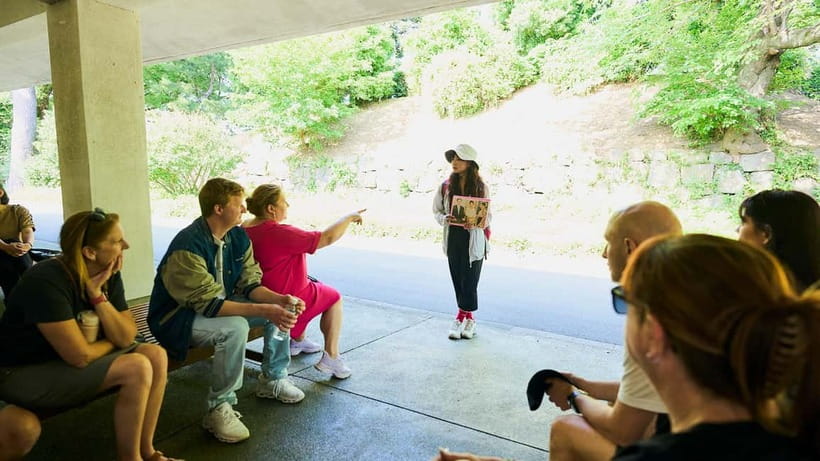
The strongest part of this experience is the human explanation. Many guides are young, and some are university students, but that should not be mistaken for a thin or casual presentation. Guests repeatedly praise their preparation, friendly manner, clear English, and willingness to answer questions.
Anju is especially good at connecting the Edo period with the present and keeping the group engaged. Fuma is praised for fun facts and passion. Kosei brings an interesting international comparison after living abroad, which can help put Japanese customs into a wider frame. Other guides, including Mai, Nana, Kazuki, Xin Yan, Koyo, Keiko, and Ai, are praised for their warmth, detail, and easy pace.
This variety means your exact experience will depend on who leads your departure. The consistent strength is the format: a small group, a local English-speaking guide, and enough time for conversation.
If you enjoy asking questions, this tour is a good fit. If you prefer to move silently and take photos without stopping for explanations, a self-guided visit may suit you better.
Is $23 a fair price?
At $23, this is not the cheapest possible way to see the Imperial Palace grounds. Some public areas can be visited without paying a tour fee, so you are not paying mainly for admission.
You are paying for interpretation, structure, and company. A guide explains why a gate matters, how the defenses worked, what changed from Edo Castle to the Imperial Palace, and how the gardens fit into the story. That can make an otherwise quiet walk much more meaningful.
The value is strongest for first-time visitors, history fans, and anyone who wants a clear introduction to samurai and imperial Japan without committing to a much longer museum visit. It is also good for solo visitors who want a small social group.
The price may feel high if you already know Edo-period history or plan to read up independently. Still, the small group and live questions make $23 a reasonable buy for most visitors.
Practical advice for a comfortable walk
A large portion of the experience takes place outside. Check the weather and dress accordingly. Comfortable walking shoes are more useful than stylish ones, and sun or rain protection can make a big difference.
There is a security check when entering the Imperial Palace grounds. Do not bring knives or alcohol.
Wheelchairs are available for use within the grounds, but some slopes and sections require walking or going down on foot. If mobility is a concern, ask for clarification before booking so you understand which parts may be difficult.
The group limit of 10 is a real advantage. You can hear the guide more easily than in a large bus group, and the walk feels more personal. Arrive at the Starbucks meeting point with time to spare, then look for the Local Guide Stars sign.
Free cancellation is available up to 24 hours in advance, and you can reserve now while paying later. Those policies are helpful if your Tokyo schedule is still shifting.
Who should book this Imperial Palace walk?
You should book it if you want the palace grounds to make sense, not just look pretty. It suits history lovers, fans of samurai stories, culture-focused visitors, and anyone curious about how Japan moved from shogunal rule to the modern imperial system.
It is also a smart early-Tokyo activity. The guide can give you a basic map of Japanese history that helps other sights make more sense later.
You may want to skip it if you need indoor shelter, dislike guided pacing, or expect to enter a fully restored castle. This is an outdoor history walk through surviving traces, gardens, and palace grounds.
Should you book it?
For $23, I would book this tour if you want context and conversation. The best guides make the site come alive, especially around Ote-Mon Gate, the castle ruins, and the East Gardens. The tour earns its price through explanation rather than exclusive access.
Go prepared for weather, security screening, and a castle that survives mostly in fragments. If that sounds appealing, this is a practical and well-priced way to meet Tokyo’s samurai past and see the Imperial Palace with sharper eyes.
FAQ
How long is the Tokyo Castle and Imperial Palace tour?
The tour lasts two hours and returns to the Starbucks Coffee Kōkyo Gaien Wadakura Fountain Park Store meeting point.
What language is the tour conducted in?
The tour is conducted in English only. Japanese-language support is not available.
How many people can join the tour?
The group is limited to 10 participants.
Where does the tour meet?
Meet in front of Starbucks Coffee Kōkyo Gaien Wadakura Fountain Park Store at 3-1 Kōkyo Gaien, Chiyoda City, Tokyo. The guide holds a Local Guide Stars sign.
What places are included?
The walk includes Sakurada Tatsumi Yagura, Ote-Mon Gate, the Imperial Palace grounds, Ninomaru Garden, Edo Castle ruins, and the Imperial Palace East Gardens.
Is there a security check?
Yes. There is a security check when entering the Imperial Palace grounds. Knives and alcohol are not permitted.
Is the tour suitable for wheelchair users?
Wheelchairs are available within the Imperial Palace grounds, but some slopes and areas require walking or going down on foot.
Can I cancel the booking?
You can cancel up to 24 hours in advance for a full refund. Reserve now and pay later is also available.
Just added around Japan
- Kyoto: Discover Every Bit of Kyoto Imperial Palace★ 4.4 · 21 reviews
- Kyoto: Nijo Castle and Kyoto Imperial Palace Guided Tour★ 4.6 · 98 reviews
- Imperial Palace Tour: Discover Samurai History with a Guide★ 5.0 · 12 reviews
- Full Tokyo: Meiji Shrine, Imperial Palace, Asakusa & Skytree★ 4.7 · 16 reviews
- Tokyo: Edo Castle & East Garden of the Imperial Palace Tour★ 4.7 · 112 reviews
- Tokyo Castle, Imperial Palace, Shogun & Garden Walking Tour★ 5.0 · 211 reviews
- Tokyo: Imperial Palace East Gardens Walking Tour★ 4.8 · 353 reviews
- Tokyo: Imperial Palace, Sensō-ji Temple, & Tokyo Tower Tour★ 4.5 · 339 reviews
Palace Walking Tours, compared.
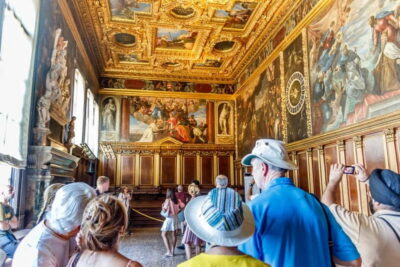
Doge’s Palace and St Mark’s Basilica Walking Tour
Read our review →

Walking Tour of Split and Diocletian’s Palace
Read our review →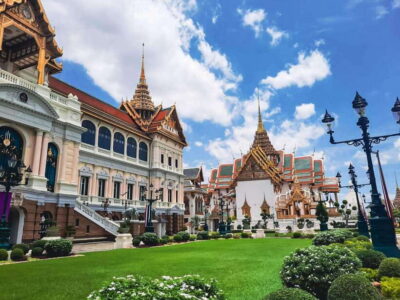
Grand Palace and Wat Phra Kaew Guided Walking Tour
Read our review →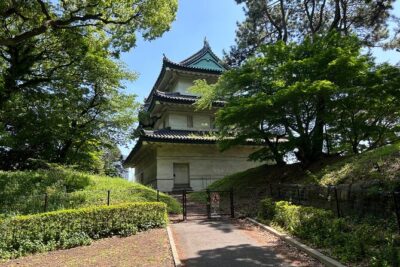
Imperial Palace and Shogun Historical Walking Tour
Read our review →
Madrid Old Town & Royal Palace Walking Tour Skip the Line Ticket
Read our review →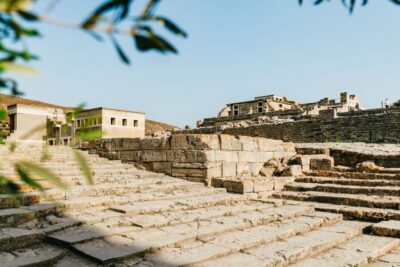
Knossos: Knossos Palace Skip-the-Line Guided Walking Tour
Read our review →
Browse the lists this tour appears in