
REVIEW · TOKYO
From the Imperial Palace to Odaiba : Time travel to Tokyo
Tokyo reveals itself in layers.
This private tour links Edo Castle’s gardens, Tokyo Station, the Tokyo International Forum, and Odaiba into one clear story about Japan’s capital. I like the unusual route and the way guide Matteo Leone connects architecture, history, and daily life instead of simply ticking off famous sights. I also like that the group is private, so you can ask questions and adjust the pace. The main drawback is the amount of walking and public transport, with about ¥1,500 per person not included.
At $91.21 per person, the value depends on your group size and how much help you want making sense of Tokyo. The tour runs about six to eight hours, and its final stop in Odaiba means you finish far from the starting point, though the end location can be adjusted for convenience.
Key points at a glance
- A history-first route: Begin where Edo Castle once shaped Tokyo, then follow the city’s growth toward modern architecture and reclaimed islands.
- Four very different stops: The East Gardens, Tokyo Station, the Tokyo International Forum, and Odaiba each show a separate side of the capital.
- Private guiding with Matteo Leone: You receive guide service for the full tour and can ask questions about Japanese history and culture as you go.
- Hotel pickup may be available: Pickup is offered for centrally located hotels, while the meeting point is Starbucks Coffee at Wadakura Fountain Park.
- Transport costs extra: Public transportation is estimated at ¥1,500 per person, and food, drinks, entrance fees, and insurance are not included.
- Best for active sightseers: Expect a full day on foot and by transit. The tour is not recommended for people with reduced mobility or stroller, walker, or pram needs.
Why this route gives Tokyo a clearer shape
Many Tokyo sightseeing plans jump between districts with little connection. This one follows a useful idea: the city grew from a shōgun stronghold into a modern capital, then pushed outward into Tokyo Bay.
That idea gives the day a natural order. You start with the Tokugawa era in the Imperial Palace’s East Gardens, move into the transport and commercial center around Tokyo Station, pause at a major piece of contemporary architecture, and finish on the artificial island of Odaiba.
I like this approach because it helps you read the city rather than simply photograph it. Tokyo can feel enormous at first. A guide who explains how power, transport, architecture, and land reclamation shaped the city can help you get your bearings fast.
The route also avoids the usual focus on Shibuya, Shinjuku, and Harajuku. Those districts are worth your time, but this experience offers something different. It is a good choice if you have already seen the major neon centers or want a first look at Tokyo that includes more context.
More Royal Palace Tours in Japan
- Tokyo: Imperial Palace and Shogun Historical Walking Tour
★ 5.0 · 2,251 reviews - Tokyo: Imperial Palace Japanese History Walking Tour
★ 4.9 · 987 reviews - Tokyo: Imperial Palace and Shogun Walking Tour
★ 4.9 · 935 reviews
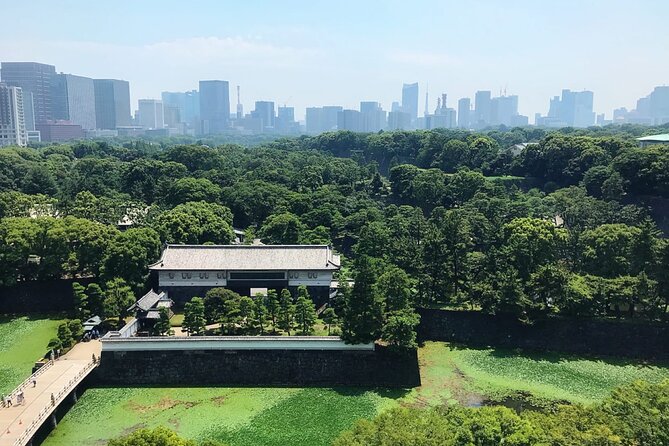
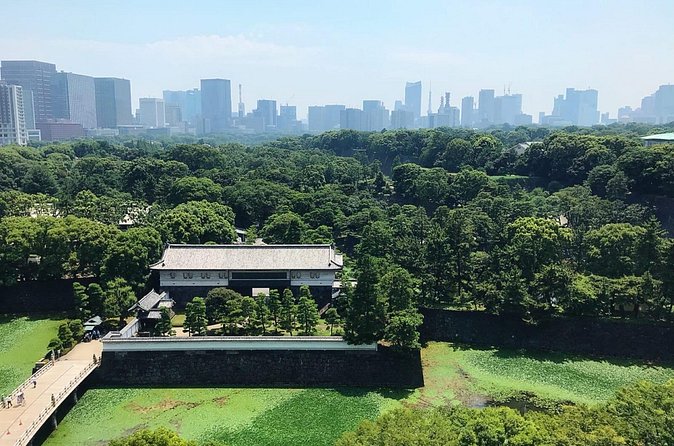
Starting at Edo Castle in the East Gardens
The tour begins at the Starbucks Coffee near the Wadakura Fountain Park in Kōkyogaien, close to the Imperial Palace. From there, you walk into the East Gardens, where Edo Castle once stood.
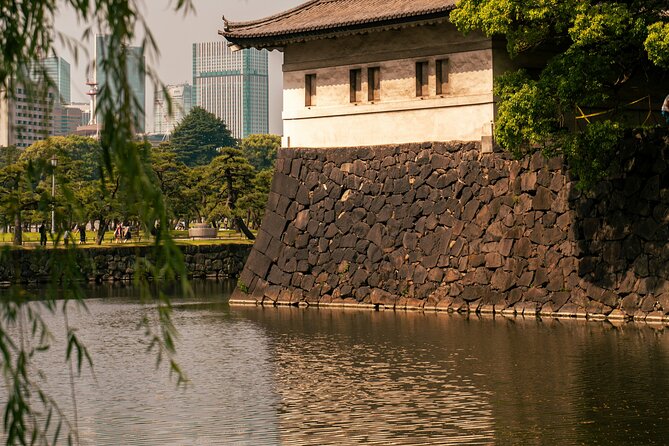
The grounds are free to enter, which keeps the cost of this first stop low. The important point is not a preserved palace interior. Instead, you see the remains and open spaces connected with the former castle, while Matteo explains how the shōgun’s seat helped turn Edo into the city now called Tokyo.
Plan on about 90 minutes here. That is enough time for a measured introduction rather than a rushed walk through a large park. The gardens also give you a calmer opening before the day moves into stations, steel, glass, and city traffic.
This is likely the strongest stop for anyone interested in Japanese history. You can ask questions about the transition from the old political center to the modern capital, and the setting gives those explanations a physical point of reference.
The limitation is simple: this is not a palace tour with a long list of indoor rooms. If you want elaborate interiors or a major museum collection, you would need to add those separately. The appeal is the outdoor setting and the story attached to the castle site.
Wear comfortable shoes. Even this first section involves walking, and the total route continues for several hours.
Reading Tokyo through its red-brick station
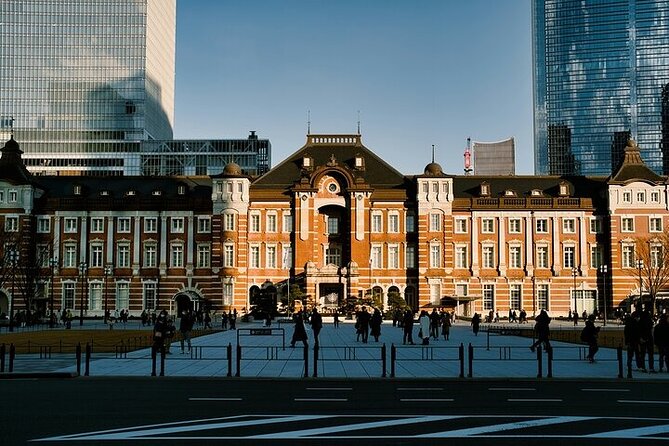
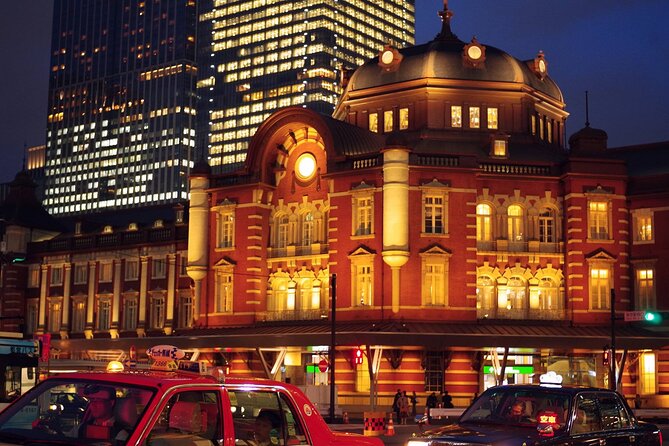
Next comes Tokyo Central Railway Station, usually called Tokyo Station. The stop lasts about an hour and focuses on the station’s red-brick European-style facade.
This is a smart choice for the tour’s central theme. Tokyo Station is not just a place to catch a train. It shows how Japan adopted and adapted foreign architectural ideas while building the transport network that keeps the capital moving.
The contrast with the East Gardens is immediate. At the first stop, you consider military power, old stonework, and the castle town of Edo. At Tokyo Station, the story becomes one of rail travel, national connection, business, and urban growth.
You can also expect a busy public setting. Unlike the gardens, this is an active station area, so the experience is more about observation and explanation than quiet contemplation. Keep your attention on the guide and your belongings in mind, especially during the transition between stops.
The tour includes assistance with buying transport tickets if needed, but your public transportation is extra. The stated estimate is ¥1,500 per person for the day. That cost matters when you compare the tour with a simple walking excursion, though the route covers a wide stretch of Tokyo and includes guidance while you move between areas.
A calm pause at the Tokyo International Forum
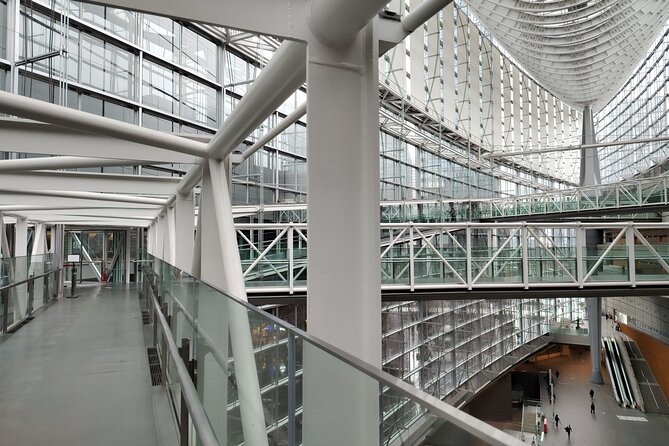
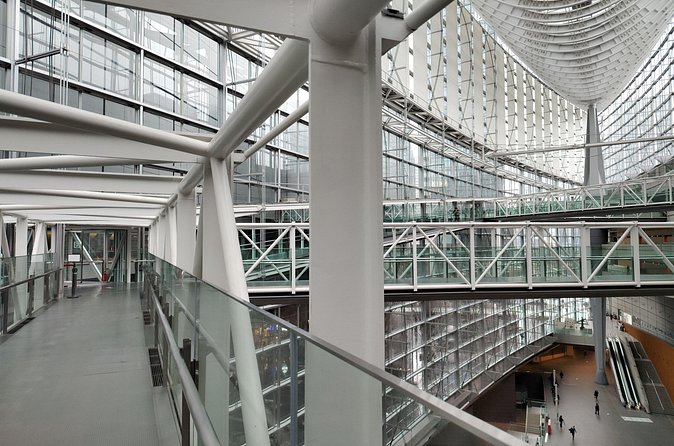
The Tokyo International Forum brings the tour into modern architecture. Its glass and steel structure has a distinctive shape, and the plan allows about an hour to stop, look around, and discuss what you are seeing.
I like this pause because it prevents the day from becoming a chain of historical explanations. Tokyo is also a city of bold public buildings, engineered spaces, and carefully planned movement. The forum gives you time to consider that side of the capital.
The venue is described as quiet and spacious, which should make it a welcome break after the station. It is not presented as a formal event visit, and no event or exhibition admission is included. Think of it as an architectural stop, not a ticketed attraction.
This section will suit you if you enjoy buildings and urban design. If your ideal sightseeing day is only temples, shrines, and old neighborhoods, the modern architecture may feel less exciting. The tour works best when you are open to seeing Tokyo as both an old city and a contemporary one.
It is also a useful place to ask Matteo about how Tokyo’s older and newer structures coexist. The guide’s role is especially valuable here because the building may mean more once you understand why it appears on this route.
More Royal Palace Tours in Tokyo:
- Imperial Palace East Garden and Edo Castle Walking Tour in Tokyo
★ 5.0 · 510 reviews - Tokyo: Imperial Palace East Gardens Walking Tour
★ 4.8 · 353 reviews - Tokyo: Imperial Palace, Sensō-ji Temple, & Tokyo Tower Tour
★ 4.5 · 339 reviews - Tokyo Castle, Imperial Palace, Shogun & Garden Walking Tour
★ 5.0 · 211 reviews
Ending beside Tokyo Bay in Odaiba
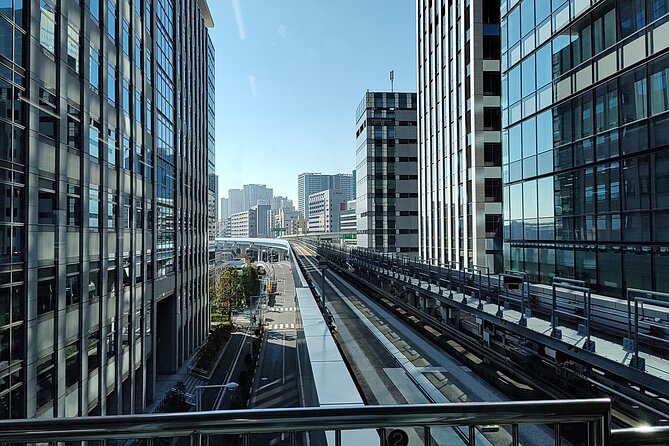
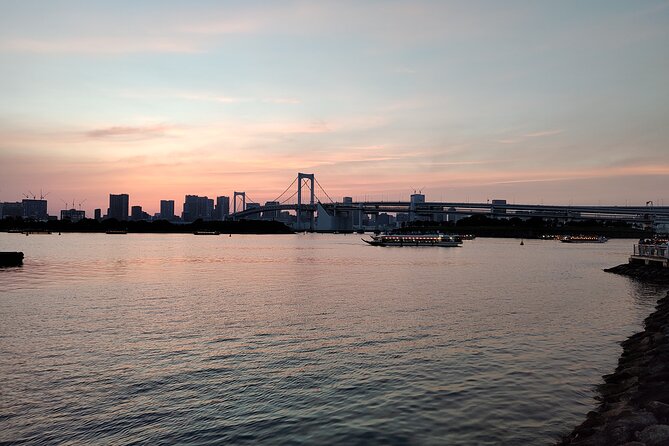
The final stop is Odaiba, an artificial island in Tokyo Bay. The tour allows about two hours here, making it the longest single stop after the opening gardens.
Odaiba changes the mood again. You leave the historic core and railway district for open spaces, bay views, and modern buildings. It can feel like a fresh chapter rather than another central Tokyo neighborhood.
The setting is suited to a relaxed finish. You can take in the broad views, walk through the open areas, and see a side of Tokyo that feels more spacious than the packed central districts. The point is not a single historic monument. Odaiba is about the city’s outward expansion and its relationship with the bay.
Because the tour ends here, check your return plan before booking. The official end point is Odaiba, but the arrival location can be agreed with Matteo during the tour based on your hotel, preferences, or convenience. That flexibility is useful, especially if you want to continue in the area or arrange an easier route back.
The two-hour allowance is generous enough for a proper look, but Odaiba’s appeal depends on your interests. If you like open views and modern city planning, it is a strong ending. If you prefer dense old streets, small shops, or traditional buildings, this may be the least compelling part of the day.
What Matteo Leone adds to the day
The guide is the main reason to choose this experience over following the same route alone. Matteo Leone provides service for the full tour, helps with transport and attraction tickets when needed, and can answer questions as the day develops.
The strongest praise centers on his preparation, friendliness, and ability to explain both historical and cultural subjects. He is also credited with pointing out details you might miss on your own. That matters in places such as the East Gardens and the Tokyo International Forum, where the setting does not always explain its importance by itself.
You should also expect a conversational day. The experience is private, so only your group participates. That makes it easier to ask basic questions, stop for clarification, or spend more time on a subject that interests you.
The private format can be especially helpful on a first visit. One person may want more history, another may care about architecture, and someone else may need help with the transport system. A private guide can respond to those different needs more easily than a large group tour.
Still, the exact balance depends on your guide and your questions. This is not a scripted attraction with guaranteed timed entry to several major museums. Its value comes from interpretation, local help, and the connections between the stops.
What the $91.21 price really covers
The listed price is $91.21 per person. It includes the guide for the tour and hotel pickup if your hotel is centrally located. It does not include public transportation, meals, drinks, personal spending, attraction entrance fees, insurance, restaurant bookings, or other hotel transfers unless those are specifically arranged.
The included stops themselves are largely free, which means you are paying mainly for the private guiding and the route design. That can be fair value if you want a full day of explanation and help moving through Tokyo without planning every detail yourself.
For a couple or small private group, the price may make more sense than paying separately for several short guided visits. You are also getting a route that connects places you might otherwise see as unrelated.
You should budget beyond the headline price. The transport estimate is ¥1,500 per person, and you will need to cover food and drinks during a six to eight-hour outing. Any optional attraction or event you add will cost extra.
There is no restaurant reservation included, so plan your meal expectations accordingly. The supplied information does not set out a fixed lunch stop. Ask Matteo about timing if a proper meal is important to you.
Walking, timing, and practical fit
The tour operates from 9:00 a.m. to 6:00 p.m. during the stated operating period, July 14, 2025, through December 9, 2026. The actual experience lasts approximately six to eight hours.
That range gives the guide some room to adapt the pace, but you should treat this as a full-day outing. The route covers several parts of Tokyo and uses public transportation. Moderate physical fitness is recommended.
The experience is not recommended for people with reduced mobility or mobility difficulties, including special needs involving prams, walkers, or strollers. The combination of walking, station movement, and changing urban surfaces is the key concern.
Pickup is offered from centrally located hotels. If you are not eligible for that arrangement, the meeting point is Starbucks Coffee at Kokyogaien Wadakura Fountain Park, 3-1 Kōkyogaien, Chiyoda City.
Confirmation is provided at booking, and the tour is near public transportation. The experience also offers free cancellation up to 24 hours before the start time. Canceling or changing it less than 24 hours ahead does not qualify for a refund.
Who should book this Tokyo experience
I would choose this tour if you want a private introduction to Tokyo that explains how the city changed over time. It suits first-time visitors who want orientation, as well as returning visitors who have already covered Shibuya, Shinjuku, and Harajuku.
It is also a good match for people who enjoy architecture, Japanese history, urban planning, and thoughtful conversation. Matteo’s role appears most valuable when you want more than a list of dates and photo stops.
I would hesitate if you need a low-walking day, want several indoor attractions, or prefer to build your own route around shopping and food. Odaiba can also feel too modern if traditional Tokyo is your main goal.
FAQ
How long does the tour last?
The experience lasts approximately six to eight hours.
Where does the tour begin?
It begins at Starbucks Coffee at Kokyo Gaien Wadakura Fountain Park, 3-1 Kōkyogaien, Chiyoda City, Tokyo 100-0002, Japan.
Where does the tour end?
The planned end point is Odaiba, Tokyo. The arrival location can be agreed with the guide during the tour based on your hotel, preferences, or convenience.
Is hotel pickup available?
Hotel pickup is available if your hotel is centrally located. Other hotel transfers are not included unless specifically agreed.
Are public transportation costs included?
No. Public transportation costs are listed at ¥1,500 per person and are paid separately.
Is this a private tour?
Yes. Only your group participates in the experience.
Is the tour suitable for people with reduced mobility?
No. It is not recommended for people with reduced mobility, mobility difficulties, or special needs involving prams, walkers, or strollers.
Should you book it?
Book this tour if you want Tokyo explained as a connected story, from the former Edo Castle grounds to the bayfront modernity of Odaiba. The private format, flexible finish, and guide Matteo Leone’s question-friendly approach are its best features.
Skip it if you want a short, attraction-heavy tour with little walking. For an active visitor who values context more than collecting famous sights, $91.21 is a reasonable price for a full day of private guidance, provided you also budget for transport and food.
Just added around Tokyo
- Tokyo Skytree, Asakusa, and Imperial Palace 1/2-Day Private Tour★ 5.0 · 3 reviews
- Imperial Palace Tour: Discover Samurai History with a Local Guide★ 5.0 · 20 reviews
- Tokyo Imperial Palace with Kagurazaka Alley Tour★ 5.0 · 54 reviews
- Cherry Blossom Highlights, Asakusa, Ueno, Imperial Palace Garden★ 4.5 · 4 reviews
- Tokyo’s Imperial Palace & Nihonbashi Tour★ 4.5 · 38 reviews
- Private Tour – History, Art and Nature at the Imperial Palace★ 5.0 · 24 reviews
- Tokyo Imperial Palace and Heritage of Edo Castle Private Tour★ 5.0 · 3 reviews
- Imperial Palace to Tokyo Station Historical Walking Tour★ 5.0 · 5 reviews
Royal Palace Tours, compared.
Royal Palace Expert Guided Tour with Skip-the-Line
Read our review →
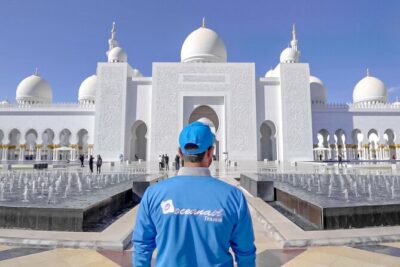
Dubai To Abu Dhabi: Grand Mosque, Royal Palace & Etihad Towers
Read our review →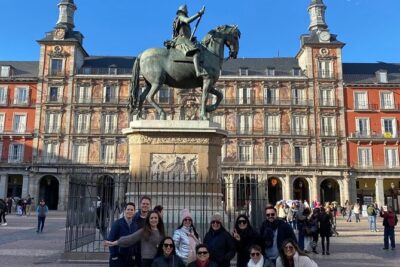
Madrid Essential: Historic Center, Plaza Mayor & Royal Palace
Read our review →
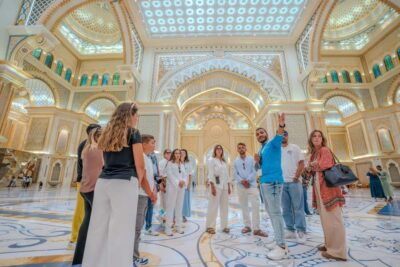
Abu Dhabi Day-Trip Grand Mosque, Royal Palace & Lunch
Read our review →
Browse the lists this tour appears in