
REVIEW · TOKYO
Tokyo Imperial Palace with Kagurazaka Alley Tour
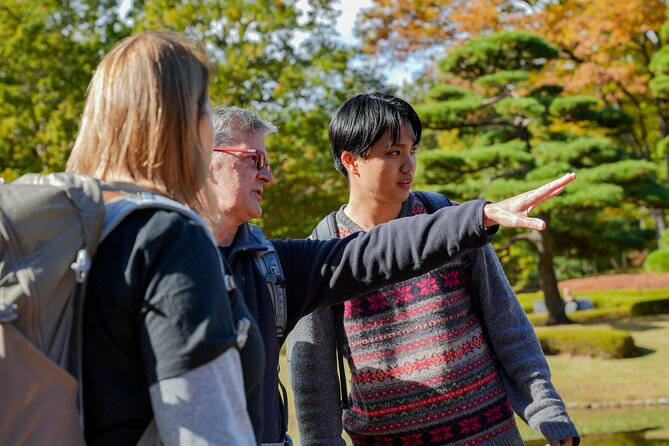
Tokyo rewards curious walkers. This small-group tour links Tokyo Station, the Imperial Palace, and Kagurazaka, giving you both grand city landmarks and quiet old alleys in about three and a half hours. I like the mix of major sights and local corners, especially the cobbled lanes of Kagurazaka and the historical details shared by guides such as Sho and Aya. The main drawback is that the palace itself is not open to the public, so you are seeing its grounds, gates, moats, and surrounding areas rather than royal rooms.
I also like the small maximum of eight people, which should make it easier to ask questions and keep pace with the guide. The tour costs $52.84 per person, a fair price if you want context and conversation rather than simply walking past the sights on your own. Keep in mind that the itinerary covers several areas, so the experience is a walking tour with a steady amount of movement, not a slow visit to one attraction.
Key points to know before booking
- Tokyo Station begins the story: You start near the Shin-Marunouchi Building, a useful meeting spot in the Marunouchi district.
- The Imperial Palace is an exterior visit: Expect about 55 minutes around the palace area, with no entry to the palace itself.
- Kagurazaka is the most distinctive stop: Geisha Alley, Hyogo Yokocho, and Kakurenbo Yokocho reveal a quieter side of Tokyo.
- The group is capped at eight people: That is a good setup for questions, photos, and a more personal pace.
- Guides add cultural detail: Past participants especially praised Sho and Aya for history, plants, architecture, and group photos.
- The tour ends in Kagurazaka: You finish near a FamilyMart on the main street, not back at Tokyo Station.
Why this route works in Tokyo
Many first visits to Tokyo focus on Shibuya, Shinjuku, Asakusa, and the neon-heavy parts of the city. Those places are worth seeing, but this route offers a calmer contrast. You begin in the polished Marunouchi district, move into the formal world of the Imperial Palace, and finish among small restaurants and narrow lanes in Kagurazaka.
That change of mood is the tour’s best feature. Tokyo Station and the palace show the city’s national scale. Kagurazaka brings you down to street level, where the past survives in alleys, small shops, traditional restaurants, and old entertainment districts.
I would choose this tour early in a Tokyo visit if you want help understanding how the city fits together. The guide provides the thread between the Edo period, the Tokugawa Shogunate, imperial Japan, Shinto practice, and modern Tokyo. You can walk the same route without a guide, but you will likely miss much of the meaning behind what you see.
The tour is scheduled for 9:00 a.m. and lasts about 3 hours and 30 minutes. That timing leaves much of the afternoon free. It also gives you a useful start to the day before Tokyo’s later crowds and nightlife take over.
More Royal Palace Tours in Japan
- Tokyo: Imperial Palace and Shogun Historical Walking Tour
★ 5.0 · 2,251 reviews - Tokyo: Imperial Palace Japanese History Walking Tour
★ 4.9 · 987 reviews - Tokyo: Imperial Palace and Shogun Walking Tour
★ 4.9 · 935 reviews
Starting at Tokyo Station and Marunouchi
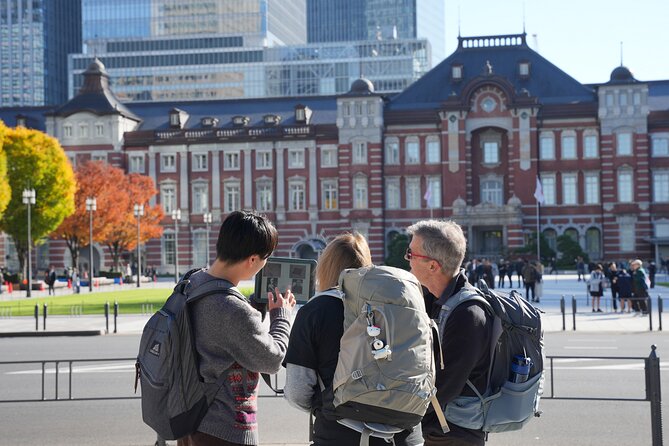
The meeting point is outside the Shin-Marunouchi Building at 1-chōme-5-1 Marunouchi, Chiyoda City. Tokyo Station is one of Japan’s major rail hubs, serving local and long-distance trains, including the Shinkansen. It is a practical place to begin, though its size can make navigation confusing.
Allow extra time to find the correct exit and building. Your mobile ticket should make check-in simple, but the meeting point is tied to the Shin-Marunouchi Building rather than a vague instruction to meet somewhere inside the station. That is helpful once you are there.
The Tokyo Station stop is listed as about five minutes, so do not expect a long architectural tour. Think of it as an orientation. The guide can point out the station’s role in Tokyo and place the Marunouchi district in context before the group continues toward the palace.
This short opening works well because it avoids spending the whole morning on a place you can revisit later. Tokyo Station is worth more time if you enjoy architecture, food halls, or railway travel, but this tour has a broader purpose.
The Imperial Palace: grand views without palace entry
The Imperial Palace is the heart of the tour, with about 55 minutes allocated to the area. It is the official residence of Japan’s emperor and sits in central Tokyo behind moats, gardens, parkland, and historic defensive features.
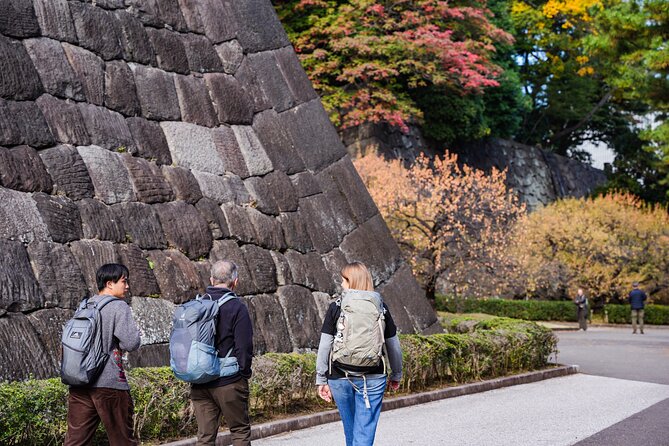
The important practical point is simple: the palace itself is not open to the public. Your visit focuses on the surrounding grounds and visible structures. That can disappoint anyone expecting an interior palace tour, but it is normal for this site and does not make the stop pointless.
The guide’s role matters here. The palace area can feel like a collection of broad paths, stone walls, gates, and open space unless someone explains what you are seeing. The tour connects the setting to the Edo period and the Tokugawa Shogunate, helping you understand why this central piece of Tokyo feels so formal and protected.
The gardens and castle remains also give the guide room to discuss architecture and nature. One particularly useful detail from the guiding experience is the explanation of decorative symbols, including the meaning of fish on rooftops. Small points like that can change the way you look at Japanese buildings for the rest of your trip.
If you visit during blossom season, the gardens may add a welcome burst of color. A guide named Sho was praised for maintaining enthusiasm on a chilly morning, while another guide was noted for explaining plants and linking Buddhist tradition with architecture. Those comments point to the tour’s strongest quality: the palace is not treated as a photo stop alone.
The limitation is time. Fifty-five minutes is enough for an introduction, but not for every garden path or historical feature. If the palace area becomes your favorite part of the morning, you may want to return independently.
A brief look at the Nippon Budokan
The route also includes the Nippon Budokan in Kitanomaru Park. The arena was built in 1964 for martial arts events during the Tokyo Olympics and now hosts many types of events, including concerts.
The stop adds useful modern context to the palace area. It shows how Tokyo has reused a historic central district for national ceremonies, sport, and popular culture. The Budokan is not presented as a separate long visit, and no admission time is specified, so expect a look at the setting rather than an event or interior tour.
This is the kind of stop that benefits from a guide’s explanation. On your own, you may see a large indoor arena and move on. With context, it becomes part of Tokyo’s postwar story and its continuing connection to martial arts.
More Royal Palace Tours in Tokyo:
- Imperial Palace East Garden and Edo Castle Walking Tour in Tokyo
★ 5.0 · 510 reviews - Tokyo: Imperial Palace East Gardens Walking Tour
★ 4.8 · 353 reviews - Tokyo: Imperial Palace, Sensō-ji Temple, & Tokyo Tower Tour
★ 4.5 · 339 reviews - Tokyo Castle, Imperial Palace, Shogun & Garden Walking Tour
★ 5.0 · 211 reviews
Tokyo Daijingu Shrine and everyday Shinto
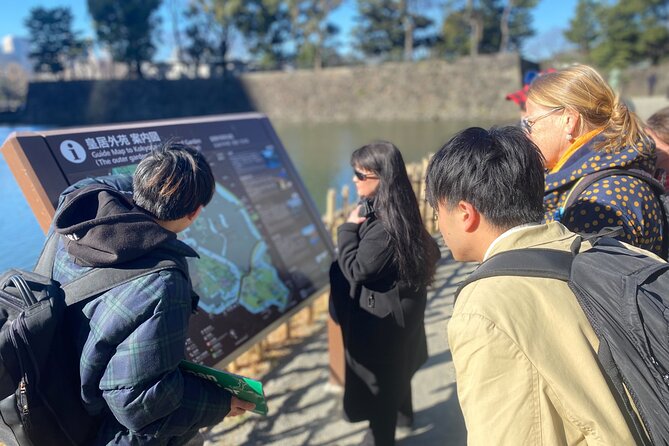
The tour then reaches Tokyo Daijingu Shrine for about 15 minutes. Founded in 1880, the shrine is dedicated to Amaterasu, the sun goddess, as well as spirits connected with Japan’s imperial family.
Fifteen minutes is short, but it gives you time to observe the shrine setting and ask basic questions about Shinto. This is useful if you are still learning the difference between shrine customs and Buddhist temple traditions. It also balances the imperial and castle material with a living religious site.
Do not expect a long ritual lesson or an extended private visit. The value here is the connection between place, belief, and Japanese public life. It is a compact stop that helps the route feel more varied.
Kagurazaka’s old lanes and new Tokyo
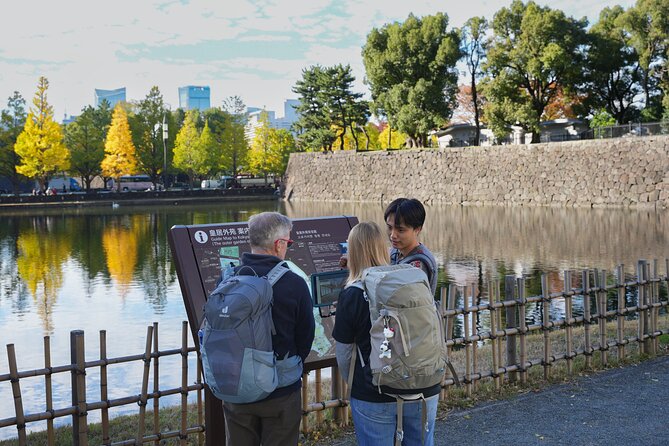
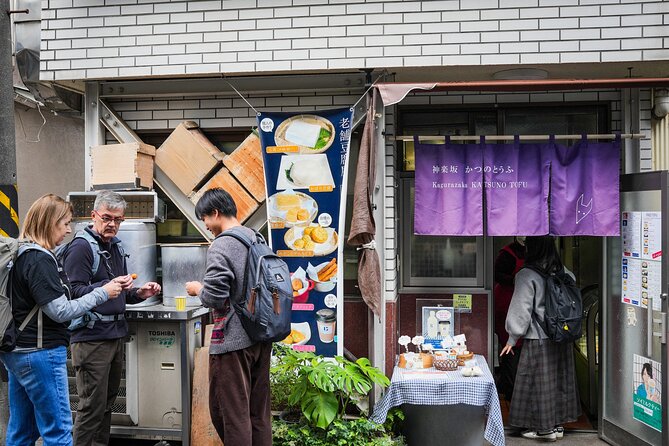
Kagurazaka is where the tour becomes most personal. Once linked with geisha culture, the district now combines traditional restaurants, stylish cafes, boutiques, and narrow lanes. Its old character has not been preserved as a museum display. People still use the area for meals, shopping, and evening drinks.
You spend about 30 minutes in Kagurazaka, with additional stops at several smaller alleys. The short listed time means you should not expect to inspect every restaurant or wander at your own speed. The guide is showing you the character of the district and pointing out places you can return to later.
Geisha Alley
Geisha Alley retains the feel of old Tokyo through narrow lanes, traditional teahouses, and a quiet sense of the district’s past. The name signals its connection with Kagurazaka’s former entertainment culture, but the area today is not a staged performance space.
I would pay attention to the scale here. The alley experience is about atmosphere, architecture, and the way small businesses fit into tight urban spaces. It is also a reminder that Tokyo’s older districts can survive beside office towers and major train lines.
Hyogo Yokocho
Hyogo Yokocho is another narrow lane, lined with small eateries and traditional shops. Its old-fashioned appearance makes it a good place to ask your guide how Tokyo neighborhoods changed during the Edo period and how some street patterns remain.
This is also where the tour’s practical value grows. A guide can point out restaurants or corners you might otherwise pass without noticing. Since the tour ends in Kagurazaka, you can return here for lunch or an evening meal after the walk.
Kakurenbo Yokocho
Kakurenbo Yokocho has small bars and eateries in a more intimate setting. The alley is suited to a later return, since the morning tour will not include a meal or drinks.
The route gives you a first look, not a full food tour. That distinction matters. If you want tastings, restaurant reservations, or a long stop at a bar, this is not the right product. If you want ideas for where to explore later, it works well.
The old Ushigome Mitsuke gate
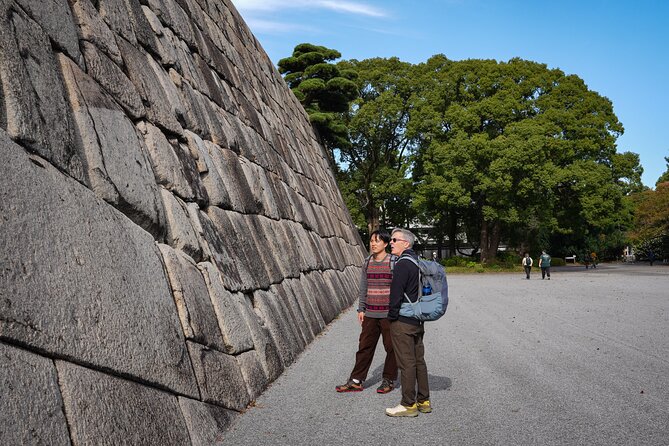
The route includes Ushigome Mitsuke, one of the gates of Edo Castle. The gate itself no longer exists, but the site marks part of the former defensive structure from the Edo period.
This is a fine example of how the tour handles history. You are not only shown surviving buildings. You are also shown places where the city’s earlier form has disappeared, leaving behind a name, location, or trace.
That kind of stop requires explanation. Without a guide, it may be difficult to understand why an absent gate matters. With the right context, you can picture how people moved through Edo Castle and how defensive planning shaped the city.
What the guides add
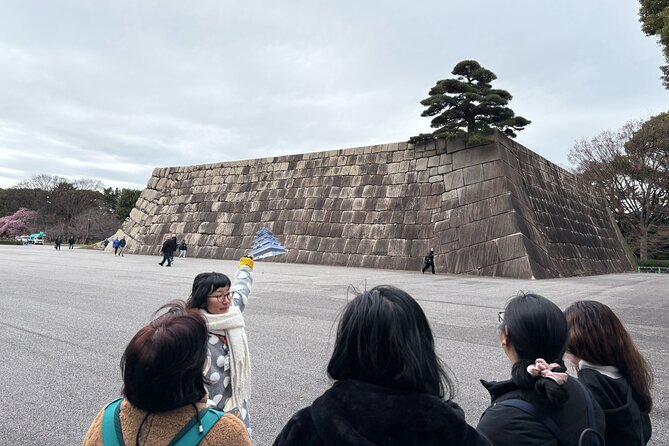
The strongest praise centers on the guides rather than on any single monument. Sho was described as energetic on a cold morning and strong on both palace details and Japanese history. Aya was praised for experience, clear guidance, and taking group photos.
One participant ended up with what was effectively a private tour and valued being able to ask many questions. That is a useful sign for anyone who likes discussion instead of a fixed speech. The maximum group size is eight, so the actual experience may feel especially personal when bookings are light.
The guiding style also appears to extend beyond dates and names. Plant details, roof symbols, Buddhist ideas, Shinto practice, and architecture all come into play. I would book this if you enjoy asking why a place looks the way it does.
Do remember that guide quality can vary by individual and by group. The strong feedback for Sho and Aya is encouraging, but a specific guide is not guaranteed in the information provided.
Is $52.84 good value?
At $52.84 per person, the tour is not the cheapest way to see the palace district. Most of the stops have no admission charge, and you could walk through parts of the route without paying a tour fee.
The value comes from the explanation, route planning, and access to smaller streets that can be hard to interpret alone. You are also paying for the convenience of linking several areas in one morning. A self-guided visit would require research and navigation, especially if you want to connect Marunouchi, the palace, Tokyo Daijingu, and Kagurazaka.
I see the price as fair for a first-time visitor who wants a short, guided introduction. It is less compelling if you already know Tokyo’s history, prefer wandering alone, or want long stops at each site.
The rating is 4.9 from 54 ratings, with 100 percent recommending it. That is a strong result, particularly because the praise focuses on specific guide qualities such as enthusiasm, history, plants, and photography rather than only on general enjoyment.
Who should book this walking tour?
I would recommend it to first-time visitors, history fans, architecture lovers, and anyone who wants a gentler alternative to Tokyo’s busiest entertainment districts. It also suits people who enjoy asking questions and discovering places to revisit later.
The tour is a good fit for a morning in Tokyo because it ends before the afternoon. You can continue eating and exploring in Kagurazaka, or return by rail to another part of the city.
I would think twice if you need a fully accessible, low-walking experience, since the tour covers several districts on foot and the available information does not provide detailed accessibility notes. I would also skip it if you expect to enter the Imperial Palace or spend a long time inside the Nippon Budokan.
The tour accepts a maximum of eight people, offers a mobile ticket, and is near public transportation. Most people can participate. Free cancellation is available up to 24 hours before the 9:00 a.m. start, but changes or cancellations inside that window are not accepted for a refund.
Should you book it?
Book this tour if you want context, not just landmarks. The palace grounds are impressive, but the real payoff is the route’s contrast: imperial walls and castle defenses in the morning, then intimate alleys and former geisha streets in Kagurazaka.
At $52.84, it is a sensible buy for a small group and a strong guide. Choose it early in your Tokyo stay, ask questions, note the restaurants and alleys you like, and plan to return to Kagurazaka after the tour. Skip it only if you prefer complete independence or need palace interior access.
FAQ
How long is the Tokyo Imperial Palace and Kagurazaka tour?
The tour lasts approximately 3 hours and 30 minutes.
What time does the tour start?
The tour starts at 9:00 a.m.
Where does the tour meet?
The meeting point is the Shin-Marunouchi Building at 1-chōme-5-1 Marunouchi, Chiyoda City, Tokyo 100-6590, Japan.
Where does the tour end?
The tour ends at 3-chōme-2-202 Kagurazaka, Shinjuku City, Tokyo 162-0825, near the main street and close to a FamilyMart convenience store.
Is the Imperial Palace open during this tour?
The palace itself is not open to the public. The tour visits the surrounding palace area, including gardens, moats, parkland, and historic features.
How many people can join the tour?
The tour has a maximum of eight participants.
Can I cancel for a refund?
Yes. You can cancel up to 24 hours before the experience starts for a full refund. Cancellations or changes made less than 24 hours before the start time are not accepted for a refund.
Just added around Tokyo
- From the Imperial Palace to Odaiba : Time travel to Tokyo★ 5.0 · 5 reviews
- Tokyo Skytree, Asakusa, and Imperial Palace 1/2-Day Private Tour★ 5.0 · 3 reviews
- Imperial Palace Tour: Discover Samurai History with a Local Guide★ 5.0 · 20 reviews
- Cherry Blossom Highlights, Asakusa, Ueno, Imperial Palace Garden★ 4.5 · 4 reviews
- Tokyo’s Imperial Palace & Nihonbashi Tour★ 4.5 · 38 reviews
- Private Tour – History, Art and Nature at the Imperial Palace★ 5.0 · 24 reviews
- Tokyo Imperial Palace and Heritage of Edo Castle Private Tour★ 5.0 · 3 reviews
- Imperial Palace to Tokyo Station Historical Walking Tour★ 5.0 · 5 reviews
Royal Palace Tours, compared.
Royal Palace Expert Guided Tour with Skip-the-Line
Read our review →
Dubai To Abu Dhabi: Grand Mosque, Royal Palace & Etihad Towers
Read our review →
Madrid Essential: Historic Center, Plaza Mayor & Royal Palace
Read our review →
Abu Dhabi Day-Trip Grand Mosque, Royal Palace & Lunch
Read our review →
Browse the lists this tour appears in