
REVIEW · TOKYO
Tokyo: Imperial Palace, the history of Japan (ENGLISH GUIDE)
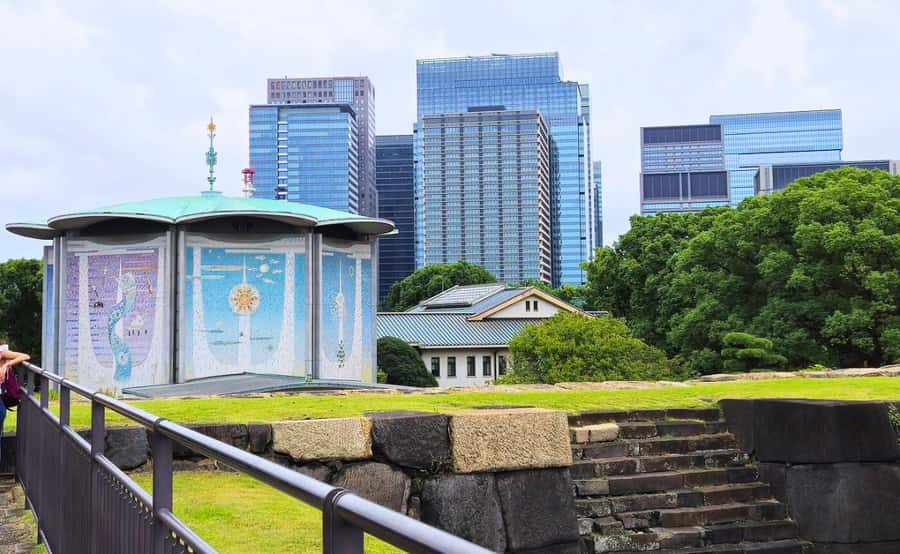
Japan’s past is hiding in plain sight. This $40 walking tour takes you through the eastern gardens of the former Edo Palace, where your guide connects castle ruins, imperial history, gardens, koi, and modern Japan in one compact visit. I like the focus on the old castle grounds, and I like that the tour includes small details such as regional trees and a special local breed of koi.
The main caution is the language information. The title describes an English guide, but the detailed tour information says the guide language is French, and the included guide is listed as French. Confirm the language before booking. Also, this tour does not enter the inner palace, so you are coming for the eastern grounds and the story of Edo Castle, not an interior palace visit.
Key points to know before you book
- Edo Castle ruins are the main attraction: You walk across the former base of Edo Castle, more than 350 years old, rather than visiting the modern inner palace.
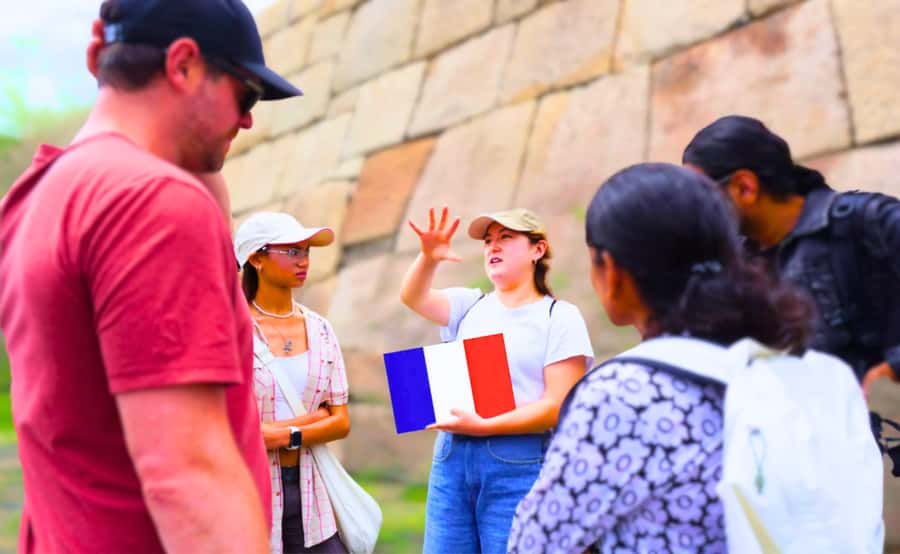
- The guide adds the meaning: Nicolas, a Franco-Japanese guide mentioned by name, has explained Japanese mythology, language, the imperial family, and the site’s past during this experience.
- The gardens give the tour breathing room: Oriental gardens, regional trees, water, and quiet paths make this more than a stop-by-stop history lecture.
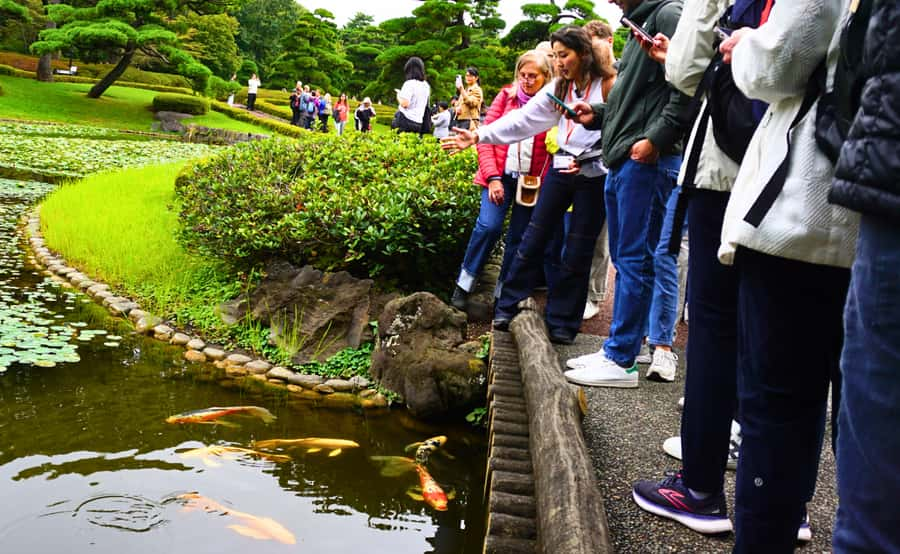
- Look for the unusual koi: The grounds are home to a special breed of koi said to be found only here.
- The group can be small: One group was made up of five people, allowing plenty of time for questions and conversation.
- Plan for outdoor conditions: The tour runs in good or bad weather, so suitable clothing matters.
Why the former Edo Palace matters
The eastern gardens occupy part of the old Edo Castle site, the seat of power during the period when Tokyo was known as Edo. You are not simply walking through a public garden. The walls, gates, foundations, and remaining structures help explain how the city became the political center of Japan.
That context is the main reason to choose a guided visit. Without help, a stone base or old wall can look like another attractive feature in a Japanese garden. With a guide, those pieces become part of the former castle complex, and you begin to see how defense, ceremony, residence, and government once fit together.
The experience also aims to explain how Japan developed into the country you see today. That is a broad promise, but it gives the walk a useful purpose. Instead of treating the Imperial Palace as a single famous sight, the guide uses the grounds to connect earlier power structures with modern Japan.
I particularly like this approach for a first visit to Tokyo. You get a physical place to anchor the story. Dates and names can blur, but a castle gate, a former barracks area, or the base of a vanished tower gives the past something solid.
More Royal Palace Tours in Japan
- Tokyo: Imperial Palace and Shogun Historical Walking Tour
★ 5.0 · 2,251 reviews - Tokyo: Imperial Palace Japanese History Walking Tour
★ 4.9 · 987 reviews - Tokyo: Imperial Palace and Shogun Walking Tour
★ 4.9 · 935 reviews
Meeting near Tokyo Station and Otemachi
The meeting point is at Wadakuramon Fountain Park, near a Starbucks and the fountain. You can reach the area with a five to ten minute walk from Tokyo Station or Otemachi Station. The guide is scheduled to wait near the fountain with a sign carrying the words SUNRISE ADVENTURE.
Give yourself enough time to find the correct fountain and Starbucks. Tokyo Station is large, and Otemachi has a maze of underground passages and office buildings. The instructions are fairly clear, but rushing through this part of central Tokyo is an unnecessary way to start.
Your guide will take the group toward Otemon, the large main gate of the Imperial Palace. This short approach helps place the gardens within the modern city. Offices, train lines, and broad avenues surround the palace grounds, yet the gate marks a quick change in mood.
Be punctual. If you have not arrived within ten minutes of the scheduled meeting time, the group may leave without you. That policy is especially important for a walking tour entering a large site, where catching up could be difficult.
Passing through Otemon
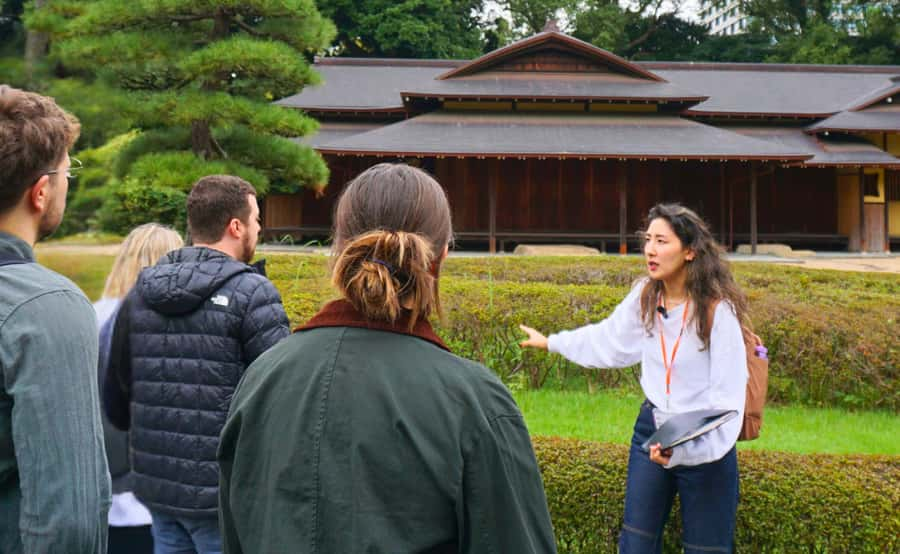
Otemon is the natural starting point for understanding the old castle. Gates were not just entrances. They controlled movement, helped protect the castle, and marked the difference between ordinary city space and the center of military and political power.
Your guide will lead you through the gate and into the grounds. The precise order of stops can vary, but the walk includes palace ruins, old military areas, gardens, trees from different prefectures, and the former castle base.
This is where a guide earns the $40 price. You could enter the public grounds on your own, but the value lies in knowing what to look at and why it matters. The tour turns a pleasant walk into a lesson in how the castle worked.
You should expect a walking experience rather than a formal museum visit. There is no promise of a long indoor presentation, climate control, or access to palace rooms. The reward is the combination of open air, old stonework, planted gardens, and conversation.
Finding the remains of Edo Castle

The main castle no longer exists, and the guide explains why. The supplied information does not give the reason in advance, which is a good choice for the tour itself. You can see the site with fresh eyes instead of arriving with every answer already supplied.
A small model of the former palace is also part of the experience. That miniature structure can help you understand the scale and arrangement of buildings that are no longer standing. For many people, the model will make the ruins easier to read.
You will also visit the former base of Edo Castle, dating back more than 350 years. The word base matters here. The experience is not selling a preserved royal palace interior. It is showing you the surviving traces of a much larger complex.
That distinction should shape your expectations. If you want grand rooms, formal palace furnishings, or an inside look at the imperial residence, this is not the right activity. If you enjoy reconstructing the past from walls, foundations, models, and a good explanation, the grounds offer plenty to work with.
More Royal Palace Tours in Tokyo:
- Imperial Palace East Garden and Edo Castle Walking Tour in Tokyo
★ 5.0 · 510 reviews - Tokyo: Imperial Palace East Gardens Walking Tour
★ 4.8 · 353 reviews - Tokyo: Imperial Palace, Sensō-ji Temple, & Tokyo Tower Tour
★ 4.5 · 339 reviews - Tokyo Castle, Imperial Palace, Shogun & Garden Walking Tour
★ 5.0 · 211 reviews
Barracks, trees, and the quieter side of the palace
The route includes former soldiers’ barracks, another detail that broadens the story beyond emperors and ceremonies. A castle required people to guard it, maintain it, and support the authority based there. The barracks help show the practical side of castle life.
The gardens add a different rhythm. You will stroll past oriental planting and trees from various prefectures of Japan. These trees give the grounds a national quality, showing how the palace site can represent more than Tokyo alone.
The garden setting also makes the tour easier to enjoy if you are not a specialist in Japanese history. You can listen for a while, then pause for photographs or take in the scenery. The quiet paths provide a useful break from Tokyo’s busy streets.
I would bring comfortable shoes and clothing suited to the forecast. The tour goes ahead in both good and bad weather, and much of the experience takes place outdoors. There is no reason to let rain or heat surprise you when the practical warning is clear.
The special koi and the best photo stops
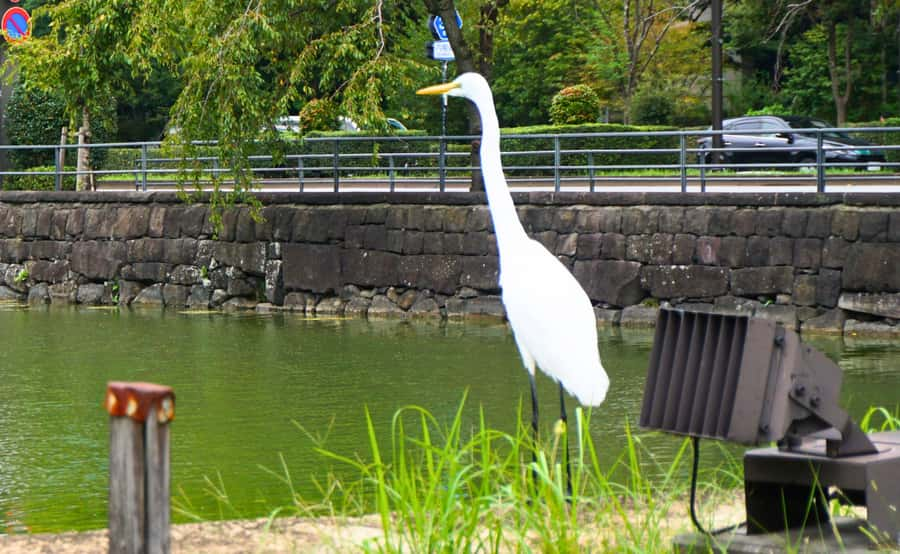
One of the tour’s more unusual details is a breed of koi that can only be found at the palace grounds. Koi may seem like a small feature beside castle ruins, but this is exactly the sort of detail that can make a guided walk memorable.
The fish also offer a welcome change of pace. After hearing about power, buildings, and military life, you can stop by the water and watch something living and colorful. Ask your guide about the koi and take your time rather than treating them as a quick photo stop.
Photography is another stated focus. The route includes attractive spots for pictures, with gardens, palace remains, gates, and water providing different settings. I would treat the photo advice as an extra benefit rather than the central reason to book. The site is scenic, but the real value comes from understanding what you are seeing.
Remember that drones are not allowed. Smoking, alcohol, drugs, littering, and skateboards are also prohibited. These rules are simple, and respecting them helps preserve the calm character of the grounds.
What the guide adds to the experience
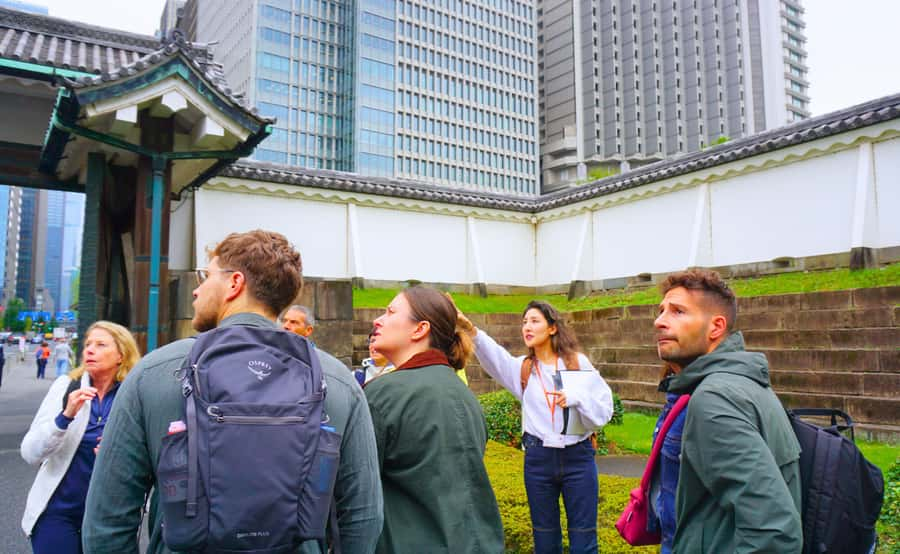
The strongest praise centers on the guide’s command of the subject and willingness to answer questions. Nicolas, identified as a Franco-Japanese guide, has discussed Japanese mythology, the Japanese language, the imperial family, and the history of the site.
That range is useful because the palace grounds touch many parts of Japanese culture. You can ask about a name, a symbol, a custom, or the reason a particular structure matters. The conversation can move beyond a memorized script.
A group of five created an especially friendly setting. A small group makes it easier to ask questions without holding up a large crowd. It also gives the guide more room to adjust the explanation to the interests of the people present.
Group size is not guaranteed, so I would not book on the assumption that every departure will have five people. Still, the experience appears designed around conversation rather than a large procession. That is a good match for anyone who likes to ask questions and connect the site to wider Japanese culture.
The language point needs careful attention. The experience title says English guide, but the supplied operational details say French, and the guide service is listed as French. Since language can determine whether the history comes alive or becomes background noise, contact Sunrise Adventure before paying if you need English specifically.
Is $40 a fair price?
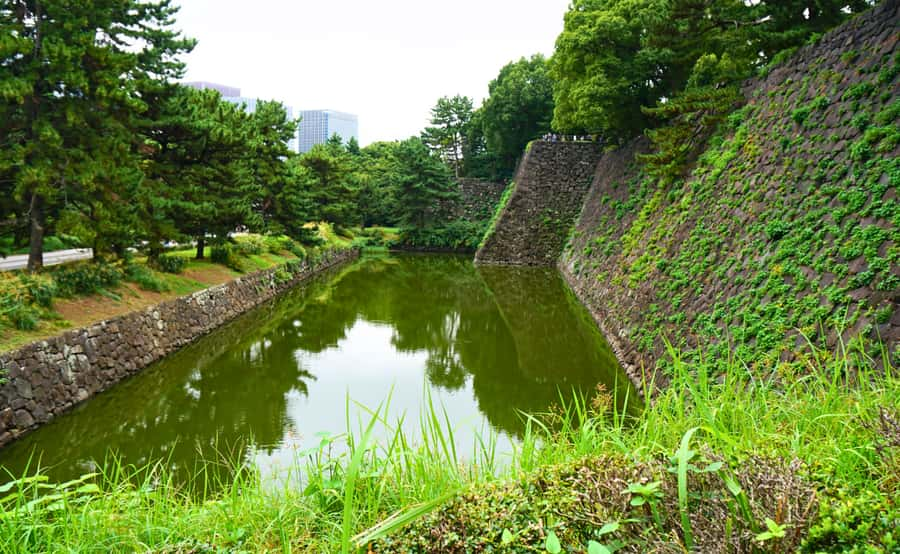
At $40 per person, the tour is priced as a guided cultural walk rather than a simple garden entry. The value depends on how much explanation you want.
If you already know Edo Castle, the imperial family, and Japanese history well, you may find the walk less essential. You can enjoy the gardens and ruins independently, assuming the grounds are open to you, without paying for interpretation.
For a first-time visitor, the price is easier to justify. The tour brings together the gate, former castle base, barracks, model, gardens, koi, and imperial history. You also get a chance to ask questions about Japan more broadly, which can make the rest of your trip easier to understand.
The price does not include entry to the inner palace because the tour does not go there. That is not a hidden extra, but you should keep it in mind. You are paying for the historical walking tour of the eastern gardens and former Edo Palace area.
The flexible booking terms are useful for a changing Tokyo schedule. You can reserve and pay later, and cancellation is available up to 24 hours before the start for a full refund. Keep the ten minute meeting rule in mind, since flexibility at booking does not mean flexibility after the tour begins.
Who should book this Imperial Palace walk?
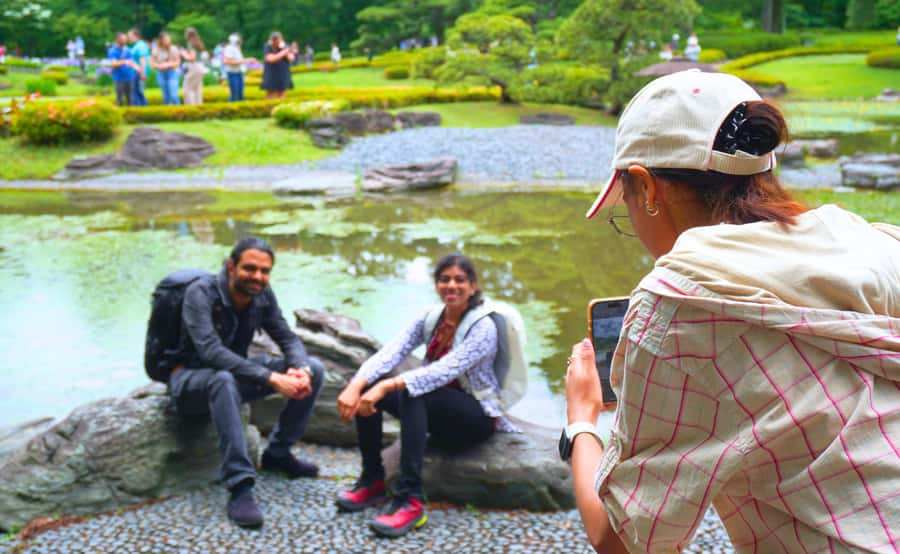
I would recommend it to you if you enjoy history but prefer seeing it in the open air. It suits first-time visitors who want a clear introduction to the transition from Edo Castle to the modern imperial center.
It is also a good choice if you like asking questions. The experience can cover mythology, language, the imperial family, and modern Japan, so it has more range than a narrow architectural tour.
Families and mixed-interest groups may find the format useful. The koi, gardens, model, and photo stops give people something to enjoy even if they are less interested in military or political history.
You may want to skip it if your main goal is entering the inner palace. You should also pause before booking if you need an English-language tour, because the supplied information conflicts on that point. Confirm directly with Sunrise Adventure.
Practical advice for a smoother visit
Wear shoes suitable for walking and dress for the forecast. The tour operates in rain or shine, and there is no indication that the route moves indoors during poor weather.
Arrive early at Wadakuramon Fountain Park. Tokyo Station and Otemachi are both nearby, but the surrounding streets and underground routes can take longer than expected. Look for the Starbucks and fountain, then find the guide holding the SUNRISE ADVENTURE sign.
Keep your camera ready, but do not let photography take over. The best part of the route is learning why the gate, ruins, trees, koi, and model matter.
Finally, ask questions. The experience seems strongest when the guide can respond to your interests. A question about the imperial family may lead to politics, a question about koi may lead to local culture, and a question about a ruined structure may explain why the castle disappeared.
Should you book it?
Book this tour if you want the Imperial Palace grounds explained rather than simply photographed. For $40, you get a focused walk through the former Edo Castle site, gardens, barracks, palace remains, a miniature model, and the unusual koi, with a guide who can connect the site to Japan’s wider story.
Before booking, verify the guide language. The title promises English, while the detailed information lists French, so this is the one point you should settle first. If the language works for you and you accept that the inner palace is not included, this is a thoughtful way to understand the place beneath Tokyo’s modern surface.
FAQ
Where does the tour begin?
It begins at Wadakuramon Fountain Park, near the Starbucks and fountain. The guide waits near the fountain with a SUNRISE ADVENTURE sign.
How do I reach the meeting point?
From Tokyo Station or Otemachi Station, the meeting point is about a five to ten minute walk away.
Does the tour enter the inner palace?
No. The tour visits the eastern gardens and the former Edo Palace area, but access to the inner palace is not included.
What language is the tour conducted in?
The detailed tour information lists French as the guide language. The experience title refers to an English guide, so confirm the language with Sunrise Adventure before booking.
What will I see during the walk?
You can expect the Otemon gate, palace ruins, a miniature structure of the former palace, former soldiers’ barracks, gardens, trees from different Japanese prefectures, special koi, and the former base of Edo Castle.
Is the tour held in bad weather?
Yes. The tour takes place in good or bad weather, so you should wear clothing suitable for the forecast.
What happens if I arrive late?
If you do not arrive within ten minutes of the meeting time, the tour may begin without you.
Can I cancel the booking?
You can cancel up to 24 hours in advance for a full refund. The reserve-and-pay-later option also lets you keep your plans flexible.
More Heritage Trips in Tokyo
- Private Tour – History, Art and Nature at the Imperial Palace
★ 5.0 · 24 reviews - Imperial Palace Tour: Discover Samurai History with a Local Guide
★ 5.0 · 20 reviews - Imperial Palace Tour: Discover Samurai History with a Guide
★ 5.0 · 12 reviews - Imperial Palace to Tokyo Station Historical Walking Tour
★ 5.0 · 5 reviews
Just added around Tokyo
- From the Imperial Palace to Odaiba : Time travel to Tokyo★ 5.0 · 5 reviews
- Tokyo Skytree, Asakusa, and Imperial Palace 1/2-Day Private Tour★ 5.0 · 3 reviews
- Tokyo Imperial Palace with Kagurazaka Alley Tour★ 5.0 · 54 reviews
- Imperial Palace Tour: Discover Samurai History with a Local Guide★ 5.0 · 20 reviews
- Tokyo’s Imperial Palace & Nihonbashi Tour★ 4.5 · 38 reviews
- Cherry Blossom Highlights, Asakusa, Ueno, Imperial Palace Garden★ 4.5 · 4 reviews
- Private Tour – History, Art and Nature at the Imperial Palace★ 5.0 · 24 reviews
- Tokyo Imperial Palace and Heritage of Edo Castle Private Tour★ 5.0 · 3 reviews
Royal Palace Tours, compared.


Royal Palace Expert Guided Tour with Skip-the-Line
Read our review →

Dubai To Abu Dhabi: Grand Mosque, Royal Palace & Etihad Towers
Read our review →
Madrid Essential: Historic Center, Plaza Mayor & Royal Palace
Read our review →

Abu Dhabi Day-Trip Grand Mosque, Royal Palace & Lunch
Read our review →
Browse the lists this tour appears in