
REVIEW · TOKYO
Imperial Palace run with fun trivia by an Imperial Palace geek
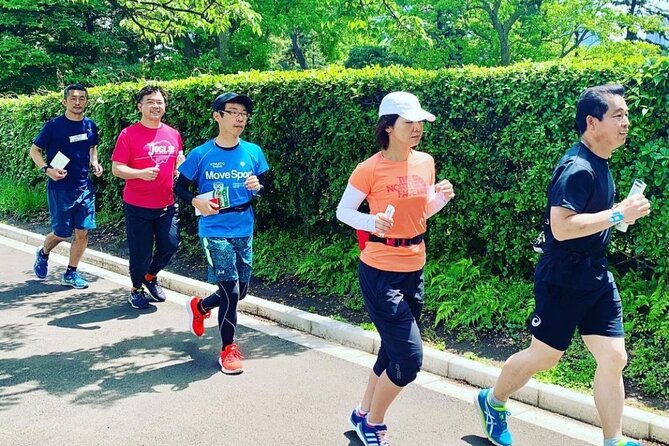
Start Tokyo with a run through history. This small-group Imperial Palace tour combines easy exercise, scenic city views, and curious details that you could easily miss on your own. I like the small maximum of eight people, which should make it easier to ask questions, and I like the flexible pace, with regular stops for walking, photos, and short talks. The main consideration is fitness: you need moderate physical fitness, and the route includes an uphill section near the end.
The tour begins at 8:30 a.m., a useful time for avoiding the heaviest crowds and midday heat. I also appreciate that running is not compulsory. You can walk when needed, making this a better choice for casual joggers than for anyone seeking a hard training session. Guide YUKO brings plenty of enthusiasm for the palace and running, though the tour is conducted in Japanese and simple English.
Key Details Before You Book
- The route mixes running and sightseeing: You will stop often for history, photos, trivia, and short walks.
- The group is limited to eight people: That gives you a better chance to ask about the palace, Edo Castle, Tokyo Station, or the Tokyo Marathon.
- The East Gardens are part of the route: You pass through Otemon Gate, undergo a baggage inspection, and see the former castle tower site.
- The start and finish are at JOGLIS: Paid lockers and showers cost ¥1,500, while running clothes, shoes, and towels can be rented for an additional fee.
- The morning start matters: The 8:30 a.m. departure offers a cooler, quieter setting than a later palace visit.
- The language is Japanese and simple English: This works best if you are comfortable with basic English explanations and some shared communication.
Why This Palace Run Works Better Than a Standard Sightseeing Walk
The Imperial Palace can be hard to understand at street level. You see stone walls, broad avenues, gates, and carefully maintained grounds, but the meaning of each place is not always obvious. This tour gives those sights a job to do. The gates connect to Edo Castle, the bridges point toward the present Imperial residence, and the running route links the palace with Tokyo Station and the Tokyo Marathon.
I like the way the experience uses exercise as the organizing idea. You are not standing in one spot for two and a half hours. You run a little, stop for a story, walk when needed, and start again. That rhythm should suit you if you want to see the palace without committing to a serious athletic session.
The guide fee is included in the $90 price. For a private guide, that would be expensive, but this is a small-group experience with a carefully planned route and several sightseeing stops. The value is strongest if you want both an introduction to the palace and a morning run. If you only want a basic jog around the Imperial Palace, you can do that without paying for a tour.
The tour has also earned a perfect rating from 12 reviews, with 100 percent recommending it. The strongest praise centers on the guide’s enthusiasm and the fact that the experience does not force you to run continuously. That detail matters. A nonstop run would leave little time for questions or palace stories.
More Royal Palace Tours in Japan
- Tokyo: Imperial Palace and Shogun Historical Walking Tour
★ 5.0 · 2,251 reviews - Tokyo: Imperial Palace Japanese History Walking Tour
★ 4.9 · 987 reviews - Tokyo: Imperial Palace and Shogun Walking Tour
★ 4.9 · 935 reviews
Meeting at JOGLIS in Kojimachi
The meeting point is JOGLIS, at FM Center Basement 1F in Kojimachi, Chiyoda City. The tour starts at 8:30 a.m. and returns to the same place, which keeps the morning simple. You do not need to arrange a separate pickup or figure out how to return to your hotel from a distant finish.
JOGLIS functions as the practical base for the tour. After meeting your guide, you receive a briefing on the Imperial Palace and the basic rules for running around it. If you want to use the changing lockers and showers, the cost is an extra ¥1,500 per person.
That fee is important to plan for. The tour price does not include the locker or shower. Running clothes, shoes, and towels are also available for rent at an additional charge, but the exact rental prices are not provided. If you already have suitable running gear, bringing your own should keep the extra cost down.
The briefing is also where the tour’s tone becomes clear. This is not simply a guide walking beside you while you jog. You can ask about the palace, the running route, and the places you pass. The small group gives the conversation more room than a large sightseeing tour.
Hanzo-mon Gate and Miyake-zaka
The run begins at Hanzo-mon, one of the entrances to the Imperial Palace. From here, you can see the National Theatre and the Diet Building as you descend Miyake-zaka, described as one of Tokyo’s most beautiful slopes.
This opening section gives you a good sense of the route’s character. You get city views, government buildings, and a change in elevation right away. It is sightseeing with movement rather than a formal lecture. If you are walking instead of running, this is still a pleasant beginning because the slope and surrounding buildings provide something to look at.
The tour does not provide entrance admission for Hanzo-mon, and no separate ticket is listed for the stop. The guide’s explanations are the main service here. I would keep your pace comfortable at the beginning, since the full route continues through several gates, gardens, and uphill sections.
Sakurada-mon Gate and Its Runner’s Details
Sakurada-mon is the largest gate on the route. Passing beneath it gives you a strong physical connection to Edo Castle, since this is not just a modern park entrance. The guide also discusses the Japanese belief in Mount Fuji and the idea of the Imperial Palace as a power spot.
That blend of history and local belief is one of the more unusual parts of the experience. You are not only learning dates and names. You are also hearing how the place can carry personal and cultural meaning.
The itinerary gives Sakurada-mon two stops. The first focuses on passing through the gate and its wider significance. The second centers on a secret connected with the clock in Sakurada-mon Square, where many runners gather. This should appeal to anyone who likes small details tied to ordinary city life.
The square is also a natural place to pause. You can listen, catch your breath, and ask questions before continuing. This is a good example of why the tour is not a race. The stops break the route into manageable sections.
More Royal Palace Tours in Tokyo:
- Imperial Palace East Garden and Edo Castle Walking Tour in Tokyo
★ 5.0 · 510 reviews - Tokyo: Imperial Palace East Gardens Walking Tour
★ 4.8 · 353 reviews - Tokyo: Imperial Palace, Sensō-ji Temple, & Tokyo Tower Tour
★ 4.5 · 339 reviews - Tokyo Castle, Imperial Palace, Shogun & Garden Walking Tour
★ 5.0 · 211 reviews
Nijubashi and the Palace’s Best-Known View
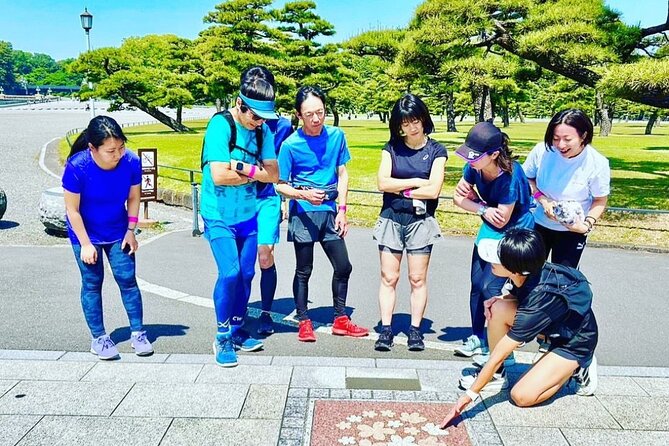
The tour continues to Nijubashi, or the Two-tiered Bridge. It is one of the Imperial Palace’s most recognizable views, and the schedule includes time for a commemorative photo.
The photo stop gives you a chance to slow down and take in the setting. You do not need to worry about missing the view while trying to maintain a running pace. If you care about taking home one clear palace image, this is one of the most useful pauses on the route.
The stop lasts about 10 minutes. That is enough time for a quick photo and explanation, but it is not a long visit. You should keep your expectations realistic: this is one part of a moving route, not an extended photography session.
Gyoko-dori, Tokyo Station, and Marathon Memories
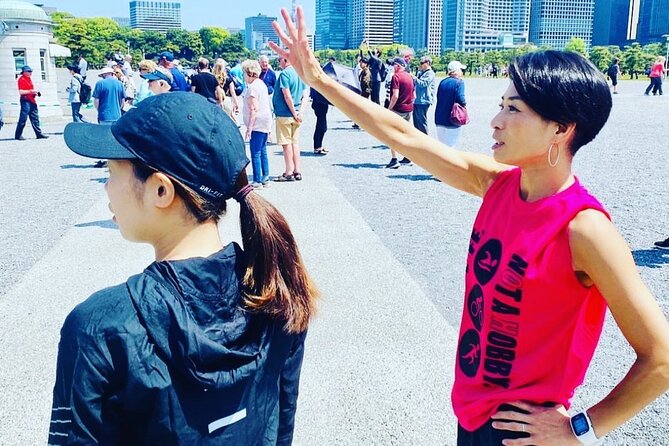
At Gyoko-dori Avenue, the tour connects the Imperial Palace with Tokyo Station and the Tokyo Marathon. This is the finish area for the marathon, and the guide discusses the secrets of Tokyo Station, the Emperor, and the race.
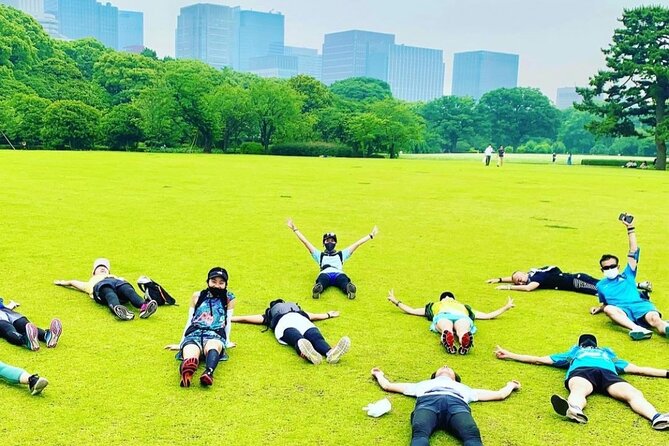
The tour also gives you a chance to pose for photos like a marathon finisher. It is a lighthearted break that fits the morning’s theme. You are seeing a formal avenue through the eyes of a runner, not just a sightseer.
I like this section because it connects several versions of Tokyo in one place. The palace represents imperial history, Tokyo Station represents the modern capital, and the marathon represents the city as a place of mass participation and movement. The guide’s trivia helps tie those ideas together.
If you are running at a casual pace, this is another point where you can stop without feeling that you are holding up a large group. With no more than eight people, the guide can keep the group together more easily.
Entering Otemon Gate and the East Gardens

The route then reaches Otemon Gate, the main gate of Edo Castle. Before entering the East Gardens, you go through a baggage inspection. You should allow time for this rather than expecting to run straight inside.
Otemon is one of the most meaningful points on the route because it links the present-day palace grounds with the former castle complex. Once inside, you are greeted by a shachihoko, a decorative roof ornament traditionally associated with castle architecture.
This section changes the feel of the tour. The broad city avenues give way to castle remains, garden paths, and old defensive features. You are still on an exercise outing, but the sightseeing becomes more focused here.
The East Gardens portion is also where practical pacing matters. You may need to walk during the inspection and at the historical stops. That is not a weakness in the tour. It gives you time to look closely instead of passing everything in a blur.
Fujimi-yagura and the Edo Castle Tower Site
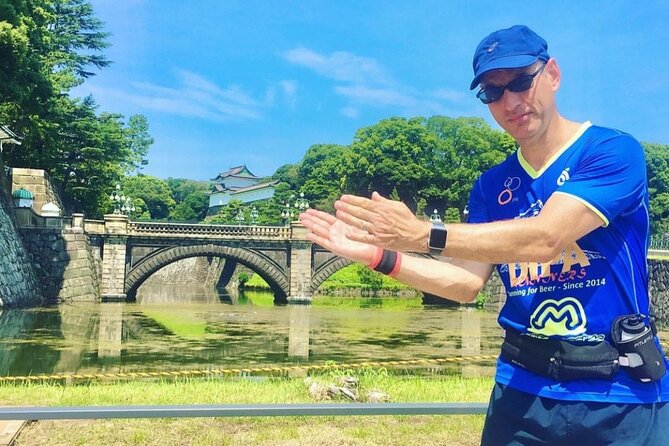
Fujimi-yagura is introduced as a small castle, a turret that served as a substitute for the lost Edo Castle keep. It gives you a view of the defensive architecture that remains after the main tower disappeared.
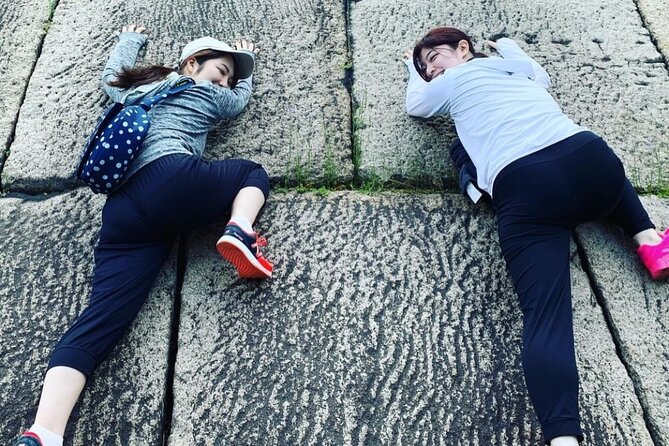
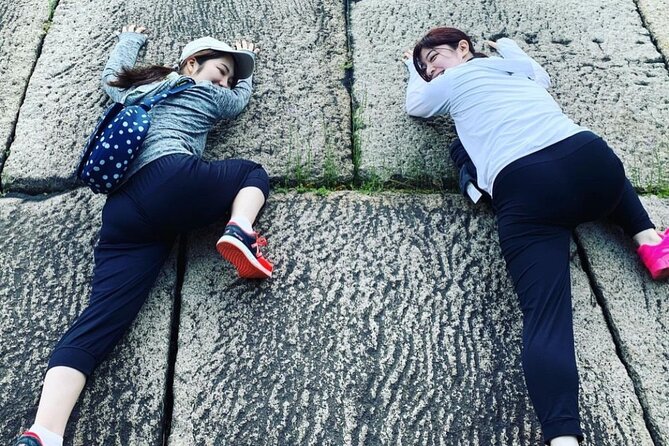
The next stop is Tenshudai, the remains of the main tower. You can see the large stone walls where the Edo Castle keep once stood. The original tower was destroyed by fire, but a reconstructed model helps you understand what it looked like.
For me, this is the historical heart of the route. Stone walls can be impressive, but they do not always explain themselves. The combination of the remains and the model makes the absent castle easier to picture.
The schedule allows about 20 minutes here, longer than at several other stops. That is sensible. You have more to see, and the guide has room to explain the site rather than giving you only a quick label.
If your main interest is imperial ceremony, you may prefer the Nijubashi area. If your interest is Edo Castle and old fortifications, the Fujimi-yagura and Tenshudai stops will likely be more rewarding.
Kitahanebashi Gate and the Uphill Finish
You leave the East Gardens through Kitahanebashi Gate, once a drawbridge of Edo Castle. From here, the route turns uphill.
This is the point to manage your energy. The tour has already included several stops, and the final section is not completely flat. You are told to run at your own pace, which is helpful for anyone who is not accustomed to running in Tokyo.
That flexibility makes the experience workable for casual runners. You do not need to match a fast group pace. You can slow down, walk, or simply enjoy the views while moving toward the finish.
The route then passes along Daikancho-dori, an area where daimyo residences were located during the Edo period. It is also known as a cherry blossom viewing spot. The stop is short, about five minutes, so expect a quick explanation rather than a long break.
Chidorigafuchi Park and the Return to JOGLIS
Chidorigafuchi Park is another well-known cherry blossom viewing area. Here the guide discusses the special place cherry trees hold in Japanese culture and shares more details about the trees.
The timing of cherry blossoms is not guaranteed, of course, so the appeal of this stop does not depend only on seeing flowers. The cultural explanation gives the park interest in other seasons as well.
From Chidorigafuchi, you return to JOGLIS. The activity ends at the original meeting point, and anyone who paid to use the facilities can take a shower.
The complete experience lasts about two hours and 30 minutes. That includes the briefing, running, walking, photos, inspections, and explanations. It is long enough to feel like a real morning outing, but short enough to leave the rest of your day open for Tokyo Station, museums, or another part of the city.
Language, Group Size, and Physical Demands
The tour is offered for Japanese and English speakers, but the communication style is Japanese and simple English. If you need detailed historical lectures in advanced English, this may not be the right fit. If you can follow basic English and enjoy asking short questions, the format should be more comfortable.
The maximum group size is eight people. That is one of the strongest practical features. A small group makes it easier to hear the guide, stop for photos, and ask about details such as the palace clock, the castle walls, or the Tokyo Marathon.
You should have a moderate level of physical fitness. The activity is not described as a nonstop or competitive run, and the guide allows walking, but you still spend much of the morning moving outdoors. The uphill portion after Kitahanebashi Gate is worth keeping in mind.
Guide YUKO’s style is clearly enthusiastic. Her passion for the Imperial Palace and running is part of the experience. That energy will suit you if you enjoy a guide who takes personal pleasure in the subject. It may feel less suitable if you prefer a quiet, strictly academic tour.
Is the $90 Price Fair?
At $90, the tour is not the cheapest way to see the Imperial Palace. You can walk around many public areas without a guide, and you can run the palace circuit independently. The fee makes more sense when you use the tour for three purposes at once: exercise, orientation, and guided sightseeing.
The small group helps justify the cost. So does the number of stops. You are not paying only for someone to point out one gate. The route includes Hanzo-mon, Sakurada-mon, Nijubashi, Gyoko-dori, Otemon, Fujimi-yagura, the castle tower remains, Kitahanebashi, Daikancho-dori, and Chidorigafuchi Park.
You should also budget for the ¥1,500 JOGLIS locker and shower if you need them. Rental clothing, shoes, and towels cost extra. The guide fee is included, but the added facility costs can change the final price.
For a first visit to Tokyo, I would call the tour good value if you genuinely want an active morning. For a serious runner who only wants distance, the price is harder to defend. For someone who wants to understand the palace while doing a gentle run, it offers a more personal experience than a basic self-guided circuit.
Cancellation and Weather Notes
You can cancel for a full refund up to 24 hours before the 8:30 a.m. start time. Cancellations or changes made within 24 hours are not refunded or accepted.
The experience depends on good weather. If poor weather forces cancellation, you are offered another date or a full refund. That policy is useful for an outdoor activity, but you should avoid placing the tour at the center of a tightly packed schedule if your Tokyo visit is short.
Who Should Book This Experience?
You should consider this tour if you want to:
- Combine sightseeing with light exercise
- See the Imperial Palace early in the day
- Learn about Edo Castle through its gates, walls, and towers
- Ask questions in a small group
- Take palace and marathon-themed photos
- Run at your own pace, with permission to walk
- Use JOGLIS as a base for changing and showering
You may want to skip it if you dislike running, need advanced English guiding, or want a long, quiet visit focused only on gardens and architecture. You can walk the route, but it remains an active outing with several hours of movement.
Should You Book the Imperial Palace Run?
Book it if you want your palace visit to feel active, social, and personal. The best features are the small group, the regular pauses, the mix of Japanese and simple English, and the guide’s clear enthusiasm for the Imperial Palace. YUKO’s approach seems especially well suited to first-time runners and anyone who wants more than a standard walking tour.
Think twice if you are measuring the $90 only against the cost of entering the palace grounds. The tour’s value comes from the guide, the route planning, the trivia, and the chance to combine exercise with sightseeing. Add the ¥1,500 locker and shower fee if you need JOGLIS facilities.
For a casual runner, an active couple, or a visitor who wants a different way to meet Tokyo’s imperial center, I would book it. Keep your pace easy, wear suitable shoes, and save enough energy for the uphill return.
FAQ
What time does the tour start?
The tour starts at 8:30 a.m. from JOGLIS in Kojimachi, Tokyo.
Where does the tour begin and end?
It begins and ends at JOGLIS, located at FM Center Basement 1F, 1 Chome 7 Kojimachi, Chiyoda City, Tokyo 102-0083.
Is running required?
No. You can walk if running is not your preference, and the route includes regular stops and walking sections.
How large is the group?
The tour has a maximum of eight travelers.
Are lockers and showers included?
No. Locker and shower use at JOGLIS costs ¥1,500 per person. Running clothes, shoes, and towels are also available to rent for an additional fee.
What happens if the weather is poor?
The experience may be canceled because it requires good weather. You will be offered a different date or a full refund.
Just added around Tokyo
- From the Imperial Palace to Odaiba : Time travel to Tokyo★ 5.0 · 5 reviews
- Tokyo Skytree, Asakusa, and Imperial Palace 1/2-Day Private Tour★ 5.0 · 3 reviews
- Tokyo Imperial Palace with Kagurazaka Alley Tour★ 5.0 · 54 reviews
- Imperial Palace Tour: Discover Samurai History with a Local Guide★ 5.0 · 20 reviews
- Tokyo’s Imperial Palace & Nihonbashi Tour★ 4.5 · 38 reviews
- Cherry Blossom Highlights, Asakusa, Ueno, Imperial Palace Garden★ 4.5 · 4 reviews
- Private Tour – History, Art and Nature at the Imperial Palace★ 5.0 · 24 reviews
- Tokyo Imperial Palace and Heritage of Edo Castle Private Tour★ 5.0 · 3 reviews
Royal Palace Tours, compared.
Royal Palace Expert Guided Tour with Skip-the-Line
Read our review →
Dubai To Abu Dhabi: Grand Mosque, Royal Palace & Etihad Towers
Read our review →
Madrid Essential: Historic Center, Plaza Mayor & Royal Palace
Read our review →
Abu Dhabi Day-Trip Grand Mosque, Royal Palace & Lunch
Read our review →
Browse the lists this tour appears in