
REVIEW · JAPAN
Nijo Castle and Imperial Palace Visit with Guide
History gets personal in Kyoto. This 2.5-hour guided tour links Nijo Castle with Kyoto Imperial Palace, giving you the story behind the buildings instead of leaving you to puzzle over signs and silent rooms. I like the choice of morning or afternoon departure, and I like that admission and public transport are included. The main tradeoff is pace: one hour at each major site is useful, but hardly leisurely.
You meet at Nijo Castle’s large white main gate and finish in front of the Imperial Palace. That one-way route saves backtracking, but you need to plan your next move from Kyoto Gyoen National Garden. Also, bring comfortable shoes. The grounds and palace areas require plenty of walking, and one hour can pass quickly.
Key points before you book
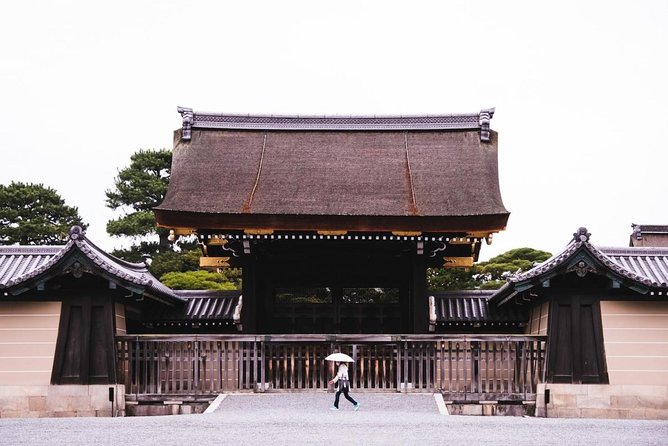
- Two major imperial-era sites in one outing: See Nijo Castle, built for the shogun, then Kyoto Imperial Palace, tied to Japan’s emperors.
- A guide who adds context: Guides such as Mia, Mie, Choko, and Mike have been praised for clear English, humor, visual aids, and answers to detailed questions.
- Entry and transit are covered: Your ticket includes admission to both sites and the public transportation used between them.
- Morning or afternoon timing: You can fit the tour around other Kyoto plans, although the exact start time depends on the option you select.
- A small-group or private feel: The tour is described as private for your party, with a small-group format under eight people in the itinerary. The published maximum is 11.
- A walk-heavy two and a half hours: Expect historic interiors, outdoor grounds, a transfer by public transport, and more walking at the palace.
Why Nijo Castle is the right place to begin
Nijo Castle gives you the clearest introduction to the political world that shaped early modern Japan. The castle is linked to the shogunate, the military government that controlled Japan during the Edo period. Your guide uses the buildings and grounds to explain how power worked, rather than treating the castle as a collection of pretty rooms.
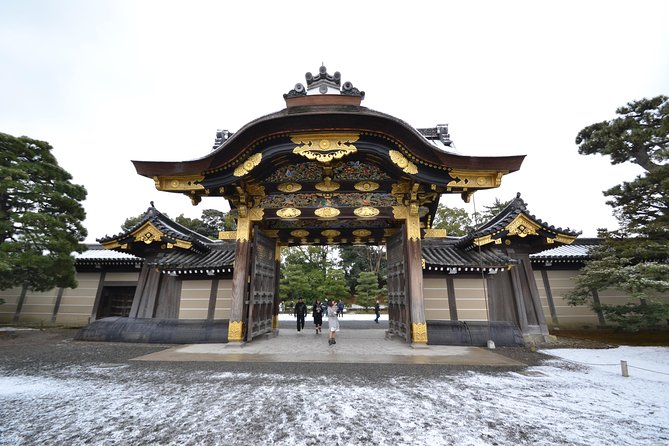
The meeting point is straightforward: the front of the huge white main gate at Nijo Castle, 541 Nijojocho in Nakagyo Ward. That matters in a city where large sites can have several entrances. You are not being asked to hunt through a hotel lobby or find a café hidden down a side street.
The guided portion at Nijo Castle lasts about one hour, with admission included. You can expect the focus to be on the castle’s historic buildings, the shogun’s meetings, and the symbols built into the site. Guide Mia, in particular, has been praised for explaining where important meetings took place and for making the shogun era easier to understand.
One of the strongest reasons to choose a guide is the interior of Nijo Castle. You are not simply looking at the outside walls and gardens. The tour includes the castle interior, where small details and room layouts make more sense when someone explains their purpose and political meaning.
Mia has also used visual aids to clarify complicated parts of Japanese history. That can be a real help if this is your first serious look at the Tokugawa shogunate. Instead of trying to remember a long list of names, you get a clearer connection between the buildings, the rulers, and the transfer of power.
The castle visit is not only a lesson. Several guides are described as warm, funny, and easy to talk with. That balance matters here. A long explanation of court ranks or political succession can become heavy going, but a guide who answers questions and adds a little humor can keep the hour moving.
More Royal Palace Tours in Japan
- Tokyo: Imperial Palace and Shogun Historical Walking Tour
★ 5.0 · 2,251 reviews - Tokyo: Imperial Palace Japanese History Walking Tour
★ 4.9 · 987 reviews - Tokyo: Imperial Palace and Shogun Walking Tour
★ 4.9 · 935 reviews
What you learn about the shogun and the emperor
The real value of this experience is the link between its two stops. Nijo Castle helps explain the shogun’s authority. Kyoto Imperial Palace then gives you a different view of Japan’s ruling tradition and the imperial family.
The tour places these sites in the larger transition from the Tokugawa shogunate to the restoration of imperial power under Emperor Meiji. This is one of the most useful themes in the outing. You are not seeing two unrelated monuments. You are following a change in how Japan was governed.
Several guides have been praised for explaining the transfer of power and the symbolism found at both locations. That makes the tour a good choice if you have watched historical dramas set in the shogun period and want to separate drama from the actual political setting.
You should also feel free to ask questions. Guides have answered everything from the role of the shogun to the imperial family and its descendants. One guide brought visual material to make the past easier to follow. Another added cultural and political background beyond the buildings themselves.
English ability appears to be a strong point. Mia and Mie are described as speaking excellent or very good English, while Choko is praised for answering questions clearly. Names appear in several forms, so your assigned guide may not be one of these individuals. Still, the repeated pattern is clear: the guide is the heart of the experience.
The public transport transfer between the sites
After about an hour at Nijo Castle, you travel with the guide to Kyoto Imperial Palace by public transportation. The fare is included, so you do not need to keep small change ready or work out the route alone.
This transfer is more than a practical link. It gives your guide a natural moment to connect the castle’s shogun-centered story with the imperial world you are about to see. It also lets you visit two important places without returning to your starting point.
The transfer does mean the tour is not a private vehicle outing. You will use ordinary public transport, and the group must move together. That is usually a sensible choice in Kyoto, where public transportation is part of daily life, but it adds a little structure to the schedule.
The tour ends at Kyoto Gyoen National Garden, in front of the Imperial Palace. You do not return to Nijo Castle, and hotel pickup and drop-off are not included. Plan your day with the finish in mind, especially if you have a timed reservation elsewhere.
Kyoto Imperial Palace and its open grounds
The second guided visit lasts about one hour and includes admission. The palace is set within Kyoto Gyoen National Garden, so the experience includes more than a single building. You will spend time around broad grounds and historic structures, with the guide explaining the imperial setting and its place in Japanese history.
The palace visit is especially useful after Nijo Castle because the contrast is easy to follow. At the first site, the guide explains the shogun’s political world. At the second, you encounter the imperial tradition that later returned to the center of national power.
The grounds are beautiful, but they also add walking. The one-hour schedule is enough for a guided introduction, not a slow wander through every corner. If you like taking many photographs or stopping often, you may feel pressed for time.
There is also a practical risk to keep in mind. Imperial Palace access can be affected by an event. In one case, the palace was closed because of a scheduled event, while the Nijo Castle portion continued. If the palace is unavailable, the operator may not be able to deliver the full plan, so it is wise to keep your expectations flexible.
Same place, a different set of state rooms:
- Tokyo Castle & Imperial PalaceーShogun Walking Tour
★ 4.7 · 1,068 reviews - Kyoto: Nijo-jo Castle and Ninomaru Palace Guided Tour
★ 4.7 · 1,020 reviews - Tokyo Castle & Imperial PalaceーShogun Walking Tour
★ 5.0 · 724 reviews - Imperial Palace East Garden and Edo Castle Walking Tour in Tokyo
★ 5.0 · 510 reviews
How the guide changes the experience
You can visit both places independently, but the guide supplies the missing connections. Japanese castles and palace grounds often have signs with basic information, yet the political relationships, ceremonies, and symbols can be hard to grasp on your own.
A strong guide does three jobs here:
- Explains the setting: You learn what each building was used for and who operated within it.
- Connects the sites: The shogun’s authority and the imperial family’s role become part of one story.
- Responds to your interests: You can ask about culture, politics, historical figures, or specific details you notice.
That last point is important. This is not presented as a fixed speech with no room for questions. Mia has been praised for giving enough background without overwhelming the group, then responding to specific questions. That is a good fit for a family or small party with different levels of interest.
The personal tone can also extend beyond the formal tour. A guide recommended a Kobe beef restaurant to one group, and the suggestion became a memorable meal. Restaurant advice is not guaranteed, but it shows how a good conversation can make the outing feel less mechanical.
The experience is described as private for you and your party, while the itinerary also refers to a small group of fewer than eight. The additional information lists a maximum of 11 people. Read those details carefully when booking. If having only your own group is essential, confirm the operating format before paying.
Price, timing, and what the $79.18 covers
At $79.18 per person, the price is reasonable if you want both admission tickets, public transport, and a guide who can explain the history in English. Buying entry separately would not give you the same help with context or with the transfer between sites.
The value is strongest for first-time visitors to Kyoto or anyone who wants a focused introduction to the shogun and imperial periods. You are paying for access to two major sites in one compact block, plus the organization needed to connect them.
The value is less clear if you already know Japanese history well or prefer to spend hours exploring at your own speed. The tour allows roughly one hour at each site, and you cannot simply linger until closing. Independent visits may suit you better if photography, gardens, or a slow inspection of architectural details matters more than interpretation.
A morning or afternoon option gives you useful flexibility. You can place the outing around another Kyoto visit, a meal, or a train schedule. The total time is approximately two hours and 30 minutes, so leave some space around it rather than booking another activity immediately afterward.
Group discounts may be available, which can improve the price for families or larger parties. Food and drinks are not included, so plan a meal before or after the tour.
Practical tips for a smoother visit
Meet at the front of Nijo Castle’s main gate, not at the Imperial Palace. This sounds obvious, but the end point is different from the start, and it is easy to plan the rest of the day incorrectly.
Wear comfortable shoes. You will walk through the castle, around grounds, between points of interest, and at the palace. The sites are worth seeing, but this is not a sit-down history lecture.
Arrive ready to listen and ask questions. The guide’s main strength is interpretation, and you will get more from the tour if you are curious about the political shift from shogun to emperor.
The tour is near public transportation, and most people can participate. Service animals are allowed. Hotel pickup and drop-off are not included, so you need to reach the starting gate independently.
The booking can be canceled for a full refund up to 24 hours before the start time. Changes or cancellations made inside that window are not accepted for a refund. The experience requires good weather, and if poor weather forces cancellation, you will be offered another date or a full refund.
Who should book this Kyoto history tour?
I would recommend it to you if you want the major facts without spending a full day on Japanese history. It is particularly useful for first-time visitors, families, couples, and small groups who prefer asking questions rather than following a large crowd.
It also suits anyone interested in the Tokugawa shogunate, Emperor Meiji, or the relationship between military and imperial power. The guides’ use of humor and visual aids should help if historical names and dates normally blur together.
I would think twice if you want a slow garden visit, extended photography time, or complete control over your route. The schedule is compact, and the palace grounds can invite more wandering than the timetable allows.
Should you book Nijo Castle and the Imperial Palace?
Book this tour if you want clear historical context, included admission, and an organized transfer between two of Kyoto’s most important sites. The strongest reports describe guides who are warm, funny, clear in English, and able to explain the symbolism and political changes behind what you see.
The main caution is the tight schedule and the possibility of an Imperial Palace closure for an event. If you can accept a brisk visit and a one-way finish, $79.18 is a fair price for a focused introduction to Kyoto’s shogun and imperial past.
FAQ
How long does the tour last?
The experience lasts approximately two hours and 30 minutes. The guided visit includes about one hour at Nijo Castle, transportation to the palace, and about one hour at Kyoto Imperial Palace.
Where does the tour begin?
The tour begins in front of the main gate of Nijo Castle at 541 Nijojocho, Nakagyo Ward, Kyoto, 604-8301, Japan.
Where does the tour end?
The tour ends in front of Kyoto Imperial Palace in Kyoto Gyoen National Garden, 3 Kyotogyoen, Kamigyo Ward, Kyoto, 602-0881, Japan.
Are entrance fees included?
Yes. Admission to Nijo Castle and Kyoto Imperial Palace is included in the tour price.
Is public transportation included?
Yes. Public transportation used to travel from Nijo Castle to Kyoto Imperial Palace is included.
Are morning and afternoon departures available?
Yes. You can choose between a morning tour and an afternoon tour.
Is the tour private or shared?
The experience is described as private for you and your party, and the itinerary describes a small group of fewer than eight people. The published maximum is 11 travelers, so confirm the exact group format when booking if this matters to you.
Just added around Japan
- From the Imperial Palace to Odaiba : Time travel to Tokyo★ 5.0 · 5 reviews
- Tokyo Skytree, Asakusa, and Imperial Palace 1/2-Day Private Tour★ 5.0 · 3 reviews
- Imperial Palace Tour: Discover Samurai History with a Local Guide★ 5.0 · 20 reviews
- Tokyo Imperial Palace with Kagurazaka Alley Tour★ 5.0 · 54 reviews
- Tokyo’s Imperial Palace & Nihonbashi Tour★ 4.5 · 38 reviews
- Cherry Blossom Highlights, Asakusa, Ueno, Imperial Palace Garden★ 4.5 · 4 reviews
- Private Tour – History, Art and Nature at the Imperial Palace★ 5.0 · 24 reviews
- Tokyo Imperial Palace and Heritage of Edo Castle Private Tour★ 5.0 · 3 reviews
Royal Palace Tours, compared.

Royal Palace Expert Guided Tour with Skip-the-Line
Read our review →

Dubai To Abu Dhabi: Grand Mosque, Royal Palace & Etihad Towers
Read our review →
Madrid Essential: Historic Center, Plaza Mayor & Royal Palace
Read our review →

Abu Dhabi Day-Trip Grand Mosque, Royal Palace & Lunch
Read our review →
Browse the lists this tour appears in