
REVIEW · JAPAN
Kyoto Imperial Palace & Nijo Castle Guided Walking Tour – 3 Hours
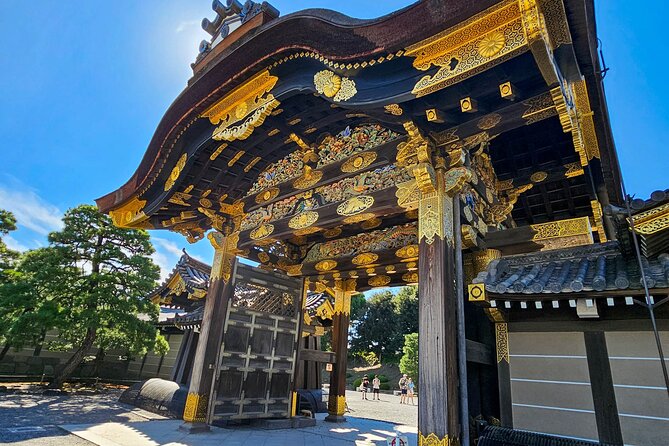
Kyoto’s past comes in two grand settings. This three-hour walk links Nijo Castle, the former shogun stronghold, with the Kyoto Imperial Palace, once home to Japan’s imperial family. I like the small maximum of nine, which gives you room to ask questions, and I like the English-speaking guides’ focus on architecture, customs, and political change. The main catch is the transfer between sites: they are not next door, and transportation is not included.
I also like that admission fees are covered and that several guides, including Jasmine, Taku, Atsushi, and Raphael, have earned praise for clear explanations and a friendly pace. You should still allow extra time for the move from Nijojo-mae Station to the palace area, especially in hot weather or during a busy season.
Key details before you book
- Two major Kyoto landmarks in three hours: Visit Nijo Castle and the Kyoto Imperial Palace in one guided outing.
- Small group, maximum nine people: A compact group makes it easier to hear the guide and ask questions.
- Nijo Castle admission included: See shogun-era rooms, gardens, architecture, and the famous interior details.
- English-speaking local guides: Guides such as Jasmine, Taku, and Atsushi are praised for clear English and strong knowledge of Kyoto.
- Transport between sites is your responsibility: The tour begins at Nijojo-mae Station and finishes at Imadegawa Station.
- Good value at $55: Included admission and three hours of instruction make this useful for first-time Kyoto visitors.
Why these two sites belong together
Kyoto can feel like a book with several chapters open at once. Nijo Castle tells the story of military rule and the shoguns. The Imperial Palace points to the emperor and the court, whose presence shaped Kyoto for more than a thousand years.
That contrast gives this tour its purpose. You are not simply looking at two attractive compounds. You are moving between two centers of power that help explain how Japan was governed, represented, and changed.
I find that context especially useful in Kyoto, where beautiful gates, gardens, painted rooms, and stone paths can blur together after a few days. A good guide helps you understand what you are seeing, why it mattered, and how the parts fit together.
The format also suits visitors who want more than an audio guide but do not want a full-day commitment. Three hours is long enough to cover both locations without taking over your entire day.
More Palace Walking Tours in Japan
- Tokyo: Imperial Palace and Shogun Historical Walking Tour
★ 5.0 · 2,251 reviews - Tokyo Castle & Imperial PalaceーShogun Walking Tour
★ 4.7 · 1,068 reviews - Tokyo: Imperial Palace Japanese History Walking Tour
★ 4.9 · 987 reviews
Starting at Nijo Castle with shogun-era detail
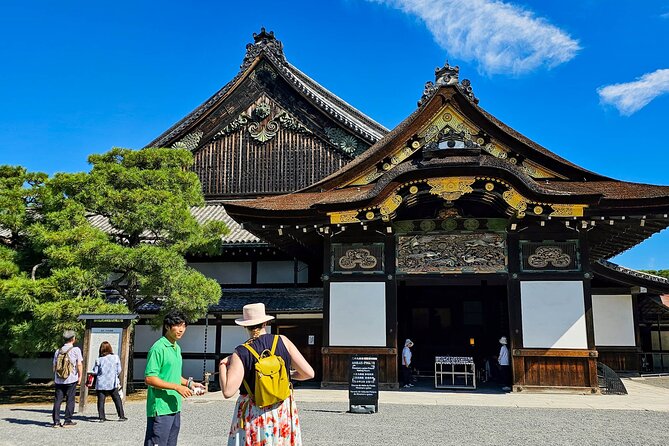
The tour starts at Nijojo-mae Station, beside Nijo Castle in Nakagyo Ward. That is a practical meeting point because the castle is the first major stop and the starting place is easy to identify by its station name.
You get about 90 minutes inside the castle grounds. That time is used for the architecture, gardens, and interiors connected with Japan’s shoguns. The castle offers a direct way to picture military power, ceremony, and elite life during the shogunate period.
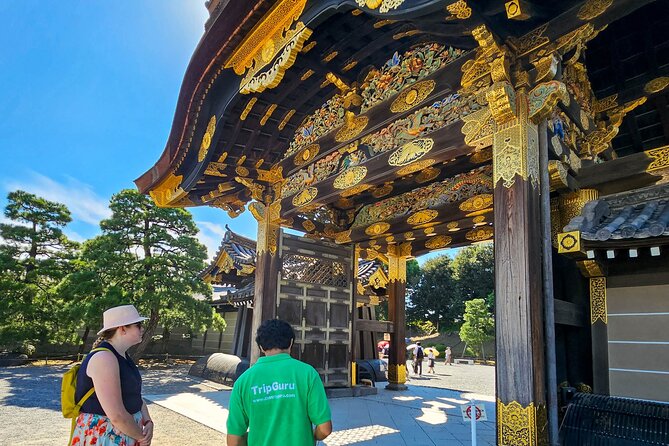
The interior details are a major reason to take a guide. Painted decoration and room arrangements can be easy to admire without understanding their purpose. A strong guide points out cultural symbols and explains how the setting reflects the era that produced it.
Jasmine received especially warm praise for explaining the shogun period, architecture, and cultural symbolism in a friendly, conversational way. Atsushi was also praised for adding special stories to the historical background, while Katsuhiko was noted for clear English and an engaging explanation of shogunate history.
The gardens provide a change of pace after the indoor rooms. You will have time to take photographs and look closely at the grounds rather than racing from one point to another. One particularly useful feature of the better-guided outings is the balance between explanation and quiet viewing time.
Still, this is a walking tour, not a private museum visit. The group needs to stay together, and the guide must keep the schedule moving. One guide was criticized for seeming too focused on finishing on time, so your experience may depend on the individual guide assigned that day.
The Imperial Palace and Kyoto’s courtly past
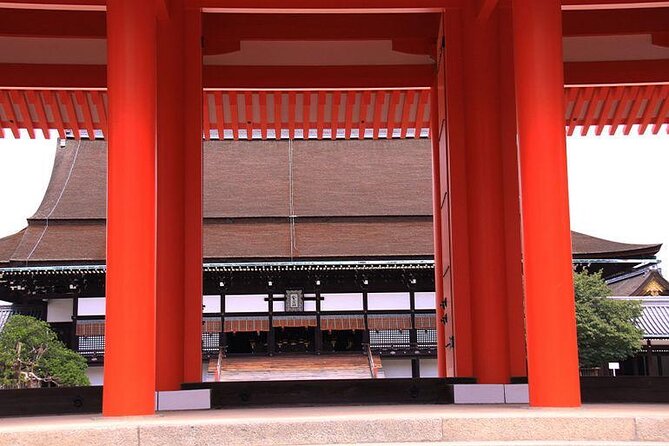
The second 90-minute section takes place at the Kyoto Imperial Palace. This was once the residence of Japan’s imperial family, and its broad grounds offer a different mood from Nijo Castle.
At Nijo Castle, the focus is strongly tied to the shoguns and military government. At the palace, you are looking at imperial architecture, formal spaces, gardens, and the long role of Kyoto as Japan’s political and ceremonial center.
A guide can help you notice the difference between these worlds. You may hear how the palace functioned as a royal residence, how its design expressed status, and how Kyoto remained important even after political power shifted elsewhere.
The palace grounds are also well suited to a slower pace. You can admire the buildings and gardens, take photographs, and ask questions without having to decode every detail alone. Cecilia was praised for helping visitors understand the subtleties of the palace and grounds, while Vincent was commended for giving a detailed overview of both locations.
The end point is Imadegawa Station in Kamigyo Ward. That makes the finish useful if you plan to continue exploring northern central Kyoto, but it may not place you near your hotel. Check your next destination before booking and keep your phone handy for directions.
The transfer between the two sites matters
This is the most important practical point. Nijo Castle and the Imperial Palace are separate sites, and the tour price does not include transportation between them.
The supplied information does not specify one fixed transfer method. Past experiences have included walking and taxis, and one account described the move as taking about 30 minutes when walking or using public transportation. That can consume a noticeable part of a three-hour tour.
You should clarify the meeting and transfer plan with the guide at the beginning. If the group uses taxis, make sure everyone knows the destination gate or entrance. A serious coordination problem once led part of a group to the wrong gate, followed by waiting and difficulty contacting the guide.
That incident appears to have been an exception rather than the norm, but it points to a real weakness in the setup. There is no hotel pickup, hotel drop-off, meal, or drink included. You are responsible for your own movement between the two sites and after the tour.
The transfer is easier to manage if you treat it as part of the outing rather than a gap between attractions. Bring your phone, allow a little schedule flexibility, and ask where the group will regroup. In hot weather, the move can be tiring, so water and light clothing are sensible choices.
More Royal Palace Tours in Japan
- Tokyo: Imperial Palace and Shogun Walking Tour
★ 4.9 · 935 reviews - Imperial Palace East Garden and Edo Castle Walking Tour in Tokyo
★ 5.0 · 510 reviews - Kyoto: Imperial Palace & Nijo Castle Guided Walking Tour
★ 4.7 · 453 reviews - Tokyo: Imperial Palace East Gardens Walking Tour
★ 4.8 · 353 reviews
What the guides add to the experience
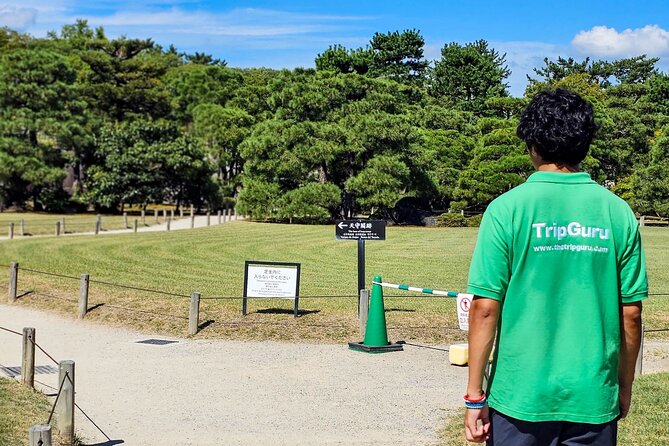
The strongest part of this tour is the human explanation. The most praised guides are not simply listing dates. They connect architecture, political power, cultural symbolism, and daily life.
Jasmine appears several times in the feedback and earned particular praise for clear English, warm manners, useful historical detail, and a good pace. She also helped with family photographs, checked that people could hear her, and offered practical help with onward transportation.
That kind of care matters. One party included a hard-of-hearing family member, and the guide adjusted her volume and tone without disturbing other people nearby. Another guide stopped for water and air-conditioning breaks during a very hot day.
Taku was described as a local certified guide with extensive experience at both Nijo Castle and the Imperial Palace. Raphael was praised for patience with many questions. Alex received credit for giving the right amount of information while keeping the group moving.
Those comments point to a consistent strength: the tour works best when you want a conversation rather than a memorized speech. Several guides were praised for answering questions, adding current Japanese cultural context, and admitting when they were unsure instead of guessing.
The standard is not identical every time. One account described a guide who offered little extra cultural insight and seemed eager to finish. I would book this tour for the chance to get strong interpretation, but I would not assume every departure will feel like a private lesson with a top specialist.
Is $55 a fair price?
At $55 per person, the tour is reasonably priced if you value context and convenience. Entrance fees are included, the group is capped at nine, and you receive three hours with an English-speaking guide.
The price is less attractive if you only want to walk through the sites at your own speed. You could visit independently, but you would need to arrange admission, plan the route, and supply your own background information.
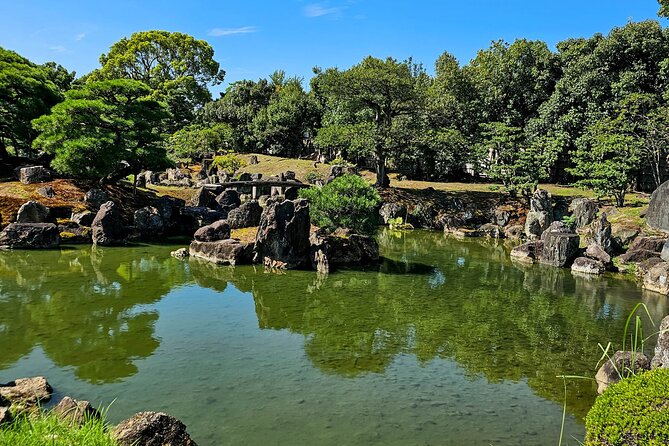
The best value comes from the guide’s ability to explain details you might otherwise overlook. The painted interiors, room functions, garden design, and difference between imperial and shogunal power become easier to understand when someone points them out at the right moment.
The price does not cover taxis, public transport, food, drinks, or personal expenses. Keep those costs separate when planning your day. Group discounts may be available, but the supplied information does not give a specific discount amount.
With a 92 percent recommendation rate and a 4.7 rating from 106 reviews, the overall record is strong. The occasional complaints focus on cancellation, timing, or transportation coordination rather than the basic appeal of the two sites.
Timing, weather, and walking effort
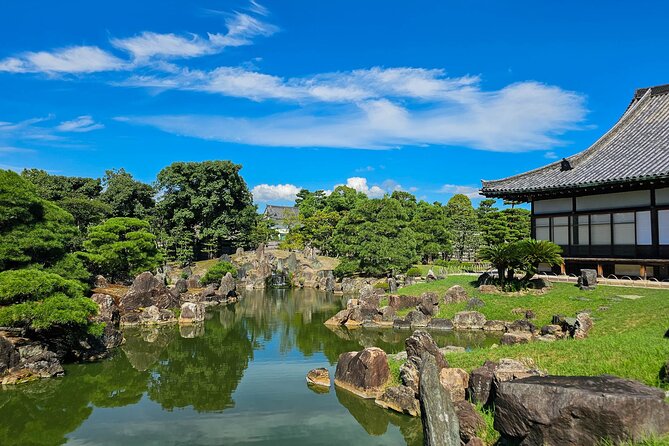
You should expect three hours of walking across large historic grounds, with time spent standing while the guide explains rooms, gardens, and buildings. Most people can take part, but the tour may feel demanding in strong Kyoto heat.
The schedule includes about 90 minutes at each site. That is enough for a useful introduction, but it is not enough to inspect every corner. If you like long photography stops or detailed museum visits, plan to return independently.
Several guides have been praised for keeping the group comfortable with regular pauses, water stops, and air-conditioning breaks. Even so, those comforts may depend on the day and the guide. Carry water and wear shoes suitable for a long walk.
The tour offers selectable departure times, which can help you fit it around other Kyoto plans. Choose a time that leaves breathing room before your next booking. The transfer between sites and the final walk to Imadegawa Station can make a tightly packed itinerary stressful.
Free cancellation is available up to 24 hours before the start time for a full refund. Changes or cancellations made inside that window are not accepted for a refund, and the cut-off uses local Kyoto time.
Who should book this Kyoto walk?
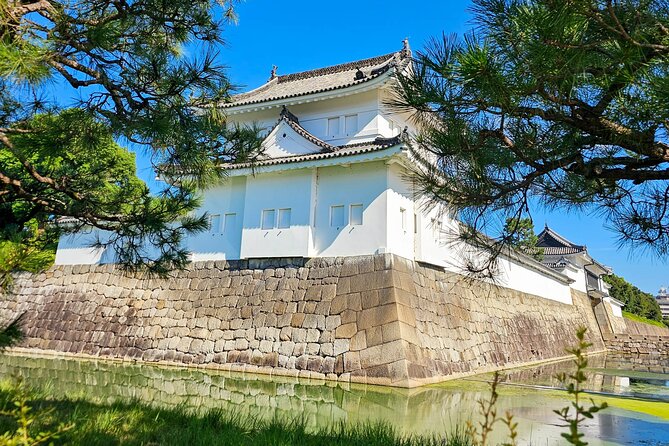
I would recommend it to first-time Kyoto visitors who want a clear introduction to two major sites. Families can also benefit, especially if children ask questions and the guide is comfortable adapting the pace.
It is a good fit for people who enjoy architecture, political history, gardens, and cultural explanation. The small group gives you a better chance to hear the guide than a large bus tour, while the three-hour length leaves room for lunch or another Kyoto sight afterward.
It is less suitable if you dislike group schedules or want complete control over the route. You may also prefer independent visits if you already know Japanese history well or plan to spend several hours at each site.
The tour is not ideal for anyone who expects transportation to be arranged from door to door. The start and end points are public transport stations, and the middle transfer needs attention.
My verdict on the Imperial Palace and Nijo Castle tour
I would book this tour if you want the two sites explained together and you are comfortable managing the transfer between them. The included admission, small group, and generally strong guide feedback make $55 a fair price.
Pay special attention to the guide’s name and communication at the start. Ask how the group will reach the palace, confirm the exact entrance, and keep your own route information available.
For the best experience, arrive ready to walk, bring water, leave space in your schedule, and ask questions. If you get a guide with the warmth and clarity praised in Jasmine, Taku, Atsushi, Raphael, or the other well-regarded guides, the tour can turn two impressive places into a much clearer picture of Kyoto’s past.
FAQ
How long does the tour last?
The tour lasts approximately three hours, with about 90 minutes at Nijo Castle and 90 minutes at the Kyoto Imperial Palace.
Where does the tour start?
It starts at Nijojo-mae Station near Nijo Castle in Nakagyo Ward, Kyoto.
Where does the tour end?
The tour ends at Imadegawa Station in Kamigyo Ward, Kyoto.
Is transportation between Nijo Castle and the Imperial Palace included?
No. Hotel pickup and drop-off are not included, and transportation between the two sites is your responsibility.
Is admission included?
Yes. Entrance fees for Nijo Castle and the Kyoto Imperial Palace are included.
What is the maximum group size?
The group can include a maximum of nine people.
More Three-Hour Trips in Japan
- Alhambra, Nasrid Palaces, and Generalife 3-Hour Guided Tour
★ 4.4 · 889 reviews - Visit Kensington Palace & 3 Hour Westminster Walking Tour
★ 4.5 · 53 reviews - Mantova City Center and Ducal Palace: 3-Hour Guided Tour
★ 4.9 · 47 reviews - 3-hour: Palace of King Jan Sobieski in Wilanow/inc. Pick-up/
★ 4.7 · 27 reviews
Just added around Japan
- From the Imperial Palace to Odaiba : Time travel to Tokyo★ 5.0 · 5 reviews
- Tokyo Skytree, Asakusa, and Imperial Palace 1/2-Day Private Tour★ 5.0 · 3 reviews
- Imperial Palace Tour: Discover Samurai History with a Local Guide★ 5.0 · 20 reviews
- Tokyo Imperial Palace with Kagurazaka Alley Tour★ 5.0 · 54 reviews
- Tokyo’s Imperial Palace & Nihonbashi Tour★ 4.5 · 38 reviews
- Cherry Blossom Highlights, Asakusa, Ueno, Imperial Palace Garden★ 4.5 · 4 reviews
- Private Tour – History, Art and Nature at the Imperial Palace★ 5.0 · 24 reviews
- Tokyo Imperial Palace and Heritage of Edo Castle Private Tour★ 5.0 · 3 reviews
Palace Walking Tours, compared.
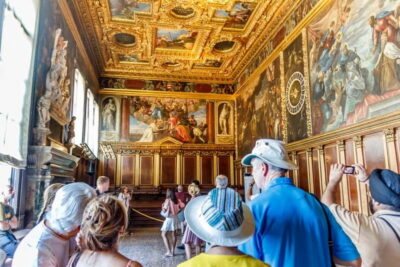
Doge’s Palace and St Mark’s Basilica Walking Tour
Read our review →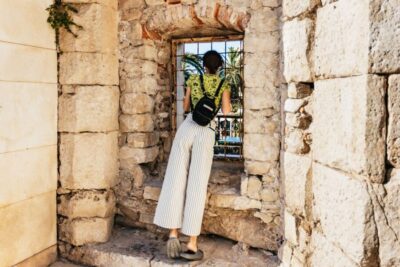

Walking Tour of Split and Diocletian’s Palace
Read our review →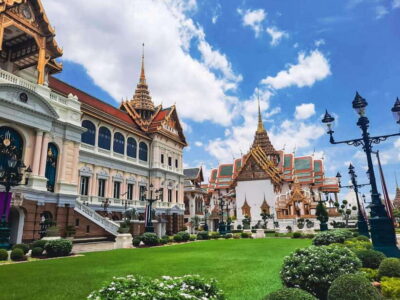
Grand Palace and Wat Phra Kaew Guided Walking Tour
Read our review →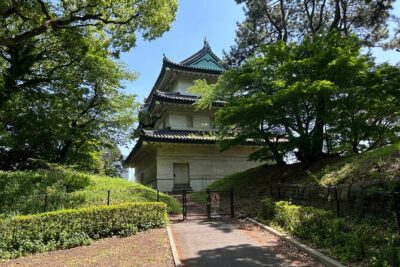
Imperial Palace and Shogun Historical Walking Tour
Read our review →
Madrid Old Town & Royal Palace Walking Tour Skip the Line Ticket
Read our review →
Knossos: Knossos Palace Skip-the-Line Guided Walking Tour
Read our review →
Browse the lists this tour appears in