
REVIEW · JAPAN
Kyoto: Imperial Palace & Nijo Castle Guided Walking Tour
Two rulers, one compact Kyoto tour. This three-hour walk links Nijo Castle, home of the shogun’s power, with the Kyoto Imperial Palace, tied to Japan’s emperors. I like the clear historical contrast between the two sites, and I like the small groups, capped at nine people. The main consideration is that the tour involves plenty of walking, and the Imperial Palace visit focuses on its grounds rather than indoor palace rooms.
The flexible start times are useful if you have only one open slot in your Kyoto schedule. Guides such as Raphael Matsui, Jasmine, Vincent, Taku, and Cecilia have been praised for clear explanations, good pacing, and helpful local advice. I would still arrive early: the guide waits only 10 minutes at Nijojo-mae Station.
Key Points at a Glance
- Two sides of old Japan: See the shogun’s Nijo Castle and the emperor’s Kyoto Imperial Palace in one outing.
- A small group of up to nine: You can ask questions without shouting across a crowd.
- About three hours on foot: The two main visits take roughly an hour each, with time for the move between them.
- Nijo Castle’s best-known interior: Entry includes Ninomaru-goten Palace, its garden, and the Painting Gallery.
- Strong guide feedback: Jasmine, Raphael, Vincent, Taku, Alex, and others are often praised for history, culture, and thoughtful pacing.
- Useful practical limits: No hotel pickup, meals, or drinks are included, and the tour is not suitable for people with mobility, heart, or respiratory problems.
Why These Two Kyoto Sites Belong Together
Kyoto can sometimes feel like a long list of temples, shrines, gardens, and historic streets. This tour gives you a simple thread to follow: who held power in Japan?
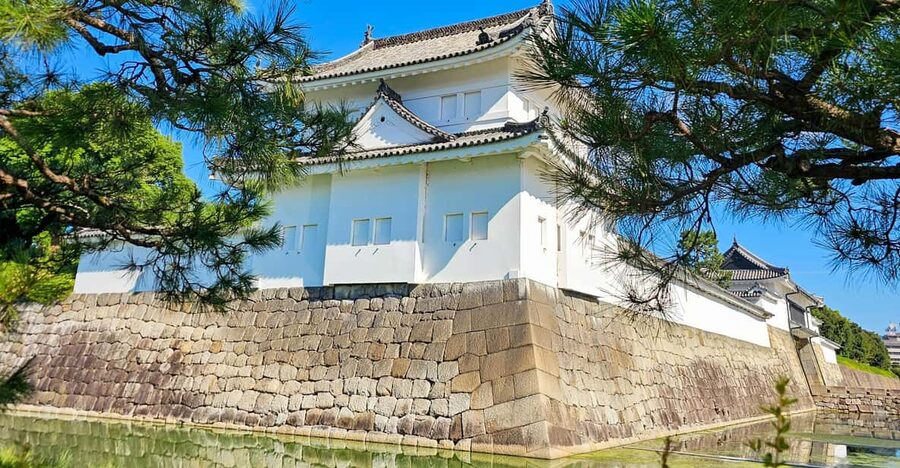
Nijo Castle represents the shogun, the military ruler who governed Japan during the Edo period. The Imperial Palace represents the emperor and the court that lived in Kyoto for more than a thousand years. Seeing both on the same morning or afternoon makes the difference easier to understand than visiting either site alone.
That comparison is the real strength of the tour. At Nijo Castle, you are looking at political authority expressed through fortified grounds, formal buildings, gardens, and carefully planned interiors. At the Imperial Palace, the mood shifts toward court life, ceremony, open gardens, and the long connection between Kyoto and Japan’s imperial family.
Guides regularly add context about Japanese culture, religion, architecture, and modern life. Jasmine, in particular, has been praised for explaining symbols and meanings in a lively way, while Taku has been noted for his patience and close attention to the needs of the group. Alex has also been praised for connecting the historic sites with Japan today.
More Palace Walking Tours in Japan
- Tokyo: Imperial Palace and Shogun Historical Walking Tour
★ 5.0 · 2,251 reviews - Tokyo Castle & Imperial PalaceーShogun Walking Tour
★ 4.7 · 1,068 reviews - Tokyo: Imperial Palace Japanese History Walking Tour
★ 4.9 · 987 reviews
Starting at Nijojo-mae Station
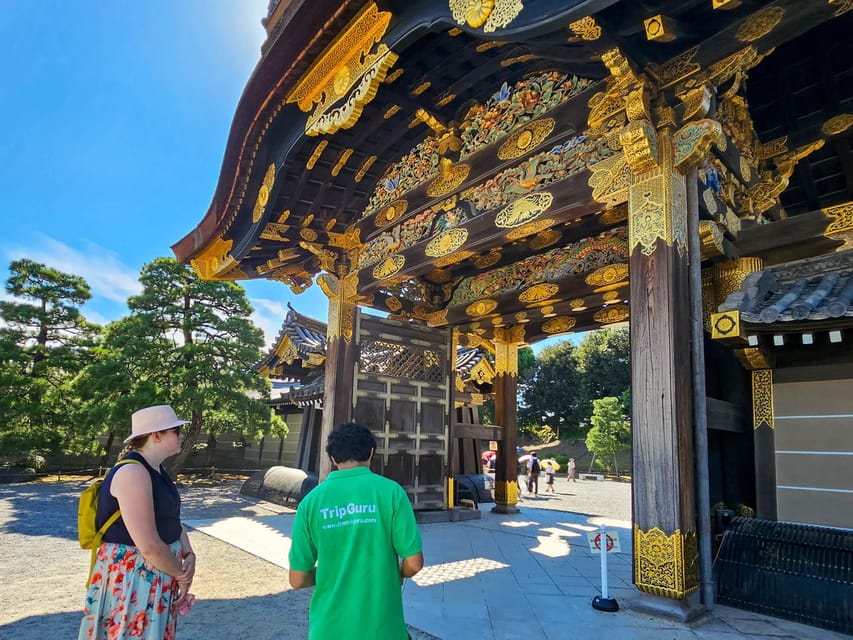
The meeting point is outside Exit 1 of Nijojo-mae Station, beside Nijo Castle. Your guide should be wearing a TripGuru shirt or holding a TripGuru sign.
This is a practical starting point because you do not waste time crossing Kyoto to reach the first sight. Still, allow more time than a navigation app suggests, especially in the morning. Traffic can change the journey considerably, so arriving at least 10 minutes early is not just polite. It protects your booking.
The tour begins with a short introduction before entering. That overview is useful because it gives you a framework for the visit. Instead of meeting the castle as a series of attractive gates and rooms, you can watch for details connected to the shogun’s authority and daily life.
The group limit of nine is another plus here. A guide can stop to answer questions, point out a small architectural detail, or adjust the pace without holding up a large crowd. The experience will still depend on the guide assigned to your date, but the format gives you a better chance to hear and participate.
Nijo Castle: Shogun Power in Wood and Stone
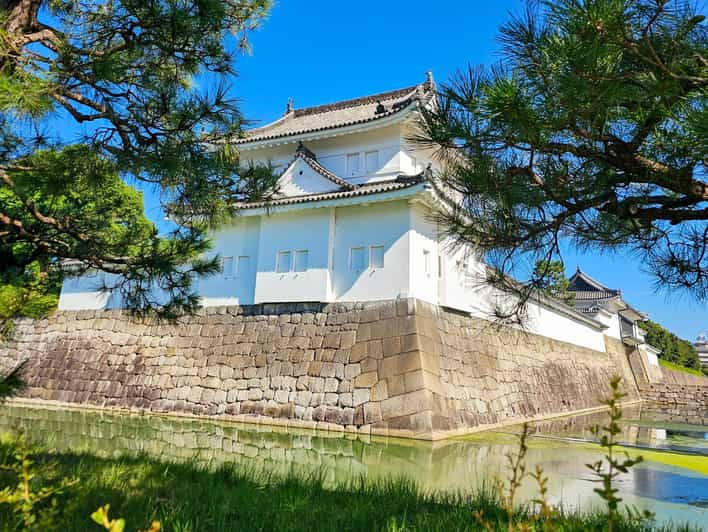
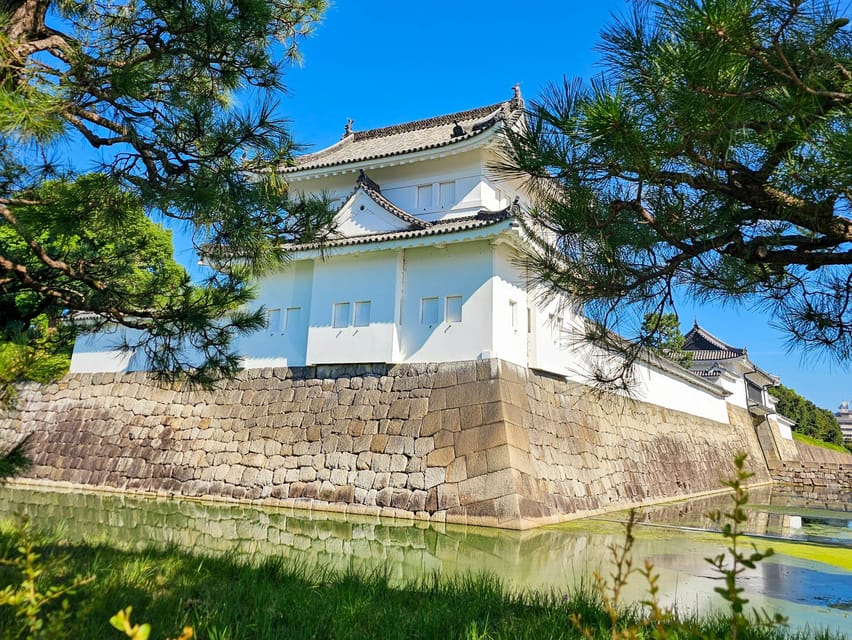
Nijo Castle receives about an hour of guided attention. That is enough for a focused visit, though not enough to inspect every corner at a slow pace.
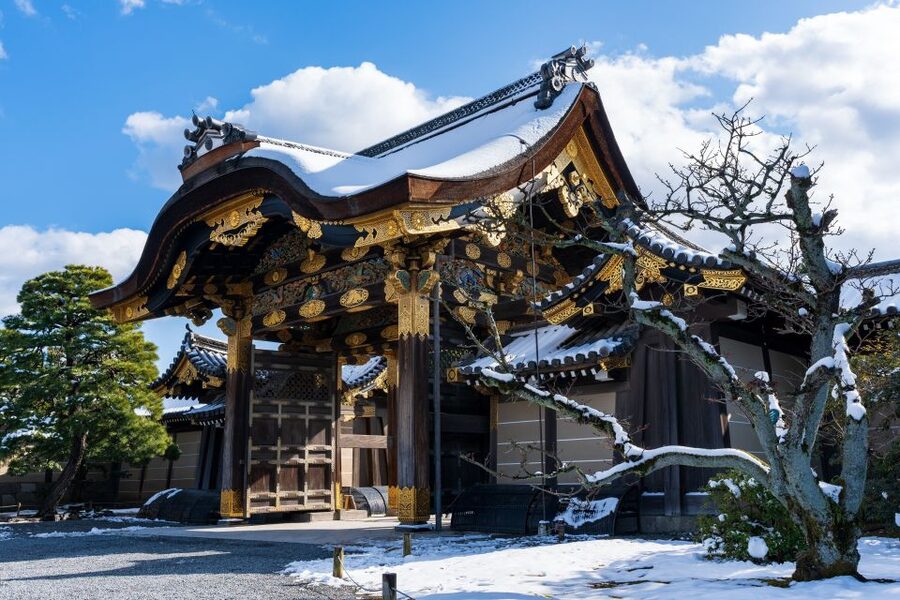
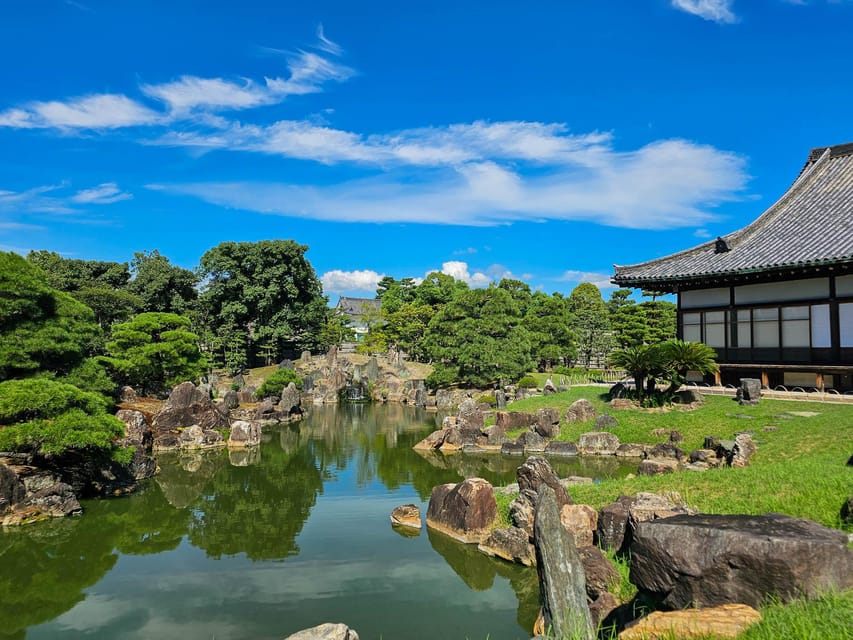
The central stop is Ninomaru-goten Palace, with its ornate rooms and painted interiors. Entry includes the palace, the garden, and the Painting Gallery. You will not be touring every building on the wider castle grounds, so think of this as a carefully selected introduction rather than a full-day castle study.
The architecture works best when someone explains what you are seeing. A guide can connect the rooms, decorations, gardens, and formal layout to the role of the shogun. Several guides have been praised for explaining hidden meanings in the buildings and gardens, rather than simply naming what is in front of you.
One especially useful feature is the chance to ask questions. You might want to know how the shogun’s residence differed from the emperor’s palace, or why certain decorative choices mattered. The small group makes those questions easier to ask, and the strongest guides appear comfortable moving between political history, cultural customs, and everyday life.
Nijo Castle is also the part of the tour most likely to satisfy visitors who want to see interiors. That matters because the Imperial Palace portion is mainly an outdoor visit. If you care most about painted rooms, formal architecture, and a more concentrated historic presentation, Nijo Castle may become your favorite stop.
The gardens add a quieter counterpoint to the palace rooms. You have time to notice the arrangement of paths, trees, water, and buildings, while the guide explains how the setting supported ceremony and status. Bring a camera, but keep it secondary to listening. The details are easy to miss if you rush from one photo stop to the next.
The Move to the Imperial Palace
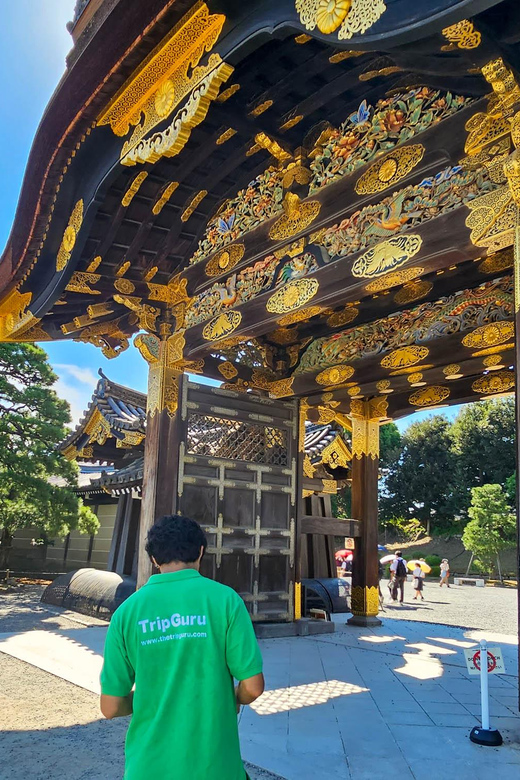
The tour continues toward the Kyoto Imperial Palace and finishes at Imadegawa Station. The exact transfer details are not fully specified, so you should expect the experience to include walking and city transit rather than a private vehicle.
This section is part of the reason the tour takes three hours rather than two. The two principal visits are listed at about one hour each, and the remaining time allows for meeting, moving between sites, and keeping the group together.
Wear comfortable shoes. That advice is essential, not decorative. You will walk through large historic grounds and move between major areas of central Kyoto. June can be especially hot, so carry water and consider a hat. Cash is also listed among the recommended items, though meals and drinks are not included.
More Royal Palace Tours in Japan
- Tokyo: Imperial Palace and Shogun Walking Tour
★ 4.9 · 935 reviews - Imperial Palace East Garden and Edo Castle Walking Tour in Tokyo
★ 5.0 · 510 reviews - Tokyo: Imperial Palace East Gardens Walking Tour
★ 4.8 · 353 reviews - Tokyo: Imperial Palace, Sensō-ji Temple, & Tokyo Tower Tour
★ 4.5 · 339 reviews
Kyoto Imperial Palace: Court Life and Open Grounds
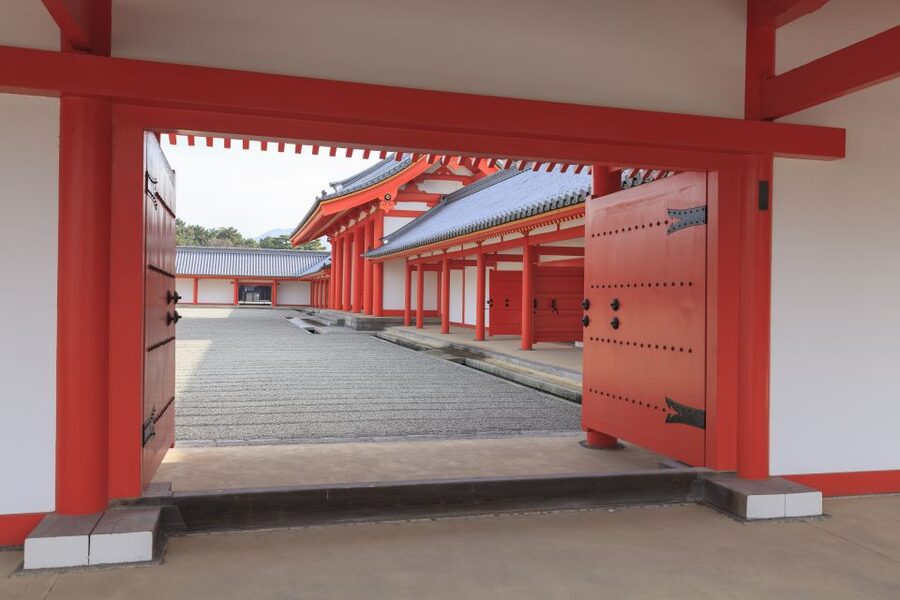
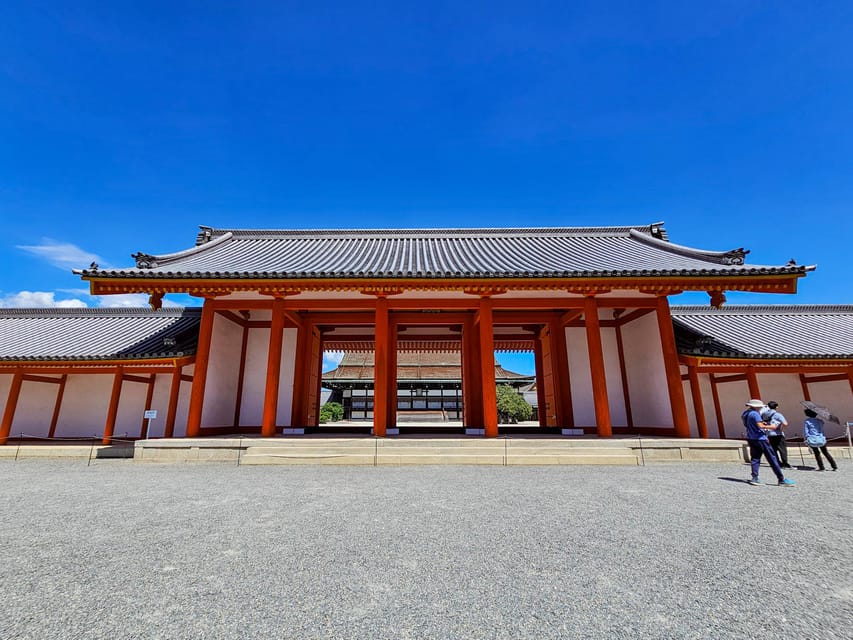
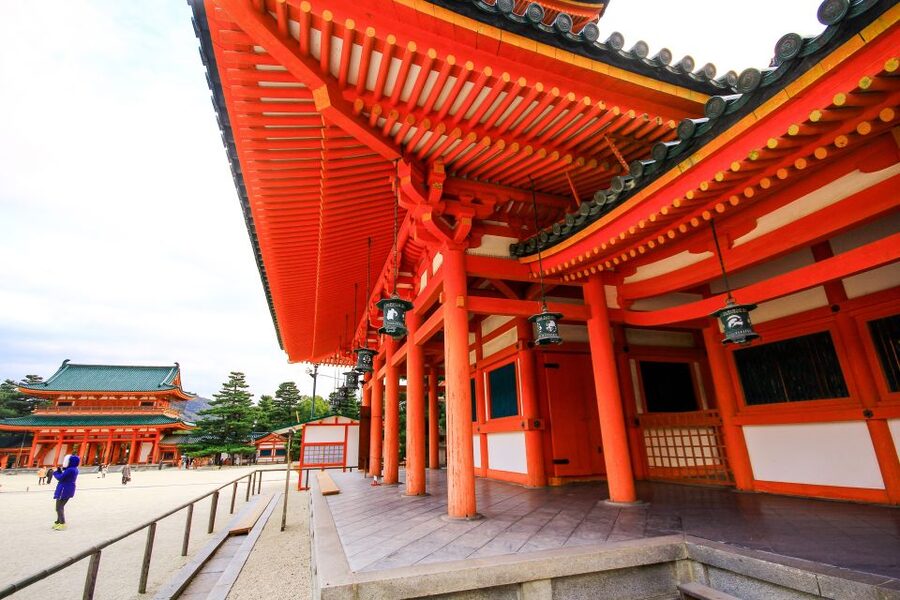
The Imperial Palace portion lasts about an hour. You will see the former residence of Japan’s imperial family and have time to appreciate the buildings, gardens, and broad grounds.
Be clear about what this means before booking. The visit does not promise access to the palace’s private interior rooms. One detailed account specifically noted that the palace cannot be visited inside in the same way as Nijo Castle. The Imperial Palace is best understood here as a guided walk through its grounds and exterior spaces.
That is not necessarily a weakness. The palace offers a different kind of experience from Nijo Castle. Its open setting helps explain the scale and formality of the imperial court, while the guide supplies the historical background that the buildings alone cannot provide.
The contrast is strongest when the guide places the two sites side by side. Nijo Castle helps you picture the shogun’s political world. The Imperial Palace helps you understand the emperor’s long connection to Kyoto. Cathal described the difference between shogun and emperor as one of the tour’s most useful features, and that is exactly the sort of context that turns two sightseeing stops into one coherent lesson.
Dress modestly and respectfully for the palace grounds. Avoid very revealing clothing, shorts, or tank tops. This is a small preparation that helps you avoid feeling underdressed once you arrive.
Some people may find the Imperial Palace less dramatic than Nijo Castle. If you prefer interiors and concentrated visual detail, you might wish the palace portion were shorter. On the other hand, if you want a broader understanding of Kyoto’s political past, this second stop earns its hour.
The Guides Make the Difference
The tour’s strongest praise centers on the guides. That is important because a historic site can be impressive while still leaving you unsure what you are looking at.
Raphael Matsui has been praised for answering questions about Japanese history and culture and for giving an overview before the walk began. Jasmine has been noted for clear English, humor, careful explanations, and a talent for making symbols and stories easy to follow. Vincent has received praise for managing time well and mixing historical detail with cultural references.
Other named guides include Taku, Cecilia, Alex, Kosuke, Naoki, Gus, Miya, Yuko, Katsuhiko, and Katz. The comments consistently point to friendly manners, strong historical knowledge, patience, and attention to the group. One guide even helped arrange a taxi after the tour, while another shared personal suggestions for food and further sightseeing.
You cannot choose a particular guide from the information provided, so do not book solely to request one person. Still, the pattern is encouraging. This is not a tour built around a recorded script. The best version gives you room to ask about architecture, religion, customs, daily life, and modern Kyoto.
The language options are English, French, and Spanish. If English is your choice, multiple comments specifically praise clear speech and the ability to answer detailed questions.
How Much Walking and Time Should You Expect?
The advertised duration is three hours. The two site visits are planned at about one hour each, with the balance used for introductions, the transfer, and group movement.
That makes the schedule compact but not frantic. One account described the pace as good, with enough time to enjoy both places. Another said three hours was the right amount of time to see the two sites. You should still expect steady walking, outdoor exposure, and time on your feet.
The experience is not suitable for pregnant women or people with mobility impairments, heart problems, or respiratory issues. There is no hotel pickup or drop-off, and meals and drinks are not included.
I would book an earlier start if you want cooler conditions and more time afterward for another Kyoto sight. An afternoon start may fit better around a morning visit elsewhere. Since several starting times are offered, the tour can work well for a short stay or a last-minute open slot.
Is $49 a Fair Price?
At $49 per person, the value depends on how much guidance you want. The price includes an English, French, or Spanish-speaking guide, walking-tour service, and entrance fees for Nijo Castle, including Ninomaru-goten Palace and the Painting Gallery.
You are paying more than a simple self-guided entry, but the extra cost buys structure and explanation. A good guide helps you understand why the shogun’s castle and the emperor’s palace look and feel different. You also avoid spending your limited Kyoto time figuring out what matters inside each site.
The small-group limit strengthens the value. A group of nine is not private, but it is much more manageable than a large coach excursion. One booking ended up feeling almost private because only three people joined that language group. That will not happen every time, but the format allows for a more personal experience.
The price is less compelling if you prefer to linger alone, take many photographs, or read every sign at your own pace. You will follow a set route and keep to the group’s timing. For a first visit, though, the combination of admission and interpretation is sensible.
Free cancellation is available up to 24 hours before the tour, and you can reserve now and pay later. Those terms help if your Kyoto schedule is still changing.
Who Should Book This Kyoto Walk?
I would recommend it to you if:
- You have only half a day for major historic sights.
- You want the shogun and emperor explained together.
- You prefer asking questions to reading signs alone.
- You are comfortable walking for three hours.
- You want a small group rather than a large bus tour.
- You are visiting Kyoto for the first time and need a clear historical foundation.
I would hesitate if you want deep interior access at the Imperial Palace, a private tour, or a leisurely pace with long photography stops. Nijo Castle is the more rewarding stop for interiors, while the Imperial Palace is better for its grounds, setting, and political context.
Final Verdict: A Smart First Look at Old Kyoto
Book this tour if you want two important Kyoto sites explained as one story. The best reason to go is not simply that both places are famous. It is that the guide can show you the difference between shogun rule and imperial tradition in a single morning or afternoon.
I especially like the small-group format, the included Nijo Castle admission, and the strong record of guides who answer questions well. Plan for comfortable shoes, water, modest clothing, and a punctual arrival at Exit 1. If you accept that the Imperial Palace visit is mainly outdoors, the $49 price is fair for a compact, well-organized introduction to Kyoto’s past.
FAQ
How long is the Kyoto Imperial Palace and Nijo Castle tour?
The tour lasts three hours. The guided visits at Nijo Castle and the Kyoto Imperial Palace are each planned for about one hour.
Where does the tour meet?
The meeting point is outside Exit 1 of Nijojo-mae Station, by Nijo Castle. The guide will wear a TripGuru shirt or hold a TripGuru sign.
Where does the tour finish?
The tour finishes at Imadegawa Station after the Imperial Palace visit.
What is included in the price?
The price includes a live tour guide, walking-tour service, and Nijo Castle entrance fees, including Ninomaru-goten Palace and the Painting Gallery.
Is hotel pickup included?
No. Hotel pickup and drop-off are not included.
Are meals and drinks included?
No. Meals and other drinks are not included.
Which languages are available?
Live tours are available in English, French, and Spanish.
How large is the group?
The tour is limited to nine participants.
Can I visit the Imperial Palace interiors?
The provided tour information describes a visit to the palace grounds and does not promise access to the interior palace rooms. Nijo Castle includes access to Ninomaru-goten Palace and the Painting Gallery.
What should I bring?
Bring comfortable shoes, a camera, and cash. Water and a hat are especially useful in hot weather.
How early should I arrive?
Arrive at least 10 minutes before the stated meeting time. Guides wait a maximum of 10 minutes before continuing to the next stop.
Can I cancel the tour?
Yes. You can cancel up to 24 hours in advance for a full refund. You can also reserve now and pay later.
Just added around Japan
- Kyoto: Discover Every Bit of Kyoto Imperial Palace★ 4.4 · 21 reviews
- Kyoto: Nijo Castle and Kyoto Imperial Palace Guided Tour★ 4.6 · 98 reviews
- Imperial Palace Tour: Discover Samurai History with a Guide★ 5.0 · 12 reviews
- Full Tokyo: Meiji Shrine, Imperial Palace, Asakusa & Skytree★ 4.7 · 16 reviews
- Tokyo: Edo Castle & East Garden of the Imperial Palace Tour★ 4.7 · 112 reviews
- Tokyo Castle, Imperial Palace, Shogun & Garden Walking Tour★ 5.0 · 211 reviews
- Tokyo: Imperial Palace East Gardens Walking Tour★ 4.8 · 353 reviews
- Tokyo: Imperial Palace, Sensō-ji Temple, & Tokyo Tower Tour★ 4.5 · 339 reviews
Palace Walking Tours, compared.
Doge’s Palace and St Mark’s Basilica Walking Tour
Read our review →

Walking Tour of Split and Diocletian’s Palace
Read our review →
Grand Palace and Wat Phra Kaew Guided Walking Tour
Read our review →
Imperial Palace and Shogun Historical Walking Tour
Read our review →
Madrid Old Town & Royal Palace Walking Tour Skip the Line Ticket
Read our review →
Knossos: Knossos Palace Skip-the-Line Guided Walking Tour
Read our review →
Browse the lists this tour appears in