
REVIEW · ROME
Private Castel Sant’Angelo Tour with Palazzo Altemps
Two Roman landmarks, one thoughtful afternoon. This four-hour private tour links the frescoed rooms of Palazzo Altemps with the fortress-like Castel Sant’Angelo, giving you two very different views of Rome within an easy city-centre walk. I like the personal attention of a private guide, and I like that the tour ends at Castel Sant’Angelo after beginning near Piazza Navona.
The best part is the contrast: Palazzo Altemps feels quiet, elegant, and art-focused, while Castel Sant’Angelo brings emperors, popes, military power, and dramatic views into the picture. The main drawback is the price, $449.15 per person, which is a serious spend unless your group values private guiding and detailed conversation.
- Two sharply different sights: A Renaissance palace and the former mausoleum of Emperor Hadrian give the tour useful variety.
- Private guiding: Only your group takes part, so you can ask questions and set the pace more easily than on a large group visit.
- A personal Roman connection: One guide grew up near Castel Sant’Angelo and still lives close by, adding local feeling to the fortress visit.
- Maria received special praise: She was described as able to answer questions readily and share her enthusiasm for art and history.
- Four hours of walking: The schedule allows about two hours at each site, with city streets, steps, and staircases between and within the landmarks.
- Skip-the-line admission included: Tickets, fees, and taxes are covered, which makes the cost easier to understand.
Why These Two Sites Work Together
Rome can feel like a stack of separate eras. One street gives you ancient masonry, the next gives you a Baroque church, and a quiet palace may hold artwork that many people never make time to see. This tour takes that layered quality and gives it a clear shape.
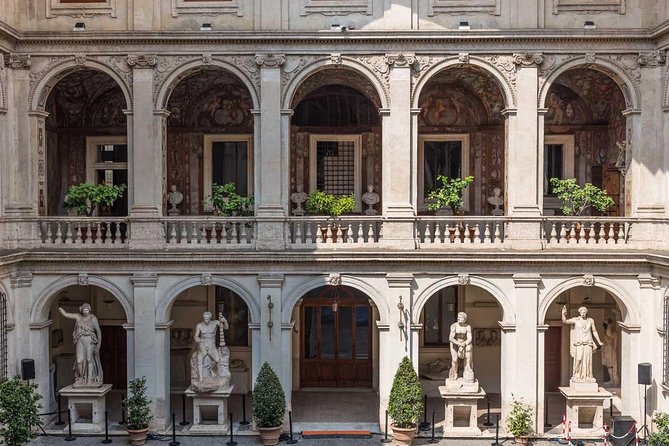
You begin at Palazzo Altemps, part of the Museo Nazionale Romano. The palace is just steps from Piazza Navona, yet it offers a calmer setting than the square outside. From there, the tour moves to Castel Sant’Angelo, whose origins reach back to Emperor Hadrian and whose later life involved military and papal power.
I like this pairing because neither stop simply repeats the other. Palazzo Altemps is about rooms, decoration, sculpture, and the feel of an aristocratic Renaissance residence. Castel Sant’Angelo is about change over time, from imperial tomb to fortified stronghold and major Roman landmark.
Your guide supplies the thread between these places. The point is not just to walk through two buildings and collect photographs. It is to understand why Rome’s buildings keep changing purpose while retaining traces of earlier lives.
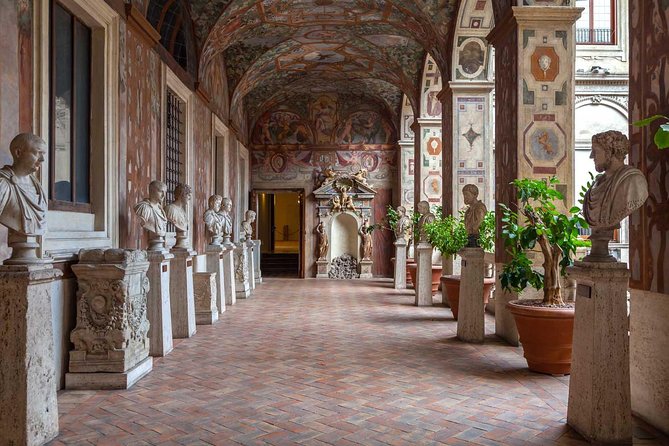
Palazzo Altemps: Quiet Rooms Near Piazza Navona
Palazzo Altemps begins the tour at Piazza di Sant’Apollinare, 46. The setting matters. You are close to one of Rome’s most famous public squares, but the palace gives you a break from the square’s noise and open-air spectacle.
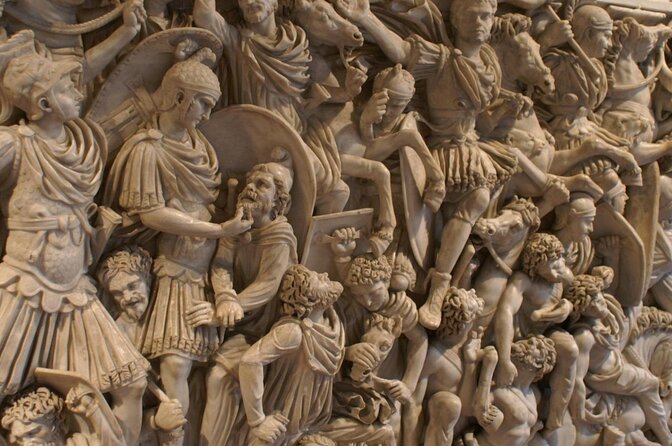
The attraction here is the frescoed Renaissance interior. Frescoes can be easy to overlook when you are hurrying between Rome’s headline sights, so having a guide explain the palace helps you notice the details. The painted rooms are not just backdrops for statues. They show how wealthy and influential residents shaped their surroundings through art, design, and display.
I would expect the visit to feel more intimate than a major archaeological site. That can be a strength if you prefer art and architecture at a slower pace. You have time to ask why a room looks the way it does, how the palace fits into Rome’s Renaissance period, and what makes its collection worth seeing.
The tour allows about two hours at Palazzo Altemps. That is generous enough for a guided look rather than a rushed pass through. It also means you should be ready to pay attention to rooms and objects that may not announce themselves with the drama of a giant amphitheatre.
One past participant found the palace interesting but not quite what they expected. That is useful advice. If you imagine a grand, crowded palace filled with theatrical royal rooms, adjust your expectations. Palazzo Altemps is better suited to someone who enjoys art, interior spaces, and the quieter side of Rome.
A private guide makes the difference here. You can say if you are more interested in frescoes, sculpture, architecture, or social history. You can also ask for a slower look at something that catches your eye instead of following a fixed speech designed for a large crowd.
More Private Palace Tours in Italy
- Private Tour – National Museum of Palazzo Massimo
★ 5.0 · 51 reviews - Private Tour – Palazzo Barberini
★ 5.0 · 23 reviews - Colosseum, Roman Forum and Emperors’ Palace Private Guided Tour
★ 5.0 · 14 reviews
Walking From the Palace to Castel Sant’Angelo

The tour does not include transportation to or from the meeting and ending points. That is not a serious problem for most visitors because both sites are in central Rome, but you should plan your arrival and departure.
You meet at Palazzo Altemps and finish at Castel Sant’Angelo on Lungotevere Castello, 50. This is a point-to-point tour, not a loop that returns you to the starting place. That makes sense for the route, but it matters if you have a restaurant booking, a train departure, or another timed attraction afterward.
The city-centre walk and the steps inside the buildings call for comfortable shoes. Bring a bottle of water, particularly in warm weather. The tour information specifically warns that you will encounter steps and staircases through several parts of the route.
You should also tell the provider about mobility concerns before the visit. Most people can take part, and service animals are allowed, but this is not a flat, effortless stroll. Asking in advance gives the team a chance to discuss what can be accommodated.
The route is near public transportation, which helps you reach the starting point and continue from the ending point. Since exact transport arrangements are not included, you will need to handle that part yourself.
Castel Sant’Angelo and the Story of Hadrian
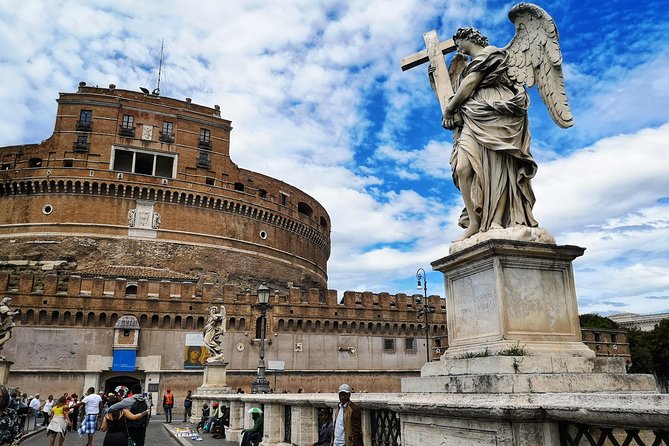
Castel Sant’Angelo is the tour’s more dramatic half. Its original identity was the mausoleum of Emperor Hadrian, but the building later served as a fortress. That change gives your guide plenty to explain, and it gives you a physical sense of how Rome repeatedly repurposed older structures.
The castle is not simply an ancient tomb preserved behind glass. It became part of the city’s defensive and political story. As you move through it, you are likely to encounter a stronger mix of stone corridors, stairways, large interior spaces, and outward views than at Palazzo Altemps.
The visit lasts about two hours, so you have time to understand the building rather than treating it as a quick photo stop. Your guide can place Hadrian’s original monument beside the later fortress and explain how the site’s role changed.
This is where the guide’s local connection may add real value. One guide grew up only a short walk from Castel Sant’Angelo and still lives nearby. That kind of personal connection does not replace historical information, but it can make the area feel less like a distant museum and more like part of a living Roman neighbourhood.
The castle was the favorite stop for one couple who took the tour. That preference makes sense if you enjoy buildings with layers of use and a strong sense of drama. If you mainly want Renaissance art, Palazzo Altemps may be your highlight instead.
Do not expect both stops to feel equally polished or quiet. Palazzo Altemps offers a more refined palace setting. Castel Sant’Angelo is a larger, heavier place shaped by imperial, religious, and military purposes. The contrast is the reason the combination works.
What a Private Guide Adds
A private tour is a luxury, but it is not an empty one. You are paying for the guide’s attention, flexibility, and ability to answer questions about your interests.
Maria received especially warm praise for her command of art and history and for answering questions without hesitation. Another guide was appreciated for being friendly and for having a lifelong connection to the Castel Sant’Angelo area. These details suggest that the human side of the experience is one of its strongest assets.
I would choose the private format if you enjoy asking questions or if people in your group have different interests. An art lover can focus on the palace’s frescoes and collection, while someone more interested in emperors and fortifications can ask for extra context at the castle.
It also works well for families or small groups that do not want to adapt to a stranger’s pace. The activity is private, so only your party takes part. That does not guarantee a perfect guide match, of course, but it gives you a better chance to shape the conversation.
For groups of six or more, headsets are included. That is helpful when you want to keep hearing the guide clearly in larger surroundings. Smaller groups may not need them, but the private format still keeps the discussion more direct than a standard large-group tour.
More Private Palace Tours in Rome
- Doria Pamphilj Palace Gallery and Museum Private Tour with Local Guide
★ 4.5 · 10 reviews - Palazzo Barberini: 2-Hour Private Tour
★ 4.9 · 9 reviews - Private Guided Day Tour to Pompeii and the Royal Palace of Caserta
★ 5.0 · 5 reviews - Skip-the-Lines Barberini Palace Museum and Gallery Private Tour
★ 5.0 · 4 reviews
Is $449.15 Per Person a Fair Price?
At $449.15 per person, this is not a bargain tour. You should compare it with the cost of arranging two admissions, a private guide, and the time needed to organize the day yourself.
The price includes admission tickets, skip-the-line access, all fees and taxes, and an English-speaking private guide. Food, drinks, transport to and from the meeting and ending points, and optional gratuities are not included.
Skip-the-line access has practical value in Rome, where waiting can eat into a short visit. Still, the real cost justification is the private guide. If you are content to read labels, move at your own pace, and visit independently, the price will likely feel high.
I see better value for a small group that wants a focused experience and can share the cost of a private guide. It may also suit visitors with limited time in Rome who want two major stops explained clearly in one four-hour block.
The cost is harder to defend if you are a solo visitor on a tight budget or if you prefer independent museum visits. The experience has received a perfect rating from three submitted reviews, but that is a small sample. I would treat the strong praise as encouraging, not as proof that every guide or every visit will feel identical.
Timing, Tickets, and Practical Details
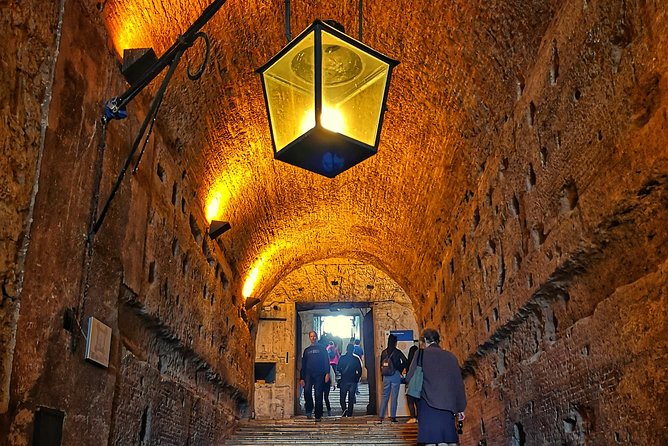
The total duration is approximately four hours, with two hours at each museum. Admission is included at both Palazzo Altemps and Castel Sant’Angelo, and skip-the-line tickets are part of the package.
You receive booking confirmation at the time of reservation. The tour begins at Museo Nazionale Romano, Palazzo Altemps, on Piazza di Sant’Apollinare, and ends at Castel Sant’Angelo on Lungotevere Castello.
Free cancellation is available if you cancel at least 24 hours before the local start time. Changes or cancellations made within 24 hours are not accepted for a refund, so keep that deadline in mind when planning.
Rome’s Jubilee period may bring restoration work at some monuments. You should pay attention to any messages from the provider about possible changes. Restoration can affect what you see, even when the tour itself continues.
The best preparation is simple:
- Wear comfortable walking shoes.
- Carry water.
- Allow time to reach the first meeting point.
- Do not schedule a tight connection immediately after the tour.
- Tell the provider about mobility needs before the day.
- Keep some flexibility if restoration affects a monument.
Who Will Enjoy This Tour Most?
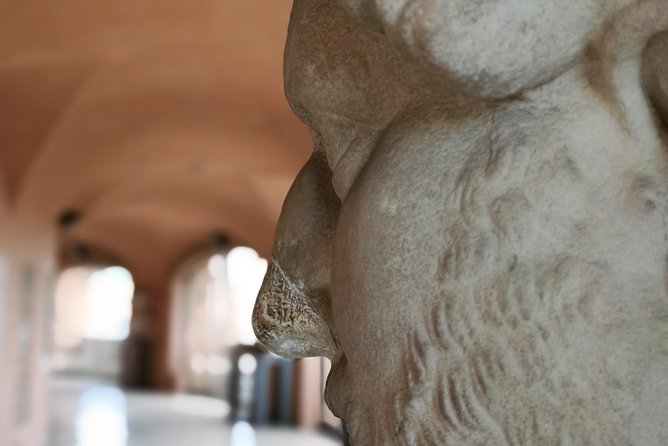
I would recommend it most strongly to people who like history explained by a real person rather than absorbed from wall labels. The private format is especially useful if you have questions, a strong interest in Roman art, or a small group with a shared curiosity.
It also suits repeat visitors who have already seen Rome’s most famous ancient sites and want a different pair of stops. Palazzo Altemps offers a quieter artistic side of the city, while Castel Sant’Angelo gives you a more imposing look at Rome’s changing political and military roles.
Families may appreciate the ability to ask the guide to adjust the pace, though the steps and four-hour length require some stamina. Older visitors or anyone with mobility concerns should discuss the route before booking.
I would hesitate if your main goal is a low-cost visit or if you dislike guided tours. The price pays for personal attention, not for a long list of included meals or transport. You should also avoid assuming that Palazzo Altemps will feel like a traditional royal palace. Its appeal is more restrained and art-centred.
Should You Book This Private Rome Tour?
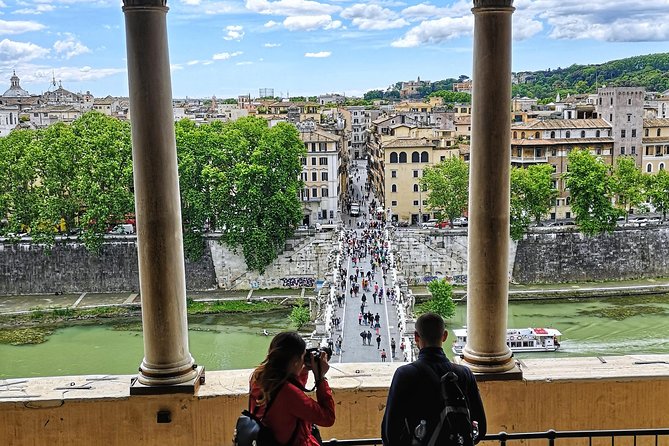
Book it if you want two contrasting landmarks, a private English-speaking guide, and enough time to ask questions. The strongest reasons are the focused pace, the included skip-the-line tickets, and the chance to hear Castel Sant’Angelo explained by someone with a close personal connection to the area.
Think twice if $449.15 per person strains your budget or if you are happy exploring museums alone. Palazzo Altemps may feel quieter and less instantly dramatic than expected, while the route includes steps and ends away from the starting point.
For the right group, this is a thoughtful way to spend four hours in central Rome. You get Renaissance rooms first, imperial and fortress history second, and a guide who can connect the two without forcing them into the same mould.
FAQ
How long does the private tour last?
The tour lasts approximately four hours, with about two hours at Palazzo Altemps and two hours at Castel Sant’Angelo.
Where does the tour begin?
It begins at Museo Nazionale Romano, Palazzo Altemps, at Piazza di Sant’Apollinare, 46, in Rome.
Where does the tour end?
The tour ends at Castel Sant’Angelo, at Lungotevere Castello, 50, in Rome.
Is admission included?
Yes. Admission tickets to both Palazzo Altemps and Castel Sant’Angelo are included.
Are skip-the-line tickets included?
Yes. Skip-the-line tickets are included in the tour price.
Is the tour private?
Yes. Only your group takes part in the activity.
Is the guide English-speaking?
Yes. The tour includes an expert, English-speaking private guide.
Are headsets provided?
Headsets are included for groups of six or more.
Is transportation included?
No. Transportation to and from the meeting point and ending point is not included.
Can I cancel for a full refund?
Yes, if you cancel at least 24 hours before the experience’s local start time. Cancellations made less than 24 hours before the start time are not refunded.
Just added around Rome
- Prince for a day, Colonna Palace complete tour, package price★ 5.0 · 5 reviews
- Skip-the-Lines Barberini Palace Museum and Gallery Private Tour★ 5.0 · 4 reviews
- The Colonna Palace Walking Tour★ 5.0 · 6 reviews
- Roman Domus of Palazzo Valentini Ticket★ 4.0 · 42 reviews
- Paint & Sip in a 17th-Century Palazzo with Wine & Pizza★ 4.5 · 18 reviews
- Rome, Vittoriano Rooftop View and Palazzo Venezia Official Entry★ 4.0 · 12 reviews
- Rome Barberini Palace Guided Tour★ 3.5 · 5 reviews
- Private Chauffeured Tour to Caserta Royal Palace from Rome and Designer Outlet★ 5.0 · 2 reviews
Private Palace Tours, compared.

Alhambra Private/Small Group Tour & Nasrid Palaces Skip the Line
Read our review →
Grand Palace, Wat Pho, and Wat Arun Private Tour
Read our review →
Mutianyu Great Wall&Summer Palace Excursion:Group/Private Options
Read our review →
Private Tour of Sintra, Cabo da Roca and Cascais with 2 Palaces
Read our review →
Private 4hrs Venice Tour: Doge’s Palace, Grand Canal & St Mark’s
Read our review →
Knossos Palace Skip-the-Line Ticket & Private Guided Tour
Read our review →

Private Tour Sintra from Lisbon Palaces of Pena and Regaleira
Read our review →Browse the lists this tour appears in