
REVIEW · ROME
Palazzo Barberini: 2-Hour Private Tour
Art rewards a closer look. This two-hour private tour of Palazzo Barberini traces Italian painting from the Middle Ages through the Baroque, with Raphael’s La Fornarina, works by Titian and Caravaggio, and Pietro da Cortona’s grand ceiling as its main attractions. I especially like the private format, which gives you room to ask questions, and the way the guide connects art to the religious and political changes of each period.
I also like the tour’s clear artistic arc. You are not simply led from one famous canvas to another. You move through changing styles and ideas, then continue toward Piazza Navona, one of Rome’s finest Baroque settings. The main consideration is price: at $135.94 per person, this is a serious outlay for two hours, and the tour is not suitable for wheelchair users or people with mobility impairments.
- Raphael’s La Fornarina: See one of the most famous portraits in the collection and hear the stories attached to Raphael.
- Caravaggio’s troubled life: Learn why the painter is often called the Cursed Painter and how his life shaped his reputation.
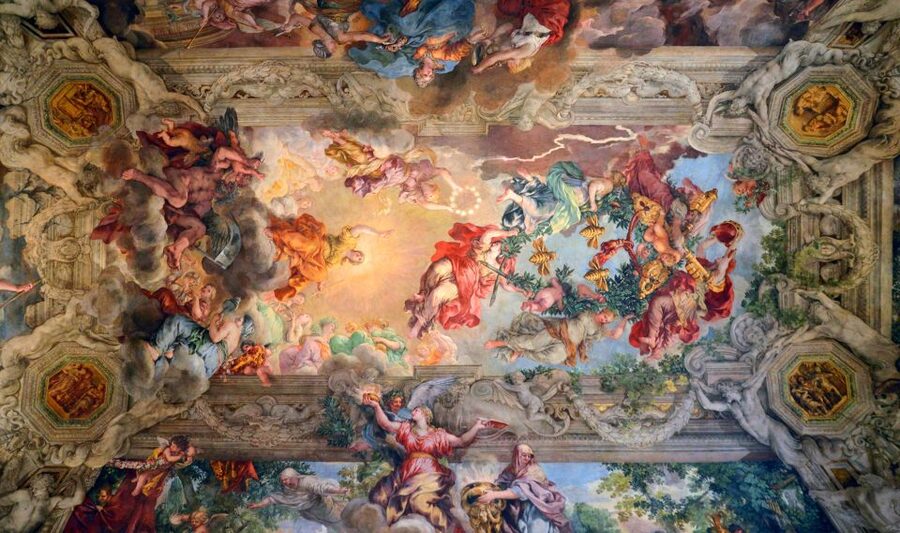
- Pietro da Cortona’s ceiling: Look up for a dramatic Baroque work that can be easy to miss without guidance.
- A private two-hour visit: Your group receives a dedicated English- or Italian-speaking guide rather than joining a large public crowd.
- A walk toward Piazza Navona: The tour links museum art with the Baroque architecture and public spaces of central Rome.
- A high-cost but focused option: Entry, guiding, and a private group are included, but hotel transport is not.
Why Palazzo Barberini Works for an Art Tour
Palazzo Barberini gives you a useful setting for understanding how Italian art changed over several centuries. Instead of treating the Middle Ages, Renaissance, and Baroque as isolated chapters, the guide can show how one period reacted to the last.
That matters in Rome, where paintings often grew from church politics, powerful families, and changing religious ideas. A private guide can explain those links while you are looking at the actual work, rather than leaving you to piece together the story from wall labels.
The two-hour length is another strength. A museum this important can easily become tiring, especially if you try to cover every room. Two hours gives you a defined route and enough time for major works without turning the visit into an art-history endurance test.
You should still set your expectations correctly. This is an introduction with depth, not a full study of every artist in the palace. If you already know the collection well, you may want to ask in advance whether the guide can adjust the emphasis toward particular painters or periods.
Starting with Medieval and Renaissance Art
The tour begins with the development of Italian art from the Middle Ages into the Renaissance. This opening gives you a way to read the paintings that follow. You can watch figures become more natural, spaces become more convincing, and artists place greater attention on the human body and individual expression.
The value of this section depends heavily on the guide. A good explanation can turn what might look like a row of old religious panels into a record of changing beliefs, artistic aims, and patron demands. Since the tour is private, you can stop when something catches your eye and ask for the plain-language version.
The Renaissance section brings you closer to artists such as Raphael and Titian. Raphael is known for balance, grace, and carefully controlled compositions, while Titian is associated with expressive color and a more flexible approach to paint. You may not leave able to identify every hand in the collection, but you should gain a clearer sense of how these painters differ.
This part of the visit also helps you understand why famous artists were more than isolated creative figures. Their work was shaped by commissions, religious themes, wealthy patrons, and the competition between Italian cities. The guide’s job is to connect those forces to what you see in front of you.
More Private Palace Tours in Italy
- Private Tour – National Museum of Palazzo Massimo
★ 5.0 · 51 reviews - Private Tour – Palazzo Barberini
★ 5.0 · 23 reviews - Colosseum, Roman Forum and Emperors’ Palace Private Guided Tour
★ 5.0 · 14 reviews
Raphael’s La Fornarina and the Stories Around It
Raphael’s La Fornarina is one of the clearest reasons to choose this tour. The portrait is a major Renaissance attraction, and it gives the guide a chance to discuss Raphael’s artistic style along with the personal stories that have grown around the painting.
You can expect attention to the sitter, the pose, the details of the image, and the questions surrounding its meaning. Raphael’s name alone can draw a crowd, but a guide helps you slow down and look at how the portrait is constructed.
This is where the private arrangement pays off. You can ask why a detail matters, how the work fits Raphael’s career, or which parts belong to documented history and which belong to later storytelling. Art tours are most useful when they separate fact from attractive legend.
If Raphael is the artist you most want to see, mention that when booking or meeting the guide. Two hours passes quickly, and the collection includes enough major names to compete for your attention.
Titian, El Greco, and Guido Reni
The route also includes works by Titian, El Greco, and Guido Reni. These artists give you a wider view of Italian and European painting than a Raphael-and-Caravaggio tour alone would provide.
Titian helps show the power of color and portraiture. El Greco offers a different visual language, with figures and forms that can feel more stretched and emotionally charged. Guido Reni brings another set of ideas about elegance, religious subjects, and idealized figures.
You do not need a strong art background to enjoy this section. The guide should help you compare what is in front of you: the handling of color, the shape of bodies, the treatment of light, and the mood of a scene. Those comparisons are more useful than memorizing dates.
I would treat this portion as a bonus rather than the sole reason to book. The tour’s strongest advertised names are Raphael and Caravaggio, while the other painters broaden the story and keep the visit from becoming too narrow.
Caravaggio, the Cursed Painter
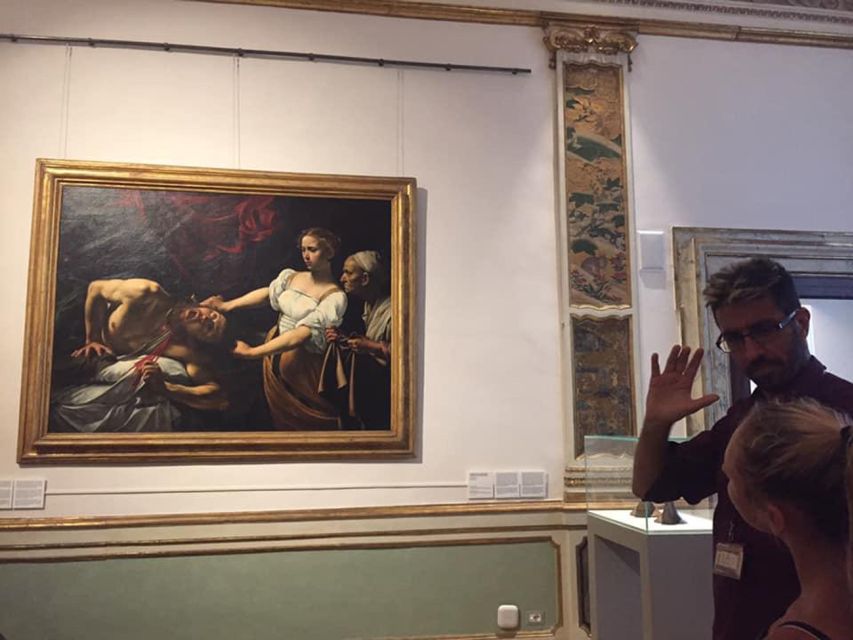
Caravaggio brings a different energy to the tour. His paintings are known for forceful light, ordinary-looking human figures, and scenes that can feel immediate rather than polished. The guide also discusses the difficult life that earned him the reputation of the Cursed Painter.
That personal story can be gripping, but it should not overpower the paintings. Caravaggio’s importance lies in what he did with light, drama, and realism, not only in his fights and scandals. A good explanation will show how his life and working methods affected the way people responded to his art.
Pay attention to the way light directs your eye. In Caravaggio’s work, illumination often does more than make a scene visible. It can separate the sacred from the ordinary, direct attention to a gesture, or heighten a moment of danger and surprise.
Because the tour is private, you can ask the guide to spend more time on Caravaggio if his work interests you most. This flexibility is one of the clearest differences between a private visit and a standard museum walk.
More Private Palace Tours in Rome
- Doria Pamphilj Palace Gallery and Museum Private Tour with Local Guide
★ 4.5 · 10 reviews - National Museum of Palazzo Massimo: 2-Hour Private Tour
★ 5.0 · 3 reviews
Looking Up at Pietro da Cortona’s Ceiling
Pietro da Cortona’s ceiling is a major visual change from the paintings viewed at eye level. Baroque art was designed to impress, and the ceiling makes that point immediately through scale, movement, and theatrical effect.
Do not rush through this part while looking only at the walls. Take a moment to look upward and let your eyes adjust to the full composition. A guide can explain how the work creates a sense of motion and how the painted architecture and figures contribute to the illusion.
The ceiling also gives you a useful explanation of Baroque taste. Earlier art often aimed for order and measured balance. Baroque artists frequently wanted drama, emotional force, and a sense that the painted world was breaking into the viewer’s space.
This is one reason a guided visit can be better than exploring alone. You might notice the ceiling, but without context you may not understand why it matters or how it fits the period. The guide can turn a spectacular sight into a readable one.
Ending in Piazza Navona
The tour’s highlights include ending the art walk in Piazza Navona, a central symbol of Rome’s Baroque style. This is a good idea in principle because it carries the story beyond museum walls. You see how Baroque ideas shaped public spaces as well as paintings and ceilings.
Piazza Navona gives you a chance to connect the art inside Palazzo Barberini with Rome’s urban theater. The broad square, fountains, and surrounding façades create a setting where power and religion were displayed in public.
There is one practical point to confirm before you go. The tour information also says the activity ends back at the museum meeting point, so the exact final route is not fully clear. Ask the provider whether Piazza Navona is part of the guided route and whether the activity finishes there or returns to Palazzo Barberini.
That detail matters if you have a restaurant reservation, another tour, or a timed ticket afterward. Do not build a tight schedule until you know where the guide will leave you.
Is $135.94 Per Person Good Value?
The price is $135.94 per person. That is high for a two-hour museum visit, but the comparison is not simply between this tour and an admission ticket.
The fee includes entry tickets, a live guide, and a private group. For a couple or small group that wants direct attention, the cost can make sense. You are paying for a planned route, explanations in real time, and the ability to ask questions without waiting for a large group to catch up.
It is less attractive if you mainly want to wander at your own pace or read the collection labels independently. You may find a standard museum visit better value if your budget is tight or if you already know the artists.
I would consider this tour most worthwhile when at least one person in your group has a strong interest in Italian art but does not want a full academic lecture. It also suits visitors with only a short window in Rome who want the major works placed in context.
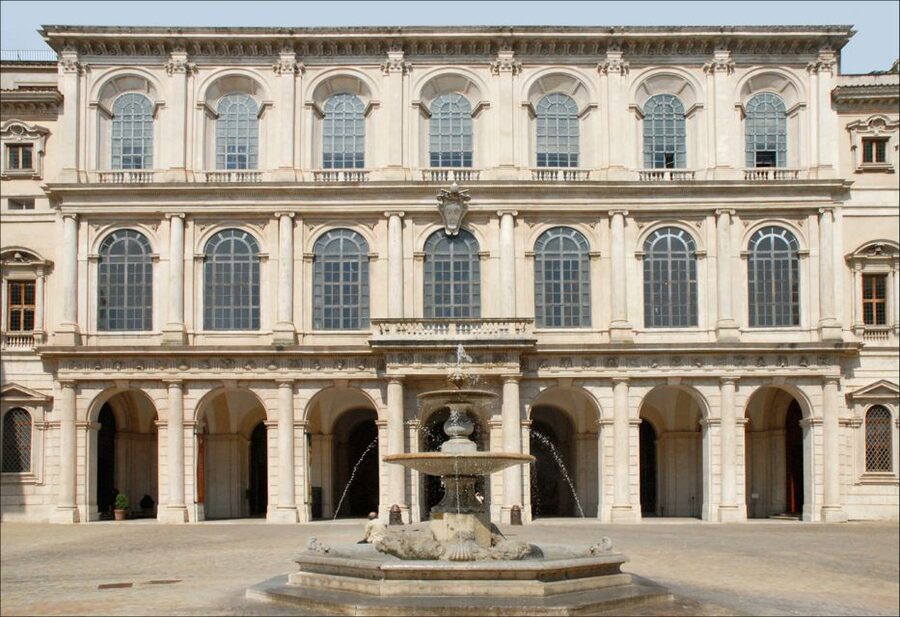
Hotel pickup and drop-off are not included, so you must arrange your own way to the museum and onward travel. Entry tickets are distributed at the start, and you should arrive 15 minutes early in the courtyard in front of the museum entrance, where the guide will hold a sign with the tour name.
Who Should Book This Private Visit?
You should consider booking if you want:
- A focused introduction to Italian art from the Middle Ages through the Baroque
- Direct access to an English- or Italian-speaking guide
- Time with Raphael, Caravaggio, Titian, El Greco, and Guido Reni
- A private setting where you can ask questions
- A guided explanation of Pietro da Cortona’s ceiling
- An art-based route that may continue toward Piazza Navona
This is not the best choice if you need step-free access or use a wheelchair. The activity is listed as unsuitable for people with mobility impairments and wheelchair users. Large bags and luggage are not allowed, so bring only what you need for the visit.
The tour runs rain or shine, though most of the experience takes place indoors. Children may need a passport or identity card, so bring the required identification if a child is joining your group.
The languages are English and Italian. The tour is private, but the supplied information does not specify the maximum group size, so ask if that point matters to you.
Should You Book Palazzo Barberini: 2-Hour Private Tour?
Book it if you want a short, guided art lesson built around major names and strong visual moments. Raphael’s La Fornarina, Caravaggio’s dramatic work and troubled story, and Pietro da Cortona’s ceiling give the visit a clear center.
I would especially recommend it for first-time visitors who want more than a quick look but do not want to spend half a day in a museum. At $135.94 per person, it is best treated as a premium private experience, not a bargain admission ticket.
Skip it if you prefer complete independence, have strict mobility needs, or want to cover a much larger collection at a lower cost. Before booking, confirm the final stop, ask about tailoring the route to your interests, and arrive early. Those small checks will help you get the most from a short but ambitious visit.
FAQ
How long does the Palazzo Barberini private tour last?
The tour lasts two hours.
What languages are available?
The live guide speaks English or Italian.
Is the tour private?
Yes. It is offered for a private group.
Are museum entry tickets included?
Yes. Entry tickets are included, and they are distributed at the start of the activity.
Where does the tour start?
You meet in the courtyard in front of the museum entrance. The guide will hold a sign with the tour name.
How early should I arrive?
You should arrive 15 minutes before the scheduled starting time.
Is hotel pickup included?
No. Hotel pickup and drop-off are not included.
Can I bring luggage or a large bag?
No. Luggage and large bags are not allowed.
Is the tour suitable for wheelchair users?
No. The activity is listed as unsuitable for wheelchair users and people with mobility impairments.
Can I cancel for a full refund?
Yes. You can cancel up to 24 hours in advance for a full refund.
More Two-Hour Trips in Rome
- Bangkok: 2 Hours Grand Palace & Wat Pho Private Tour
★ 4.9 · 15 reviews
Just added around Rome
- Palazzo Barberini (Bernini Exhibition Is Not Included)★ 4.0 · 34 reviews
- Rome: Dinner and Opera Performance at Palazzo Pamphili★ 4.9 · 14 reviews
- Rome: New Year’s Concert at Palazzo Doria Pamphilj with Tour★ 4.0 · 3 reviews
- National Museum of Palazzo Massimo: 2-Hour Private Tour★ 5.0 · 3 reviews
- Rome: Palazzo Braschi Reserved Entrance Ticket★ 3.7 · 9 reviews
- Lateran Palace Entry Ticket with Audio Guide★ 3.1 · 16 reviews
- Rome: Palazzo Barberini Guided Tour★ 4.6 · 31 reviews
- Colosseum, Roman Forum and Emperors’ Palace Private Guided Tour★ 5.0 · 14 reviews
Private Palace Tours, compared.
Alhambra Private/Small Group Tour & Nasrid Palaces Skip the Line
Read our review →
Grand Palace, Wat Pho, and Wat Arun Private Tour
Read our review →
Mutianyu Great Wall&Summer Palace Excursion:Group/Private Options
Read our review →
Private Tour of Sintra, Cabo da Roca and Cascais with 2 Palaces
Read our review →
Private 4hrs Venice Tour: Doge’s Palace, Grand Canal & St Mark’s
Read our review →
Knossos Palace Skip-the-Line Ticket & Private Guided Tour
Read our review →

Private Tour Sintra from Lisbon Palaces of Pena and Regaleira
Read our review →Browse the lists this tour appears in