
REVIEW · ROME
Private Tour – National Museum of Palazzo Massimo
Ancient Rome speaks through small details. This two-hour private visit to Palazzo Massimo brings calendars, ancestor worship, household decoration, mosaics, and religious customs into focus, rather than leaving you to puzzle over silent statues. I especially like the chance to see the Boxer at Rest and the frescoes from Villa Livia, two famous works that reward a closer look.
I also like that admission is included and that only your own group joins the guide. The main concern is reliability: one published account says the guide never arrived, even though the experience carries a 4.9 rating from 51 ratings and is recommended by 98 percent of customers. That isolated complaint is worth taking seriously when booking a private tour.
- The Boxer at Rest: See one of ancient Rome’s most arresting sculptures, with a guide to help explain its human detail and artistic purpose.
- Villa Livia frescoes: Examine painted garden scenes that show how wealthy Romans decorated their homes.
- Roman customs: Learn about calendars, ancestor worship, religious practice, and the way Romans honored the dead.
- Private format: Your group receives the guide’s attention instead of joining a large public walk.
- Central meeting point: Begin at Palazzo Massimo alle Terme, near public transportation, at 2:30 pm.
- Admission included: You pay one tour price, with museum tickets and professional guiding covered.
Why Palazzo Massimo Makes a Good Rome Museum Stop
Rome gives you ruins in the open air, but ruins rarely show how people used a building or lived with its decoration. Palazzo Massimo helps fill that gap. Here, the ancient world is presented through sculpture, wall painting, mosaics, objects, and evidence of daily customs.
That matters because a Roman column tells you only part of the story. Inside the museum, you can connect public monuments with private homes, religious habits, family memory, and the calendar that organized Roman life. The tour aims to give meaning to what you later see scattered around the city.
I like this approach for a first or second visit to Rome. You do not simply look at old things. You are encouraged to ask what they meant, who used them, and how ancient Romans viewed family, religion, status, and death.
The museum is also a sensible choice when the heat, crowds, or rain make an outdoor ruin less appealing. The tour lasts about two hours, long enough to focus on major themes without turning into an all-day museum session.
Meeting at Largo di Villa Peretti
The tour begins at Palazzo Massimo alle Terme, Largo di Villa Peretti 2, Rome. The stated start time is 2:30 pm, and the building is near public transportation, which makes it easier to reach from other parts of central Rome.
You will need to plan your route carefully enough to arrive before the start. A private guide has less flexibility than an informal stroll, and a late arrival can cut into your two-hour visit. Your booking confirmation is received at the time of booking, so check the meeting information before setting out.
One practical point matters immediately: bags and backpacks must be left in the museum checkroom. Carry only what you need for the visit, and allow a little time to deal with the required storage before the tour begins.
The tour ends back at the same meeting point. Since private transportation and hotel pickup are not included, you make your own way to the museum and continue independently after the visit.
More Private Palace Tours in Italy
- Private Tour – Palazzo Barberini
★ 5.0 · 23 reviews - Colosseum, Roman Forum and Emperors’ Palace Private Guided Tour
★ 5.0 · 14 reviews - Doria Pamphilj Palace Gallery and Museum Private Tour with Local Guide
★ 4.5 · 10 reviews
A Two-Hour Route Through Roman Ideas
The visit is built around themes rather than a simple march from case to case. You will look at how Romans used calendars, portrayed heroes, decorated homes, honored the dead, and practiced religion.
That structure gives the museum a human scale. Instead of treating each object as an isolated masterpiece, the guide can connect it to Roman institutions and habits. A calendar becomes evidence of how society organized time. A portrait becomes part of family memory or public honor. A fresco becomes a clue to the way a home was experienced.
The exact objects discussed can depend on the guide and the museum’s presentation, but the stated focus is clear. Expect an interpretation centered on ancient Roman life, artistic practice, religious belief, and domestic decoration.
For you, the value is in the conversation. If you already know Roman dates and emperors, you may appreciate the links between art and custom. If this is your first serious look at Roman antiquity, the guide’s explanations can provide a useful framework for the rest of your sightseeing.
Meeting the Boxer at Rest
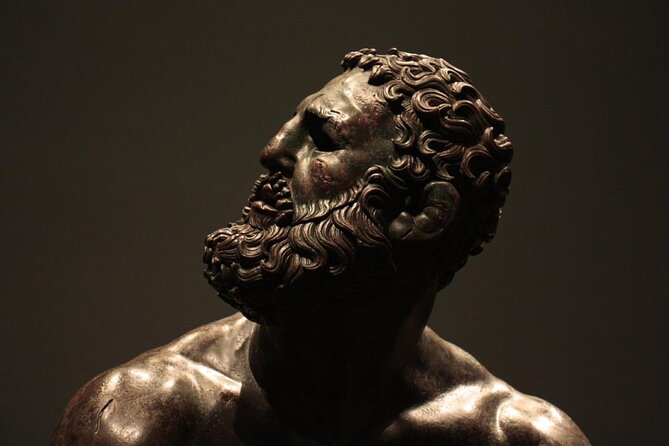
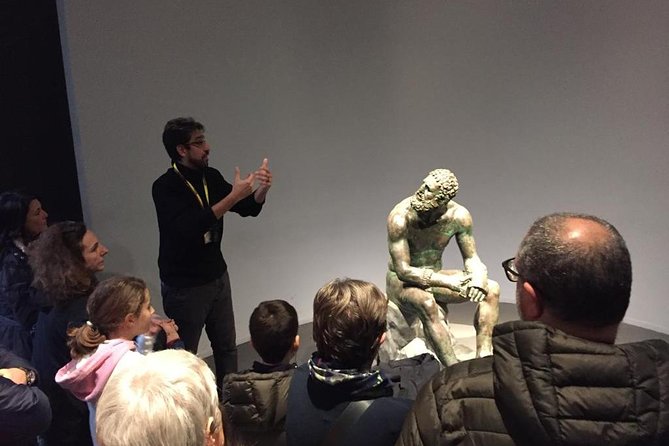
The Boxer at Rest is one of the major reasons to choose this museum. The sculpture presents a seated boxer after a fight, and its physical condition gives the figure a strong sense of fatigue and strain.
This is not an idealized hero posing without a mark on him. The work draws attention to the body, the face, and the cost of physical competition. A guide can help you look beyond its reputation and notice how the sculpture communicates effort, injury, and human vulnerability.
That kind of explanation is valuable in a private visit because you can spend time on what interests you. You might want to discuss the athlete’s expression, the treatment of the body, or the difference between a public hero and a tired individual. The experience is not described as a general museum admission with an audio device. It is a guided visit intended to give context to important works.
The sculpture is also a good test of what a guide adds. You can see it on your own, but a strong explanation may help you understand why this particular figure matters within ancient art. The one published complaint about a missing guide makes this point especially important: the museum collection remains worthwhile, but the promised interpretation is a central part of what you are paying for.
Villa Livia’s Painted Garden
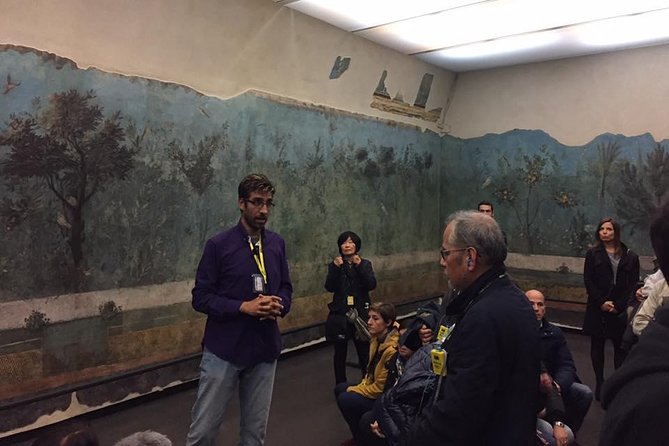
The frescoes from the Villa Livia offer a different experience from the bronze or marble sculpture. They show how Roman interiors could be transformed by painted decoration, making a room feel connected to nature even when the walls were solid.
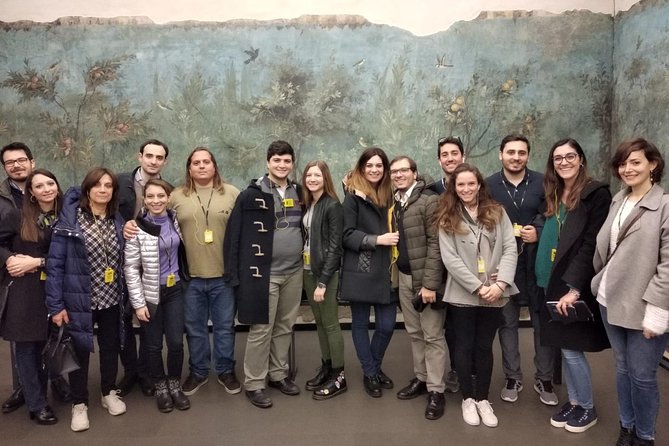
You will see frescoes associated with Villa Livia, the residence linked to Livia Drusilla, wife of Augustus. The supplied details do not specify every scene or room included in the visit, so it is best to think of this as a focused introduction rather than a guarantee of a particular sequence through the museum.
What makes the frescoes useful is their domestic setting. They help you picture how wealthy Romans decorated their houses and how art shaped everyday surroundings. After seeing them, Roman wall painting in other sites can feel less like damaged color on plaster and more like part of a carefully planned living space.
I would give these frescoes real time. They are easy to rush past because they do not have the physical drama of a large sculpture. Yet the painted surfaces tell you about taste, status, and the desire to bring an idealized natural world indoors.
More Private Palace Tours in Rome
- Palazzo Barberini: 2-Hour Private Tour
★ 4.9 · 9 reviews - National Museum of Palazzo Massimo: 2-Hour Private Tour
★ 5.0 · 3 reviews
Calendars, Ancestors, and Roman Religion
The tour also tackles subjects that are less instantly visual but just as useful. Ancient Roman calendars were not simply lists of dates. They helped organize festivals, public events, religious observances, and the rhythm of civic life.
Learning about the calendar can change how you read Roman ruins. A temple or forum was not merely a collection of impressive stones. It was part of a society shaped by recurring ceremonies, public duties, and sacred days.
Ancestor worship gives the visit another personal dimension. Roman families had ways to remember and honor the dead, and portraits could carry more than decorative value. They could help preserve family identity and connect the living with those who came before.
The religious material is also important because Roman belief was tied to both public institutions and private life. The tour promises to examine this religious side of ancient Rome, helping you see how worship affected buildings, objects, household customs, and communal traditions.
I like that these topics go beyond famous emperors and battles. They ask you to consider ordinary patterns of life, even if the surviving evidence often comes from wealthy or powerful people.
What a Private Guide Adds
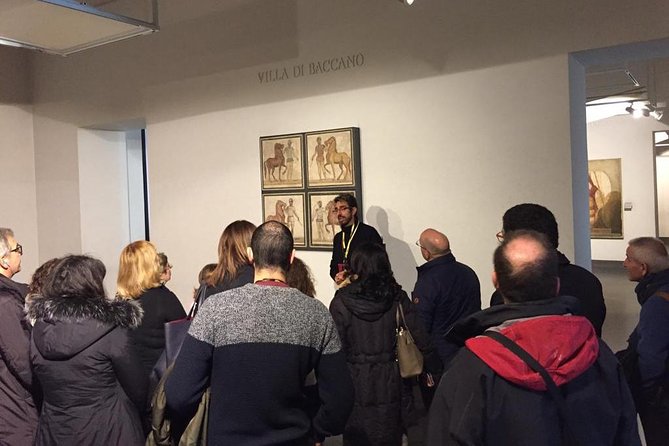
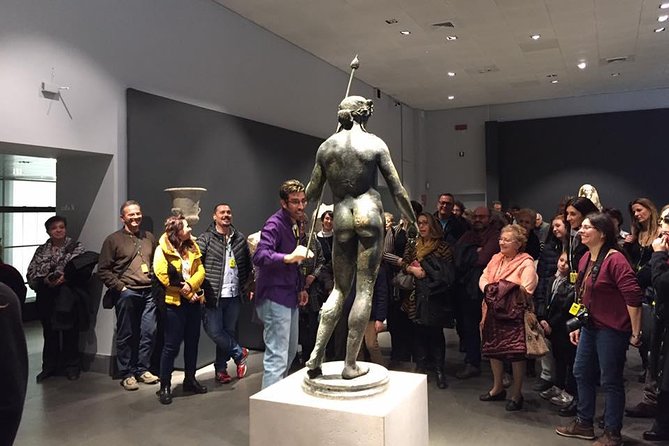
A private format means only your group takes part. That usually gives you more freedom to ask questions and more control over how long you pause at a sculpture, fresco, or display.
The included professional guide and local guide are listed as part of the experience, but no individual guide’s name is provided. That means you cannot select a particular expert in advance from the information available.
A private tour can be especially helpful if your group has mixed interests. One person may care about ancient religion, another about painting, and another about sculpture. A shared public tour has to keep moving at one pace, while a private visit can respond more directly to your questions.
Still, private does not automatically mean perfect. The one-star account says the guide did not show up and that the museum was visited without assistance. The same account praised the collection, which is a useful distinction: Palazzo Massimo itself may justify a visit, but the quality and arrival of the guide are central to the tour’s value.
The overall public score is very strong, at 4.9 from 51 ratings, with 98 percent recommending the experience. I would read that as reassuring but not as a reason to ignore the isolated service failure. Keep your booking confirmation available and verify the meeting details before you go.
Is $150.18 a Fair Price?
The listed price is $150.18 per person. That is a serious expense for a two-hour museum visit, particularly if you are traveling alone or with a small group.
The price includes admission tickets, a professional guide, and a local guide, and the experience is private. Those inclusions make the comparison different from buying a basic museum ticket and walking through alone. You are paying for interpretation, convenience, and exclusive attention, not just entry.
The value improves as your group grows, provided the tour allows the listed group discount to reduce the per-person cost. A family or group of friends may find the private format easier to justify than one person paying the full amount alone.
I would book it when you care about context and want a focused introduction to Roman art and customs. I would skip it when your priority is simply seeing the museum at the lowest possible cost. In that case, the collection itself may be enough, especially since there is no transportation or hotel service included.
The tour is commonly booked about 90 days in advance. That suggests you should not leave it until the final moment if the 2:30 pm time and private format matter to your plans.
Who Will Get the Most From This Visit?
This experience suits you if you enjoy museums more when someone explains the connections between objects. It is also a good match if Roman religion, family memory, home decoration, and daily customs interest you as much as famous statues.
Families and small groups may appreciate the private setting. You can ask questions without worrying about slowing down a large group, and younger members may find the human story behind the Boxer at Rest more engaging than a list of dates.
The visit also works well for people who have seen Rome’s main ruins but feel they are missing the social side of the city. The tour gives you ideas to carry into the Forum, temples, villas, and other archaeological sites.
You may want to choose another plan if you dislike guided museum visits or prefer to spend several hours wandering at your own pace. Two hours is a useful introduction, but it will not cover every object in a national museum.
The experience is offered in English. Most people can participate, and it is near public transportation, but the provided details do not give more specific access information. If you need particular arrangements, ask the provider before booking.
Booking, Cancellation, and Practical Limits
You receive confirmation at booking, and free cancellation is available until 24 hours before the 2:30 pm start time. Canceling less than 24 hours in advance means the payment is not refunded, and changes inside that period are not accepted.
The cutoff uses local Rome time. That detail matters if you are arranging the tour from another time zone or changing plans during a busy trip.
Remember that hotel pickup, hotel drop-off, and private transportation are not included. You meet at Palazzo Massimo alle Terme, leave bags and backpacks in the checkroom, and return to the meeting point when the two-hour activity ends.
Should You Book the Palazzo Massimo Tour?
I would book this private tour if you want ancient Rome explained through art and daily life, not just famous ruins. The Boxer at Rest, Villa Livia frescoes, Roman calendars, ancestor worship, and religious practice give the visit a clear purpose, while included admission and a private group make the arrangement simple.
I would hesitate only if the price feels high for two hours or if you are comfortable exploring without a guide. The missing-guide complaint is a real warning, although the strong 4.9 rating and 98 percent recommendation rate point to a generally positive experience.
For a small group that values personal explanation, this is a focused and worthwhile museum visit. Confirm the meeting details, arrive early, and treat the guide as the main reason to book, with Palazzo Massimo’s excellent collection as the safety net.
FAQ
Where does the tour begin?
It begins at Palazzo Massimo alle Terme, Largo di Villa Peretti 2, 00185 Rome, Italy.
What time does the tour start?
The stated start time is 2:30 pm.
How long does the experience last?
The visit lasts approximately two hours.
Is admission to Palazzo Massimo included?
Yes. The price includes the museum admission tickets.
Is this a private tour?
Yes. Only your group participates in the activity.
Is the tour offered in English?
Yes. English is the listed language.
Is transportation included?
No. Private transportation and hotel pickup and drop-off are not included.
Do I need to leave my backpack somewhere?
Yes. Bags and backpacks must be left in the museum checkroom.
More Museum Visits in Rome
- Palazzo Barberini (Bernini Exhibition Is Not Included)
★ 4.0 · 34 reviews - Venice’s Best: Basilica, Doge’s Palace, Gondola & History Gallery
★ 4.5 · 2,478 reviews - Royal Palace & Prado Museum Skip the Line Guided Tour
★ 4.5 · 1,347 reviews - Venice: City Pass with Museums including Doge’s Palace
★ 4.1 · 1,020 reviews
Just added around Rome
- Palazzo Barberini: 2-Hour Private Tour★ 4.9 · 9 reviews
- Palazzo Barberini (Bernini Exhibition Is Not Included)★ 4.0 · 34 reviews
- Rome: Dinner and Opera Performance at Palazzo Pamphili★ 4.9 · 14 reviews
- Rome: New Year’s Concert at Palazzo Doria Pamphilj with Tour★ 4.0 · 3 reviews
- National Museum of Palazzo Massimo: 2-Hour Private Tour★ 5.0 · 3 reviews
- Rome: Palazzo Braschi Reserved Entrance Ticket★ 3.7 · 9 reviews
- Lateran Palace Entry Ticket with Audio Guide★ 3.1 · 16 reviews
- Rome: Palazzo Barberini Guided Tour★ 4.6 · 31 reviews
Private Palace Tours, compared.
Alhambra Private/Small Group Tour & Nasrid Palaces Skip the Line
Read our review →
Grand Palace, Wat Pho, and Wat Arun Private Tour
Read our review →
Mutianyu Great Wall&Summer Palace Excursion:Group/Private Options
Read our review →
Private Tour of Sintra, Cabo da Roca and Cascais with 2 Palaces
Read our review →
Private 4hrs Venice Tour: Doge’s Palace, Grand Canal & St Mark’s
Read our review →
Knossos Palace Skip-the-Line Ticket & Private Guided Tour
Read our review →

Private Tour Sintra from Lisbon Palaces of Pena and Regaleira
Read our review →Browse the lists this tour appears in