
REVIEW · ROME
Palazzo Massimo Roman Museum and Diocletian’s Baths Private Tour with Phd Guide
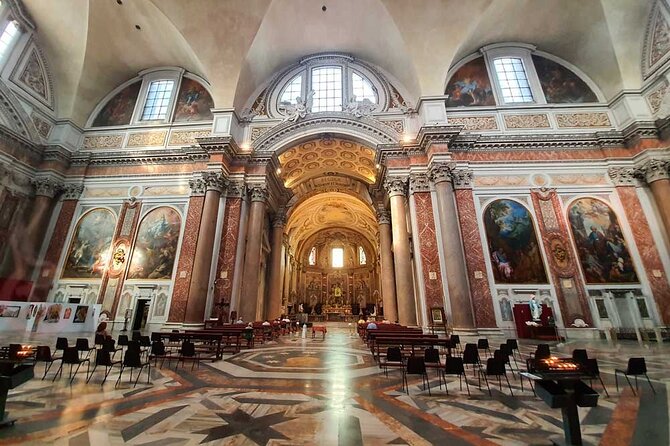
Two Roman museums, one focused afternoon. This private tour pairs Palazzo Massimo with the Baths of Diocletian, giving you ancient art and monumental ruins without having to plan two separate visits. I like the one-on-one format, and I like that a guide with archaeological training can explain not only what an object is, but where and how it was found.
The main consideration is the price: $270.89 per person is a serious outlay for about three hours. Since private transportation is not included, you also need to reach the starting point at Largo di Villa Peretti on your own. Still, for travelers who want focused attention, fluent English guidance, and plenty of time for questions, this is a strong way to explore a quieter side of ancient Rome.
Key points to know before booking
- Two National Roman Museum branches in one tour: You visit Palazzo Massimo alle Terme and the Baths of Diocletian in a single outing.
- A private guide for your group only: You get direct attention rather than following a large mixed group.
- Archaeology adds useful context: Guide Tomas is praised for his passion, humor, and ability to explain how artifacts were discovered.
- Two hours at Palazzo Massimo: The longer museum visit gives ancient Roman art the attention it deserves.
- One hour at the Baths of Diocletian: You see the remains of Rome’s largest imperial bath complex.
- Free cancellation up to 24 hours ahead: This gives you some protection if your Rome plans change.
Why these two museums work well together
Rome can make ancient history feel scattered. One site gives you sculpture, another gives you ruins, and a third offers inscriptions or household objects. This tour brings two parts of that story together.
At Palazzo Massimo, you look closely at ancient Roman art in a former Neo-Renaissance palace. At the Baths of Diocletian, you move from individual works to a huge public complex built for Roman bath culture. The combination helps you connect the polished object in a display case with the massive buildings and civic life that once surrounded it.
I like this pairing because it avoids the usual Roman greatest hits for a while. You are not spending the afternoon rushing between the Colosseum, Roman Forum, and other headline sites. Instead, you get a calmer museum visit followed by one of Rome’s major archaeological complexes.
The tour lasts about three hours. Two hours are reserved for Palazzo Massimo, while one hour is given to the baths. That balance makes sense. The palace contains a broad collection of ancient Roman art, while the baths are more about scale, ruins, and the setting itself.
More Private Palace Tours in Italy
- Private Tour – National Museum of Palazzo Massimo
★ 5.0 · 51 reviews - Private Tour – Palazzo Barberini
★ 5.0 · 23 reviews - Colosseum, Roman Forum and Emperors’ Palace Private Guided Tour
★ 5.0 · 14 reviews
Palazzo Massimo: ancient art in a former palace
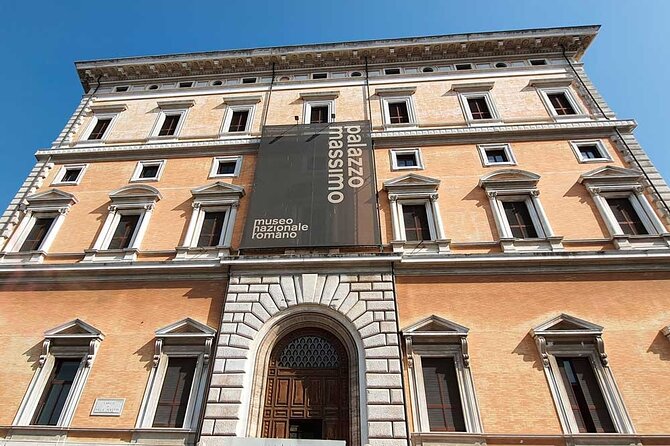
The first stop is Museo Nazionale Romano Palazzo Massimo, also called Palazzo Massimo alle Terme because of its location near the Baths of Diocletian. The building itself is part of the appeal. It is a Neo-Renaissance palace that once served as a Jesuit college before becoming part of the National Roman Museum.
That change in purpose gives the visit a nice contrast. You enter an elegant later building to see art made many centuries earlier. The setting feels more measured than a vast outdoor ruin, and the indoor galleries give your guide room to focus on details that are easy to miss when you are tired or distracted.
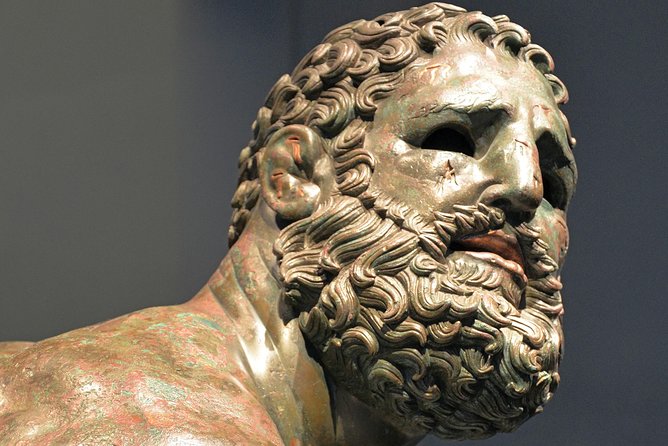
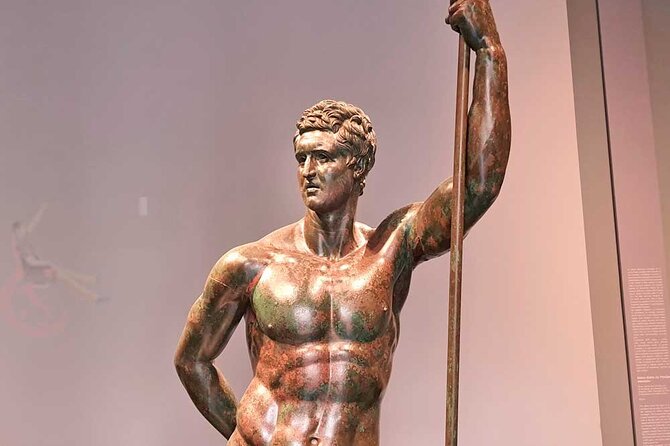
The collection covers ancient Roman art, with masterpieces and archaeological finds presented inside the museum. The supplied details do not provide a complete object-by-object list, so you should not expect a fixed checklist of famous works. Your guide will lead you through the major points, with the exact emphasis shaped by the collection and your questions.
This is where a private tour has a practical advantage. In a large public museum, it is easy to walk past an object without knowing why it matters. With your own guide, you can stop and ask about its date, purpose, discovery, or connection to Roman society. You can also ask for more explanation when a sculpture or artifact catches your eye.
A particularly useful feature is the guide’s archaeological background. One guide, Tomas, is described as a working archaeologist who can explain where, when, and how artifacts were found. That kind of information changes the way you look at museum objects. An ancient statue is not just an isolated work of art. Its excavation, location, and survival all shape what you are seeing today.
Tomas is also praised for being passionate, considerate, responsive, and fun. That combination matters. A guide can know a great deal and still make a museum visit feel like a lecture. Here, the available feedback points to someone who welcomes questions and keeps the tone lively.
The two-hour timing is generous enough to make Palazzo Massimo the heart of the experience. You should expect a guided selection rather than an attempt to inspect every room. That is a good thing. Ancient collections reward attention, and trying to cover everything would turn the visit into a march.
The Baths of Diocletian: Rome on a grand public scale
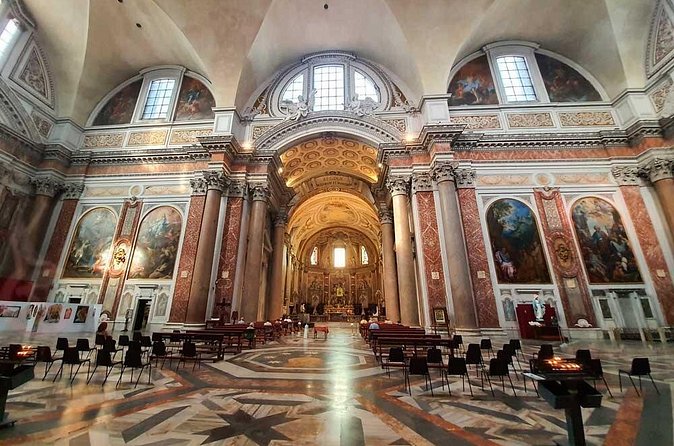
The second stop is the National Roman Museum branch at the Baths of Diocletian. These were public baths and the largest of the imperial baths in Rome. Even from the basic description, the scale is the key point: this was not a small neighborhood facility but a major public complex.
After two hours with portable artworks and museum displays, the baths change the rhythm. You begin thinking about architecture, public space, and the sheer amount of labor needed to create an imperial bath complex. The site gives you a sense of Rome as a city built for large crowds and ambitious public projects.
The one-hour visit is shorter than the Palazzo Massimo portion, but it is enough to give the ruins a clear place in the story. A guide can help you understand what you are seeing rather than leaving you to interpret fragments on your own. You can ask how the baths functioned, what the ruins represent, or how the site fits into the National Roman Museum.
The baths may appeal most to you if you like archaeology in its physical form. Palazzo Massimo asks you to study objects. Diocletian’s Baths ask you to read the remains of a huge complex. Together, they offer both close-up detail and broad scale.
There is also a welcome sense of contrast between the two stops. Palazzo Massimo is a preserved palace used for galleries. The baths are the remains of an ancient public institution. The tour does not force you to choose between art and ruins. It gives you both, with the guide providing the bridge.
What a private tour changes
The private format is the strongest selling point. Only your group participates, so the guide can adjust the pace and answer questions without worrying about a large crowd. If you want to spend more time on Roman sculpture, you can ask. If you are more interested in excavation methods or the daily function of the baths, you can steer the conversation in that direction.
That flexibility is especially useful for mixed-interest groups. One person may care about art, another about architecture, and another about how archaeologists recover objects from the ground. A shared tour often has to keep moving. A private guide can respond to the interests in front of them.
The tour is offered in English. That removes one common concern for English-speaking visitors, especially in museums where labels may not explain every object in detail. You also have the simple benefit of being able to ask questions as they occur to you.
The guide’s personality matters here. Tomas is described as knowledgeable in the supplied comments, but that word alone does not tell you much. The more useful details are that he is a working archaeologist, passionate about the subject, considerate, fun, and eager to answer questions. Those traits suggest an experience that is both serious and easy to follow.
The four published ratings are all five stars, but the sample is small. I would treat that as encouraging rather than conclusive. The praise is consistent on the important points: the guide’s command of the subject, his enthusiasm, and the value of having an archaeologist explain the finds.
More Private Palace Tours in Rome
- Doria Pamphilj Palace Gallery and Museum Private Tour with Local Guide
★ 4.5 · 10 reviews - Palazzo Barberini: 2-Hour Private Tour
★ 4.9 · 9 reviews - Private Guided Day Tour to Pompeii and the Royal Palace of Caserta
★ 5.0 · 5 reviews - Skip-the-Lines Barberini Palace Museum and Gallery Private Tour
★ 5.0 · 4 reviews
Is $270.89 per person good value?
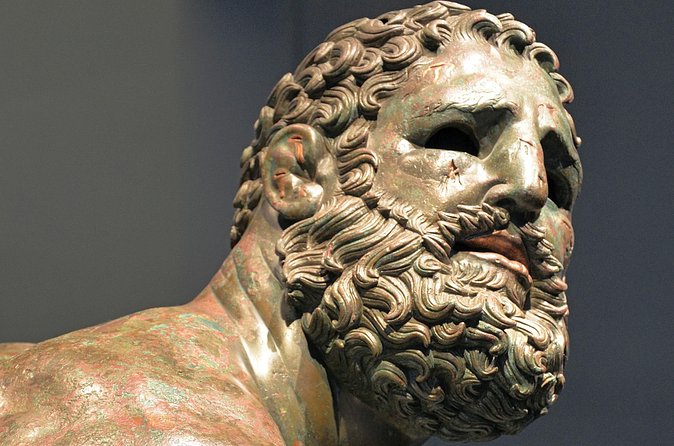
At $270.89 per person, this is not a budget museum visit. You are paying for a private experience, a specialist guide, and admission to both locations. The price makes more sense for a couple, family, or small group that values personal attention and can share the cost across the group.
The tour also includes entrance fees, so you do not need to buy those separately. Group discounts are available, which may improve the calculation for larger private parties. Since no private transport is included, you should also account for your own travel to Largo di Villa Peretti and back into your Rome plans.
I would not choose this tour simply to save time. Three hours is a substantial block, and the two museums can be visited independently if you prefer to read labels and set your own pace. The reason to pay more is the interpretation. You are buying a guide who can connect objects to excavation, explain the site, and respond to your interests.
For a first-time visitor with limited knowledge of Roman archaeology, that guidance can prevent a museum from becoming a blur of marble and stone. For a repeat visitor, the archaeological angle may provide a fresh way to see Roman art and ruins you might otherwise skip.
Timing, meeting point, and practical details
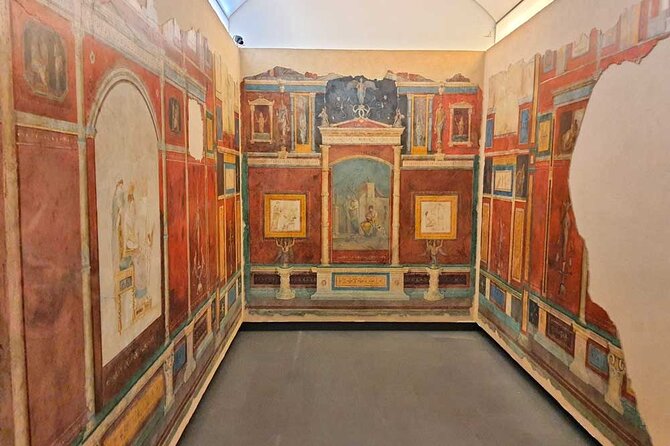
The tour begins at the National Roman Museum, Palazzo Massimo alle Terme, at Largo di Villa Peretti, 2, 00185 Roma RM, Italy. The activity ends back at the meeting point, so you should plan your next stop from there rather than assume the guide will take you elsewhere.
The location is near public transportation, which makes the starting point easier to reach than a remote archaeological site. Still, transportation is not included. Give yourself enough time to arrive at the museum entrance, since the tour starts there and confirmation is sent when you book.
The tour is private and offered in English. Service animals are allowed, and most people can participate. The supplied information does not describe every physical feature of the route, so if you have specific mobility needs, contact the provider before booking.
Admission fees are included. Free cancellation is available if you cancel at least 24 hours before the local start time. Changes or cancellations made inside that 24-hour window are not accepted for a refund, so keep an eye on Rome time when your plans are uncertain.
Who will appreciate this Roman museum tour?
I would recommend it most strongly to anyone who wants expert explanation rather than a quick walk through two museums. It suits art lovers, archaeology students, history-minded families, and repeat visitors who have already seen Rome’s most famous ancient sites.
It is also a good match for people who prefer a quiet museum setting. One comment describes Palazzo Massimo as a particularly enjoyable place for Roman art because it feels calm compared with the rest of Rome. That does not promise an empty museum at every hour, but it does point to a less hectic experience than the city’s biggest attractions.
The tour may be less appealing if you want maximum independence. You will follow a planned three-hour visit, with two hours at Palazzo Massimo and one hour at the baths. You also pay a premium for a private guide when a self-guided visit would cost less.
Families should consider the children’s attention span. The private setup allows questions and some flexibility, but the subject is ancient art and archaeology rather than an activity designed specifically for children. The guide’s humor may help, though the tour is best for children who can handle a museum-focused afternoon.
My verdict: book it for the guide, not just the tickets
I would book this tour if I wanted to understand what I was seeing, especially if the chance to speak with a working archaeologist mattered to me. Palazzo Massimo provides the art, Diocletian’s Baths provide the monumental ruins, and the private format gives you room to ask the questions that make both places memorable.
I would skip it if $270.89 per person feels too high or if I prefer to wander alone with an audio guide or museum labels. The four five-star ratings are encouraging, but the sample is small, so the safest reason to book is the clear match between your interests and the experience.
Choose it for focused attention, archaeological context, and two important museums in one afternoon. If that sounds better than another crowded run through Rome’s headline sights, this tour earns serious consideration.
FAQ
How long does the tour last?
The tour lasts approximately three hours. About two hours are spent at Palazzo Massimo and one hour at the Baths of Diocletian.
Which museums are included?
The tour includes Museo Nazionale Romano Palazzo Massimo alle Terme and the National Roman Museum branch at the Baths of Diocletian.
Is the tour private?
Yes. Only your group participates in the private tour.
Is the tour offered in English?
Yes. The experience is offered in English.
Are entrance fees included?
Yes. Admission to both stops is included in the tour price.
Is private transportation included?
No. Private transportation is not included. You are responsible for reaching the meeting point and making your own arrangements after the tour.
Where does the tour begin and end?
It begins at the National Roman Museum, Palazzo Massimo alle Terme, Largo di Villa Peretti, 2, 00185 Rome. The activity ends back at the meeting point.
Can I cancel for a full refund?
Yes, if you cancel at least 24 hours before the experience start time. Cancellations or changes made less than 24 hours before the start time are not refunded.
More Museum Visits in Rome
- Rome: Palazzo Venezia Reserved Entrance with Museum
★ 4.2 · 52 reviews - Palazzo Barberini (Bernini Exhibition Is Not Included)
★ 4.0 · 34 reviews - National Museum of Palazzo Venezia in Rome
★ 3.0 · 10 reviews - Doria Pamphilj Gallery and Palace Private Tour
★ 5.0 · 4 reviews
More Diocletian's Palace Tours in Rome
- Split: Old Town and Diocletian Palace Walking Tour
★ 4.9 · 4,727 reviews - Walking Tour of Split and Diocletian’s Palace
★ 5.0 · 2,588 reviews - Split & Diocletian’s Palace Walking Tour
★ 5.0 · 1,125 reviews - Split: Diocletian Palace & Old Town Guided Walking Tour
★ 4.7 · 882 reviews
Just added around Rome
- Prince for a day, Colonna Palace complete tour, package price★ 5.0 · 5 reviews
- Skip-the-Lines Barberini Palace Museum and Gallery Private Tour★ 5.0 · 4 reviews
- The Colonna Palace Walking Tour★ 5.0 · 6 reviews
- Roman Domus of Palazzo Valentini Ticket★ 4.0 · 42 reviews
- Paint & Sip in a 17th-Century Palazzo with Wine & Pizza★ 4.5 · 18 reviews
- Rome, Vittoriano Rooftop View and Palazzo Venezia Official Entry★ 4.0 · 12 reviews
- Rome Barberini Palace Guided Tour★ 3.5 · 5 reviews
- Doria Pamphilj Gallery and Palace Private Tour★ 5.0 · 4 reviews
Diocletian's Palace Tours, compared.
Walking Tour of Split and Diocletian’s Palace
Read our review →

Diocletian Palace & Old Town Guided Walking Tour
Read our review →

Game of Thrones Tour with Diocletian’s Palace Cellar
Read our review →
Diocletian’s Palace and Old Town SMALL GROUP Walking Tour
Read our review →
Browse the lists this tour appears in