
REVIEW · BEIRUT
Exclusive Excursion: Discover Baalbek, Anjar, and Chateau Ksara
Baalbek, Anjar, and wine make a fine Lebanese day. This 8-hour private outing links colossal Roman temples, an Umayyad city, and Chateau Ksara in the Bekaa Valley. I like the private car and driver-guide, which keeps the long road from Beirut comfortable, and I like the chance to taste Lebanese wine without anyone in your group needing to drive.
The strongest parts are the personal service and the mix of sites. You get two UNESCO-listed places plus Lebanon’s oldest winery, all in one day. The catch is simple: admission fees and lunch are not included, so the $70 price is attractive but not the final cost.
Key points to know before booking
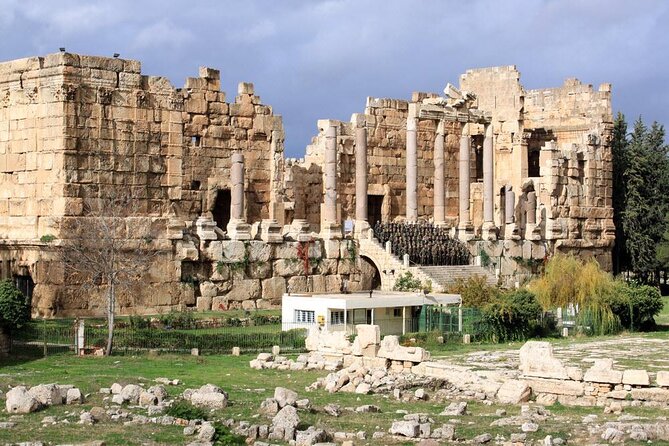
- Baalbek delivers the day’s biggest spectacle: Roman temples built on a huge scale, including the Temple of Jupiter and the Temple of Bacchus area.
- The Stone of the Pregnant Woman adds a useful engineering puzzle: this enormous Roman block helps explain how extreme the Baalbek building project was.
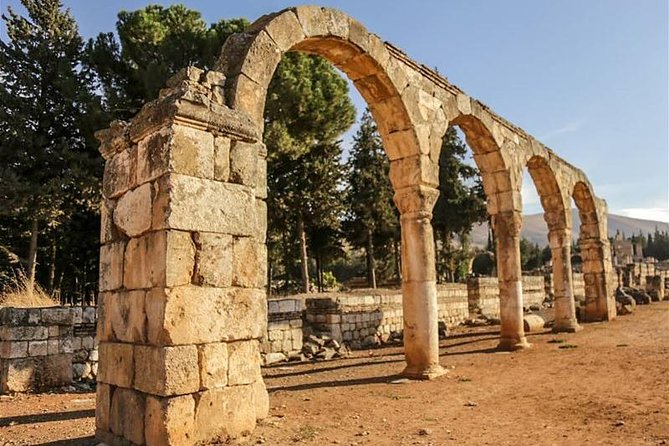
- Anjar changes the mood completely: its Umayyad ruins show a planned Islamic city with palaces, baths, a mosque, and Roman-style columns.
- Chateau Ksara makes the private vehicle especially useful: you can sample Lebanese wine without turning the return drive into a problem.
- Hotel pickup and drop-off simplify a long day: the tour begins at about 8:30 am and includes air-conditioned private transport.
- The $70 rate is strongest for couples or small groups: remember to add site admissions and lunch when comparing the total cost.
Why this Beirut day trip works
This excursion is built around contrast. Baalbek is monumental and Roman. Anjar is more compact, Islamic, and planned around trade. Chateau Ksara brings the day into modern Lebanon through wine production that began in 1857.
I like that the schedule does not force you to choose between ancient sites and a food or wine stop. Many day trips from Beirut focus on one famous attraction. This one makes the long trip into the Bekaa Valley feel worthwhile by giving you three very different reasons to go.
The private format matters more than it might at first appear. You are not joining a large coach with a fixed social rhythm. Your group gets a driver, a tour leader, and a local guide, with round-trip hotel transportation included. That gives you a better chance to ask questions, pause at the places that interest you, and relax between stops.
The day is still ambitious. Baalbek and Anjar are not quick urban sights near central Beirut. Much of the eight-hour duration goes into driving, and the stated sightseeing times add up to only about three hours. That is not a flaw, but you should think of this as a full excursion into the Bekaa Valley, not a leisurely series of long museum visits.
More Chateau and Wine Estate Tours in Beirut:
- Guided Private Full Day Tour to Baalbek, Anjar and Chateau Ksara
★ 5.0 · 60 reviews - Small Group Tours to Baalbek, Anjar & Chateau Ksara with lunch and Tickets
★ 5.0 · 29 reviews - Guided Full-Day Private Trip to Cedars, Baalbek and Chateau Ksara
★ 5.0 · 10 reviews
Leaving Beirut in a private car
Pickup begins at about 8:30 am. The exact pickup arrangement is not otherwise detailed, but hotel pickup and drop-off are included, so you avoid finding your own way to a distant meeting point.
The air-conditioned vehicle is a practical advantage. The Bekaa Valley excursion covers a fair distance, and a private ride gives you a quieter place to rest between ancient sites. It also solves the wine question. You can sample at Chateau Ksara without assigning one person in your group to remain completely dry for the drive back.
The tour is private, meaning only your group participates. That is useful for families, couples, and friends who want to keep the pace together. It is also a good fit if you prefer asking your guide about religious sites, Roman construction, or Lebanese wine rather than listening to a general speech designed for a busload of people.
The tour includes both a tour leader and a local guide. Their individual names are not provided, so you should not book expecting a particular guide. The important point is the combination of personal transport and local explanation, rather than a self-guided visit with only a driver.
Baalbek and the Roman scale of the Bekaa
The first major stop is Baalbek, about one hour of sightseeing. The sanctuary sits at roughly 1,150 meters, at the foot of the Anti-Lebanon range beside the fertile Bekaa plain.
The setting helps explain why this place mattered. Baalbek grew into a major religious center during Roman times, and construction continued for more than two centuries. The sanctuary was associated with the Romanized Heliopolitan Triad: Jupiter, Venus, and Bacchus. Beneath those Roman names was an older Phoenician religious tradition.
You should expect great columns, broad stone platforms, and blocks that make ordinary Roman ruins look modest. The site’s appeal is not just age. It is the physical size of the project. The Roman builders were working with stone on a scale that still raises questions about quarrying, transport, and construction.
The Temple of Jupiter is the dramatic centerpiece, while the Temple of Bacchus is known for its remarkable preservation and ornate Roman detail. The supplied schedule gives Baalbek about an hour, so you will need to use that time well. I would keep your attention on the overall design first, then spend your remaining minutes on the architectural details your guide points out.
Admission to Baalbek is not included. That means you should carry some extra money for entry, since the $70 tour price covers the private transportation and guiding but not every site charge.
A short stop at the Sayeda Khawla Mosque
The route also includes the Mosque of Sayeda Khawla in Baalbek. It is associated with Sayyida Khawla, the daughter of Imam al-Hussein, who is believed to have been buried at the site.
This stop adds a religious dimension that the Roman sanctuary cannot provide. Baalbek is not only an archaeological destination. It remains a place connected to living belief and pilgrimage.
The information provided does not give a separate duration for the mosque, so you should think of it as a brief part of the Baalbek portion rather than a long independent visit. Dress and behave respectfully at a religious site, and follow your guide’s instructions about where you may go.
More Palace Day Trips in Beirut:
- Full-Day Private Trip to Jeita Grotto, Baalbek and Chateau Ksara
★ 5.0 · 8 reviews - DeirElkamar, Beitdeen, Moussa Palace, EinwZien Grotto,Full-Day Trip PRIVATE-CAR
★ 5.0 · 5 reviews - Full-Day Private Tour to Beiteddine, Deir El Qamar, Mousa Palace
★ 5.0 · 2 reviews - PRIVATE Half-Day Tour to Beiteddine Palace & Deir elQamar
★ 5.0 · 2 reviews
The Stone of the Pregnant Woman
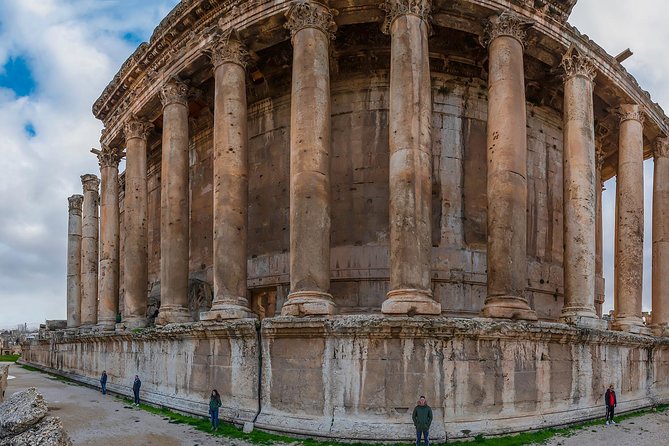
A 15-minute stop at the Stone of the Pregnant Woman gives you a close look at one of the region’s most striking ancient building blocks. This worked Roman monolith, along with another nearby block, ranks among the largest stones ever quarried.
The name is memorable, but the engineering problem is the real attraction. These blocks were apparently intended for the nearby temple complex. Their sheer size helps you understand why Baalbek can feel less like a normal Roman ruin and more like a giant construction site frozen in time.
Admission is listed as free. Fifteen minutes is enough for a look and some photographs, though not for a long archaeological discussion. I would use this stop to ask the guide how the stone may have been cut and moved. The answers make the main temple complex more meaningful when you return to its giant foundations and columns.
Anjar, an Umayyad city at a crossroads
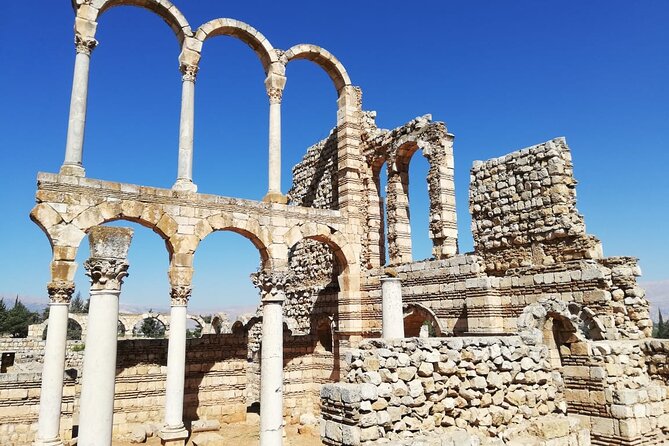
Anjar receives about 45 minutes. The ruins belonged to an Umayyad inland commercial center positioned where routes from Beirut to Damascus and from Homs toward Tiberiade met across the Bekaa.
This site feels different from Baalbek from the moment you begin looking at the plan. Instead of one enormous sanctuary, you see the remains of an organized city. The ruins include the walls of an Umayyad palace, harems, a mosque, the caliph’s great palace, thermal baths, and many columns with Roman architectural features.
That mixture is what makes Anjar worth adding. The city reflects Umayyad planning while also borrowing visible forms from Roman building traditions. You get a clearer sense of daily urban life here: administrative buildings, bathing facilities, religious space, and palatial areas rather than one dominant temple precinct.
Archaeologists found the ancient city only in the late 1940s. That relatively recent rediscovery gives the site a different feel from Baalbek, which has been famous for centuries. You may find Anjar quieter and easier to read as a city, even though the ruins are less visually overwhelming.
Forty-five minutes is a brisk visit. You can see the main remains, but you will not have time to linger over every wall or pillar. Admission is not included, so add another entry fee to your budget. A guide is particularly useful here because the low walls and foundations can be difficult to interpret without a plan.
Chateau Ksara and Lebanon’s wine tradition
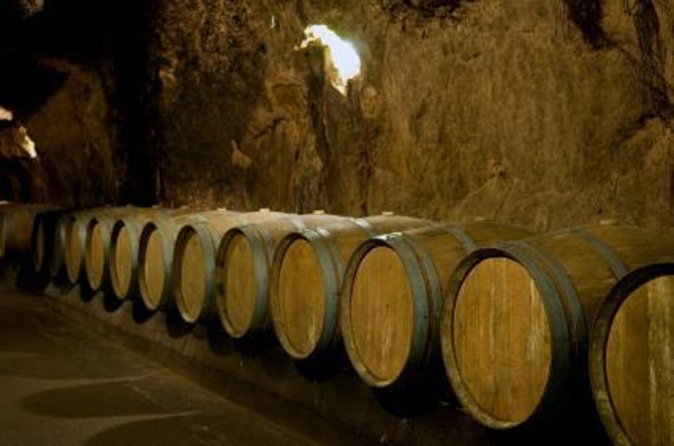
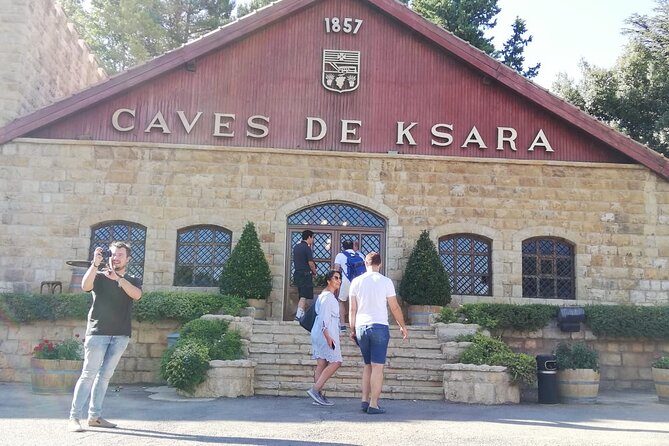
The final major stop is Chateau Ksara, where the tour spends about an hour. Founded by Jesuit priests in 1857, it is Lebanon’s oldest winery and produced the country’s first dry wine.
The visit includes a cellar tour and wine tasting. Chateau Ksara now produces roughly three million bottles each year and exports to more than 40 countries. Those figures give the tasting some useful context: this is not simply a small local stop added to fill the afternoon. It is a major Lebanese wine producer with an international market.
The winery is also the most relaxed part of the day. After Roman columns and Umayyad walls, you can slow down, hear about the production process, and sample local wines. I like this ending because it connects the Bekaa Valley’s agricultural setting with a modern Lebanese product you can actually taste.
The tasting is the reason private transport earns its keep. Driving and wine sampling are a poor combination, and the tour removes that concern. You can enjoy the stop while your driver handles the road.
The tour data does not specify how many wines you taste, which cellar areas you enter, or what food is served. Do not book it expecting a full meal or a detailed wine course. Lunch is not included, and the winery visit is listed at about one hour, so plan your food budget separately.
What the $70 price really buys
At $70 per person, the price is appealing for a private full-day outing that includes hotel pickup, drop-off, an air-conditioned vehicle, a tour leader, and a local guide. The value improves if you are traveling with a small group and can share the private experience while still paying per person.
You are also paying for convenience. Organizing Baalbek, Anjar, and Chateau Ksara independently would mean arranging transport across the Bekaa Valley, handling site admissions, and deciding who drives after the tasting. Here, those practical jobs are bundled into one day.
Still, compare the headline price with the real day’s cost. Baalbek and Anjar admissions are extra, Chateau Ksara admission is extra, and lunch is not included. The total will therefore be higher than $70, though the exact amount depends on the entrance prices in effect when you visit.
The price is less compelling if you only want one archaeological site. In that case, a shorter and simpler outing might suit you better. This tour earns its value through variety and private transport, not through long periods at any single attraction.
Who should book this excursion?
I would recommend it to you if you have limited time in Beirut and want a broad view of the Bekaa Valley in one day. It suits first-time visitors who want major ancient sites without giving up a local wine experience.
It is especially useful for couples, families, and friends who value privacy. You can set the tone of the day within the limits of the schedule, and you avoid sharing the vehicle with strangers.
The excursion also suits anyone who does not want to drive in Lebanon. The private car, air conditioning, and door-to-door transfers remove much of the practical strain from a distant day trip.
I would hesitate if you want slow archaeological study. Baalbek receives about an hour, Anjar about 45 minutes, and the Stone of the Pregnant Woman 15 minutes. The schedule favors breadth over long, careful exploration.
You should also check the total budget before booking. The base fare does not include lunch or admission tickets, and the schedule is long enough that you will want to plan for food and drinks.
The tour has a five-star rating from six submitted ratings, with particular praise for the guides, the impressive Roman monument at Baalbek, the wine at Ksara, and the excitement of the full outing. That is a small sample, so treat it as encouraging rather than final proof. The strongest pattern is clear, though: the combination of friendly guiding, private transport, and varied stops is the main appeal.
Cancellation and booking notes
Confirmation is provided at booking, and the activity is private for your group. Most people can participate, according to the supplied information.
Free cancellation is available if you cancel at least 24 hours before the local start time. Cancellations or changes made less than 24 hours ahead are not accepted for a refund, so check your plans before the deadline.
Final call: book it for variety and ease
Book this excursion if you want Baalbek’s huge Roman remains, Anjar’s planned Umayyad ruins, and Lebanese wine in one organized day from Beirut. The private vehicle and driver make the route practical, while the tasting means nobody in your group has to sacrifice the wine stop to drive home.
Skip it if your priority is an unhurried archaeological visit or a fully inclusive day with lunch and entrance tickets covered. For most visitors with one free day, though, the mix is well judged: two major historic sites, one distinctive winery, and transport that keeps the day manageable.
FAQ
What time does the tour start?
The listed start time is 8:30 am.
How long does the excursion last?
The experience lasts approximately eight hours.
Is hotel pickup included?
Yes. Hotel pickup and drop-off are included, along with private air-conditioned transportation.
Is this a private tour?
Yes. Only your group participates in the activity.
Are admission tickets included?
No. Admission is not included for Baalbek, Anjar, or Chateau Ksara. The Stone of the Pregnant Woman is listed as free.
Is lunch included?
No. Lunch is not included in the tour price.
Can I cancel for a full refund?
Yes, if you cancel at least 24 hours before the local start time. Cancellations or changes made less than 24 hours before the start are not refunded.
Just added around Beirut
- Palace of Dreams – Oyoun El Samak – Zahlan Grotto – Jabal El Arbaaine★ 4.5 · 5 reviews
- Full-Day Private Tour to Beiteddine, Deir El Qamar, Mousa Palace★ 5.0 · 2 reviews
- Half-Day Private Tour to Baalbek & Chateau Ksara★ 5.0 · 8 reviews
- Deir Al-Qamar, Beiteddine Palace and Barouk Cedars Tour★ 4.5 · 6 reviews
- DeirElkamar, Beitdeen, Moussa Palace, EinwZien Grotto,Full-Day Trip PRIVATE-CAR★ 5.0 · 5 reviews
- Beirut to Beiteddine: Private Journey Through Palaces & Villages★ 4.5 · 2 reviews
- Deir el Qamar – Beiteddine Palace – Chouf Cedars From Beirut★ 5.0 · 7 reviews
- Guided Half-Day Private Trip to Beiteddine Palace and Deir el Qamar★ 5.0 · 2 reviews
Chateau and Wine Estate Tours, compared.
Medoc or Saint Emilion Wine Tasting and Chateau from Bordeaux
Read our review →
Versailles Château and Gardens Walking Tour from Paris by Train
Read our review →
Loire Valley: Château Royal d’Amboise Entrance Ticket
Read our review →
Fontainebleau & Vaux-le-Vicomte Châteaux Day Tour from Paris
Read our review →
Browse the lists this tour appears in