
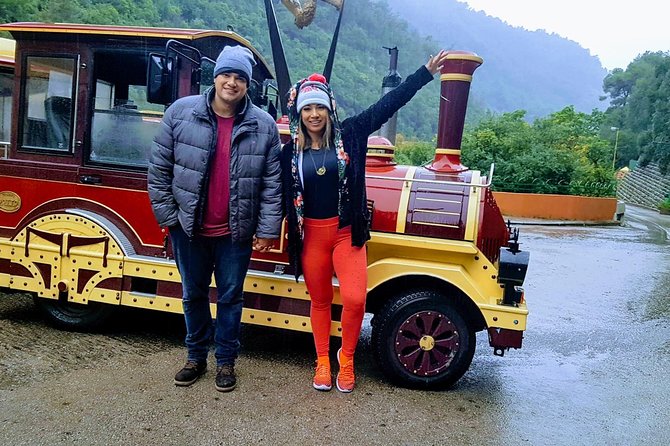
REVIEW · BEIRUT
Full-Day Private Trip to Jeita Grotto, Baalbek and Chateau Ksara
Lebanon packs big sights into one long day. This private trip links Jeita Grotto, the immense Roman ruins at Baalbek, and Chateau Ksara in the Bekaa Valley, with hotel pickup, a private air-conditioned vehicle, and a local guide at Baalbek. I like the freedom of traveling with only your own group, and I like the mix of nature, ancient history, and Lebanese wine.
The two best features are the door-to-door transport and the expert help at Baalbek, where the scale of the temples is hard to grasp without context. The main drawback is the pace: nine hours is a lot of road time, and entrance fees are not included. You will need to keep moving, especially if you want time for both caves and a proper winery visit.
Key points to know before booking
- Three very different sights in one day: You go from limestone caves to Roman temples and then to a working Lebanese winery.
- Private transport from Beirut: Pickup and drop-off make this far easier than arranging several separate rides.
- Baalbek gets the most attention: The Temple of Jupiter, Temple of Bacchus, Temple of Venus, and Stone of the Pregnant Woman fill much of the day.
- Jeita Grotto includes boat and walking sections: The lower gallery uses an underground river and lake, while the upper cave is filled with dramatic mineral formations.
- Wine tasting is included, but lunch is not: Plan for your own meal budget and ask how much time is available for lunch.
- Fees need checking: The tour price is listed at $69.45 per person, but cave and archaeological-site admission charges are extra.
Why this private day works from Beirut
The tour starts around 8:30 a.m. and lasts about nine hours. That makes it a full day rather than a relaxed outing, but it also lets you visit three of Lebanon’s best-known attractions without changing hotels or piecing together local transport.
I especially like the private format. Your group gets its own vehicle, driver, tour leader, and local guide at Baalbek. That matters on a route with several long stretches of driving. You can ask questions, adjust the rhythm within reason, and avoid spending the day waiting for a large group to gather.
The drive also connects three parts of Lebanon that feel quite different. Jeita sits near Beirut, Baalbek lies in the Bekaa Valley near the Anti-Lebanon range, and Chateau Ksara is in the wine-producing Bekaa region. The route gives you a broad introduction to the country, but the price is time. You should be comfortable spending much of the day in a vehicle.
The $69.45 price is attractive for a private trip if you are sharing it with friends or family. It covers transportation, hotel pickup and drop-off, the tour leader, the Baalbek guide, and wine tasting. It does not cover lunch or entrance fees, so the final cost will be higher than the advertised fare. Group discounts may also be available, making this a stronger deal for a small party.
More Chateau and Wine Estate Tours in the world:
- From Lisbon: Sintra, Pena Palace & Wine Tasting Small-Group Tour
★ 5.0 · 252 reviews - Lisbon: Sintra, Pena Palace & Wine Tasting Small-Group Tour
★ 4.9 · 156 reviews - Full-Day Private Sintra Tour with Wine Tasting and Pena Palace
★ 5.0 · 67 reviews
Inside Jeita Grotto: boats, formations, and a strict schedule
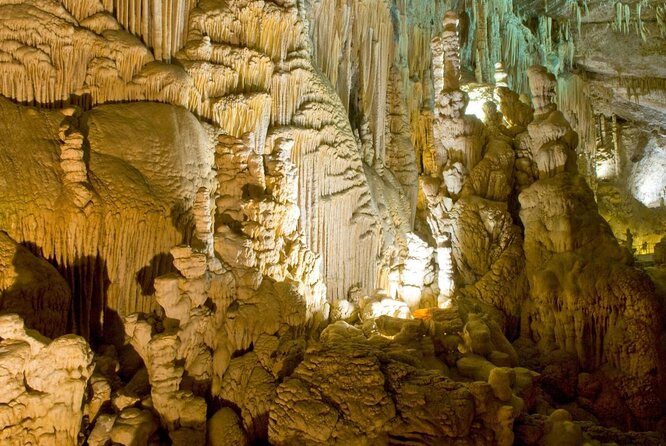
Your first major stop is Jeita Grotto, a connected system of limestone caves about 300 metres above sea level. The cave system has formed over millions of years and includes an upper gallery and a lower gallery separated by about 60 metres.
The upper cave is the visual showstopper. It stretches for about 2,130 metres and contains stalactites, stalagmites, columns, curtains, draperies, ponds, and other mineral shapes. Some formations appear delicate and thin, while others look like heavy stone pillars. The setting is cool, dark, and very different from the open air of Beirut.
The lower gallery extends for about 6,200 metres and includes a smooth underground river and lake. A boat ride is part of the experience, followed by time on foot. The water section gives the cave a quieter mood than the upper gallery, while the walking route lets you study the rock formations at close range.
You get roughly 90 minutes here. That is enough for the main experience, but not enough for a slow, wandering visit. Jeita is explored independently, so you should pay attention to the meeting time and keep the schedule in mind. The cave entrance fee is not included, and the supplied information does not give the exact price. Bring extra cash or confirm the current fee before departure.
Jeita is a good opening stop because it is atmospheric and relatively easy to appreciate without a long history lesson. The tradeoff is that you may wish for more time, particularly if you enjoy photography or want to stop often.
Baalbek gives the day its ancient scale
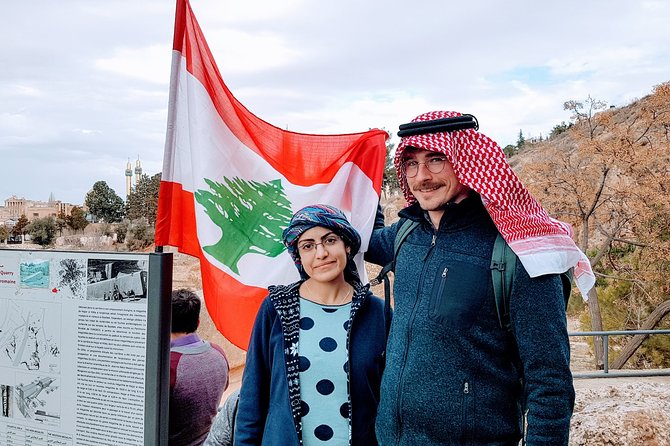
Baalbek is the heart of the excursion. The site was known as Heliopolis during the Hellenistic period and later became an important Roman sanctuary. Its religious tradition drew on a Phoenician triad associated with Jupiter, Venus, and Bacchus.
The remains are famous for their size. Roman builders worked on the sanctuary for more than two centuries, creating platforms, courtyards, columns, and temples on a massive scale. A local guide is included here, and that is valuable. Without explanation, you see huge stones and broken columns. With context, you begin to understand how the complex functioned as a place of worship and pilgrimage.
The Temple of Jupiter is the most imposing part of the complex. Construction probably began around 16 BC and was nearly complete by about AD 60. The temple occupied a raised platform at the western end of the Great Court, with enormous foundation stones beneath it. Three of those blocks are among the heaviest stones used in ancient construction.
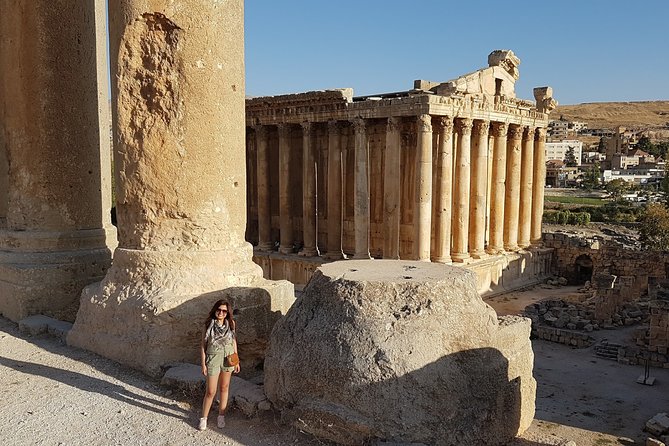
The surviving columns and elevated platform help you picture the original building, even though much of the temple has disappeared. Give yourself time to look down at the foundation stones and then up at the remaining architecture. The contrast explains why Baalbek feels larger than a normal ruin site.
The Temple of Bacchus is smaller than the Temple of Jupiter, but it is exceptionally well preserved and richly decorated. Its ornamentation dates to the second century CE. Carved details remain visible around the doorway and interior, so this is the place to look closely rather than simply take a wide photograph.
The Temple of Venus has a different shape. Built in the third century, it uses a horseshoe-shaped platform and a circular shrine with a square entrance. Niches decorated with dove and shell motifs are linked to its dedication to Venus. This smaller building gives you a useful change of scale after the huge Jupiter complex.
The site is listed as a UNESCO World Heritage Site, and admission charges are not included in the tour price. One part of the supplied schedule describes Baalbek admission as free, while several individual stops say admission is excluded. Treat the fees as extra and confirm the current arrangement before setting out. That small bit of planning can prevent an awkward surprise at the gate.
Beyond the temples: local faith and the Stone of the Pregnant Woman
The Baalbek visit also includes two stops that broaden the story beyond the main Roman sanctuary.
The Mosque of Sayyeda Khawla is associated with the belief that Sayyida Khawla, the daughter of Imam al-Hussein, was buried there. Local tradition connects the site to the passage of captives from Karbala. It offers a different view of Baalbek, linking the city to living religious practice rather than only to ancient stonework.
The Stone of the Pregnant Woman is a worked Roman monolith near the temple complex. Together with another nearby block, it is among the largest ancient stones ever quarried. The block was likely intended for the Roman sanctuary but was never used in the final construction.
The stop lasts about 15 minutes, so do not expect a long archaeological visit. It is a quick but worthwhile pause. The stone helps explain the sheer ambition of Baalbek’s builders, especially after you have seen the temple foundations.
Several Baalbek entries in the schedule repeat the same temple complex, with time allocations of 30 to 90 minutes. In practical terms, you should expect one extended archaeological visit rather than separate, fully independent tours of each temple. Your local guide will likely connect the monuments into one walk.
More Palace Day Trips in the world:
- Neuschwanstein Castle and Linderhof Palace Day Trip from Munich
★ 4.5 · 1,756 reviews - From Paris: Giverny and Versailles Palace Guided Day Trip
★ 4.5 · 1,324 reviews - Downton Abbey Village, Blenheim Palace and Cotswolds Day Trip from London
★ 4.5 · 1,139 reviews - Beijing: Mutianyu Great Wall & Summer Palace Day Tour
★ 4.8 · 1,004 reviews
Chateau Ksara brings wine into the Bekaa Valley
The last stop is Chateau Ksara, a Lebanese winery founded by Jesuit priests in 1857. The winery developed Lebanon’s first dry wine and now produces about three million bottles each year, exporting to more than 40 countries.
The visit lasts about 45 minutes and includes a winery tour and tasting. The experience is a pleasant change after the outdoor ruins. Instead of studying columns and foundations, you get an introduction to Lebanese wine production and a chance to sample several vintages.
The tour description points to French-style Lebanese wines, which makes sense in a country with a long connection to French wine culture. Chateau Ksara gives you a specific producer to understand rather than a vague tasting with no sense of place.
Wine tasting is included, but lunch is not. Since this is the final stop, you should not assume the winery visit includes a full meal. Ask about the day’s meal break when you are picked up, or plan to buy lunch separately if the schedule permits.
A practical note: the tour includes a private driver, but you should not plan to drink heavily. The driver handles the road, yet the route is long and the tasting is one part of a much larger day. Treat it as a cultural stop with wine, not as a leisurely afternoon at a vineyard.
Guides, service, and the private format
The company’s guide team has included Hassan, Makram, Kaleeb, Ahmad, and Kimal. Feedback about the service has praised punctual pickups, clear communication, friendly drivers, and strong local explanations. Hussein, who handles bookings, has also been described as responsive when schedules changed.
Those details matter because this tour depends on coordination. You have several major stops, multiple admission arrangements, and a long drive between Beirut and the Bekaa Valley. A driver who arrives on time and a guide who keeps the day organized can make the difference between a satisfying visit and a rushed one.
Kaleeb was praised for being patient and informative, while Makram was noted for friendly and professional service. Ahmad handled a last-minute booking without delay, and Kimal helped make the history of Lebanon easier to understand. You may not receive one of these guides, but the pattern suggests that guide quality is a major strength of the operation.
The private format also gives you more breathing room than a large coach tour. You can ask for clarification at Baalbek, spend less time at a stop that does not interest you, or request more explanation when the schedule allows. Do not expect unlimited flexibility, though. Jeita, Baalbek, and Chateau Ksara still need to fit into a nine-hour window.
Who should book this and who should skip it
I would choose this trip if you are staying in Beirut and want to cover several major sights in one day. It suits first-time visitors, history fans, couples, families, and small groups that value a private vehicle. It is also useful if you prefer not to arrange separate transport to Jeita, Baalbek, and the Bekaa Valley.
The tour is a particularly good match for a group of two to four people. You share the private vehicle while spreading the per-person cost, and you get more control over questions and timing. Group discounts could improve the value further.
I would think twice if you dislike long drives, need a slow pace, or want a full wine-country experience. Chateau Ksara receives only about 45 minutes, and Baalbek alone could easily fill a day for anyone who likes archaeology. The three-stop plan favors variety over depth.
You should also budget for site admissions and lunch. The listed price is good for private transport and guiding, but it is not an all-inclusive fare. Confirm the current entrance charges before you leave Beirut.
Free cancellation is available if you cancel at least 24 hours before the start time. Changes or cancellations inside that window are not accepted for a refund.
Should you book the Jeita, Baalbek, and Ksara day?
Book it if you want a practical introduction to Lebanon’s caves, Roman past, and wine culture without managing the transport yourself. The private setup, door-to-door pickup, and Baalbek guide give the tour real value, while the mix of stops keeps the day varied.
Skip it if you want long, unhurried visits or a serious winery day. For everyone else, this is a strong one-day overview. Bring money for entrance fees and lunch, wear comfortable shoes, and accept that the road time is part of the deal.
FAQ
How long does the tour last?
The experience lasts approximately nine hours.
What time does the tour start?
The scheduled start time is 8:30 a.m.
Is hotel pickup included?
Yes. Hotel pickup and drop-off in Beirut are included.
Is this a private tour?
Yes. Only your own group participates in the private activity.
Is transportation air-conditioned?
Yes. Transportation is provided in a comfortable, air-conditioned private vehicle.
Is a guide included at Baalbek?
Yes. A local guide in Baalbek is included, along with a tour leader.
Are entrance fees included?
No. The tour information says that admission fees for Jeita Grotto and the archaeological attractions are not included. One Baalbek entry is marked free, so confirm the current fee arrangements before departure.
Is lunch included?
No. Lunch is not included in the tour price.
Is wine tasting included at Chateau Ksara?
Yes. Wine tasting is included, along with the winery visit.
More Full-Day Trips in the world
- Versailles Full Day Bike Tour with Palace, Gardens, & Picnic
★ 5.0 · 2,217 reviews - Beijing Classic Full-Day Tour including the Forbidden City, Tiananmen Square, Summer Palace and Temple of Heaven
★ 4.0 · 610 reviews - Full-Day; Castle, Palace, Cathedral & Viking ships Tour
★ 5.0 · 326 reviews - Full Day Tour: Sintra, Pena Palace, Cabo da Roca, Cascais
★ 5.0 · 310 reviews
More Private Palace Tours in the world
- Alhambra Private/Small Group Tour & Nasrid Palaces Skip the Line
★ 4.5 · 921 reviews - Bangkok: Grand Palace, Wat Pho, and Wat Arun Private Tour
★ 4.8 · 855 reviews - Mutianyu Great Wall&Summer Palace Excursion:Group/Private Options
★ 5.0 · 816 reviews - Private Tour of Sintra, Cabo da Roca and Cascais with 2 Palaces
★ 5.0 · 770 reviews
Just added around the world
- Pena Palace, Moorish Castle,Quinta ad Regaleira:Walking tour★ 5.0 · 3 reviews
- Porto Bishop’s Palace Guided Tour★ 4.5 · 8 reviews
- Paris: Versailles Palace and Queen Hamlet E-Bike Tour★ 5.0 · 126 reviews
- Phnom Penh: Full-Day City Tour with Royal Palace & Killing …★ 4.7 · 2 reviews
- Petchaburi Temples & Royal Palace – small Join Group Tour★ 4.6 · 46 reviews
- Paris: Versailles Golf Cart & Bike Tour with Palace Entry★ 4.8 · 58 reviews
- Petit Palais Paris Museum of Fine Arts Tour with Tickets★ 4.2 · 3 reviews
- Paris: Palace of Versailles Private Tour with Transportation★ 5.0 · 2 reviews
Chateau and Wine Estate Tours, compared.

Medoc or Saint Emilion Wine Tasting and Chateau from Bordeaux
Read our review →
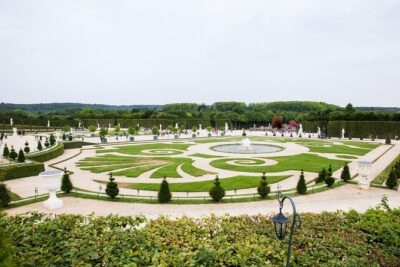
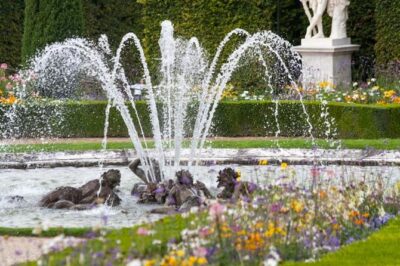
Versailles Château and Gardens Walking Tour from Paris by Train
Read our review →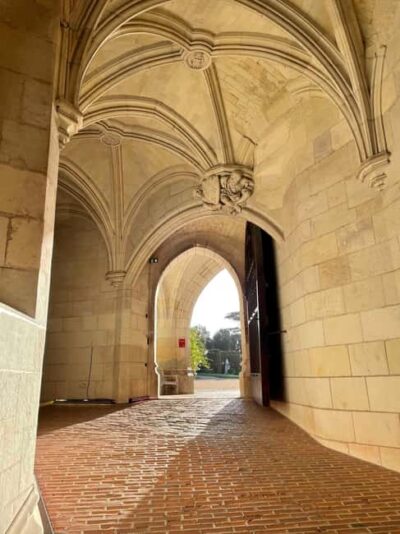
Loire Valley: Château Royal d’Amboise Entrance Ticket
Read our review →
Fontainebleau & Vaux-le-Vicomte Châteaux Day Tour from Paris
Read our review →
Browse the lists this tour appears in