
REVIEW · BEIRUT
Guided Half-Day Private Trip to Beiteddine Palace and Deir el Qamar
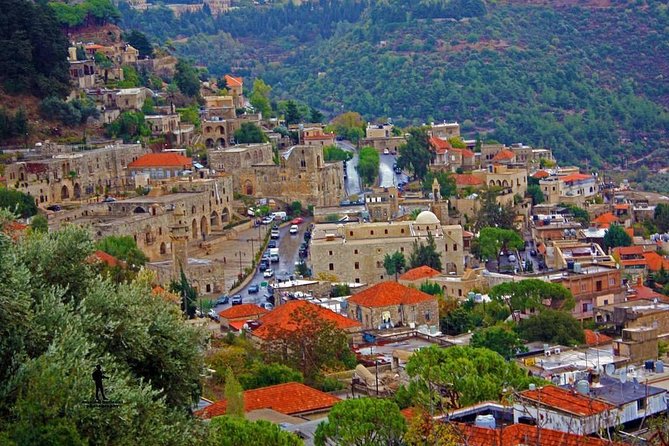
Mount Lebanon rewards a slower day. This private six-hour trip from Beirut takes you into the Chouf for Beiteddine Palace and Deir el Qamar, two places that explain Lebanon through architecture, politics, faith, and village life. I like the front-door hotel pickup and the fact that your group has its own vehicle and guide. I also like the compact mix of a palace, an old mosque, and a historic church.
The main point to consider is cost. At $100 per person, this is not the cheapest way to reach the Chouf, especially since palace admission and lunch are extra. Still, the price makes more sense if you value private transportation, an arranged route, and personal attention instead of piecing the day together yourself.
Key points to know before booking
- Beiteddine Palace takes about 90 minutes, with admission paid separately.
- Deir el Qamar is only about five kilometres from the palace, so the two major stops fit neatly into one outing.
- The route links a mosque and a church, offering a clear look at the area’s pluralist past.
- Hotel pickup and drop-off are included from any hotel accommodation in Beirut.
- The tour is private, so only your own group participates.
- Albert may be your driver, and his helpful restaurant suggestions and cultural knowledge were singled out as valuable additions to a Lebanon visit.
Why this six-hour Chouf trip works from Beirut
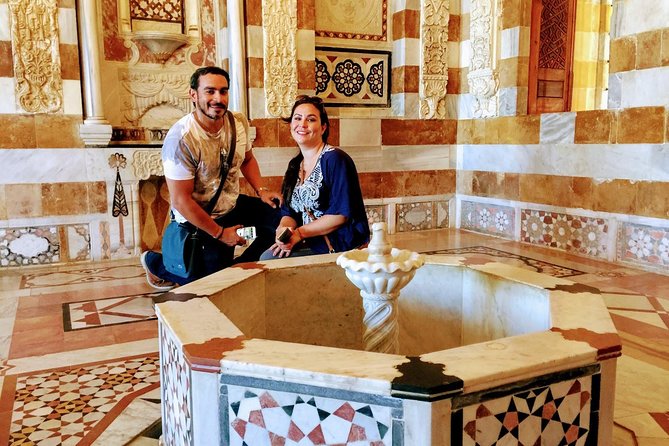
Beirut is the practical base for this excursion, but the Chouf gives you a very different sense of Lebanon. The trip moves from the capital to mountain towns shaped by emirs, religious communities, Ottoman rule, the French Mandate, and the Lebanese Civil War.
The schedule is listed as approximately six hours. The stops themselves total about two and a half hours: 90 minutes at Beiteddine Palace, 30 minutes in Deir el Qamar, and 15 minutes each at Fakhreddine’s Mosque and Saydet Al Talle Church. The remaining time allows for driving, hotel transfers, and the natural pauses of a private day.
That matters because you are not paying for six hours of nonstop sightseeing. You are paying for a manageable day beyond Beirut, with transport taken care of and enough time to see the main sites without racing from one door to the next.
The private format is especially useful if you have limited time in Lebanon. You can ask questions as you go, spend more attention on the places that interest you, and avoid being tied to the pace of a large group. It also gives you a quieter ride through the Chouf, where the road itself is part of the experience.
More Private Palace Tours in Beirut:
- Guided Private Full Day Tour to Baalbek, Anjar and Chateau Ksara
★ 5.0 · 60 reviews - Guided Full-Day Private Trip to Cedars, Baalbek and Chateau Ksara
★ 5.0 · 10 reviews - Half-Day Private Tour to Baalbek & Chateau Ksara
★ 5.0 · 8 reviews
Beiteddine Palace: an emir’s grand mountain residence
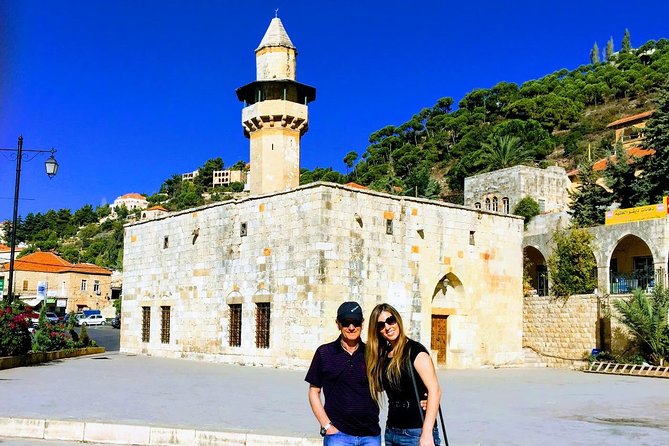
Your main visit is Beiteddine Palace, a 19th-century complex in the town of Beiteddine. Emir Bashir Chehab II began building it in 1788, and construction continued until 1818. The name Beiteddine means House of Faith, a fitting title for a building that later passed through several political eras.
The palace was not simply a country home. Emir Bashir became ruler of the Mount Lebanon Emirate, and the palace reflected his power and ambition. After 1840, the Ottomans used it as a government building. Under the French Mandate, it became a local administrative office. In 1943, it was declared the official summer residence of Lebanon’s president.
That sequence gives the visit real substance. You are looking at more than an ornate residence. The building tracks the changing authority of the mountain region, from local emirate to Ottoman administration, French rule, and the modern Lebanese state.
Plan on about one hour and 30 minutes here. That is enough time for a serious visit to the parts open to the public, though it is not an endless palace tour. Some areas remain part of the president’s summer residence, so access is not total.
The palace also suffered heavy damage during the Lebanese Civil War. Knowing that before you arrive changes how you see the site. Its appeal is not only decoration or scale. It is the survival of a major political building through periods of upheaval, with some sections restored or open while other areas remain restricted.
The palace hosts the annual Beiteddine Festival and contains the Beiteddine Palace Museum. These uses give the site a life beyond its historical role. Depending on the day and current access, you may find that the museum and public rooms provide the clearest look at the palace’s artistic and civic importance.
Admission is not included, so set aside extra money for the entrance fee. The tour price covers transport and guiding, but not every cost once you reach the attractions.
Deir el Qamar: a village shaped by several faiths
Only about five kilometres from Beiteddine, Deir el Qamar makes a natural second stop. Its name means Monastery of the Moon, and the village has an unusually layered religious and civic past.
Deir el Qamar became Lebanon’s first village with a municipality in 1864. It was also home to people from different religious communities. At various points, the town included a mosque, synagogue, and Christian churches. That mix is not an abstract idea here. You can see it in the short walk between the principal religious sites.
The village was destroyed by fire during the 1860 conflict between Druze and Christians. Napoleon III sent a French contingent to help rebuild it. That detail helps explain why Deir el Qamar is worth more than a quick photograph. Its buildings and institutions reflect both local divisions and outside intervention.
The scheduled village stop lasts about 30 minutes, not counting the visits to the mosque and church. That is a concise introduction rather than a full walking tour. If you like architecture, local politics, or religious history, use your private guide to ask questions while you move through the town.
The private arrangement should help here. Deir el Qamar’s importance is easy to miss if you only hear a few names and dates. A good guide can connect the municipality, the 1860 destruction, the rebuilding effort, and the village’s religious mixture into one understandable story.
Fakhreddine’s Mosque and its unusual octagonal minaret
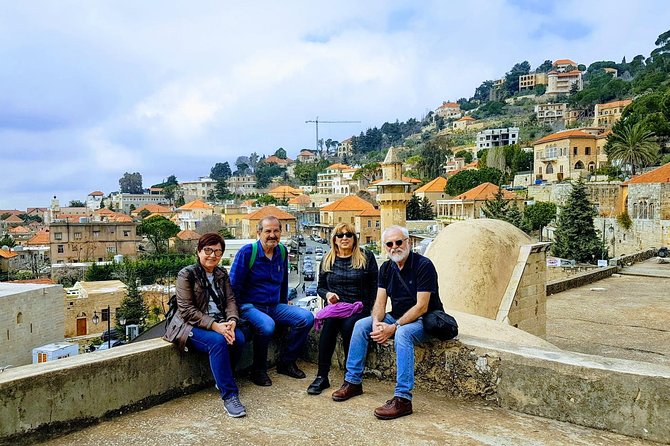
The mosque visit is brief, at around 15 minutes, but it adds an important contrast to the palace and church. Fakhreddine’s Mosque was built in 1493 and restored in the 16th century by Fakhreddine I. It is described as the oldest mosque in Mount Lebanon.
Its octagonal minaret is the feature to watch for. With only a short visit, you will not have time for a long architectural study, but the building gives Deir el Qamar a visible Islamic landmark within a town also known for its churches.
This is one reason the excursion works better than a palace-only outing. Beiteddine presents political power through a grand residence. The mosque places that story within a wider community where Islamic and Christian sites existed close together.
The admission charge for this stop is listed as free. As with all religious sites, follow the guide’s instructions about appropriate behavior and access. The supplied details do not promise a lengthy interior visit, so think of this as a focused historical stop rather than a major museum experience.
More Half-Day Trips in Beirut:
- PRIVATE Half-Day Tour to Beiteddine Palace & Deir elQamar
★ 5.0 · 2 reviews - Seoul Half-Day City Highlight, Palace Tour with Hanbok
★ 4.9 · 764 reviews - Lisbon: Half-Day Sintra Tour with Pena Palace and Regaleira
★ 4.9 · 570 reviews - Bangkok: Grand Palace & Wat Pho Half-Day Private Tour
★ 4.7 · 510 reviews
Saydet Al Talle Church and the hilltop legend
The Church of Saidet et Tallé, also called Our Lady of the Hill, dates to the 15th century and is one of Deir el Qamar’s important religious sites. The church was built by Monk Nicolas Smisaati on the ruins of an older Phoenician temple dedicated to Astarte.
An earthquake destroyed the earlier structure in 859. The church’s story therefore reaches back well before the medieval building you see today. That combination of older sacred ground and later Christian construction gives the stop a broad historical frame without requiring a long visit.
You have about 15 minutes here. That is enough to see the site and hear its central story, but you should not expect an extended religious tour. The visit is most rewarding if you pay attention to how local traditions connect different periods and faiths.
A local legend adds another layer. A Druze emir in Baakline is said to have seen a light coming from the hill at Deir el Qamar. He sent soldiers to investigate and instructed them to build either a mosque or a church depending on the symbol they found. The story links the church to the area’s shared religious setting, even if you treat it as tradition rather than documented fact.
The church is free to visit, like the mosque. Together, these two short stops provide the most distinctive feature of the day: you are not simply touring one religious monument, but seeing how different communities shaped the same town.
What the private vehicle and guide add
Hotel pickup and drop-off are included from any hotel accommodation in Beirut. That is a practical benefit in a city where arranging an early pickup, finding the right road, and organizing a return ride can consume energy before the sightseeing begins.
The vehicle is private, air-conditioned, and described as comfortable. You also have a professional guide and tour leader. The distinction is not important for most people, but the combined promise is clear: transport and interpretation are arranged together.
The experience is particularly suited to couples, families, and small groups who want control over the day. A private tour can also help if one person in your party wants more explanation at Beiteddine while another prefers to keep moving. Group discounts may be available, so the per-person cost can become easier to justify as your party grows.
One driver named Albert received especially warm praise for being trustworthy, positive, and helpful with cultural information and restaurant recommendations. He may not be the person assigned to every departure, so do not book on the assumption that he will drive you. Still, the feedback points to the kind of added value you should hope for: useful advice that reaches beyond the formal sightseeing stops.
Lunch is not included. That gives you less price certainty, but it also leaves room for restaurant advice from the guide. If food matters to your day, ask about options early rather than waiting until everyone is hungry.
Is $100 per person fair value?
The answer depends on how many people are in your group and how much planning you want to do yourself. At $100 per person, the tour is a significant expense for a half-day outing, and you still pay for the palace entrance and lunch.
The price includes several things that are easy to underestimate:
- Private, air-conditioned transportation
- Hotel pickup and return in Beirut
- A professional guide and tour leader
- A six-hour schedule
- A route covering four historical stops
- No need to share the vehicle with strangers
For one person or a couple, the price may feel high compared with arranging transport independently. For a family or small group, group discounts and shared private transport may improve the value.
I would also compare this with your own comfort level. If you are happy navigating outside Beirut, arranging a car, and researching the sites in advance, you may prefer an independent visit. If you want a direct explanation of the palace, village, mosque, and church without handling the logistics, the private format earns its premium.
Who should book this excursion?
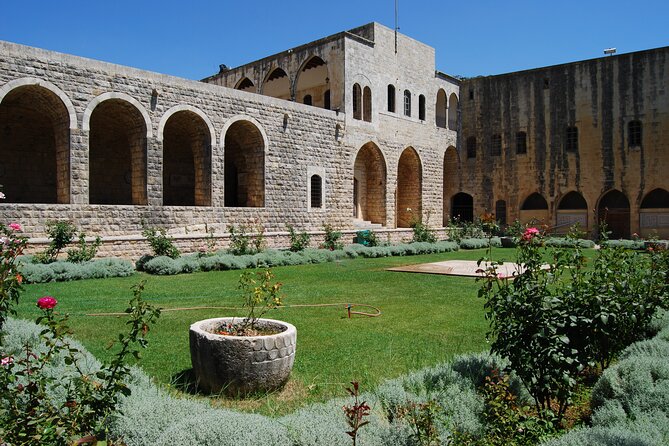
I would recommend it to anyone staying in Beirut who wants to see the Chouf without committing to a full-day mountain program. It suits first-time visitors who want historical context, people interested in Lebanon’s religious mix, and small groups that value a flexible private vehicle.
It is also a good fit if you want more than a scenic drive. The strongest part of the route is the way the sites connect: an emir’s palace, a municipal village, the oldest mosque in Mount Lebanon, and a 15th-century church.
I would hesitate if your priority is a long, unhurried village walk, a full palace museum visit, or a meal included in the price. The schedule is efficient, and the stop at Deir el Qamar is short. You get a broad introduction rather than a slow exploration of every lane and interior.
Before booking, confirm the palace entrance cost and ask what time your hotel pickup will be. Since cancellation is free up to 24 hours before the start time, you have some room to adjust plans, but changes or cancellations inside that window are not refundable.
Final verdict: a strong private introduction to the Chouf
Book this trip if you want a well-organized route from Beirut with historical depth and little transport hassle. The best value comes from the private format, the included hotel transfers, and the chance to ask questions throughout the day.
The main compromise is price, plus extra admission and lunch costs. Yet the combination of Beiteddine Palace and Deir el Qamar is hard to match in a short outing. You leave with more than palace photographs: you see how Lebanon’s political past, religious communities, and mountain towns fit together.
FAQ
How long does the tour last?
The tour lasts approximately six hours, including transportation and the scheduled visits.
Does the tour include hotel pickup and drop-off?
Yes. Pickup and drop-off are provided from any hotel accommodation in Beirut.
Is this a private tour?
Yes. Only your group participates in the activity.
Is admission to Beiteddine Palace included?
No. The entrance fee for Beiteddine Palace is not included in the tour price.
Are the mosque and church admission fees included?
Admission to Fakhreddine’s Mosque and Saydet Al Talle Church is listed as free.
Is lunch included?
No. Lunch is not included.
Can I cancel for a full refund?
Yes, if you cancel at least 24 hours before the experience start time. Cancellations or changes made less than 24 hours before the start time are not refunded or accepted.
Just added around Beirut
- Exclusive Excursion: Discover Baalbek, Anjar, and Chateau Ksara★ 5.0 · 6 reviews
- Palace of Dreams – Oyoun El Samak – Zahlan Grotto – Jabal El Arbaaine★ 4.5 · 5 reviews
- Full-Day Private Tour to Beiteddine, Deir El Qamar, Mousa Palace★ 5.0 · 2 reviews
- Half-Day Private Tour to Baalbek & Chateau Ksara★ 5.0 · 8 reviews
- Deir Al-Qamar, Beiteddine Palace and Barouk Cedars Tour★ 4.5 · 6 reviews
- DeirElkamar, Beitdeen, Moussa Palace, EinwZien Grotto,Full-Day Trip PRIVATE-CAR★ 5.0 · 5 reviews
- Beirut to Beiteddine: Private Journey Through Palaces & Villages★ 4.5 · 2 reviews
- Deir el Qamar – Beiteddine Palace – Chouf Cedars From Beirut★ 5.0 · 7 reviews
Private Palace Tours, compared.
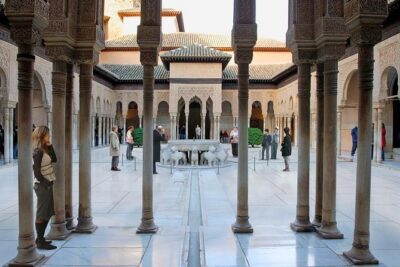
Alhambra Private/Small Group Tour & Nasrid Palaces Skip the Line
Read our review →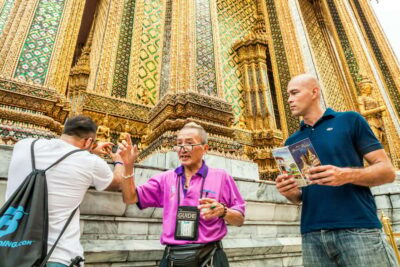
Grand Palace, Wat Pho, and Wat Arun Private Tour
Read our review →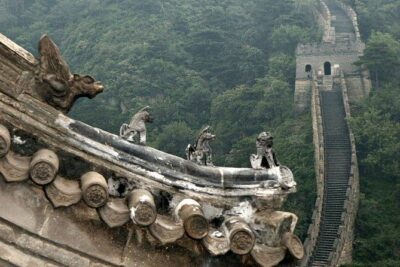
Mutianyu Great Wall&Summer Palace Excursion:Group/Private Options
Read our review →
Private Tour of Sintra, Cabo da Roca and Cascais with 2 Palaces
Read our review →
Private 4hrs Venice Tour: Doge’s Palace, Grand Canal & St Mark’s
Read our review →
Knossos Palace Skip-the-Line Ticket & Private Guided Tour
Read our review →
Private Tour Sintra from Lisbon Palaces of Pena and Regaleira
Read our review →Browse the lists this tour appears in