
REVIEW · BEIRUT
Small Group Tours to Baalbek, Anjar & Chateau Ksara with lunch and Tickets
Ancient stones, modern wine, one long day. This nine-hour small-group tour links Baalbek, Anjar, and Château Ksara from Beirut, giving you three very different views of Lebanon beyond the capital. I like the hotel pickup and comfortable air-conditioned minivan, and I like the mix of major archaeology, local food, and wine. The main drawback is the distance: you spend much of the day on the road, and Baalbek deserves more than a quick visit if ancient sites are your main reason for coming.
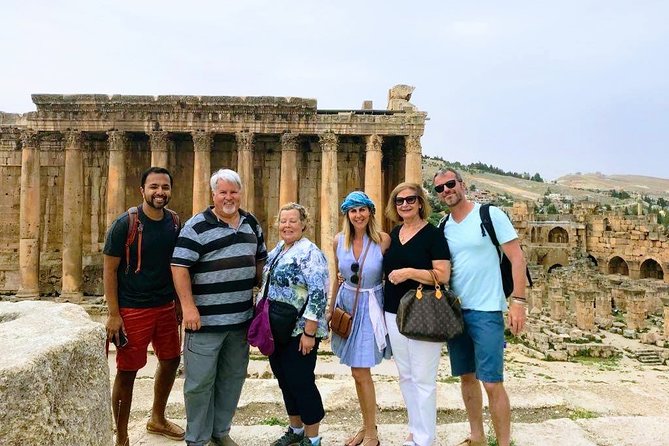
The strongest part is the Baalbek temple complex, where colossal Roman construction makes even seasoned history fans stop and stare. The local Lebanese lunch also gets high marks, and guides such as Natasha, an archaeologist, can add useful context instead of simply pointing at stones. Just note that Château Ksara admission is not included, so check exactly what your wine visit covers when you book.
Key points to know before booking
- Baalbek is the main event: You see the temples of Jupiter, Venus, and Bacchus, with about 90 minutes at the complex.
- The tour reaches three major sites: Roman Baalbek, Umayyad Anjar, and Château Ksara winery all fit into one day.
- Lunch is included: Expect a local Lebanese restaurant meal, praised for generous portions and strong flavor.
- Transport is easy: Hotel pickup and drop-off use an air-conditioned private minivan.
- The group is limited to 15 people: That gives you a better chance to ask questions than on a large coach tour.
- Wine tasting adds a local touch: Château Ksara offers a look at Lebanese wine production and its on-site cave, though admission is not included.
Why this Beirut day trip works
Lebanon packs a surprising amount of history into the Bekaa Valley. This tour lets you see Roman imperial architecture, an early Islamic city, and one of the country’s best-known wineries without arranging separate transport.
That matters because Baalbek and Anjar are far more awkward to reach independently than Beirut’s central sights. The tour handles the driving, hotel transfers, site admissions where specified, and lunch. You can watch the Bekaa Valley pass by instead of worrying about directions.
The format is efficient rather than leisurely. You leave at 8:00 a.m. and return after roughly nine hours, with the longest visit at Baalbek. It is a good fit if you have limited time in Beirut and want a broad introduction to inland Lebanon.
The group maximum of 15 is another practical advantage. It is not a private tour, but it is small enough for a guide to answer questions and keep the day moving. A minivan also feels more manageable than a full-size coach on a long day.
More Chateau and Wine Estate Tours in the world:
- From Lisbon: Sintra, Pena Palace & Wine Tasting Small-Group Tour
★ 5.0 · 252 reviews - Lisbon: Sintra, Pena Palace & Wine Tasting Small-Group Tour
★ 4.9 · 156 reviews - Full-Day Private Sintra Tour with Wine Tasting and Pena Palace
★ 5.0 · 67 reviews
Baalbek temples: the reason to make the trip
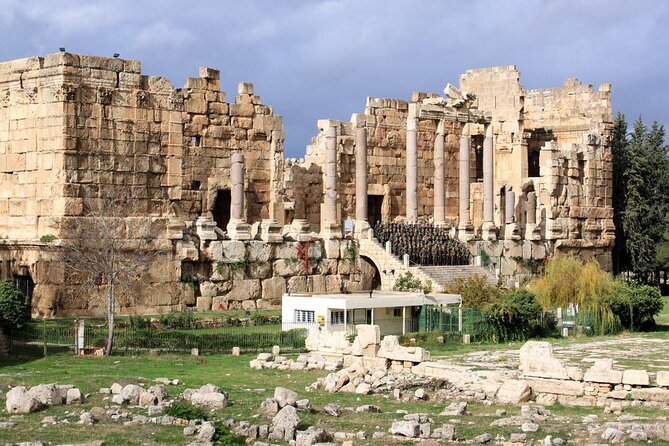
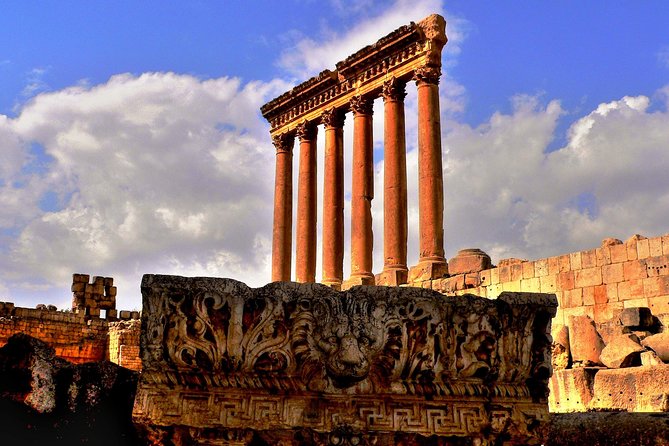
Baalbek sits at about 1,150 meters near the southwestern slope of the Anti-Lebanon range. In Roman times, it became one of the great sanctuary centers of the ancient world, known as Heliopolis. The Romanized religious complex honored Jupiter, Venus, and Bacchus, while retaining older Phoenician roots.
You have about 90 minutes at the temple complex, with admission included. That is enough to see the main structures and understand the site, but not enough for an unhurried archaeological study. If you like ancient architecture, keep your attention on the guide rather than rushing for photographs.
The scale is the first thing you notice. Baalbek was built over more than two centuries, and the enormous columns and foundations show the ambition of Roman builders. The site is not just a collection of fallen stones. It demonstrates how imperial power, local religious traditions, engineering, and pilgrimage came together in one monumental place.
The three deities give the visit a useful structure. Jupiter represents the central Roman power of the sanctuary, Venus reflects a female divine figure, and Bacchus connects the complex with wine and celebration. Your guide can help explain how Roman names were placed over older regional beliefs.
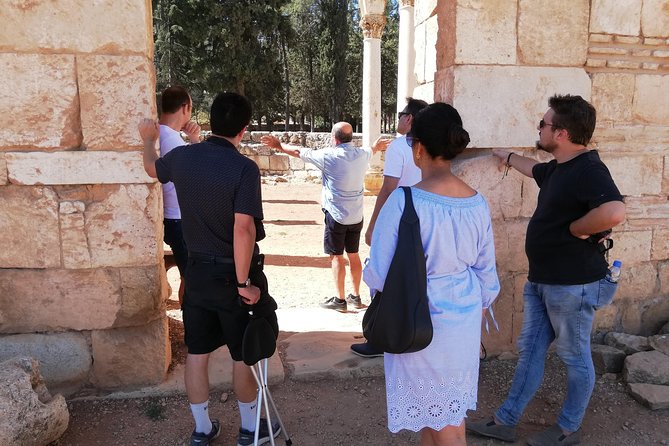
A guide makes a real difference here. One guide associated with the tour, Natasha, is an archaeologist, which can add a more technical layer to the visit. The strongest guiding will help you notice construction details, religious connections, and the relationship between the ruins and the wider Bekaa setting.
The limitation is time. Ninety minutes goes quickly, particularly if you want photographs, a full explanation of every major structure, and quiet time among the ruins. You should treat this as a well-organized introduction rather than a specialist archaeological visit.
Sayyida Khawla Mosque and the Stone of the Pregnant Woman
The day also includes a stop at the Mosque of Sayyida Khawla in Baalbek. The mosque is associated with the burial of Sayyida Khawla, the daughter of Imam al-Hussein, the grandson of the Prophet Muhammad. Local belief holds that she died and was buried here when the caravan of captives from Karbala passed through Baalbek.
This stop gives the day a different religious and cultural dimension. Baalbek is not only an ancient Roman site preserved for archaeology. It remains a living place of faith, memory, and pilgrimage.
You also stop at the Stone of the Pregnant Woman for about 15 minutes. This worked Roman monolith, along with another nearby block, ranks among the largest stones ever quarried. The blocks were probably intended for the nearby temple complex.
The stop is brief, but it helps explain the sheer size of Baalbek’s construction program. Seeing one huge unfinished or unused building block makes the temple foundations easier to understand. You will not spend long here, so use the time for a close look and a few photographs.
Anjar: a different kind of ancient city
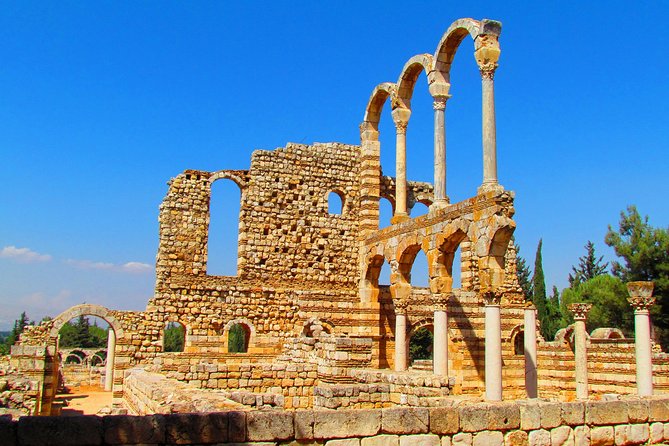
From Baalbek, the tour continues to the Umayyad ruins of Anjar. The visit lasts about 45 minutes and includes admission.
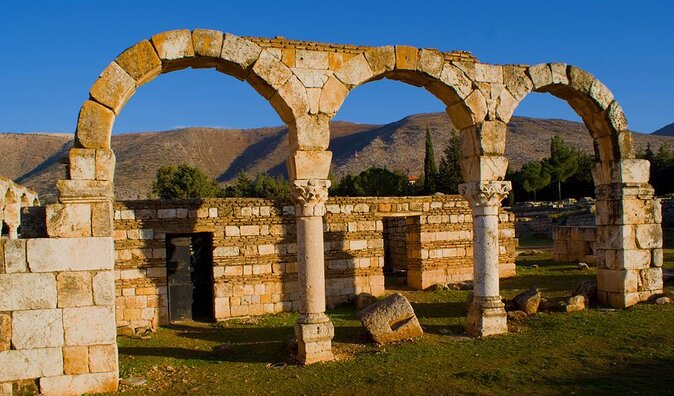
Anjar differs sharply from Baalbek. Instead of a massive Roman sanctuary, you see the remains of an inland commercial city built during the Umayyad period. Its position mattered because it sat near routes connecting Beirut with Damascus and the Bekaa Valley with Homs and Tiberias.
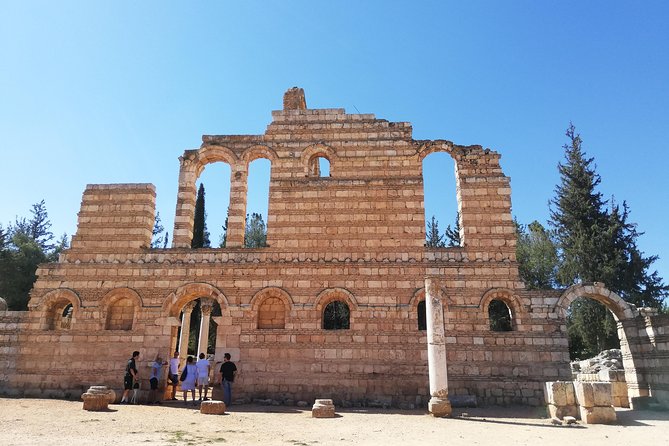
The ruins include the Umayyad palace, harems, mosque, caliph’s great palace, thermal baths, and rows of pillars. Some architectural details show Roman influence, which makes the site especially useful for understanding how styles and building traditions continued across political and religious change.
Anjar was only identified by archaeologists in the late 1940s. That relatively recent discovery adds an interesting layer to the visit. You are not simply looking at a famous monument known for centuries. You are seeing a city whose remains had to be located, studied, and interpreted in modern times.
Forty-five minutes is a compact visit. You can get the layout and see the main structures, but you will not have time for a slow examination of every wall and column. This stop works best when your guide explains what each area was used for and how the city fitted into regional trade.
If your main interest is Roman architecture, Baalbek will feel more powerful. If you want to understand Lebanon as a meeting point between eras, Anjar earns its place on the route.
More Trips with Lunch in the world:
- Dubai: Abu Dhabi Day-Trip Grand Mosque, Royal Palace & Lunch
★ 4.9 · 5,368 reviews - Versailles Palace and Giverny Monet House Visit with Lunch
★ 4.0 · 1,948 reviews - Mutianyu Great Wall and Summer Palace Small-Group Tour with Lunch
★ 5.0 · 316 reviews - Vienna: Schönbrunn Palace Entry Ticket with Lunch
★ 4.4 · 299 reviews
Lebanese lunch in the Bekaa Valley
Lunch at a local Lebanese restaurant is included, and this is one of the tour’s practical strengths. A long sightseeing day is easier when you do not need to search for a restaurant, study a menu, or negotiate timing between stops.
The meal has been praised as generous and excellent, with one account describing it as sumptuous. That is useful because lunch is not treated as an afterthought. The combination of a set tour schedule and a proper local meal keeps the day moving without forcing you to rely on snacks.
You should still remember that a group lunch is not the same as choosing a restaurant for yourself. The experience is built around convenience and local food rather than a personal search for a particular dish or dining style.
The driver and guide also affect how smoothly lunch goes. Ziad, named in one account, was praised for taking care of the meal service and making sure everything was handled well. That sort of attention matters on a tightly timed day, particularly when you have three stops to fit in.
Château Ksara and Lebanese wine
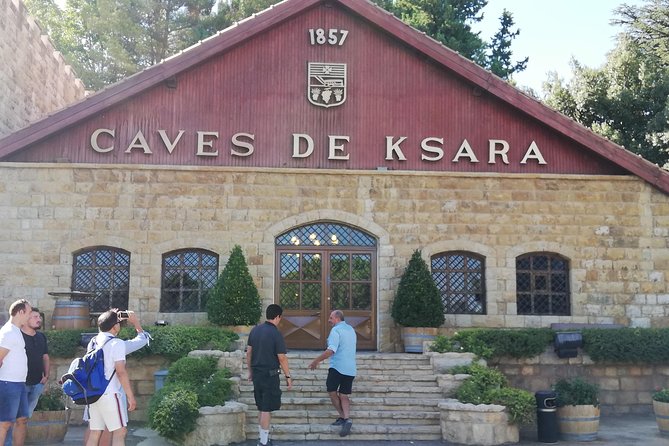
The final major stop is Château Ksara in the Bekaa Valley. The winery was founded in 1857 by Jesuit priests and developed Lebanon’s first dry wine. It now produces about three million bottles each year, with distribution in several countries.
The visit lasts about an hour. You can learn how Lebanese wine is made, sample several wines, and see the winery’s cave. This gives the day a welcome change of pace after several hours of ruins and monuments.
The cave is an important part of the visit because it connects the product with the place where it is made. Instead of stopping only for a tasting room experience, you get a behind-the-scenes look at the winery’s production setting.
The wine stop is also tied to Baalbek in an interesting way. The Roman sanctuary included Bacchus, a god linked with wine, so the day moves from ancient wine culture to modern Lebanese production. That connection is not the sole reason to book the tour, but it gives the itinerary a pleasant sense of continuity.
There is one cost detail you should watch carefully: Château Ksara admission is listed as not included, while lunch and the other stated site admissions are included. The tour description includes wine tasting, but you should confirm whether the tasting itself is covered and whether any winery admission fee is payable locally.
Transport, timing, and group size
Pickup and drop-off are offered from your hotel, with an 8:00 a.m. start. The vehicle is an air-conditioned private minivan, a useful feature for a full day that includes travel between Beirut, Baalbek, Anjar, and the winery.
The nine-hour schedule is ambitious. Baalbek receives about 90 minutes, the Stone of the Pregnant Woman 15 minutes, Anjar 45 minutes, and Château Ksara one hour. The remaining time covers driving, lunch, and transitions.
That structure gives you a lot in one day, but it also means you should not expect long periods of free exploration. You will be moving according to the group schedule. For most people with only a few days in Lebanon, that tradeoff is sensible.
The maximum group size is 15. That is small enough for direct contact with the tour leader and a reasonable chance to ask questions. It is not small enough to guarantee a quiet or highly personal experience, so anyone wanting complete flexibility should consider a private arrangement instead.
The tour requires good weather. If conditions force cancellation, you can receive a different date or a full refund. Standard cancellation is free up to 24 hours before the start time, but changes or cancellations inside that window are not accepted for a refund.
Is $75 good value?
At $75 per person, the package offers strong value if you want to cover all three locations in one day. Hotel transportation, an air-conditioned vehicle, a local guide, a tour leader, lunch, and stated admissions are included.
The value becomes clearer when you consider the logistics. Baalbek and Anjar are not simple add-ons to a Beirut walking itinerary. The tour combines transport, historical interpretation, and meals in one booking, which saves you the work of coordinating separate visits.
The price is less compelling if you want a slow, deeply focused archaeological day. The schedule gives you a solid introduction, but the travel time and short stops limit independent wandering.
You should also factor in the Château Ksara admission issue. Since it is not included, the final cost may be slightly higher than $75. The wine tasting and cave visit remain worthwhile for many people, but confirm the exact inclusions before payment.
Who should book this tour?
I would choose this tour if you are staying in Beirut and have one free day for inland sights. It suits first-time visitors who want ancient monuments, Islamic history, Lebanese food, and wine without managing transport themselves.
It also works well for people who value explanation. Baalbek’s scale can impress you immediately, but a strong guide helps connect the stones to Phoenician religion, Roman imperial building, and later local history.
The tour may not suit you if you dislike early starts, long drives, or fixed schedules. It is also not ideal if you want a full day at Baalbek alone. In that case, a dedicated Baalbek visit would give you more time at the temples and nearby sites.
Final verdict: book it for breadth and ease
Book this experience if you want a well-priced introduction to three major Bekaa Valley sights and prefer someone else to handle the driving. Baalbek supplies the drama, Anjar adds an important Umayyad chapter, and Château Ksara brings food and wine into the picture.
The strongest reasons to go are the included Lebanese lunch, small-group format, hotel transfers, and access to guides with useful local or archaeological insight. The main compromises are the long day, short stop at Anjar, and possible extra charge at the winery.
For a first visit to Lebanon, I think the balance is very good. You see more than one famous ruin, eat a proper local meal, and return to Beirut with a clearer sense of how Roman, Islamic, religious, and modern Lebanese culture meet in the Bekaa Valley.
FAQ
How long does the tour last?
The tour lasts approximately nine hours.
What time does the tour start?
The stated start time is 8:00 a.m.
Does the tour provide hotel pickup and drop-off?
Yes. Hotel pickup and drop-off are included.
How many people can join the tour?
The group has a maximum of 15 participants.
Is lunch included?
Yes. Lunch at a local Lebanese restaurant is included.
Is transportation included?
Yes. Transportation is provided in an air-conditioned private minivan.
Are entrance tickets included?
Admission to the Baalbek temples and Anjar ruins is included. The Stone of the Pregnant Woman stop is free. Château Ksara admission is not included.
Does the tour include wine tasting?
The experience includes multiple wine samples at Château Ksara and a visit connected with the winery’s production and cave. Château Ksara admission is listed separately as not included.
What happens if the tour is canceled because of bad weather?
You can choose a different date or receive a full refund if poor weather causes the cancellation.
Just added around the world
- Pena Palace, Moorish Castle,Quinta ad Regaleira:Walking tour★ 5.0 · 3 reviews
- Porto Bishop’s Palace Guided Tour★ 4.5 · 8 reviews
- Paris: Versailles Palace and Queen Hamlet E-Bike Tour★ 5.0 · 126 reviews
- Phnom Penh: Full-Day City Tour with Royal Palace & Killing …★ 4.7 · 2 reviews
- Petchaburi Temples & Royal Palace – small Join Group Tour★ 4.6 · 46 reviews
- Paris: Versailles Golf Cart & Bike Tour with Palace Entry★ 4.8 · 58 reviews
- Petit Palais Paris Museum of Fine Arts Tour with Tickets★ 4.2 · 3 reviews
- Paris: Palace of Versailles Private Tour with Transportation★ 5.0 · 2 reviews
Chateau and Wine Estate Tours, compared.

Medoc or Saint Emilion Wine Tasting and Chateau from Bordeaux
Read our review →
Versailles Château and Gardens Walking Tour from Paris by Train
Read our review →
Loire Valley: Château Royal d’Amboise Entrance Ticket
Read our review →
Fontainebleau & Vaux-le-Vicomte Châteaux Day Tour from Paris
Read our review →
Browse the lists this tour appears in