
REVIEW · BEIRUT
Guided Full-Day Private Trip to Cedars, Baalbek and Chateau Ksara
Ancient temples, wine, and cedar trees in one day. This private trip from Beirut brings together three very different sides of Lebanon: the monumental Roman ruins at Baalbek, the vineyards of the Beqaa Valley, and the cool mountain woods of the Chouf. I like the private vehicle and hotel pickup, which remove much of the day’s transport hassle, and I like the mix of culture, wine, and a cedar forest hike. The main trade-off is the long day, about nine hours, with several hours on the road.
You travel with a driver-guide and also have a local guide in Baalbek. That combination is useful because the temple complex deserves more than a quick photo stop. Lunch is not included, and admission at some stops may cost extra, so bring money beyond the $100 tour price.
Key points at a glance
- Baalbek gets the time it deserves: The Roman sanctuary receives about two hours, with another listed two hours for the temple complex itself.
- The Stone of the Pregnant Woman adds a striking detail: This enormous worked Roman block helps explain the sheer scale of Baalbek’s construction.
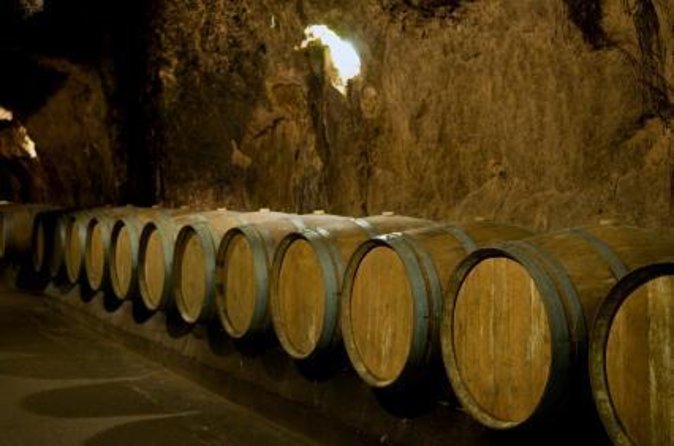
- Chateau Ksara brings a taste of modern Lebanon: The one-hour stop includes local wine tasting at a winery founded by Jesuit priests in 1857.
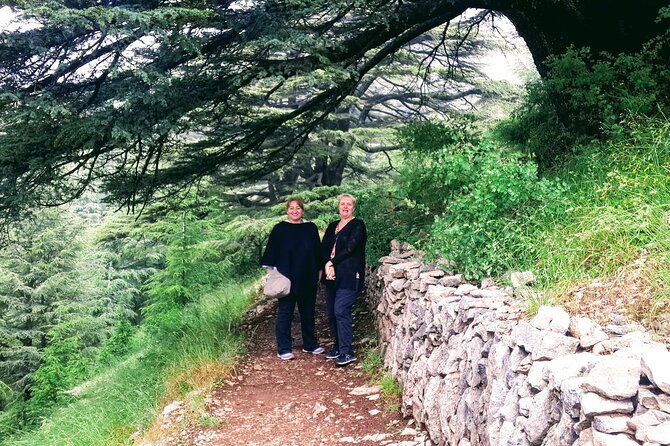
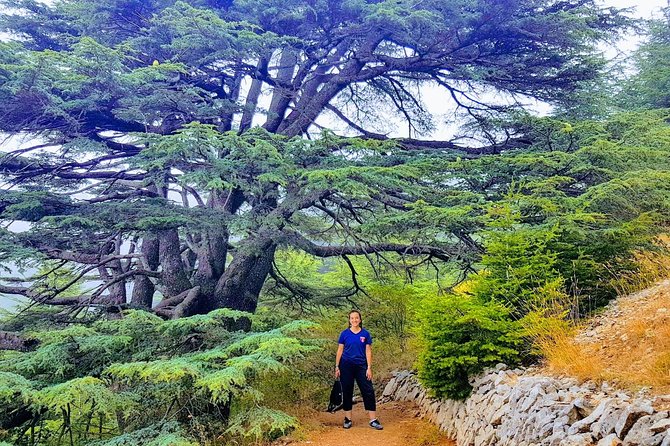
- The Chouf Cedars provide a change of pace: You get about two hours for a walk among Lebanon’s national trees.
- Private transport keeps the day flexible: Pickup and drop-off at your Beirut hotel are included, and only your group takes part.
- The price is strongest for small groups: At $100 per person, the value improves when you want a private vehicle, a guide, and several major stops in one day.
Leaving Beirut for the Beqaa Valley
The day begins at 8:30 a.m. with pickup from your Beirut hotel. Since the trip lasts about nine hours, an early start matters. You need enough daylight for Baalbek, the winery, and the cedar reserve without turning the final part of the day into a rushed dash.
I like the practical setup here. You do not need to find a bus meeting point, arrange a taxi to the first stop, or manage separate transport between the sites. The air-conditioned private vehicle is included, along with a tour leader and driver. Only your group participates, which gives the day a more personal feel than a large coach outing.
The route takes you toward the Beqaa Valley, a broad inland area framed by the Lebanon and Anti-Lebanon mountain ranges. The tour connects several places that are not easy to combine by public transport in one day. That is the real value of the arrangement: you spend the day seeing more, not working out connections.
Still, this is not a slow countryside ramble. The schedule includes major archaeological sites, a wine stop, and a nature reserve. If you prefer one place explored at length, you may find the pace busy. If you want a full day of variety, the packed route works well.
More Chateau and Wine Estate Tours in the world:
- From Lisbon: Sintra, Pena Palace & Wine Tasting Small-Group Tour
★ 5.0 · 252 reviews - Lisbon: Sintra, Pena Palace & Wine Tasting Small-Group Tour
★ 4.9 · 156 reviews - Full-Day Private Sintra Tour with Wine Tasting and Pena Palace
★ 5.0 · 67 reviews
Baalbek’s colossal Roman sanctuary
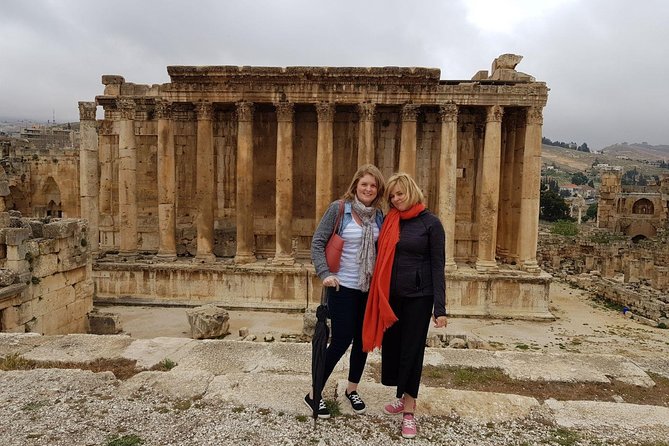
Baalbek is the tour’s main cultural stop, and it deserves your full attention. The ancient city was known as Heliopolis during the Hellenistic period, or City of the Sun. Under Roman rule, it became a major religious center dedicated to the Heliopolitan triad of Jupiter, Venus, and Bacchus.
The surviving ruins are famous for their huge scale. The Temple of Jupiter once formed part of a vast sanctuary, while the Temple of Bacchus remains one of the best-preserved Roman temples in the region. You will see monumental columns, broad stone platforms, carved details, and the remains of an ancient sacred complex built over more than two centuries.
Baalbek was inscribed as a UNESCO World Heritage site in 1984. That label matters less than what you see in front of you: blocks and columns that make ordinary Roman ruins feel almost modest. The site is one of the finest examples of Imperial Roman architecture at its height.
The tour allows about two hours at Baalbek, with another two hours listed for the temple complex. The exact division may depend on the day’s arrangement, but the important point is that this is not a five-minute photo stop. You should have time to look closely at the layout and hear how the sanctuary developed.
A local guide in Baalbek is included. That is a strong feature. Without context, the site can look like a grand collection of stones. With guidance, you can better understand the religious purpose of the complex, the role of the three deities, and the engineering effort behind the giant structures.
One practical note is worth taking seriously: the supplied details list admission as included at one Baalbek stop but not included for the temple complex. Because of that mixed wording, confirm the entrance arrangement before you go. Set aside extra money in case the main archaeological admission is separate.
The Mosque of Sayyida Khawla
The visit to the Mosque of Sayyida Khawla adds a different layer to Baalbek. The mosque is built on the site believed to be the burial place of Sayyida Khawla, the daughter of Imam al-Hussein, grandson of the Prophet Muhammad.
Local belief holds that Khawla died and was buried here when the caravan of captives from Karbala passed through Baalbek. This stop is not simply another old building. It connects the town to Shia religious tradition and shows how sacred meaning in Baalbek continued long after the Roman sanctuary declined.
The supplied tour details do not give a separate visit duration or specify whether entrance is required. Treat it as a cultural stop connected to the Baalbek portion of the day. Dress and behavior should be respectful at a religious site, and follow the guide’s instructions.
The Stone of the Pregnant Woman
About 30 minutes are set aside for the Stone of the Pregnant Woman, also known as a worked Roman monolith. It is one of the largest ancient stone blocks ever quarried, and another enormous block sits nearby.
The name is memorable, but the engineering is the real point. These stones were likely intended for the nearby Roman temple complex. Their size gives you a useful clue about how the builders approached Baalbek: not with small, manageable pieces, but with massive blocks that demanded extraordinary planning and labor.
This stop is brief, yet it helps make the main sanctuary easier to understand. After seeing the finished columns and platforms, you can look at the raw material and imagine the problem of moving it from quarry to temple.
Do not expect a second full archaeological site here. It is a short, focused stop. Its value comes from scale and context, not from a long list of structures to explore.
More Palace Day Trips in the world:
- Neuschwanstein Castle and Linderhof Palace Day Trip from Munich
★ 4.5 · 1,756 reviews - From Paris: Giverny and Versailles Palace Guided Day Trip
★ 4.5 · 1,324 reviews - Downton Abbey Village, Blenheim Palace and Cotswolds Day Trip from London
★ 4.5 · 1,139 reviews - Beijing: Mutianyu Great Wall & Summer Palace Day Tour
★ 4.8 · 1,004 reviews
Lunch between Baalbek and Ksara
Lunch is not included in the $100 price. The itinerary says to pause for lunch before continuing to Chateau Ksara, but it does not name a restaurant, set a menu, or give a meal allowance.
That gives you some flexibility, but you should budget for the meal and ask the guide how the timing will work. A proper pause matters on a nine-hour outing, especially with walking at Baalbek and later in the cedar reserve.
The meal is also the point where the private format can help. Your group can discuss timing with the tour leader instead of following a large group through a fixed schedule. Do not assume, though, that every stop can be extended. The day still has to cover the winery and the reserve before the return to Beirut.
Chateau Ksara and Lebanon’s wine tradition
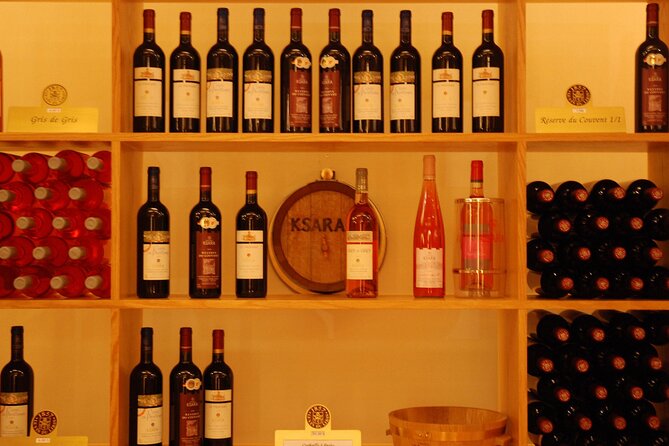
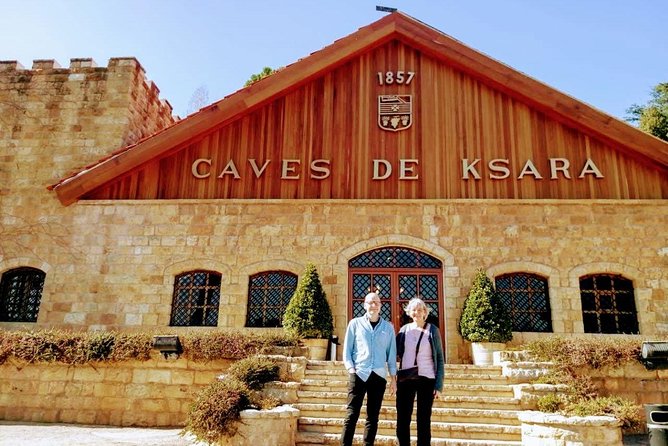
Chateau Ksara provides a welcome change from ancient stone. The winery was founded by Jesuit priests in 1857 and developed Lebanon’s first dry wine. Today, it produces about three million bottles each year and exports to more than 40 countries.
The one-hour visit includes local wine tasting. That is enough time to sample several wines and get a sense of Ksara’s place in Lebanese wine production, but it is not a long winery course. If you are especially interested in wine, ask the guide or winery staff how much tasting time is available and what the admission fee covers.
The winery stop gives the Beqaa Valley a modern face. Baalbek shows the area as a center of ancient religious power. Ksara shows a continuing agricultural and commercial tradition, with vineyards producing wine for both Lebanon and overseas markets.
Admission to Chateau Ksara is not included according to the tour details. Wine tasting may be part of the visit, but the exact entrance arrangement should be confirmed before departure. This is another reason to carry some extra cash or have a payment method ready.
You do not need to be a serious wine enthusiast to enjoy this stop. It breaks up the ruins and walking with a seated tasting and a look at a working Lebanese producer. If you do not drink wine, ask ahead about the visit, since the main attraction here is the winery and its tasting experience.
Hiking among the Chouf Cedars
The final major stop is Maasser el Chouf in the Chouf Cedar Nature Reserve. About two hours are set aside here, giving you more than a quick roadside view of the trees.
The reserve lies on the slopes of Barouk Mountain and covers about 550 square kilometers. It accounts for nearly 5.3 percent of Lebanon’s territory and about 70 percent of the country’s green area, according to the supplied information. UNESCO recognized the reserve as a biosphere reserve in 2005.
The cedar is Lebanon’s national tree, and walking among these trees gives the day a strong natural finish. After the monumental scale of Baalbek and the structured tasting at Ksara, the forest offers room to move and breathe.
The word hike should be read in a practical way. The tour includes a walk in the cedar forest, but it does not specify a trail distance, elevation gain, or difficulty level. Wear shoes suitable for walking and bring water. The reserve is in the mountains, so conditions may differ from those in Beirut.
The two-hour allocation is one of the best parts of the schedule. It allows you to spend real time in the reserve rather than treating the cedars as a symbolic photo stop. At the same time, you should not assume this is a strenuous mountain trek. The exact walk depends on the guide and conditions that day.
What the $100 price really covers
At $100 per person, this is not simply a sightseeing ticket. You are paying for a private vehicle, air conditioning, hotel pickup and drop-off, a tour leader, and a local guide in Baalbek. You also get a full day linking sites that would be awkward to visit independently.
The value improves if you are traveling with family or friends and can use the group discount. A private vehicle also matters if your group prefers not to spend the day with strangers or wants a quieter ride between sites.
You still need to pay for lunch and possibly admission at Baalbek and Chateau Ksara. Those extras reduce the all-in value slightly, so compare the tour price with your likely meal and entrance costs before booking.
The strongest reason to choose this tour is convenience combined with variety. You get ancient monuments, a wine producer, and a nature reserve in one outing. The weaker point is that the day is ambitious. You will see a lot, but you will not have unlimited time at any one place.
The experience currently carries a 5 out of 5 rating from 10 ratings, with 100 percent recommending it. The most praised elements are the astonishing temples, the guide’s explanations, the wine tasting, and the walk in the cedar forest. Those are exactly the parts that give this tour its appeal.
Who should book this day trip?
I would recommend it to first-time visitors based in Beirut who want a broad look at Lebanon beyond the capital. It suits couples, families, and small groups who value private transport and want a guide at Baalbek.
It is also a good fit if you enjoy contrast. One hour you are studying Roman engineering, later you are tasting Lebanese wine, and by the afternoon you are walking among cedar trees. Few single-day outings offer that combination.
You may want a different plan if you dislike long days, do not want to pay extra for lunch and admissions, or prefer a slow archaeological visit with no second major stop. Baalbek alone can absorb a great deal of attention.
For the best experience, wear comfortable walking shoes, prepare for a full day, and confirm the entrance fees before leaving Beirut. Ask about the lunch plan, and keep some space in your schedule for the return journey.
Should you book it?
Book this tour if you want Baalbek, Chateau Ksara, and the Chouf Cedars in one organized day, with hotel pickup and private transport taking care of the complicated parts. The guide support at Baalbek and the two-hour cedar walk are especially useful.
Skip it if you prefer a relaxed pace or want to spend most of the day at one site. For everyone else, the $100 price is fair for the transport, guiding, and range of experiences, provided you remember that lunch and some admissions are extra.
FAQ
What time does the tour start?
The tour starts at 8:30 a.m.
How long does the experience last?
The trip lasts approximately nine hours.
Is hotel pickup included?
Yes. Pickup and drop-off at your Beirut hotel are included.
Is the tour private?
Yes. This is a private activity, so only your group participates.
Is transportation included?
Yes. The tour includes comfortable transportation in an air-conditioned private vehicle.
Is lunch included?
No. Lunch is not included in the tour price.
Is a guide included at Baalbek?
Yes. The package includes a tour leader and a local guide in Baalbek.
Can I cancel for a full refund?
Yes. You can cancel at least 24 hours before the experience start time for a full refund. Changes or cancellations made less than 24 hours before the start time are not accepted for a refund.
More Full-Day Trips in the world
- Versailles Full Day Bike Tour with Palace, Gardens, & Picnic
★ 5.0 · 2,217 reviews - Beijing Classic Full-Day Tour including the Forbidden City, Tiananmen Square, Summer Palace and Temple of Heaven
★ 4.0 · 610 reviews - Full-Day; Castle, Palace, Cathedral & Viking ships Tour
★ 5.0 · 326 reviews - Full Day Tour: Sintra, Pena Palace, Cabo da Roca, Cascais
★ 5.0 · 310 reviews
More Private Palace Tours in the world
- Alhambra Private/Small Group Tour & Nasrid Palaces Skip the Line
★ 4.5 · 921 reviews - Bangkok: Grand Palace, Wat Pho, and Wat Arun Private Tour
★ 4.8 · 855 reviews - Mutianyu Great Wall&Summer Palace Excursion:Group/Private Options
★ 5.0 · 816 reviews - Private Tour of Sintra, Cabo da Roca and Cascais with 2 Palaces
★ 5.0 · 770 reviews
Just added around the world
- Pena Palace, Moorish Castle,Quinta ad Regaleira:Walking tour★ 5.0 · 3 reviews
- Porto Bishop’s Palace Guided Tour★ 4.5 · 8 reviews
- Paris: Versailles Palace and Queen Hamlet E-Bike Tour★ 5.0 · 126 reviews
- Phnom Penh: Full-Day City Tour with Royal Palace & Killing …★ 4.7 · 2 reviews
- Petchaburi Temples & Royal Palace – small Join Group Tour★ 4.6 · 46 reviews
- Paris: Versailles Golf Cart & Bike Tour with Palace Entry★ 4.8 · 58 reviews
- Petit Palais Paris Museum of Fine Arts Tour with Tickets★ 4.2 · 3 reviews
- Paris: Palace of Versailles Private Tour with Transportation★ 5.0 · 2 reviews
Chateau and Wine Estate Tours, compared.
Medoc or Saint Emilion Wine Tasting and Chateau from Bordeaux
Read our review →
Versailles Château and Gardens Walking Tour from Paris by Train
Read our review →
Loire Valley: Château Royal d’Amboise Entrance Ticket
Read our review →
Fontainebleau & Vaux-le-Vicomte Châteaux Day Tour from Paris
Read our review →
Browse the lists this tour appears in