
REVIEW · BEIRUT
Guided Private Full Day Tour to Baalbek, Anjar and Chateau Ksara
Ancient temples, a wine cave, and one long day. This private excursion from Beirut packs Lebanon’s Beqaa Valley into roughly eight hours, pairing the enormous Roman sanctuary at Baalbek with the Umayyad ruins of Anjar and a stop at Château Ksara. I like the hotel pickup and private vehicle, which remove much of the day’s transport hassle, and I like having a guide who can connect Phoenician, Roman, Islamic, and modern Lebanese history. The main catch is that entry fees, wine tasting, and lunch are extra, so the advertised $100 price is not the final cost.
The schedule is full but sensible. You get major archaeological sites rather than a quick photo stop, and the private format gives your group more flexibility than a large coach tour. Guides Georgette and Albert receive especially warm praise for their clear explanations, flexibility, and thoughtful comments about both the past and present. Still, Baalbek and Anjar require walking outdoors, and the day may feel packed if you prefer slow sightseeing.
Key points to know before booking
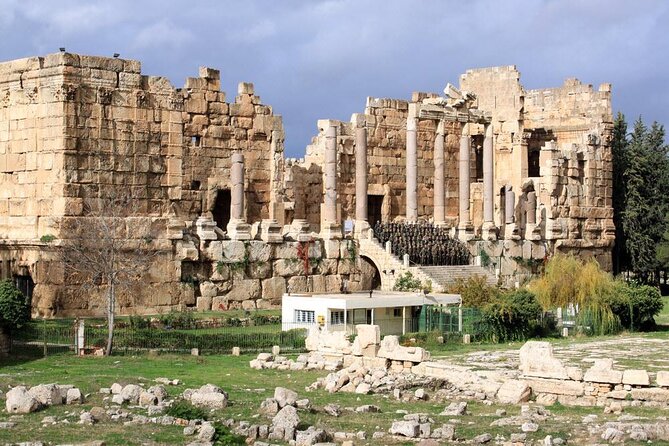
- Baalbek is the day’s main event: Allow about three and a half hours for the city and temple complex, where the Temple of Jupiter and Temple of Bacchus show Roman building on a colossal scale.
- The Stone of the Pregnant Woman adds a striking mystery: This enormous Roman block gives you a close look at the practical problem behind Baalbek’s giant monuments.
- Anjar offers a different chapter of Lebanon’s past: The Umayyad city includes palace walls, a mosque, baths, harems, and Roman-style columns.
- Château Ksara changes the pace: After ruins and stonework, you can sit in a cave and sample Lebanese wine, with the tasting paid separately.
- Private transport matters: Pickup and drop-off at your Beirut hotel, plus an air-conditioned vehicle, make the long Beqaa Valley outing easier.
- Budget beyond the tour fee: The $100 per-person rate excludes lunch, archaeological entry fees, and wine tasting.
Why this Beirut day trip works
Beirut is a good base for seeing more of Lebanon, but the Beqaa Valley is not a casual side trip you can fit into a spare hour. This tour handles the long road day with hotel pickup, a private vehicle, a tour leader, and a professional guide. You do not need to arrange separate transport between Baalbek, Anjar, and Ksara.
I like the mix of places. Baalbek gives you monumental Roman architecture. Anjar shifts the story to the Umayyad period. Château Ksara brings you into present-day Lebanese wine production. The result is not just a parade of old stones. You move through several eras and see how the valley has served religious, commercial, and agricultural purposes.
The private setup is also useful if your group has different interests. You can ask for more explanation at the temples, take a little less time at a site, or spend longer at the winery if the schedule allows. That flexibility is more valuable here than on a short city tour because each stop has a different pace.
The day is still a lot to cover. Baalbek receives the most attention, while Anjar gets about 45 minutes and Château Ksara about an hour. If you want detailed archaeological study, this is an introduction rather than a specialist tour. If you want a broad, well-organized day outside Beirut, the balance works well.
More Chateau and Wine Estate Tours in the world:
- From Lisbon: Sintra, Pena Palace & Wine Tasting Small-Group Tour
★ 5.0 · 252 reviews - Lisbon: Sintra, Pena Palace & Wine Tasting Small-Group Tour
★ 4.9 · 156 reviews - Full-Day Private Sintra Tour with Wine Tasting and Pena Palace
★ 5.0 · 67 reviews
Reaching Baalbek and the Beqaa Valley
Your day begins with pickup from your Beirut hotel. The included air-conditioned vehicle is a practical advantage, especially on an outing that lasts around eight hours. You travel privately rather than joining a large group, so the ride should feel more personal and easier to manage.
The route leads toward the Beqaa Valley and the Anti-Lebanon area. Baalbek sits at about 1,150 meters, at the foot of the southwest slope of the Anti-Lebanon mountains. The setting helps explain why this was such a major religious center. The valley provided a route between important parts of the region, while the sanctuary drew pilgrims from far beyond the immediate city.
A guide adds real value on the road because the sites are easier to understand as part of a longer story. At Baalbek, you are not simply looking at fallen columns. You are seeing a sanctuary that began with a Phoenician religious tradition, became known as Heliopolis in the Hellenistic period, and later attracted Roman pilgrims devoted to Jupiter, Venus, and Bacchus.
Baalbek’s vast Roman sanctuary
Baalbek is the clear centerpiece. The city was known as Heliopolis during the Hellenistic period, and its religious role continued under Roman rule. The sanctuary reached its height during the Roman era, when builders created one of the most imposing temple complexes in the ancient world.
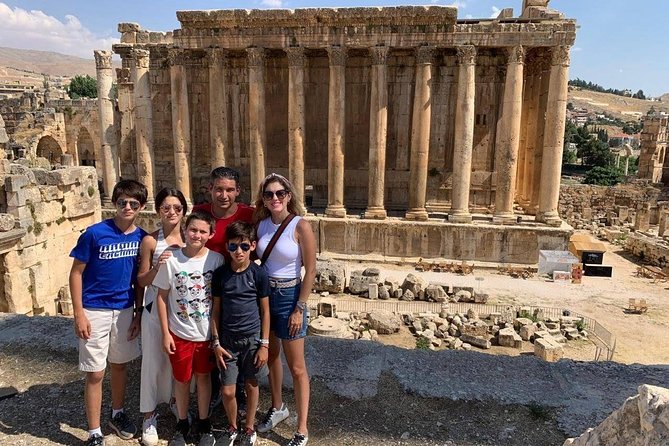
The scale is what first grabs you. The Temple of Jupiter and Temple of Bacchus are the best-known structures, and both show how much ambition went into this place. The Temple of Jupiter was part of a vast ceremonial complex, while the Temple of Bacchus remains especially impressive for its size and preservation.
You have about two hours for Baalbek itself, followed by another hour and a half at the temples. That gives you enough time to look closely rather than simply step out, take a picture, and leave. Your guide can explain the Romanized Triad of Heliopolis, the Phoenician roots behind it, and the way the sanctuary functioned as a destination for pilgrims.
Baalbek was added to the UNESCO World Heritage list in 1984. That designation matters, but the site does not need a plaque to make its point. The huge blocks, broad courtyards, and surviving columns show the engineering skill of Imperial Rome in a very direct way.
There is one practical issue: the temple admission fee is not included. The Baalbek city stop is described separately from the temple entry, so you should expect an additional charge for entering the archaeological complex. Ask your provider for the current fee before departure, since the supplied tour details do not state the amount.
Wear shoes suited to uneven ground, and give yourself time to look upward. The surviving architecture is easy to underestimate when you focus only on individual columns. The best sense of Baalbek comes from viewing the whole complex, then moving closer to inspect carved stone and construction details.
The Mosque of Sayyeda Khawla
The Baalbek portion also includes the Mosque of Sayyeda Khawla. It is linked to the belief that Sayyida Khawla, the daughter of Imam al-Hussein and granddaughter of the Prophet Muhammad, was buried at this site.
According to local belief, she died here while a caravan of captives from Karbala passed through Baalbek. The stop adds a religious dimension that differs from the Roman sanctuary nearby. It also reminds you that Baalbek has remained a place of spiritual importance long after the Roman period ended.
The available details do not give a separate visit length or admission charge for the mosque. Your guide can explain its place in local tradition and help you understand how several layers of faith and history occupy the same city.
More Palace Day Trips in the world:
- Neuschwanstein Castle and Linderhof Palace Day Trip from Munich
★ 4.5 · 1,756 reviews - From Paris: Giverny and Versailles Palace Guided Day Trip
★ 4.5 · 1,324 reviews - Downton Abbey Village, Blenheim Palace and Cotswolds Day Trip from London
★ 4.5 · 1,139 reviews - Beijing: Mutianyu Great Wall & Summer Palace Day Tour
★ 4.8 · 1,004 reviews
The Stone of the Pregnant Woman
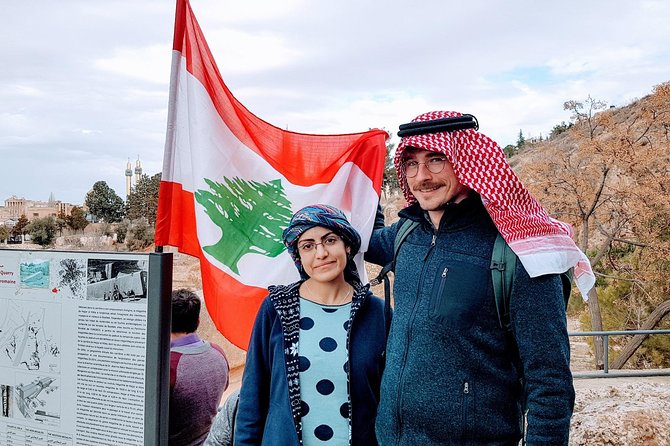
The Stone of the Pregnant Woman is a short stop, about 15 minutes, but it is worth keeping in the plan. This worked Roman monolith is one of the largest ancient stone blocks ever quarried, along with another huge block nearby.
The name is memorable, and the object itself is even more so. You can see why Baalbek raises questions about how Roman builders moved and placed such massive pieces of stone. The blocks were likely intended for the nearby temple complex, although their exact role remains part of the site’s enduring puzzle.
No separate admission fee is listed for this stop. It is a quick visit, so use it as a chance to see the raw material behind the grand structures rather than expecting another full temple complex.
Anjar’s Umayyad city ruins
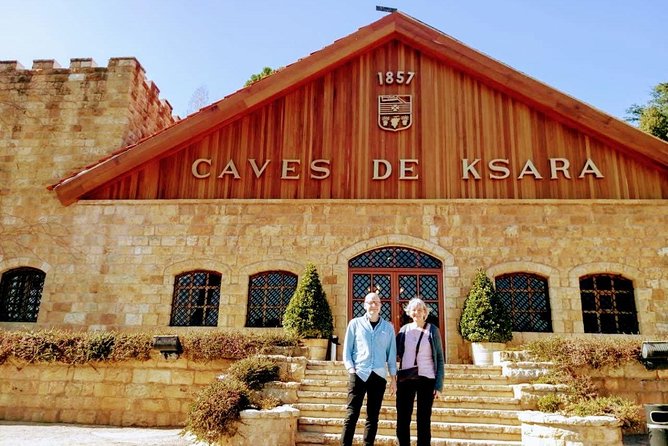
After Baalbek, the tour moves to Anjar, an inland commercial center built during the Umayyad period. The ruins were discovered by archaeologists only in the late 1940s, which gives the site a different feel from the famous and long-studied Roman sanctuary.
Anjar’s location was practical. It sat at the meeting point of a route from Beirut to Damascus and another route crossing the Beqaa toward Homs and Tiberiade. That position helped make it a place of trade and administration.
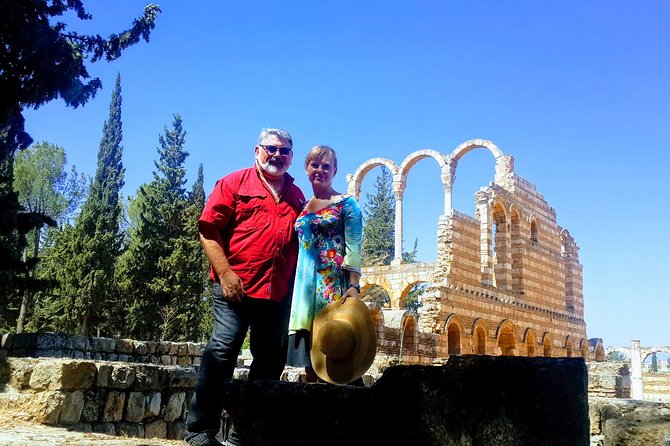
You will see remains of the Umayyad palace, harems, mosque, the caliph’s great palace, thermal baths, and numerous pillars. Some of the columns and building details use Roman architectural forms, so the site also shows how later builders adapted earlier styles.
The allotted 45 minutes is enough for a clear introduction, especially with a guide pointing out the main structures. It is not enough for an unhurried archaeological study of every wall and column. If you are most interested in early Islamic urban planning, you may wish the stop were longer. For a day that also includes Baalbek and a winery, the shorter visit keeps the schedule moving.
Anjar has a more organized city-plan feel than Baalbek’s giant sanctuary. Look for the relationship between public, religious, residential, and bathing areas. Your guide can help turn what might otherwise look like scattered foundations into a functioning commercial city.
Admission is not included, so add the site fee to your budget. The tour price covers transport and guiding, not every entrance along the way.
Château Ksara and Lebanese wine
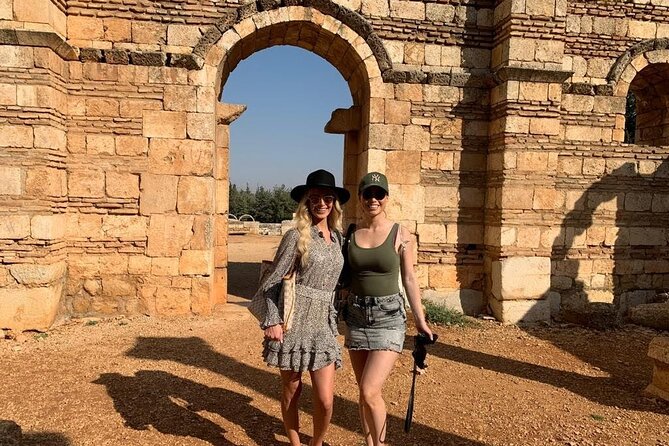
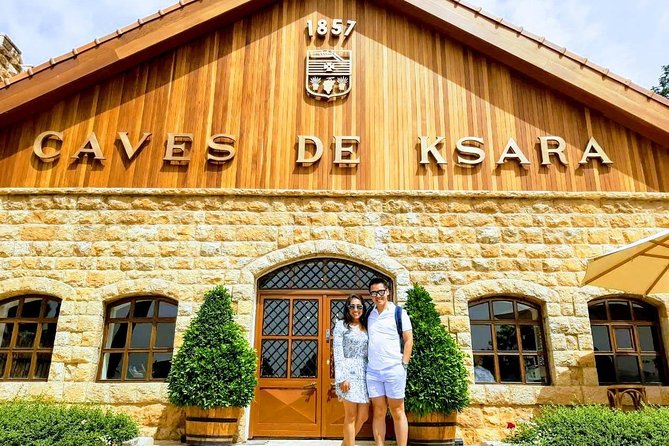
Château Ksara provides a welcome change after hours among ancient ruins. The winery was founded in 1857 by Jesuit priests and later developed Lebanon’s first dry wine. Today, it produces about three million bottles each year and exports to more than 40 countries.
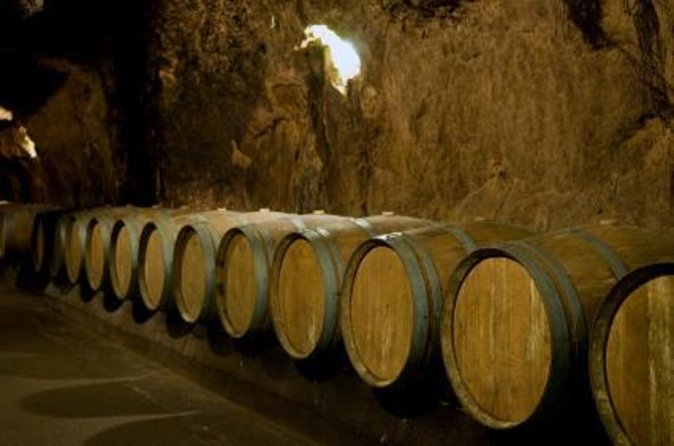
The visit lasts about an hour. The distinctive feature is the chance to sample local wine while sitting in a cave, giving the stop a cooler, more atmospheric setting than the open archaeological sites.
Wine tasting is not included in the tour price. That point matters because the winery may look like an included final activity when you first read the schedule. Plan for an additional tasting charge, and remember that lunch is also excluded.
I like this stop because it gives the day a modern local connection. You are not only looking backward at Phoenician, Roman, and Umayyad history. You are also seeing a long-running Lebanese producer tied to the agricultural identity of the Beqaa Valley.
If you do not drink wine, the information provided does not describe an alternative activity or non-drinking tasting arrangement. Ask the provider before booking if that matters to your group.
What the $100 price really covers
At $100 per person, this tour offers solid value for a private eight-hour outing if you are traveling with people who want both major ruins and a winery. The price includes private transportation, Beirut hotel pickup and drop-off, an air-conditioned vehicle, a tour leader, and a professional guide.
The private vehicle is the key cost advantage. Organizing a car, driver, and separate guides for Baalbek, Anjar, and Ksara could take more time and planning, especially if you are unfamiliar with the routes. Here, the day is arranged around three distant stops.
Still, calculate the actual day’s spending carefully. You need to pay separately for the relevant archaeological admission fees, Château Ksara’s wine tasting, and lunch. The group discount option may improve the per-person value if several people are booking together, but the available information does not state the discount amount.
The price makes the most sense for a small group that values convenience and explanation. A solo visitor may find the cost less attractive than someone sharing a private vehicle with family or friends. Since the activity is private, only your group participates, which can make the higher rate worthwhile if flexibility matters.
The guide can shape the whole day
A guide is especially important at Baalbek and Anjar because both sites cover long periods and include structures that can be hard to interpret without context. The strongest feedback centers on Georgette and Albert.
Georgette is praised for her enthusiasm and for explaining the history during the mountain drive and site visits. Albert is described as flexible and thoughtful, with the ability to discuss both the ancient places and present-day concerns. He also led a day that included the Beqaa, Baalbek, Anjar, and the Cava de Ksar winery.
Guide assignments can change, so you should not assume one particular person will lead your date. Still, these names suggest the provider has guides who do more than recite dates. The best experience here comes from asking questions and letting the guide connect the sites instead of treating each stop as an isolated monument.
Who should book this experience?
I would choose this tour if you are staying in Beirut and want to see Baalbek without arranging a long-distance car day yourself. It suits first-time visitors who want a broad introduction to Lebanese history, as well as small groups that prefer a private schedule.
It is also a good fit if your interests are varied. One person can enjoy Roman architecture, another can focus on early Islamic history, and another can look forward to Lebanese wine. The combination keeps the day from feeling like eight straight hours of archaeology.
I would hesitate if you dislike full schedules, do not want to pay extra at several stops, or want long, scholarly visits at each archaeological site. The plan covers a lot, and Anjar in particular receives less time than Baalbek.
Most people can participate, according to the tour information. Even so, you should be comfortable walking around outdoor ruins and spending much of the day away from Beirut.
Should you book the Baalbek, Anjar, and Ksara tour?
Book it if you want the easiest way to combine Lebanon’s most dramatic Roman ruins, a major Umayyad site, and a winery in one private day. The guide-led context and hotel-to-hotel transport are the strongest reasons to choose it, while the private format helps make the long schedule manageable.
Before paying, confirm the current entrance fees, wine-tasting charge, lunch arrangements, and pickup time. If you budget for those extras and accept that the day will move at a steady pace, the $100 rate offers a useful mix of comfort, history, and local flavor.
FAQ
Is hotel pickup and drop-off included?
Yes. Pickup and drop-off from your Beirut hotel are included in the tour.
How long does the tour last?
The experience lasts approximately eight hours.
Is this a private tour?
Yes. Only your group participates in the activity, and transportation is provided in a private vehicle.
Are entrance fees included?
No. The relevant admission fees for the Baalbek temple complex and Anjar are not included in the tour price.
Is the Château Ksara wine tasting included?
No. Wine tasting at Château Ksara is an additional cost.
Is lunch included?
No. Lunch is not included in the tour price.
More Full-Day Trips in the world
- Versailles Full Day Bike Tour with Palace, Gardens, & Picnic
★ 5.0 · 2,217 reviews - Beijing Classic Full-Day Tour including the Forbidden City, Tiananmen Square, Summer Palace and Temple of Heaven
★ 4.0 · 610 reviews - Full-Day; Castle, Palace, Cathedral & Viking ships Tour
★ 5.0 · 326 reviews - Full Day Tour: Sintra, Pena Palace, Cabo da Roca, Cascais
★ 5.0 · 310 reviews
More Private Palace Tours in the world
- Alhambra Private/Small Group Tour & Nasrid Palaces Skip the Line
★ 4.5 · 921 reviews - Bangkok: Grand Palace, Wat Pho, and Wat Arun Private Tour
★ 4.8 · 855 reviews - Mutianyu Great Wall&Summer Palace Excursion:Group/Private Options
★ 5.0 · 816 reviews - Private Tour of Sintra, Cabo da Roca and Cascais with 2 Palaces
★ 5.0 · 770 reviews
Just added around the world
- Pena Palace, Moorish Castle,Quinta ad Regaleira:Walking tour★ 5.0 · 3 reviews
- Porto Bishop’s Palace Guided Tour★ 4.5 · 8 reviews
- Paris: Versailles Palace and Queen Hamlet E-Bike Tour★ 5.0 · 126 reviews
- Phnom Penh: Full-Day City Tour with Royal Palace & Killing …★ 4.7 · 2 reviews
- Petchaburi Temples & Royal Palace – small Join Group Tour★ 4.6 · 46 reviews
- Paris: Versailles Golf Cart & Bike Tour with Palace Entry★ 4.8 · 58 reviews
- Petit Palais Paris Museum of Fine Arts Tour with Tickets★ 4.2 · 3 reviews
- Paris: Royal Palais, Tuileries and D’Orsay Tour★ 4.8 · 3 reviews
Chateau and Wine Estate Tours, compared.

Medoc or Saint Emilion Wine Tasting and Chateau from Bordeaux
Read our review →
Versailles Château and Gardens Walking Tour from Paris by Train
Read our review →
Loire Valley: Château Royal d’Amboise Entrance Ticket
Read our review →
Fontainebleau & Vaux-le-Vicomte Châteaux Day Tour from Paris
Read our review →
Browse the lists this tour appears in