REVIEW · SPLIT
Split: Diocletian’s Palace Private walking tour
Ancient walls still do everyday work. This private Split walking tour makes Diocletian’s Palace feel less like a museum and more like a living neighborhood, where homes, churches, shops, and cafés occupy a Roman imperial complex. I especially like the small group limit of 10 and the flexible route, which let the guide adjust the pace and focus.
I also like how much ground the tour covers on foot: the Peristyle, cathedral, Vestibule, North Gate, and tiny Church of St. Martin all reveal a different side of the palace. The main consideration is the $135 per person price, which is easier to justify for a small private group than for a couple, and some areas may close for church services or special events.
The guide Dana receives especially warm praise for her enthusiasm and for making Split easy to understand quickly. If she leads your tour, expect an energetic introduction to the city center, though guide assignments can vary.
Key points about the Split palace tour
- A living Roman palace: Diocletian’s Palace is still part of everyday Split, not a fenced-off archaeological site.
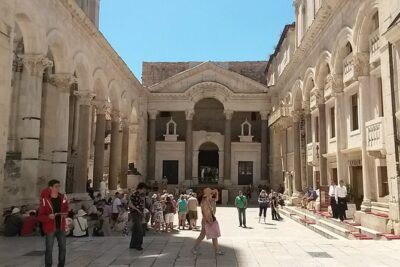
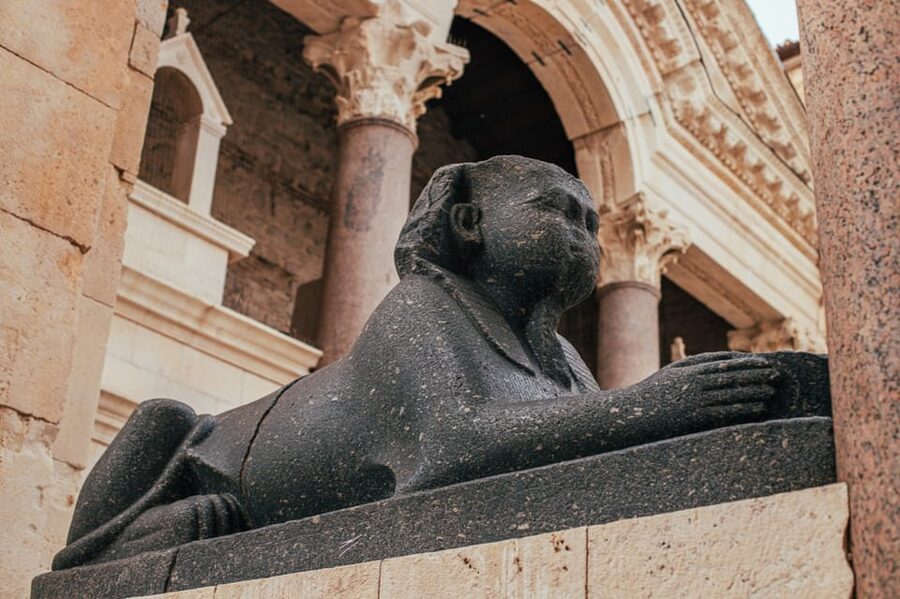
- The Peristyle sets the scene: Learn how the emperor presented himself as the son of Jupiter in this grand central space.
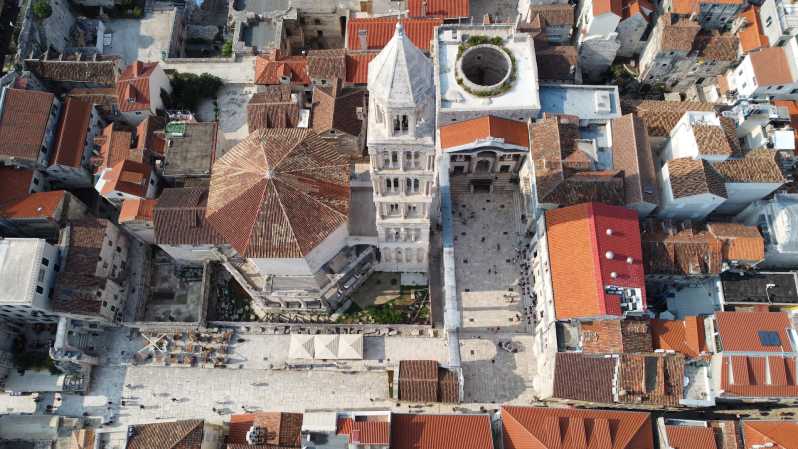
- A mausoleum became a cathedral: Split Cathedral shows how the palace changed after Christianization.
- The Vestibule reveals imperial privacy: This formal entrance led toward Diocletian’s private chambers and received visiting dignitaries.
- The Golden Gate ends the story well: The North Gate explains Roman control of access to the palace and leads to the small Church of St. Martin.
- Private, but not unlimited: The group can include up to 10 people, and the itinerary can be adjusted to suit your interests and needs.
Why Diocletian’s Palace is best seen on foot
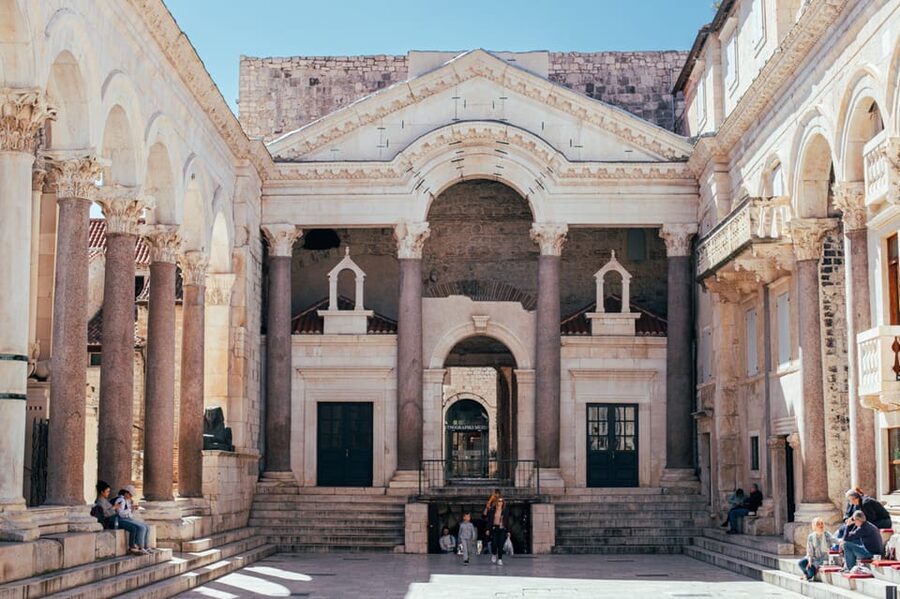
Split’s old center is not simply a collection of Roman ruins. Diocletian’s Palace is a 1700-year-old structure that still houses the people of Split. That changes the experience from a standard monument visit into a walk through a working part of the city.
You might turn a corner and find ancient stone beside a modern doorway. A passage once designed for imperial life now forms part of a local street. This overlap is the palace’s greatest appeal, but it can also make the site confusing if you explore without context.
I like a guided walk here because the stones alone do not explain their purpose. The guide connects the buildings to Diocletian, his political image, the arrival of Christianity, and the later life of Split. You get a map of the center in your head, not just a series of photographs.
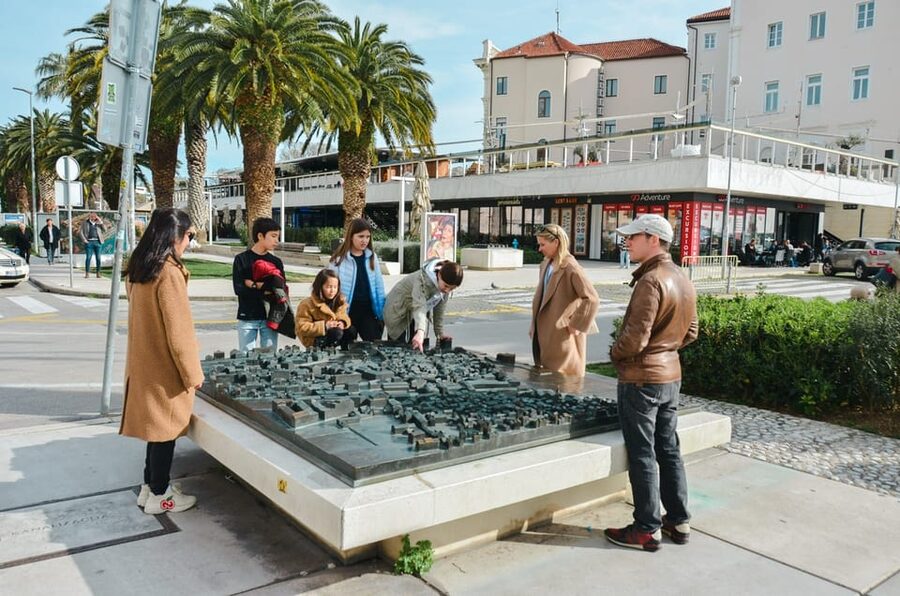
The tour begins at the bronze model of Split at the eastern end of the Riva promenade. That is a sensible meeting place because the model gives you an immediate sense of the city’s shape before you enter the palace area. The walk returns to the same point, so you do not need to arrange a separate pickup or figure out where the tour finishes.
No tour duration is provided, so you should confirm the timing before booking if your day is tightly planned. The route is on foot, and the site includes old passages and uneven areas. Wear comfortable shoes and allow yourself enough time to enjoy the stops instead of racing between them.
More Palace Walking Tours in Croatia
- Split: Old Town and Diocletian Palace Walking Tour
★ 4.9 · 4,727 reviews - Walking Tour of Split and Diocletian’s Palace
★ 5.0 · 2,588 reviews - Split & Diocletian’s Palace Walking Tour
★ 5.0 · 1,125 reviews
The Peristyle and Diocletian’s public image
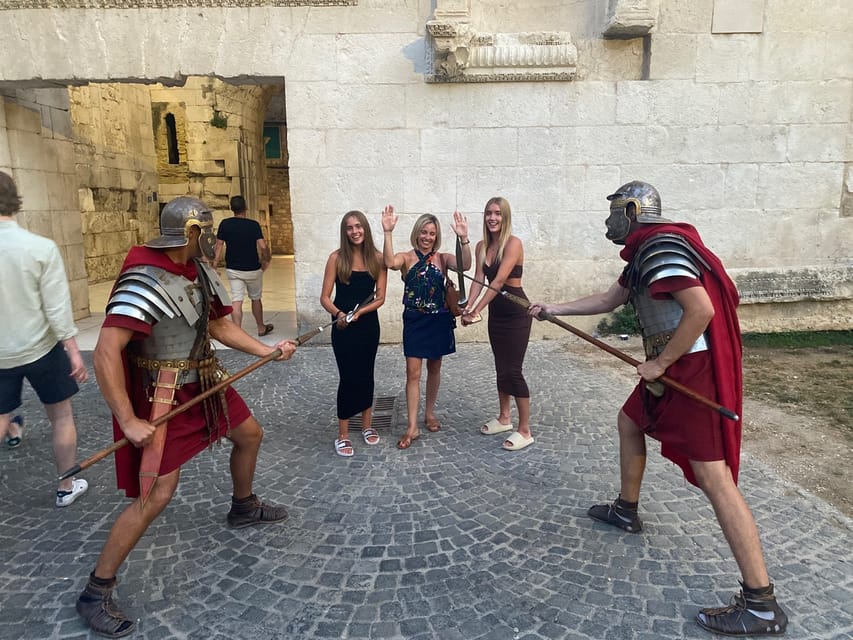
The Peristyle is the natural heart of the tour. In Diocletian’s time, this was an important gathering place where the emperor was worshipped as the son of Jupiter. That detail helps explain why the space feels more ceremonial than ordinary.
Your guide can point out how the setting supported Diocletian’s authority. This was not just an open courtyard for people to cross. It was a stage for the emperor’s public identity, linking him to the Roman gods and placing him above his subjects.
For you, the value of this stop is visual and political at the same time. The columns, open space, and surrounding buildings give you an idea of imperial power, while the explanation shows how architecture helped communicate that power. Without that background, you may notice the stone but miss the message.
The Peristyle also offers one of the clearest examples of the palace’s modern life. Ancient architecture remains part of the city rather than being separated from it. The setting can feel active and crowded, especially compared with a quiet archaeological site, so your guide’s voice and position matter.
This is one place where a private or small-group format helps. With no more than 10 people, you should have a better chance of hearing the explanation and asking questions than you would on a large group walk. The benefit is not only comfort. It lets you pause over details that interest you.
Split Cathedral, from imperial mausoleum to Christian church
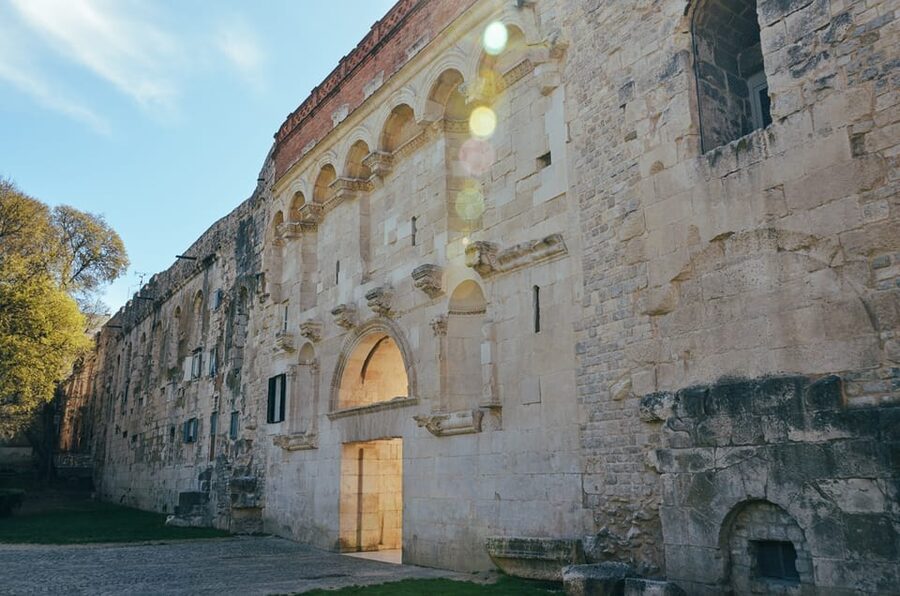
Split Cathedral carries one of the tour’s most striking stories. The building began as Emperor Diocletian’s mausoleum. After Christianization, the emperor’s remains disappeared and the structure was converted into a cathedral.
That change gives you a clear picture of how Split’s religious and political identity shifted. The same building that honored a Roman emperor later served Christian worship. Its walls tell two very different stories, and the contrast is more interesting than a simple description of the exterior.
The tour includes the cathedral’s fascinating history and its impressive exterior. The information provided does not guarantee entry inside, and church services may prevent access to certain areas. Keep that in mind if seeing the interior is especially important to you.
The possibility of a service is not a flaw in the destination. It is a reminder that the cathedral remains a working church. The route may need to change slightly if a service or event is underway, but the guide can still explain the building’s role and its transformation.
I would pay close attention here to the shift from mausoleum to cathedral. It shows how later generations reused the palace instead of preserving it as a frozen monument. That living continuity is one reason this walk offers more than a quick look at Roman stonework.
The Vestibule and the emperor’s private world
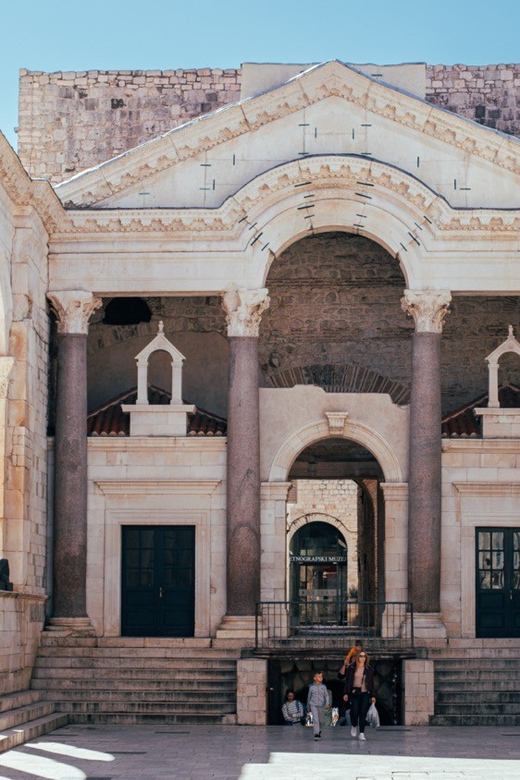
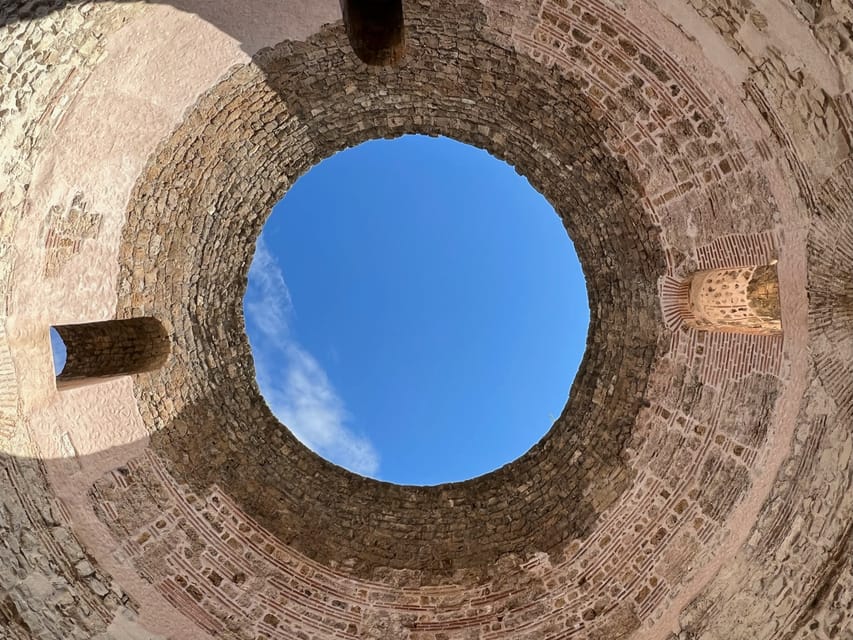
After the public ceremony of the Peristyle, the Vestibule changes the mood. This grand entrance led to Diocletian’s private chambers and served as a formal gateway for dignitaries arriving from across the world.
The Vestibule helps you picture the palace as a residence, not only as a fortress or government complex. It marked the boundary between public access and imperial privacy. People entering this area were moving closer to the emperor himself, so the entrance had to make an impression.
I like this stop because it adds scale to Diocletian’s life. The Peristyle explains how he appeared before his subjects. The Vestibule shows how visitors approached him. Together, the spaces help you understand the palace as a carefully arranged setting for power.
Your guide’s explanation matters here because the Vestibule may not announce its purpose in an obvious way. You can admire the architecture, but the social meaning comes from knowing who passed through it and why. Ask about the relationship between the public parts of the palace and the private chambers if that subject interests you.
The tour is individually customizable, so you can request more attention to imperial life, architecture, religion, or the later history of Split. That flexibility is most useful when you already know what you want from the visit.
More Palace Walking Tours in Split
- Split: Diocletian Palace & Old Town Guided Walking Tour
★ 4.7 · 882 reviews - Diocletian’s Palace and Old Town SMALL GROUP Walking Tour
★ 5.0 · 502 reviews - SPLIT-PRIVATE Walking Tour of Diocletian’s Palace & Old Town
★ 5.0 · 467 reviews - 90-min Diocletian Palace Walking Tour
★ 5.0 · 323 reviews
The North Gate and the Golden Gate
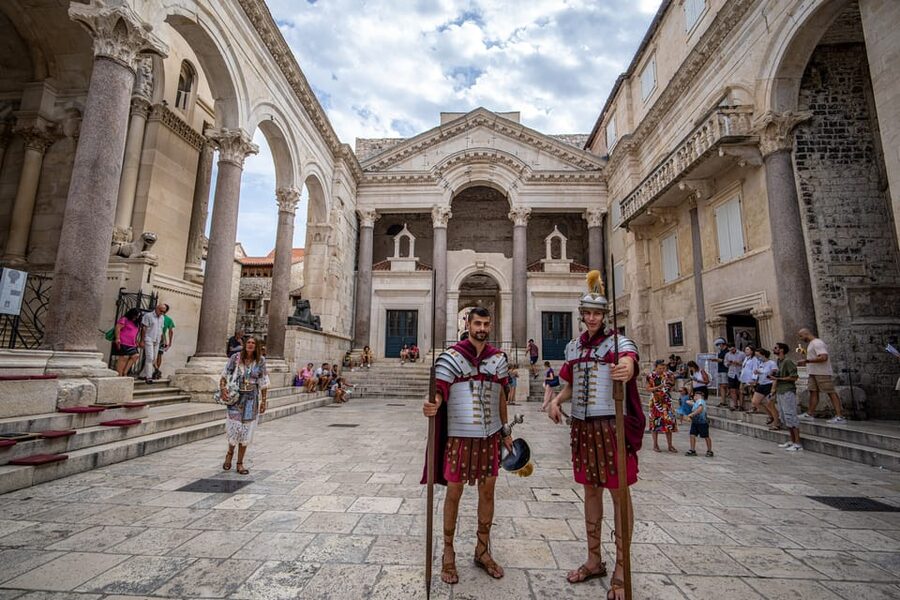
The North Gate, also called the Golden Gate or Porta Aurea, was the most important city gate during the Roman era. It is a strong final chapter for the palace walk because it shows how people entered and left this powerful complex.
A gate is easy to treat as a photo stop. Here, its importance is larger. The North Gate controlled movement and helped define the palace’s connection with the outside city. Its name and Roman role give you a better sense of the palace as an organized imperial residence, not a random group of old buildings.
The route also takes you into the former guard corridor, where the Church of St. Martin occupies a remarkably small space. This is one of the tour’s most distinctive details. After seeing grand imperial areas, you finish with a tiny church formed within a former defensive passage.
That contrast is useful. It shows how the palace changed through time and how later residents adapted its rooms for new purposes. The North Gate represents Roman security and authority, while St. Martin’s Church reflects the smaller, more personal religious spaces that developed within the old structure.
The church may not be accessible at every moment, since events and services can affect the program. Still, even when a sight cannot be entered, the guide can explain its place in the palace story. The route may change slightly, so keep your schedule flexible.
A private group of up to 10 people
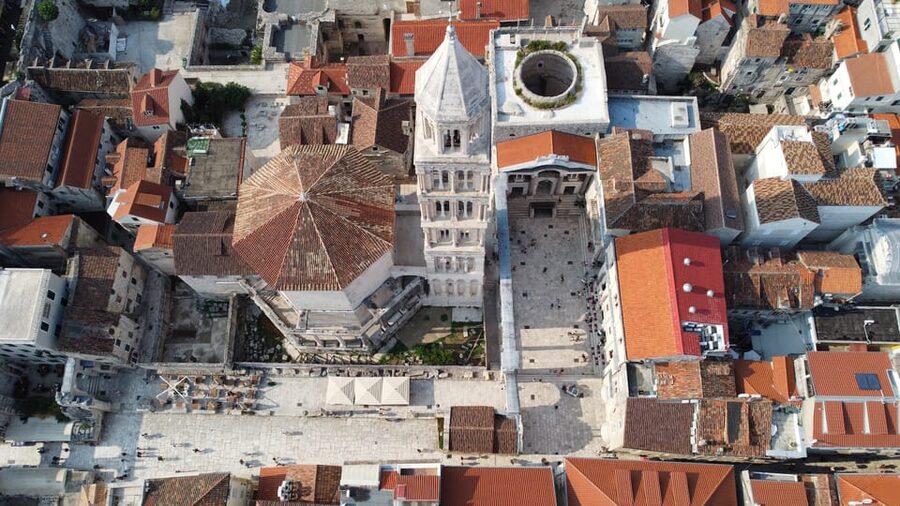
The tour is designed for a maximum of 10 participants. That is small enough to feel personal, though it is worth noting that the word private does not necessarily mean a tour only for you and your companions. Confirm the exact group arrangement when booking if that distinction matters.
A small group has practical value in Split’s old center. Narrow passages and busy public spaces can make a large group hard to manage. With fewer people, you can hear the guide more clearly and ask questions without holding up a long line.
The itinerary can be customized, which is a real advantage for families, history fans, and repeat visitors. You might spend more time on Roman politics, the cathedral’s change of purpose, or the layout of the palace. The available languages are English, French, and German.
Dana is the guide name connected with the strongest personal praise. She is described as enthusiastic and as someone who made the private tour memorable. You cannot assume she will lead every departure, but her mention is useful when you ask the provider about guide availability.
The tour has received a top rating from three submitted ratings, including praise for quickly seeing the highlights and getting a clear sense of the city center. That is a good description of the tour’s strongest use: it gives you orientation early in your Split visit.
Is $135 per person a fair price?
At $135 per person, this is not a budget walk. The value depends heavily on your group size and how much you want personal attention.
For a larger family or friend group sharing a private guide, the price may make sense. You are paying for a focused route, a maximum group size of 10, the ability to customize the walk, and a guide who can explain the palace rather than simply point out its famous places.
For one or two people, the price requires more thought. You may prefer a less expensive group tour if your main goal is only to see the Peristyle and Golden Gate. The private format becomes more worthwhile if you have limited time, want to ask many questions, or care about adjusting the emphasis.
The tour’s value also comes from orientation. A previous participant praised it as a fast way to see the highlights, learn a lot, and understand the city center. That can save you time later because you will know where the palace’s main areas connect.
No admission fees for additional sights are specified, so check exactly what the price covers before paying. The available details confirm the guided walking experience, but they do not list entry tickets to cathedral interiors or other paid areas.
Practical points before you book
Start at the bronze model of Split on the eastern end of the Riva promenade. Arrive with comfortable walking shoes and enough time to locate the model, since the palace streets can be confusing once you enter them.
The tour ends back at the starting point. That makes it easy to continue along the Riva, return to your accommodation, or plan another activity without arranging transport from a distant endpoint.
Some sights may be unavailable because of church services or special events. The program may then change slightly. If you have your heart set on one interior, ask about current access before booking and keep your expectations flexible.
The site is only partly wheelchair accessible. The tour can be adapted to special needs, but you must tell the provider in advance. This is important because old palace passages do not all offer the same access.
You can reserve now and pay later, which helps if you are still arranging your Split schedule. Cancellation is allowed up to 24 hours in advance for a full refund. These terms are useful, but I would still check the final booking conditions for your selected date.
Who will get the most from this walk?
I would recommend this tour to a first-time visitor who wants a quick, organized introduction to Split’s center. The route covers the most important palace highlights and explains how Roman, imperial, and Christian stories overlap.
It also suits anyone who prefers questions and conversation over a fixed lecture. The custom route means you can ask for more attention to the Peristyle, the cathedral, the emperor’s chambers, or the city gates.
Families may appreciate the short sequence of distinct places. Children can understand the palace more easily when the story moves from a grand courtyard to a former mausoleum, then to an emperor’s entrance and a tiny church.
History fans should find plenty to discuss, especially the change from imperial mausoleum to cathedral and the palace’s continuing use as part of the city. Architecture lovers will enjoy seeing how large formal spaces and small adapted rooms now exist side by side.
I would hesitate only if you want a long interior tour with guaranteed access to every sight, or if $135 per person feels too high for a highlights walk. The tour is strongest as an introduction and orientation, not as an exhaustive archaeological study.
Should you book the Diocletian’s Palace private tour?
Book it if you want the palace explained as a living part of Split, not just photographed as an ancient ruin. The Peristyle, cathedral, Vestibule, North Gate, and Church of St. Martin create a well-shaped route, and the small group limit gives the guide room to respond to your interests.
The price is easiest to justify for a group of several people, for visitors with limited time, or for anyone who values a personal guide. Ask about the guide assigned to your date, current church access, and what is included in the fee.
Skip it if you only need a quick self-guided look at the main monuments. But if you want a clear introduction to Split and appreciate the stories behind the stones, this is a practical and worthwhile way to begin.
FAQ
Where does the tour start?
The tour starts at the bronze model of the city of Split at the eastern end of the Riva promenade.
Where does the tour end?
The tour ends back at the starting meeting point.
How large can the group be?
The tour is designed for a maximum of 10 participants.
Is the tour customizable?
Yes. The tour is individually customizable, so you can discuss your interests and special needs in advance.
Which languages are available?
The tour is available in English, French, and German.
What are the main sights on the route?
The route includes the Peristyle, Split Cathedral, the Vestibule, the North Gate or Golden Gate, and the Church of St. Martin.
Can I visit every sight during the tour?
Not necessarily. Some sights may be unavailable because of events or church services, and the program may be adjusted.
Is the tour wheelchair accessible?
The site is partly wheelchair accessible. The tour can be adapted to special needs if you inform the provider in advance.
Can I pay later?
Yes. You can reserve your place and pay later.
What is the cancellation policy?
You can cancel up to 24 hours in advance for a full refund.
More Private Palace Tours in Split
- Split Diocletian Palace Highlights – Private walking tour
★ 5.0 · 35 reviews - Chill Private Walking Tour of Diocletian’s Palace
★ 5.0 · 35 reviews - Private Split: Visit Diocletian Palace & Taste Food at the Market
★ 5.0 · 33 reviews - Split: Private Walking Tour with Diocletian’s Palace
★ 5.0 · 30 reviews
More Private Palace Tours in Croatia
- Split by Private Electric Rickshaw – Palace & Hidden Gems
★ 5.0 · 412 reviews - YOUR BEST PRIVATE TOUR – amazing Split and Diocletian’s palace
★ 5.0 · 83 reviews - Jewish Heritage & Diocletian’s Palace Private Split Tour
★ 5.0 · 80 reviews - Split Palace & Old Town -Private walking tour- Entrance included
★ 5.0 · 77 reviews
Just added around Split
- Wine Tasting in the Diocletian’s Palace★ 4.5 · 12 reviews
- Split & Diocletian Palace Historical Walking Tour★ 5.0 · 29 reviews
- Walking tour of Diocletian’s Palace in Split★ 5.0 · 60 reviews
- Split: Diocletian’s Palace Walking and Wine Tasting Tour★ 4.5 · 56 reviews
- SPLIT-History Tour of Diocletian’s Palace & Old Town with Daniela★ 5.0 · 76 reviews
- Wonderful Split – Diocletian’s Palace Private Walking Tour★ 5.0 · 20 reviews
- Diocletian Palace in Split and Trogir Private Heritage Tour★ 5.0 · 12 reviews
- Private Split: Visit Diocletian Palace & Taste Food at the Market★ 5.0 · 33 reviews
Diocletian's Palace Tours, compared.
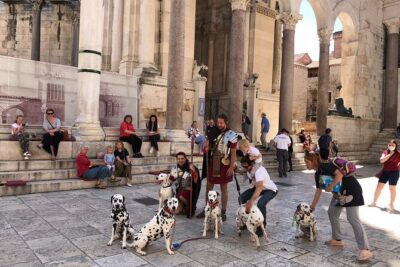
Walking Tour of Split and Diocletian’s Palace
Read our review →

Diocletian Palace & Old Town Guided Walking Tour
Read our review →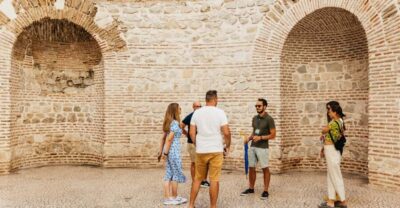

Game of Thrones Tour with Diocletian’s Palace Cellar
Read our review →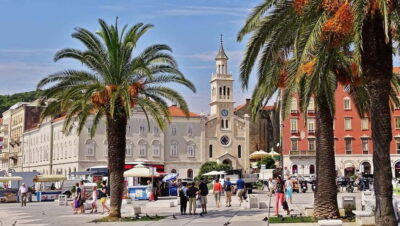
Diocletian’s Palace and Old Town SMALL GROUP Walking Tour
Read our review →