REVIEW · SPLIT
Split Diocletian Palace Highlights – Private walking tour
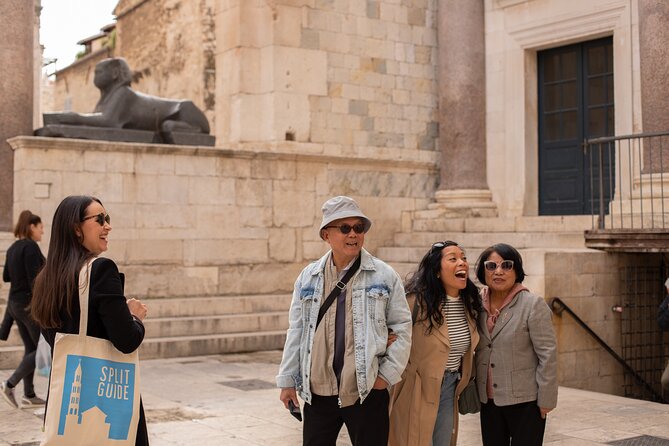
Ancient walls still shape daily Split life. This 90-minute private walk brings you through Diocletian’s Palace, where Roman stone frames homes, shops, cafés, and market stalls. I like the small-group format, capped at six participants, and the chance to hear local food, restaurant, and evening tips from a guide such as Dana, whose storytelling earned especially warm praise.
I also like the route’s clear sweep through Split’s main Roman landmarks, including the Riva, cellars, Peristyle, cathedral, gates, vestibule, and market. The main drawback is that all sights are viewed from outside, so you will not enter the cathedral, Jupiter’s Temple, or paid sections of the cellars during this tour. At $137.80 per person, the price makes the most sense for people who value personal attention and local guidance.
Key points to know before booking
- The palace is still part of city life: You walk through homes, shops, cafés, and public squares rather than a quiet museum.
- Dana has received special praise: Her storytelling and historical explanations helped make this a strong choice for an introduction to Split.
- The walk covers a lot in 90 minutes: You see the Riva, palace gates, cellars, Peristyle, cathedral, vestibule, temple, market, and Pjaca.
- It is designed for a small private group: The tour description says a maximum of six participants, while the general activity information allows up to ten, so confirm the exact size when booking.
- No admission fees are included because there are no interior visits: The cathedral and Temple of Jupiter are viewed from outside.
- You get practical local advice: Restaurant, bar, and leisure suggestions are included, which can be useful after the tour.
Why Diocletian’s Palace feels different from a museum
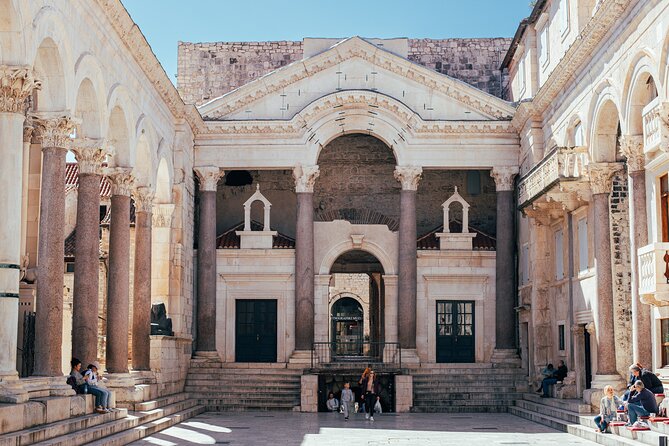
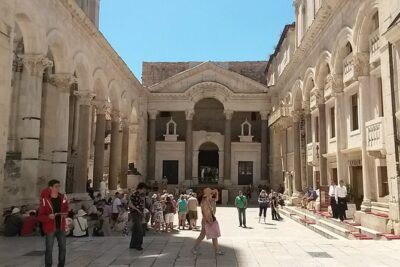
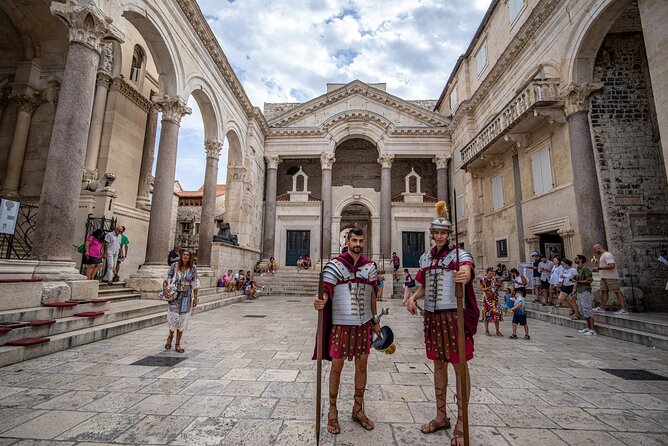
Split’s old center is not a fenced-off Roman ruin. It is a working neighborhood built inside and around the remains of a palace that is more than 1,700 years old. You may pass a shop or café beneath ancient stone, then turn into a lane where Roman walls still define the route.
That is the central value of this walk. You are not simply checking off a Roman emperor’s palace. You are seeing how old architecture became part of modern Split. The guide’s job is to connect the stones with the life around them, and the private format gives you more room to ask questions than a large group tour usually allows.
The route lasts about 90 minutes. That is enough time for a strong first look, but not enough for long interior visits or slow archaeological study. I would treat it as an orientation walk that helps you decide where to return later, rather than as a complete exploration of every room and monument.
The tour is offered in English and includes a mobile ticket. It begins at the model of Split’s historic core on Obala Hrvatskog narodnog preporoda 23. The stated end point is Republic Square, also called Prokurative. The route description also says you follow the palace walls back toward the Riva, so it is wise to confirm the exact finishing point with the guide.
More Palace Walking Tours in Croatia
- Split: Old Town and Diocletian Palace Walking Tour
★ 4.9 · 4,727 reviews - Walking Tour of Split and Diocletian’s Palace
★ 5.0 · 2,588 reviews - Split & Diocletian’s Palace Walking Tour
★ 5.0 · 1,125 reviews
Starting on the Riva, Split’s social front porch
The Riva is Split’s waterfront promenade and a natural place to begin. Locals and visitors gather at its cafés and restaurants, enjoying the sun and watching the city’s daily parade. It is a useful first stop because it gives you a sense of Split as a living coastal city before you move into the Roman core.
You spend about ten minutes here. That may sound brief, but the Riva is more about orientation than monuments. Your guide can point out how the waterfront relates to the palace and explain the setting before the route turns inland.
I like this opening because it avoids dropping you straight into a pile of ancient facts. You first see where people meet today, then learn how the palace shaped the city behind it.
Entering the palace through its working streets
Diocletian’s Palace occupies much of Split’s old center, but the name can mislead you. It was not only a grand residence. It was a fortified complex with ceremonial spaces, private quarters, religious buildings, service areas, and gates connected to roads beyond the city.
You spend about 15 minutes exploring the palace area. The important point is that the palace is not presented as a silent ruin. Houses and businesses operate within the walls, and ordinary city life continues among the ancient remains.
This is where a guide adds real value. Without context, a column or wall can look like another old stone feature. With an explanation of its original purpose, you begin to see how the emperor’s residence, military defenses, religious spaces, and later Christian buildings fit together.
The route is especially useful for first-time visitors who want to get their bearings quickly. It also suits anyone who prefers stories and urban life to a long archaeological lecture.
The cellars reveal the palace’s scale
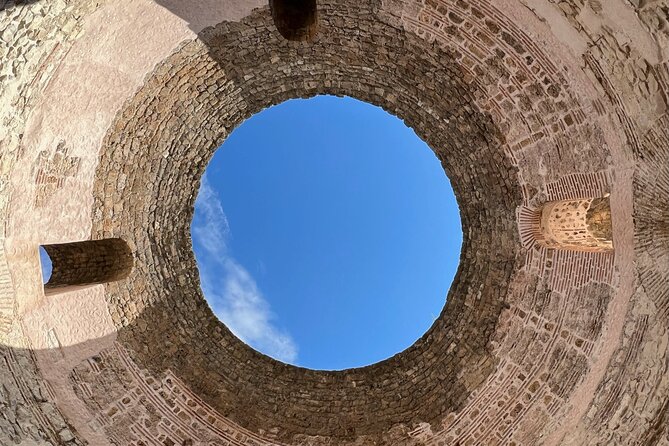
Through the south gate, you reach Diocletian’s cellars. These lower spaces are among the best-preserved parts of the complex and help you understand the size and structure of the palace above.
The scheduled stop is only about five minutes, so expect an introduction rather than a lengthy underground visit. The cellars are valuable because they show the practical side of the palace. They supported the rooms above and give you a clearer sense of how the whole complex was built.
There is an important limitation here. The tour does not include entrance fees, and the sights are visited from outside. If a particular section of the cellars requires admission, you should not assume it is part of this walk. Ask the guide what can be seen without a ticket and decide if you want to return independently.
More Palace Walking Tours in Split
- Split: Diocletian Palace & Old Town Guided Walking Tour
★ 4.7 · 882 reviews - Diocletian’s Palace and Old Town SMALL GROUP Walking Tour
★ 5.0 · 502 reviews - SPLIT-PRIVATE Walking Tour of Diocletian’s Palace & Old Town
★ 5.0 · 467 reviews - 90-min Diocletian Palace Walking Tour
★ 5.0 · 323 reviews
The Peristyle and the emperor as Jupiter’s son
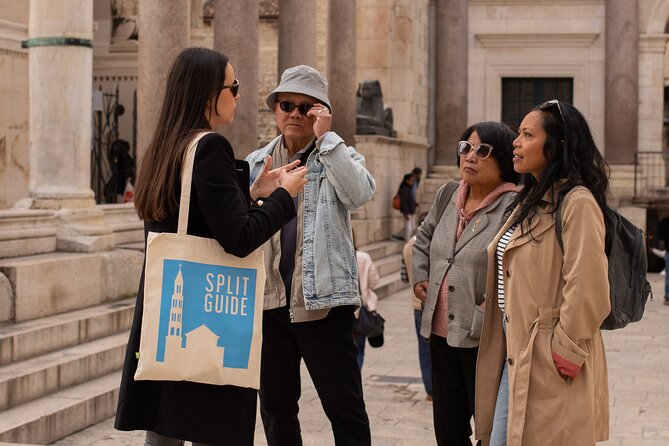
The Peristyle is the symbolic heart of the palace. In Diocletian’s time, it was a ceremonial meeting place where the emperor appeared before his subjects and presented himself as the son of Jupiter.
You spend about ten minutes here. The stop is short, but the setting carries much of the tour’s historical drama. This is where you can best picture Roman power being displayed in public, with architecture used to place the emperor above ordinary people.
The guide’s storytelling matters here. A plain explanation of dates will not do much. The interesting idea is how ceremony, religion, and political authority worked together. Diocletian was not simply living in a large home. He was building a stage for imperial rule.
The Peristyle can also be a lively public space, so do not expect a private archaeological site. That is part of its appeal. Modern Split continues to use the area, just as the emperor once used it for public display.
Diocletian’s mausoleum and the Cathedral of Saint Domnius
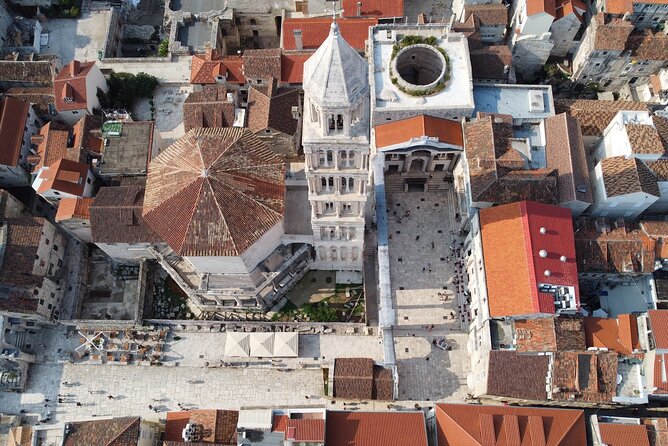
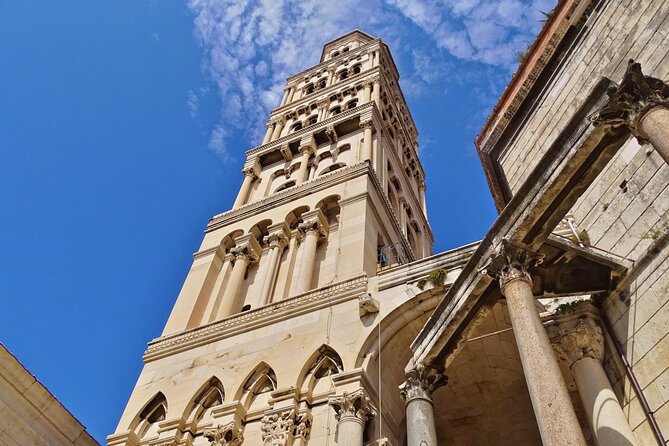
The Cathedral of Saint Domnius began as Diocletian’s mausoleum. Later, as the Roman world became Christian, the pagan mausoleum became a Christian cathedral. The emperor’s coffin and remains eventually disappeared.
The tour views the cathedral from the outside, with about five minutes allotted to the stop. There is no entrance fee to pay as part of the tour because you do not go inside.
This is a compact but meaningful example of Split’s layered past. One building shifted from imperial tomb to Christian place of worship. You can see how later generations reused Roman structures instead of clearing them away.
If you want to see the cathedral’s interior, this walk will not provide that experience. I would consider the outside explanation a preview, then make a separate plan if entering the building matters to you.
East and west gates, with a lesson in palace defenses
The route visits the east gate, identified in the tour description as the Silver Gate, and the west gate, called the Iron Gate. The Silver Gate was walled up and reopened several times over the centuries. Today it leads toward the market area.
The Iron Gate was built as a double gate, known in Latin as a propugnaculum. The space between the gates created a trap where attackers could be struck with stones, arrows, and hot oil. You spend about five minutes at each gate, so the guide has to make the defensive design clear in a few words.
These stops are easy to rush past on your own. A gate can look like a passageway, but its position tells you about movement, control, and danger. I like having the military purpose explained while standing in the actual route through the palace.
Leaving the Iron Gate brings you to Pjaca, a handsome square west of the palace. This gives the walk a pleasant change of mood, from defensive architecture to an open civic space.
Triclinium, the vestibule, and imperial private life
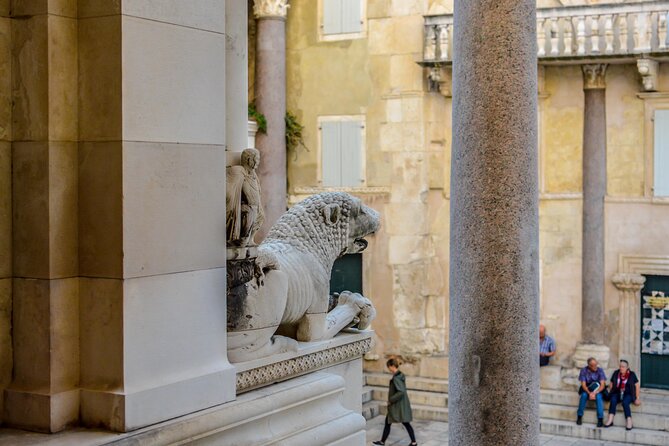
The Triclinium was Diocletian’s dining room. The name comes from the Latin word for dining room, and the setting offers a glimpse into the emperor’s private entertaining.
The description of the meals is a memorable detail: local wine, fish, honey, and as many as 20 courses in one evening. You spend about ten minutes at this stop, which gives the guide time to explain the social side of palace life rather than focusing only on walls and rulers.
Next comes the vestibule, the entrance area to Diocletian’s private chambers. This stop lasts about five minutes. It helps you shift from public ceremony to controlled access. The palace had spaces for crowds, soldiers, officials, guests, and the emperor himself, and the route shows how those areas related to each other.
Again, the value is interpretive. You may not see a furnished dining room or private suite. Instead, you use the surviving architecture and the guide’s explanation to picture how the complex functioned.
Jupiter’s Temple and the palace’s religious layers
The Temple of Jupiter is now a baptistery. The tour views it from outside, with about five minutes planned for the stop and no admission included.
This is one of the clearest examples of religious change in the palace. A temple dedicated to Jupiter became a Christian baptistery, just as Diocletian’s mausoleum became a cathedral. The building’s use changed, but the structure remained part of the city.
Do not book this tour expecting extended time inside either religious building. The outside visit keeps the walk moving and avoids added admission costs, but it also limits what you can examine. For many people, that is a fair trade during a short introductory tour.
The Golden Gate points toward Salona
The Golden Gate was the most important gate in Roman times. From here, the road led toward Salona, the capital of the Roman province.
You spend about five minutes at the gate. Its importance comes from its connection to the wider Roman road system. The palace was not an isolated retreat. It had routes linking it to the surrounding province and to the capital at Salona.
This is another place where the guide can turn a doorway into a larger story. The gate tells you how the palace connected to the Roman world beyond Split’s modern streets.
Green Market and the return to the waterfront
The Green Market lies on the east side of the palace. Fresh fruit, vegetables, and traditional foods are sold there each day. The stop lasts about five minutes, but it brings the tour back into present-day Split.
I like ending near a market because it balances the imperial material. You see how people shop and eat now, after hearing about an emperor’s multi-course dinners and Mediterranean ingredients. The market also gives you a practical place to return for a look at local produce and food.
The route then follows the palace walls toward the Riva. As noted, the stated end point is Republic Square, or Prokurative, while the route description says it reaches the promenade again. Confirm the final meeting point so you know where to continue your day.
What $137.80 per person buys you
At $137.80 per person, this is not a budget sightseeing walk. The price needs to be judged against the private format, the small group size, the English-speaking guide, and the local recommendations included after the historical tour.
For a couple or small family that wants direct access to a guide, the price may be reasonable. A guide such as Dana can make the difference, especially if you value stories, questions, and advice about restaurants, bars, and leisure activities. The especially strong feedback for Dana points to storytelling as one of the experience’s main strengths.
For a larger group, check the final group limit carefully. The tour is described as designed for a maximum of six, while the general activity information says up to ten participants. That difference matters because the sense of a private walk changes if the group is larger.
You are not paying for admission to monuments. You are paying for time with a guide who organizes the palace into a clear story. If you want interior access, you may spend more later on separate tickets.
Who will get the most from this walk
I would choose this tour if you are new to Split, have limited time, or prefer a guided introduction before exploring alone. It works well for people who want history connected to ordinary city life rather than a museum-style presentation.
It also suits couples, families, and small groups who appreciate the ability to ask questions. The tour can be adapted to special needs if you notify the provider in advance. Most people can participate, service animals are allowed, and the route is near public transportation.
You should look elsewhere if your priority is entering every major building or spending a long time at archaeological sites. The 90-minute schedule is brisk, and several stops last only five minutes. It gives you breadth, not extended study.
Free cancellation is available up to 24 hours before the start time. Changes or cancellations inside that period are not accepted for a refund. The activity requires good weather, so a weather cancellation brings an offer of a different date or a full refund.
Should you book Split’s private palace walk?
Book it if you want a clear, compact introduction to Split with personal guidance and useful local suggestions afterward. The strongest reasons are the small-group setting, the wide route, and the chance to hear lively stories about Diocletian, Roman defenses, food, religion, and modern city life.
Skip it if you mainly want interior visits or a lower-cost group walk. Before paying, confirm the exact group size and final meeting point, then ask which cellar areas can be entered without admission. For a first afternoon in Split, this is a practical way to understand the old center before you explore it at your own pace.
FAQ
How long does the Split Diocletian Palace tour last?
The tour lasts approximately 1 hour and 30 minutes.
What language is the tour offered in?
The tour is offered in English.
How many people can join the tour?
The tour is designed for a maximum of six participants. The general activity information states a maximum of ten travelers, so confirm the exact group size when booking.
Are entrance fees included?
No. The sights are visited from the outside, and no entrance fees are included.
Does the tour enter the Cathedral of Saint Domnius?
No. The cathedral is viewed from the outside.
Does the tour enter the Temple of Jupiter?
No. The Temple of Jupiter, now a baptistery, is viewed from the outside.
Where does the tour start and end?
It starts at the model of Split’s historical core at Obala Hrvatskog narodnog preporoda 23. The stated end point is Republic Square, or Prokurative. The route description also mentions returning to the Riva, so confirm the exact finishing point with the provider.
More Private Palace Tours in Split
- Chill Private Walking Tour of Diocletian’s Palace
★ 5.0 · 35 reviews - Private Split: Visit Diocletian Palace & Taste Food at the Market
★ 5.0 · 33 reviews - Split: Private Walking Tour with Diocletian’s Palace
★ 5.0 · 30 reviews - Wonderful Split – Diocletian’s Palace Private Walking Tour
★ 5.0 · 20 reviews
More Private Palace Tours in Croatia
- Split by Private Electric Rickshaw – Palace & Hidden Gems
★ 5.0 · 412 reviews - YOUR BEST PRIVATE TOUR – amazing Split and Diocletian’s palace
★ 5.0 · 83 reviews - Jewish Heritage & Diocletian’s Palace Private Split Tour
★ 5.0 · 80 reviews - Split Palace & Old Town -Private walking tour- Entrance included
★ 5.0 · 77 reviews
Just added around Split
- Split & Diocletian Palace Historical Walking Tour★ 5.0 · 29 reviews
- Walking tour of Diocletian’s Palace in Split★ 5.0 · 60 reviews
- Wine Tasting in the Diocletian’s Palace★ 4.5 · 12 reviews
- Split: Diocletian’s Palace Walking and Wine Tasting Tour★ 4.5 · 56 reviews
- SPLIT-History Tour of Diocletian’s Palace & Old Town with Daniela★ 5.0 · 76 reviews
- Diocletian Palace in Split and Trogir Private Heritage Tour★ 5.0 · 12 reviews
- Private Split: Visit Diocletian Palace & Taste Food at the Market★ 5.0 · 33 reviews
- Wonderful Split – Diocletian’s Palace Private Walking Tour★ 5.0 · 20 reviews
Diocletian's Palace Tours, compared.

Walking Tour of Split and Diocletian’s Palace
Read our review →

Diocletian Palace & Old Town Guided Walking Tour
Read our review →

Game of Thrones Tour with Diocletian’s Palace Cellar
Read our review →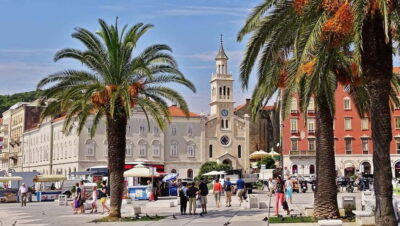
Diocletian’s Palace and Old Town SMALL GROUP Walking Tour
Read our review →