REVIEW · SPLIT
Chill Private Walking Tour of Diocletian’s Palace
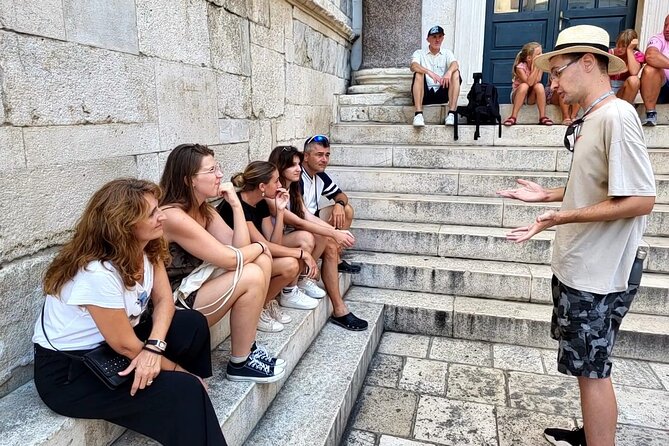
Ancient stones hide modern stories. This private Split walk makes Diocletian’s Palace easier to understand, moving from the Peristyle to the Golden Gate with a guide who connects Roman walls, Croatian history, and even Game of Thrones locations. I especially like the private format and the use of 3D reconstructions showing how the palace looked 17 centuries ago.
The route covers a lot in 90 minutes to two hours, yet you can slow down for questions. I also like that optional entrance tickets let you choose which interiors matter to you. The main consideration is that the advertised price covers the group, not individual tickets, so cathedral and substructure interiors cost extra if you decide to enter.
Key points to know before booking
- Private groups of up to 15 people: You get the guide’s attention rather than joining a large crowd.
- Starts at the Silver Gate: The tour begins at Poljana kraljice Jelene and finishes by the Golden Gate.
- Nine historic stops: The route links Roman architecture, medieval Split, Croatian history, and later building changes.
- Optional interior visits: You can add the museum section of the substructures and enter the cathedral or Temple of Jupiter if you buy tickets.
- 3D views of ancient Split: Digital reconstructions help you picture the palace before later buildings filled its corridors.
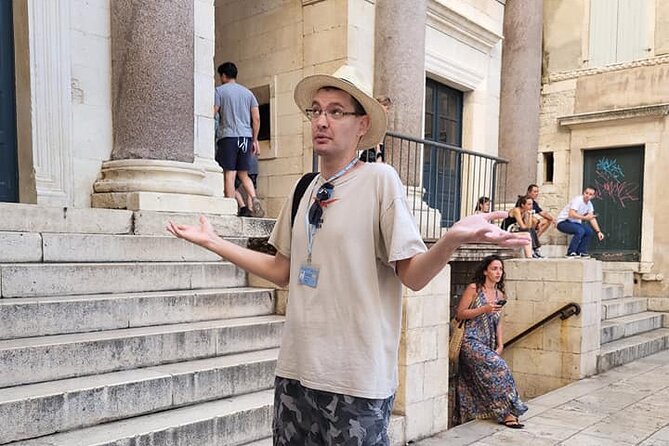
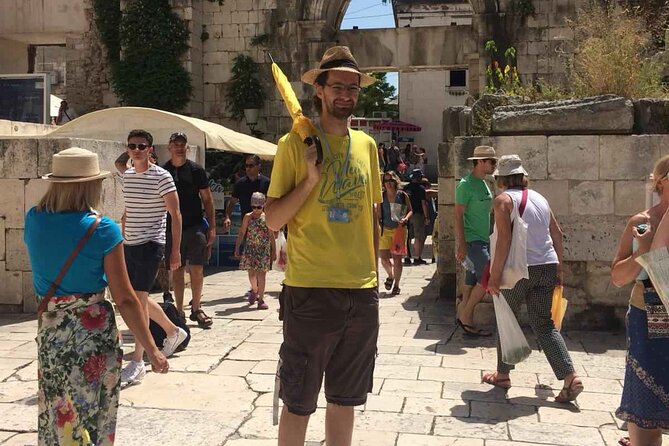
- Guide Mili brings history to life: His clear English, humor, flexibility, and Game of Thrones knowledge are major strengths.
Why Diocletian’s Palace needs a guide
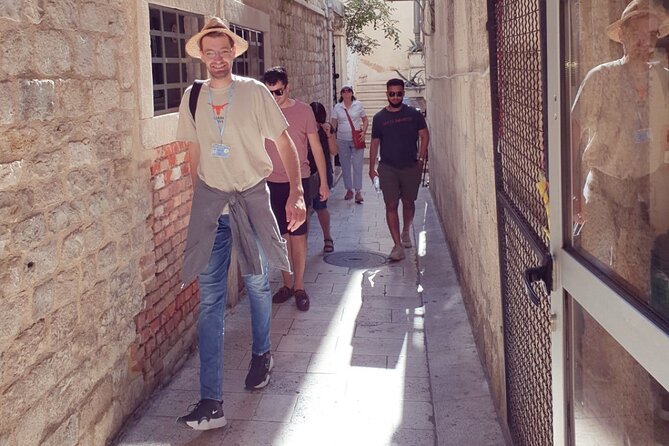
Diocletian’s Palace is not a tidy archaeological site with empty courtyards and numbered ruins. It is part Roman monument, part working city, part church complex, and part later Croatian neighborhood. Modern homes, shops, alleyways, cafés, and squares occupy spaces that began as an imperial residence.
That layering is the reason I would not treat this as a simple walk past old stones. Without some explanation, the Peristyle can look like a beautiful square, the cathedral can look like a church, and the basement can seem like a pile of masonry. A good guide shows how each part fits the original plan.
This private walk is built around that idea. The guide explains the Roman design, then points out how later people reused the palace. You are not just hearing about Emperor Diocletian. You are watching one building change purpose across many centuries.
The guide, Mili, receives especially strong praise for clear explanations, relaxed communication, and a good sense of humor. He also uses comparisons with 3D reconstructions of the palace as it may have appeared 17 centuries ago. That visual help matters because much of the original upper structure has disappeared or been altered.
More Palace Walking Tours in Croatia
- Split: Old Town and Diocletian Palace Walking Tour
★ 4.9 · 4,727 reviews - Walking Tour of Split and Diocletian’s Palace
★ 5.0 · 2,588 reviews - Split & Diocletian’s Palace Walking Tour
★ 5.0 · 1,125 reviews
Starting at the Peristyle and the Silver Gate
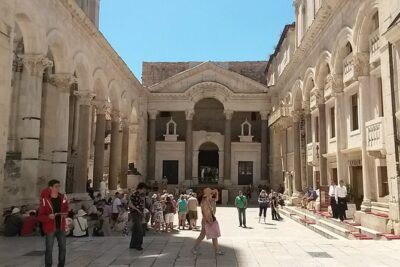
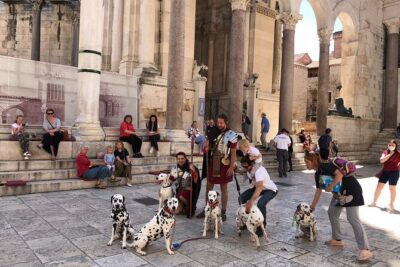
The meeting point is by the Eastern, or Silver, Gate, at Poljana kraljice Jelene 5. The first major stop is the Peristyle, the central ceremonial space of the palace. The opening section lasts about 20 minutes and sets up the rest of the walk.
Here you learn who Diocletian was and why he built this enormous fortified residence in Split. The Peristyle gives you the best early lesson in how the palace worked. It was not simply a private villa. Its design joined imperial ceremony, religious buildings, military protection, and residential areas.
I like beginning here because the square gives you a strong visual reference point. The guide can explain the palace as a whole before leading you into smaller spaces. The 3D comparisons are useful at this stage, helping you see the difference between the Roman complex and the later city built into it.
The square can be busy, and the stone paving is uneven in places. You will get more from the explanation if you stay close to the guide and keep an eye on your footing. Since this is a private tour, your group can ask questions without trying to hear a guide speaking over a large crowd.
The substructures reveal the palace’s hidden plan
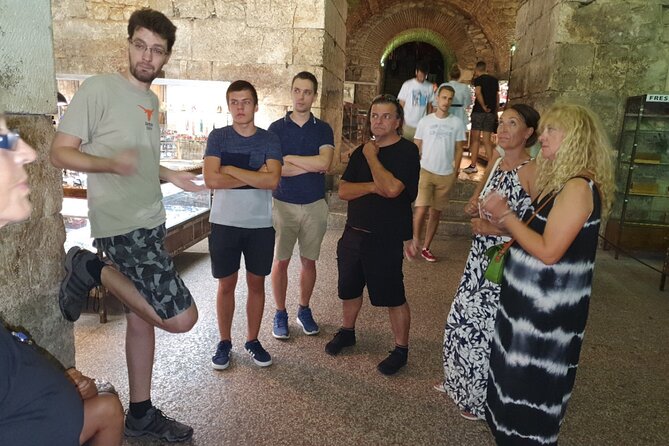
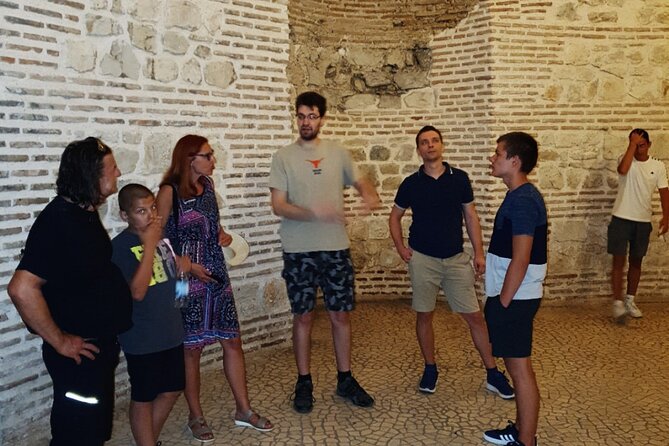
The free part of Diocletian’s Palace substructures takes about 10 minutes. These lower rooms help explain the original arrangement above them. Their layout reflects the upper palace, making them one of the most useful places for understanding the building’s Roman engineering.
This is also where the optional ticket choice becomes important. If you want to see more of the museum section, you can purchase a ticket and add about 20 minutes to the tour. The supplied details do not include the ticket price, so you should treat this as an extra expense and decide on the day based on your interest and available time.
I see the free section as a useful minimum, not a substitute for the full interior. If you enjoy architecture, construction, and the practical side of Roman buildings, the paid section may be worth adding. If your priority is the overall story of Split, the free portion keeps the walk moving.
The lower rooms may also feel different from the bright open square above. That change is part of the appeal, but it can make the route feel less comfortable for anyone who prefers a short outdoor walk. The guide helps by linking the underground structure to the rooms and streets you have already seen.
Saint Domnius, where a Roman tomb became a cathedral
The Cathedral of Saint Domnius receives about 10 minutes from the outside. It was built as part of Diocletian’s Palace and is described as one of the best-preserved Roman structures in the complex.
The key story here is reuse. A building created as Diocletian’s tomb later became a Christian cathedral. That change gives you a compact lesson in how Split’s religious and political life shifted after the Roman period.
If you already have a cathedral ticket, the guide can take you inside and add about 10 minutes. This is not included in the tour price. Buying the ticket is optional, so you can keep the focus on the exterior if you prefer not to add another entrance fee.
I would consider the interior if you want to see the Roman structure from within and have enough time. The outside explanation still gives you the central idea, but entering makes the change from tomb to cathedral easier to grasp. Ask about the extra time before the tour begins so your group knows what pace to expect.
More Palace Walking Tours in Split
- Split: Diocletian Palace & Old Town Guided Walking Tour
★ 4.7 · 882 reviews - Diocletian’s Palace and Old Town SMALL GROUP Walking Tour
★ 5.0 · 502 reviews - SPLIT-PRIVATE Walking Tour of Diocletian’s Palace & Old Town
★ 5.0 · 467 reviews - 90-min Diocletian Palace Walking Tour
★ 5.0 · 323 reviews
Temple of Jupiter and the palace’s religious side
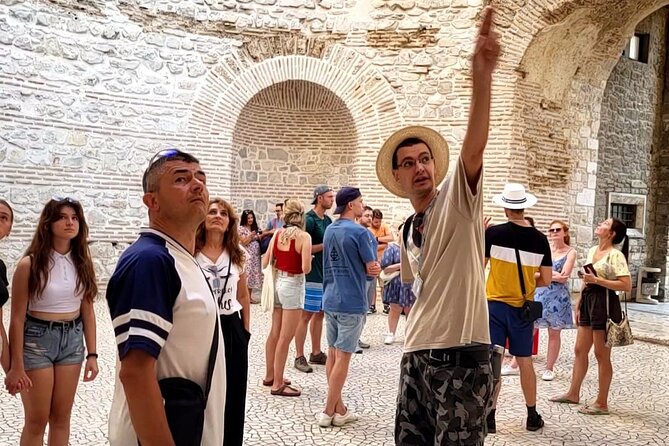
The Temple of Jupiter takes about 10 minutes. This was dedicated to the chief Roman god and, like several palace buildings, it was later repurposed by the church. That continued use helped preserve the small structure.
If you have a ticket for the interior, the guide will go inside with you. Otherwise, the explanation takes place outside and covers the important points without another admission fee.
This stop works well beside the cathedral because the two sites show different forms of reuse. One became a major cathedral, while the temple remains a smaller but sharply defined reminder of Roman religion. I appreciate that the tour does not treat every interior ticket as essential. You can spend money only where your interests lead you.
Triklinij gives a glimpse of imperial daily life
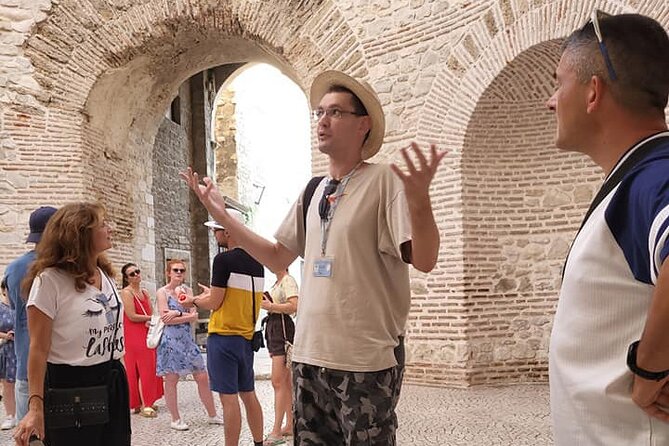
The southeastern corner of the palace has suffered major damage. Yet the form of the construction allowed part of it to be reconstructed. At Triklinij, you get an impression of how Diocletian might have lived inside the palace rather than hearing only about walls and gates.
This 15-minute stop adds a human scale to the tour. Imperial buildings can feel remote when you view them only as military or political monuments. A reconstruction connected with dining and residence helps you imagine the people and routines that once occupied the complex.
The wording here matters: you get an impression, not a perfect recreation of daily life. Much has been lost, and the partial reconstruction cannot answer every question. Still, it is a useful pause after the more formal religious sites.
Papalićeva Street shows the palace as a real neighborhood
Papalićeva alleyway takes about 15 minutes as you move through the northern half of the palace. This section is less about one grand monument and more about how the old complex functions as part of Split.
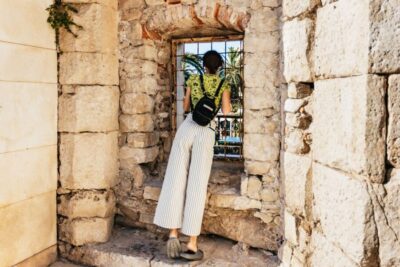
That is one of the best reasons to book a walking tour instead of looking only at photographs. You begin to notice how later buildings fit against Roman walls and how narrow passages preserve the shape of an ancient plan. The palace is not frozen in one era. It is still part of the city.
The route through alleyways can be less straightforward than the open Peristyle. Your guide’s role becomes practical here, too, since you can focus on the story instead of trying to work out which wall belongs to which period.
Fruit’s Square connects palace walls with Croatian history
At Fruit’s Square, also called Trg Brace Radic, the focus moves beyond the palace itself. The guide discusses an important period of Croatian history while showing how the Roman complex was absorbed into newer buildings.
This is a useful change of pace. You are no longer looking only at the emperor’s residence. You are seeing how Split developed around it and how later architecture can sit directly against Roman remains.
The stop lasts about 15 minutes, enough time to place the palace in the wider story of Croatia. If you want a tour that stays strictly Roman, this part may feel less focused. I think it improves the experience because the palace makes more sense when you see it as the foundation of a living city.
The Golden Gate explains defense and change
Near the end, the route reaches the Golden Gate, the northern entrance to the palace. The stop lasts about 10 minutes and covers the original fortifications and the changes made between Roman construction and the present day.
Gates are easy to admire and then walk past. Here, you get the practical story: how an entrance fitted into a fortified imperial complex, and how later generations altered it. The Golden Gate also gives you a clear sense of the palace boundary, which can be hard to see once modern streets and buildings have grown around it.
The tour ends outside this gate, by the bronze statue of Grgur Ninski. That makes the finish convenient if you want to continue exploring the northern side of the old city afterward.
Grgur Ninski closes the Roman and Croatian story
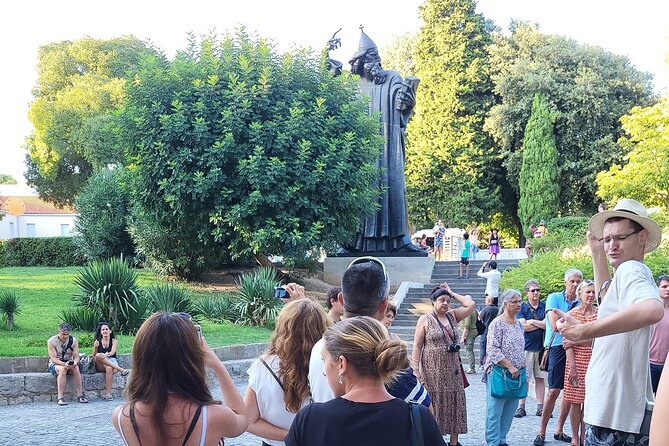
The final 15 minutes center on the statue of Grgur Ninski, an important bishop in Croatian history. The guide uses the statue and its setting to wrap up the story of Croatia up to this point.
This ending is a smart choice. The tour begins with Diocletian and Roman power, then follows the palace through religious change, later construction, and Croatian history. By the end, you are looking at a monument outside the original northern gate and connecting it to the wider story of Split.
The stop also gives you a chance to ask final questions. Mili is praised for checking whether a group wants more or less information and for taking time with questions. That sort of flexibility is especially useful in a private tour, where the pace can match your group instead of an anonymous schedule.
The private format and guide style
The price is $107.84 per group of up to 15 people. That is a sensible value for a family or group of friends, especially if several people share the cost. For one or two people, the per-person price is higher, but you are paying for a private experience rather than a standard group walk.
The advertised duration is about 1 hour 30 minutes to 2 hours. The basic route fits the shorter end, while entering the substructures or cathedral adds time. The Temple of Jupiter can also add a short interior visit if you buy a ticket.
Mili’s strongest qualities are his communication, clear English, humor, and ability to adjust. One group found him helpful when a sudden thunderstorm hit at the scheduled start. He waited for the worst rain to pass and changed the route to avoid flooding. That does not guarantee the same response in every situation, but it suggests a guide who pays attention to real conditions rather than reciting a fixed script.
Game of Thrones information is available for fans, but it does not appear to dominate the tour. People who do not follow the show can still expect the focus to remain on Split, the palace, and Croatian history.
Timing, tickets, and practical details
The experience is offered in English and uses a mobile ticket. Confirmation arrives when you book. The published meeting point is the Silver Gate, and the finishing point is the Golden Gate, so you do not need to return to your starting place.
The tour is near public transportation, service animals are allowed, and most people can participate. Since the route uses old streets, gates, and palace spaces, sensible shoes are a good idea even though the supplied details do not specify a formal accessibility grade.
The listed operating information covers May 1 through October 31, 2026, with Monday hours shown as 8:00 a.m. to 6:00 p.m. Because the date and hours may affect your plans, confirm the available time when booking.
Free cancellation is available up to 24 hours before the start time. Changes or cancellations inside that window are not accepted for a refund. The experience depends on good weather, and if poor weather causes cancellation, you can choose another date or receive a full refund.
Who should book this Split walk?
I would choose this tour if you have one day in Split and want the palace explained rather than simply photographed. It also suits families and friend groups because the private format allows questions, a custom pace, and shared cost.
History fans will appreciate the Roman structure, substructures, fortifications, and reuse of religious buildings. People with limited interest in ancient history may still enjoy it because the guide connects the monuments to later Croatian life and modern Split.
I would think twice if you want a long museum visit or a full day of sightseeing. This is a focused walk, and the paid interiors are optional extras. You should also check the weather, allow room for the optional stops, and be ready for an active route through old urban spaces.
Should you book it?
Book it if you want the palace to make sense as a layered city, not just a collection of ruins. The private group size, Mili’s flexible style, and the 3D reconstructions give this walk more value than a bare list of dates and names.
Skip it if you prefer to explore alone, do not want to pay for optional interiors, or plan to spend several hours inside museums. For most small groups with limited time in Split, though, the $107.84 group price is a fair way to get a clear introduction to Diocletian’s Palace and the city that grew inside it.
FAQ
How long does the tour last?
The tour lasts approximately 1 hour 30 minutes to 2 hours. Optional visits to the substructures museum and cathedral can add time.
How many people can join the private tour?
The price covers one private group of up to 15 people.
Where does the tour start?
The tour starts at the Eastern, or Silver, Gate, at Poljana kraljice Jelene 5 in Split.
Where does the tour end?
The tour ends outside the Golden Gate, by the bronze statue of Grgur Ninski.
Is the tour offered in English?
Yes. The experience is offered in English.
Are entrance tickets included?
The tour includes the free sections described along the route. Tickets for the museum section of the substructures, the cathedral interior, and the Temple of Jupiter interior are optional and not included.
Does the tour include the Cathedral of Saint Domnius interior?
The guide can take you inside if you already have a cathedral ticket. Otherwise, the cathedral is explained from outside.
Is the tour suitable for most people?
Most people can participate. The experience is near public transportation, and service animals are allowed.
What happens if bad weather cancels the tour?
If poor weather causes cancellation, you can receive a full refund or choose a different date. You can also cancel for a full refund if you do so at least 24 hours before the start time.
More Private Palace Tours in Split
- Split Diocletian Palace Highlights – Private walking tour
★ 5.0 · 35 reviews - Private Split: Visit Diocletian Palace & Taste Food at the Market
★ 5.0 · 33 reviews - Split: Private Walking Tour with Diocletian’s Palace
★ 5.0 · 30 reviews - Wonderful Split – Diocletian’s Palace Private Walking Tour
★ 5.0 · 20 reviews
More Private Palace Tours in Croatia
- Split by Private Electric Rickshaw – Palace & Hidden Gems
★ 5.0 · 412 reviews - YOUR BEST PRIVATE TOUR – amazing Split and Diocletian’s palace
★ 5.0 · 83 reviews - Jewish Heritage & Diocletian’s Palace Private Split Tour
★ 5.0 · 80 reviews - Split Palace & Old Town -Private walking tour- Entrance included
★ 5.0 · 77 reviews
Just added around Split
- Wine Tasting in the Diocletian’s Palace★ 4.5 · 12 reviews
- Split & Diocletian Palace Historical Walking Tour★ 5.0 · 29 reviews
- Walking tour of Diocletian’s Palace in Split★ 5.0 · 60 reviews
- Split: Diocletian’s Palace Walking and Wine Tasting Tour★ 4.5 · 56 reviews
- SPLIT-History Tour of Diocletian’s Palace & Old Town with Daniela★ 5.0 · 76 reviews
- Diocletian Palace in Split and Trogir Private Heritage Tour★ 5.0 · 12 reviews
- Private Split: Visit Diocletian Palace & Taste Food at the Market★ 5.0 · 33 reviews
- Wonderful Split – Diocletian’s Palace Private Walking Tour★ 5.0 · 20 reviews
Diocletian's Palace Tours, compared.
Walking Tour of Split and Diocletian’s Palace
Read our review →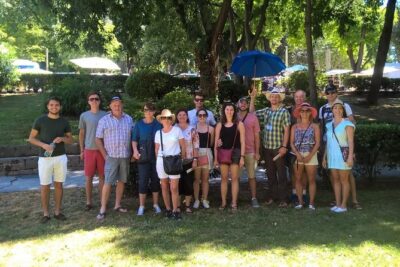

Diocletian Palace & Old Town Guided Walking Tour
Read our review →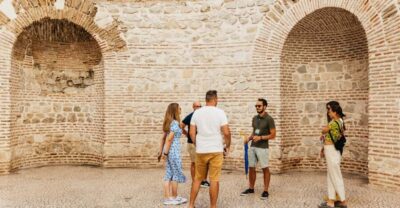

Game of Thrones Tour with Diocletian’s Palace Cellar
Read our review →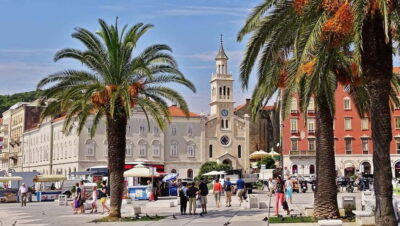
Diocletian’s Palace and Old Town SMALL GROUP Walking Tour
Read our review →