
REVIEW · SEOUL
(Small Group) Palace & Seoul Old Town Highlights
Seoul’s old center rewards curious walkers. This three-hour tour links Gyeongbokgung Palace with Insadong, Jogyesa Temple, Gwanghwamun Square, Tong-in Market area, and Bukchon Hanok Village, giving you a useful first look at both royal Seoul and modern city life. I like the maximum group size of 10, and I like that the Gyeongbokgung admission ticket is included. Guide Lee also adds friendly touches, including mini quizzes and Korean traditional games during breaks.
The main thing to consider is the pace. You cover several important places in a short time, with up to 90 minutes at the palace and only brief visits elsewhere. Bukchon and Gyeongbokgung can also involve plenty of walking, so this is best for you if you want orientation and context rather than a slow, deep visit to every stop.
Key points to know before booking
- Maximum 10 people: A small group gives you a better chance to ask Lee questions and stay connected during the walk.
- Anguk Station start: Meet outside Exit 6, a practical launch point for Insadong and Seoul’s historic center.
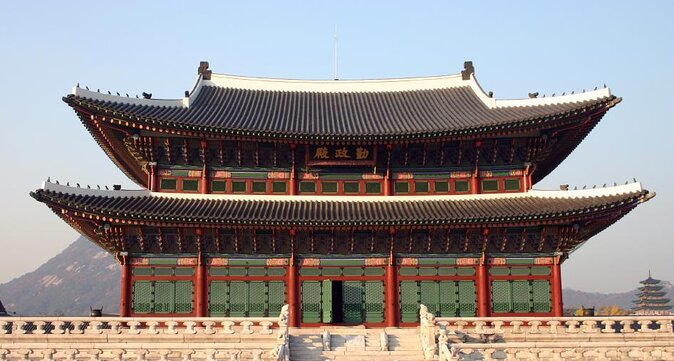
- Gyeongbokgung is the main event: You have about 90 minutes at Joseon Korea’s principal royal palace.
- Five major stops: The route includes Insadong, Jogyesa Temple, Gwanghwamun Square, Gyeongbokgung, and Bukchon Hanok Village.
- Modern and traditional Seoul together: You see tea houses and hanok homes alongside major civic spaces and busy city streets.
- Strong satisfaction record: The experience has a 5.0 rating from 24 reviews, with 100 percent recommending it.
Why this three-hour walk works as a first Seoul outing
Seoul can feel enormous when you first arrive. This tour gives you a clear starting map of the old central districts, all on foot and within roughly half a day. You move from traditional shops and tea houses to a Buddhist temple, a major public square, a royal compound, and an old residential quarter.
That mix is the real value. You do not spend the entire morning looking at palace buildings in isolation. Instead, you see how the Joseon court, Buddhist institutions, marketplaces, civic monuments, and ordinary homes fit into the same part of the city.
The small group matters here. With no more than 10 people, the walk should feel less like following a flag through a crowd and more like a guided conversation. The feedback about Lee repeatedly points to patience, clear explanations, and useful answers to questions about Korea and Seoul.
You should still set your expectations correctly. This is an orientation tour, not a specialist architecture walk or a full-day palace study. If you want to photograph every courtyard or spend hours browsing Insadong shops, you will need to return on your own.
A few more palace visits around Seoul worth a look
- Seoul: Gyeongbok Palace, Bukchon Village, and Gwangjang Tour
★ 4.9 · 2,321 reviews - Best Seoul City Tour (Gyeongbokgung Palace,Insadong,Namsan Tower)
★ 5.0 · 1,647 reviews - Small-Group Royal Palace and Seoul City Tour (hotel pick-up)
★ 5.0 · 1,474 reviews
Starting at Anguk Station and entering Insadong
The meeting point is outside Anguk Subway Station at Exit 6. That makes the start fairly easy to locate, especially if you are using Seoul’s subway system and want to avoid a long taxi ride through central traffic.
From there, the walk heads toward Insadong. This district is known for traditional goods, restaurants, and tea houses, so it provides a gentle introduction to the older side of Seoul. You have about 10 minutes here, which is enough to get a feel for the area but not enough for a proper shopping session.
I would treat this stop as a visual and cultural introduction. Look at the shopfronts, note the tea houses, and pay attention to how traditional products are presented in a very modern city. If you are hoping to buy souvenirs, save that task for after the tour or plan a separate visit. The short stop keeps the route moving.
Anguk is also a useful place to begin exploring independently later. The tour ends back at the meeting point, so you can return to Insadong after the guided walk if you want more time there.
A quiet pause at Jogyesa Temple
Jogyesa Temple is the next major stop, with about 30 minutes set aside. It is the head temple of the Jogye Order of Korean Buddhism and was founded in 1910. Its location in the middle of Seoul makes the visit especially striking: a calm religious center appears amid one of the capital’s busiest urban zones.
Thirty minutes is a sensible amount of time for a first visit. You can look around, absorb the atmosphere, and hear about the temple’s place in Korean Buddhism without turning the morning into a long religious-site tour.
The value of a guide is clear here. Without context, you might simply see a colorful temple complex and move on. Lee’s commentary can connect the building and its role to broader Korean culture, while leaving you enough quiet time to observe the site for yourself.
Please treat this as a functioning religious place, not just a photo stop. Keep your voice low and follow any posted rules. The tour description specifically identifies Jogyesa as a peaceful sanctuary, and the short visit works best when you allow it to feel peaceful.
Reading Seoul’s story at Gwanghwamun Square
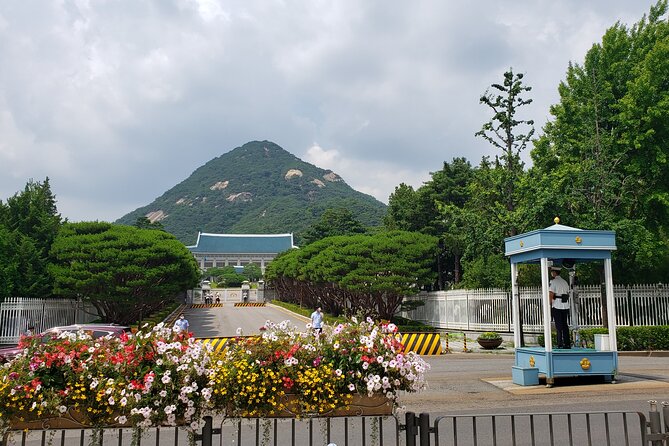
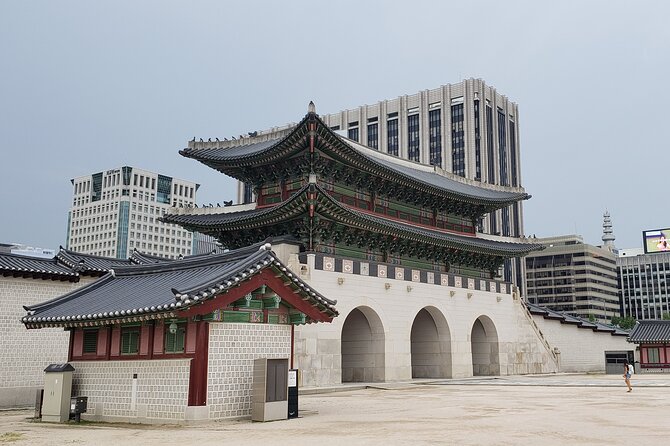
Gwanghwamun Square takes about 20 minutes. The wide public plaza sits in front of Gyeongbokgung Palace and focuses on key figures from Korean history, including King Sejong the Great and Admiral Yi Sun-sin.
This is a useful bridge between the temple and the palace. The square is not an old neighborhood in the same sense as Bukchon, but it places national history in a modern public setting. You get a sense of how Seoul presents its past to people living in and visiting the capital today.
The short stop also helps with orientation. Once you see the square and the palace setting, the next part of the route makes more sense. You are no longer just walking from one attraction to another. You are moving through the ceremonial heart of the old city.
Do not expect a long museum-style explanation here. Twenty minutes is enough for the main points, a look at the statues, and perhaps some photos. The guide’s role is to give you a framework you can remember when you return on your own.
Same place, a different set of state rooms:
- Seoul City Sightseeing Tour Including Gyeongbokgung Palace, N Seoul Tower, and Namsangol Hanok Village
★ 5.0 · 1,423 reviews - Seoul: Gyeongbok Palace, Bukchon Village, and Gwangjang Tour
★ 5.0 · 1,044 reviews - Seoul Half-Day City Highlight, Palace Tour with Hanbok
★ 4.9 · 764 reviews - Seoul: Palace, Temple and Market Guided Foodie Tour at Night
★ 4.9 · 750 reviews
Spending 90 minutes inside Gyeongbokgung Palace
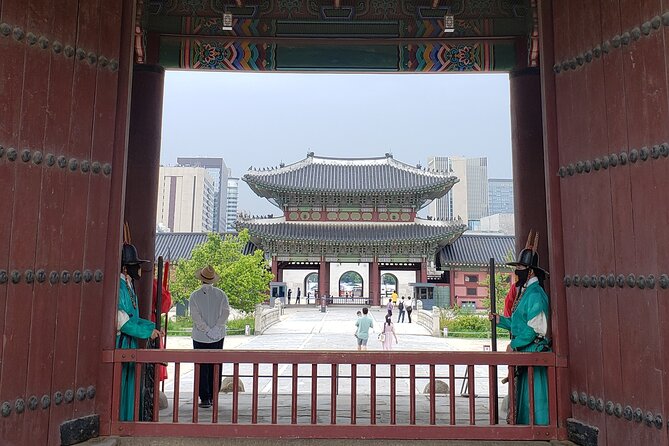
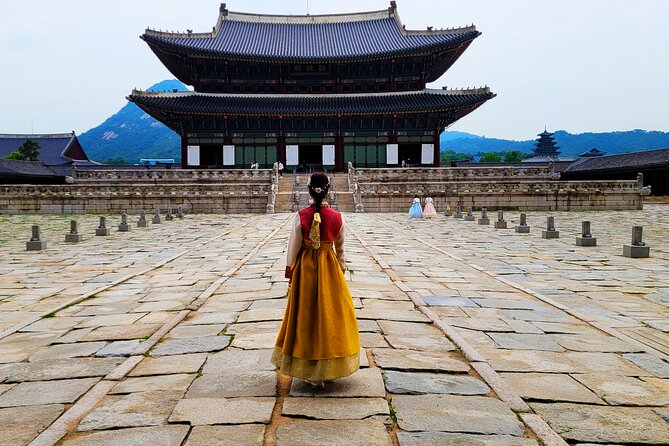
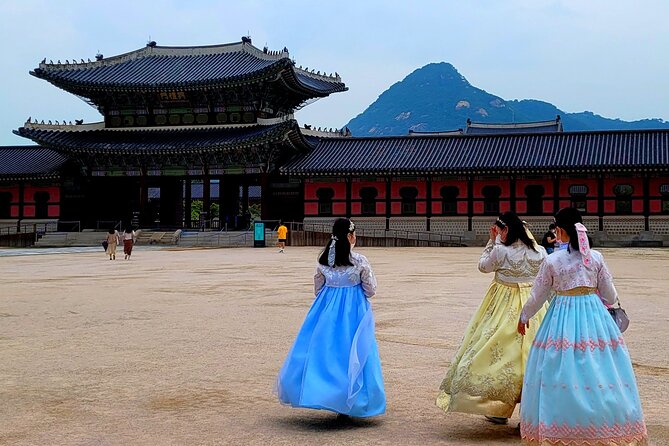
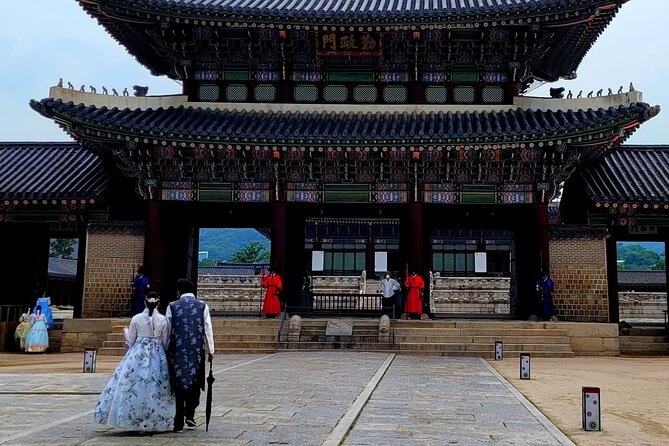
Gyeongbokgung receives the longest visit, about an hour and a half, and rightly so. Built in 1395, it was the main royal palace of the Joseon Dynasty. The site represents the power and design ideals of traditional Korea, with mountains behind the palace and modern Seoul in front.
Your admission ticket is included, which adds real value to the $60.27 price. You do not have to stop during the walking tour to arrange entry or work out the ticket process yourself. More important, the guide can help you understand what you are seeing instead of leaving you to wander among courtyards with only a few labels for company.
Ninety minutes is enough for a meaningful overview, though not a complete examination of every building. You can expect the palace to be the visual center of the tour, with time to take in its architecture and hear about the Joseon period. The supplied feedback gives particular weight to explanations of the dynasty, along with connections between historical events and present-day Korean culture.
I especially like this part of the plan because the palace gets more time than the quick introductory stops. Insadong and Gwanghwamun help you get oriented, but Gyeongbokgung gives the tour its strongest sense of place.
The limitation is simple: palace compounds are large. If you become absorbed in the details, 90 minutes can pass quickly. If Gyeongbokgung is one of your main reasons for visiting Seoul, consider returning later for a slower look. This tour gives you a solid first visit, not every corner.
The guide’s personality can also shape the experience. Lee is praised for being patient, caring, and willing to answer questions. One especially appealing detail is the use of mini quizzes and Korean traditional games during break times. Those touches may be most useful for families or anyone who enjoys an active explanation instead of a long stream of dates and names.
Seeing daily life in Bukchon Hanok Village
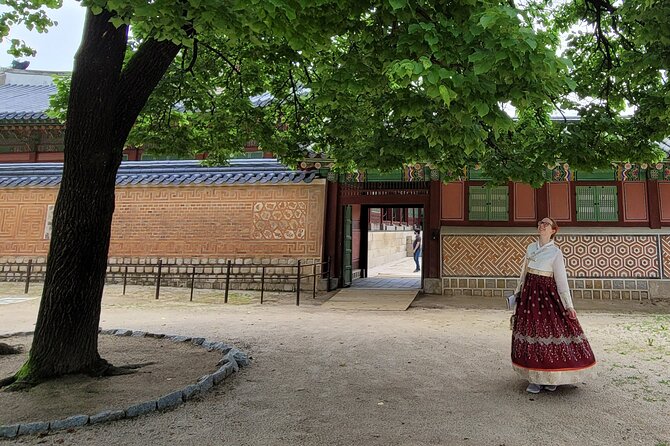
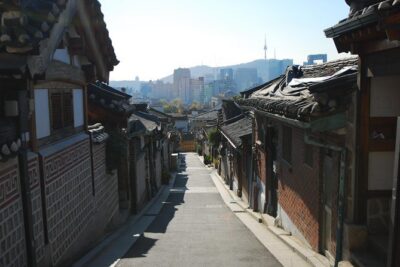
The route finishes with about 30 minutes in Bukchon Hanok Village. This historic residential district lies between two royal palaces and is known for traditional Korean houses called hanok. Its narrow lanes and tiled rooftops show how people lived during the Joseon period.
Bukchon gives the tour a different mood from Gyeongbokgung. The palace represents royal power and ceremony. Bukchon shows domestic architecture and neighborhood life. Seeing both in one morning helps you understand that old Seoul was not only a courtly world of kings and officials.
Half an hour is enough for an introduction to the lanes and rooflines, but it is not a leisurely neighborhood exploration. The area is residential, so you should keep voices down and avoid treating doorways and private homes as photo props. The tour’s short visit also means you may want to come back later if you enjoy traditional architecture.
The walk can be tiring here, particularly if the route includes slopes or uneven lanes. The supplied information says most people can participate, but you should still consider your own comfort with a three-hour walking tour. Good shoes and water are sensible choices, even though those items are not provided.
What the guide adds to the walk
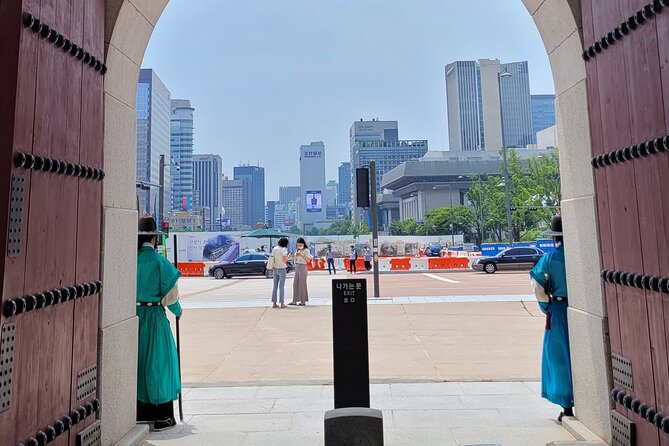
The strongest praise centers on Lee. The feedback describes a guide who balances facts about Korean history with observations about current Korean culture. That balance is important because Seoul can otherwise be reduced to a list of palace dates and royal names.
You can also expect room for questions. One account describes plenty of discussion about Seoul and Korea, with Lee giving helpful answers. That makes this a good choice if you want to ask practical cultural questions while you are still forming your first impressions.
The personal touches matter, too. Mini quizzes and traditional games during pauses can keep younger participants involved, and Lee’s patient manner suits people who do not want to feel rushed through a lecture. The feedback also describes the tour as a strong introduction for a first visit to Seoul.
Of course, a small group does not guarantee a private tour. The advertised maximum is 10, but some dates may have fewer people. Several past bookings happened with only three people or even as a private experience, though you should not book expecting that result.
Is $60.27 a fair price?
At $60.27 per person, this is not the cheapest way to walk around central Seoul. You are paying for a three-hour guided experience, a small group capped at 10, and the Gyeongbokgung admission ticket.
The price makes the most sense if you value explanation and efficient planning. You could visit these areas independently, but you would need to arrange the route, decide how long to stay at each place, and research the palace and temple beforehand. The tour handles that structure for you.
The value is strongest during a first Seoul visit or a short stay. You see five important areas in less than half a day, then have the rest of the day to return to a favorite spot or explore another district.
It is less compelling for you if you already know Seoul well, have visited Gyeongbokgung, or prefer wandering without a schedule. You may find the short stops restrictive, especially in Insadong and Bukchon.
The experience has free cancellation up to 24 hours before the start time. A late cancellation is not refunded, and changes inside that 24-hour window are not accepted. Poor weather or failure to reach the minimum number of participants can lead to a rescheduled date, another experience, or a full refund.
Who should book this Seoul introduction?
I would choose this tour for a first-time visitor who wants a clear introduction to the old center without spending a full day on formal sightseeing. It also suits you if you enjoy asking questions, prefer a small group, and want history explained in plain terms.
Families may appreciate the quizzes and traditional games, while couples and solo visitors can benefit from the efficient route and local perspective. The tour is also useful early in a Seoul stay because it helps you decide which districts deserve a longer return visit.
I would think twice if you want a slow photographic tour, an in-depth palace study, or lots of shopping time in Insadong. The route covers a lot, but that means each stop has a firm time limit.
The activity is near public transportation, service animals are allowed, and most people can participate. Still, plan for a substantial amount of walking and check the weather before you go, since the experience requires good weather.
Should you book this tour?
Book it if you want a friendly, tightly planned introduction to Seoul’s historic center and like having a guide who can connect Joseon history with modern Korean life. The small group, included palace ticket, and strong feedback about Lee make $60.27 a reasonable price for a first look.
Skip it if you already know these districts or want to set your own pace. For most first-time visitors, though, this is a smart way to get your bearings quickly, then return to the places that deserve more time.
FAQ
Where does the tour begin?
It begins outside Exit 6 of Anguk Subway Station in Seoul.
Where does the tour end?
The activity ends back at the meeting point.
How long does the experience last?
The walking tour lasts approximately three hours.
How large is the tour group?
The maximum group size is 10 people.
Is admission to Gyeongbokgung Palace included?
Yes. The Gyeongbokgung admission ticket is included in the tour price.
Which places does the tour visit?
The route includes Insadong, Jogyesa Temple, Gwanghwamun Square, Gyeongbokgung Palace, and Bukchon Hanok Village.
Is the tour suitable for most people?
The information says most people can participate, and the activity is near public transportation. It also allows service animals.
Can I cancel for a full refund?
Yes. You can cancel at least 24 hours before the local start time for a full refund. Cancellations or changes made less than 24 hours before the start are not refunded or accepted.
What happens if the weather is poor or the minimum group size is not reached?
The tour may be rescheduled or canceled. In that case, you will be offered a different date or experience, or a full refund.
Just added around Seoul
- Small-Group Seoul Tour with Gyeongbokgung Palace (hotel pick-up)★ 5.0 · 68 reviews
- Gyeongbokgung Palace & Bukchon Village Walking Tour★ 5.0 · 3 reviews
- Seoul Night Tour with Han River Cruise and Gyeongbokgung Palace★ 5.0 · 53 reviews
- Seoul Palace Morning Tour★ 4.5 · 53 reviews
- Seoul Private Tour Gyeongbok Palace Bukchon and Gwangjang Market★ 5.0 · 4 reviews
- Seoul UNESCO Heritage Palace, Shrine, and More Tour★ 4.5 · 13 reviews
- Seoul Night Tour (Gwangjang Market, Royal Palace and Naksan Park)★ 5.0 · 92 reviews
- Seoul Royal Palace,Bukchon Hanok Village & Gwangjang Market Feast★ 4.5 · 16 reviews
Seoul Palace Tours, compared.
Gyeongbok Palace, Bukchon Village, and Gwangjang Tour
Read our review →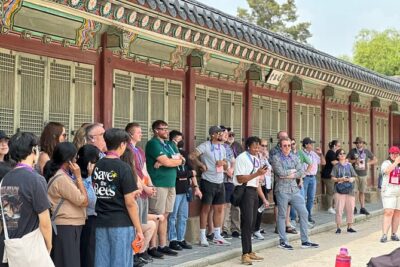
Best Seoul City Tour (Gyeongbokgung Palace,Insadong,Namsan Tower)
Read our review →
Small-Group Royal Palace and Seoul City Tour (hotel pick-up)
Read our review →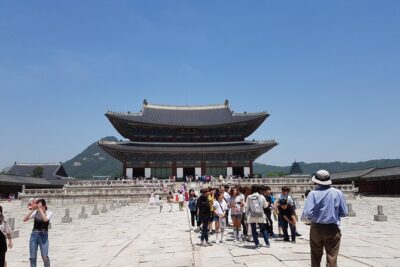
Seoul City Sightseeing Tour Including Gyeongbokgung Palace, N Seoul Tower, and Namsangol Hanok Village
Read our review →Gyeongbok Palace, Bukchon Village, and Gwangjang Tour
Read our review →
Seoul Half-Day City Highlight, Palace Tour with Hanbok
Read our review →
Palace, Temple and Market Guided Foodie Tour at Night
Read our review →
Seoul Highlights: Gyeongbok Palace, Insadong & N Seoul Tower
Read our review →Browse the lists this tour appears in