
REVIEW · SEOUL
Small-Group Seoul Tour with Gyeongbokgung Palace (hotel pick-up)
Seoul’s royal story fits one morning. This 3.5-hour tour links Jogyesa Temple, Gyeongbokgung Palace, the National Folk Museum, and the changing of the royal guard in a tidy half-day outing. I like the mix of Korean Buddhism, palace life, and daily history, plus the convenience of hotel pickup and included admission.
I also like the guides’ personal touch. Sookhee, Young, Junie, Lua, Brian, and others have been praised for clear explanations, patience, family photos, and help with heat or rain. The main catch is the required ginseng-center stop, which can feel more like a sales visit than a cultural attraction.
Key points to know before booking
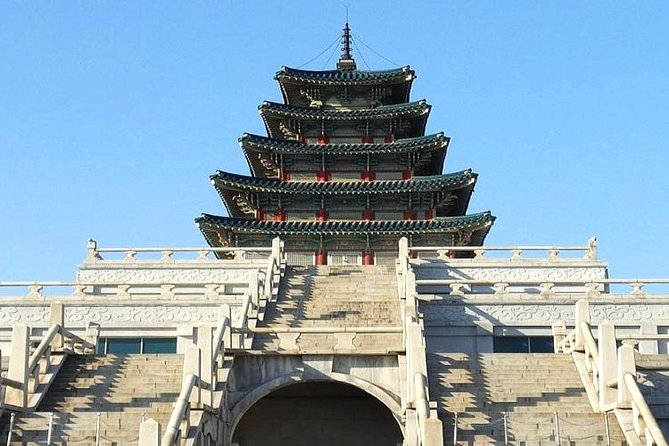
- Jogyesa Temple begins the morning with a look at Korean Zen Buddhism in the middle of central Seoul.
- Gyeongbokgung Palace is the centerpiece, with a guard-changing ceremony at Gwanghwamun Gate when the schedule and weather allow.
- Tuesdays follow a different route: Changdeokgung Palace and the Secret Garden replace Gyeongbokgung because it is closed.
- The tour is limited to 15 participants, making it more personal than a large coach outing.
- Hotel pickup is offered from central Seoul, but the tour ends at City Hall or Insadong rather than returning you to your hotel.
- The ginseng-center visit is the weak link, especially if you dislike organized shopping stops.
A useful Seoul introduction in 3.5 hours
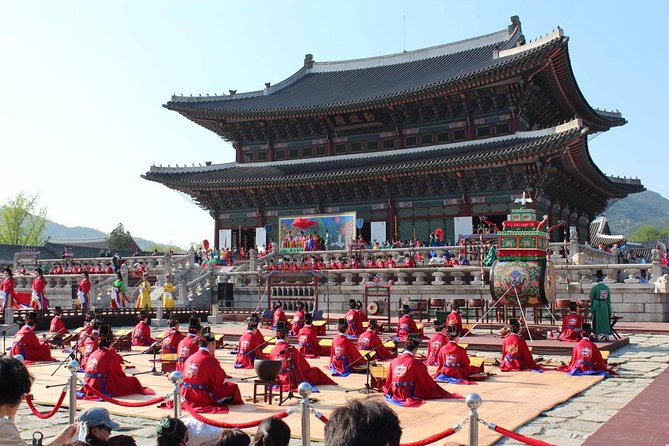
Seoul can feel enormous at first. Royal gates, subway lines, modern towers, Buddhist temples, traditional lanes, and government buildings all sit close together, but the city does not always explain itself to a first-time visitor. This tour gives you a quick framework for understanding central Seoul.
The route begins at about 9 a.m. and uses a climate-controlled vehicle between stops. That matters in Seoul’s hot summers, cold winters, and wet seasons. You will still walk quite a bit, especially at the palace, but you are not left to solve every transfer on your own.
The advertised price is $39.73 per person. For that amount, you receive a guide, hotel pickup in central Seoul, transportation during the outing, bottled water, entrance fees, and the service of a small group. That is a fair price for visitors who want the main royal sights without spending a full day on a guided program.
The tradeoff is pace. You get an efficient introduction, not a leisurely study of each building. At Gyeongbokgung, you may wish for more time to wander on your own. Some participants have also found the Folk Museum visit too brief, while the ginseng stop took longer than expected.
More Gyeongbokgung and Seoul Palace Tours in Seoul:
- Seoul: Gyeongbok Palace, Bukchon Village, and Gwangjang Tour
★ 4.9 · 2,321 reviews - Best Seoul City Tour (Gyeongbokgung Palace,Insadong,Namsan Tower)
★ 5.0 · 1,647 reviews - Seoul City Sightseeing Tour Including Gyeongbokgung Palace, N Seoul Tower, and Namsangol Hanok Village
★ 5.0 · 1,423 reviews
Jogyesa Temple: a calm start in central Seoul
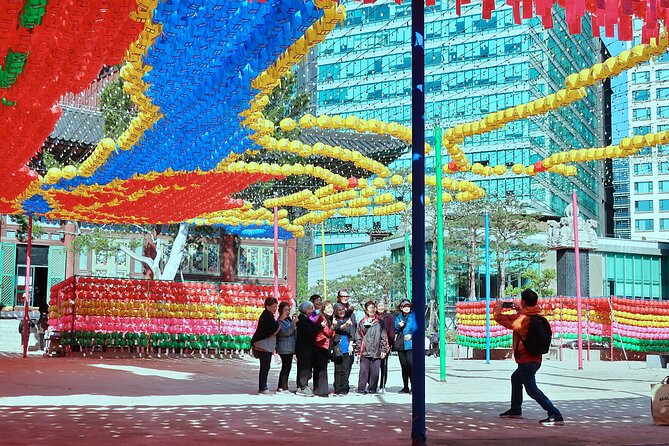
The first stop is Jogyesa Temple, a major center of Korean Zen Buddhism. Its location is part of the lesson. You reach it from the busy Jongno streets, so the temple offers a sudden change in mood without requiring a long trip outside the city center.
Expect about 30 minutes here. You will walk through key parts of the colorful compound and hear about Buddhism in Korea. The temple is an active place of worship, not simply a preserved monument, so access to interior areas can depend on what is happening at the time.
That last point is worth keeping in mind. If worship is underway, you may have less freedom to enter or look around inside. The temple portion can also feel partly self-guided, depending on the guide’s timing and the activity in the compound.
Still, Jogyesa gives the tour a useful cultural balance. Without it, the morning could become only a palace-and-guards circuit. Here, you get an early look at a living religious tradition before turning to Korea’s royal past.
Blue House Square and the view toward Mount Bukak
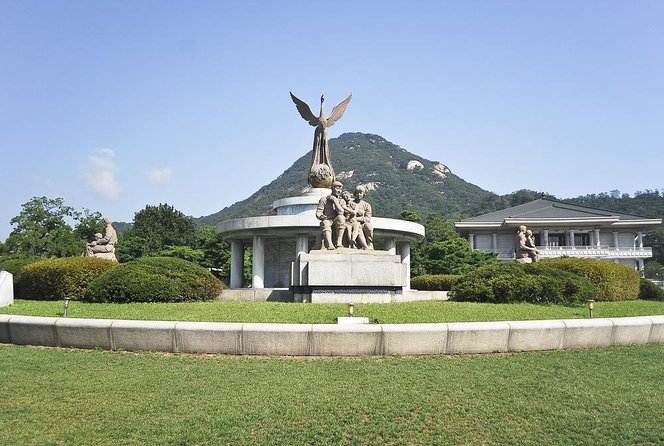
The route then passes through Blue House Square for photographs of Cheong Wa Dae, the former Presidential Blue House. The blue-tiled roof and Mount Bukak behind it create one of the more recognizable government views in central Seoul.
You do not go inside the Blue House on this tour. The stop is for exterior views and photographs, and it may be brief. That makes it a quick orientation point rather than a full attraction.
I would treat this as a useful bonus, not the reason to book. It gives you a look at Korea’s modern political center and connects the royal district with the city’s present-day government quarter.
Gwanghwamun Gate and the changing of the royal guard
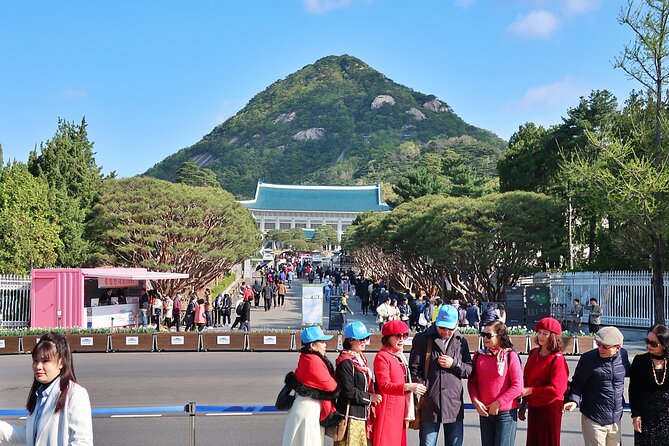
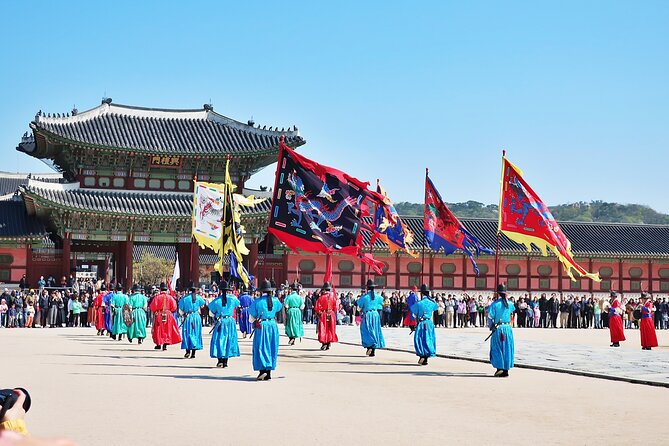
Gwanghwamun Gate is the grand front entrance to Gyeongbokgung Palace. The tour schedules about 20 minutes here, with the goal of positioning you to watch the changing-of-the-guard ceremony.
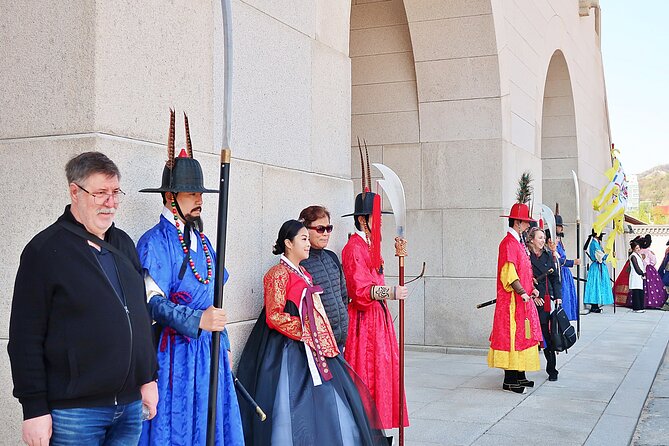
The ceremony adds color and movement to the morning. Guards in traditional dress, formal signals, and the gate itself make this one of the easiest moments to appreciate even if you know little about Korean history. Keep your camera ready, but listen to the guide too, since the ceremony makes more sense when you understand its function.
There are several reasons the ceremony may not happen. It is unavailable on Tuesdays because Gyeongbokgung is closed, and bad weather can cancel it. Rain has caused cancellations, and long holiday lines have also affected the schedule. The tour provider may adjust the route, but no short guided outing can guarantee every public performance.
The guide’s position matters here. Sookhee was praised for placing the group well for the ceremony, while Brian helped explain changes when rain interrupted the schedule. If this event is your main priority, avoid Tuesday and check the forecast before booking.
A few more palace visits around Seoul worth a look
- Small-Group Royal Palace and Seoul City Tour (hotel pick-up)
★ 5.0 · 1,474 reviews - Seoul: Gyeongbok Palace, Bukchon Village, and Gwangjang Tour
★ 5.0 · 1,044 reviews - Seoul Half-Day City Highlight, Palace Tour with Hanbok
★ 4.9 · 764 reviews - Seoul: Palace, Temple and Market Guided Foodie Tour at Night
★ 4.9 · 750 reviews
Gyeongbokgung Palace: the heart of the morning
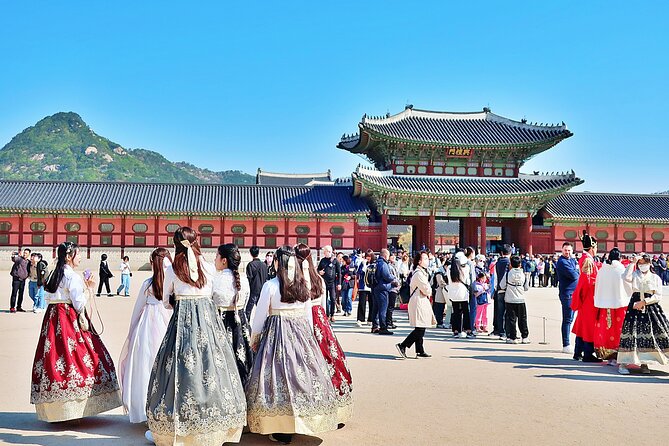
Gyeongbokgung, the northern palace, receives about an hour of the tour. This is the central stop, and it is where the guide explains how royal families, court attendants, and officials lived and worked.
The palace grounds are large. An hour gives you a useful introduction, but not enough time to see every corner at a relaxed pace. You will likely focus on the main courtyards and the key royal buildings while the guide explains the role of the palace in Korea’s royal period.
The palace is also a place where the group format helps. Without context, a sequence of courtyards and painted wooden buildings can blur together. A good guide points out what mattered, who used each space, and how court life was organized.
This is where the strongest guide reports matter most. Sookhee, Young, Junie, Lua, and others were praised for explaining Korean history and culture clearly, helping with photographs, and adjusting the pace in difficult weather. Families with children found Junie especially patient, and one guide looked for shade during a very hot morning.
That said, the palace can be physically demanding. The grounds include cobblestones, gravel, steps, and uneven surfaces. You should expect substantial walking, and the tour information recommends moderate physical fitness. Anyone with back problems, heart complaints, or other serious medical conditions should consider the demands carefully.
Heat can change the experience. One participant felt the palace was rushed because of high temperatures, while another appreciated the guide’s effort to find shade and slow down. Bring suitable clothing, especially in winter, and expect little relief from the sun in open courtyards.
The National Folk Museum and everyday Korean life
Inside the palace compound, the National Folk Museum shifts the focus from kings to ordinary life. The museum covers daily life from the Goryeo dynasty, from 918 to 1392, through the Joseon dynasty, from 1392 to 1910.
The planned visit is about 20 minutes. That is enough for a guided introduction to displays about households, social classes, customs, and daily routines, but it is not enough for a detailed museum visit. If you enjoy museums, you may want to return independently with more time.
This stop adds important balance. Palace architecture can tell you about power, but a folk museum helps explain how people lived beyond the royal court. The short visit is one of the tour’s limitations, yet the subject matter makes it worthwhile.
One practical point: the museum may be reached through a less obvious entrance, and the schedule can feel compressed. If you want to read labels or study displays, tell your guide early that you would prefer a little more museum time, though the group schedule may not allow it.
The ginseng center: useful context, clear sales pressure
Before the drop-off, the group stops at the Cheongha Korea Ginseng Museum, described as a government-approved Korean ginseng center. You may taste ginseng tea and see Korean ginseng products.
Ginseng is an important Korean product, so the stop is not completely unrelated to the country’s culture. You can learn a little about its use and see products that are difficult to assess on your own. But the visit is also a shopping opportunity, and this is the part of the tour most likely to test your patience.
The stop is listed as about 30 minutes, though some outings have run much longer. The usual pattern can include an explanation of ginseng, tea tasting, and a sales presentation for costly products. You are not required to buy anything, and you should feel comfortable treating the stop as optional browsing.
If you strongly dislike commercial stops, this tour may not suit you. The ginseng center is included in the actual route, so do not assume this is only a palace tour. Ask about the expected duration before departure, and keep your expectations realistic.
For everyone else, a firm no is enough. You can enjoy the tea, ask questions, and leave without purchasing. The sales pressure is the main reason this otherwise well-priced morning does not feel like a perfect match for every reader.
Guides, group size, and the feel of the outing
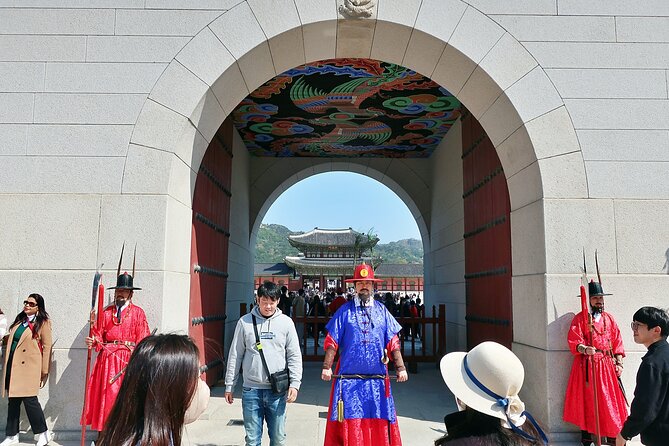
The maximum group size is 15 people. That is small enough for questions and a more personal pace, though the experience can feel almost private when bookings are light. One family ended up with what was essentially a private tour, while other departures had a fuller group.
The guide quality appears to be the tour’s biggest strength. Sookhee has been praised for strong English, history explanations, humor, family photographs, and communication before pickup. Young was described as friendly, flexible, and helpful with food suggestions in Insadong. Junie worked well with children, and Lua made a hot day easier by using shaded places for explanations.
Those details matter more than a polished script. A palace tour succeeds when the guide connects buildings to people and events, notices when someone is tired, and leaves room for questions. Several guides were also praised for punctual pickup and for helping participants who had afternoon plans.
English ability can vary by guide, but the available experiences describe clear communication. The company may contact you the evening before to confirm pickup, which is useful if your hotel is in a busy central area.
Pickup, drop-off, and the practical details
Hotel pickup is offered from centrally located hotels in Seoul. The vehicle is climate-controlled, and bottled water is included. The meeting information also lists a central Jongno address, 55 Ujeongguk-ro, as a start point, so confirm the exact pickup arrangement before the morning of the tour.
The tour begins at 9 a.m. and finishes after about 3.5 hours. The usual drop-off is in Insadong, with City Hall also listed as a possible end point. You should not expect hotel drop-off, and food is not included.
Ending in Insadong is useful. You can continue into one of Seoul’s traditional shopping and dining areas rather than losing time returning to your hotel. It also makes this a practical morning choice if you have afternoon plans nearby.
The tour is not designed for anyone seeking a slow, step-free route. The palace grounds are uneven, and there are stairs and extended walking. The stated recommendation is moderate fitness, with a warning for serious medical conditions.
Free cancellation is available up to 24 hours before the start time. Changes or cancellations made inside that window are not refundable.
Tuesday changes: Changdeokgung replaces Gyeongbokgung
Gyeongbokgung Palace is closed on Tuesdays. On that day, the tour visits Changdeokgung Palace and its Secret Garden instead.
This is not a minor change. You will not see Gyeongbokgung or its guard-changing ceremony on Tuesday. The alternative is a different royal site, and the Secret Garden is a UNESCO World Heritage area with its own appeal.
The provider covers the higher admission cost for the Tuesday route, but you should still book with clear expectations. The tour is a royal-palace outing on Tuesday, not the exact Gyeongbokgung program described for other days.
If Gyeongbokgung and the guard ceremony are your priorities, choose another day. If you want a royal palace and are open to Changdeokgung, Tuesday can still work well.
Who will get the most from this tour?
I would recommend this outing to a first-time Seoul visitor who wants historical orientation without giving up an entire day. It suits solo visitors, couples, families, and anyone who values hotel pickup and a guide who can explain what they are seeing.
It is also a strong choice for a short Seoul stay. In one morning, you cover a Buddhist temple, a royal gate, a palace, a museum, and a modern government landmark. That range helps you understand the city faster than visiting one sight alone.
Families should prepare for heat, stairs, uneven ground, and a fairly brisk schedule. Children may enjoy the guard ceremony and open palace spaces, but the museum and historical explanations require some attention.
I would skip it if you want long, quiet time inside each attraction, dislike shopping stops, or need an accessible route. I would also skip Tuesday if Gyeongbokgung is the main goal.
Should you book it?
At $39.73, this is good value for a guided half-day in central Seoul. The included transport, admissions, bottled water, and hotel pickup keep the morning simple, while the small group and strong guide reports add real value.
Book it for efficient sightseeing, useful historical context, and a friendly guide-led introduction to Seoul. Before paying, confirm your pickup point, remember that the tour ends at City Hall or Insadong, and accept that the ginseng center is part of the deal.
Choose a non-Tuesday date if you want Gyeongbokgung and the royal guard ceremony. If you can live with the shopping stop and a brisk palace visit, this is a practical first morning in Seoul.
FAQ
How long does the Seoul palace tour last?
The tour lasts approximately 3.5 hours, beginning at 9 a.m.
What sights are included?
The route includes Jogyesa Temple, Blue House Square for exterior photographs, Gwanghwamun Gate, Gyeongbokgung Palace, the National Folk Museum of Korea, and a Korean ginseng center.
Is hotel pickup included?
Yes. Pickup is offered from centrally located hotels in Seoul.
Where does the tour end?
The tour ends at City Hall or Insadong. The provided meeting information specifically notes drop-off in Insadong.
Is hotel drop-off included?
No. Hotel drop-off is not included.
Does the tour include palace admission?
Yes. Entrance fees and taxes are included.
Can I see the royal guard-changing ceremony?
The tour is scheduled to watch the ceremony at Gwanghwamun Gate, but it may not take place on Tuesdays or during unsuitable weather. Gyeongbokgung is closed on Tuesdays.
What happens on Tuesdays?
On Tuesdays, the tour visits Changdeokgung Palace and the Secret Garden instead of Gyeongbokgung Palace.
Is the ginseng-center visit included?
Yes. The route includes a stop at the Cheongha Korea Ginseng Museum or Korean ginseng center before drop-off.
Is the tour suitable for people with limited mobility?
The tour recommends moderate physical fitness. The palace grounds include cobblestones, gravel, stairs, and extended walking, and the tour is not recommended for people with back problems, heart complaints, or other serious medical conditions.
Just added around Seoul
- Gyeongbokgung Palace & Bukchon Village Walking Tour★ 5.0 · 3 reviews
- Seoul Night Tour with Han River Cruise and Gyeongbokgung Palace★ 5.0 · 53 reviews
- Seoul Palace Morning Tour★ 4.5 · 53 reviews
- Seoul Private Tour Gyeongbok Palace Bukchon and Gwangjang Market★ 5.0 · 4 reviews
- Seoul UNESCO Heritage Palace, Shrine, and More Tour★ 4.5 · 13 reviews
- Seoul Night Tour (Gwangjang Market, Royal Palace and Naksan Park)★ 5.0 · 92 reviews
- Seoul Royal Palace,Bukchon Hanok Village & Gwangjang Market Feast★ 4.5 · 16 reviews
- Gyeongbokgung palace family/group private photoshoot★ 5.0 · 10 reviews
Gyeongbokgung and Seoul Palace Tours, compared.
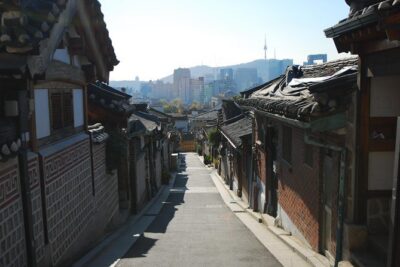
Gyeongbok Palace, Bukchon Village, and Gwangjang Tour
Read our review →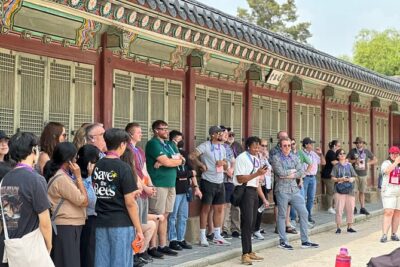
Best Seoul City Tour (Gyeongbokgung Palace,Insadong,Namsan Tower)
Read our review →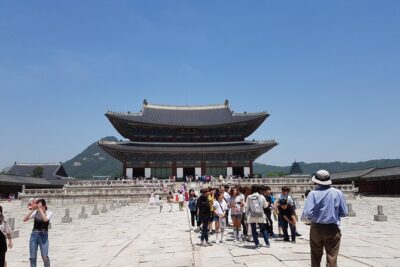
Seoul City Sightseeing Tour Including Gyeongbokgung Palace, N Seoul Tower, and Namsangol Hanok Village
Read our review →Gyeongbok Palace, Bukchon Village, and Gwangjang Tour
Read our review →
Seoul Half-Day City Highlight, Palace Tour with Hanbok
Read our review →
Hanbok Photoshoot and History Tour at Gyeongbokgung Palace
Read our review →Browse the lists this tour appears in