
REVIEW · SEOUL
Seoul UNESCO Heritage Palace, Shrine, and More Tour
Seoul’s royal past fits into one busy morning. This four-hour tour brings together Bukchon Hanok Village, Jongmyo Shrine, and Changdeokgung Palace, with an English-speaking guide and air-conditioned minivan transport. I like the mix of quiet ceremonial spaces and lived-in traditional streets, and I also like the included entry at both major heritage sites. The main drawback is the pace: you may have little time to pause after each explanation, and the final ginseng museum stop can feel more commercial than cultural.
The tour costs $34 per person, which is a fair price for transport, guiding, and admission to the principal sites. Guides such as Sam, Leo, Dragon, Park, and Jung have been praised for clear explanations, friendly service, and help with photos. Still, you should know that Monday and Tuesday bring replacement stops, and the morning ends in Myeongdong rather than at your hotel.
Key points to know before booking
- Three major cultural stops in about four hours: You see Bukchon, Jongmyo Shrine, and a Joseon palace without giving up a full day.
- Changdeokgung changes on Mondays: The tour visits Gyeongbokgung Palace instead because Changdeokgung is closed.
- Jongmyo changes on Tuesdays: Insadong Antique Shop Alley replaces the shrine.
- Sunday brings a different first stop: Namsangol Hanok Village replaces Bukchon Hanok Village.
- The ginseng museum is the weak link for some people: It is free, but the presentation may include a strong sales pitch.
- The tour ends in Myeongdong: Hotel drop-off is not included, though pickup may be arranged from some centrally located hotels.
A quick morning lesson in Joseon Seoul
This tour works best as a first look at Seoul’s old royal center. You move from traditional homes to a sacred royal shrine, then into a palace complex where government work and court life once unfolded. The order gives you useful context, even though the schedule leaves little room for lingering.
The group can reach up to 40 people, so the experience may feel more like a standard group tour than a private walk. On the other hand, the minivan makes it easier to cover several locations without figuring out Seoul’s streets and subway connections on your own.
The guide is the heart of the experience. Sam has been praised for his enthusiasm, stories about the kings, and willingness to answer questions. Leo helped reorganize the morning when access around Bukchon was restricted, while Dragon was singled out for making the main part of the tour enjoyable. Guide quality can vary by departure, but the strongest praise consistently goes to the people leading the history talks.
More Heritage Trips in Seoul:
- Hanbok Photoshoot and History Tour at Gyeongbokgung Palace
★ 5.0 · 276 reviews - Korean Heritage Tour: Palaces and Villages of Seoul Including Gyeongbokgung Palace
★ 4.0 · 25 reviews - Seoul Cultural Tour – Kimchi Making, Gyeongbok palace with Hanbok
★ 5.0 · 25 reviews
Bukchon Hanok Village: traditional homes in a living neighborhood
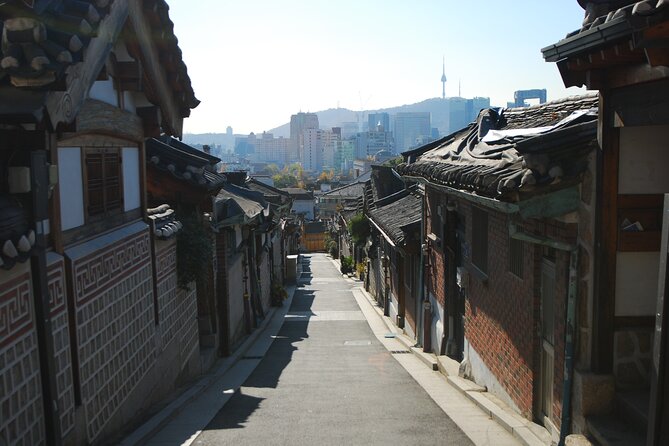
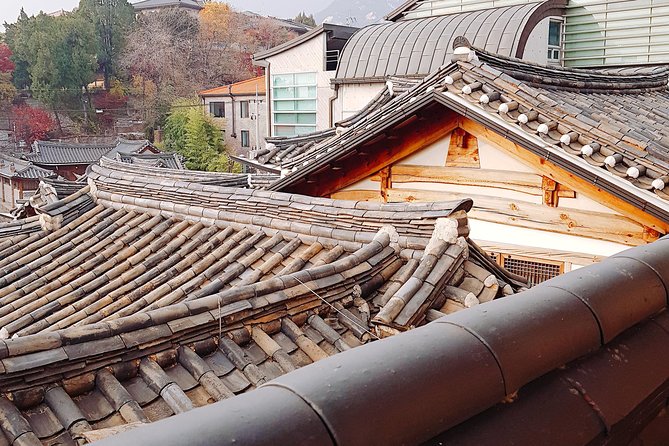
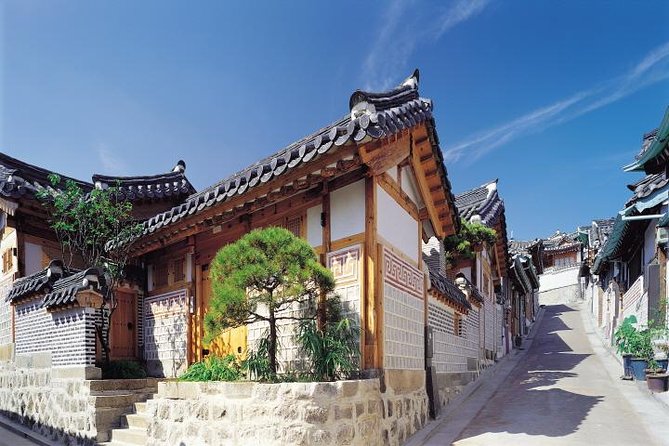
The morning begins at the Bukchon Traditional Culture Center, followed by about 40 minutes in Bukchon Hanok Village. The area is known as a street museum in Seoul’s urban core, with traditional hanok homes dating from the Joseon period.
Bukchon is not a sealed-off historical park. It is a real neighborhood, which makes the visit more interesting and also requires good manners. You can admire the tiled roofs, wooden details, and narrow lanes, but residents still live here. Keep your voice low and avoid treating doorways as photo props.
Forty minutes is enough for an introduction and some photographs. It is not enough for a slow wander through every lane or a detailed look at the full neighborhood. That limitation matters because Bukchon rewards unhurried walking, while this tour must keep to its morning schedule.
Access restrictions can also affect the route. One guide rearranged the order when part of Bukchon was restricted, a practical response that protected the rest of the morning. You should expect the exact path to change if local access rules are in effect.
On Sundays, the first stop changes to Namsangol Hanok Village. This is important if Bukchon is your main reason for booking. The replacement still focuses on traditional Korean homes and culture, but it is not the same neighborhood experience.
Jongmyo Shrine: a quieter place for royal memory
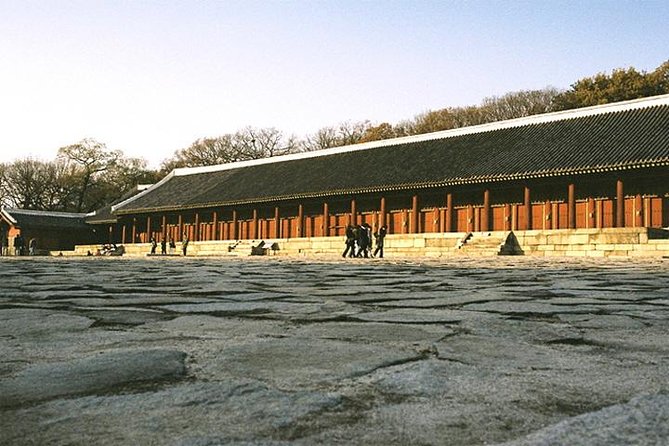
Jongmyo Shrine is the most solemn stop. The shrine holds the ancestral tablets of Joseon kings and queens, and royal memorial rites have continued for roughly 600 years since the dynasty began.
Unlike a palace, Jongmyo is not mainly about rooms, decorations, or royal comfort. Its power comes from ceremony, order, and open space. The long shrine buildings and restrained setting make it easier to think about how the Joseon court remembered its rulers.
The tour allows about 40 minutes here. That is enough for your guide to explain the shrine’s role and the memorial services connected with it, but you should not expect a full, leisurely examination of every part of the grounds.
Jongmyo closes on Tuesdays. On that day, the group visits Insadong Antique Shop Alley instead. Insadong is a useful cultural district, but it does not offer the same quiet ceremonial experience. If Jongmyo is a priority, avoid a Tuesday departure.
A guide makes a real difference at this stop. Sam has been praised for explaining the kings and their stories in a way that connected the buildings with the people remembered there. Without that context, the shrine can seem spare. With it, the simple architecture begins to make sense.
Changdeokgung Palace: the morning’s main attraction
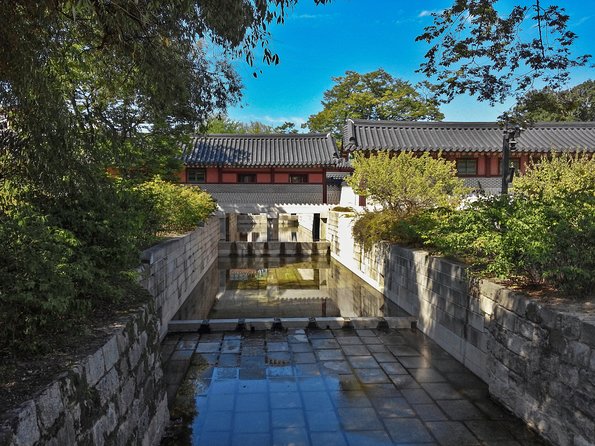
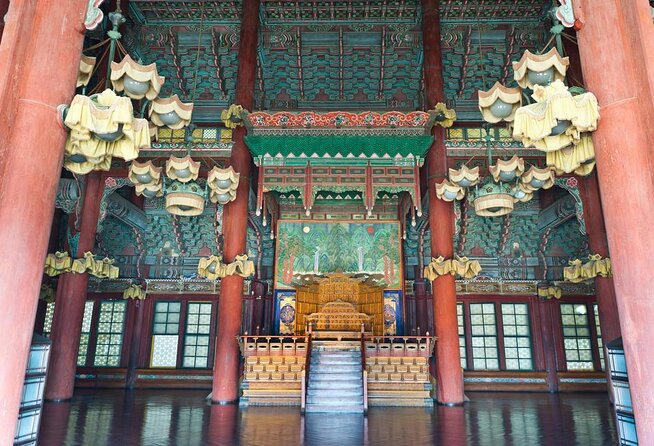
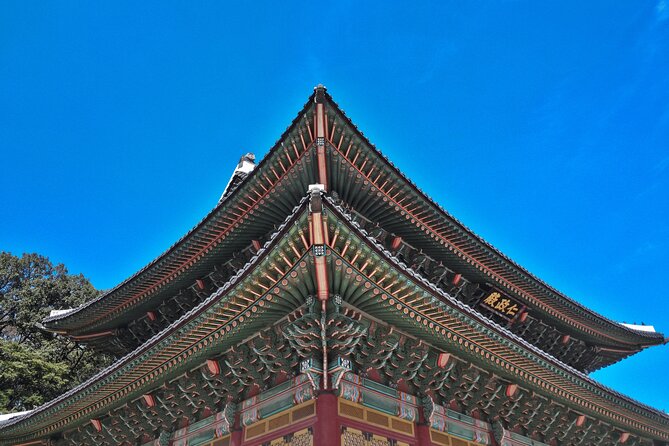
Changdeokgung receives about an hour, making it the longest major stop. Built in 1405 as the second royal villa after Gyeongbokgung, it became the principal palace for many Joseon kings.
The complex includes public palace areas, royal residences, and a rear garden. Its appeal comes partly from how well the buildings and grounds fit together. This was not simply a grand ceremonial front. It was also a working royal home, with separate areas for official business and family life.
The rear garden is especially appealing. It includes a tree more than 300 years old, a pond, and a pavilion, and it served as a place where kings could rest. You may find this quieter side of the palace more memorable than the formal courtyards.
One hour goes quickly. A strong guide can explain the purpose of the buildings, connect them to Joseon rulers, and point out details you might otherwise miss. Park, for example, was praised for making the palace visit more meaningful through clear explanations and an engaging manner.
The tradeoff is that the schedule can feel rushed. You may move on just as you begin to absorb what you have learned. That is not necessarily a flaw in the guide. The group has to stay on time for the next stop, and the tour tries to cover a lot before midday.
Changdeokgung closes on Mondays. The replacement is Gyeongbokgung Palace, Seoul’s best-known royal palace and the first palace referenced in the tour description. It is a sensible alternative, but you should book on another day if Changdeokgung and its rear garden are the sights you most want to see.
A few more palace visits around Seoul worth a look
- Seoul: Gyeongbok Palace, Bukchon Village, and Gwangjang Tour
★ 4.9 · 2,321 reviews - Best Seoul City Tour (Gyeongbokgung Palace,Insadong,Namsan Tower)
★ 5.0 · 1,647 reviews - Small-Group Royal Palace and Seoul City Tour (hotel pick-up)
★ 5.0 · 1,474 reviews - Seoul City Sightseeing Tour Including Gyeongbokgung Palace, N Seoul Tower, and Namsangol Hanok Village
★ 5.0 · 1,423 reviews
The ginseng museum: useful context, commercial finish
The final stop lasts about 30 minutes at Cheongha Korea Ginseng Museum. You learn about ginseng’s long use in East Asia, including its mention in a Chinese text from the Han dynasty and its reputation as an all-purpose remedy.
The stop can add context to a familiar Korean product. You get an introduction to Korean ginseng and its traditional role, rather than simply passing a shop window during a sightseeing drive. Admission is free.
This is also the part of the tour that creates the most concern. One person described the stop as a hard-sell room and felt the morning would have earned a top rating without it. If you dislike sales presentations, prepare for this section to feel less authentic than the palace and shrine visits.
The tour states that it does not stop at shopping centers, but the ginseng museum can still have a commercial feel. That distinction is worth understanding before you book. The stop is not a broad shopping excursion, yet it may encourage purchases or make you feel that products are being promoted.
For some people, the ginseng presentation will be harmless and informative. For others, it will interrupt an otherwise focused morning of cultural sightseeing. I would treat it as a short add-on, not a reason to book the tour.
Transport, meeting point, and the shape of the morning
The official start time is 8:30 a.m. at Myeongdong Station, listed near 1061-7 Chungmuro 2-ga in Jung District. The tour ends in the Myeongdong area, so you can continue sightseeing, find lunch, or return to your accommodation by subway or taxi.
Transport is provided in an air-conditioned minivan. That is useful in Seoul, where several central districts can be tiring to connect on foot, especially when you are trying to keep a tight schedule. The vehicle also gives you a place to sit between stops.
Hotel pickup is available only from centrally located Seoul hotels. If your hotel or guesthouse sits behind narrow alleys, the English-speaking guide may meet you at the nearest central hotel or subway station instead. Confirm the exact meeting arrangement rather than assuming the vehicle will pull up at your door.
There is no hotel drop-off. This is not a major problem if you are already planning to spend time in Myeongdong, but it matters if you have luggage, mobility concerns, or a distant hotel. The tour also calls for moderate physical fitness, with walking around historic compounds and traditional neighborhoods.
The maximum group size is 40. Some departures may be much smaller. One couple had a private-feeling experience because they were the only participants, while other departures may be full enough to make it harder to hear or stay close to the guide. The group size is therefore a practical variable, not a fixed promise.
What the $34 price really covers
At $34, this is a strong-value introduction to Seoul’s royal center. You receive a local guide, minivan transport, and admission to the scheduled cultural sites. You also avoid the time and effort of piecing together several stops by subway.
The price does not include meals, drinks, or a return to your hotel. You should plan to eat after the tour, with Myeongdong offering a convenient endpoint. One Sunday morning ended with lunch at a Michelin Guide dumpling restaurant, but that meal was separate from the tour and should not be treated as part of the package.
Value depends on what you want from the morning. If you need a broad orientation and clear historical explanations, the price is attractive. If you want long photo stops, quiet reflection, or detailed palace exploration, the four-hour schedule may leave you wanting more.
You also pay for convenience. Seoul’s palaces and traditional districts are easy to reach independently with preparation, but the guide helps connect them into one story. For a first visit, that structure can be worth more than the admission fees alone.
Who should book this Seoul tour?
I would recommend it to a first-time visitor who wants a guided introduction to Joseon culture without spending a whole day on formal sightseeing. It suits you especially well if you value historical explanation, prefer included transport, and want to finish near Myeongdong in time for lunch or more exploring.
Families may also appreciate the short duration and vehicle transfers. The guides have been praised for answering questions, helping with photographs, and making the royal stories easier to follow.
I would be more cautious if you dislike fixed schedules. The palace stop is short, and you may not have time to sit with each courtyard or take an extra photograph. Independent visitors who want to set their own pace should consider visiting the sites on their own.
I would also check the calendar carefully. Tuesday replaces Jongmyo with Insadong, Monday replaces Changdeokgung with Gyeongbokgung, and Sunday replaces Bukchon with Namsangol Hanok Village. Those are reasonable substitutions, but they change the character of the morning.
The tour offers free cancellation up to 24 hours before the start time. Changes or cancellations inside that window are not accepted for a refund, and the tour requires a minimum number of participants. If that minimum is not met, you are offered another date or experience, or a full refund.
Should you book it?
Book this tour if you want a compact, guided introduction to Seoul’s royal heritage and you are happy to trade free time for convenience. The best parts are the thoughtful guides, the UNESCO-listed shrine and palace, and the chance to connect several central sights in one morning for $34.
Skip it if you want a slow palace visit, dislike commercial presentations, or are visiting on a day when your preferred site is closed. For most first-time visitors, though, the tour offers a sensible start: useful history, manageable logistics, and a finish in Myeongdong where the rest of your Seoul day can begin.
FAQ
How long does the tour last?
The tour lasts approximately four hours and begins at 8:30 a.m.
Where does the tour begin and end?
It begins near Myeongdong Station at 1061-7 Chungmuro 2-ga in Jung District. It ends in the Myeongdong area.
Is hotel pickup included?
Pickup is available only from centrally located Seoul hotels. If your accommodation is behind alleys, you may need to meet the guide at a nearby central hotel or subway station.
What happens if Changdeokgung Palace is closed?
Changdeokgung is closed on Mondays. On Mondays, the tour visits Gyeongbokgung Palace instead.
What happens if Jongmyo Shrine is closed?
Jongmyo Shrine is closed on Tuesdays. On Tuesdays, the tour visits Insadong Antique Shop Alley instead.
Is food included?
No. Meals and drinks are not included. The tour also does not include hotel drop-off, though it finishes in Myeongdong.
Just added around Seoul
- Gyeongbokgung Palace & Bukchon Village Walking Tour★ 5.0 · 3 reviews
- Small-Group Seoul Tour with Gyeongbokgung Palace (hotel pick-up)★ 5.0 · 68 reviews
- Seoul Night Tour with Han River Cruise and Gyeongbokgung Palace★ 5.0 · 53 reviews
- Seoul Palace Morning Tour★ 4.5 · 53 reviews
- Seoul Private Tour Gyeongbok Palace Bukchon and Gwangjang Market★ 5.0 · 4 reviews
- Seoul Night Tour (Gwangjang Market, Royal Palace and Naksan Park)★ 5.0 · 92 reviews
- Seoul Royal Palace,Bukchon Hanok Village & Gwangjang Market Feast★ 4.5 · 16 reviews
- Gyeongbokgung palace family/group private photoshoot★ 5.0 · 10 reviews
Historical Tours, compared.
Madrid Essential: Historic Center, Plaza Mayor & Royal Palace
Read our review →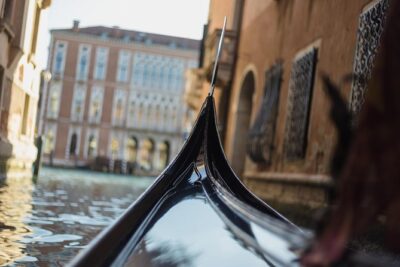
Venice’s Best: Basilica, Doge’s Palace, Gondola & History Gallery
Read our review →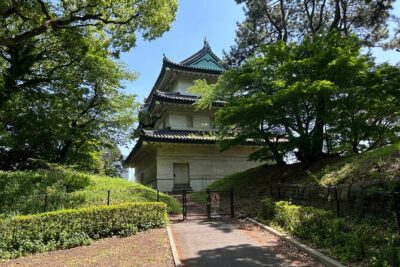
Imperial Palace and Shogun Historical Walking Tour
Read our review →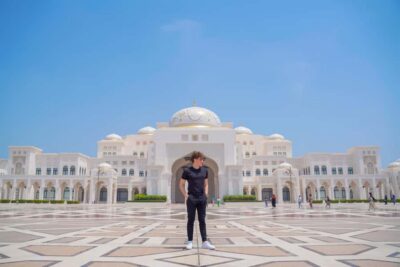
Abu Dhabi Grand Mosque, Palace, and Heritage Village
Read our review →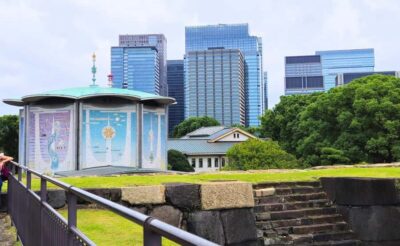
Skip-the-Line Schonbrunn Palace Guided Tour and Vienna Historical City Tour
Read our review →
Madrid in a Day Tour:Royal Palace, Historic Center & Prado Museum
Read our review →
Basilica, Doge’s Palace, History Gallery & Bell Tower Option
Read our review →Browse the lists this tour appears in