
REVIEW · SEOUL
Korean Heritage Tour: Palaces and Villages of Seoul Including Gyeongbokgung Palace
Seoul’s old Korea fits into one busy day. This tour links Gyeongbokgung Palace, the National Folk Museum, Jogyesa Temple, a Korean meal, and the Korean Folk Village, making it a useful first look at the city’s royal, religious, and rural traditions. I like the included hotel pickup and the small maximum group of 10, which can make a full day easier to manage. I also like that lunch and admission to the main paid sights are included.
The main caution is the pace. You cover a lot of ground in about 8 hours and 30 minutes, and the schedule can feel rushed, especially during the morning palace visits. A stop at a ginseng center is also built into the day, and some accounts describe extra shopping presentations, including amethyst, that feel less connected to Korean heritage.
Key points to know before booking
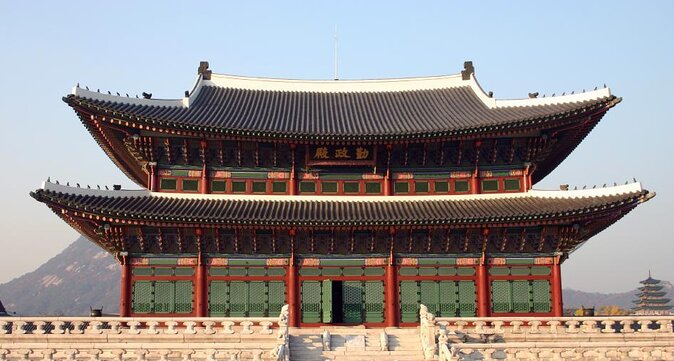
- Gyeongbokgung is the morning highlight: You walk through Seoul’s grandest Joseon palace, with its gates, courtyards, pavilions, and royal halls.
- The group is capped at 10 people: That is a useful advantage for questions and moving through busy sights.
- The Korean lunch is part of the price: You get a traditional meal at a local restaurant, with dietary needs to be supplied when booking.
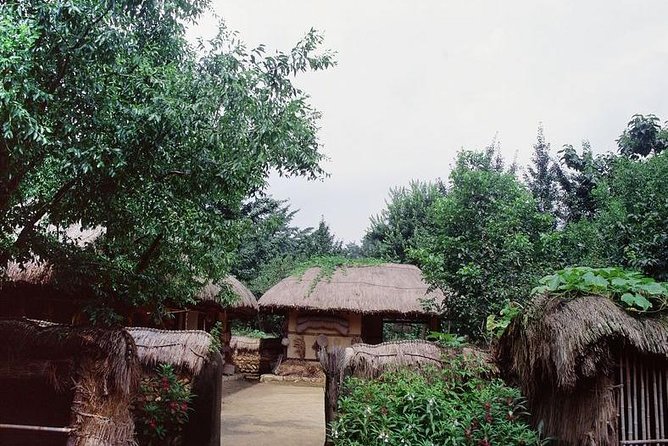
- The Korean Folk Village is a living museum: You may see demonstrations of pottery, basket weaving, embroidery, and traditional tool making.
- Shopping stops can affect the mood: The ginseng center takes about 30 minutes, and several accounts describe pressure to buy or mention an additional amethyst stop.
- Tuesday changes the palace visit: Gyeongbokgung is closed then, so the tour visits Deoksugung Palace and the Seoul Museum of History instead.
A full day of Seoul’s royal and everyday past
This is a broad introductory tour rather than a slow, specialist examination of one palace. For $140 per person, you receive hotel pickup and drop-off, an air-conditioned coach, a professional guide, lunch, and admission to Gyeongbokgung or the Tuesday replacement. I consider that a fair package if you want transport and structure more than independent wandering.
The tour starts at about 8:30 a.m. with pickup at your Seoul hotel. The exact morning can stretch because the coach collects other people, but that is the tradeoff for door-to-door transport. You avoid working out subway connections and arrive with a guide already explaining what you are seeing.
The small group limit is one of the better details here. With no more than 10 people, you have a better chance of hearing the guide than you would on a large city coach. English quality can vary by guide, though several named guides, including Sunny, Winnie, Dora, Michelle, and David, received especially warm praise for clear explanations, humor, and care.
More Gyeongbokgung and Seoul Palace Tours in Seoul:
- Seoul: Gyeongbok Palace, Bukchon Village, and Gwangjang Tour
★ 4.9 · 2,321 reviews - Best Seoul City Tour (Gyeongbokgung Palace,Insadong,Namsan Tower)
★ 5.0 · 1,647 reviews - Seoul City Sightseeing Tour Including Gyeongbokgung Palace, N Seoul Tower, and Namsangol Hanok Village
★ 5.0 · 1,423 reviews
Passing the Blue House before Gyeongbokgung
The first drive passes the Blue House, the former executive office and official residence of South Korea’s president. It is a quick look rather than a major sightseeing stop, but it helps place the palace district within modern Seoul’s political center.
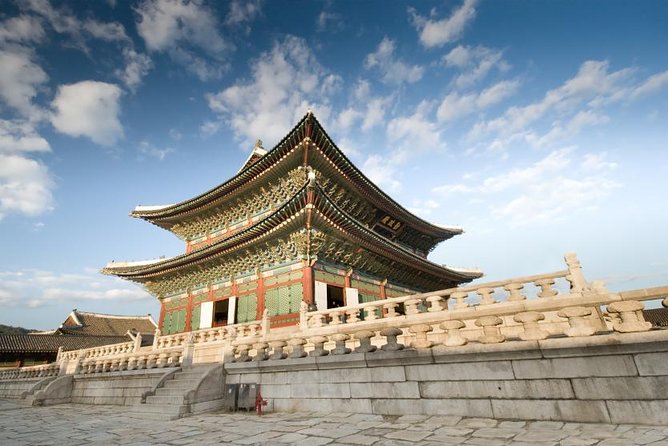
Then you get out at Gyeongbokgung Palace. This was the first royal palace built by the Joseon Dynasty, constructed in 1395, and it is the largest of Seoul’s Five Grand Palaces. Much of the site was damaged during the Japanese occupation, so the buildings you see are part of a large restoration effort.
That restoration gives the compound a special character. You are not simply walking through untouched old buildings. You are seeing a national effort to recover royal architecture and make its layout understandable again. The gates, painted pavilions, open courtyards, and formal halls give you a strong sense of how the Joseon court used space.
The palace visit lasts about an hour, including the guide’s explanation and time to walk around. That is enough for an overview, but not enough for every corner. If you enjoy architecture or want careful photographs, you may wish for more time. One useful tip is to check the timing of the changing of the guard. Several people considered it a highlight, and the schedule can feel much more rewarding when you see the ceremony before moving on.
Comfortable shoes matter. The day includes a moderate amount of walking, and palace grounds can mean long outdoor stretches. You will do better with shoes made for steady walking than with footwear chosen only for photographs.
The National Folk Museum in a short visit
The National Folk Museum sits within the palace grounds and uses artifacts, replicas, and models to explain Korean life from ancient times through the 20th century. Its collection includes more than 90,000 artifacts, though your scheduled visit is only about 20 minutes.
That short stop works as a sampler. You can look at displays about household life, work, customs, and traditional culture, then use the guide’s comments to connect what you see with the palace outside. I like the contrast: Gyeongbokgung shows the world of kings and court ritual, while the museum shifts attention to ordinary families.
Still, 20 minutes is tight. If museums are a major reason you visit Seoul, you will not get a full visit here. One practical choice is to listen closely to the guide’s main points and save detailed browsing for a separate return visit.
Jogyesa Temple and the religious side of Seoul
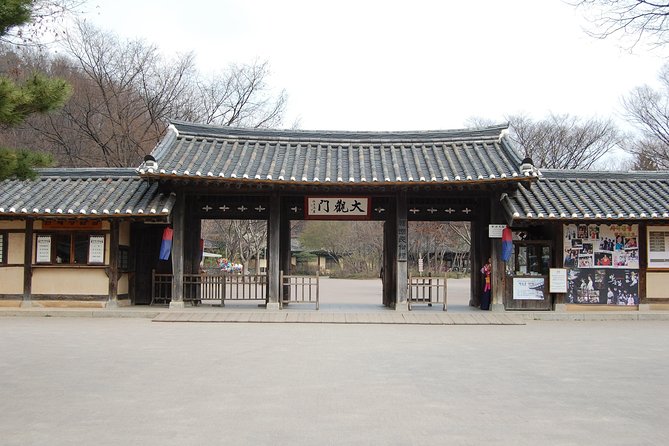
The coach then takes you to Jogyesa Buddhist Temple, the chief temple of the Jogye Order of Korean Buddhism. The stop is listed as very brief, so think of it as an introduction rather than a long temple visit.
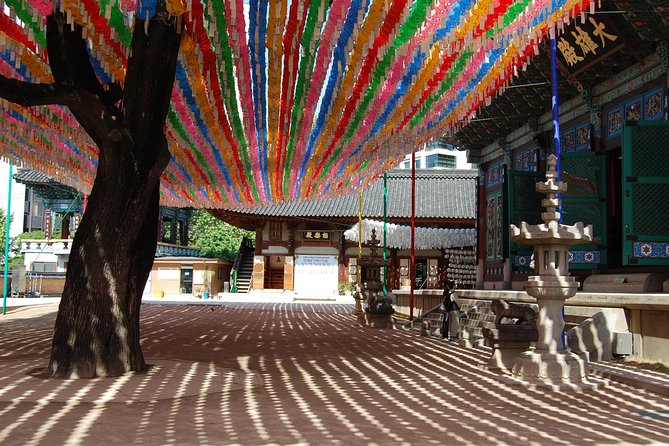
Outside, the locust and baeksong trees help frame the entrance. Inside the Daeungjeon, the main hall, you see an enlightened Buddha and a building associated with roughly 500 years of Buddhist tradition. The visit adds a spiritual dimension to a day otherwise shaped by royal buildings and folk customs.
This is one place where the tour’s tight timing matters. If you want quiet reflection, detailed architecture, or a longer look inside the hall, the scheduled stop may disappoint. If you want to understand how Buddhism fits into Korean culture, it is a useful brief pause.
More Heritage Trips in Seoul:
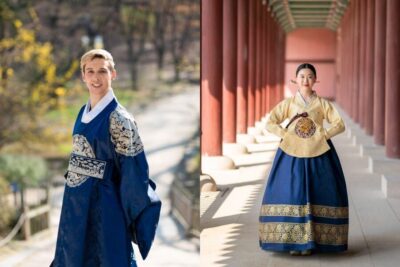
- Hanbok Photoshoot and History Tour at Gyeongbokgung Palace
★ 5.0 · 276 reviews - Seoul Cultural Tour – Kimchi Making, Gyeongbok palace with Hanbok
★ 5.0 · 25 reviews - Seoul UNESCO Heritage Palace, Shrine, and More Tour
★ 4.5 · 13 reviews - Seoul: Colonial History Tour with Prison&Palace, Market Food
★ 5.0 · 5 reviews
Lunch at a traditional Korean restaurant
Around midday, the group stops at a traditional Korean restaurant for lunch. The meal is included, which helps the $140 price feel more reasonable. Food is one of the best ways to make a cultural tour feel real, and several people particularly enjoyed the meal and the setting.
The supplied information does not specify the menu, so you should not book this expecting a particular dish. You can, however, provide dietary requirements when making the reservation. That is important because the tour does not describe a separate food-shopping stop or a flexible restaurant choice.
Lunch lasts about an hour. It gives you a chance to sit down after the palace walking and offers a natural break before the afternoon visit. The meal also keeps the day from becoming only a string of monuments viewed through a bus window.
The ginseng center: useful context or unwanted sales stop?
Before lunch, the schedule includes a visit of about 30 minutes to a Korean ginseng center. You learn about ginseng and have the option to purchase it. South Korea has a major ginseng industry, so the stop is not completely unrelated to local products.
The problem is fit. You booked a heritage tour, and a retail presentation can feel like a detour from palaces, temples, and village life. Several accounts describe the stop as a waste of time or say they felt pressure to buy. That is the clearest weakness in the day.
I would treat the ginseng center as a sales-oriented stop, not as a core cultural sight. You can listen, browse, and decline to purchase. If a guide or staff member discusses an additional amethyst presentation, ask how much time it will take and whether it is compulsory. Some accounts mention an amethyst factory or presentation even though it is not part of the stated schedule, so this is worth clarifying before you book.
Korean Folk Village and traditional crafts
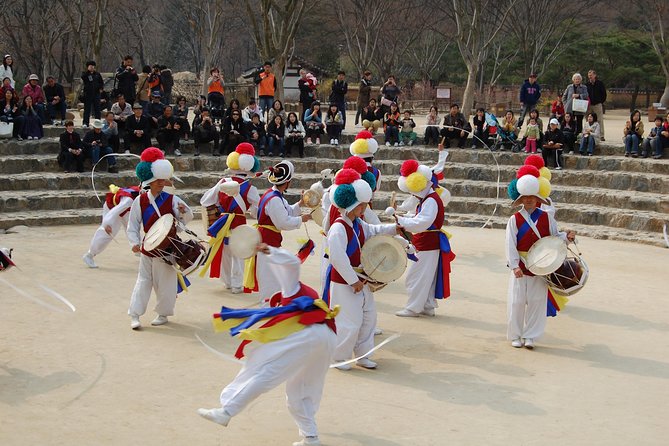
The afternoon ends at the Korean Folk Village, about an hour and 20 minutes from the schedule. It is presented as a living museum of traditional Korean life and folk culture, with preserved buildings and demonstrations of older crafts.
You may see pottery making, basket weaving, the hand-making of winnows, musical instruments, embroidery, and bamboo, wood, and brass goods. This is the day’s most hands-on stop, at least in the sense that you can watch skills being practiced rather than only viewing finished objects behind glass.
The village also gives you a picture of life outside the royal court. After Gyeongbokgung’s formal halls and Jogyesa’s religious setting, the village turns to homes, tools, crafts, and work. That range is the tour’s strongest idea: in a single day, you move from the king’s compound to household traditions.
There is an important expectation to set. The Korean Folk Village is a staged cultural attraction, not an untouched historic village where ordinary modern life continues. One person found it too much like a fake village or amusement park, while another considered it the best part of the afternoon. I think your reaction will depend on what you want. If you enjoy demonstrations and a clear presentation of traditional customs, you should like it. If you want an unpolished neighborhood or a remote rural village, it may feel manufactured.
The afternoon can also be more relaxed than the morning. One account described having more time and enjoying the village more, especially with a smaller group. If your tour divides between morning and afternoon guides, the experience may feel slightly uneven, but a good second guide can make the final stop work very well.
Guides, language, and the pace of the day
The quality of the guide matters a great deal here. Positive experiences singled out Sunny and Winnie for strong English and useful cultural explanations. Dora was praised for making the day enjoyable, while Michelle was described as helpful and funny. David was also credited with keeping the group informed and seeing everything promised.
The picture is not uniform. Some people found the first guide too quiet to hear clearly, and others felt the explanations were thin or rushed. Because the tour requires at least four people and can combine different language groups, the style may change from one departure to another.
You should also know that the morning and afternoon may use different guides. That can be a benefit if the second guide is more engaging, but it can make the day feel like two linked tours rather than one carefully paced experience.
The coach is air-conditioned and comfortable, a real advantage during a long day. Hotel transport also removes some of Seoul’s navigation work. The cost is less attractive if you prefer to explore slowly, use public transport, and choose your own meal and museum timing.
Is $140 good value for your Seoul trip?
At $140, this is not the cheapest way to see Gyeongbokgung. You are paying for convenience, a guide, transport, lunch, and a broad schedule that reaches the Korean Folk Village outside the central palace district.
I see the best value for a first visit to Seoul, especially if you have only a short stay or prefer not to plan several separate outings. The tour gives you a useful framework for the city’s royal past, everyday customs, religion, and traditional food in one day.
The value drops if you already know Seoul well or dislike fixed schedules. The 20-minute museum visit and brief Jogyesa stop leave little room for lingering. The ginseng stop also takes time that some people would rather spend at the palace or village.
Free cancellation is available until 24 hours before the start time. The tour requires at least four people, and most people can take part, but you should be ready for moderate walking and outdoor time.
Who should book this heritage tour?
I would choose this tour if you want:
- A guided first look at Seoul’s historic sights
- Hotel pickup and return by air-conditioned coach
- A small group capped at 10 people
- A traditional lunch included in the price
- One day covering palaces, a museum, a temple, and a folk village
- Help understanding Korean customs without arranging each stop yourself
I would look elsewhere if you want long, quiet visits at each site, dislike shopping presentations, or prefer authentic neighborhoods over staged cultural attractions. Independent visitors can spend longer at Gyeongbokgung and the National Folk Museum, then choose a restaurant and afternoon sight on their own.
Should you book it?
Book this tour if your priority is coverage and convenience. The palace, lunch, and Korean Folk Village create a solid introduction to Seoul, and a strong guide can turn the day into a useful lesson in Korean culture. The changing of the guard is worth planning around if the timing allows.
Before paying, I would ask the operator to confirm the ginseng stop, any possible amethyst presentation, the guide language, and the Tuesday replacement itinerary. If you accept a busy schedule and a sales-oriented detour, this is a practical first-day tour. If you want depth, calm, and complete control, visit Gyeongbokgung independently and give the palace district more time.
FAQ
How long does the tour last?
The tour lasts approximately 8 hours and 30 minutes, beginning with hotel pickup at about 8:30 a.m. Return transport to your Seoul hotel is included.
Is hotel pickup included?
Yes. Hotel pickup and drop-off are included, with transport provided in an air-conditioned coach.
What happens if I book for a Tuesday?
Gyeongbokgung Palace is closed on Tuesdays. The tour visits Deoksugung Palace instead, along with the Seoul Museum of History.
Is lunch included?
Yes. Lunch at a traditional Korean restaurant is included. You should provide any dietary requirements when booking.
How large is the group?
The tour requires a minimum of four people and has a maximum of 10 participants.
How much walking is involved?
A moderate amount of walking is involved, especially at the palace and Korean Folk Village. Comfortable walking shoes are recommended.
Can I cancel for a full refund?
Yes. You can cancel at least 24 hours before the local start time for a full refund. Changes or cancellations made less than 24 hours before departure are not accepted for a refund.
Just added around Seoul
- Small-Group Seoul Tour with Gyeongbokgung Palace (hotel pick-up)★ 5.0 · 68 reviews
- Gyeongbokgung Palace & Bukchon Village Walking Tour★ 5.0 · 3 reviews
- Seoul Night Tour with Han River Cruise and Gyeongbokgung Palace★ 5.0 · 53 reviews
- Seoul Palace Morning Tour★ 4.5 · 53 reviews
- Seoul Private Tour Gyeongbok Palace Bukchon and Gwangjang Market★ 5.0 · 4 reviews
- Seoul UNESCO Heritage Palace, Shrine, and More Tour★ 4.5 · 13 reviews
- Seoul Night Tour (Gwangjang Market, Royal Palace and Naksan Park)★ 5.0 · 92 reviews
- Seoul Royal Palace,Bukchon Hanok Village & Gwangjang Market Feast★ 4.5 · 16 reviews
Gyeongbokgung and Seoul Palace Tours, compared.
Gyeongbok Palace, Bukchon Village, and Gwangjang Tour
Read our review →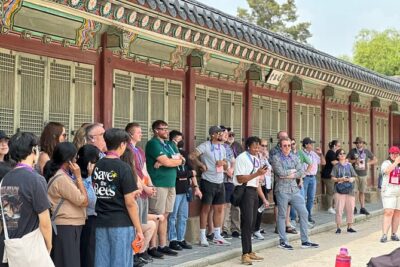
Best Seoul City Tour (Gyeongbokgung Palace,Insadong,Namsan Tower)
Read our review →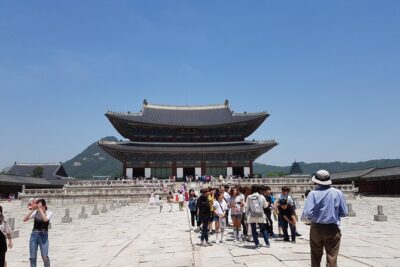
Seoul City Sightseeing Tour Including Gyeongbokgung Palace, N Seoul Tower, and Namsangol Hanok Village
Read our review →Gyeongbok Palace, Bukchon Village, and Gwangjang Tour
Read our review →
Seoul Half-Day City Highlight, Palace Tour with Hanbok
Read our review →
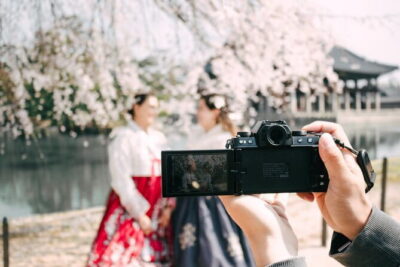
Hanbok Photoshoot and History Tour at Gyeongbokgung Palace
Read our review →Browse the lists this tour appears in