
REVIEW · SOUTH KOREA
Gyeongbokgung Palace, Jogyesa Temple and Bukchon village
Seoul’s story unfolds one street at a time. This roughly three-hour walking tour links Jogyesa Temple, Gyeongbokgung Palace, and Bukchon village, giving you a useful first look at Korean religion, royal life, language, and traditional architecture without making you plan every stop yourself. At $82 per person, it is not a bargain walk, but the palace admission, guide, and traditional herbal tea add real value.
I especially like the route’s mix of grand sights and smaller cultural details. You get the main Joseon palace, a Buddhist temple in central Seoul, King Sejong at Gwanghwamun Square, and quiet lanes in Bukchon. I also like the personal touch supplied by guides such as Lee, who has been praised for her patience, clear explanations, and playful way of teaching, including a Korean board game during a palace break.
The main consideration is the pace and price. You will be walking for several hours, often through historic streets and village lanes, so comfortable shoes matter. At $82, this makes the most sense if you want context and conversation, not simply entrance tickets and photo stops.
Key points to know before booking
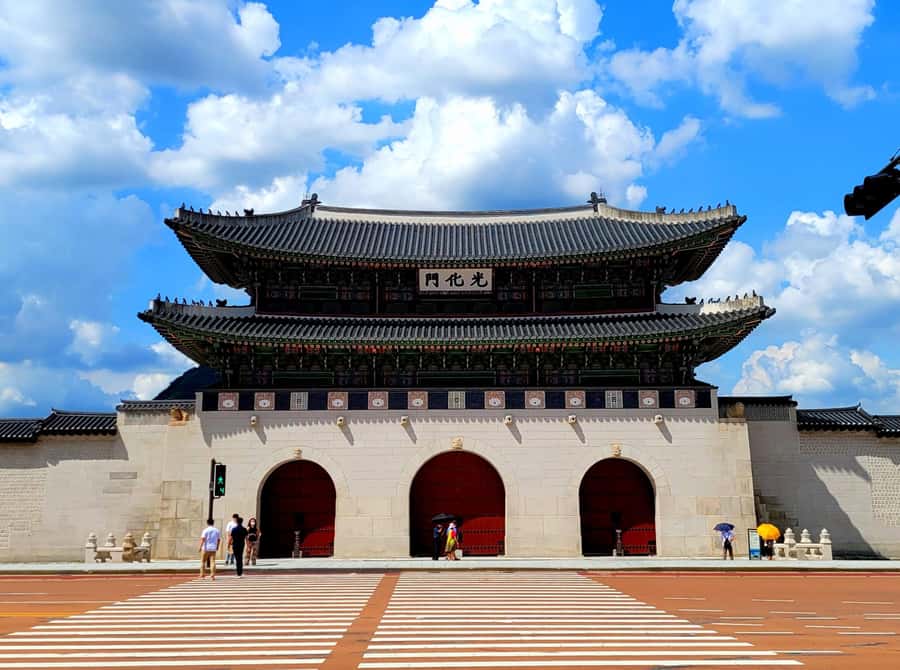
- Three major Seoul sights in one route: The walk connects Jogyesa Temple, Gwanghwamun Square, Gyeongbokgung Palace, and Bukchon village.
- A strong first-day introduction: You receive a broad grounding in Korean history, language, traditions, and palace life.
- Gyeongbokgung admission is included: You do not need to arrange the palace ticket separately.
- Tea adds a welcome pause: A traditional herbal drink is part of the experience, with time to slow down at the palace.
- Guide quality matters here: Lee has earned especially warm praise for being patient, friendly, well prepared, and open to questions.
- Expect a moderate walk: The route is manageable for many people, but it is not a sit-down sightseeing tour.
Why this route works for a first day in Seoul
Seoul can feel enormous at first. Its modern streets, royal compounds, Buddhist temples, shopping areas, and old residential lanes do not always explain themselves. This tour helps you place several important sights on the same mental map.
The route moves through different parts of Korean culture rather than repeating the same kind of stop. At Jogyesa, you begin with living Buddhist practice. At Gwanghwamun Square, you meet one of Korea’s most important historical kings. At Gyeongbokgung, you enter the main palace of the Joseon Dynasty. Bukchon then shifts the mood again, with traditional houses and narrow streets.
That variety is the tour’s best feature. You are not spending three hours hearing dates in one courtyard. You are seeing how religion, government, royalty, language, and residential life fit together.
The English-language guide is important because the value comes from explanation. Without a guide, you can still admire the palace roofs and village streets, but you may miss why the sites matter. The strongest feedback centers on clear storytelling, patience, and the ability to answer questions without rushing you.
More Gyeongbokgung and Seoul Palace Tours in Seoul:
- Seoul: Gyeongbok Palace, Bukchon Village, and Gwangjang Tour
★ 4.9 · 2,321 reviews - Best Seoul City Tour (Gyeongbokgung Palace,Insadong,Namsan Tower)
★ 5.0 · 1,647 reviews - Seoul City Sightseeing Tour Including Gyeongbokgung Palace, N Seoul Tower, and Namsangol Hanok Village
★ 5.0 · 1,423 reviews
Starting near Anguk Station and Jogyesa Temple
Your stated meeting point is Anguk Station Exit 6. Check the exact instructions before setting out, since the route description also places the opening stop at Jogyesa Temple in Insadong. The meeting point is central and practical, but you should allow time to find the correct exit and guide.
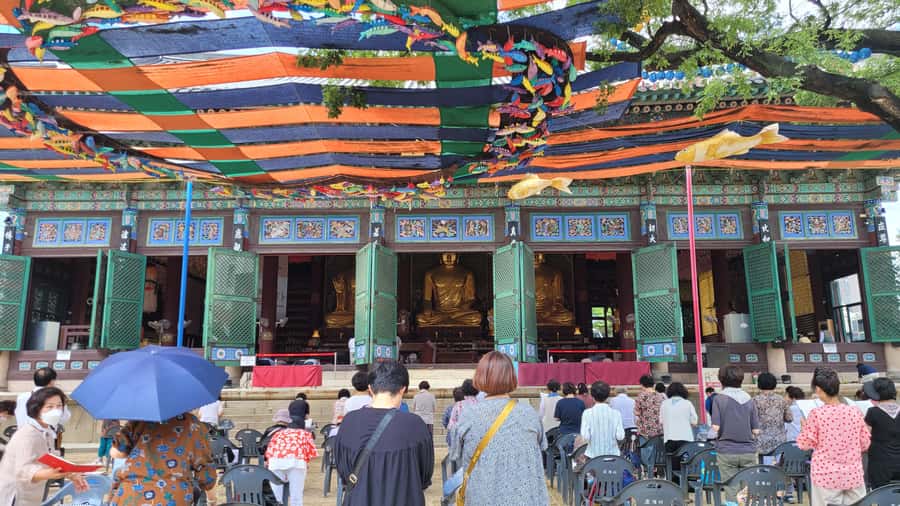
Jogyesa is the head temple of the Jogye Order of Korean Buddhism. That gives the opening stop more weight than a quick photo opportunity. You are beginning with a place connected to an active Buddhist tradition, not only a preserved historic building.
The surrounding Insadong area is known for traditional tea houses and restaurants. That setting helps establish the contrast that makes Seoul so interesting: old customs sit close to busy commercial streets. Your guide can also use the temple and neighborhood to explain parts of Korean culture that are not obvious from architecture alone.
I would pay attention to the atmosphere here rather than rush straight to the next sight. The temple is a calm start, and it gives you a chance to adjust to the walking pace. You will also have an early opportunity to ask your guide what you are seeing and how the day will unfold.
Gwanghwamun Square and the world of King Sejong
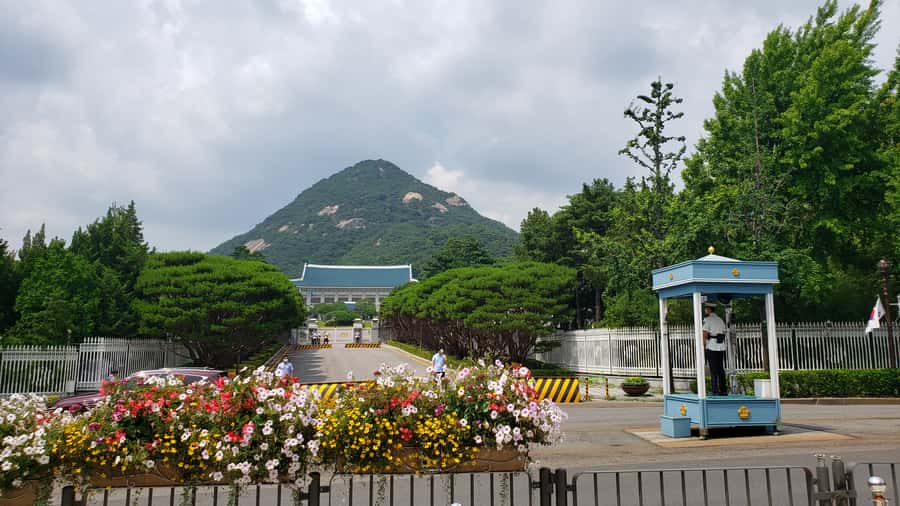
From the temple area, the walk continues toward Gwanghwamun Square, where you see the statue of King Sejong. He is one of Korea’s most important historical figures, especially for the creation of Hangul, the Korean alphabet.
The tour promises help with Korean language and culture, so this is a useful point for that discussion. Even if you cannot read Korean yet, learning a little about Hangul gives you a better connection to the country. Street signs and menus begin to look less like decoration and more like something you might actually understand.
The square also prepares you for Gyeongbokgung. It links the modern city with the royal district and offers a sense of how central this part of Seoul remains. Your guide can explain the historical setting while you walk, rather than waiting until you are inside the palace to provide every piece of background.
This portion is more about orientation than a long stop. If you want extensive time for photographs at the statue or square, ask your guide how much time is available. The tour has several major stops, so the schedule cannot allow unlimited time at each one.
Entering Gyeongbokgung, Seoul’s main Joseon palace
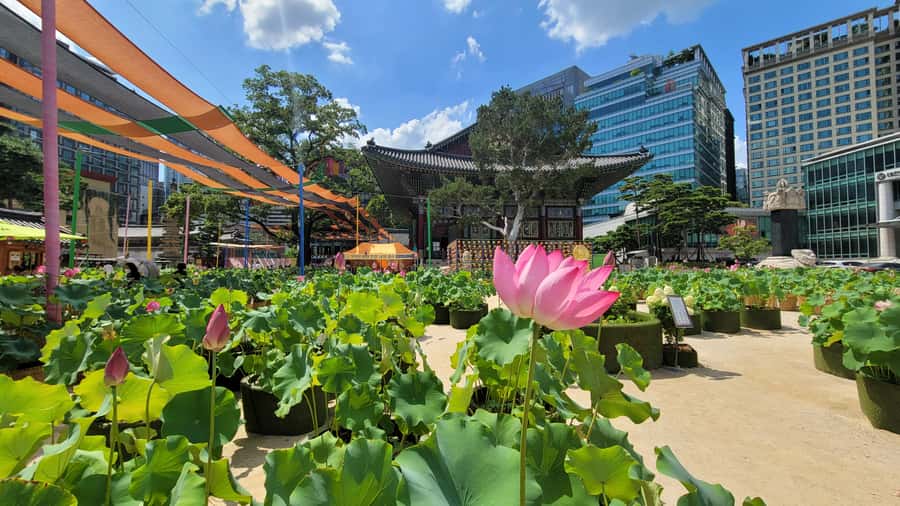
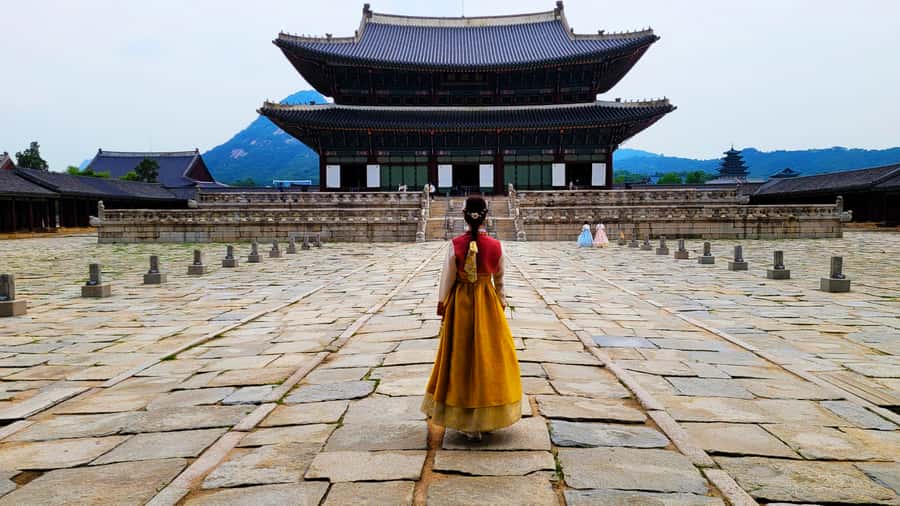
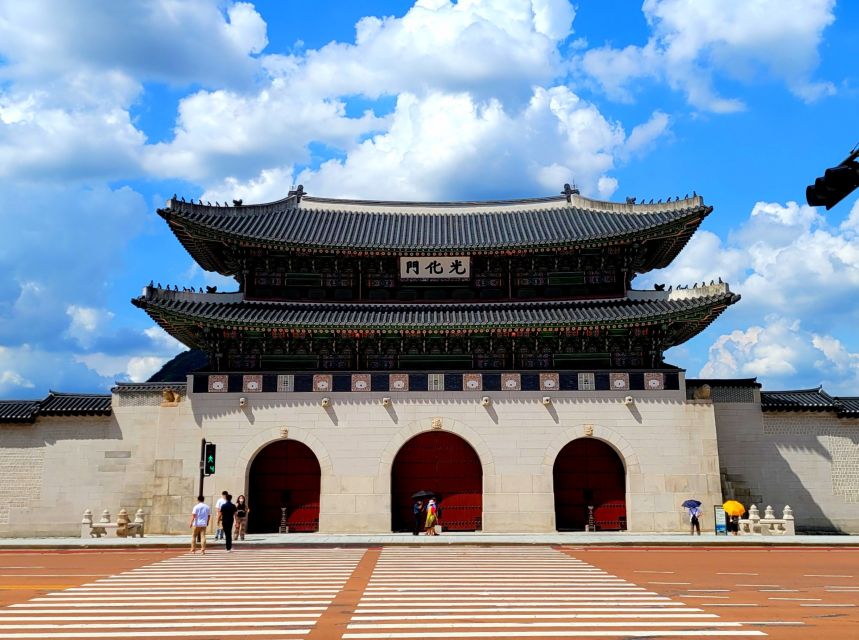
Gyeongbokgung was established in 1395 as the main palace of the Joseon Dynasty. The palace visit is the core of the tour, and your entrance ticket is included in the price.
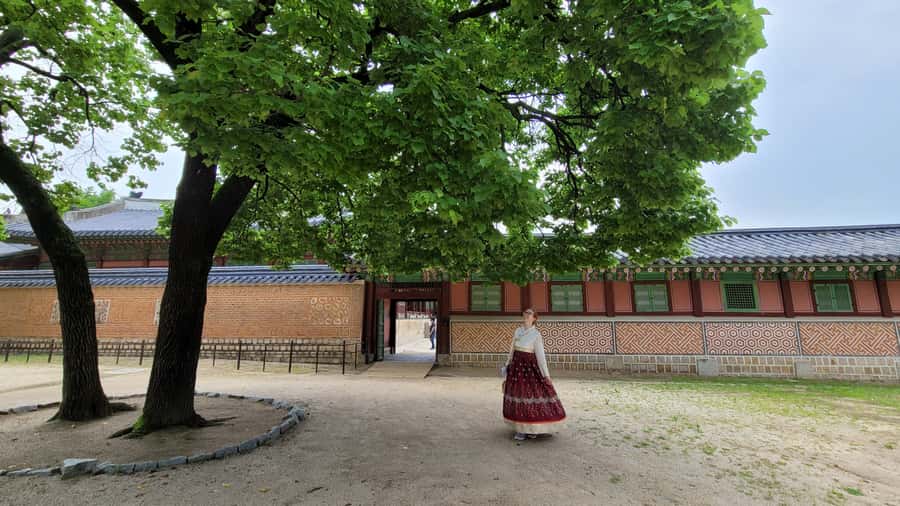
The scale and formal layout give you a clearer sense of royal life than a short history lesson can. You can look at the courtyards, buildings, gates, and rooflines while your guide explains the people and customs connected to them. The setting also gives the guide room to discuss the Joseon era in a way that connects buildings with government, ceremony, and daily routines.
I like that the palace visit is not treated as a quick walk-by. The schedule includes a traditional herbal tea, giving the experience a pause inside the larger visit. That small break can be welcome after moving through busy central Seoul.
One particularly nice detail comes from the way guide Lee has handled this break. On one tour, she introduced a Korean board game at a palace cafe, turning a rest period into a simple cultural exchange. You should not treat that as guaranteed for every departure, but it shows the kind of personal teaching that can make this walk feel less formal and more memorable.
The tea is included, but food is not. If you need a full meal, plan to eat before or after the tour. The traditional drink is best understood as a cultural tasting and rest stop, not lunch.
The palace can also be the busiest part of the route in terms of visual stimulation. You will want photographs, but try to leave room for the guide’s explanations. The main value here is not just seeing an impressive compound. It is understanding why Gyeongbokgung matters within Seoul and Korean history.
A few more palace visits around Seoul worth a look
- Small-Group Royal Palace and Seoul City Tour (hotel pick-up)
★ 5.0 · 1,474 reviews - Seoul: Gyeongbok Palace, Bukchon Village, and Gwangjang Tour
★ 5.0 · 1,044 reviews - Seoul Half-Day City Highlight, Palace Tour with Hanbok
★ 4.9 · 764 reviews - Seoul: Palace, Temple and Market Guided Foodie Tour at Night
★ 4.9 · 750 reviews
Walking through Bukchon’s traditional lanes
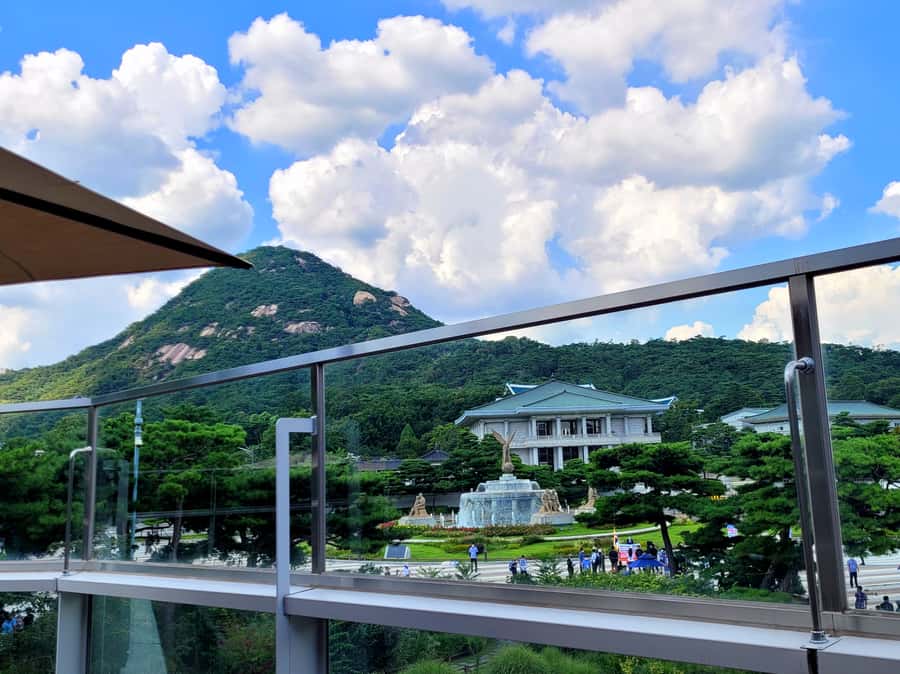
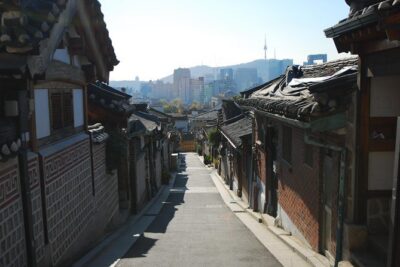
The final major stop is Bukchon traditional village. This area is known for its traditional architecture, and the walk gives you a chance to see a different side of Seoul after the palace’s formal open spaces.
Bukchon is especially enjoyable because the experience happens at street level. You are looking at buildings, lanes, views, and the way older forms of architecture fit into a living part of the city. The route is described as moderate, and one set of feedback praised the village views while suggesting that an extra stop and more historical background would have been welcome.
That is a fair point. Bukchon rewards a slower pace, but a short tour must balance the village with three other important areas. You may receive a good introduction rather than a complete study of every lane and building.
The streets can also require more attention than the palace courtyards. Wear shoes with a firm sole and be ready for walking through uneven or sloping sections. The supplied instructions specifically recommend comfortable shoes, and I would take that advice seriously.
Your guide’s role is useful here. Architecture can look beautiful without explaining itself. Ask about the houses, the neighborhood’s place in Seoul, and what makes the buildings traditional. The tour promises cultural context, but you will get more from the stop if you ask questions instead of treating it as a succession of viewpoints.
At the end, the activity returns to the meeting point. That is handy if you want to continue exploring central Seoul on foot, although the exact end point should be confirmed with the guide.
The guide can make or break the experience
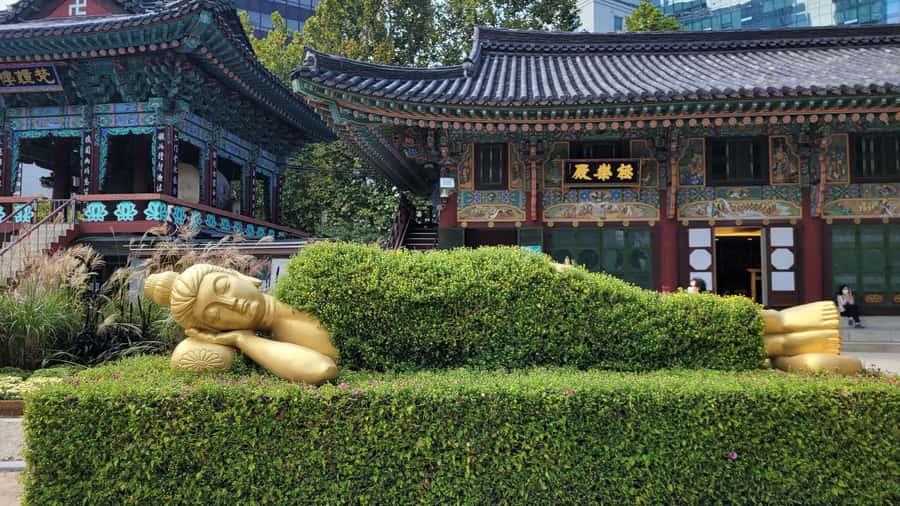
This is a guide-led tour, so the person leading it has a large effect on what you receive for the $82 price. The strongest comments describe Lee as friendly, patient, professional, and well informed. She has also been praised for allowing enough time to enjoy each place and for recommending other places to visit afterward.
Those details matter. A guide who rushes from landmark to landmark can make a historic district feel like a checklist. A guide who listens can adjust explanations for families, older visitors, or people seeing Korea for the first time.
One useful sign is the communication before the meeting. Lee has managed arrangements by email for someone without a Korean phone number. That does not remove the need to check your meeting instructions, but it suggests a practical and patient approach when plans need clarification.
The tour is in English. If you want a quiet walk with little conversation, this may be more guidance than you need. If you want to ask about customs, language, history, and everyday culture, the format should suit you well.
What $82 includes, and what it does not
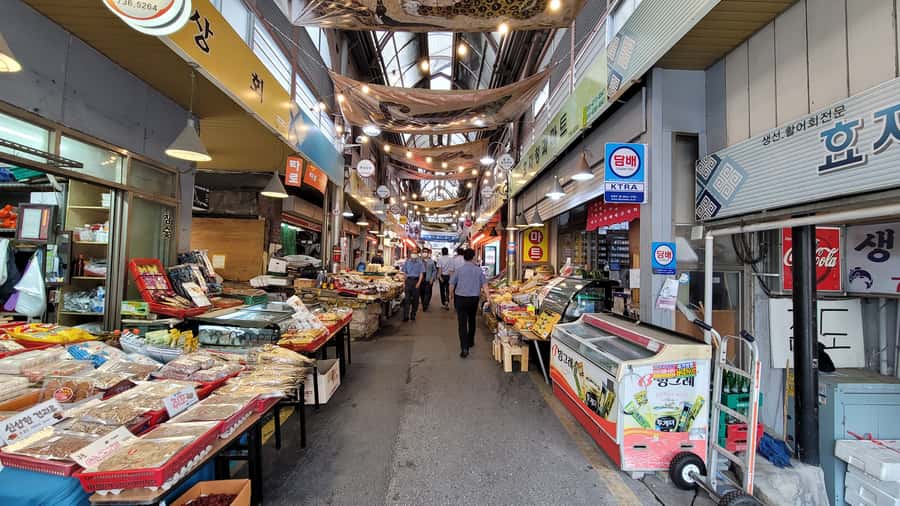
The price includes:
- Gyeongbokgung Palace entrance
- Traditional herbal tea
- English-speaking guide
It does not include food, hotel pickup, or hotel drop-off. You need to make your own way to Anguk Station Exit 6 and return from the meeting point when the activity ends.
At $82 per person, the value depends on how much you want from the guide. If you only want to see the palace, you can find cheaper ways to visit a single attraction. The price becomes easier to justify if you want one organized route, historical explanation, cultural conversation, a tea break, and help connecting the four areas.
Families may find the interactive style useful, especially if the guide includes a game or adjusts the pace. Couples, solo visitors, and first-time visitors who want an overview should also find the route practical. People with limited walking ability should think carefully before booking, since the experience is on foot and mobility scooters are not allowed.
The activity allows you to reserve and pay later, which is helpful if your Seoul plans are still changing. You can also cancel up to 24 hours in advance for a full refund. These policies make the booking less risky, but you should still read the final booking terms before paying.
What to bring and what to expect on the day
Wear comfortable shoes. That is the one clear packing instruction, and it is the right one for a route that links a temple, square, palace, and village streets.
Bring curiosity and a few questions. The tour is designed to teach, and the best moments may come from asking about Korean language, Buddhist practice, palace customs, or traditional homes.
You should not bring pets, and mobility scooters are not allowed. Alcohol and drugs are prohibited. The operator also states that it is not responsible for loss, illness, injury, accident, or damage to people or property, so keep valuables secure and take normal care while walking.
Because the route includes several major sights, do not expect unlimited free time at every location. You will see a lot in about three hours, but this is an introduction rather than an exhaustive study of Seoul’s royal and traditional districts.
Who should book this Seoul walking tour?
I would recommend it most strongly to first-time visitors who want a clear introduction to Seoul’s cultural center. You get the palace that many people place at the top of their list, but you also see a temple, a major public square, and a traditional village.
It is also a good choice if you enjoy asking questions. The praise for Lee and the other guide-led interactions suggests that the human element is a major part of the experience. You are paying for interpretation and company as much as for admission.
Families may appreciate the friendly pace and the possibility of a Korean board game, though that extra activity should not be considered guaranteed. The tour can also work well for older children who may tire of formal sightseeing but respond to stories, language, and hands-on cultural details.
I would be less likely to choose it if you want a very slow photographic tour, a food-focused outing, or a private vehicle. It includes no food beyond the traditional herbal tea, no hotel transfers, and no promise of extended time in each Bukchon lane.
Should you book it?
Book this tour if you want Seoul’s major cultural sights explained in one organized walk. The combination of Jogyesa Temple, Gwanghwamun Square, Gyeongbokgung, and Bukchon is sensible, and the inclusion of palace admission and tea softens the $82 cost.
I would especially choose it for a first or second day in Seoul, when a good guide can help you understand what you are seeing and suggest what to visit next. Skip it if you already know these districts well or prefer to explore slowly on your own.
The best reason to book is the guide-led experience, particularly if Lee is available. Her patient, friendly approach has made this tour work for families, older visitors, and curious first-timers. Just bring good shoes, allow for a moderate walk, and keep your expectations focused on a well-explained introduction rather than an all-day exploration.
FAQ
How long does the tour last?
The experience takes about three hours, based on the stated tour description and timing.
Where does the tour meet?
The listed meeting point is Anguk Station Exit 6.
Where does the tour end?
The activity ends back at the meeting point.
Is Gyeongbokgung Palace admission included?
Yes. The Gyeongbokgung Palace entrance ticket is included.
Is a drink included?
Yes. A traditional herbal tea or traditional drink at the palace is included.
Is food included?
No. Food is not included in the tour price.
What language is the tour offered in?
The tour is offered in English.
Can I cancel for a full refund?
Yes. You can cancel up to 24 hours in advance for a full refund.
Just added around Seoul
- Seoul: Nighttime Tour of Palace, Market, Naksan Park & More★ 4.9 · 143 reviews
- Seoul: DMZ, Gyeongbokgung Palace & City Tour★ 4.5 · 36 reviews
- Customized Private Seoul tour: Palace, Market etc(Airport Option)★ 5.0 · 46 reviews
- Private Seoul City Tour Palace, village, temple, market★ 5.0 · 21 reviews
- Seoul: Full-Day Royal Palaces Private Tour★ 4.9 · 33 reviews
- Customizable Seoul Private Tour Palaces Food and Markets★ 5.0 · 27 reviews
- Seoul: Gyeongbokgung Palace Half Day Tour★ 4.9 · 111 reviews
- Full-Day Palace Tour in Seoul★ 5.0 · 155 reviews
Gyeongbokgung and Seoul Palace Tours, compared.
Gyeongbok Palace, Bukchon Village, and Gwangjang Tour
Read our review →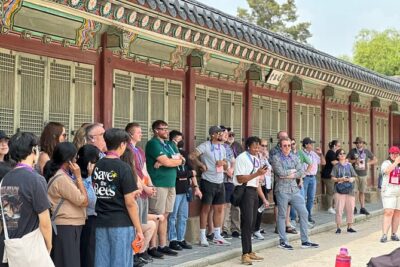
Best Seoul City Tour (Gyeongbokgung Palace,Insadong,Namsan Tower)
Read our review →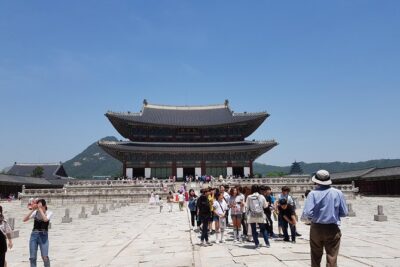
Seoul City Sightseeing Tour Including Gyeongbokgung Palace, N Seoul Tower, and Namsangol Hanok Village
Read our review →Gyeongbok Palace, Bukchon Village, and Gwangjang Tour
Read our review →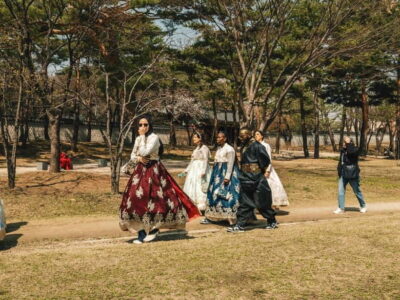
Seoul Half-Day City Highlight, Palace Tour with Hanbok
Read our review →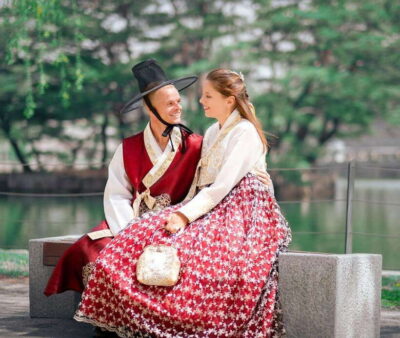
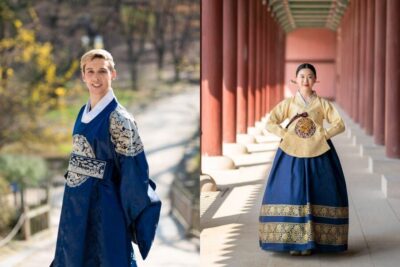
Hanbok Photoshoot and History Tour at Gyeongbokgung Palace
Read our review →Browse the lists this tour appears in