
REVIEW · SEOUL
Best Things to Do – Half Day Seoul Trip (Seoul Palace & Temple)
Seoul’s royal past fits neatly into three hours. This compact afternoon tour links Jogyesa Temple, Gyeongbokgung Palace, the Blue House area, and a ginseng shopping stop, with an air-conditioned coach handling the city traffic. I like the efficient mix of major sights and the chance to see the Changing of the Guard Ceremony without arranging transport yourself.
I also like the guides’ strong reputation. Judy, Lynn, Henry, Diane, Sunny, Wendy, and others are praised for clear English, royal stories, useful Seoul suggestions, and help with photos or shopping. The main caution is the ginseng stop, which can feel like a sales presentation rather than a cultural visit. Pickup details and the exact timing also need careful checking before you go.
Key points to know before booking
- Jogyesa Temple offers a calm opening stop: You get about 40 minutes at one of central Seoul’s most important Buddhist sites.
- Gyeongbokgung brings the big royal spectacle: The Changing of the Guard Ceremony is a major reason to choose this route.
- Tuesday changes the palace visit: Gyeongbokgung is closed on Tuesdays, so the tour substitutes Changdeokgung Palace, a UNESCO-listed site.
- The air-conditioned coach matters: Seoul sightseeing can be hot, cold, or tiring, and the coach gives you a break between stops.
- The ginseng center is the weak link: It may be interesting to some, but the sales pitch has bothered several people.
- This is an introduction, not a full palace day: You will see important places, but the schedule leaves little room for wandering.
What this Seoul half-day tour is really designed to do
At $38 per person, this is an orientation tour. You are paying for a guide, entrance fees where listed, hotel pickup, transport, and a quick route through several central sights. That is fair value if you want help getting your bearings fast and prefer not to piece together Seoul’s palace district on your own.
The tour lasts about three hours. That sounds generous until you account for hotel pickups, city traffic, group movement, and the four scheduled stops. You should expect short visits rather than a slow stroll through palace courtyards or a long temple meditation.
The experience is best for a first visit, a short stay, or a final morning when you want to see the main historical sights before moving on. It also suits anyone who likes a guide to explain what they are seeing. If you already know Seoul well, or want plenty of free time for photography, the pace may feel tight.
The advertised highlights also include shopping at two popular Seoul markets, but the detailed route focuses on Jogyesa, the palace, Cheongwadae Sarangchae, and a ginseng center. I would confirm the exact stops before paying if market browsing is important to you.
A few more palace visits around Seoul worth a look
- Seoul: Gyeongbok Palace, Bukchon Village, and Gwangjang Tour
★ 4.9 · 2,321 reviews - Best Seoul City Tour (Gyeongbokgung Palace,Insadong,Namsan Tower)
★ 5.0 · 1,647 reviews - Small-Group Royal Palace and Seoul City Tour (hotel pick-up)
★ 5.0 · 1,474 reviews
Jogyesa Temple: a peaceful start in downtown Seoul
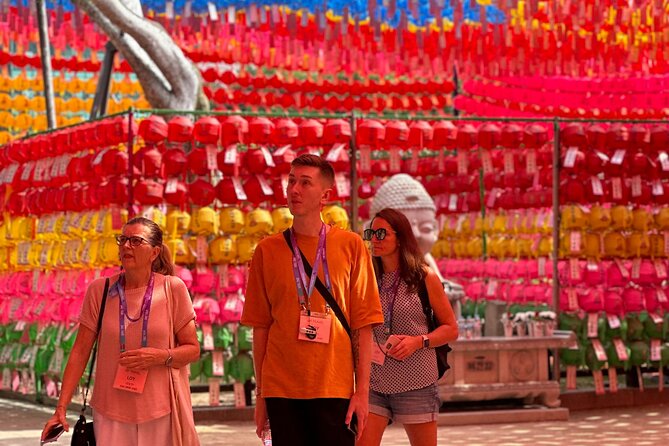
The first stop is Jogyesa Temple, with about 40 minutes to look around. It is one of the key landmarks of Korean Buddhism and was first established in 1935. The temple sits in central Seoul, so the contrast is immediate: traffic and modern buildings outside, colorful Buddhist decoration and old trees inside.
The white tree mentioned in the tour description is one of the details that gives this stop character. Your guide can help explain the temple’s role rather than leaving you to take a few pictures and move on. Several guides have been praised for making these short visits meaningful with clear explanations and stories.
Forty minutes is enough to see the main temple area and take photographs. It is not enough for a quiet, unhurried visit if the grounds are crowded. Keep your camera ready, listen for instructions, and stay aware of the group’s meeting point.
This stop works well at the beginning because it introduces Korean religious culture before the tour shifts to royal power. I like that balance. You are not simply moving from one grand building to another.
Gyeongbokgung Palace and the Changing of the Guard
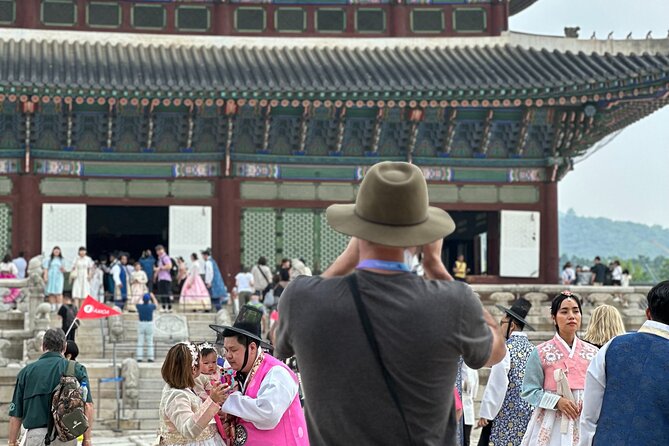
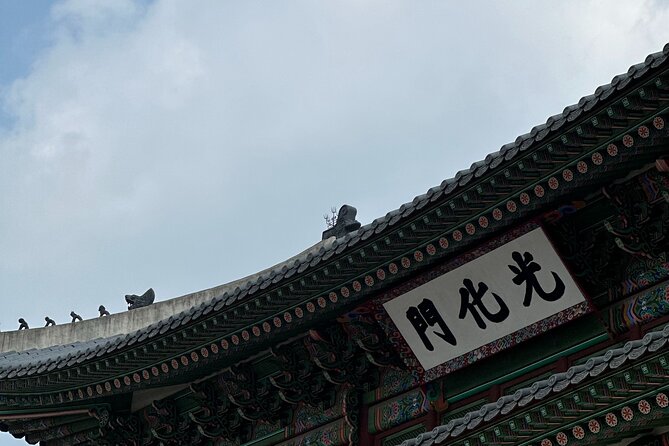
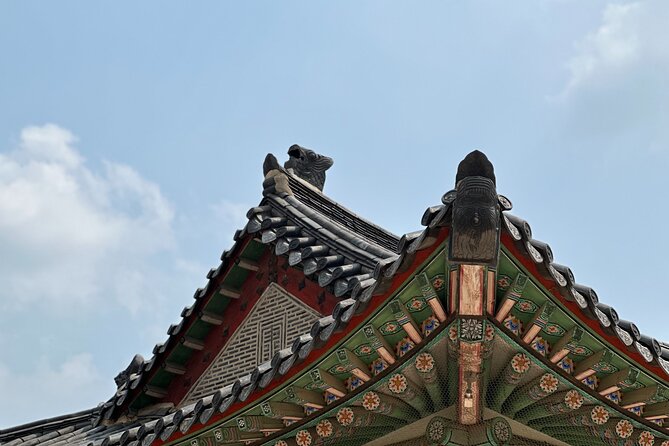
Gyeongbokgung is the tour’s headline sight, with about an hour scheduled. It was the main royal palace and includes major buildings such as Geunjeongjeon Hall, Hyangwonjeong Pavilion, and Gyeonghoeru Pavilion. The route gives you a brisk look at the palace grounds and the architectural details that survived occupation and war.
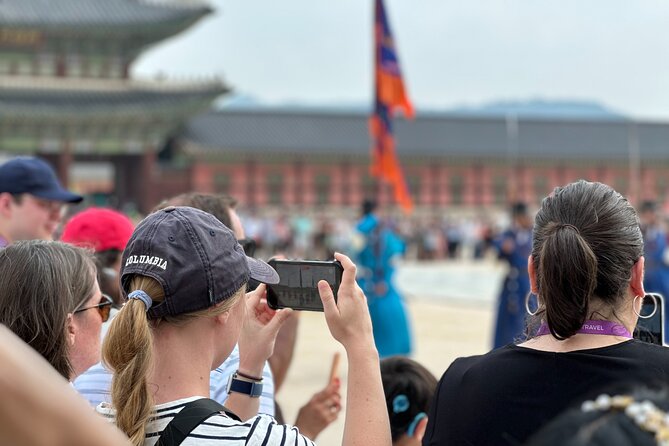
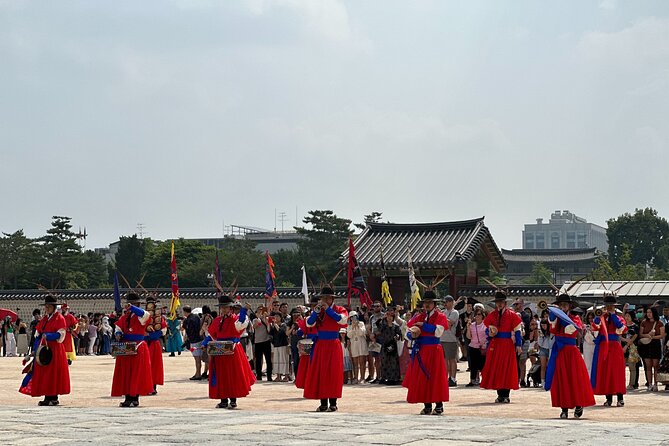
The Changing of the Guard Ceremony is a key attraction. It is carefully choreographed, colorful, and easy to appreciate even if you know little about Korean history. One person described imagining how grand the ceremony must have been in earlier royal times, which gets to the heart of its appeal. It turns a palace visit into a live historical display.
Timing matters here. Guides such as Judy and Wendy received praise for getting the schedule right, while another guide, Sunny, was credited with keeping the day moving despite heat and crowds. A well-timed visit can make the difference between seeing the ceremony and merely hearing about it.
One hour will not cover every courtyard, hall, or pavilion in detail. You will get the major visual points and a guided explanation, but you should not expect the depth of a dedicated palace tour. I see that as a reasonable trade for a three-hour city route.
Gyeongbokgung is closed on Tuesdays. On that day, the palace portion changes to Changdeokgung Palace, which is UNESCO listed. That substitution is not a minor detail. Changdeokgung has a different character, so check the day of the week when choosing this experience.
The description also refers to buildings that survived the Japanese occupation and the Korean War. That context gives the palace visit more weight. These are not simply attractive backdrops for photographs. They are part of Seoul’s record of loss, survival, and rebuilding.
Cheongwadae Sarangchae and the Blue House area
The next stop is Cheongwadae Sarangchae, an exhibition hall near the Blue House, also known as Cheongwadae. The visit is scheduled for about 40 minutes.
This stop adds modern political and cultural context to the older palace and temple sites. Exhibits cover Korean artifacts, documents, politics, history, and culture. If you enjoy understanding how a country presents its own past, this can be a useful change of pace.
The time is enough for an introduction, not a full museum visit. You may find yourself moving through the displays quickly, especially if the coach has a fixed departure time. The guide’s explanation will likely shape how much you get from it, so this is another part of the tour where a strong guide matters.
The Blue House setting also links past government to present-day Seoul. After seeing royal administration at Gyeongbokgung, you get a short look at more recent national institutions. That sequence gives the tour a sensible historical arc, even though each stop is brief.
Same place, a different set of state rooms:
- Seoul City Sightseeing Tour Including Gyeongbokgung Palace, N Seoul Tower, and Namsangol Hanok Village
★ 5.0 · 1,423 reviews - Seoul: Gyeongbok Palace, Bukchon Village, and Gwangjang Tour
★ 5.0 · 1,044 reviews - Seoul Half-Day City Highlight, Palace Tour with Hanbok
★ 4.9 · 764 reviews - Seoul: Palace, Temple and Market Guided Foodie Tour at Night
★ 4.9 · 750 reviews
The ginseng center: the part you need to understand
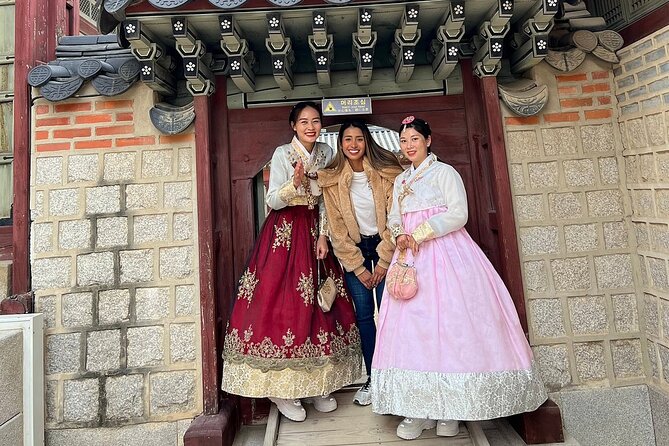
The final scheduled stop is Cheongha Plus Ginseng Shopping Center, listed at 30 minutes. This is where expectations can go wrong.
Some people have found the center pleasant and felt no pressure to buy. Others describe a long sales pitch, an expensive product focus, and a visit that felt forced. One account says the stop lasted about an hour, although the stated schedule gives it 30 minutes. That difference is worth noting because even a half-hour sales presentation can feel long after a packed palace visit.
The central issue is not ginseng itself. Korean ginseng is a genuine cultural and commercial product, and you may be interested in learning how it is presented or sold. The issue is that the stop can feel less like sightseeing and more like a retail appointment.
I would not budget this as free shopping time. Treat it as a possible commercial stop included in the route. If you do not want to buy anything, be polite and firm. Do not feel that the guide’s enthusiasm creates an obligation.
A few people specifically wished this stop were optional or placed at the very end, where it would not interrupt the cultural portion. That is sensible advice. If the schedule runs late, the ginseng visit may also reduce time at the sights you actually came to see.
Guides make or break the experience
The strongest praise goes to the guides. Judy is described as fluent in English, well informed, and good at helping with a souvenir search. Lynn was praised for talking with the group during the bus rides as well as at the sights. Henry offered extra ideas for things to do in Seoul, and Diane answered questions about the difference between historical dramas and real Korean history.
Other named guides include K, Kelly, Lina, Gabby, GoGo, Wendy, Alex, Andy, and Sunny. The feedback points to a consistent strength: the guide often adds far more value than the basic route suggests. Good guides explain royal intrigue, manage crowds, help with photographs, and keep people engaged in heat or cold.
The guide language is English or Chinese. If the history matters to you, pay attention during the coach rides. With such a short schedule, the bus commentary may provide context that cannot fit into the palace walk.
Group size can reach 100 people, although one account describes a much smaller group on a particular day. That means the experience may vary. A large group can slow movement at gates and meeting points, while a small group can feel more personal.
Hotel pickup and coach transport
Hotel pickup is offered, and the air-conditioned coach is one of the practical advantages of this tour. Seoul’s weather can be intense, and one person specifically appreciated the strong air conditioning during a hot visit. Another praised the driver for safe transport in freezing conditions.
Pickup needs extra attention. Some people had smooth, punctual collection, but others waited because the pickup arrangement was unclear or not properly remembered. One account describes a morning start that was more than an hour earlier than expected, while another group waited in a vehicle for nearly 40 minutes before the tour began.
Confirm the pickup time and location directly before the day of the tour. Do not assume that selecting hotel pickup means the timing is automatically settled. If your hotel is not on a standard route, allow extra flexibility.
There is no hotel drop-off service included. Plan your next move from the final stop rather than assuming the coach will return you to your hotel. Lunch is also not included, so eat before the tour if your schedule leaves no room afterward.
Weather, crowds, and the pace
You will spend time outside at Jogyesa and the palace. Reviews describe intense heat, extreme cold, and heavy crowds on busy Saturdays. The coach provides relief, but the walking portions still require suitable shoes and weather protection.
The pace is manageable for most people because the tour is short and transport connects the stops. Still, the palace visit involves walking and standing. The information provided says most people can participate, and service animals are allowed, but no detailed accessibility assessment is given.
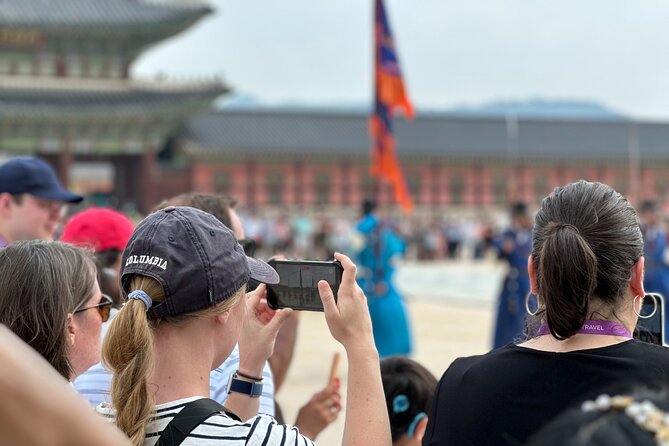
Crowds can affect the Changing of the Guard Ceremony and palace photographs. A skilled guide can steer the group through busy areas, but no guide can make a popular royal palace empty. If you want a calm photographic session, choose a private visit instead.
Value at $38 per person
The price is attractive for a guided Seoul introduction. You receive professional guiding, fuel and handling charges, relevant admission fees, coach transport, and hotel pickup. At $38, the cost is lower than arranging several separate transfers and paying for a guide alone.
The value depends on how you feel about the commercial stop. If you enjoy the temple, palace, Blue House exhibits, and guide commentary, the price is strong. If you consider the ginseng visit wasted time, the tour becomes less appealing, especially if it runs longer than planned.
I would judge the tour by its cultural core, not by the shopping stop. The palace ceremony and guide commentary are the reasons to book. The ginseng center is a condition to accept, not a reason to choose it.
Free cancellation is available if you cancel at least 24 hours before the start time. Changes or cancellations inside that window are not accepted for a refund, so check your plans early.
Who should book this Seoul tour?
Book it if you want a short, organized introduction to Seoul’s religious, royal, and political landmarks. It is particularly useful if you have only one free morning or afternoon, dislike navigating unfamiliar public transport, or want a guide to explain the places you are seeing.
It also suits fans of Korean historical dramas. The palace setting lets you compare screen versions of royal life with actual buildings, ceremonies, and historical context. Diane’s approach, which connected drama with real history, is exactly the kind of added value this tour can provide.
Think twice if you strongly dislike shopping stops, need precise timing, or want a deep visit to one palace. You may prefer to visit Gyeongbokgung independently and spend several hours there, then explore Jogyesa and the Blue House district at your own pace.
Should you book it?
I would book this tour for a first look at Seoul, provided you accept the ginseng stop and confirm pickup details. The combination of Jogyesa, Gyeongbokgung, the Changing of the Guard Ceremony, and Cheongwadae Sarangchae gives you a useful slice of the city in three hours.
The guides appear to be the real strength. Names such as Judy, Lynn, Henry, Diane, Sunny, Wendy, and GoGo come up with praise for warmth, clear explanations, and practical help. Just keep your expectations realistic: this is a brisk overview with a possible sales presentation, not a leisurely palace day.
FAQ
How long does the Seoul palace and temple tour last?
The tour lasts approximately three hours.
What places are included?
The stated route includes Jogyesa Temple, Gyeongbokgung Palace, Cheongwadae Sarangchae, and Cheongha Plus Ginseng Shopping Center.
What happens if I take the tour on a Tuesday?
Gyeongbokgung Palace is closed on Tuesdays, so the palace visit is substituted with Changdeokgung Palace.
Is hotel pickup available?
Yes, hotel pickup is offered. Confirm the exact pickup time and location before the tour because timing can vary.
Is hotel drop-off included?
No. Hotel drop-off service is not included.
Is lunch included?
No. Lunch is not included in the tour price.
What languages are available?
The professional guide is available in English or Chinese.
Can I cancel for a full refund?
Yes, you can receive a full refund if you cancel at least 24 hours before the experience start time. Cancellations or changes made less than 24 hours before the start time are not refunded.
Just added around Seoul
- Small-Group Seoul Tour with Gyeongbokgung Palace (hotel pick-up)★ 5.0 · 68 reviews
- Gyeongbokgung Palace & Bukchon Village Walking Tour★ 5.0 · 3 reviews
- Seoul Night Tour with Han River Cruise and Gyeongbokgung Palace★ 5.0 · 53 reviews
- Seoul Palace Morning Tour★ 4.5 · 53 reviews
- Seoul Private Tour Gyeongbok Palace Bukchon and Gwangjang Market★ 5.0 · 4 reviews
- Seoul UNESCO Heritage Palace, Shrine, and More Tour★ 4.5 · 13 reviews
- Seoul Night Tour (Gwangjang Market, Royal Palace and Naksan Park)★ 5.0 · 92 reviews
- Seoul Royal Palace,Bukchon Hanok Village & Gwangjang Market Feast★ 4.5 · 16 reviews
Seoul Palace Tours, compared.
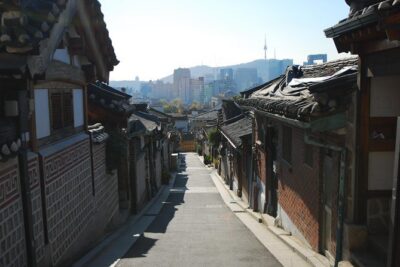
Gyeongbok Palace, Bukchon Village, and Gwangjang Tour
Read our review →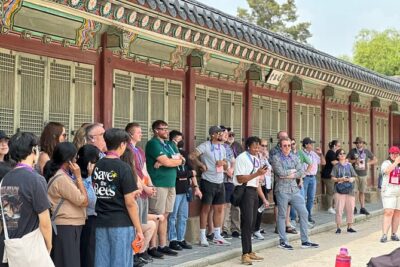
Best Seoul City Tour (Gyeongbokgung Palace,Insadong,Namsan Tower)
Read our review →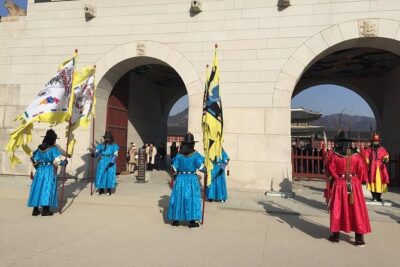
Small-Group Royal Palace and Seoul City Tour (hotel pick-up)
Read our review →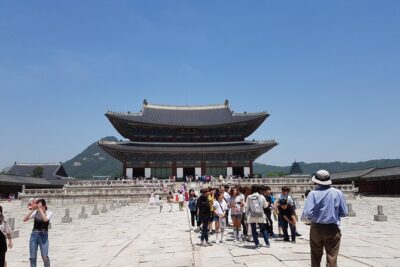
Seoul City Sightseeing Tour Including Gyeongbokgung Palace, N Seoul Tower, and Namsangol Hanok Village
Read our review →Gyeongbok Palace, Bukchon Village, and Gwangjang Tour
Read our review →
Seoul Half-Day City Highlight, Palace Tour with Hanbok
Read our review →
Palace, Temple and Market Guided Foodie Tour at Night
Read our review →
Seoul Highlights: Gyeongbok Palace, Insadong & N Seoul Tower
Read our review →Browse the lists this tour appears in