
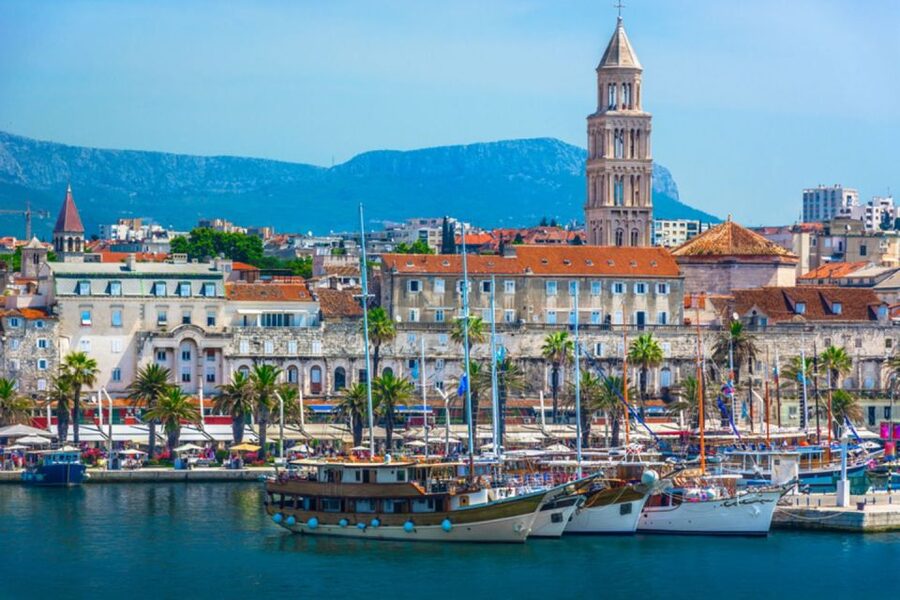
REVIEW · SPLIT
Split: Old Town & Diocletian’s Palace Earlybird Walking Tour
Wake up before the cruise crowds arrive. This 70-minute walk through Split pairs Diocletian’s Palace with the cooler, calmer feel of early morning, making it a smart way to see the city’s core before the lanes fill up. I like the peaceful start and the chance to explore with a local guide rather than simply follow a map.
I also like the strong value at $29, especially if you want the main sights explained in a short visit. Guide Duje earns special praise for his humor, local pride, and thoughtful storytelling. The tradeoff is that some of the time may go toward general Split tips, so you might want a longer palace visit if ancient buildings are your main interest.
Key points to know before you book

- Early hours keep the July heat and crowds down, a major advantage in Split’s stone-paved old center.
- The 70-minute route covers Peristyle Square, the palace cellars, St. Jupiter’s Temple, and St. Duje’s Cathedral.
- Guide Duje has been especially well received for his humor, local knowledge, and personal connection to Split.
- The palace is part of the living city, not a fenced-off ruin, so the walk mixes Roman remains with modern streets and daily life.
- You meet at the big red SPLIT sign at Trg Braće Radić in Split Port, then return to the same point.
- The tour is offered in English, with hotel pickup and drop-off left out.
Why an early start makes sense in Split
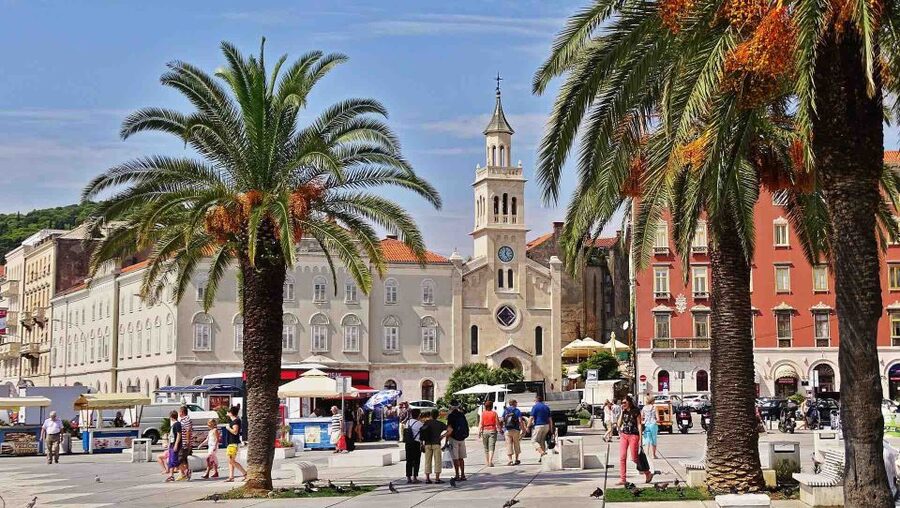
Split is easiest to enjoy before the city gets busy. The old center is compact, but its narrow lanes, stone squares, and palace passages can feel crowded later in the day, especially during summer. Starting early gives you room to listen, look up, and take photographs without constantly stepping aside.
The cooler air matters, too. A July walk over pale stone can become tiring quickly once the sun is high. An early tour lets you see the central sights before the heat builds, then leaves you with most of the day for the waterfront, museums, beaches, or a longer meal.
I would not choose this tour only because it starts early. The real reason is that the palace is easier to understand when you can hear the guide and see the shape of the old streets clearly. The quiet also helps you notice the odd mixture at the heart of Split: Roman walls, medieval lanes, church bells, cafés, shops, and apartments all packed into one ancient complex.
The exact start time is not provided, so check it carefully when booking. You want to know how early you must leave your hotel and whether the time works with a cruise arrival, ferry departure, or breakfast plan.
More Palace Walking Tours in Croatia
- Split: Old Town and Diocletian Palace Walking Tour
★ 4.9 · 4,727 reviews - Walking Tour of Split and Diocletian’s Palace
★ 5.0 · 2,588 reviews - Split & Diocletian’s Palace Walking Tour
★ 5.0 · 1,125 reviews
Meeting the guide at Split Port
The meeting point is at Trg Braće Radić, in the Split Port area. Look for the large red SPLIT sign and a guide holding a My Special Tour sign. That detail should make the beginning fairly simple, but give yourself enough time to find the square without rushing.
Hotel pickup and drop-off are not included. You need to make your own way to the port meeting point, and the tour finishes there as well. This is convenient if you are staying near the center or arriving by ferry, but less convenient if your accommodation is farther away.
The activity is offered in English. Since this is a walking tour rather than a private sightseeing car, you should expect the experience to depend heavily on the guide’s pacing and storytelling. Duje is the guide most often singled out for praise. His style combines humor with a serious understanding of local history, and he has a personal connection to Split through his involvement in local politics.
That does not mean every departure will have Duje. If having a particular guide matters to you, ask the provider before booking rather than assuming.
Entering a 1,700-year-old palace that became a city

Diocletian’s Palace is not a single quiet monument sitting apart from Split. It has become part of the city itself. People live, work, shop, eat, and walk through spaces that began as a Roman imperial complex roughly 1,700 years ago.
That makes the opening part of the walk especially useful. You are not just looking at old stones. You are learning how a Roman palace shaped the streets and neighborhoods around it. A guide can point out how the large ancient plan survives beneath later buildings and everyday urban life.
The palace feels more understandable when you see it as a place with several lives. First came the Roman imperial residence. Later, people adapted its rooms and walls for churches, homes, and businesses. Today, the old structure remains part of Split’s working center.
I find that this kind of setting rewards a guided visit. Without context, you may see a column, arch, or worn wall and move on. With a guide, those pieces begin to show how the palace was arranged and why certain spots mattered.
Peristyle Square and the Roman center
Peristyle Square is one of the key stops. It served as a ceremonial center of Diocletian’s Palace, and its scale gives you a clearer sense of the original Roman ambition than the small lanes do.
This is a good place to pause and look around rather than rush through. The square connects several important parts of the palace, and its surrounding architecture helps you read the old complex as a planned imperial space.
The early hour should make this stop more pleasant. With fewer people crossing the square, you have a better chance to hear the explanation and study the details. You can also take photographs without turning the visit into a contest for a clear view.
One limitation is the short overall duration. Seventy minutes is enough for an introduction, but not enough for a slow architectural study of every corner. If Peristyle Square interests you most, take another look after the tour while you still have the guide’s basic explanation in mind.
More Palace Walking Tours in Split
- Split: Diocletian Palace & Old Town Guided Walking Tour
★ 4.7 · 882 reviews - Diocletian’s Palace and Old Town SMALL GROUP Walking Tour
★ 5.0 · 502 reviews - SPLIT-PRIVATE Walking Tour of Diocletian’s Palace & Old Town
★ 5.0 · 467 reviews - 90-min Diocletian Palace Walking Tour
★ 5.0 · 323 reviews
The underground cellars beneath the palace

The underground cellars are another important stop. They reveal the lower level of the palace and help explain the structure above it. Walking below the modern city gives you a stronger sense of how much of Split is built over, around, and within the old Roman plan.
This part of the tour can be especially helpful if you have trouble picturing the original palace from street level. The cellars offer a physical link between the ancient layout and the buildings you see above ground.
You should also keep your expectations measured. The tour includes the cellars, but the itinerary does not promise a long or separate cellar visit. The guide may use this stop as one part of a broader story about the palace, rather than spending most of the 70 minutes underground.
That is the right balance for a first visit. You get the basic orientation, then can decide if you want to return later for more time in the area.
St. Jupiter’s Temple and the change from Roman religion

The Temple of St. Jupiter adds another layer to the walk. Its name reflects the Roman past, while its place in a later Christian city shows how old structures in Split have been reused and reinterpreted.
A stop here gives the guide a chance to explain the Roman religious world and the changes that followed. It also helps you understand that Diocletian’s Palace was not simply a residence. It was a ceremonial and religious center as well as an imperial home.
The value of this stop is mainly in the explanation. The temple itself may not take long to view, but the connection between Roman worship and later Christian use is one of the most interesting themes in the palace.
If you prefer tours that focus only on dramatic monuments, this may feel brief. If you like seeing how cities change over time, it adds useful context to the walk.
St. Duje’s Cathedral and Split’s Christian center
The Cathedral of St. Duje is included in the route and brings the story into Split’s Christian period. Its presence within the old palace is a strong example of how the ancient complex was adapted rather than abandoned.
The cathedral is associated with St. Duje, Split’s patron saint, and forms one of the city’s best-known landmarks. On this walk, you see it as part of the old center rather than as an isolated church reached by a separate excursion.
Again, the tour is short, so do not expect a lengthy cathedral visit unless the guide’s timing allows it. The main benefit is learning how the cathedral fits into the palace and the city around it.
This is also where the tour’s broader focus becomes clear. It is not just a Roman ruins tour. It follows Split through several periods and shows how the old center kept being used.
The old town beyond the palace walls
The walk includes the special old part of Split, not only the most famous palace monuments. That matters because the palace is inseparable from the surrounding streets and squares.
You may find the old town more enjoyable once you know what you are looking at. A narrow passage might follow an ancient wall. A lively square might occupy space that once had a very different purpose. The guide’s job is to connect these fragments without turning the walk into a lecture.
Duje’s humor is a plus here. His approach has been described as entertaining without losing the academic side of the subject. That mix can make a short history tour easier to follow, especially if you do not usually enjoy formal museum-style explanations.
One fair criticism is that some of the time may go toward general Split tips rather than palace details. Pia’s three-star assessment reflects that concern: if you expect a palace-heavy route, you may wish for more time inside the complex and less practical advice about the city.
I see this as a question of purpose. If you are new to Split and want a quick orientation, the extra city advice can be useful. If you already know the city and want a detailed study of the palace, a longer specialist tour may suit you better.
What $29 buys you
At $29 per person, the tour offers a reasonable introduction to Split’s central sights. You are paying for a guide, a planned route, and a compact explanation of several major locations. There are no extra transport costs built into the price because the tour is on foot.
The value is strongest for first-time visitors with limited time. In 70 minutes, you get a basic map of the old center and enough background to make independent exploring more rewarding afterward. You also avoid spending your first hour guessing which lanes and courtyards matter.
The value is less clear if you want extensive access or a slow archaeological tour. The experience does not include hotel transport, and the short length limits how long you can stay at each site. You are buying orientation and atmosphere, not an all-day examination of Diocletian’s Palace.
The early timing improves the deal. Cooler temperatures and fewer people can make the same 70-minute route feel more comfortable than a later walk through crowded streets.
A look at the mixed scores
The overall rating is 4 out of 5 from 12 reviews, which points to a good experience with a few practical cautions. The strongest praise centers on the early start, the quiet streets, the cooler conditions in July, and Duje’s ability to make the past entertaining.
A no-show received a one-star rating, but the available information does not explain what happened. You should not treat that single incident as a normal feature of the tour, but it is a reminder to confirm the meeting details and arrive at the marked sign.
Another one-star rating followed a late cancellation caused by too few people. That suggests a possible risk with departures that do not reach a required minimum, though the exact group requirement is not provided. If your schedule is tight, avoid placing this tour immediately before a ferry, flight, or fixed reservation.
The balance of feedback is useful: the tour can be excellent when the early timing and guide match your needs, but it is not the right choice for someone expecting a long palace-only visit.
Who should take this walking tour
I would recommend it most strongly to:
- First-time visitors who want a clear introduction to Split
- People visiting in summer who want to avoid the strongest heat
- Cruise or ferry passengers who can reach Split Port early
- Visitors who enjoy local stories, humor, and history in equal measure
- Anyone who wants a short activity before a full day of independent exploring
You may want another option if you need hotel pickup, prefer a long and detailed archaeological tour, or dislike early starts. You should also think twice if every minute of your schedule is fixed, since one departure has been canceled because of low participation.
The tour suits independent visitors particularly well. After the walk, you can return to the palace, revisit Peristyle Square, spend more time in the cellars, or explore the surrounding old town with a better sense of direction.
Booking advice and final verdict
Reserve this tour if your priority is a short, calm introduction to Split rather than a complete study of the palace. The $29 price is fair for a guided 70-minute walk, and the early hour adds real value in summer.
I would book it for a first morning in the city, especially if Duje is leading. His humor and connection to Split can make the ancient sites feel personal rather than remote. Just keep your expectations in check: the route covers several important places, but it moves at an introductory pace.
You can reserve now and pay later, and cancellation is allowed up to 24 hours before the tour for a full refund. Confirm the start time, meeting point, and departure status before setting your day around it.
FAQ
How long is the Split early-morning walking tour?
The walking tour lasts 70 minutes.
How much does the tour cost?
The listed price is $29 per person.
Where does the tour start?
Meet at Trg Braće Radić in Split Port, in front of the large red SPLIT sign.
How will I recognize the guide?
The guide will be holding a My Special Tour sign.
Where does the tour end?
The activity ends back at the meeting point.
Which language is offered?
The tour is offered in English.
What sights are included?
The route includes Split Old Town and Diocletian’s Palace, with stops such as Peristyle Square, the underground cellars, the Temple of St. Jupiter, and the Cathedral of St. Duje.
Is hotel pickup included?
No. Hotel pickup and drop-off are not included.
Can I cancel for a refund?
Yes. You can cancel up to 24 hours in advance for a full refund.
More Diocletian's Palace Tours in Split
- Split Old Town and Diocletian’s Palace Tour
★ 4.8 · 716 reviews - Split: Game of Thrones Tour with Diocletian’s Palace Cellar
★ 4.8 · 545 reviews - Split: Diocletian’s Palace Virtual Reality Experience
★ 4.4 · 308 reviews - Split: 1.5-Hour Walking Tour and Diocletian’s Palace
★ 4.7 · 256 reviews
Just added around Split
- Split: Old Town and Diocletian’s Palace Walking Tour★ 3.3 · 3 reviews
- Essential Diocletian’s Palace Tour for First-Time Visitors★ 4.9 · 79 reviews
- Diocletian’s Palace & Old Town Split Walking Tour★ 5.0 · 11 reviews
- Split: Palace & Old Town Private Walking Tour-Entrance incl.★ 4.8 · 8 reviews
- Jewish Heritage & Diocletian’s Palace Private Split Tour★ 5.0 · 80 reviews
- YOUR BEST PRIVATE TOUR – amazing Split and Diocletian’s palace★ 5.0 · 83 reviews
- Split: 1.5-Hour Walking Tour and Diocletian’s Palace★ 4.7 · 256 reviews
- Split: Diocletian’s Palace Virtual Reality Experience★ 4.4 · 308 reviews
Diocletian's Palace Tours, compared.

Walking Tour of Split and Diocletian’s Palace
Read our review →

Diocletian Palace & Old Town Guided Walking Tour
Read our review →

Game of Thrones Tour with Diocletian’s Palace Cellar
Read our review →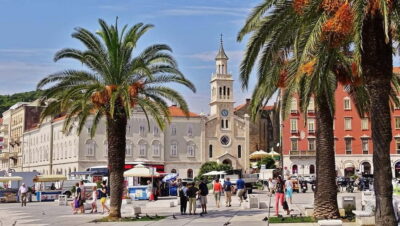
Diocletian’s Palace and Old Town SMALL GROUP Walking Tour
Read our review →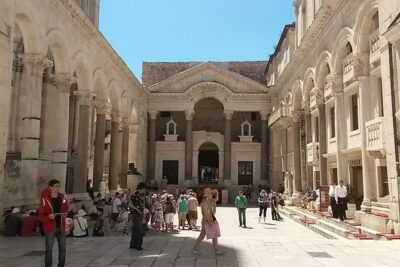
Browse the lists this tour appears in