
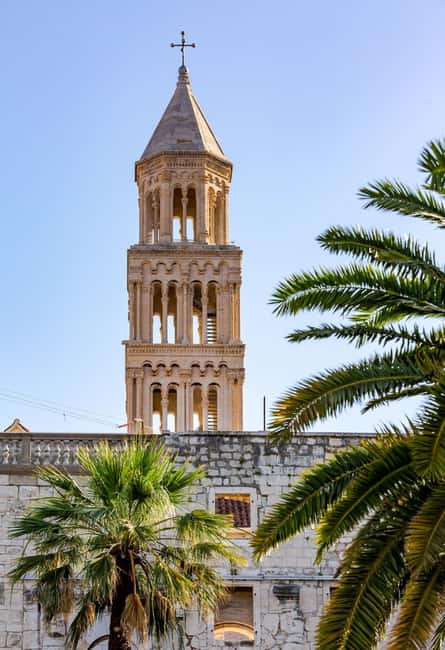
REVIEW · SPLIT
Split: 1.5-Hour Walking Tour and Diocletian’s Palace
Roman walls still frame daily life. This Split walking tour takes you through Diocletian’s Palace and the old town, where ancient stone, medieval lanes, cafés, markets, and modern apartments share the same tight space. I like the way it covers the city beyond the palace, especially the Riva waterfront and Fruit Square, and I like the local perspective offered by guides such as Ana, Sandra, Ivan, and Jelena.
The tour also makes a useful first introduction to Split. You get the Roman cellars, Peristyle, cathedral, gates, and main squares without giving up half a day. The main drawback is that entrance fees are not included, and the route involves uneven old-town walking, so it is not a good fit if stairs or rough paving are a serious problem.
Key points to know before booking
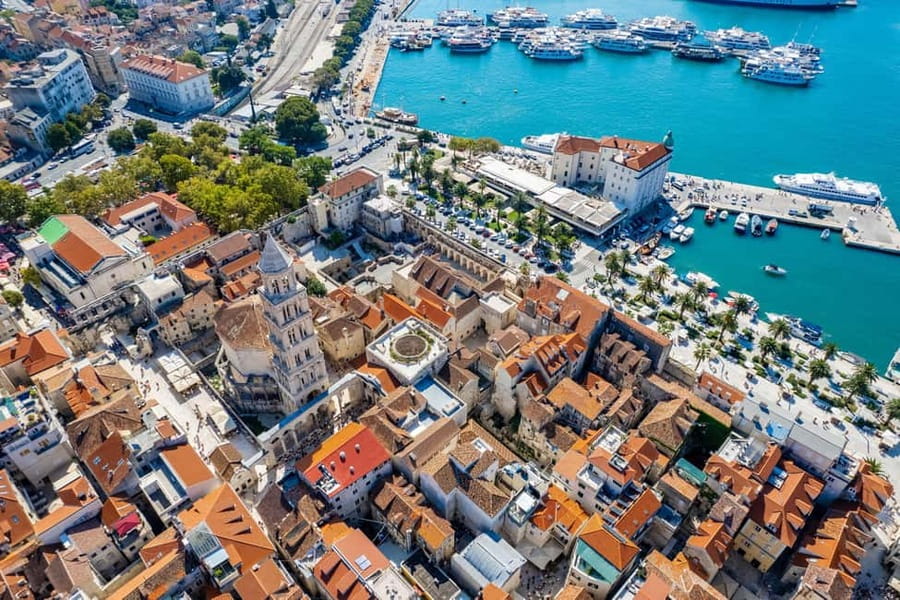
- Roman palace still used as a city center: Diocletian’s Palace is not an isolated ruin. Streets, homes, shops, cafés, and daily life fill its ancient footprint.
- A broad old-town route: The walk links the Golden Gate, People’s Square, Fruit Square, Riva, Peristyle, Vestibule, cathedral, and palace cellars.
- Local guides add the color: Guides including Ana, Sandra, Ivan, and Jelena have been praised for personal stories, practical advice, and clear explanations.
- The 8 a.m. start can be smart: One review specifically favored the early departure before the heat and crowds arrived.
- Spanish and English options: Tours are offered in both languages, though mixed-language groups may move more slowly.
- Bring good shoes and extra money: Food, drinks, and admission tickets are separate from the $41 tour price.
Why Diocletian’s Palace feels different from a normal monument
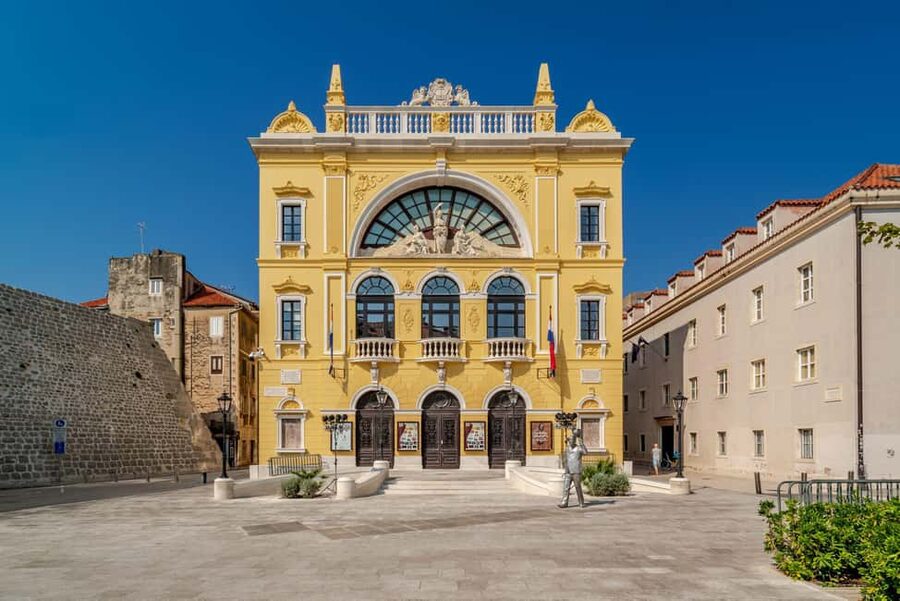
Many ancient sites ask you to imagine the city that once surrounded them. In Split, you do not need much imagination. The old palace became the core of the modern city, and the Roman plan still shapes the streets you walk.
Emperor Diocletian built the palace at the turn of the fourth century AD. It was both a residence and a fortified complex, with gates facing different directions and a central ceremonial court. Over time, people adapted its walls and rooms for homes, businesses, religious buildings, and public spaces.
That is the central pleasure of this tour. You are not simply walking from one freestanding monument to another. You move through a living town where Roman columns can appear beside laundry, a narrow lane can open into a polished square, and a former imperial room can sit beside a café.
The route lasts about 90 minutes to two hours. That is enough time to get your bearings and hear the main story without turning the morning into a long lecture. Several guides have been praised for adding small anecdotes rather than reciting dates alone. Sandra, for example, was described as passionate about Split’s past, while Ana was praised for connecting local history with present-day Croatian life.
More Palace Walking Tours in Croatia
- Split: Old Town and Diocletian Palace Walking Tour
★ 4.9 · 4,727 reviews - Walking Tour of Split and Diocletian’s Palace
★ 5.0 · 2,588 reviews - Split & Diocletian’s Palace Walking Tour
★ 5.0 · 1,125 reviews
From the South Gate to the Golden Gate
Depending on the option you book, you begin at the South Tours Travel Agency. The meeting point can vary, so check your confirmation carefully rather than assuming every departure starts in exactly the same place.
The walk brings you toward the Golden Gate, one of the palace’s most important entrances. This is a good place to begin because it introduces the scale and defensive purpose of the complex. The gate is also a practical reference point for exploring on your own later.
The guide explains how the palace walls and entrances fit together, then places them in the wider story of Split. You will hear about Roman construction, later changes, and the way the old center developed over many centuries.
The route also passes the Game of Thrones Museum. The stop is brief, about five minutes, and the museum is treated as a point of interest rather than the main attraction. If you care about the show, this gives you a quick connection between screen locations and the real city. If you do not, it does not take up enough time to derail the historical focus.
People’s Square and Fruit Square
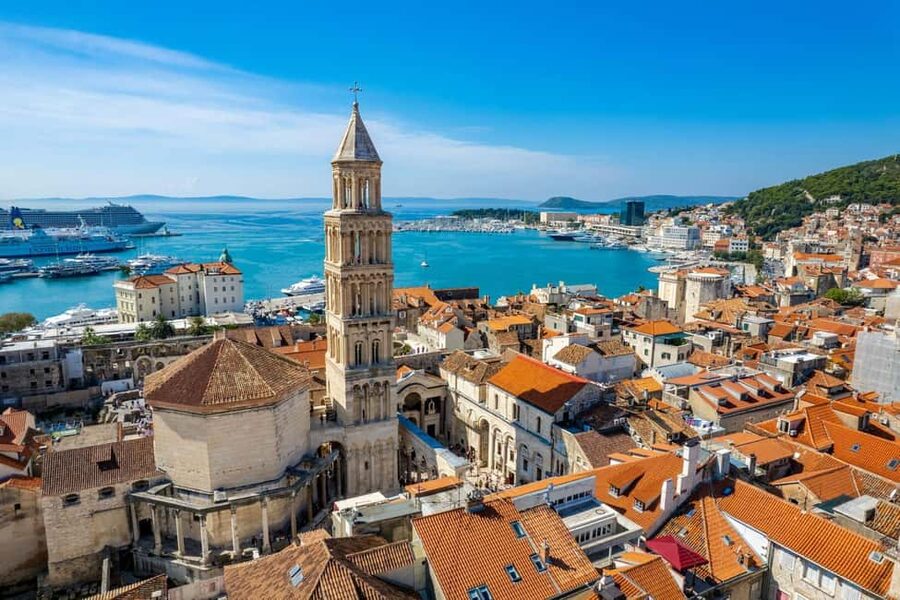
From the Roman core, the walk opens into later parts of the old town. People’s Square gives you a different view of Split’s development, with architecture from periods far removed from Diocletian’s reign.
This contrast is one of the tour’s strengths. You are not shown only polished Roman remains. The route brings together styles from the imperial period through the 20th century, helping you see Split as a city that kept changing rather than a preserved stage set.
At Fruit Square, once the site of the old fruit market, the guide discusses another layer of local life. The name itself points to the square’s practical past. Today, the setting helps you understand how trade, public space, and movement shaped the old center.
I would pay attention here to the street plan and the transitions between spaces. Split’s old town can feel confusing at first, especially when narrow passages appear to lead nowhere. One useful benefit of a guided walk is learning the shortcuts and basic orientation points. Several people who took similar routes found the tour helped them find their way around the next day.
The Riva waterfront and views toward Marjan Hill
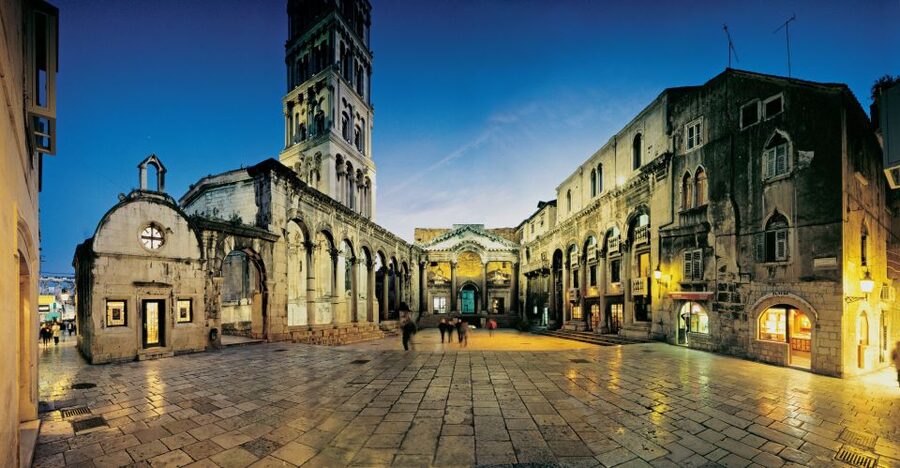
The route eventually reaches the Riva, Split’s waterfront promenade. This is where the experience shifts from stone and enclosed lanes to open views and the everyday social life of the city.
You get a look toward Marjan Hill from the promenade. The view gives the palace a wider setting and reminds you that Split is more than its Roman center. The guide may also explain the port and its current role, a detail that was particularly useful to one person who wanted more than ancient history.
I like this section because it gives the walk breathing room. Inside the palace, the narrow streets can make the city feel inward-looking. On the Riva, you can watch the relationship between the old center, the waterfront, and the hill beyond.
This is also a good place to ask for local suggestions. Guides have offered advice about taverns, authentic food, Marjan Hill, and other places to visit. That kind of practical information can be worth as much as another date or architectural term, especially if you have only one day in Split.
More Palace Walking Tours in Split
- Split: Diocletian Palace & Old Town Guided Walking Tour
★ 4.7 · 882 reviews - Diocletian’s Palace and Old Town SMALL GROUP Walking Tour
★ 5.0 · 502 reviews - SPLIT-PRIVATE Walking Tour of Diocletian’s Palace & Old Town
★ 5.0 · 467 reviews - 90-min Diocletian Palace Walking Tour
★ 5.0 · 323 reviews
Inside the palace, where the old city keeps changing

The main palace visit brings you back into the dense historic center. The word palace can be misleading if you picture one grand building with a clear entrance and a single preserved interior. Here, Diocletian’s Palace is a network of streets, courtyards, walls, gates, and adapted rooms.
The guide helps you read the remains. Roman elements sit beside medieval changes and newer construction. You may see how later residents reused imperial spaces rather than leaving them untouched.
The cellars are one of the most important stops. They preserve the lower structure of the palace and help explain how the upper rooms were supported. They also give you a stronger sense of the original plan than the busy streets above can provide.
Admission fees are not part of the tour price, so ask what you will need to pay for before the walk begins. The tour description promises a visit to the Roman-era cellars, but the broader package also says entrance fees are separate. That means you should keep some money available and confirm which interior areas are included in your chosen departure.
Peristyle, the palace’s main ceremonial space
The Peristyle is the visual center of the route. This grand square once served the imperial palace and remains one of Split’s most striking outdoor spaces.
The guide points out the black granite Egyptian sphinx, described as the last remaining sphinx of its kind in the setting. It is an unusual detail that links Diocletian’s project to Egypt and the wider Roman world. The contrast between dark stone, pale walls, columns, and the surrounding city makes this a strong photo stop.
Do not rush through the square. Look up at the masonry, notice how later buildings press against the ancient structure, and listen for the explanation of how the space functioned. A good guide can turn what first looks like a handsome courtyard into a place with political and religious meaning.
The stop is scheduled for about ten minutes, so the pace is fairly brisk. If you want extensive architectural study or time for long photographs, a private visit later will suit you better. For a first look, the time is enough to understand the space and mark it for a return visit.
Cathedral of Saint Domnius and the former mausoleum
The Cathedral of Saint Domnius occupies an extraordinary building: Diocletian’s former imperial mausoleum. That change from Roman emperor’s tomb to Christian cathedral captures much of Split’s story in one place.
The cathedral is presented as the oldest Catholic cathedral in the world, formed from the imperial Roman mausoleum. The guide explains the connection between the Roman structure and its later religious use, helping you see why this is more than another church stop.
The scheduled visit is about ten minutes. Admission is not included, so the exact interior access may depend on the ticket arrangements for your tour. If entering the cathedral is a priority, confirm the details before booking.
This stop also shows why Split rewards a guide. Without context, you might notice a circular stone building with Christian decoration and move on. With an explanation, you can understand the unusual reuse of imperial architecture and the long shift in the city’s religious life.
Vestibule, the final Roman flourish
The Vestibule is another memorable Roman space. Its round form once served as an entrance area to the imperial apartments. The stop includes time to walk, see the structure, and take photographs.
This part of the route works well after the Peristyle and cathedral because it returns you to the palace’s imperial design. You have seen the ceremonial court and the adapted mausoleum, then you encounter another piece of the original residential complex.
The tour returns to the South Tours Travel Agency after the final stops. Since the old town route includes several short visits rather than one long indoor session, expect to keep moving. Comfortable shoes are not a minor suggestion here. Old streets can be uneven, and the tour is not recommended for people with limited mobility.
What the guides add to the experience
The strongest part of this tour is the guiding. The available feedback repeatedly praises guides for warmth, clear storytelling, and a personal connection to Split.
Ana has been appreciated for explaining the city through Croatian eyes and for giving direct advice about restaurants and places worth seeing. Sandra has been praised for enthusiasm, local perspective, and helping people understand both the palace and modern Split. Ivan has been described as relaxed and well informed, with useful suggestions for other activities.
Jelena has received praise for making history fun and easy to follow. One account also highlights a Spanish-language tour with Ana, while the activity is generally offered in English and Spanish.
Guide quality can vary from one departure to another, and the guide assigned to you is not guaranteed. Still, the repeated pattern is encouraging: expect a person who knows the city well and can answer questions, not just someone pointing at stones.
One practical warning is language balance. A departure with both Spanish and English speakers may be less smooth because information must be repeated. One person found this made the tour good rather than excellent, though the guide was not blamed. If you want the clearest possible flow, check the language option and departure time carefully.
Timing, heat, crowds, and the $41 price
At $41 per person, this is not the cheapest way to see Split’s old town. You are paying for a live guide, a structured route, and the chance to ask questions while you walk. For a first visit, that can be good value because the palace is a maze and its most important pieces are spread through the city.
The price is less attractive if you plan to read a guidebook and explore slowly on your own. It also does not cover food, drinks, or entrance fees, so your final cost will be higher if you enter paid sites.
Timing matters in Split. The 8 a.m. departure was specifically praised as a good choice before the heat and crowds arrived. An evening departure can also be appealing, especially in warmer months, and one person found an 18:00 start comfortable because it was cooler and less crowded.
The duration is a useful middle ground. At 90 minutes to two hours, you get a solid orientation without losing the entire day. You can then return to the cathedral, cellars, or another square at your own pace.
Free cancellation is available up to 24 hours before the tour for a full refund, and you can reserve now and pay later. Those terms help if your Split schedule depends on a ship arrival or changing plans, but still check the precise meeting point for your selected option.
Who should book this Split walking tour?
I would recommend it for a first visit, a short stay, or a morning when you want to understand the city before exploring alone. It is also a good fit if Roman architecture interests you but you want to connect it with markets, waterfront life, later buildings, and modern Croatian culture.
Families with older children may appreciate the manageable length, especially if the guide uses stories and anecdotes to keep the history moving. People interested in Game of Thrones get a quick screen connection, though this is not primarily a filming-location tour.
It is less suitable if you want a slow photographic walk, an in-depth cathedral visit, or a route designed around step-free access. The old town includes uneven paving and historic spaces, and the activity specifically excludes people with mobility impairments.
Should you book it?
Book this tour if you want a clear, lively introduction to Split and value a local guide who can explain both Roman remains and present-day life. The strongest reasons are the well-planned route, the palace cellars, the Peristyle, Saint Domnius Cathedral, and the practical advice about food and other sights.
Choose an early start if heat and crowds bother you. Bring comfortable shoes, allow extra money for admission fees, and confirm the meeting point and language before you pay.
If you already know Split well or prefer to spend an hour studying one monument in depth, explore independently instead. For most first-time visitors, though, $41 buys a useful map in your head and a much better sense of how this unusual city fits together.
FAQ
How long does the Split walking tour last?
The tour lasts about 90 minutes to two hours. The exact duration can vary within that range depending on the departure and pace of the group.
What languages are available?
The tour is offered in English and Spanish. A group may include both languages, which can affect the pace.
What sights are included on the route?
The route includes the Golden Gate, Game of Thrones Museum, People’s Square, Fruit Square, the Riva waterfront, Diocletian’s Palace, Peristyle, Cathedral of Saint Domnius, and Vestibule.
Are entrance fees included?
No. Entrance fees are not included in the tour price. Food and drinks are also separate.
Where does the tour meet?
There are two starting-location options associated with the South Tours Travel Agency. The exact meeting point may vary depending on the option you book, so check your booking details.
Is the tour suitable for people with limited mobility?
No. The tour is not recommended for people with mobility impairments. Comfortable walking shoes are recommended.
Can I cancel the booking?
Yes. You can cancel up to 24 hours in advance for a full refund. A reserve-now, pay-later option is also available.
More Diocletian's Palace Tours in Split
- Split Old Town and Diocletian’s Palace Tour
★ 4.8 · 716 reviews - Split: Game of Thrones Tour with Diocletian’s Palace Cellar
★ 4.8 · 545 reviews - Split: Diocletian’s Palace Virtual Reality Experience
★ 4.4 · 308 reviews - YOUR BEST PRIVATE TOUR – amazing Split and Diocletian’s palace
★ 5.0 · 83 reviews
Just added around Split
- Split: Old Town and Diocletian’s Palace Walking Tour★ 3.3 · 3 reviews
- Essential Diocletian’s Palace Tour for First-Time Visitors★ 4.9 · 79 reviews
- Split: Old Town & Diocletian’s Palace Earlybird Walking Tour★ 4.0 · 12 reviews
- Diocletian’s Palace & Old Town Split Walking Tour★ 5.0 · 11 reviews
- Split: Palace & Old Town Private Walking Tour-Entrance incl.★ 4.8 · 8 reviews
- Jewish Heritage & Diocletian’s Palace Private Split Tour★ 5.0 · 80 reviews
- YOUR BEST PRIVATE TOUR – amazing Split and Diocletian’s palace★ 5.0 · 83 reviews
- Split: Diocletian’s Palace Virtual Reality Experience★ 4.4 · 308 reviews
Diocletian's Palace Tours, compared.

Walking Tour of Split and Diocletian’s Palace
Read our review →

Diocletian Palace & Old Town Guided Walking Tour
Read our review →

Game of Thrones Tour with Diocletian’s Palace Cellar
Read our review →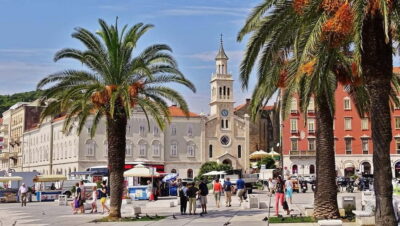
Diocletian’s Palace and Old Town SMALL GROUP Walking Tour
Read our review →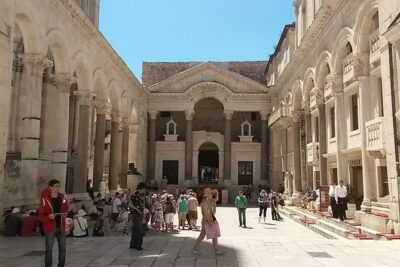
Browse the lists this tour appears in