
REVIEW · SEOUL
Gyeongbokgung Palace & Bukchon Village Walking Tour
Seoul’s royal past fits neatly into one memorable walk. This 2.5-hour tour pairs Gyeongbokgung Palace, Korea’s grandest Joseon-era palace, with the narrow lanes and traditional homes of Bukchon Hanok Village. A local guide adds context that can make the architecture and royal grounds much easier to understand.
I especially like the combination of major sights and close-up neighborhood walking. I also like that the Gyeongbokgung entrance ticket is included, so you are not left sorting out admission on your own. The main consideration is the pace: two and a half hours is enough for an introduction, but not enough for a slow, detailed visit to every corner.
Key Points to Know Before Booking
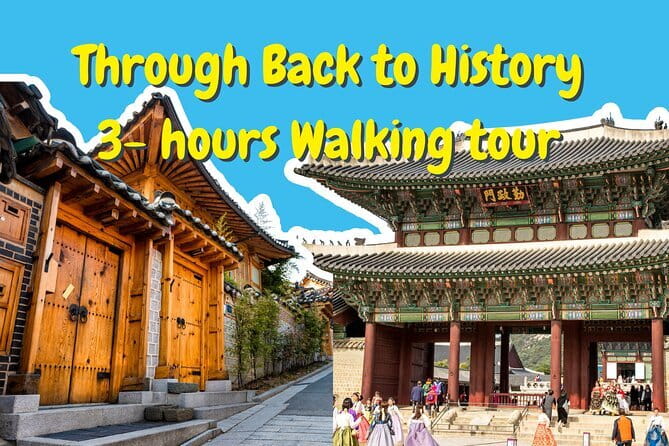
- Gyeongbokgung was built in 1395: You will visit the first and largest palace of the Joseon Dynasty, once home to Korea’s kings and queens.
- Geunjeongjeon Hall and Gyeonghoeru Pavilion are highlights: These are among the most striking structures for architecture, photographs, and historical context.
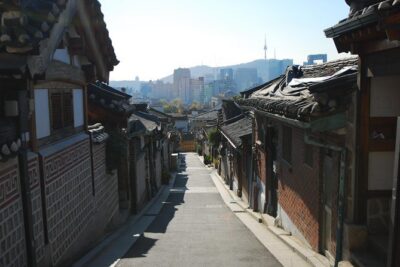
- Bukchon adds a completely different setting: Its traditional hanok homes and steep alleyways offer a closer look at old Seoul beyond formal palace grounds.
- A local guide leads the walk: The tour is designed to make Korean history easy to follow, especially for first-time visitors.
- The group is capped at 10 people: This is small enough to feel more personal than a large city tour.
- The price is $62.89 per person: Palace admission is included, but transportation, food, insurance, and personal spending are not.
Why This Two-Part Seoul Walk Works
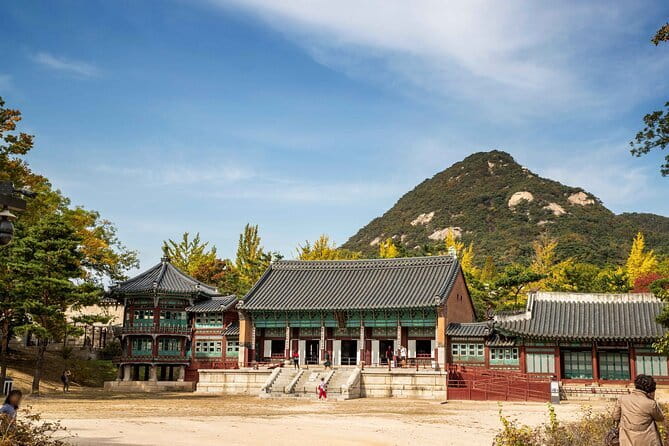
Gyeongbokgung and Bukchon are close enough to combine, yet they show different sides of Seoul. The palace presents Korea through royal ceremonies, ordered courtyards, monumental gates, and carefully planned gardens. Bukchon feels more intimate, with residential lanes and tiled roofs packed into the hills between Gyeongbokgung Palace and Changdeokgung Palace.
That contrast gives the tour a clear rhythm. You begin with the scale and ceremony of the Joseon court, then move into the smaller details of traditional urban life. I find that pairing more useful than visiting either place alone because the palace explains the power of the dynasty, while Bukchon helps you picture how Korean architectural traditions continued into daily life.
The tour lasts about two hours and 30 minutes. That is a practical length for a first introduction, especially if you are fitting several Seoul sights into one day. It is long enough to see the main highlights without turning into an exhausting half-day commitment.
Still, you should keep your expectations in check. This is a guided overview, not a full palace study or a photography workshop. If you want extensive time in the gardens, a slower look at every building, or a long stay in Bukchon’s lanes, you will likely want to return on your own.
More Gyeongbokgung and Seoul Palace Tours in Seoul:
- Seoul: Gyeongbok Palace, Bukchon Village, and Gwangjang Tour
★ 4.9 · 2,321 reviews - Best Seoul City Tour (Gyeongbokgung Palace,Insadong,Namsan Tower)
★ 5.0 · 1,647 reviews - Seoul City Sightseeing Tour Including Gyeongbokgung Palace, N Seoul Tower, and Namsangol Hanok Village
★ 5.0 · 1,423 reviews
Entering Gyeongbokgung, Seoul’s Royal Center
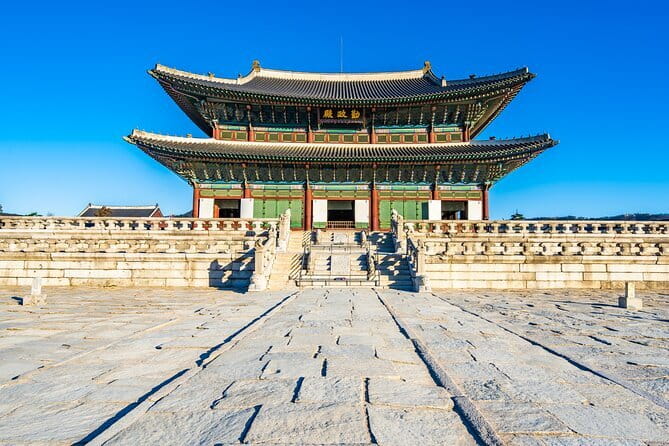
Gyeongbokgung was built in 1395 and served as the primary residence of the Joseon kings and queens. Its name means Palace Greatly Blessed by Heaven, a hopeful title tied to prosperity and good fortune.
The palace is the natural anchor of the experience. Its broad grounds and formal buildings give you an immediate sense of royal authority. Instead of encountering isolated structures without context, you can follow the layout as part of a working court where rulers governed the country.
A guide is particularly useful here. Palace architecture can look beautiful while its purpose remains unclear. The right explanation helps you understand why one hall mattered for official business, why another building served a different role, and how courtyards and pavilions fit into court life.
Geunjeongjeon Hall is one of the main sights. Its name is associated with diligent governance, making it a fitting place to discuss the duties of the king and the political life of Joseon. The building also gives you the grandest sense of ceremony within the palace grounds.
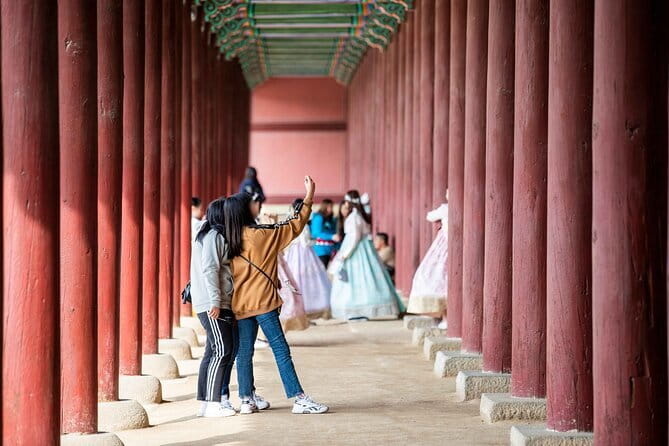
Gyeonghoeru Pavilion offers a different view. Set beside water, it shows the more graceful side of royal design, with a structure intended for formal gatherings and special occasions. It is also one of the strongest photo locations on the route.
The palace’s pavilions and gardens show the careful balance found in traditional Korean design. You will see open space, strong rooflines, painted details, and buildings arranged to frame one another. The result is impressive without relying only on size.
For photographs, allow your guide’s explanations to shape your stops. The best images are not limited to the largest gate or hall. A pavilion reflected in water, a roof edge against the sky, or a quiet garden view can say more about the place than a hurried collection of snapshots.
The palace portion also gives first-time visitors a helpful introduction to Korean history. One short review described the experience as a great way to learn about Korea while taking photos, and that is a fair description of the tour’s main appeal. You do not need prior knowledge to follow the story.
From Royal Grounds to Bukchon’s Hanok Lanes
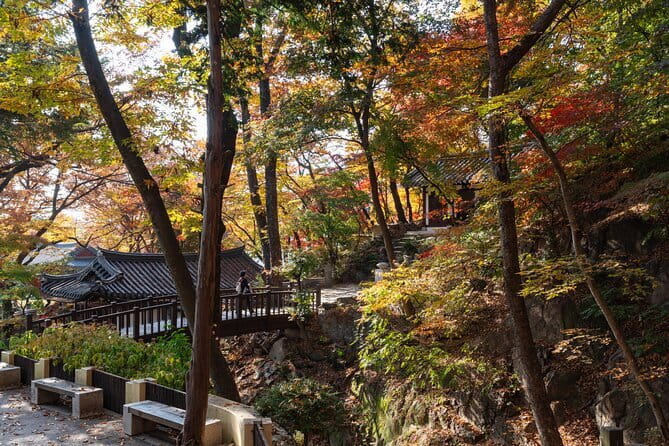
Bukchon Hanok Village changes the mood. The palace is formal and spacious. Bukchon is closer, more residential in feel, and shaped by narrow alleyways that climb through the neighborhood.
The village is known for its hanok, traditional Korean houses with distinctive rooflines and carefully arranged wooden details. Walking through the area lets you see how traditional design works at a smaller scale. Here, the interest comes from doors, walls, roof angles, lane views, and the way old-style homes fit into modern Seoul.
Bukchon sits between Gyeongbokgung Palace and Changdeokgung Palace. That location helps explain why the area mattered historically. It was close to the royal center, and its architecture still gives the neighborhood a strong connection to Seoul’s past.
This part of the tour is especially good for visitors who want more than grand monuments. The village offers many places for photographs, but its value is not only visual. The lanes help you notice how a neighborhood differs from a palace compound. The palace was designed to project order and authority. Bukchon shows domestic architecture and everyday scale.
The trade-off is that the village is not a museum frozen outside modern life. It is an urban area, and the experience is based on walking through its alleys rather than entering a series of major attractions. Some visitors may prefer the palace’s clearer route and formal buildings. Others will find Bukchon more relaxed and personal.
The available feedback gives Bukchon strong praise for its calm atmosphere and photo spots. I would treat that as a reason to bring your camera, but not as a promise of complete quiet. The tour description presents it as a peaceful cultural break in central Seoul, while the village itself remains part of an active city.
A guide can help you read details that you might otherwise pass without noticing. You may see a traditional roof and admire its shape, but an explanation of the house style or local heritage can turn a quick photograph into a more meaningful stop.
What a 10-Person Group Means
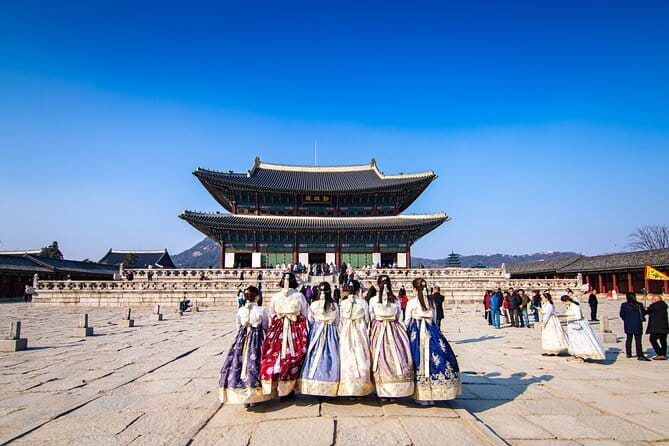
The maximum group size is 10 people. That is a useful middle ground. You get the energy and efficiency of a guided group, but the number is small enough that the guide should be easier to hear and questions should be more manageable.
Small groups matter most in Bukchon. Narrow lanes are less comfortable with a large crowd, and a compact group makes it easier to keep moving without blocking the route. It also suits a tour built around short explanations and frequent photo stops.
The tour description does not name the guide, so you should not book expecting a particular person. What is clear is that the guide’s role is central. The strongest praise focuses on making the history easy to understand, which is important for anyone visiting Korea for the first time.
Three brief comments describe the experience as a strong introduction to Korea, an easy way to understand Gyeongbokgung, and a pleasant look at a different side of Seoul. Those points suggest the tour works best as an orientation. It gives you a useful framework for later visits rather than attempting to cover every detail in one outing.
More Palace Walking Tours in Seoul:
- Seoul: Gyeongbok Palace and Bukchon Hanok Walking Tour
★ 4.8 · 157 reviews - Best Walking Tour to Gyeongbok Palace Bukchon Hanok Village
★ 5.0 · 138 reviews - Walking Tour with Gyeongbokgung Palace, Bukchon, Insadong
★ 5.0 · 5 reviews - Seoul: Deoksugung Palace Heritage Walking Tour
★ 4.9 · 5 reviews
Price, Tickets, and What You Still Pay For
At $62.89 per person, this is not the cheapest way to walk around the two areas. The value depends on how much you want a guide to connect the places and explain the history.
The included Gyeongbokgung entrance ticket removes one direct cost and one small task. You will not need to arrange palace admission separately as part of the tour. The local guide is the other major part of the price, since the experience is built around interpretation rather than simply following a route.
Transportation is not included. Meals, insurance, and personal expenses are also your responsibility. Since this is a walking experience near public transportation, you should plan your route to the meeting point and decide how you will reach your next stop afterward.
The price makes the most sense for a first visit, a short Seoul stay, or anyone who prefers having local context at major cultural sites. If you are comfortable reading about Joseon history in advance and exploring independently, you may find the cost harder to justify. If you want an efficient introduction with palace admission handled, it is easier to see the value.
Timing, Comfort, and Practical Limits
Most travelers can participate, and the tour is listed near public transportation. The information does not give a specific meeting point, route length in distance, or accessibility details, so you should confirm those points before booking if they matter to you.
You should expect steady walking for about two and a half hours. Bukchon’s lanes may include slopes and uneven sections, though the exact route is not specified. Comfortable shoes are a sensible choice, and you should plan around the weather because much of the experience takes place outside.
The short duration is both a strength and a limit. You can fit this tour into a busy Seoul schedule, perhaps alongside another nearby attraction. But you should not expect a complete exploration of both districts. The guide will need to keep the group moving between the palace highlights and Bukchon’s key lanes.
Booking tends to happen about 19 days ahead on average. That suggests you should not leave it until the last moment if your schedule is fixed, particularly because confirmation is subject to availability and may arrive within 48 hours of booking.
Free cancellation is available up to 24 hours before the start time for a full refund. Cancellations or changes made less than 24 hours before the start are not accepted for a refund. The tour also requires a minimum number of participants, and if that minimum is not met, you will be offered another date or experience, or a full refund.
Who Will Get the Most From This Tour?
I would recommend this experience most strongly to first-time visitors to Seoul. The tour gives you two famous places, a basic understanding of Joseon Korea, and a sense of how royal architecture connects with traditional neighborhood design.
It also suits you if you enjoy taking photographs but want more than a photo stop. Gyeonghoeru Pavilion, the palace halls, and Bukchon’s alleys provide plenty of visual variety. The guide’s explanations can help you choose meaningful details instead of rushing from one familiar view to the next.
This may not be the best choice for repeat visitors who already know Gyeongbokgung and Bukchon well. It may also feel brief if your main goal is quiet, independent exploration. The structure is built for highlights and orientation, not a full day of wandering.
Families and mixed-interest groups may find the format useful because the route combines history, buildings, gardens, and photo opportunities. The small group limit also makes the experience less unwieldy than a large coach-style city tour, though the tour itself does not include transportation.
Should You Book the Gyeongbokgung and Bukchon Walk?
Book it if you want an efficient first look at Seoul’s royal center and traditional neighborhood culture, especially if you prefer a guide to explain what you are seeing. The included palace admission, small group size, and practical 2.5-hour length give the tour a clear purpose.
Skip it if you want to explore slowly, spend a long time inside Gyeongbokgung, or walk Bukchon without a fixed schedule. You can visit both areas independently, but you will need to arrange the ticket, route, and historical background yourself.
For most first-time visitors, this is a sensible introduction rather than a definitive tour. It links two of Seoul’s most important cultural areas, keeps the schedule manageable, and makes the city’s past easier to grasp without taking over your entire day.
FAQ
How long does the tour last?
The tour lasts approximately 2 hours and 30 minutes.
What locations does the tour visit?
It visits Gyeongbokgung Palace and Bukchon Hanok Village.
Is the Gyeongbokgung entrance ticket included?
Yes. The Gyeongbokgung entrance ticket is included in the tour price.
Is transportation included?
No. Transportation is not included.
Are meals included?
No. Meals are not included.
Is a tour guide included?
Yes. A tour guide leads the walking tour.
How many people can join the tour?
The tour has a maximum of 10 participants.
Is the tour near public transportation?
Yes. The experience is listed as being near public transportation.
Can most people participate?
Yes. The activity information states that most travelers can participate.
What is the cancellation policy?
You can cancel up to 24 hours before the start time for a full refund. Cancellations or changes made less than 24 hours before the start time are not accepted for a refund.
Just added around Seoul
- Small-Group Seoul Tour with Gyeongbokgung Palace (hotel pick-up)★ 5.0 · 68 reviews
- Seoul Private Tour Gyeongbok Palace Bukchon and Gwangjang Market★ 5.0 · 4 reviews
- Seoul Night Tour with Han River Cruise and Gyeongbokgung Palace★ 5.0 · 53 reviews
- Seoul Palace Morning Tour★ 4.5 · 53 reviews
- Seoul UNESCO Heritage Palace, Shrine, and More Tour★ 4.5 · 13 reviews
- Seoul Night Tour (Gwangjang Market, Royal Palace and Naksan Park)★ 5.0 · 92 reviews
- Seoul Royal Palace,Bukchon Hanok Village & Gwangjang Market Feast★ 4.5 · 16 reviews
- Gyeongbokgung palace family/group private photoshoot★ 5.0 · 10 reviews
Gyeongbokgung and Seoul Palace Tours, compared.
Gyeongbok Palace, Bukchon Village, and Gwangjang Tour
Read our review →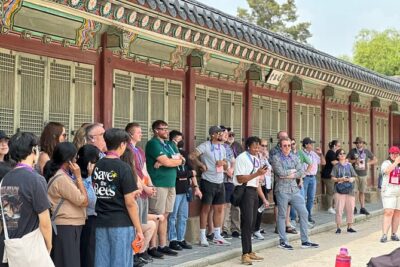
Best Seoul City Tour (Gyeongbokgung Palace,Insadong,Namsan Tower)
Read our review →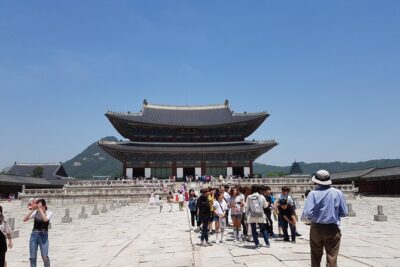
Seoul City Sightseeing Tour Including Gyeongbokgung Palace, N Seoul Tower, and Namsangol Hanok Village
Read our review →Gyeongbok Palace, Bukchon Village, and Gwangjang Tour
Read our review →
Seoul Half-Day City Highlight, Palace Tour with Hanbok
Read our review →
Hanbok Photoshoot and History Tour at Gyeongbokgung Palace
Read our review →Browse the lists this tour appears in