REVIEW · SEOUL
Seoul: Gyeongbokgung Palace Half day Tour
The palace tells Korea’s story. This two-hour visit makes Gyeongbokgung easier to understand, with an English-speaking guide explaining Joseon kings, royal buildings, architecture, and the animal statues placed around the grounds. I especially like the detailed English explanations and the chance to ask questions as you walk. The main thing to consider is the strict meeting policy: arriving late is not allowed, and the tour may be canceled if fewer than four people book.
I also like that admission is included in the $35 price, so you are paying for both entry and interpretation rather than simply walking through the gates alone. Guide Gabriela received special praise for going out of her way to find a guest who had gone to the wrong meeting point. Still, you need to leave a working Korean contact number or an active messaging account, since schedule and meeting details are sent by email or WhatsApp.
Key points at a glance
- Gwanghwamun Gate begins the story: Start at the palace’s grand southern entrance and learn how Gyeongbokgung fits into Seoul’s royal past.
- Six important royal buildings: See the throne hall, king’s office, royal sleeping quarters, queen’s quarters, and Gyeonghoeru pavilion.
- English explanations throughout: The guide connects architecture, royal routines, famous Joseon kings, and small animal statues.
- Two hours is a useful length: You get a focused palace visit without giving up an entire day in Seoul.
- Small-group uncertainty: The maximum is 20 people, but the tour can be canceled if fewer than four people sign up.
- Tuesday closure matters: Gyeongbokgung is closed on Tuesdays, with a Deoksugung night tour offered instead.
Why Gyeongbokgung is worth seeing with a guide
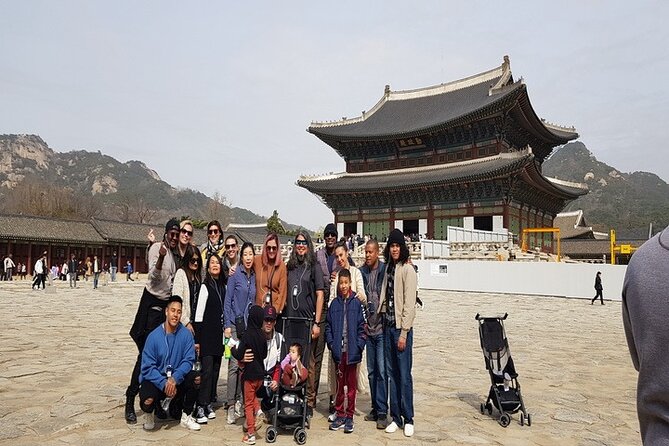
Gyeongbokgung Palace is not simply a set of attractive gates and painted wooden buildings. Built in 1394, it was the oldest and most important of Seoul’s five palaces and served as a central symbol of the Joseon dynasty. That context changes how you look at the site.
Without guidance, you can admire the tiled roofs, courtyards, and bright decorative details, but the buildings can begin to blur together. This tour gives each major structure a role. You learn where the king worked, where formal ceremonies took place, where the royal couple slept, and where court events were held.
I find that especially useful at a large palace complex. Gyeongbokgung covers enough ground to make a self-guided visit feel scattered. A guide gives you a route and a reason to pause at each stop, while the palace itself provides the setting.
The tour also addresses damage from the Japanese Colonial Period and the restoration work that has helped preserve the palace. That is an important part of the visit. You are not looking at an untouched royal compound, but at a place shaped by destruction, repair, and continuing efforts to protect Korea’s cultural heritage.
More Palace Day Trips in Seoul
- Seoul City Half Day Tour-Gyeongbok Palace Guard Changing Ceremony
★ 4.5 · 357 reviews - Full-Day Palace Tour in Seoul
★ 5.0 · 155 reviews - Seoul: Gyeongbokgung Palace Half Day Tour
★ 4.9 · 111 reviews
Meeting at the National Palace Museum
The tour begins at the National Palace Museum of Korea, at 12 Hyoja-ro in Jongno District. The end point is listed as 7-25 Tongui-dong, also in the palace area. Both locations are near public transportation, which makes this a practical choice if you are already sightseeing around central Seoul.
Pay close attention to the final meeting instructions. The operator sends the place and time by email or WhatsApp, and you need to provide your name plus a phone number or messaging account that works in Korea. A number that cannot receive messages in Korea can create a serious problem, especially because joining after the tour starts is not permitted.
This is one of those tours where arriving early is smart. One guest, according to the available account, went to the wrong meeting place, and guide Gabriela made an effort to find her. That is reassuring, but you should not count on a rescue. The group cannot wait for late arrivals without affecting everyone else.
Gwanghwamun Gate sets the royal scale
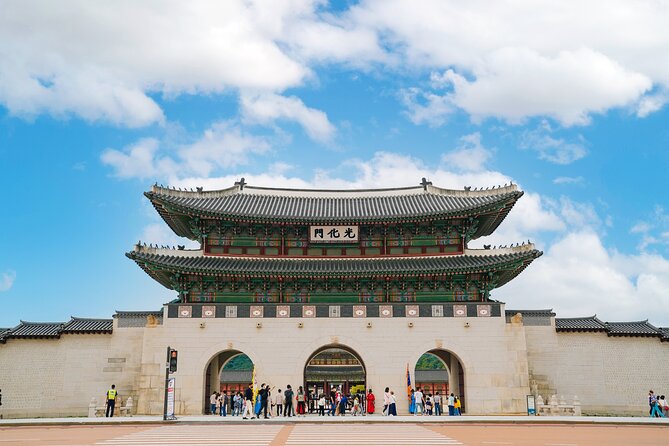
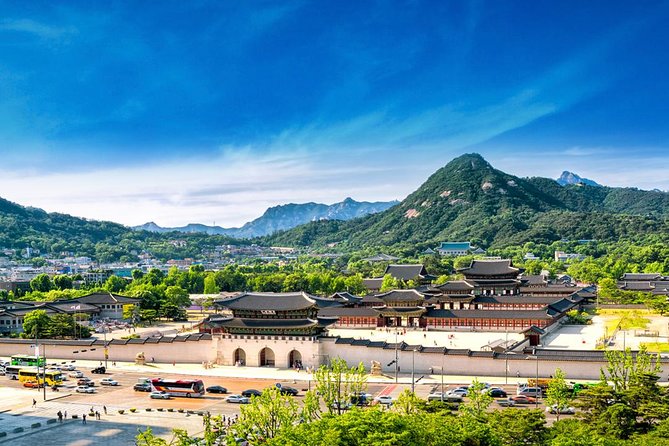
Your first named stop is Gwanghwamun Gate, the southern gate of Gyeongbokgung. It is a fitting beginning because the gate gives you an immediate sense of the palace’s scale and formal design.
Here, the guide can explain how the entrance relates to the royal compound and introduce the Joseon dynasty. The goal is not just to take a photograph at a famous Seoul landmark, but to understand why this gate served as the public face of the palace.
This opening stop should also help you get your bearings. Gyeongbokgung contains several major halls and courtyards, and the first explanation gives you a framework for the rest of the walk. If you are interested in architecture, listen for the details about the building forms and the symbolism found around the grounds.
Geunjeongjeon reveals the palace’s public side
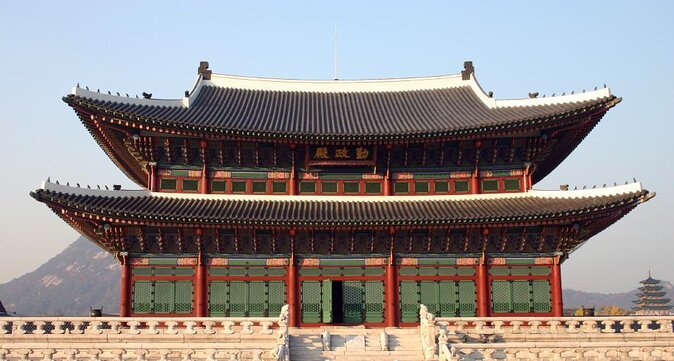
Geunjeongjeon, the main throne hall, represents the formal and ceremonial side of royal life. This is where the tour’s discussion of kings, court protocol, and palace architecture should become especially clear.
The building matters because it shows how the Joseon court presented authority. You can expect the guide to explain the hall’s function and point out visual details that are easy to miss when you are focused only on the broad roof and open courtyard.
I like this stop for visitors who want more than a photo opportunity. The throne hall helps connect the palace’s physical design with the political structure of Joseon. It also gives the visit a strong central point before you move into the more private parts of the royal compound.
Because the tour lasts about two hours, the stop will be focused rather than exhaustive. You will hear the main story and have a chance to ask questions, but this is not a full academic treatment of every period of the dynasty.
More Palace Day Trips in South Korea
- Seoul City Full Day Tour – Changdeok Palace (wearing Hanbok)
★ 5.0 · 55 reviews - Royal Palace, Full-day Seoul City Tour (Pick up & Drop off)
★ 5.0 · 53 reviews - Seoul: Full-Day Royal Palaces Private Tour
★ 4.9 · 33 reviews - Seoul Day Tour: Gyeongbok Palace, Bukchon, Gwangjang Market
★ 4.7 · 7 reviews
Sajeongjeon explains where the king worked
Sajeongjeon was the king’s office space, giving you a look at the daily business of government. This stop adds useful contrast to Geunjeongjeon. The throne hall was designed for public ceremony, while Sajeongjeon relates more closely to administration and decision-making.
I appreciate this kind of distinction because it makes the palace feel less like a collection of grand rooms. The guide can help you picture the difference between royal display and the work required to run the kingdom.
The stop is also a good place to ask specific questions. The tour encourages questions for the professional palace guide, so you can use this moment to clarify how the king’s working life differed from formal court events or private family life.
Gangnyeongjeon and Gyotaejeon show private royal life
The itinerary then moves to Gangnyeongjeon, the king’s bed-chamber, and Gyotaejeon, the queen’s bed-chamber. These rooms bring the palace closer to everyday royal life, even though the people who lived there belonged to an intensely formal court.
Seeing the king’s and queen’s quarters together helps you understand that the palace was both a workplace and a residence. Royal life was divided by rank, function, and custom, and the buildings reflect those divisions.
This part may appeal most to visitors who enjoy human stories. The guide discusses famous Joseon kings and the palace’s people, adding personality to a site that might otherwise feel ceremonial and distant.
You should keep your expectations sensible. The experience does not promise access to every room or a long discussion of court customs. It provides a guided look at the key royal quarters within a short visit. For most first-time visitors, that balance is useful.
Gyeonghoeru pavilion adds ceremony and setting
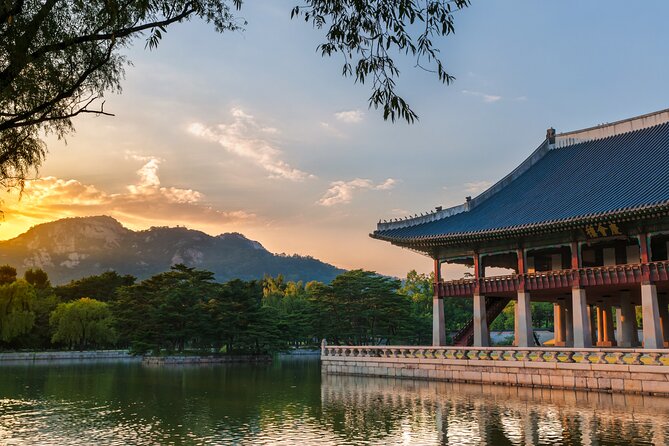
Gyeonghoeru pavilion, described as an event hall, closes the listed route. It represents the palace’s grander social and ceremonial functions, giving the tour a different mood from the offices and sleeping quarters.
The pavilion is also one of the places where architecture and setting work together. Your guide can explain how the building was used for events and point out features that might not be obvious from a quick glance.
This final stop gives the tour a natural finish. You have moved from the main gate, through public government spaces, into private royal quarters, and finally to a place associated with formal gatherings. That progression makes the palace easier to remember after you leave.
Look down and around for the animal statues
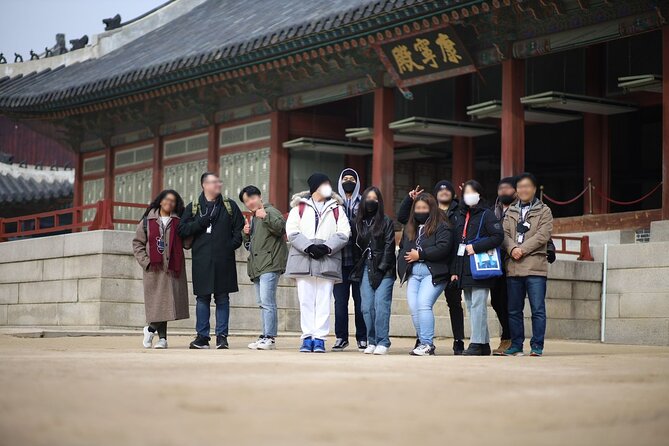
One of the more unusual features of this tour is its attention to animal statues placed throughout Gyeongbokgung. These small details are easy to overlook when you are concentrating on the largest halls.
I like this focus because it encourages you to slow down and look closely. A palace visit is not only about the most famous building in front of you. Decorative animals and other architectural details can tell you about symbolism, protection, status, and the way Joseon builders decorated important spaces.
The tour description does not list every animal or explain the meaning of each one in advance, so you should treat this as a reason to ask questions rather than a promised checklist. If you enjoy visual details, this may become one of the most memorable parts of the walk.
What $35 gets you
At $35 per person, this tour is priced for visitors who want interpretation without committing to a full-day private guide. Admission is included, which improves the value because you do not have to buy palace entry separately.
The real question is what the English guidance is worth to you. If you already know Joseon history and are comfortable reading information on your own, the price may feel less necessary. If you want the buildings explained in clear detail, the fee is easier to justify.
A two-hour length also helps with planning. You can fit the palace into a morning or afternoon and still have time for other sights in Seoul. The tradeoff is that the route will focus on the principal buildings rather than cover every corner of the compound.
The listed maximum is 20 people. That is not a tiny private tour, but it is limited enough to be workable if the group reaches its upper limit. The tour requires at least four participants, so there is some uncertainty until the operator confirms that the minimum has been met.
Practical details that affect your day
Gyeongbokgung is closed on Tuesdays. If your visit falls on that day, the operator says you can book a Deoksugung night tour instead. Check the date carefully before making other Seoul plans around this palace visit.
The tour requires good weather. If poor conditions force a cancellation, you will be offered another date or a full refund. This matters because the experience takes place outdoors across a palace complex, not in one enclosed museum room.
Pets are not allowed, and there is no special place to leave them. Recording or filming the tour is also not allowed, so plan to listen and take personal notes instead of treating the walk as a video production.
Most people can participate, and the palace is near public transportation. Still, the available information does not give detailed accessibility guidance, so you should contact the operator if you have specific mobility needs or questions about the walking route.
Cancellation is free up to 24 hours before the start time. Changes or cancellations inside that window are not accepted, except when the operator cancels for weather or failure to reach the minimum group size.
Who will get the most from this palace tour
I would choose this tour if you are visiting Seoul for the first time and want a clear introduction to Joseon history. It suits anyone who looks at a royal building and immediately wants to know what happened there, who used it, and why it was designed that way.
It is also a good fit for people who prefer asking questions to reading signs. The English explanations and direct access to a guide make the visit more personal than a quiet walk through the grounds.
Families, couples, and solo visitors can all fit the format, since most people can participate and the group size is capped at 20. The two-hour schedule works well if you want a focused cultural stop rather than an all-day palace study.
I would hesitate if you need a private, flexible schedule or want to film the entire visit. You also need to be organized about the meeting point and contact information. A private tour estimate is available by email, but it is not the same product as this shared experience.
Should you book the Gyeongbokgung Palace tour?
Book it if you want the palace to make sense, not just look beautiful. The strongest reasons are the detailed English explanations, the chance to ask questions, the included admission, and the route through the palace’s most important public and private buildings.
The praise for guide Gabriela also suggests a helpful, attentive approach, including an effort to locate a guest who went to the wrong meeting point. That is a welcome quality, though you should still arrive early and provide a working Korean contact number.
Skip it if you prefer exploring alone, need total flexibility, or cannot manage a fixed meeting time. Also avoid Tuesdays, and remember that the tour may be canceled if fewer than four people book.
For most first-time visitors, $35 is a fair price for a two-hour, English-guided introduction to Seoul’s most important palace. It gives you enough context to appreciate the architecture and enough time afterward to continue exploring Jongno.
FAQ
How long does the Gyeongbokgung Palace tour last?
The tour lasts approximately two hours.
Is palace admission included?
Yes. Admission to Gyeongbokgung Palace is included in the tour price.
What language is the tour conducted in?
The tour provides detailed explanations in English.
Where does the tour begin?
The meeting point is the National Palace Museum of Korea at 12 Hyoja-ro, Jongno District, Seoul.
Where does the tour end?
The listed end point is 7-25 Tongui-dong, Jongno District, Seoul.
Is Gyeongbokgung Palace open on Tuesdays?
No. Gyeongbokgung Palace is closed on Tuesdays. A Deoksugung night tour can be booked instead.
What happens if fewer than four people book?
The tour may be canceled if the minimum of four participants is not reached. You will be offered another date or experience, or a full refund.
Can I cancel for a full refund?
Yes. You can cancel at least 24 hours before the experience start time for a full refund. Changes or cancellations made less than 24 hours before the start time are not accepted.
More Gyeongbokgung and Seoul Palace Tours in Seoul
- Seoul: Gyeongbok Palace, Bukchon Village, and Gwangjang Tour
★ 4.9 · 2,321 reviews - Best Seoul City Tour (Gyeongbokgung Palace,Insadong,Namsan Tower)
★ 5.0 · 1,647 reviews - Seoul City Sightseeing Tour Including Gyeongbokgung Palace, N Seoul Tower, and Namsangol Hanok Village
★ 5.0 · 1,423 reviews - Seoul: Gyeongbok Palace, Bukchon Village, and Gwangjang Tour
★ 5.0 · 1,044 reviews
Just added around Seoul
- Small-Group Seoul Tour with Gyeongbokgung Palace (hotel pick-up)★ 5.0 · 68 reviews
- Gyeongbokgung Palace & Bukchon Village Walking Tour★ 5.0 · 3 reviews
- Seoul Night Tour with Han River Cruise and Gyeongbokgung Palace★ 5.0 · 53 reviews
- Seoul Palace Morning Tour★ 4.5 · 53 reviews
- Seoul Private Tour Gyeongbok Palace Bukchon and Gwangjang Market★ 5.0 · 4 reviews
- Seoul UNESCO Heritage Palace, Shrine, and More Tour★ 4.5 · 13 reviews
- Seoul Night Tour (Gwangjang Market, Royal Palace and Naksan Park)★ 5.0 · 92 reviews
- Gyeongbokgung palace family/group private photoshoot★ 5.0 · 10 reviews
Gyeongbokgung and Seoul Palace Tours, compared.
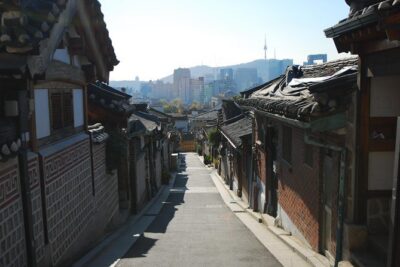
Gyeongbok Palace, Bukchon Village, and Gwangjang Tour
Read our review →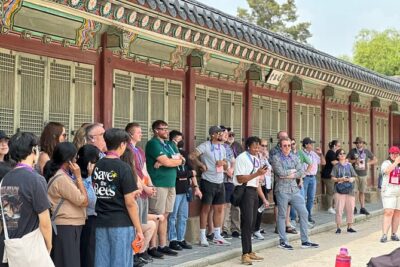
Best Seoul City Tour (Gyeongbokgung Palace,Insadong,Namsan Tower)
Read our review →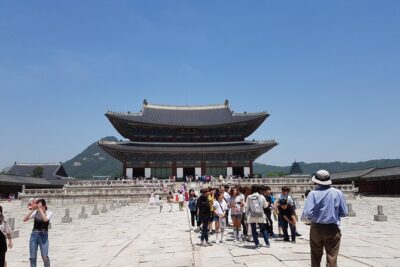
Seoul City Sightseeing Tour Including Gyeongbokgung Palace, N Seoul Tower, and Namsangol Hanok Village
Read our review →Gyeongbok Palace, Bukchon Village, and Gwangjang Tour
Read our review →
Seoul Half-Day City Highlight, Palace Tour with Hanbok
Read our review →