
REVIEW · SEOUL
Best Walking Tour to Gyeongbok Palace Bukchon Hanok Village
Seoul’s royal past is only a short walk away. This three-hour tour links Gwanghwamun Gate, Gyeongbokgung Palace, the National Folk Museum, Bukchon Hanok Village, and Insadong with a professional guide who explains how Korea’s past still shapes daily life. I especially like the small maximum of eight people and the chance to see the palace’s royal guard changing ceremony. The tour also includes entrance fees, which keeps the $88 price simple.
The main caution is the walking. Bukchon includes uphill streets and steps, and the palace grounds are broad. If you have trouble walking uphill or on stairs, this may feel demanding. Guide quality can also vary. Jay Kim, Stella, Joe, and Paul receive especially warm praise for clear stories and personal attention, while a few reviews describe guides who offered little detail.
Key points to know before booking
- The route connects Seoul’s major historic sights: You move from Gwanghwamun and King Sejong’s statue to the palace, museum, Bukchon, and Insadong.
- The group is capped at eight people: That makes it easier to hear the guide and ask questions than on a large coach tour.
- Gyeongbokgung includes the royal guard ceremony: The timing matters, so confirm the meeting details and arrive promptly.
- Guides make the biggest difference: Stella, Jay Kim, Joe, Jack, and Paul are praised for strong English, warmth, and detailed explanations, though experiences are not perfectly consistent.
- Bukchon is a real neighborhood: You see traditional houses alongside ordinary city life, but you must respect residents and expect hills.
- The tour finishes in Insadong: That gives you an easy place to continue with food, shops, and traditional crafts after the formal tour ends.
Why this is a smart first look at Seoul
I like this tour because it gives you a clear starting point for Seoul. You do not spend three hours looking at one building in isolation. Instead, the route joins royal power, Korean language, folk culture, residential architecture, and modern city life.
That connection matters. Gyeongbokgung Palace shows how the Joseon royal court worked. The National Folk Museum adds ordinary objects and customs. Bukchon then brings traditional homes into a neighborhood where people still live. By the end, you have a more useful picture of Korea than you would get from a palace visit alone.
The guide is central to the experience. A good guide can explain why the palace was built, how its buildings were used, and how Korean history changed over time. Several guides have received especially strong praise. Stella is described as warm, enthusiastic, and excellent in English. Jay Kim is praised for linking palace history to Seoul’s wider story. Joe is noted for answering questions with pictures and facts, while Paul has been praised for history, culture, language, food suggestions, and extra help during private-feeling tours.
The record is not perfect. One guide was criticized for sending questions back to Google or YouTube, and another was described as monotone and unfocused. That does not cancel out the many strong experiences, but it is worth understanding. You are booking a tour company, not a specific guide, unless the booking process allows you to request one.
More Gyeongbokgung and Seoul Palace Tours in Seoul:
- Seoul: Gyeongbok Palace, Bukchon Village, and Gwangjang Tour
★ 4.9 · 2,321 reviews - Best Seoul City Tour (Gyeongbokgung Palace,Insadong,Namsan Tower)
★ 5.0 · 1,647 reviews - Seoul City Sightseeing Tour Including Gyeongbokgung Palace, N Seoul Tower, and Namsangol Hanok Village
★ 5.0 · 1,423 reviews
Meeting in central Seoul and finding your bearings
The listed starting point is 24-1 Taepyeongno 2(i)-ga in Jung District. The area is near public transportation, but you should allow enough time to find the guide. A small group can be hard to spot in a busy central district, so look for the meeting instructions and any identifying message from the guide.
One useful detail comes from Jay Kim’s tour: he sent a message describing what he was wearing, which made him easier to find. That kind of simple preparation is valuable in Seoul, where large streets, station exits, and crowds can make a meeting point less obvious than it sounds.
The tour finishes at 75-5 Insa-dong in Jongno District. This is a practical ending point. You are not returned to the original meeting spot, so plan your day around continuing from Insadong rather than going back across the city.
Gwanghwamun and the King Sejong statue
The walk begins with Seoul’s past and present side by side. Gwanghwamun Gate introduces the palace district, while the King Sejong statue points to one of Korea’s best-known rulers and the development of the Korean alphabet.
This opening gives the guide a chance to set the scene before you enter Gyeongbokgung. The area is also useful for photographs and orientation. You get a sense of how the royal center fits into the modern capital, instead of seeing the palace as a disconnected museum compound.
The historical background is one of the tour’s most praised features. Strong guides explain Joseon Dynasty events in a way that connects rulers, architecture, language, and everyday life. Jack, for example, has been praised for returning to earlier points as the walk continues, helping you link separate sights into one story.
Do not expect a quiet, private setting here. Seoul traffic, pedestrians, and city activity are part of the scene. That contrast is actually useful. The old royal entrance is not hidden away from modern Seoul. It sits right in the middle of it.
Gyeongbokgung Palace and the royal guard ceremony
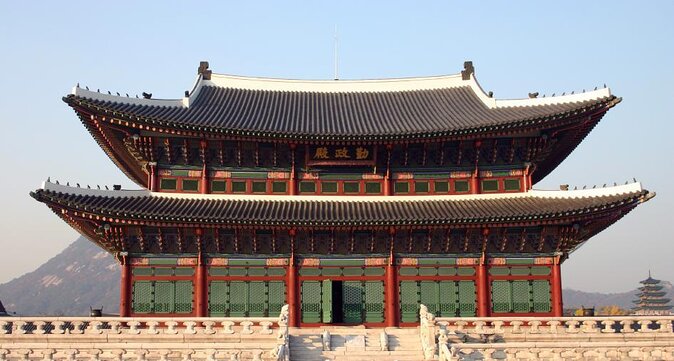
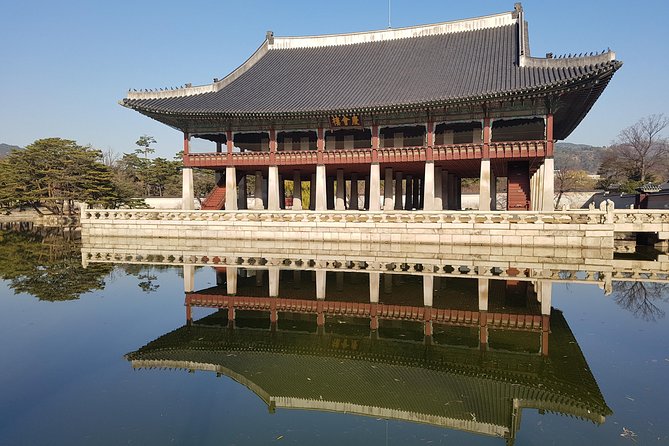
Gyeongbokgung is the main stop, with about one hour scheduled inside the palace grounds. The admission fee is included, so you do not need to handle that separately once the tour begins.
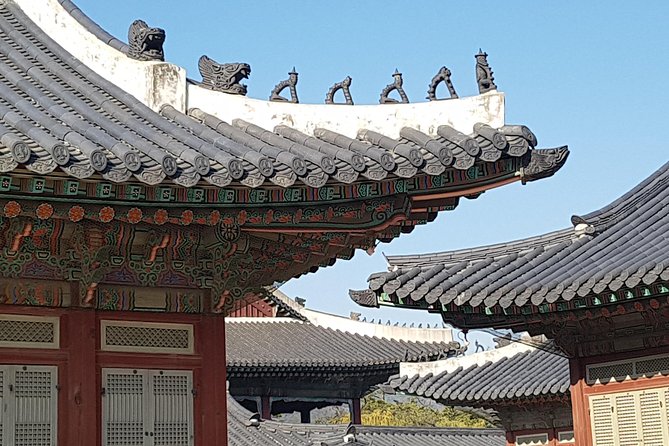
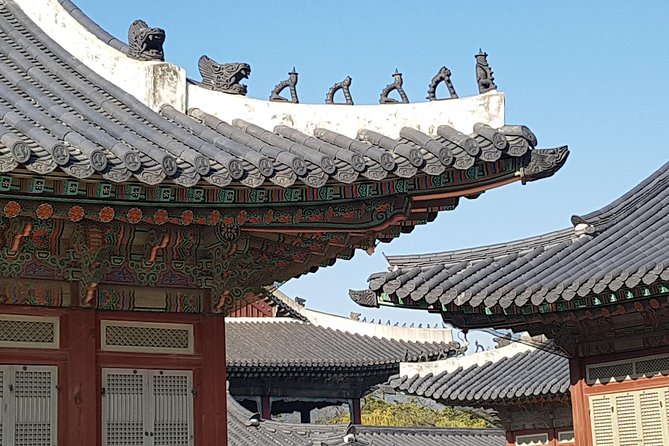
The palace offers more than grand gates and wide courtyards. Your guide explains the Joseon Dynasty, traditional construction methods, and how the royal complex functioned. The value is in the detail. Rooflines, courtyards, painted decoration, and the arrangement of buildings make more sense when someone explains their purpose.
The royal guard changing ceremony is another major reason to choose this outing. It adds movement and color to the palace visit, but timing is important. Since the tour schedule is only approximate, the exact ceremony timing may depend on the day’s route and conditions. Arrive on time and avoid assuming you can join late without missing it.
One hour is enough for a strong introduction, but not enough for every corner of the palace. If you want a slow, photography-heavy visit or plan to inspect each building, you will probably want to return on your own. This tour is designed to give you context and the main sights, not to replace a full day at Gyeongbokgung.
The palace grounds also involve a fair amount of walking. Comfortable shoes are essential. Several accounts specifically advise practical clothing and footwear, and that advice is more useful than dressing for a perfect palace photograph. You will enjoy the architecture more if your feet are not complaining.
More Palace Walking Tours in Seoul:
- Seoul: Gyeongbok Palace and Bukchon Hanok Walking Tour
★ 4.8 · 157 reviews - Walking Tour with Gyeongbokgung Palace, Bukchon, Insadong
★ 5.0 · 5 reviews - Seoul: Deoksugung Palace Heritage Walking Tour
★ 4.9 · 5 reviews - Gyeongbokgung Palace & Bukchon Village Walking Tour
★ 5.0 · 3 reviews
The National Folk Museum and everyday Korean life
The National Folk Museum of Korea adds an important change of scale. At the palace, the focus is royal space. At the museum, you see artifacts that explain how people lived, worked, and practiced traditions. The collection includes more than 98,000 artifacts, giving the guide plenty of material for explaining ordinary Korean life.
This stop is particularly helpful if you know little about Korea. It can be difficult to understand a royal court without knowing what daily life looked like outside it. The museum helps bridge that gap.
The exact balance of palace grounds and museum time can depend on the guide and the group’s pace. If you care most about the museum, tell your guide early. If you care most about architecture and photographs, make that clear too. A small group makes this kind of conversation easier.
Several highly rated tours included extra explanations of Korean culture, language, food, and customs. Paul was specifically praised for discussing the Korean language near the place where it was developed, while other guides used personal stories and pictures to make history easier to follow. Those details can turn a standard palace walk into a more memorable lesson.
Walking from the palace to Bukchon Hanok Village
The route continues toward Bukchon Hanok Village, the section that most clearly tests your stamina. About 30 minutes is listed for the village, though the entire transition includes city streets, hills, and stops along the way.
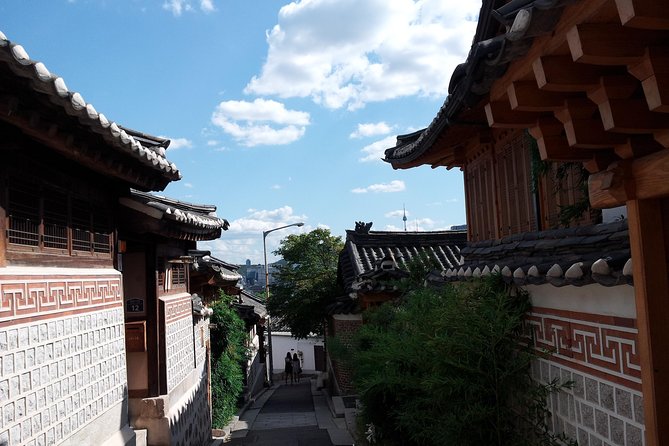
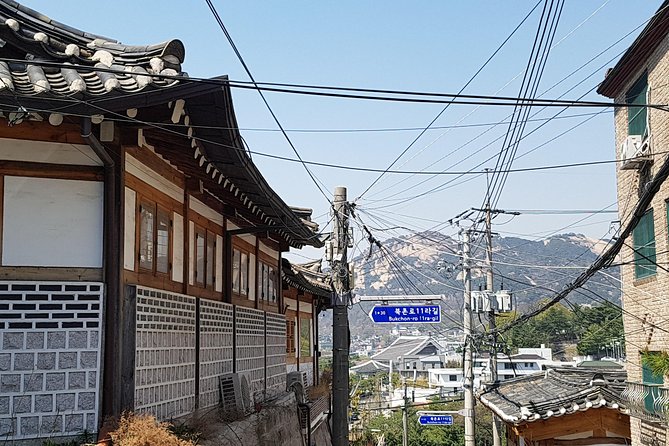
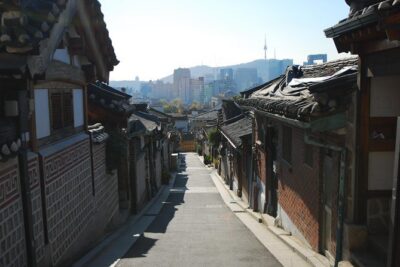
Bukchon is known for traditional Korean houses, called hanok. Their tiled roofs, wooden details, and compact lanes offer a sharp contrast to Seoul’s modern towers. The appeal is not just the buildings. You also see a lived-in neighborhood rather than a sealed historic site.
That point comes with a responsibility. Bukchon is a residential area. Keep your voice down, do not block narrow lanes, and treat doorways and private homes as private. The guide can help you understand what you are seeing, but no tour can turn someone’s neighborhood into a theme park.
The uphill sections are the biggest physical issue. The route includes steps and inclines, and the pavement may be uneven. The tour is not recommended for people with walking difficulty on stairs or hills. A moderate level of fitness is expected, so wear supportive shoes and consider the weather before booking.
The village visit can feel brief if you want extensive browsing or photographs. On the other hand, the shorter stop keeps the tour moving and leaves you with time in Insadong afterward. If Bukchon is your top priority, you may want to return independently for a longer visit.
Finishing in Insadong
The final destination is Insadong, an area known for traditional shops, food, and cultural sights. The tour does not promise a meal, but several guides have offered restaurant suggestions, street food stops, or recommendations for continuing the day. Joe was praised for ending with a typical Korean meal recommendation, and Paul helped one solo participant find street food and a seafood restaurant.
Those extras are not guaranteed, so treat them as a bonus rather than part of the formal package. The useful point is that the tour ends in an area where you can easily continue exploring. If you are hungry, you can stay nearby instead of spending time crossing Seoul to find your next activity.
This ending also gives you a natural chance to ask follow-up questions. After three hours of palace and neighborhood history, you may have a better idea of what you want to see next, from more royal sites to food markets or shopping streets.
What the $88 price really gets you
At $88 per person, this is not the cheapest way to walk around Gyeongbokgung. You could enter the palace independently and explore the surrounding area for less. The question is what you value.
The price includes a professional guide and the palace admission fee. More importantly, it buys structure. You do not need to research the Joseon Dynasty before arriving, work out how the palace relates to Bukchon, or spend time deciding which buildings matter most.
The maximum group size of eight is also meaningful. A guide can usually answer questions more easily in a small group, and you are less likely to lose the thread of the explanation. Some bookings have even turned into private tours when no one else joined, although that should not be expected.
The tour is commonly booked about 30 days in advance, which suggests that planning ahead is sensible. The overall rating is 4.8 from 138 reviews, with 97 percent recommending it. Those figures are strong, but the mixed guide experiences mean you should book for the route and small group first, then hope for one of the especially praised guides.
Practical advice for a better three hours
I would schedule this early in your Seoul stay. The tour explains landmarks you may pass again, and the guide’s recommendations can help shape the rest of your visit.
Keep these points in mind:
- Wear comfortable shoes with good support.
- Bring clothing suitable for several hours outdoors.
- Expect steps, uphill streets, and steady walking.
- Arrive early at the central Seoul meeting point.
- Keep your group small and quiet in Bukchon.
- Leave time after the tour for Insadong.
- Ask questions. The best guides clearly enjoy explaining history and culture.
- If you have mobility concerns, choose a less demanding activity.
The experience requires good weather. If poor weather cancels the tour, you are offered another date or a full refund. You can also cancel for a full refund up to 24 hours before the start time. Changes or cancellations inside that window are not accepted.
Who should book this tour?
I would recommend it to a first-time visitor who wants Seoul’s main historic sights explained in plain English. It suits couples, families, and small groups who prefer conversation over a large bus tour. It also works well for a short stay because it covers several important places in three hours.
Families may appreciate the pace and stories, especially with a lively guide. One parent specifically noted that a child stayed interested throughout the tour. Solo visitors can also benefit from the small format, particularly if the group happens to be tiny.
I would hesitate if you want a slow, independent palace visit, dislike hills, or need a guaranteed specific guide. Bukchon is not flat, and the tour cannot cover every palace building in one hour.
For most first-time visitors, though, this is a useful introduction. The best version of the experience comes with a guide who explains the details, answers questions, and connects the palace to modern Korean life. If you book, arrive ready to walk, listen, and keep exploring after the tour ends in Insadong.
FAQ
How long is the Gyeongbokgung and Bukchon tour?
The tour lasts approximately three hours.
What is included in the price?
A professional guide and the admission fee are included.
Where does the tour start?
It starts at 24-1 Taepyeongno 2(i)-ga in Jung District, Seoul.
Where does the tour finish?
The tour finishes at 75-5 Insa-dong in Jongno District, in the Insadong area.
How large is the tour group?
The activity has a maximum of eight participants.
Is the tour suitable for people with walking difficulty?
The tour requires moderate physical fitness and is not recommended for people who have difficulty walking on steps and uphill streets.
What happens if the weather is poor?
If poor weather causes the tour to be canceled, you will be offered another date or a full refund.
Just added around Seoul
- Small-Group Seoul Tour with Gyeongbokgung Palace (hotel pick-up)★ 5.0 · 68 reviews
- Gyeongbokgung Palace & Bukchon Village Walking Tour★ 5.0 · 3 reviews
- Seoul Night Tour with Han River Cruise and Gyeongbokgung Palace★ 5.0 · 53 reviews
- Seoul Palace Morning Tour★ 4.5 · 53 reviews
- Seoul Private Tour Gyeongbok Palace Bukchon and Gwangjang Market★ 5.0 · 4 reviews
- Seoul UNESCO Heritage Palace, Shrine, and More Tour★ 4.5 · 13 reviews
- Seoul Night Tour (Gwangjang Market, Royal Palace and Naksan Park)★ 5.0 · 92 reviews
- Seoul Royal Palace,Bukchon Hanok Village & Gwangjang Market Feast★ 4.5 · 16 reviews
Gyeongbokgung and Seoul Palace Tours, compared.
Gyeongbok Palace, Bukchon Village, and Gwangjang Tour
Read our review →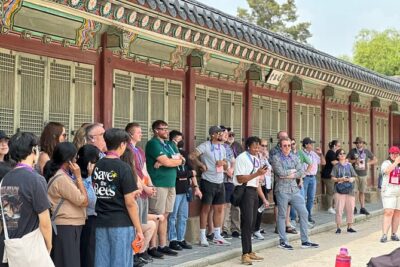
Best Seoul City Tour (Gyeongbokgung Palace,Insadong,Namsan Tower)
Read our review →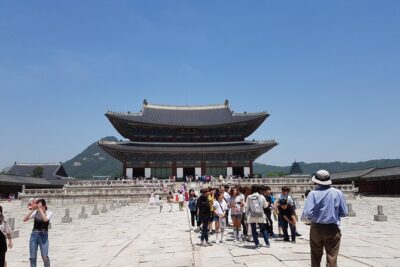
Seoul City Sightseeing Tour Including Gyeongbokgung Palace, N Seoul Tower, and Namsangol Hanok Village
Read our review →Gyeongbok Palace, Bukchon Village, and Gwangjang Tour
Read our review →
Seoul Half-Day City Highlight, Palace Tour with Hanbok
Read our review →
Hanbok Photoshoot and History Tour at Gyeongbokgung Palace
Read our review →Browse the lists this tour appears in