REVIEW · SPLIT
Split: Palace & Old Town Private Walking Tour-Entrance incl.
Ancient stone, living city. This private Split walking tour makes Diocletian’s Palace easier to understand, linking Roman ruins with the medieval and Venetian streets that grew around them. I like the small private format, limited to 10 people, and I like that entrance fees for the palace cellars, cathedral, and baptistery are included. The main consideration is the price: at $192 per person, this suits visitors who value personal guiding more than a budget group tour.
The 2.5-hour route covers a lot of ground, from the Riva promenade to Prokurative. You get a useful introduction to the palace, a look inside several major monuments, and a guided walk through squares, gates, markets, and streets that still serve as everyday Split. Some sites can close for church services or events, so the guide may need to adjust the route.
Key points to know before booking
- The Roman palace is still part of daily Split: You walk through streets and squares built inside and around Emperor Diocletian’s residence.
- Three important admissions are included: The palace cellars, Cathedral of Saint Domnius, and baptistery are covered in the price.
- A private group keeps the tour focused: The maximum group size is 10, with the route described as individually customizable.
- The route reaches many Old Town landmarks: Expect the Peristyle, Golden Gate, Fruit Square, Pjaca, Fishmarket, Marmontova Street, and Prokurative.
- The tour begins on the Riva: You meet near the bronze model of Split’s historic center, then enter through the palace’s south gate.
- Dinah receives a particularly warm mention: If she is available when you book, her name may be worth requesting.
Why Diocletian’s Palace works best with a guide
Split’s old center can look confusing at first. It is not a single preserved Roman monument sitting apart from modern life. It is a living district, with homes, shops, cafés, churches, and narrow lanes occupying the old palace complex.
That makes a guide useful. Without context, you might walk past an ancient column, a medieval wall, or a Venetian façade without knowing which period you are seeing. This tour gives you a basic timeline: Roman imperial residence first, Christian center later, and a medieval and Venetian town built into the remains.
The route begins beside the bronze model of the historic core on the Riva promenade. This is a smart meeting point because the model gives you a quick sense of the palace layout before you enter it. You can see how the main gates, central court, cellars, and outer walls relate to one another.
The tour is private, but the maximum group size is 10. That is small enough for questions and easier movement through narrow streets. It also gives the guide room to adjust the emphasis. If you care most about Roman architecture, religious buildings, or everyday Split, tell the guide early.
More Palace Walking Tours in Croatia
- Split: Old Town and Diocletian Palace Walking Tour
★ 4.9 · 4,727 reviews - Walking Tour of Split and Diocletian’s Palace
★ 5.0 · 2,588 reviews - Split & Diocletian’s Palace Walking Tour
★ 5.0 · 1,125 reviews
Entering through the south gate and palace cellars
From the Riva, you head to the south gate of Diocletian’s Palace. This route helps you picture the palace as a fortified residence connected to the sea, rather than as a collection of random ruins.
The palace cellars are one of the strongest parts of the experience. Their preserved shape mirrors important parts of the rooms above, giving you a sense of how the imperial complex was arranged. The cellars also help explain why parts of Roman Split remain visible today.
You spend about 20 minutes here. That is enough for a guided look without turning the tour into a long archaeological lecture. I would pay close attention to the guide’s explanation of the relationship between the cellars and the upper palace because that connection is easy to miss when you explore alone.
The cellars are included in the admission price, and skip-the-ticket-line access is listed as part of the experience. That matters on a busy day, when buying separate tickets could eat into a short walking tour.
The cellars may not suit anyone who dislikes uneven surfaces or confined historic interiors. The tour is only partly wheelchair accessible, although the route can be adapted if you tell the provider about mobility needs in advance.
The Peristyle and Diocletian’s imperial theater
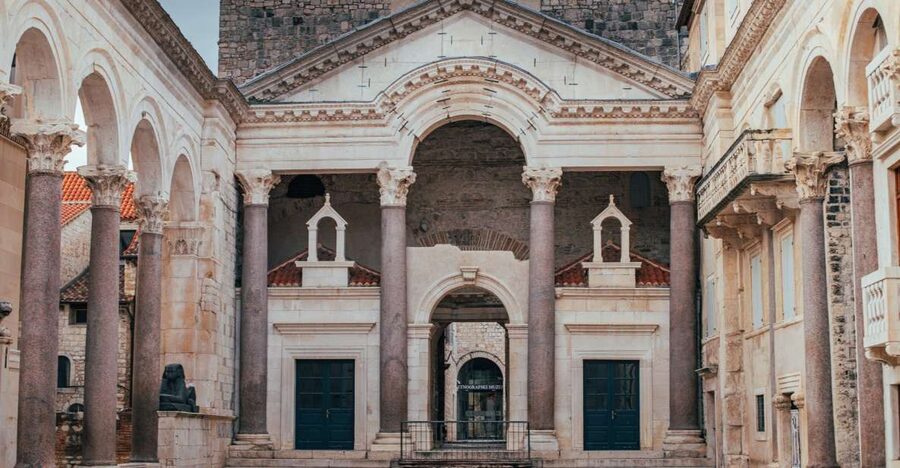
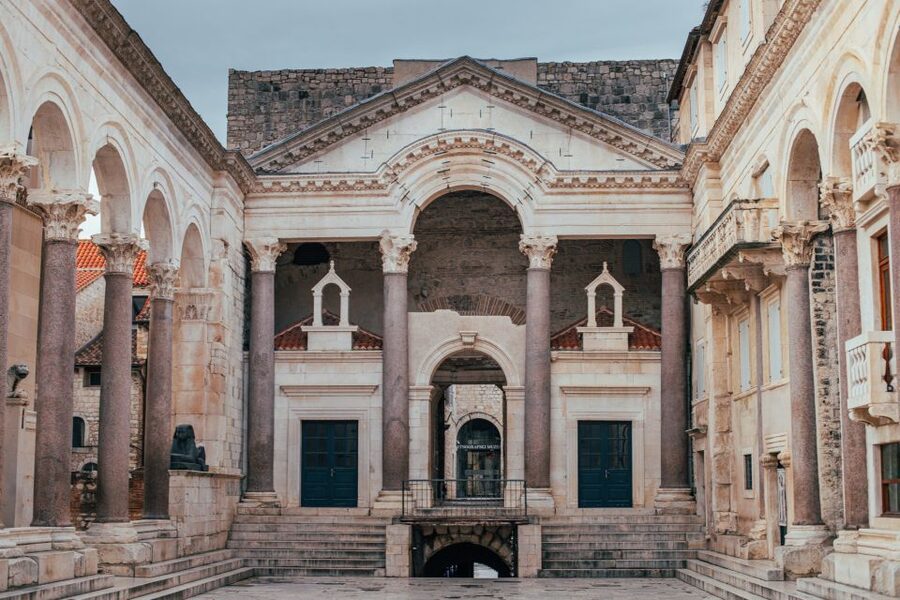
After the cellars, you climb steps toward the Peristyle, the palace’s grand central court. This is where the Roman setting becomes most dramatic. Emperor Diocletian presented himself here as the son of Jupiter, and his subjects worshipped him in that role.
The guide’s job here is not simply to name columns and arches. The important point is how power was staged. The Peristyle was designed for ceremony, display, and control. Standing in the court, you can better understand why the palace was both a residence and an imperial statement.
The itinerary allows about 10 minutes of guided attention at the Peristyle, with another 10-minute palace tour earlier in the route. That is a brisk pace, but it works if you want a broad introduction to Split rather than a specialist study of every stone.
You also see the Vestibul, a round entrance space that connected parts of the palace. The tour gives this stop around 10 minutes. Nearby, Triklinij receives a shorter explanation, about five minutes. These stops help fill in the palace plan, though you should expect brief visits rather than long independent exploration.
Cathedral of Saint Domnius and the former mausoleum
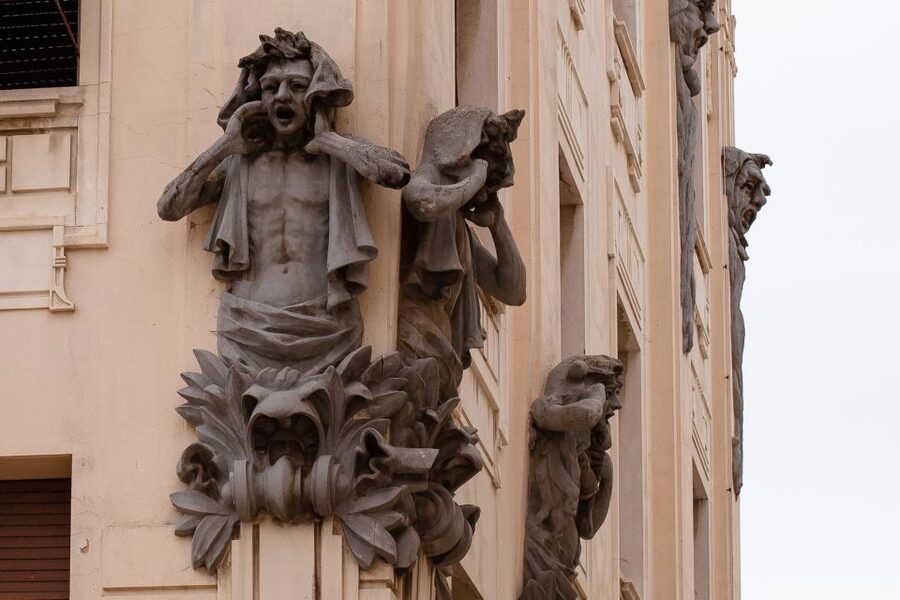
The Cathedral of Saint Domnius began as Diocletian’s mausoleum. During the Christianization of the Roman world, it was transformed into a church. That change gives the building an unusual story: a monument created for an emperor later became a Christian place of worship.
You spend about 20 minutes inside. The entrance fee is included, along with the baptistery. This is a real advantage because the cathedral is one of the tour’s key interiors, not just a sight viewed from outside.
The guide can help you read the building as two things at once: a Roman imperial structure and a Christian cathedral. That layered identity is one of the best reasons to take this walk. You are not just looking at an old church. You are seeing how later Split adapted and reused the architecture left behind by Diocletian.
Services or special events can affect access. If the cathedral, baptistery, or another included site cannot be entered, the entrance fee for that unavailable visit is refunded. The route may also change slightly.
More Palace Walking Tours in Split
- Split: Diocletian Palace & Old Town Guided Walking Tour
★ 4.7 · 882 reviews - Diocletian’s Palace and Old Town SMALL GROUP Walking Tour
★ 5.0 · 502 reviews - SPLIT-PRIVATE Walking Tour of Diocletian’s Palace & Old Town
★ 5.0 · 467 reviews - 90-min Diocletian Palace Walking Tour
★ 5.0 · 323 reviews
Jupiter’s Temple and the palace’s sacred spaces
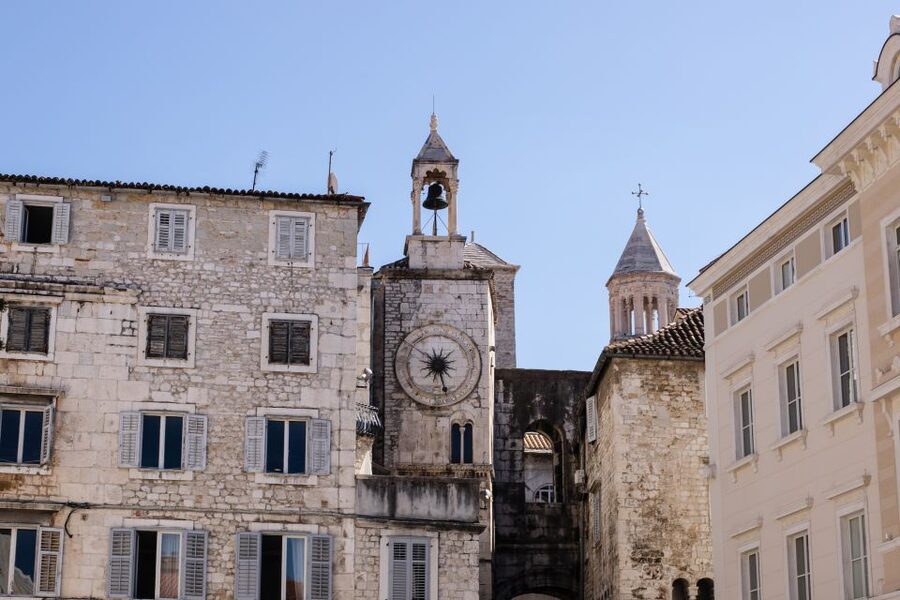
The Temple of Jupiter is another important interior stop. In Diocletian’s time, it was a sacred building. Today, the coffered ceiling is a major detail to watch for.
The visit lasts around 10 minutes. That sounds short, but it is enough to see the ceiling and hear why the temple mattered within the palace. A guide is especially helpful here because the building’s religious role changed over time, just as the mausoleum did.
I would not book this tour expecting long, quiet periods inside each monument. The strength is the connection between sites. You move from imperial ceremony to imperial burial, then to Roman worship, all within a compact area.
The included baptistery admission adds another religious site to the experience. Since the information provided does not specify a separate time allocation for the baptistery, your guide may combine it with the cathedral and Jupiter’s Temple portion of the walk.
The gates, squares, and medieval heart of Split
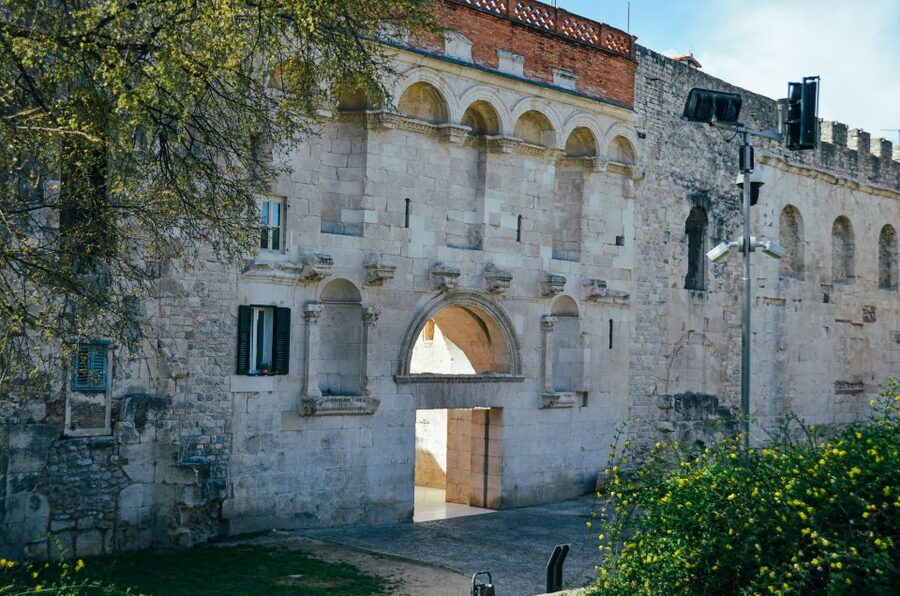
The tour then widens beyond the central palace. At the Silver Gate, you get a short guided explanation of one of the old entrances. The Golden Gate receives more time, about 10 minutes, and leads you toward the statue of Gregory of Nin.
The Golden Gate and Gregory of Nin help show how Split moved beyond its Roman beginnings. The route is not only about ruins. It follows the changing shape of the city, where later residents used, altered, and built around the palace.
Fruit Square is another useful stop. Its name points to its long connection with local trade, while the surrounding architecture shows how public spaces developed outside the strict Roman plan. The stop lasts about 10 minutes.
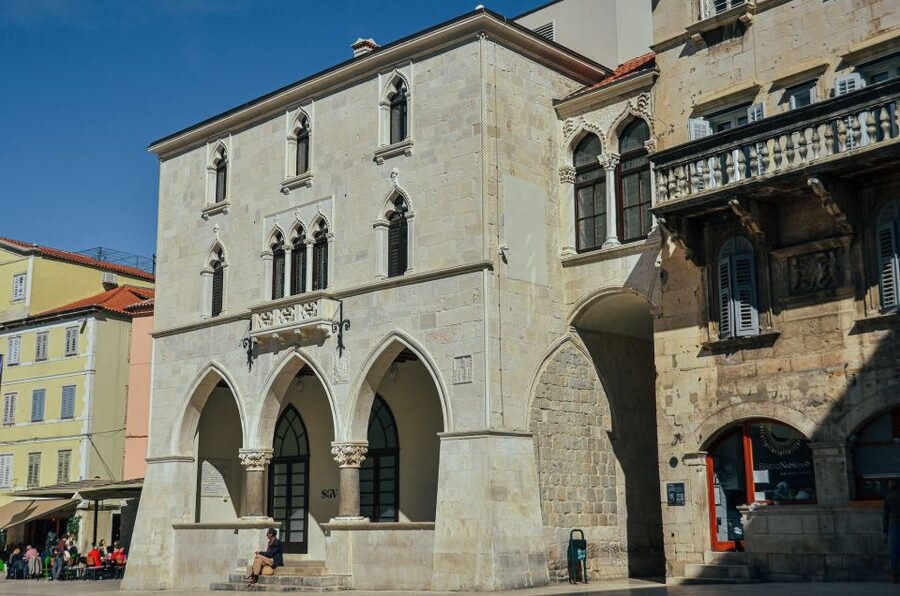
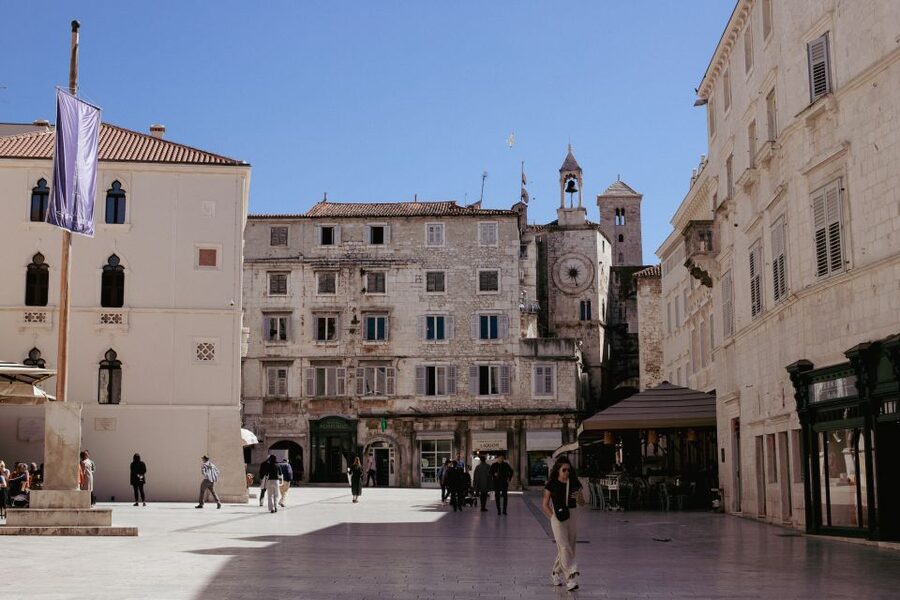
Then you reach Narodni trg, commonly called Pjaca. This square has been central to Split since the Middle Ages and is lined with Venetian palaces. The historic town hall is here too. I like this part of the route because it shifts your attention from emperors and ancient temples to the city that grew after Rome.
The City Lodge, or Loggia, gets a shorter five-minute explanation. It is another reminder that Split’s public life moved into formal civic spaces long after Diocletian’s palace was built.
From the Fishmarket to Prokurative
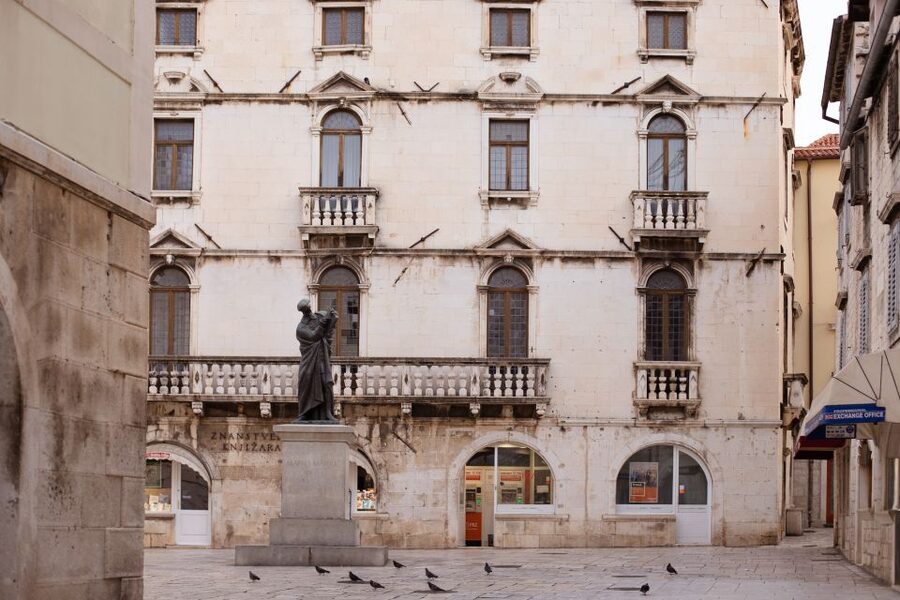
The final stretch brings you through the Split Fishmarket and along Marmontova Street. These stops are brief, about five minutes each, but they add local texture to a route otherwise centered on major monuments.
You should not expect a food tasting or a market visit with time to shop. The fishmarket is a guided point of interest, not a separate culinary activity. Marmontova Street also receives a short explanation rather than a long stop.
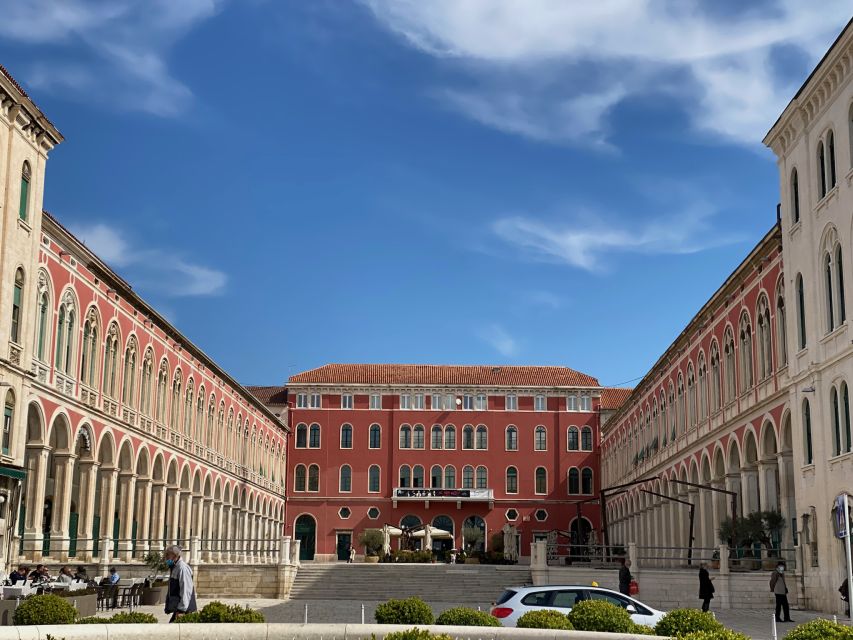
The walk ends at Trg Republike, known as Prokurative. The square recalls St. Mark’s Square in Venice, with arcaded buildings and cafés around its edges. It is a pleasant place to pause after the tour, and the cafés and restaurants make it easy to continue your afternoon in Split.
The route description places the finish at Prokurative, while meeting-point details can vary by the option booked. Check the exact start and finish information before setting out, especially if you have a cruise departure or another timed activity afterward.
Is $192 per person a fair price?
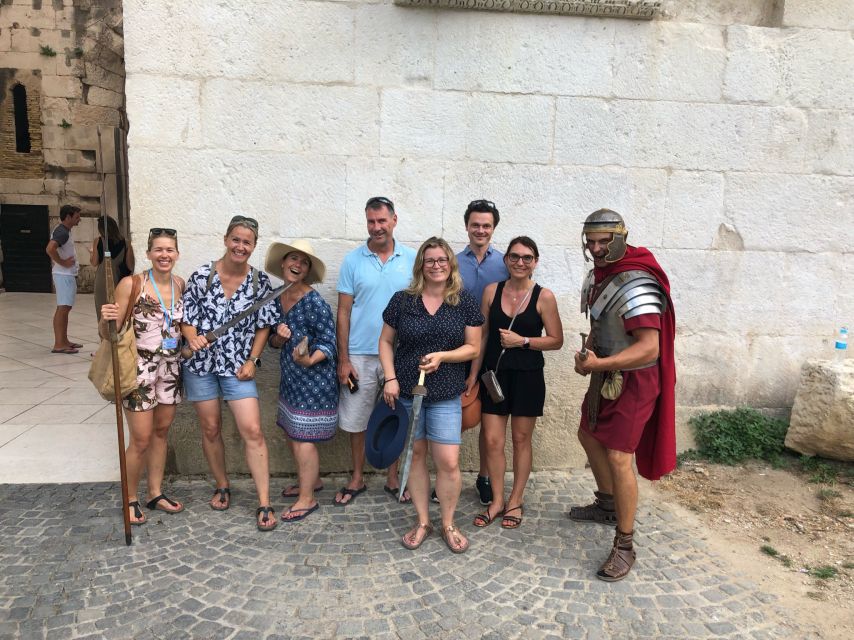
At $192 per person, this is not a low-cost way to see Split. The value depends heavily on how many people are in your private group and how much you want from the guide.
For one or two people, the price is a serious splurge. For a family or group of friends sharing the private booking, the cost may feel more reasonable because you get a dedicated guide instead of joining a large public walk. The maximum group size is 10, and the tour can be customized.
The price includes entrance fees for three important sites: the cathedral, baptistery, and palace cellars. That saves you from arranging separate admissions and lets you spend the short tour time seeing the interiors rather than sorting out tickets.
The 2.5-hour duration also gives the tour a clear purpose. You get an overview of the Roman palace, its religious buildings, and the Old Town’s later squares. You do not get a full-day archaeology lesson, nor does the route allow extended free time at each monument.
I would consider it good value if you want a private orientation on your first day in Split. It is less compelling if you are happy to read signs, wander independently, and visit only the major sights at your own pace.
Who will enjoy this Split walking tour?
I would recommend it to first-time visitors who want the city explained in a logical order. It is also a good fit for families, couples, and small groups who prefer a private guide and do not want to wait for a large tour party.
History-minded visitors will appreciate the Roman, Christian, medieval, and Venetian layers. The route has enough variety to keep you moving: cellars, cathedral, temple, palace gates, squares, market streets, and a formal public plaza.
It may be less suitable if you want a slow photographic walk. The itinerary includes many stops, and several are only five or 10 minutes. You will cover a lot of ground in a short time.
The route includes steps and is only partly wheelchair accessible. Still, the provider says the tour can be adapted for special needs, so contact them before booking rather than assuming the standard route will work.
The tour is offered in English, French, and German. Cancellation is free up to 24 hours before the start, and you can reserve now and pay later, which helps if your Split schedule is still changing.
Should you book it?
Book this tour if you want a private, well-organized first look at Split and care about entering the main historic buildings. The cellars, cathedral, baptistery, and Jupiter’s Temple give the walk more substance than an outside-only city stroll.
I would especially consider it for a small group that can share the $192-per-person cost and for anyone who wants the guide to adjust the emphasis. If Dinah is available, her strongly positive mention gives you a useful name to ask about.
Skip it if your main goal is the cheapest possible introduction or a leisurely day spent exploring at your own speed. Split is walkable, and independent visitors can see many of these places without a private guide. For a clear overview in 2.5 hours, though, this route offers a solid mix of Roman remains and living Croatian city life.
FAQ
How long does the Split Palace and Old Town tour last?
The tour lasts 2.5 hours. Starting times vary, so you need to check availability when booking.
What is included in the price?
The price includes entrance fees for the Cathedral of Saint Domnius, the baptistery, and Diocletian’s Palace cellars.
What languages are available?
The live guide is available in English, French, and German.
How many people can join the private group?
The tour is designed for a private group of no more than 10 participants.
Where does the tour start?
The meeting point can vary by the option booked. The listed starting point is near the bronze model of Split’s historic core on the Riva promenade.
Where does the tour finish?
The route is scheduled to finish at Trg Republike, also called Prokurative. Check the meeting details for your selected option because starting arrangements may vary.
Can the route be adapted for wheelchair users?
The site is only partly wheelchair accessible, but the tour can be adapted to special needs. You should inform the provider in advance.
What happens if a church or historic site is closed?
Events or church services may prevent access to some sights, and the guide may change the program slightly. If the cathedral, baptistery, or palace cellars cannot be visited inside, the entrance fee for that unavailable visit is refunded.
More Private Palace Tours in Split
- Alhambra Private/Small Group Tour & Nasrid Palaces Skip the Line
★ 4.5 · 921 reviews - Bangkok: Grand Palace, Wat Pho, and Wat Arun Private Tour
★ 4.8 · 855 reviews - Mutianyu Great Wall&Summer Palace Excursion:Group/Private Options
★ 5.0 · 816 reviews - Private Tour of Sintra, Cabo da Roca and Cascais with 2 Palaces
★ 5.0 · 770 reviews
More Private Palace Tours in Croatia
- Split by Private Electric Rickshaw – Palace & Hidden Gems
★ 5.0 · 412 reviews - YOUR BEST PRIVATE TOUR – amazing Split and Diocletian’s palace
★ 5.0 · 83 reviews - Jewish Heritage & Diocletian’s Palace Private Split Tour
★ 5.0 · 80 reviews - Dubrovnik History, Sweets & Liquors in a Private Palace
★ 5.0 · 3 reviews
Just added around Split
- Split: Old Town and Diocletian’s Palace Walking Tour★ 3.3 · 3 reviews
- Essential Diocletian’s Palace Tour for First-Time Visitors★ 4.9 · 79 reviews
- Split: Old Town & Diocletian’s Palace Earlybird Walking Tour★ 4.0 · 12 reviews
- Diocletian’s Palace & Old Town Split Walking Tour★ 5.0 · 11 reviews
- Jewish Heritage & Diocletian’s Palace Private Split Tour★ 5.0 · 80 reviews
- YOUR BEST PRIVATE TOUR – amazing Split and Diocletian’s palace★ 5.0 · 83 reviews
- Split: 1.5-Hour Walking Tour and Diocletian’s Palace★ 4.7 · 256 reviews
- Split: Diocletian’s Palace Virtual Reality Experience★ 4.4 · 308 reviews
Palace Walking Tours, compared.
Doge’s Palace and St Mark’s Basilica Walking Tour
Read our review →

Walking Tour of Split and Diocletian’s Palace
Read our review →
Grand Palace and Wat Phra Kaew Guided Walking Tour
Read our review →
Imperial Palace and Shogun Historical Walking Tour
Read our review →
Madrid Old Town & Royal Palace Walking Tour Skip the Line Ticket
Read our review →
Knossos: Knossos Palace Skip-the-Line Guided Walking Tour
Read our review →