
REVIEW · SPLIT
Walking Tour of Diocletian’s Palace and Old town-small group
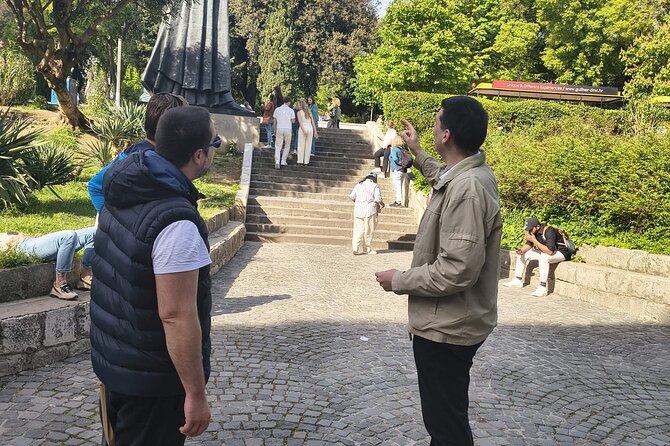
Split’s old town is built into an emperor’s palace. This small-group walk makes that unusual setting easier to read, taking you from the Golden Gate through Roman courtyards, cellars, medieval squares, and later city streets. I like the small maximum of seven people, which should make it easier to hear Luka and ask questions. I also like the relaxed, question-led approach described by past participants. The main drawback is time: at about 85 to 95 minutes, this is a brisk introduction rather than a detailed archaeological tour.
The price is about $23.83 per person, a fair rate if you want a clear orientation before exploring alone. You will see many major sights from the outside, but the tour does not include entry into the Temple of Jupiter, and the listed stops do not carry an admission charge. Good walking shoes matter, since the route passes through historic streets and palace spaces.
Five useful things to know before you go
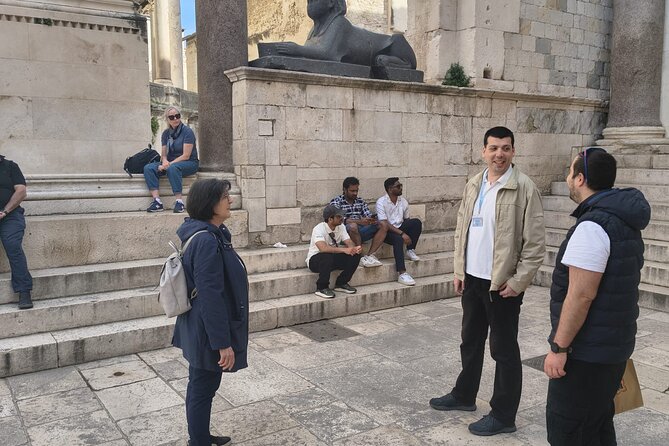
- The group is capped at seven people, giving this walk a more personal feel than a large city tour.
- Luka leads the experience, and his style is friendly, easy to follow, and built around questions from the group.
- The route covers ten stops, from the Golden Gate to the Gregory of Nin statue.
- You see Roman, medieval, and later Split in one walk, rather than visiting the palace as an isolated monument.
- The tour lasts roughly 90 minutes, making it useful on a short visit or as a first look at the city.
- The listed stops are free to visit, though the Temple of Jupiter is viewed from outside.
Why Diocletian’s Palace is such a good place for a walking tour
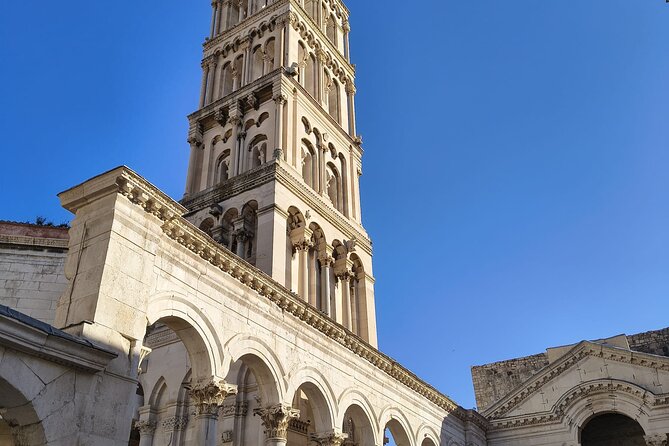
Diocletian’s Palace is not simply a ruin fenced off from modern life. It forms the core of Split’s old town, with streets, squares, shops, and daily city activity woven through the Roman structure. That makes a guide especially useful. Without context, you can see stone walls and columns but miss how the imperial residence shaped the city around it.
This tour moves through the palace and then follows Split’s later expansion westward. That sequence gives you a basic timeline without turning the walk into a lecture. You begin with the Roman emperor’s complex, then see how the city grew beyond it.
I like this format for a first visit because it answers the basic questions quickly. What was the palace? Where did the emperor live? Why are the cellars so well preserved? How did a Roman residence become the center of a living town? You should leave with a map in your head, even if you still need more time to explore the palace on your own.
The group limit of seven is one of the strongest features. In a compact historic center, a large group can block narrow passages and make questions awkward. A small group should feel easier to manage, particularly when Luka pauses at the Peristyle or explains details in the palace substructures.
More Palace Walking Tours in Croatia
- Split: Old Town and Diocletian Palace Walking Tour
★ 4.9 · 4,727 reviews - Walking Tour of Split and Diocletian’s Palace
★ 5.0 · 2,588 reviews - Split & Diocletian’s Palace Walking Tour
★ 5.0 · 1,125 reviews
Starting at the Golden Gate
The meeting point is at Ul. kralja Tomislava 15. The first listed stop is the Golden Gate, where the introduction to Diocletian’s Palace begins. This is a sensible starting point because the gate gives you an immediate sense of the palace as a fortified complex, not just a collection of Roman columns.
Luka uses this opening to establish the basic story of Diocletian and the purpose of the palace. The introductory stop lasts about ten minutes, so expect a focused orientation rather than a long historical talk.
I would pay attention here to the way the palace entrance connects with the modern city. The value is not just the gate itself. It is the first clue that Split’s old town grew around, inside, and beyond the imperial complex.
The Peristyle, the palace’s great Roman square
The Peristyle receives about 15 minutes, the longest stop inside the central Roman section. That extra time makes sense. This is the palace’s key public space and the clearest place to understand its formal design.
The tour explains why the square is important and points out that it is among the best-preserved Roman squares. You can expect this stop to focus on the layout, its role within the palace, and the relationship between the open court and the imperial areas around it.
This is also where a small group helps. The Peristyle can be a busy public space, so having a guide who knows where to stand and when to move should make the explanation easier to follow. One especially useful detail from the feedback is that Luka knows shortcuts to the best places. That matters in a dense old town, where a few steps can change what you see and how clearly you hear.
The Vestibule and the emperor’s private side
The Vestibule is a short, five-minute stop. It served as an entrance toward the imperial chambers, so it helps you understand the difference between the palace’s public ceremonial areas and the emperor’s private residence.
Do not expect a full room-by-room visit in five minutes. Instead, treat this as a quick piece of the palace plan. The guide’s job here is to show how the spaces connected and why the entrance mattered.
The next stop, Triklinij, lasts about ten minutes. Here you see the emperor’s residence and promenade. Together, the Vestibule and Triklinij add a more personal dimension to the palace. You are no longer looking only at a monumental square. You are considering where the ruler lived, moved, and received people.
More Palace Walking Tours in Split
- Split: Diocletian Palace & Old Town Guided Walking Tour
★ 4.7 · 882 reviews - Diocletian’s Palace and Old Town SMALL GROUP Walking Tour
★ 5.0 · 502 reviews - SPLIT-PRIVATE Walking Tour of Diocletian’s Palace & Old Town
★ 5.0 · 467 reviews - 90-min Diocletian Palace Walking Tour
★ 5.0 · 323 reviews
The palace cellars and the story beneath the streets

The Diocletian Palace substructures receive another ten minutes. This is one of the most useful stops for understanding how the Roman building survived.
Luka explains why the cellars are so well preserved. The tour passes through parts that are not paid for, which means you can see sections of the substructures without an additional admission charge for this route. The stop is not presented as a separate paid attraction, and the supplied details specifically note the free access for the parts visited.
For me, this is the point where the palace becomes easier to picture as a working complex. A floor plan can feel abstract until you see the lower level and understand how it relates to the rooms above. Keep in mind that ten minutes is enough for an explanation and a look around, not an exhaustive study of every underground passage.
The Temple of Jupiter and a change of purpose
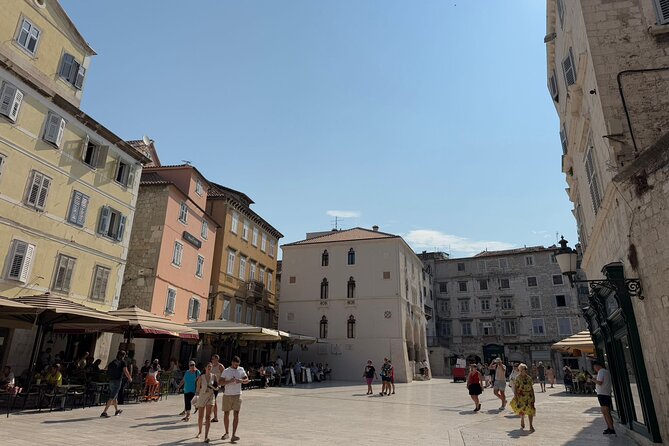
The Temple of Jupiter is a five-minute stop, and the group does not go inside. The guide explains its transformation from a temple into a baptistery.
That change gives you a compact lesson in how old buildings can take on new roles. The stop is brief, but the idea is important: the palace did not remain frozen in its Roman form. Its spaces were adapted over time.
Because you only view the temple from outside, this part may feel limited if you hoped to enter. It works best as a quick explanation within the wider walk. You get the historical connection without spending time on an interior visit.
Narodni Trg and the city beyond the palace
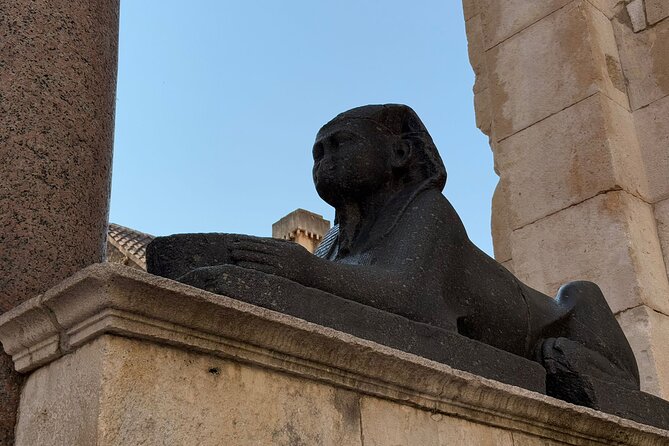
At Narodni Trg, the story moves westward. The city expanded beyond the original palace, and this square reflects that growth. The stop lasts about ten minutes, giving the guide time to explain how Split developed outside the imperial residence.
This transition is one of the best design choices in the route. A tour that stayed only inside Diocletian’s Palace would give you Roman Split but not the later city. Narodni Trg shows that the old town is not one single period. It is a layered place, with the palace forming the foundation for later urban life.
You should notice how the mood changes as the route moves from the palace’s planned imperial spaces into the city’s later public areas. The tour does not treat the old town as a museum. It helps you understand why people still move through these spaces today.
Fruit’s Square and Prokurative
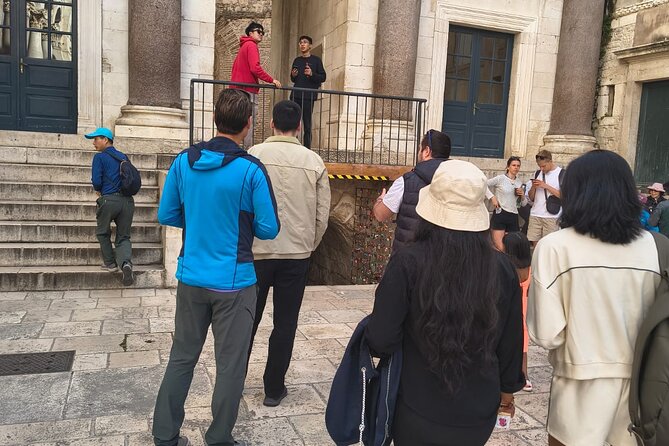
Fruit’s Square, also called Trg Brace Radic, receives about ten minutes. The description promises several interesting points here, though it does not specify each one in advance. That makes this a good place to listen closely and ask Luka about details that catch your eye.
The walk then continues to Prokurative for about 15 minutes. This is another substantial stop, and the guide explains how the square was modeled after a European square. You will also hear about a nearby church and hotel.
Prokurative adds a later architectural chapter to the route. After seeing the Roman Peristyle and the medieval-feeling streets around the palace, you get a more open square shaped by a different urban idea. It is a useful reminder that Split’s identity did not end with antiquity.
The route’s variety is a strength. You are not asked to admire one monument for an hour and a half. Instead, you move between imperial architecture, religious reuse, city expansion, and public squares. That keeps the walk moving and gives you several reference points for the rest of your time in Split.
Finishing with Gregory of Nin
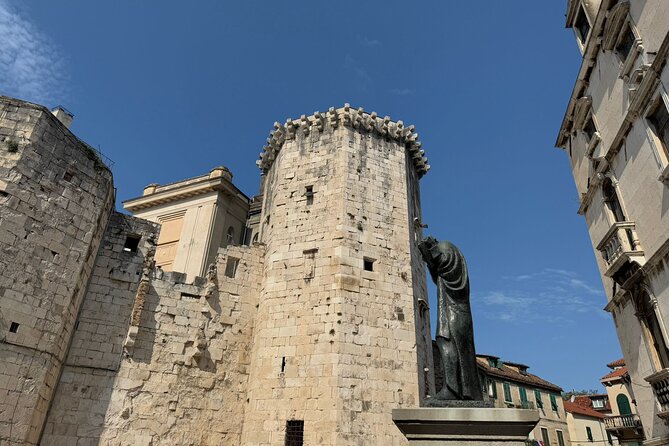
The final stop is the statue of Grgur Ninski, or Gregory of Nin. The guide shares interesting facts about the statue and uses it to close the tour. This final five-minute stop is a practical finish because you end near the same meeting point rather than being left in an unfamiliar part of town.
The statue also gives the walk a clear closing image. You have moved from Roman imperial power through the palace’s later uses and into Split’s civic story. Gregory of Nin provides a final local reference before you continue exploring independently.
The activity ends back at the meeting point. That makes it easier to plan the rest of your day, especially if you want to return to a favorite square or continue through the old town without having to arrange transport back.
Luka’s guiding style and the value of a small group
The strongest praise for this experience centers on Luka’s manner. He is described as friendly, easy to understand, informative, and happy to answer a range of questions. That combination matters more than a long list of dates. You want a guide who can explain the palace clearly without making the walk feel like a classroom.
Another appealing feature is the use of questions. Luka involves the group by asking questions of his own, which gives the walk a relaxed, conversational feel. That approach can help you remember the main ideas because you are not simply listening to a long speech.
The seven-person maximum supports that style. You should have a better chance to ask about architecture, local history, or a particular detail in the street. Still, the group size alone does not guarantee a private tour. The experience is described as a small-group walk, though one past booking was characterized as very personal. If having a completely private guide is essential, check the booking details before paying.
Is $23.83 a fair price?
At $23.83 per person, the price is reasonable for a guided walk lasting about 85 to 95 minutes, especially with a maximum of seven people and an English-speaking guide. You are paying for orientation, explanations, and a route that links several parts of Split rather than for admission to a major paid attraction.
The value is strongest if you are new to Split and want to understand the city before exploring alone. Luka’s shortcuts and knowledge of good stopping points can save time in a compact but confusing old town. The tour may be less useful if you already know the palace well or want extended interior access.
The mobile ticket is convenient, and confirmation is received when you book. The activity is near public transportation, and most people can participate. Service animals are allowed. The tour is offered in English.
You should also plan around the weather. The activity requires good weather, and if poor weather causes cancellation, you are offered another date or a full refund. A minimum number of participants is also required. If that minimum is not met, you are offered another option or a full refund.
Free cancellation is available up to 24 hours before the start time. After that point, the payment is not refunded, and changes made inside the 24-hour window are not accepted. The cut-off follows local time in Split.
Who should book this Split walk?
I would choose this tour if you want a short, clear introduction to the palace and old town. It suits a first visit, a morning before independent sightseeing, or a port-day schedule when you need a compact activity.
It is also a good match if you prefer conversation over a formal lecture. Luka’s style, as described, is friendly and relaxed, with time for questions and group participation.
You may want something else if your main goal is entering every major interior or studying Roman architecture in detail. The Temple of Jupiter is viewed from outside, and the short stops mean the tour covers breadth more than depth.
Should you book the Walking Tour of Diocletian’s Palace?
Book it if you want to make sense of Split quickly, prefer a small group, and value a guide who explains details in plain language. The combination of the Golden Gate, Peristyle, imperial chambers, substructures, later squares, and Gregory of Nin gives you a useful framework for exploring on your own.
Skip it if you want a long archaeological visit, extensive indoor access, or a tour focused only on Roman remains. For most first-time visitors, though, the modest price and roughly 90-minute route make this a practical way to get oriented without giving up half your day.
FAQ
Where does the walking tour start?
The tour starts at Ul. kralja Tomislava 15, 21000, Split, Croatia.
Where does the tour end?
The activity ends back at the meeting point.
How long does the tour last?
The tour lasts approximately 1 hour 25 minutes to 1 hour 35 minutes.
What language is the tour offered in?
The tour is offered in English.
How many people can join the tour?
The tour has a maximum of seven participants.
Is a mobile ticket available?
Yes. The experience includes a mobile ticket.
Does the tour enter the Temple of Jupiter?
No. The group views the Temple of Jupiter but does not go inside.
Are admission tickets included for the listed stops?
All listed stops show an admission ticket as free. The palace substructures portion also notes that the route passes through parts that are not paid for.
What happens if the tour is canceled because of weather or low participation?
If poor weather causes cancellation, you are offered a different date or a full refund. If the minimum number of participants is not reached, you are offered a different date or experience, or a full refund.
More Diocletian's Palace Tours in Split
- Split Old Town and Diocletian’s Palace Tour
★ 4.8 · 716 reviews - Split: Game of Thrones Tour with Diocletian’s Palace Cellar
★ 4.8 · 545 reviews - Split: Diocletian’s Palace Virtual Reality Experience
★ 4.4 · 308 reviews - Split: 1.5-Hour Walking Tour and Diocletian’s Palace
★ 4.7 · 256 reviews
Just added around Split
- Split & Diocletian Palace Historical Walking Tour★ 5.0 · 29 reviews
- Walking tour of Diocletian’s Palace in Split★ 5.0 · 60 reviews
- Wine Tasting in the Diocletian’s Palace★ 4.5 · 12 reviews
- Split: Diocletian’s Palace Walking and Wine Tasting Tour★ 4.5 · 56 reviews
- SPLIT-History Tour of Diocletian’s Palace & Old Town with Daniela★ 5.0 · 76 reviews
- Diocletian Palace in Split and Trogir Private Heritage Tour★ 5.0 · 12 reviews
- Private Split: Visit Diocletian Palace & Taste Food at the Market★ 5.0 · 33 reviews
- Wonderful Split – Diocletian’s Palace Private Walking Tour★ 5.0 · 20 reviews
Diocletian's Palace Tours, compared.
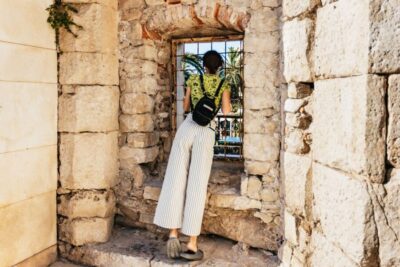

Walking Tour of Split and Diocletian’s Palace
Read our review →

Diocletian Palace & Old Town Guided Walking Tour
Read our review →

Game of Thrones Tour with Diocletian’s Palace Cellar
Read our review →
Diocletian’s Palace and Old Town SMALL GROUP Walking Tour
Read our review →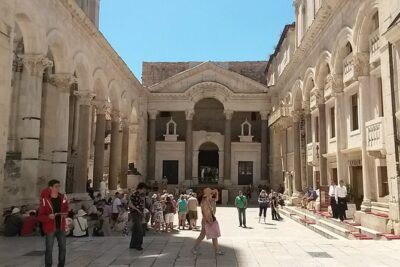
Browse the lists this tour appears in