
REVIEW · YOGYAKARTA
Javanese Dance Workshop with Kraton Palace Dancer
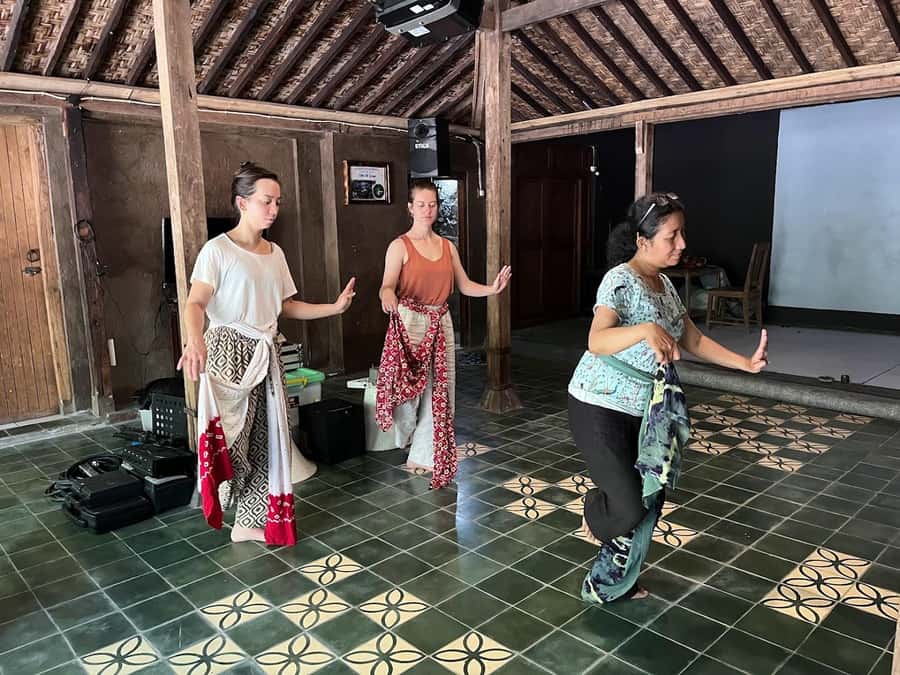
Dance tells Java’s story through the body. This 90-minute workshop brings you into a traditional Javanese home in Jogja, where a Kraton Palace dancer teaches the meaning behind the movements, not just the steps. I like the personal setting and the chance to receive direct corrections. I also like that a cup of traditional black tea gives the lesson time for relaxed cultural exchange.
The main consideration is physical access. The activity is not suitable for wheelchair users or people with visual impairments, and babies under one year are not accepted. You also need to arrange your own way to the home, since pickup and drop-off are not included.
Key points at a glance
- Private instruction: You learn in a private group rather than in a large class.
- Palace-trained teacher: Your instructor is a classical Javanese dancer connected with the Kraton Palace tradition.
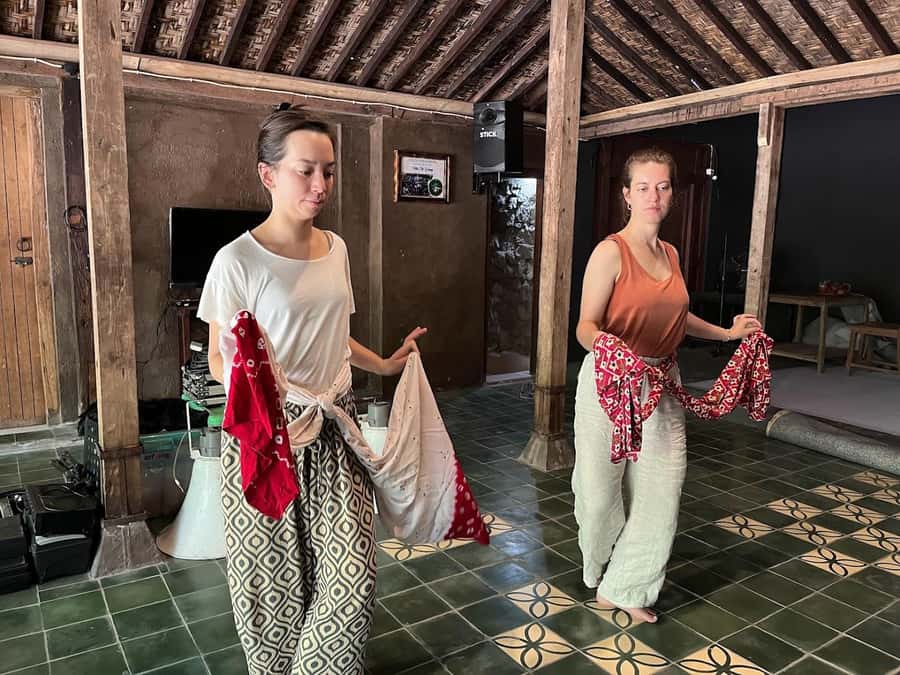
- A real home setting: The lesson takes place in the dancer’s traditional Javanese home in Jogja.
- Personal dance feedback: The instructor watches your movements and helps you understand the basic forms.
- Tea and conversation: Traditional Javanese black tea adds an easygoing social part to the lesson.
- Simple, flexible booking: The $24 price includes the lesson, dancing cloth, and refreshments, with cancellation allowed up to 24 hours before the start.
Why this Jogja dance lesson feels different
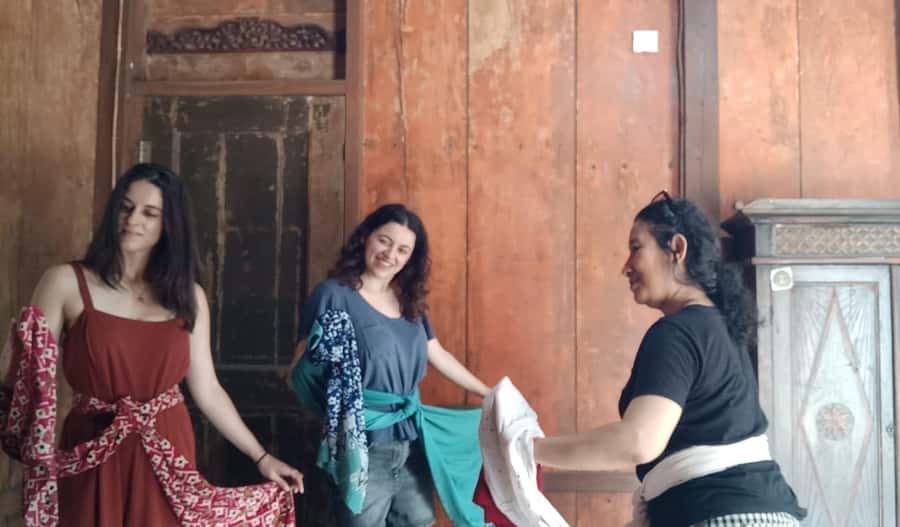
Many cultural activities give you a short talk, a photo opportunity, and a quick demonstration. This workshop asks you to try the art yourself. That matters with Javanese dance, because the form is not easy to understand from watching alone.
The movements can look gentle and restrained. Once you attempt them, you begin to notice the control needed in the hands, shoulders, eyes, posture, and feet. One of the strongest points of this activity is that the teacher does not simply show you a sequence and leave you to copy it. You receive personal feedback as you practice.
The setting also changes the tone. You are welcomed into the home of a classical dancer rather than entering a formal performance venue. That gives the lesson a more personal scale and leaves room for conversation about the art, Java, and the role of dance in local culture.
The workshop has a perfect 5 out of 5 rating from two verified bookings. One participant praised the teacher’s skill and kindness, while also noting how difficult the art is to master. Another described the lesson as beautiful and said the instruction made the dance easy to learn. Those comments point to the key strength here: you get an approachable introduction without being told that a few basic steps make you a Javanese dancer.
More Hands-On Sessions in Indonesia:
- Château du Bois-Huaut: Cellar Tour and Wine Tasting Class
★ 4.8 · 53 reviews - Luang Prabang: Cooking Class at the Former Royal Palace
★ 4.9 · 51 reviews
Entering a traditional Javanese home in Jogja
The meeting place is the dancer’s traditional Javanese home in Jogja. The information provided does not give a precise neighborhood, street address, or transport instructions, so you should check the final meeting details before setting out.
The home setting is more than a backdrop. It gives you a direct connection to everyday cultural space, rather than presenting Javanese dance as something removed from ordinary life. You can expect the first part of the workshop to include a welcome and an introduction to the instructor.
Because this is a private group, the atmosphere should feel more focused than a large public class. You have room to ask questions, request clarification, and repeat a movement without worrying about holding up a crowd.
There is no included drop-off or drop-in service. Plan your own transport to and from the home, and allow enough time to arrive ready for a lesson that involves standing and moving.
Understanding the origins and meaning of Javanese dance
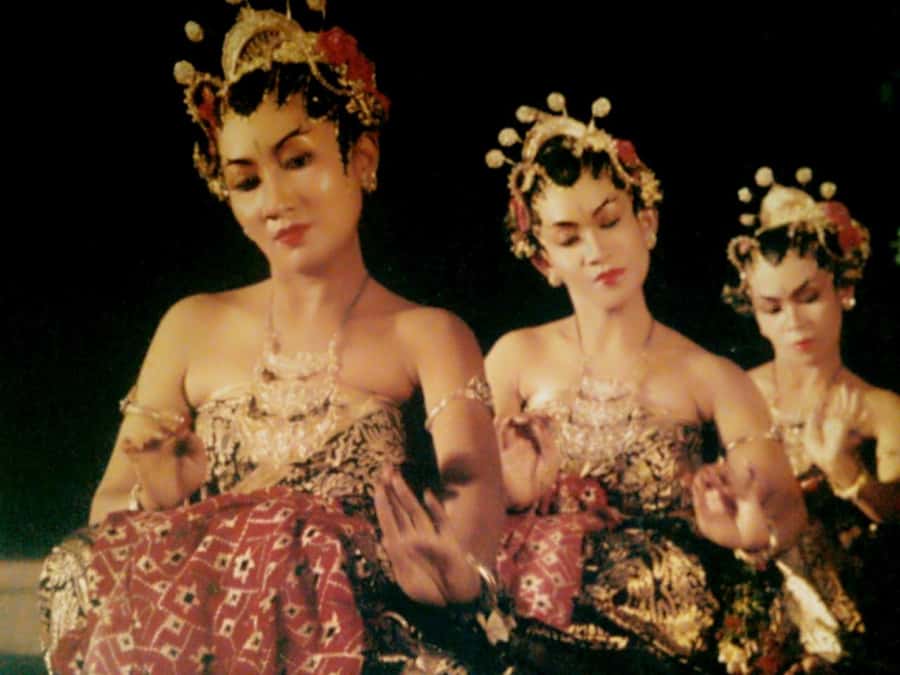
Before you begin the practical work, the instructor explains the history and cultural significance of Javanese dance. This introduction helps you see that the gestures are not random decoration. Movement, posture, timing, and expression all carry purpose within the classical form.
The lesson covers the origins of the dance tradition and explains its connection with the Kraton Palace. The Kraton, or royal palace, is central to the cultural identity of Yogyakarta. A dancer trained within that tradition can explain why certain movements are performed with restraint and care.
You should not expect a long academic lecture. The workshop lasts only 90 minutes, so the background section needs to be selective. Its value comes from giving you a frame for the practical work. Once you understand that the dance has rules and meaning, you can pay closer attention to the details.
I like this balance. A cultural activity can become dry if it gives you too much history before you do anything. It can also feel shallow if it skips context altogether. Here, the history leads into the movements, so the information has a clear purpose.
Learning the first movements and sequences
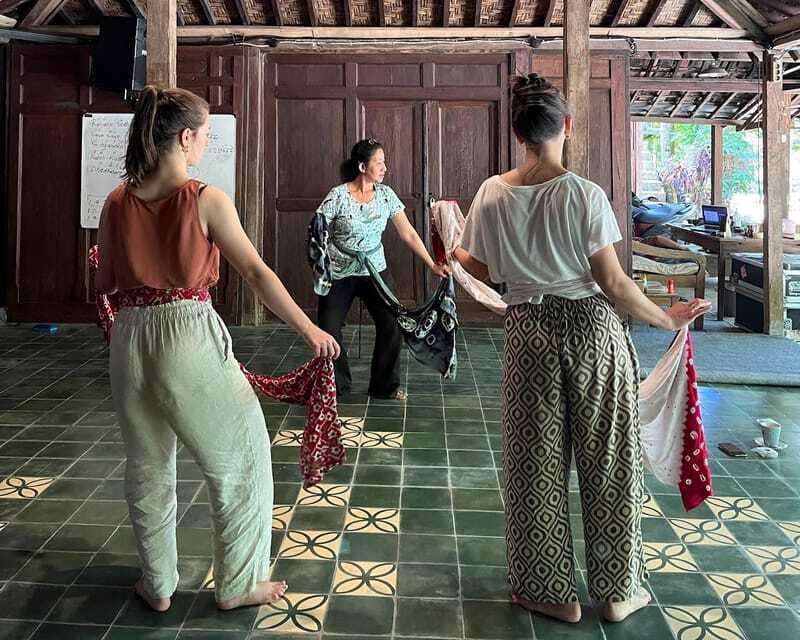
The main part of the workshop introduces basic Javanese dance movements and short sequences. The instructor guides you carefully, which is important because the form can look simpler than it feels.
You may find that small adjustments make a large difference. A hand may need to sit at a particular angle. Your posture may need to remain controlled while your arms move. Your timing may feel slow at first, especially if you are used to dance styles with larger, faster gestures.
The point is not to become a palace dancer in one session. The point is to understand the structure of the art and experience some of its discipline from the inside. That makes this activity a good match for curious visitors who enjoy learning by doing.
The included stash, a long piece of fabric used for dancing, helps you take part in the lesson in a more traditional way. The details do not describe a full costume, so you should not expect to be dressed as a palace performer. Still, having the fabric supplied means you do not need to bring a special dancing garment.
Wear clothes that allow comfortable movement. The activity information does not specify a dress code, but practical clothing will make it easier to focus on the dance rather than on adjusting what you are wearing.
A few more palace visits around Indonesia worth a look
- Bali: Ubud Palace Legong Dance Show Ticket
★ 4.4 · 3,979 reviews - East Bali Tour: Gate of Heaven, Water Palace, Sleeping Gajah
★ 5.0 · 1,726 reviews - Bali: Lempuyang Quick Access, Waterfall, Water Palace & More
★ 4.7 · 1,072 reviews - East Bali: Lempuyang Gates, Tenganan, & Water Palaces Tour
★ 4.8 · 175 reviews
Personal corrections from a palace dancer
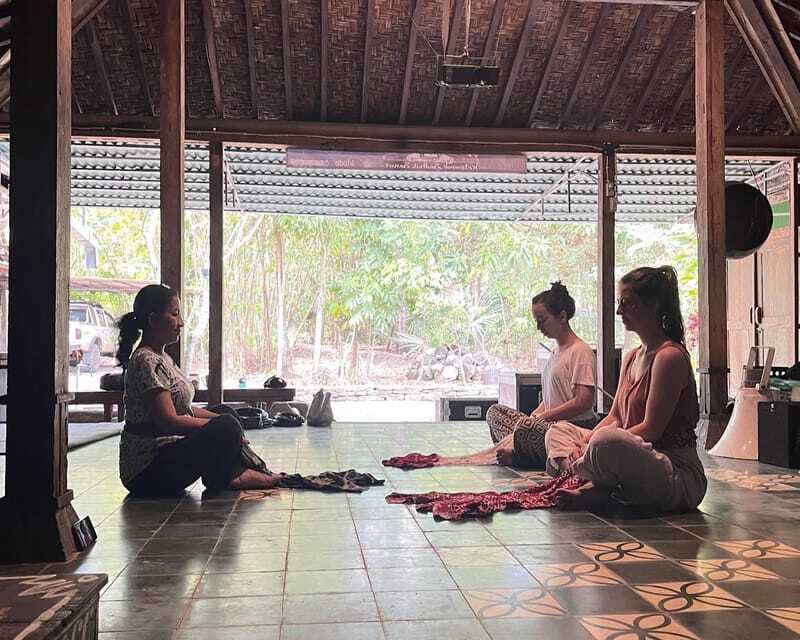
Personal feedback is one of the best reasons to choose this workshop instead of watching a performance. The instructor can see how you are holding your body and can guide you toward the intended form.
The feedback may also help you appreciate why Javanese dance takes years to master. A beginner can copy the broad shape of a movement, but the proper control, expression, and timing require much more practice. The workshop lets you feel that gap without making the lesson intimidating.
The two available ratings are especially positive about the instructor. The teacher is described as both highly skilled and lovely, with clear instruction that helps participants follow along. That is useful information for anyone nervous about trying a formal dance tradition for the first time.
Because the group is private, the instructor can give attention to the people in your party. The exact maximum group size is not provided, so you should confirm it if you are booking for several people. The private format still suggests a more tailored class than a public demonstration.
Tea, questions, and cultural exchange
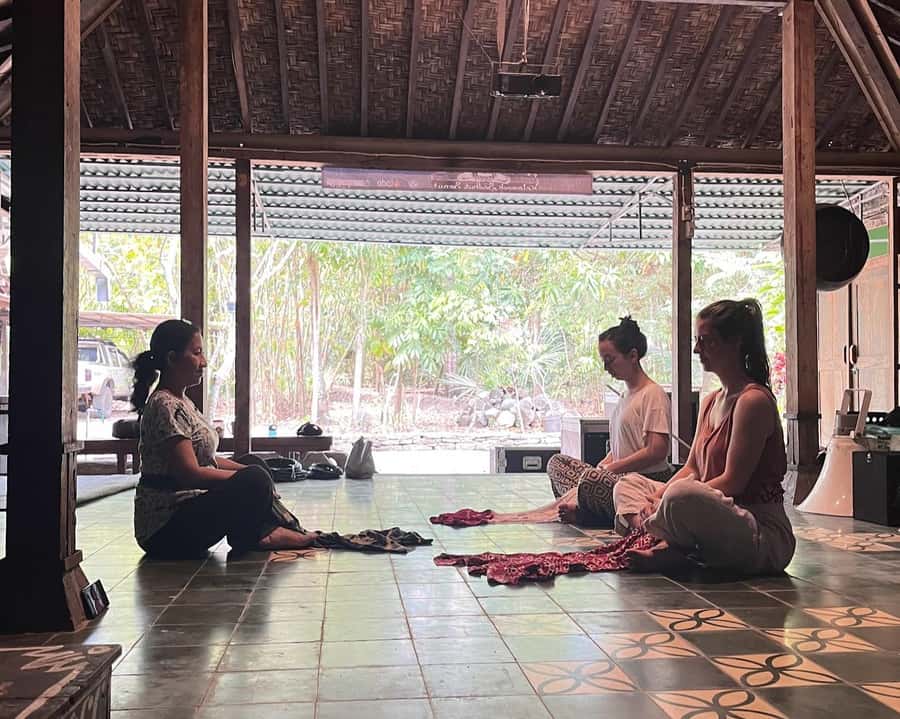
Traditional Javanese black tea is included as a refreshment. It gives the session a natural pause and makes room for conversation after the physical practice.
This social part should not be treated as filler. Dance is easier to understand when you can ask about the instructor’s training, the Kraton tradition, or the meaning behind movements you have just attempted. The supplied information specifically presents cultural exchange as part of the appeal.
Tea also keeps the activity from feeling like a strict dance examination. You can enjoy the lesson as a meeting with a local artist, not simply as a class with a pass or fail result.
The refreshment is modest, but it supports the personal nature of the workshop. At $24 per person, the price includes the private lesson, feedback, dancing cloth, and refreshments. You are paying for access to instruction and conversation, not for a large meal or a full cultural show.
Is $24 a fair price?
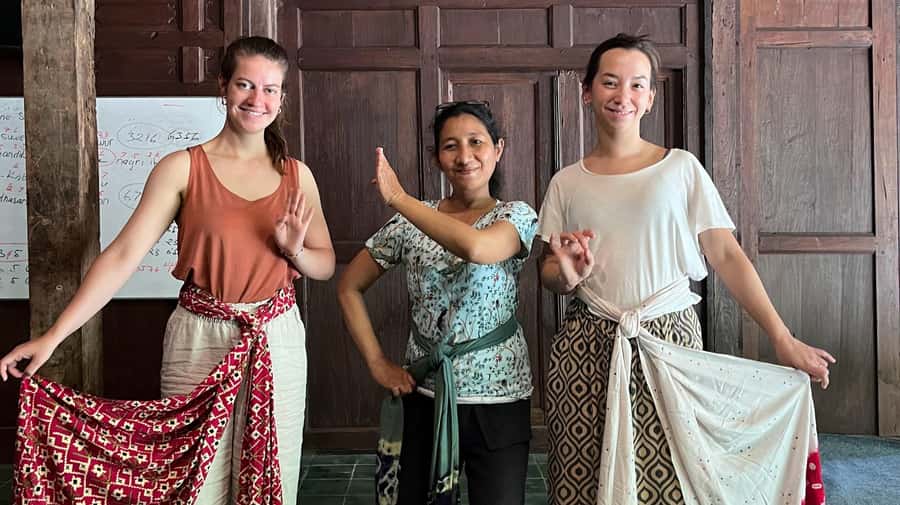
For a 90-minute private cultural lesson, $24 per person is a reasonable price. The value rests mainly in the instructor’s time and the access to a palace dance tradition. The tea and stash are useful extras, but they are not the main reason to book.
A short performance may show you what Javanese dance looks like. This workshop lets you ask questions and try the basic movements yourself. If you want a passive cultural stop, the price may feel less attractive. If you want personal instruction and a closer look at how the art works, the cost is easier to justify.
The private-group format improves the value for couples, families with older children, or small groups of friends. You are not paying for a crowded class where the teacher has little time for each person. The exact group limit is not stated, so larger parties should confirm how the private arrangement works before booking.
The activity also offers reserve now and pay later, which can help if your Jogja schedule is still changing. Cancellation is free up to 24 hours in advance for a full refund. Those terms reduce the risk of fitting the workshop into a busy itinerary.
Who should book this experience?
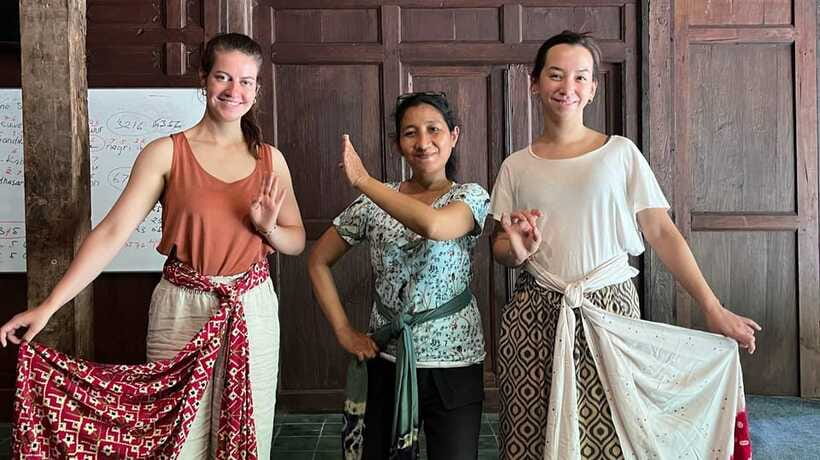
I would recommend this workshop to anyone who wants more than a quick introduction to Yogyakarta’s cultural life. It suits people who enjoy hands-on activities, small-group teaching, and conversations with local artists.
It is especially good for:
- First-time visitors looking for a respectful introduction to Javanese culture
- People curious about classical dance and royal traditions
- Couples or small private groups who prefer personal attention
- Beginners who want to try dance without committing to a long course
- Culture-focused visitors who value a home setting over a polished stage show
You do not need to be an experienced dancer. In fact, the difficulty is part of the lesson. Trying the movements helps you see the control behind the art.
This may not suit you if you want a full performance, a detailed costume experience, or a physically effortless activity. The workshop includes practice, and you should be comfortable taking part in basic movement. It is also not suitable for wheelchair users, people with visual impairments, or babies under one year.
Practical details before you book
The workshop lasts 90 minutes, and starting times depend on availability. Check the schedule before planning other activities around it.
Instruction is available in English. That makes the history, movement guidance, and question period accessible to English-speaking visitors. No other teaching language is specified.
You receive the dancing cloth, refreshments, and a private lesson with feedback. Pickup and drop-off are not included, so arrange your own transport.
The activity is offered by Jogsider. Since the meeting address and transport instructions are not included in the available details, check the booking information carefully after reserving. You want to know where the home is located and how much time you need to reach it.
Book at least a day ahead if you want the safety of the free cancellation policy. You can cancel up to 24 hours before the start for a full refund. The reserve now and pay later option also lets you hold a place without paying immediately.
Should you book the Javanese dance workshop?
Book it if you want a personal, hands-on cultural lesson led by a Kraton Palace dancer. The private format, direct feedback, English instruction, traditional tea, and home setting give the experience a clear identity. The $24 price is fair for 90 minutes of focused teaching.
Skip it if you prefer watching rather than participating, need wheelchair access, or want transportation included. Also keep your expectations realistic: one lesson will not make you an expert. Its real reward is learning how much control the art demands and gaining a respectful first look at a major Javanese tradition.
FAQ
How long does the Javanese dance workshop last?
The workshop lasts 90 minutes.
How much does the workshop cost?
The listed price is $24 per person.
Where does the workshop take place?
It takes place in the traditional Javanese home of a classical Kraton Palace dancer in Jogja, Java, Indonesia.
Who teaches the dance lesson?
The lesson is taught by a classical Javanese dancer from the Kraton Palace tradition.
Is the workshop private?
Yes. The activity is offered for a private group.
Is the lesson taught in English?
Yes. English is the listed instruction language.
What is included in the price?
The price includes a stash, which is a long fabric used for dancing, refreshments, and a private lesson with feedback.
Is transportation included?
No. Drop-off and drop-in services are not included, so you need to arrange your own transportation.
Can I cancel the booking?
Yes. You can cancel up to 24 hours in advance for a full refund.
Is payment required when booking?
No. The reserve now and pay later option allows you to book without paying immediately.
Who should not take this workshop?
The activity is not suitable for wheelchair users, people with visual impairments, or babies under one year.
Just added around Indonesia
- Jakarta : Taman Safari, Panda Palace, and Waterfall★ 4.7 · 11 reviews
- Bali: Trip to Tirta Gangga Palace and Tukad Cepung Waterfall★ 3.9 · 7 reviews
- Bali: Safari Zoo and Ubud Palace and Market Day Tour★ 4.7 · 6 reviews
- Bali:Heaven Gate, TirtaGangga Palace, and Beach Escape Tour★ 5.0 · 3 reviews
- Bali: Ujung Water Palace, Candidasa and Sidemen Village Tour★ 4.8 · 80 reviews
- Bali: Lempuyang Temple, Water Palace, and Waterfall Tour.★ 5.0 · 2 reviews
- Bali: Gate Of Heaven and Water Palace Tirta Gangga Package★ 4.7 · 3 reviews
- Taman sari water castle, sultan palace & local food tasting★ 4.7 · 11 reviews
Yogyakarta Palace Tours, compared.
Palace, Water Castle & UNESCO Temple Guided Tour
Read our review →
Borobudur Climb To The Top, Prambanan Temple, Yogyakarta Palace
Read our review →
Taman sari water castle, sultan palace & local food tasting
Read our review →Browse the lists this tour appears in