
REVIEW · HERAKLION
Heraklion: Knossos Palace Guided Tour Half Day
Knossos makes old myths feel surprisingly close. I like the short three-hour format and the chance to see the Minoan palace with a guide who explains what the rooms were used for, rather than leaving you to decode a maze of stones. I also like the direct five-kilometer ride from Heraklion, which keeps the outing simple. The main catch is that the entrance fee is extra, and one booking record described the guided visit as only 1.5 hours instead of the advertised three-hour total.
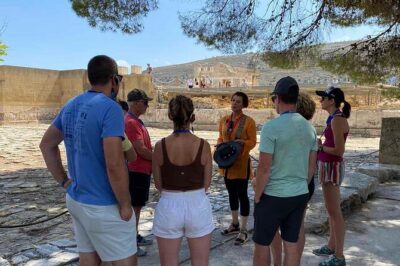
This is a good fit if you want the major archaeological site near Heraklion without giving it a full day. I would pay close attention to the meeting details, bring sturdy shoes, and confirm the timing before you go. The Spanish-language guide Sacarías received especially warm praise for explaining the palace carefully and using a book to show reconstruction drawings.
Key points about the Knossos half-day tour
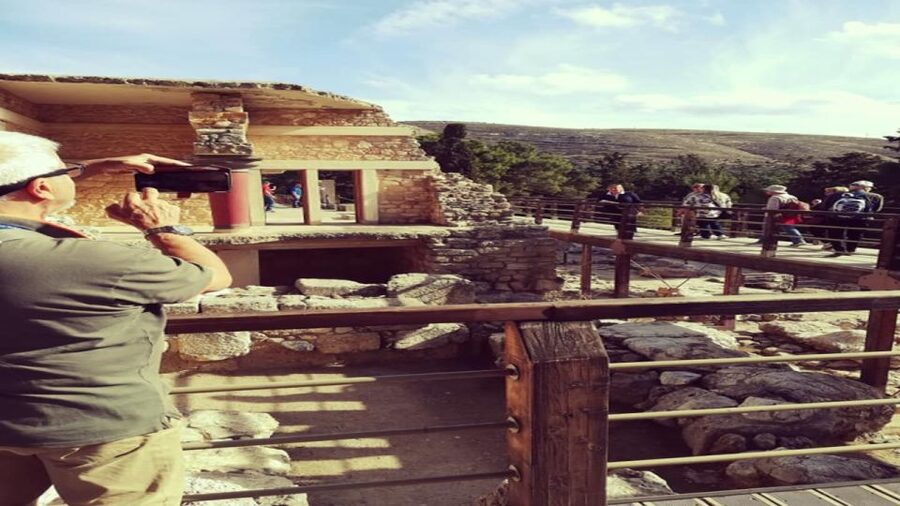
- The palace sits only five kilometers southeast of Heraklion, so you spend little of your morning on the road.
- A two-hour guided visit is scheduled at Knossos, with transport time included in the three-hour outing.
- The site connects archaeology with famous legends, including King Minos and the stories linked to the palace.
- Minoan engineering is a major theme, with the ancient complex once reaching as high as five stories in places.
- Guides speak English, Spanish, Italian, or French, depending on the departure and guide assigned.
- The $70 price excludes admission, so calculate the site ticket separately before booking.
Why Knossos deserves a place on your Crete schedule
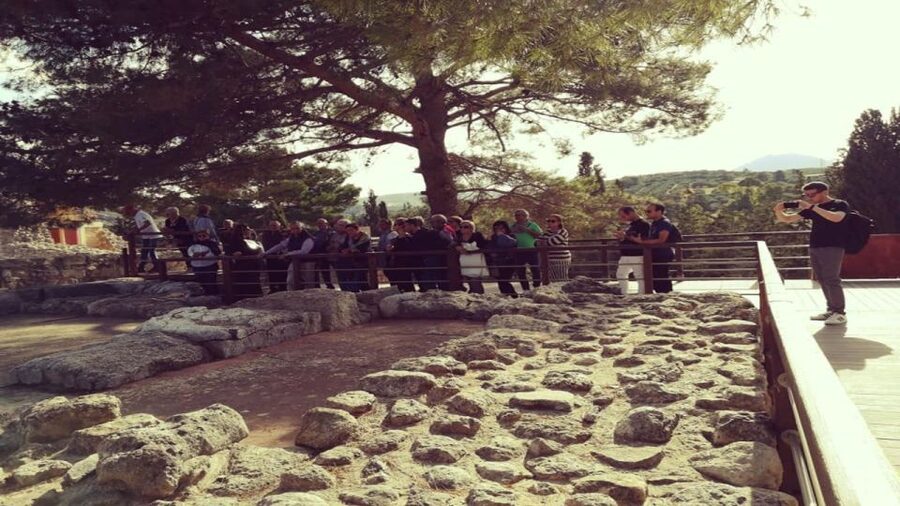
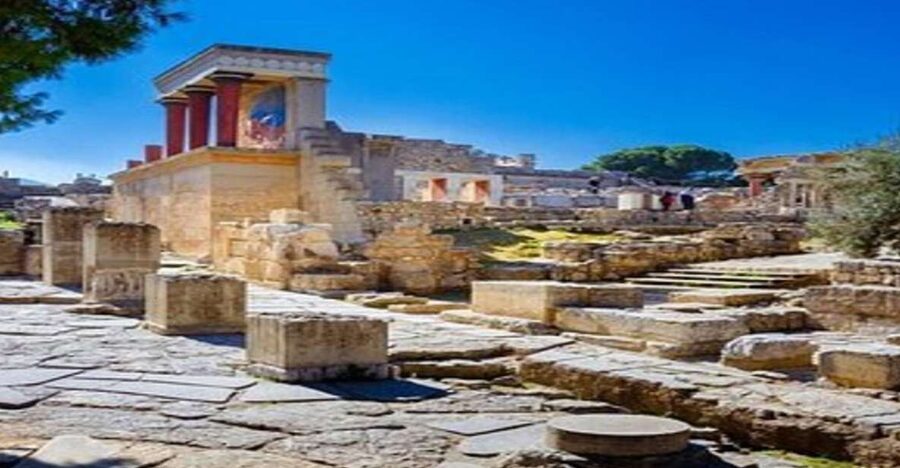
Knossos is the best-known palace site connected with the Minoan civilization. It is also the place where archaeology and mythology constantly overlap. You are not just looking at an ancient settlement. You are standing at the center of stories about the legendary King Minos and the palace often linked with the Labyrinth.
That mix gives the visit its appeal. You can look at a storeroom, a corridor, or a foundation and then hear how the site fits into the wider Minoan world. A good guide helps you keep those two threads separate: the physical evidence on one hand, and the legends that grew around the place on the other.
The earliest settlements at Knossos reach back to the Neolithic period. Remains from around 7000 BC have been found in Crete, showing that this was not a site that suddenly appeared when the palace was built. The palace visitors see today was constructed mainly between 1700 and 1400 BC, during the height of Minoan civilization.
I find that date range useful because it changes how you look at the ruins. Even a simple wall represents a society that organized large buildings, food storage, movement through corridors, and complex public spaces more than 3,000 years ago.
More Knossos Palace Tours in Heraklion:
- Crete: Palace of Knossos E-Ticket and Audio Guide
★ 3.8 · 1,540 reviews - From Heraklion: Historical Center City Tour & Knossos Palace
★ 4.4 · 340 reviews - Crete: Knossos Palace, Heraklion City, Market Guided Tour
★ 4.2 · 164 reviews
Meeting in central Heraklion at 8:30
The tour begins at 8:30 in front of Hari’s Creperie, across from the entrance to the Heraklion Archaeological Museum. This is the terminal for Cretan Spiti Travel and the stated meeting point, so you should arrive with enough time to find the café and identify the group.
The location is practical if you are already in central Heraklion. It is not a hotel pickup, though. Pick-up and drop-off transfers are not included, so you must make your own way to Hari’s Creperie.
The transport is an air-conditioned motorcoach or van. The drive to Knossos takes about 30 minutes according to the stated itinerary, even though the archaeological site is only five kilometers from the city center. That longer time can reflect traffic, loading, and the route used by the vehicle.
I like the morning departure. Crete can be hot, and an early start gives you a better chance of walking through the site before the strongest heat of the day. It also leaves your afternoon free for the museum, the old harbor, or a slower meal in Heraklion.
The ride to Knossos and what it means
The vehicle transfer is not the main attraction, but it makes this outing easier than arranging local transport on your own. You do not need to worry about the route to the palace, and you return to the same central starting point at about 11:30.
The ride also gives the guide a chance to frame the visit before you enter. The most useful introduction should explain the difference between the palace as an archaeological site and the palace as a setting for later legends. Since the tour is offered in English, Spanish, Italian, and French, check the language available for your departure when you reserve.
Group size is not specified, so I would not assume a small private outing. The service is described as a guided group trip using shared transport. If you prefer personal attention, arrive early, stay near the guide, and ask questions while the group is still gathered.
Entering the Palace of Knossos
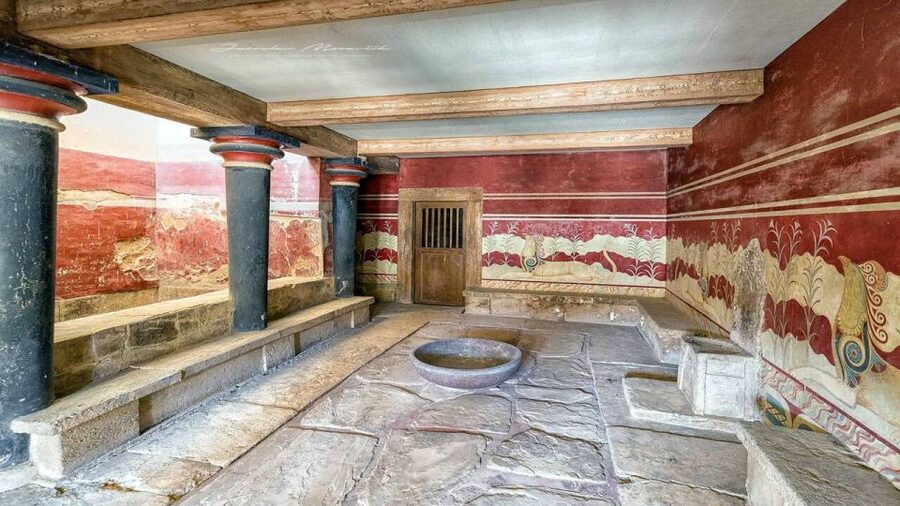
The central visit lasts about two hours in the planned schedule. That gives you enough time for a guided overview, but it is not an all-day archaeological study. You should expect a focused tour of the main remains rather than a leisurely examination of every corner.
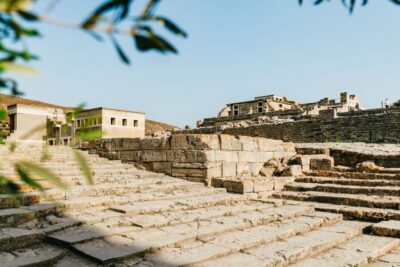
Knossos once contained about 1,300 rooms linked by corridors. The scale is one of the first things the guide can help you grasp. From ground level, ruins can look scattered and low. The original complex was far more ambitious, with sections rising as high as five stories.
That height matters. It points to advanced building methods and a carefully planned center rather than a simple village. The palace included public areas, work and storage spaces, and a theater. Its corridors also created the maze-like quality that helped feed later stories about the Labyrinth.
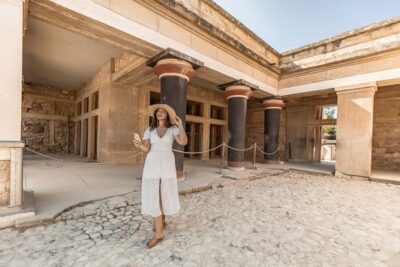
You will not see a complete ancient palace standing intact. You will see excavated remains, structural traces, and areas interpreted through archaeology. This is where guiding adds real value. A guide can connect a broken wall or foundation to the building it once supported, making the site easier to picture.
A few more palace visits around Heraklion worth a look
- Private Tour-Knossos Palace Zeus Cave Olive Oil Mill & Wine
★ 5.0 · 135 reviews - Crete: Knossos Palace and Museum E-Tickets with Audio Guides
★ 4.0 · 126 reviews - Knossos Palace guided tour – Heraklion City tour + market
★ 3.6 · 51 reviews - Chania – Knossos Palace Guided Tour
★ 4.4 · 39 reviews
Storerooms, food supplies, and Minoan planning
One of the most telling parts of Knossos is its storage system. Large clay containers held oil, grains, dried fish, beans, and olives. These were not decorative jars. They reveal how the palace managed food, supplies, and perhaps redistribution across the surrounding area.
The information about gold hidden beneath some containers adds a small note of drama, but the larger point is organization. A palace that stores food on this scale needs workers, transport, record keeping, and authority. I would pay attention when the guide explains these practical details because they say more about daily life than a familiar myth alone.
You may find the storerooms less immediately impressive than the larger architectural remains, but they are among the most useful places for understanding how the site functioned. They show that Knossos was not only a ceremonial center. It was also a place where goods were collected and controlled.
The tour is strongest when it links these ordinary details to the wider Minoan society. Oil, grain, fish, beans, and olives sound familiar, yet their storage in large quantities tells you about a highly organized economy many centuries before classical Athens.
Archaeology, Arthur Evans, and reconstruction
The site was discovered in 1878 by Minos Kalokairinos. Excavations began in 1900 under the English archaeologist Sir Arthur Evans and continued for 35 years.
That excavation story is important because the Knossos experience is not simply a walk through untouched ruins. Archaeologists made choices about how to expose, interpret, and present the remains. Reconstruction drawings and explanations can help you understand what Evans and his team believed the palace looked like.
The guide Sacarías was praised for using a book to show reconstructions and explain the palace in Spanish. If your tour is conducted in Spanish, that kind of visual aid may be especially helpful when the surviving walls do not immediately reveal the original shape.
I would listen carefully when the guide distinguishes between what remains and what has been reconstructed or interpreted. That habit keeps the visit honest. You can enjoy the visual sense of the ancient palace while remembering that some of the picture comes from modern archaeological decisions.
Legends of King Minos and the Labyrinth
Knossos is tied to the legendary King Minos, one of the best-known figures in Greek mythology. The palace is also linked with thrilling stories about the Labyrinth and the Minotaur.
The legends add energy to the visit, especially if you already know the basic story. Corridors and rooms make the setting feel less abstract than a myth read in a book. At the same time, I would not treat every legend as a confirmed description of palace life.
That balance is one reason to choose a guided visit. A good guide can tell you which parts belong to archaeology and which belong to later storytelling. You get the drama without confusing myth with proof.
The tour does not promise a separate mythology presentation, so the amount of time given to Minos and the Labyrinth will depend on the guide. Still, the connection is built into the site and is likely to form part of the explanation.
Is $70 a fair price?
At $70 per person, the price is reasonable only if you value the guide and the convenience of organized transport. You receive an air-conditioned vehicle, a professional guide, and the short ride from central Heraklion to Knossos and back. VAT and legal taxes are included.
The archaeological entrance fee is not included. That matters because the advertised $70 is not your final cost. Add the admission charge before comparing this outing with independent transport or a self-guided visit.
I can see the value for someone with limited time or little interest in arranging buses and directions. The guide provides context that a bare site visit may lack, and the three-hour schedule fits neatly into a morning.
The value is less clear if you already know Minoan archaeology, want to explore at your own pace, or need a very exact guided duration. One Italian-language booking record described the guide as saying the tour itself lasted 1.5 hours, despite the three-hour duration shown for the full outing. That discrepancy is worth checking before payment, especially since another quoted price was €79 per person.
Timing, walking, and practical comfort
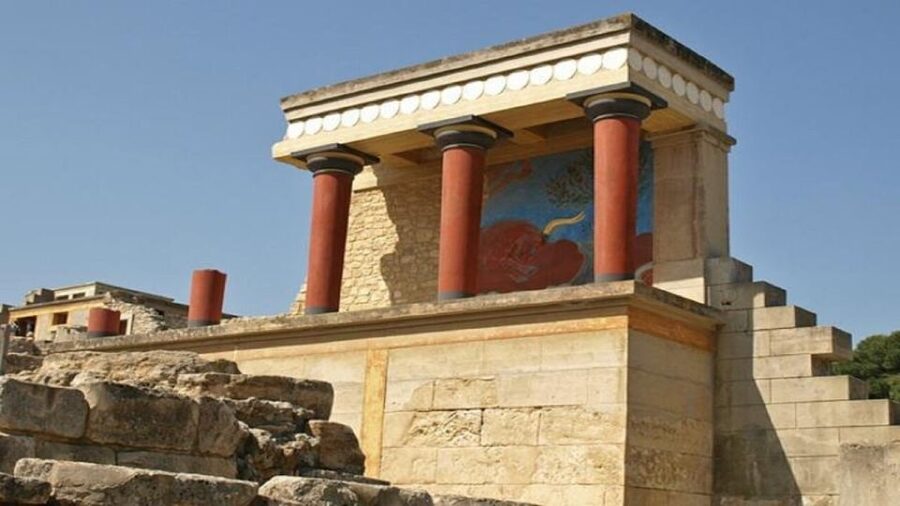
Bring comfortable shoes. The tour takes place at an archaeological site, and the experience involves walking around ancient remains rather than viewing everything from the vehicle.
The activity is not suitable for people with mobility impairments, and unaccompanied minors are not allowed. Those rules should guide your decision before booking, not after you arrive at the meeting point.
The morning schedule is efficient, but it can also feel brisk if you want to stop often for photographs or study details. Two hours at Knossos is enough for a guided introduction, yet you may want more time if you are especially interested in architecture, excavation methods, or the Minoan economy.
I would bring water and sun protection as sensible personal choices, although only comfortable shoes are specifically listed among the required items. The motorcoach is air-conditioned, which gives you a cool break before and after the site visit.
Who will get the most from this tour?
I would recommend this experience to first-time visitors who want to see Knossos without spending a full day on the subject. It suits you if you value clear explanations, prefer a morning departure, and like having transport arranged from central Heraklion.
It is also a good option for visitors who want to hear the palace explained in Spanish, Italian, French, or English. The praise for Sacarías suggests that the Spanish-language experience can be particularly strong when he is the assigned guide.
I would think twice if you have limited mobility, need hotel pickup, or want a private tour. I would also confirm the actual guided-site duration if a full two-hour explanation is important to you.
Cancellation is flexible up to 24 hours before departure for a full refund, and you can reserve while paying later. Those terms help if your Crete plans are still changing, but they do not remove the need to budget for the separate entrance ticket.
Should you book the Knossos half-day tour?
Book it if you want a focused, guided introduction to Knossos and prefer a simple morning from central Heraklion. The palace is important enough to deserve context, and the guide can turn rooms, corridors, storerooms, and legends into a coherent story.
Skip it if you want unhurried archaeological study, hotel transfers, or a fully inclusive price. Before booking, confirm the tour language, ask how long the guided visit will last, and add the entrance fee to the $70 cost. For most first-time visitors who want the essentials without giving up an entire day, this is a practical choice.
FAQ
How long is the Knossos Palace tour?
The full activity lasts three hours, from the 8:30 meeting time until the planned return at 11:30. The itinerary allows about 30 minutes each way for transport and two hours at the palace.
Where does the tour meet in Heraklion?
The meeting point is in front of Hari’s Creperie, across from the entrance to the Heraklion Archaeological Museum.
Is the entrance fee to Knossos included?
No. The archaeological site entrance fee is not included in the $70 tour price.
What languages are available?
The live guide service is available in English, Spanish, Italian, and French.
Is transportation included?
Yes. An air-conditioned motorcoach or van takes you to Knossos and returns you to the Heraklion meeting point. Hotel pick-up and drop-off are not included.
What should I bring?
Bring comfortable shoes for walking around the archaeological site.
Can children join the tour alone?
No. Unaccompanied minors are not allowed to take part.
Just added around Heraklion
- Minoan Path: Knossos Palace, Winery Visit, Lunch at Archanes★ 5.0 · 7 reviews
- From Heraklion Port: Highlights & Knossos Palace Shore Tour★ 4.5 · 6 reviews
- Crete: Lasithi Plateau & Knossos Palace Tour★ 3.8 · 10 reviews
- Lasithi, Mythology Park & Knossos Palace Tour From Heraklion★ 4.0 · 15 reviews
- Crete: Knossos Palace, Archaeological Museum & Heraklion★ 4.7 · 6 reviews
- Knossos Palace Private Tour with Licensed Guide and Tickets★ 5.0 · 3 reviews
- Knossos Palace &/or Zeus Cave + Olive Mill | Local & Private★ 5.0 · 4 reviews
- Knossos Palace , Museum & Heraklion city private tour★ 5.0 · 5 reviews
Knossos Palace Tours, compared.
Knossos Palace Entry Ticket with Optional Audio Guide
Read our review →
Knossos: Knossos Palace Skip-the-Line Guided Walking Tour
Read our review →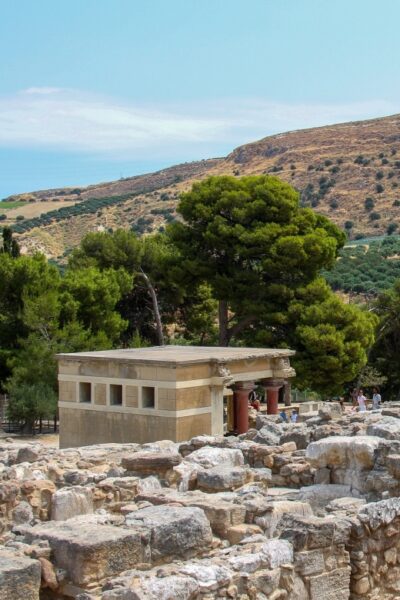
Knossos Palace and Museum E-Tickets with Audio Guides
Read our review →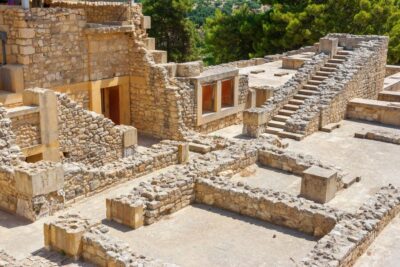
Knossos Palace Skip-the-Line Ticket & Private Guided Tour
Read our review →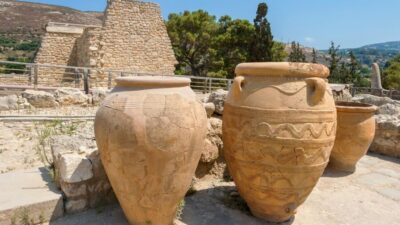
Knossos Palace Skip-the-Line Ticket (Shared Tour Group)
Read our review →Browse the lists this tour appears in