
REVIEW · HERAKLION
Knossos Palace Lasithi Plateau Villages & Olive Oil Mill
Crete rewards curiosity beyond the beach. This full-day trip links Knossos Palace with the mountain villages of Lasithi, an olive oil mill, Zeus Cave, local food, and quiet village stops. I like the mix of major archaeology and ordinary Cretan life, and I especially like that the day includes time for coffee, pottery, and a traditional lunch rather than only photo stops. The main drawback is the pace: seven to eight hours covers a great deal, and the cave, palace, and mountain roads may feel tiring for some people.
The tour costs $138.47 per person and includes hotel pickup in the Heraklion area, a Mercedes-Benz vehicle, an English-speaking driver-guide, coffee, water, taxes, and insurance. Entrance fees and lunch cost extra, so your final bill will be higher. The small maximum group size of 12 helps keep the day personal, and guides such as Spyros, Niko, and Ed have been praised for their humor, warmth, local contacts, and love of Crete.
Five things to know before booking
- Knossos comes at the end: You visit the famous archaeological site after the mountain villages, so you finish with Crete’s best-known ancient attraction.
- The Lasithi Plateau is the heart of the day: Windmills, villages, pottery, coffee, food, and Zeus Cave give you a broader look at inland Crete.
- Olive oil tasting is included: You learn how to smell, taste, and compare extra virgin, virgin, and refined olive oil.
- Lunch and entrance fees are extra: Allow another €20 for Knossos, plus the cost of the optional traditional tavern lunch.
- Pickup is limited to Heraklion: The company collects and returns you to accommodation in the Heraklion area, not Rethymno, Chania, Souda port, Agios Nikolaos, Sitia, or Ierapetra.
Why this day trip works so well
Many Crete excursions force you to choose between ancient sites and village life. This one tries to do both. You get the archaeological centerpiece at Knossos, but you also spend several hours seeing how food, crafts, coffee, and farming fit into daily life on the island.
I like that the day does not treat Lasithi as scenery viewed through a window. You stop at an olive press, walk around villages, visit a pottery workshop, sit in a kafeneio, and eat at a traditional restaurant. Those pauses give the tour its character.
The tradeoff is time. The schedule includes nine main stops, with about seven to eight hours on the road. Zeus Cave receives up to two hours, while the old plane tree at Krasi gets about 20 minutes. You will not have unlimited time anywhere, and the day is better for sampling several parts of Crete than for studying one place slowly.
The small group format matters here. A vehicle carrying no more than 12 people is easier to manage at village stops than a large coach. It also gives you a better chance to ask questions and request small adjustments when the day allows. Past visitors have particularly valued guides who made the tour feel like a drive with a proud local friend rather than a scripted bus outing.
More Knossos Palace Tours in Heraklion:
- Crete: Palace of Knossos E-Ticket and Audio Guide
★ 3.8 · 1,540 reviews - From Heraklion: Historical Center City Tour & Knossos Palace
★ 4.4 · 340 reviews - Crete: Knossos Palace, Heraklion City, Market Guided Tour
★ 4.2 · 164 reviews
Starting with olive oil at Omalia Olive Press
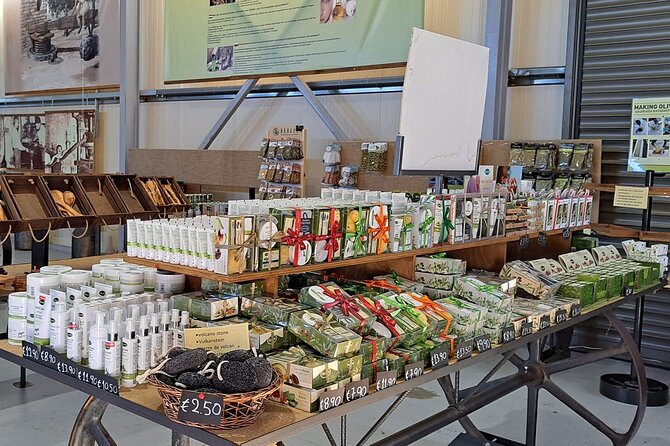
The olive mill is a smart first stop because it introduces one of Crete’s central foods before you start eating your way through the island. You learn about the work behind the bottle, from olives to oil, and see how a product used every day is tied to local farming and tradition.
The tasting is more than a quick sample. You learn to warm the oil in your hand, smell it, and sip it. The guide points out fruitiness, bitterness, and pepperiness, then explains the difference between extra virgin, virgin, and refined olive oil.
That lesson helps you shop more intelligently later. Extra virgin oil is not simply a decorative phrase, and the tasting gives you a way to notice quality with your own senses. I also like the sensory side of this stop: the smell, texture, and peppery finish make the subject easy to remember.
The visit lasts about an hour and has no separate admission charge. If you are buying oil, check how much room you have in your luggage. The tour includes transportation, but it does not state that purchases are included.
Seeing the Lasithi Plateau windmills
The Lasithi Plateau is known for its old windmills, once used to grind wheat and other grains. You get about 30 minutes here, enough to see the structures, take photographs, and hear why they mattered to farming in this high plain.
This is a short stop, so expect an introduction rather than a long historical visit. The value comes from placing the villages and olive groves in context. The plateau was not just a pretty mountain setting. It supported agriculture, milling, and village life.
The route includes time passing through olive groves, which connects neatly with the earlier mill visit. You see the crop in its setting, then learn how it becomes the oil poured over Cretan food.
Entering Zeus Cave near Psychro
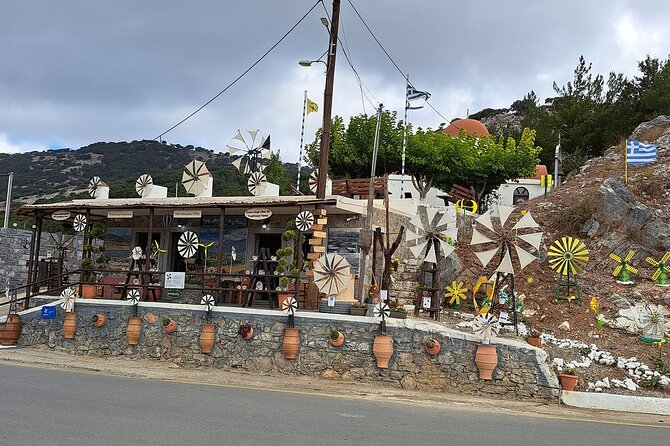
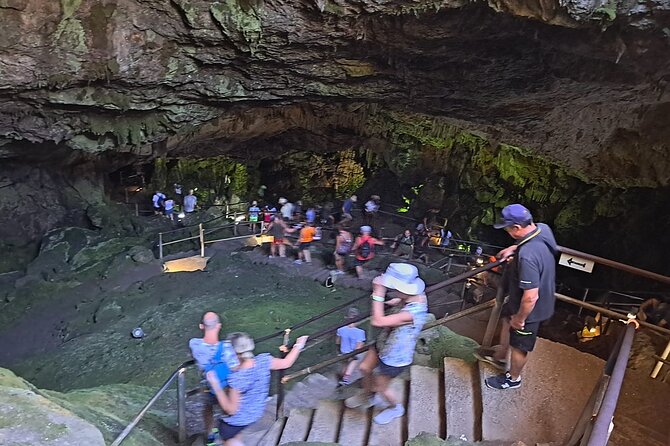
Zeus Cave, also called Dikteon Cave, is linked by ancient myth with the birth of Zeus. It is one of the day’s strongest stops for anyone interested in Greek mythology, though the cave is also a natural attraction in its own right.
You have about two hours here, far more than at the windmills or Krasi. That longer block suggests a more active visit. The admission fee is not included, so plan to pay separately at the cave.
The practical issue is comfort. A cave visit can involve uneven ground and a more physical walk than the village stops. The supplied information does not give a detailed accessibility description, so ask the operator if you have concerns about stairs, surfaces, or walking distance before booking.
The myth gives the site its instant appeal, but try to balance the story with the place itself. You are not only following a tale about the king of the gods. You are seeing how geography, religion, and local tradition overlap in Crete.
A few more palace visits around Heraklion worth a look
- Private Tour-Knossos Palace Zeus Cave Olive Oil Mill & Wine
★ 5.0 · 135 reviews - Crete: Knossos Palace and Museum E-Tickets with Audio Guides
★ 4.0 · 126 reviews - Guided Tour to Knossos Palace & Heraklion
★ 4.0 · 83 reviews - Knossos Palace & Historical Heraklion City Tour, with Old Market
★ 4.5 · 51 reviews
Pottery and coffee in Psychro and Lasithi Mesa
The pottery workshop in Psychro brings the day down to a human scale. You can watch a local craftsperson shape clay on a wheel, using methods passed down through generations. The stop lasts about 30 minutes and does not charge an admission fee.
This is a useful pause after the cave. Instead of moving straight from one major sight to another, you get a look at a practical art form. The pieces are both decorative and useful, and you may find something small to take home. Any purchase would be separate from the tour price.
Later, in Lasithi Mesa, you stop at a traditional Greek kafeneio for about 30 minutes. Greek coffee arrives in a small, handle-less cup with a glass of cold water. The setting is tied to everyday village life, where people gather to talk, play backgammon, or read the newspaper.
I consider this one of the tour’s best details. Coffee in a village café does not require a grand attraction. It gives you a brief look at the slower social rhythm of inland Crete. Greek coffee is strong and often leaves grounds at the bottom, so sip carefully rather than treating it like a quick espresso.
The exact plan may include local yogurt or bakery and market stops, depending on the guide and the day. Those additions were especially appreciated by families who wanted ordinary food and local contact, not only scheduled monuments. Since the formal details specifically include coffee and water, treat any extra food stop as a possible addition rather than a promise.
Eating at Restaurant Tzanakis Michael
The optional lunch is held at a traditional tavern and lasts about an hour. You pay separately, but this is the meal I would consider budgeting for, since food is one of the clearest ways to understand Cretan culture.
Possible dishes include moussaka, with eggplant, minced meat, and béchamel, or stifado, a slow-cooked beef stew with onions and a hint of cinnamon. The meal is presented as traditional Cretan cooking made with fresh local ingredients.
Ask your guide what is best that day. A set dish can be enjoyable, but local advice may help you choose something suited to your taste. Families have described the lunch as one of the best meals of their time in Greece, while others appreciated the chance to eat where local people go.
Because lunch is optional and not included, the tour price is not the full cost of the day. Still, paying for an authentic meal is more satisfying than treating food as an afterthought. If you have dietary needs, ask before departure because no specific dietary arrangements are provided in the tour details.
Krasi and its ancient plane tree
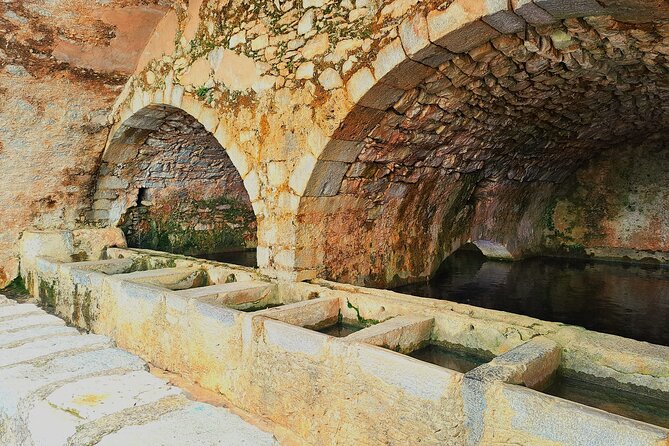
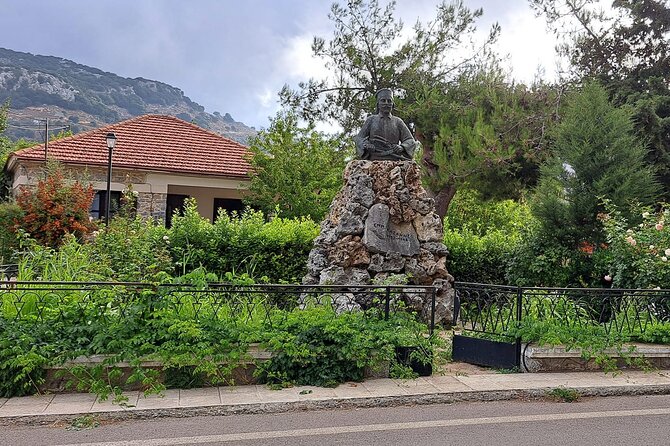
Krasi is a small village known for traditional Cretan buildings and a quiet atmosphere. You have about 20 minutes to walk around and see its enormous plane tree, estimated to be more than 2,400 years old.
The short stop is enough for photographs and a quick look, but not enough for a long village walk. The tree has served as a shaded meeting place for centuries, making it more than a botanical curiosity. It connects the modern village with a very long stretch of local life.
I would not book this tour solely for Krasi. I would value it as a pause between the larger attractions, especially if you enjoy old trees, village architecture, and places that feel calm rather than heavily developed.
Aposelemis Dam and the road back to Heraklion
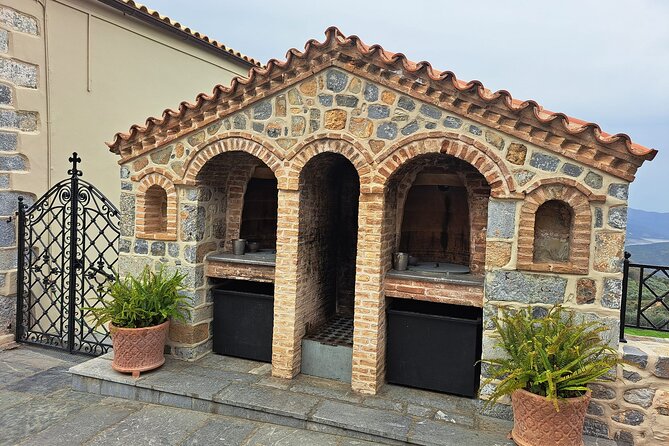
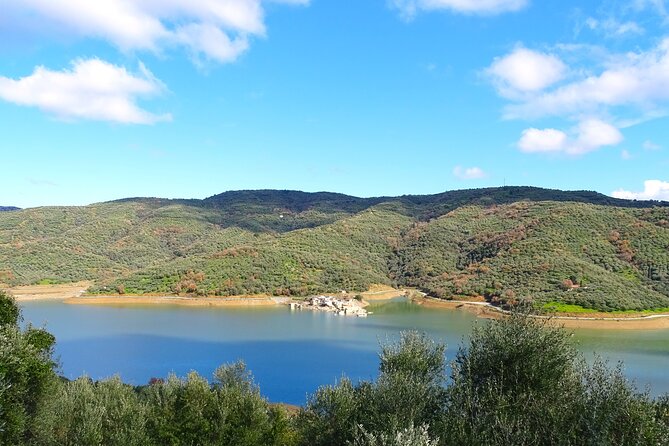
Aposelemis Dam is a brief 10-minute stop for views over the reservoir and surrounding mountains. You hear about the dam’s construction, its role in local water supply, and efforts to protect the surrounding habitat.
Ten minutes is short, so this is mainly a viewpoint and orientation stop. The water and hills create good photo opportunities, but you should not expect an extended nature walk or a detailed engineering visit.
The stop also reminds you that Crete’s beauty depends on practical resources. Water supply matters on an island, and the dam shows how modern needs meet natural surroundings. It is a small but worthwhile change of subject before Knossos.
Exploring Knossos after the mountains
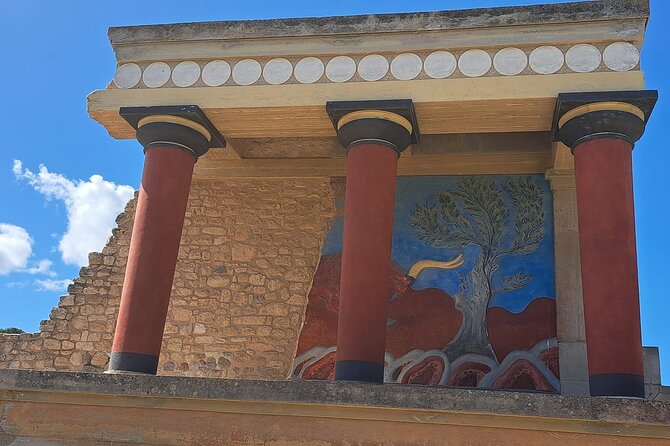
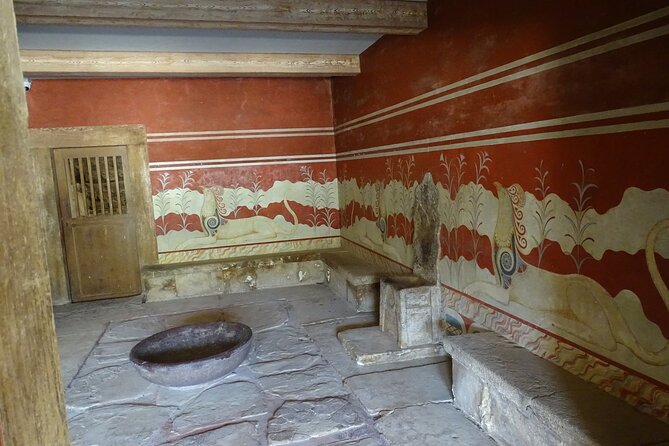
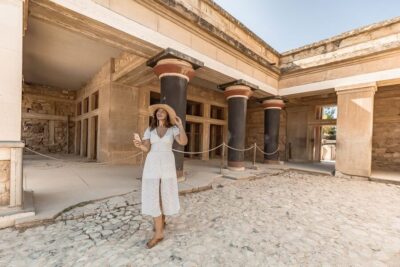
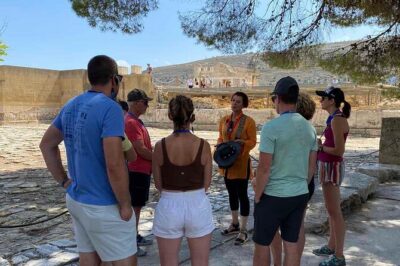
Knossos is the grand finale, with about 90 minutes inside the archaeological site. The palace served as the political and ceremonial center of the Minoan civilization and dates to around 1900 BC. It is often described as Europe’s oldest city and the largest Bronze Age archaeological site in the world.
You can see the Central Court, Throne Room, Grand Staircase, Royal Apartments, and restored frescoes. The site’s layout gives you a sense of a complex society with organized spaces, impressive construction, and strong artistic traditions.
Admission is not included and costs €20 per person. Bring that amount into your calculation before booking. The 90-minute visit is enough for a guided overview of the main areas, but it may feel brief if you want to read every sign or examine each architectural detail.
Knossos can be confusing without context. A good guide helps explain what is original, what was restored, and how the palace fits into Minoan civilization. The tour’s English-speaking driver-guide is included, so you are not left to make sense of the site alone.
Ending here makes practical sense. By this point, you have seen the rural side of Crete and can place Knossos within the island’s wider culture. The visit feels less like an isolated ruin and more like the final chapter of a day about food, farming, myth, craft, and ancient power.
Guides, vehicle, and group size
The company provides an English-speaking local driver-guide and transportation in a Mercedes-Benz vehicle. Pickup and drop-off are included from accommodation in the Heraklion area, which saves you the trouble of arranging a taxi to a meeting point.
The operator does not collect from Rethymno, Chania, Souda port, Agios Nikolaos, Sitia, or Ierapetra. This matters because the tour may look suitable for anyone staying on Crete, but the pickup area is specific.
The maximum group size is 12. That is small enough for conversation, and it suits a day with many stops. Guides named Spyros, Niko, and Ed have been praised for being friendly, funny, patient with children, and eager to share their home. Families have also appreciated the relaxed approach with young children, including a 10-month-old.
You receive coffee and water, plus all fees and taxes and liability insurance. These inclusions make the price easier to understand, but they do not cover the €20 Knossos ticket, Zeus Cave admission, lunch, or personal purchases.
Is $138.47 good value?
At $138.47 per person, this is not the cheapest way to see Knossos. It is also not simply a transfer to the palace. You are paying for a full day with hotel transportation, a small group, a vehicle, a local guide, an olive oil visit, mountain villages, a cave, food culture, and archaeology.
The value is strongest if you want variety and personal interpretation. A family or small group can cover several parts of Crete without renting a car or planning mountain roads. The price is less appealing if your only goal is Knossos, or if you prefer to spend a whole day at one archaeological site.
Add €20 for Knossos, the cave entrance, and lunch if you choose it. Your final cost will therefore be higher than the advertised figure. Still, the included transport and guide can make the overall day reasonable, especially when compared with organizing multiple taxis or a rental car.
Who should book this Crete tour?
I would recommend it to first-time visitors based in Heraklion who want a broad introduction to Crete. It suits families, couples, and small groups who enjoy food, villages, history, and scenery in equal measure.
It is also a good fit for anyone who wants a local guide rather than a large coach experience. The personal style of guides such as Spyros appears to be a major part of the appeal, especially for people who enjoy questions, conversation, and small changes to the day.
You may want another option if you dislike long days, cave walks, repeated vehicle time, or a schedule with many short stops. People focused on detailed archaeology should allow more time at Knossos separately. People staying outside the Heraklion pickup zone should also contact the operator before paying.
Cancellation is free up to 24 hours before the start time. Poor weather or failure to reach the minimum number of participants can lead to a different date, another experience, or a full refund.
Should you book it?
Book this tour if you want to see more than Knossos in one day. The strongest combination is the olive oil lesson, Lasithi villages, Greek coffee, traditional food, and a guide who can connect each stop to Cretan life.
Skip it if you want a slow, single-site visit or dislike paying extra for lunch and admissions. For most people staying in Heraklion, though, this is a well-rounded way to meet the island: ancient at Knossos, mythical at Zeus Cave, practical at the olive mill, and wonderfully ordinary over coffee in a village café.
FAQ
Where does the tour pick up?
Pickup and drop-off are provided from accommodation in the Heraklion area.
Does the tour pick up in Chania or Rethymno?
No. Pickup is not provided from Rethymno, Chania, Souda port, Agios Nikolaos, Sitia, or Ierapetra.
How long does the tour last?
The tour lasts approximately seven to eight hours.
Is Knossos Palace admission included?
No. Knossos admission costs €20 per person and is paid separately.
Is lunch included?
No. Lunch at the traditional tavern is optional and not included in the tour price.
Is Zeus Cave admission included?
No. The admission fee for Zeus Cave is not included.
What language is the tour offered in?
The tour is offered in English and includes a local English-speaking driver-guide.
How many people can join the group?
The maximum group size is 12 people.
Just added around Heraklion
- Private Guided Tour to Knossos Palace, the Museum and Heraklion★ 5.0 · 13 reviews
- Palace of Knossos – Early Morning Ticket and avoid crowds★ 5.0 · 10 reviews
- Minoan Luxuries: Ancient Palaces, Messara Wine Routes & Matala★ 5.0 · 11 reviews
- Small Group Tour to Knossos Palace Lasithi Plateau & Olive Mill★ 5.0 · 3 reviews
- Crete Shore Trip & Knossos Palace from Heraklion (Iraklion) Port★ 5.0 · 25 reviews
- Minoan Path: Knossos Palace, Winery Visit, Lunch at Archanes★ 4.5 · 12 reviews
- Knossos Palace and Heraklion Guided Tour with Transport★ 5.0 · 2 reviews
- Knossos Palace and Plateau of Lassithi from Heraklion Region★ 4.0 · 16 reviews
Knossos Palace Tours, compared.
Knossos Palace Entry Ticket with Optional Audio Guide
Read our review →
Knossos: Knossos Palace Skip-the-Line Guided Walking Tour
Read our review →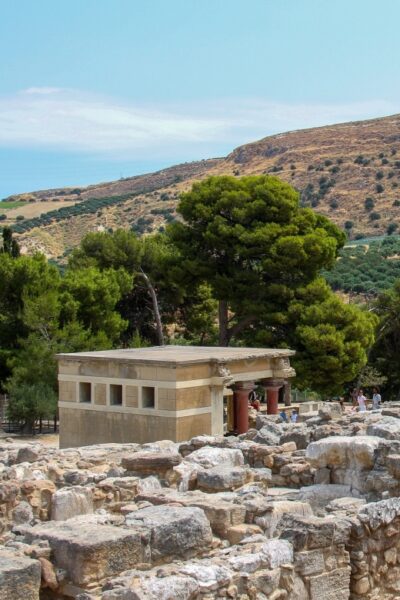
Knossos Palace and Museum E-Tickets with Audio Guides
Read our review →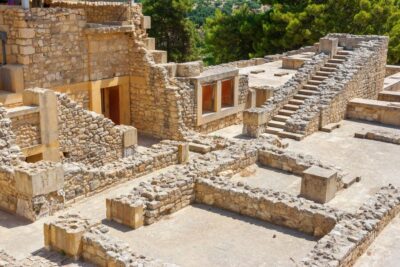
Knossos Palace Skip-the-Line Ticket & Private Guided Tour
Read our review →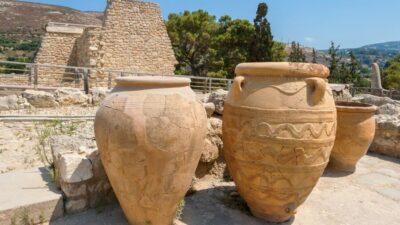
Knossos Palace Skip-the-Line Ticket (Shared Tour Group)
Read our review →Browse the lists this tour appears in