
REVIEW · SPAIN
Granada: Palacio de los Olvidados and Torture Exhibition
Some museums make history hard to forget. Granada’s Palacio de los Olvidados combines a restored 16th-century palace, an interactive flamenco display, and more than 70 instruments linked to the Spanish and European Inquisition. I like the unusual mix of subjects, and I like the final-floor views toward the Alhambra and Albaicín. The main drawback is size: this is a compact museum, and the torture exhibition may feel lightly explained if you want a full guided history lesson.
At $8 per person, it is an inexpensive add-on near the Alhambra area. Plan on 45 minutes, though you may spend closer to an hour if you read the Spanish and English descriptions carefully. The building has no elevator, so its three floors are not suitable for people with mobility impairments.
Key points to know before you go
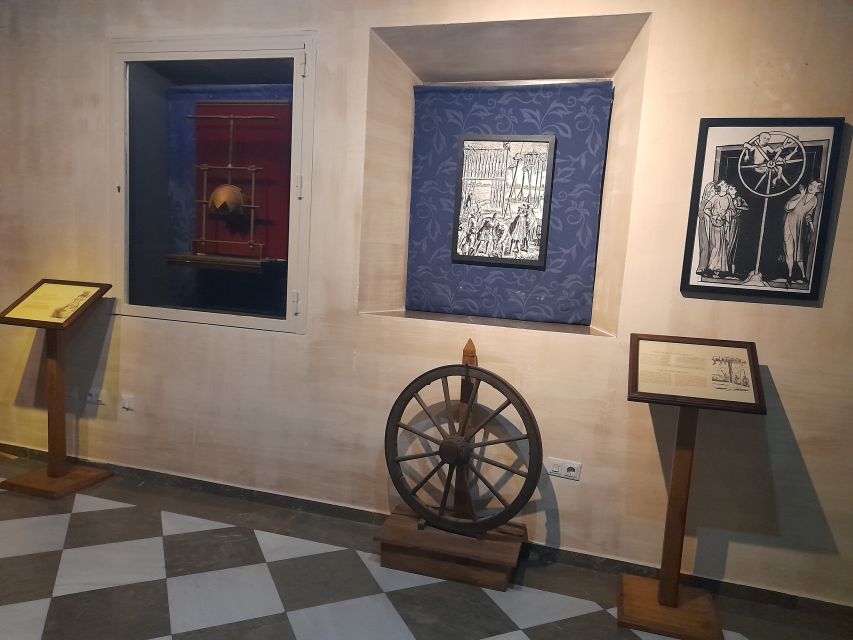
- More than 70 torture instruments: The second floor presents equipment used by Spanish and European inquisitorial courts.
- Three very different floors: You move from interactive flamenco to Inquisition history, then up to views of the Alhambra.
- A restored 16th-century palace: The building itself gives the visit more character than a plain exhibition room.
- Bilingual exhibit descriptions: Most displays have information in both Spanish and English.
- Compact and easy to fit into a day: The stated visit lasts 45 minutes, with about an hour useful if you read every note.
- Stairs matter: There is no elevator, so the museum is not appropriate for people with mobility impairments.
Entering the Palacio de los Olvidados
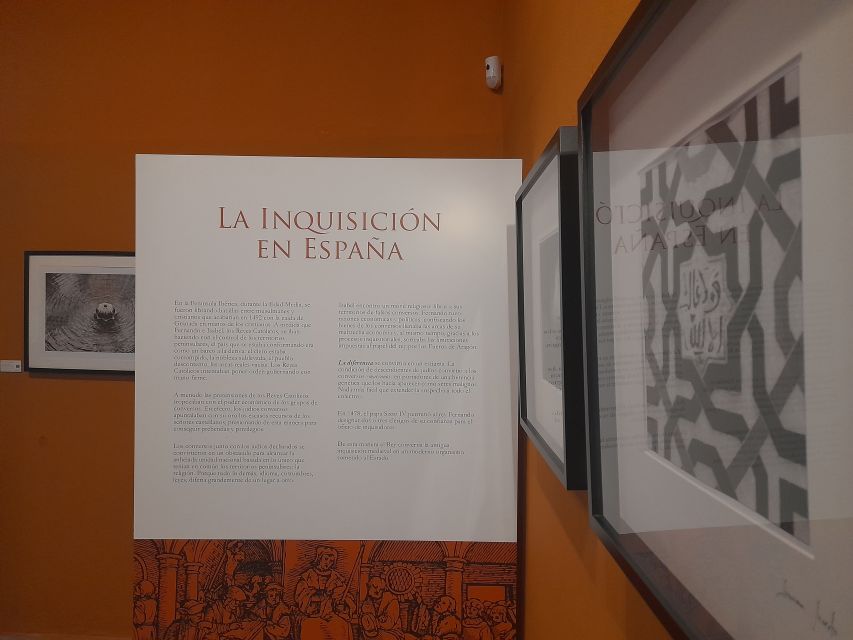
The museum sits at Cuesta de Sta. Inés, 6, at the foot of the Alhambra Palace. That location is useful if you are already exploring the old quarter or planning time around the Alhambra. You do not need to give half a day to this stop. It is a short, focused visit that can fill a gap between larger sights.
The setting matters. The Palacio de los Olvidados is a restored building from the 16th century, not a purpose-built modern museum. I like that the visit begins with a sense of place before you even reach the displays. The palace name translates roughly as Palace of the Forgotten, which suits an exhibition about subjects often pushed to the edge of polite history.
Keep your expectations in check. This is not a grand palace tour with room after room of original furnishings. The appeal comes from the combination of the building, the three-floor format, and the unusual subjects. You are paying for a compact cultural stop, not a full-day attraction.
The museum’s layout also creates a clear rhythm. The first floor looks at flamenco. The second turns to torture and the Inquisition. The third opens to views over Granada. That change of mood is striking, although the subjects do not form one tightly connected story.
More Museum Visits in Spain:
- Royal Palace & Prado Museum Skip the Line Guided Tour
★ 4.5 · 1,347 reviews - Madrid: Prado Museum and the Royal Palace Guided Tour
★ 4.6 · 688 reviews - Madrid in a Day Tour:Royal Palace, Historic Center & Prado Museum
★ 5.0 · 628 reviews
First floor: an interactive look at flamenco
The first floor contains the Interactive Flamenco exhibition. Its aim is to recreate several sensations associated with flamenco rather than simply display costumes or photographs. You learn about flamenco’s past and present, its compasses, its cantes, its voice types, and its dances.
The wording can sound technical, but the basic idea is approachable. Flamenco is not just a dance performed to music. It includes rhythm, song, voice, movement, and a strong sense of timing. This exhibition tries to separate those parts so you can understand how they work together.
I like this as an opening because it gives you something active before the darker second floor. The exhibition is designed around sound, movement, and performance, at least in concept, rather than only written panels. If you have never spent time learning the basic parts of flamenco, this can help you recognize what to listen for during a later performance in Granada.
The flamenco section may also appeal to families and curious first-time visitors who would find a strictly historical display too dry. You are not expected to arrive as a flamenco expert. The point is to get a basic feel for the art form and its vocabulary.
Still, this is not the main reason most people choose the museum. The torture exhibition receives the greater share of attention, and the first floor may feel like an unexpected prelude. If your interest is only in the Inquisition, you might move through the flamenco material quickly. If you want a more rounded visit, give it time.
Second floor: more than 70 instruments of torture
The second floor holds the main exhibition, titled Inquisition, Instruments of Torture. It presents more than 70 instruments associated with the Spanish and European inquisitorial courts.
This is the part that gives the museum its strongest emotional charge. The objects are not simply old tools. They are reminders of how courts and authorities used fear, pain, punishment, and public control. The subject is difficult, but it offers a direct way to think about Spain’s complex past and the wider European use of judicial torture.
The collection works best when you move slowly. Most pieces have descriptions in both Spanish and English, which makes the visit more useful for English-speaking visitors. You can look at an object, read what it was intended to do, and consider the legal and social system that allowed such equipment to be used.
Do not expect a large institution with a long chain of galleries. The museum is fairly small. One hour is a sensible maximum for most people, and 45 minutes may be enough if you read selectively. That compact scale is convenient, but it also explains one common limitation: some visitors may want more background and fuller explanations.
I would treat the written material as an introduction, not a complete course on the Inquisition. The displays can show the instruments and give you context, but the experience does not promise a long lecture or detailed historical argument. If you want dates, individual cases, court records, and a broad study of religious persecution, you will need a larger museum or a separate guided tour.
The collection also calls for a little restraint. The subject can tempt a museum to rely on shock value. I find the visit more worthwhile when you focus on what the instruments reveal about law and power, rather than treating them as a catalogue of gruesome curiosities. The best reason to visit is not simply that the objects are disturbing. It is that they make an abstract part of European history concrete.
Some of the items may strike you as ingenious in a grim way. That reaction is understandable, and it is part of the exhibition’s effect. But the displays should leave you thinking about the people subjected to these methods and the authorities who approved them. That is where the museum moves beyond spectacle.
Third floor: Alhambra and Albaicín views
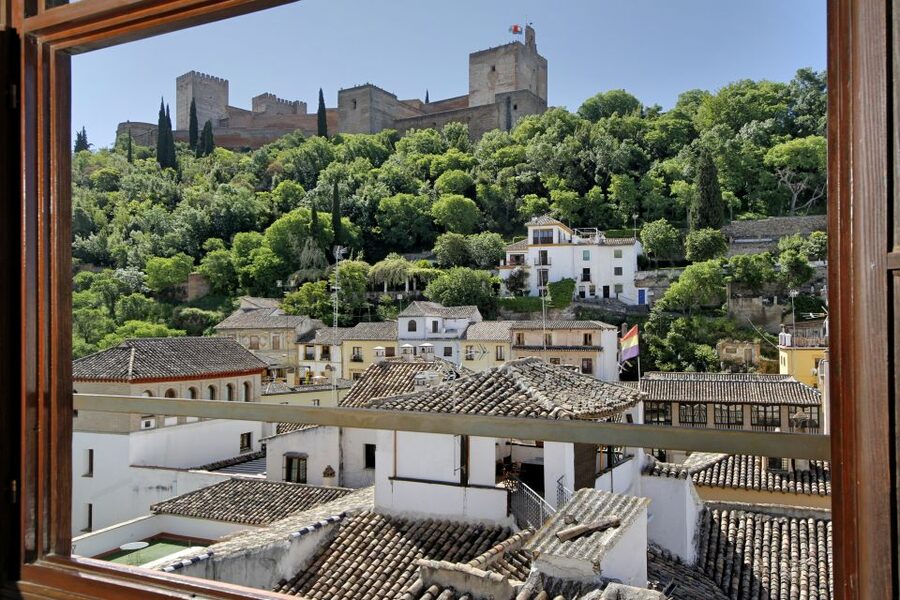
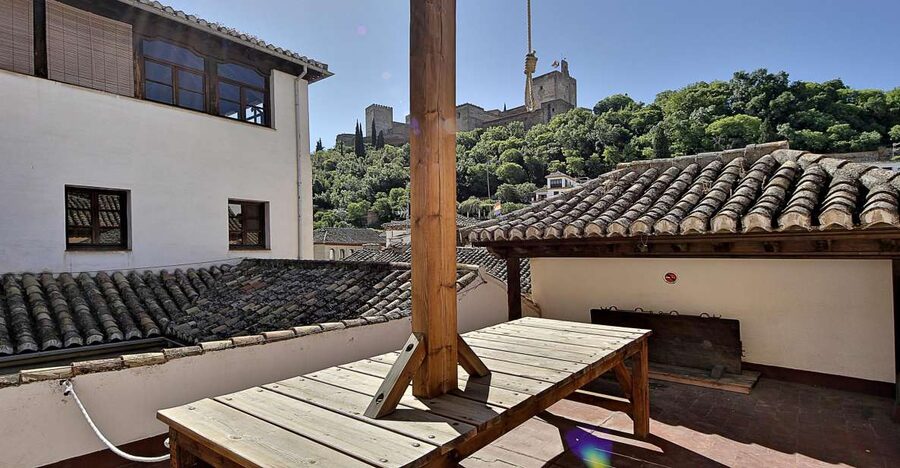
The third floor provides panoramic views of the Alhambra and Albaicín. This is a welcome change after the enclosed exhibits below.
The view is one of the easiest reasons to recommend the museum as a short stop. You get an elevated look at two of Granada’s defining sights without committing to another large attraction. The Alhambra is especially impressive from almost any useful viewpoint, and seeing it from this restored palace adds a small sense of discovery to the visit.
The final floor also gives the experience a natural ending. After the flamenco display and the grim instruments, you step into open air and reconnect with the city outside. I like that the museum does not finish in a shop or at the end of a narrow corridor. It ends with Granada itself.
The information provided does not specify exactly how much of the city can be seen from the terrace or viewing area, so I would not book this solely as a major lookout point. Think of the views as a bonus that adds value to the museum ticket. If you want a full panorama of Granada, you should not treat this brief visit as a replacement for the city’s dedicated viewpoints.
A few more palace visits around Spain worth a look
- Granada: Alhambra & Nasrid Palaces Tour with Tickets
★ 4.7 · 19,801 reviews - Granada: Alhambra and Nasrid Palaces Entry Ticket
★ 4.6 · 15,130 reviews - Madrid: Royal Palace Fast-Access Admission Ticket
★ 4.6 · 13,856 reviews - Madrid: Royal Palace Expert Guided Tour with Skip-the-Line
★ 4.7 · 8,407 reviews
How long the visit really takes
The advertised duration is 45 minutes. That is realistic for a straightforward visit through all three floors. You can see the main displays, spend a little time with the flamenco section, read some of the bilingual notes, and finish with the views.
If you read every description, allow closer to an hour. That extra time matters on the torture floor, where the objects need context and the English notes slow your pace slightly. Rushing through the displays would reduce the visit to a series of grim-looking objects without much meaning.
The small size is both an advantage and a limitation. You can fit the museum into a busy Granada schedule, perhaps before or after another sight in the old quarter. You are unlikely to feel trapped in a long, fixed program. On the other hand, anyone expecting a major museum may find the experience short.
At $8, the timing works in its favor. You are not paying a premium for an all-day attraction. The price is reasonable if you want something unusual, close to the Alhambra, and easy to complete in under an hour. It is less convincing if you are interested only in one narrow historical topic and expect extensive interpretation.
What the ticket includes, and what it does not
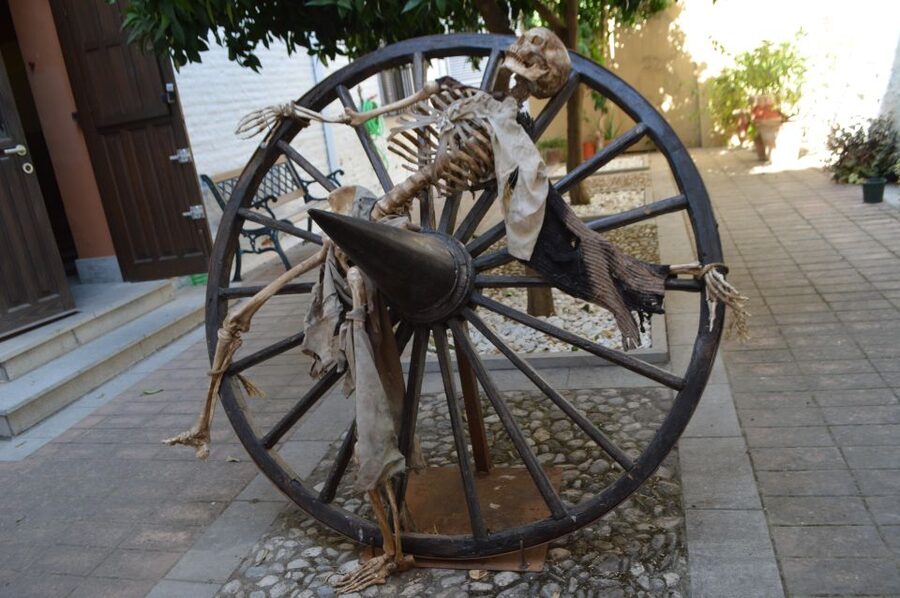
The admission covers a visit to the Palacio de los Olvidados and the exhibition currently presented there, including the Inquisition and ancient instruments of torture. The flamenco exhibition and the upper-floor views are part of the overall museum experience.
You should not assume that the ticket includes a full personal guide. The information provided focuses on the exhibits themselves, and one useful caution is that the displays can feel short on explanation. If a guided tour is important to you, check the available option before booking rather than assuming the admission automatically includes one.
There is also a minimum of five participants for a guided tour with the student discount. That condition matters if you are a student or are counting on a student-priced guided visit. It does not mean that every standard admission requires five people, but it is a detail worth checking when selecting your ticket.
The facility has no elevator. Since you must use the stairs between floors, this experience is not suitable for people with mobility impairments. That is not a minor footnote here because the museum’s three-part structure depends on reaching each level.
The stated booking terms allow free cancellation up to 24 hours in advance for a full refund. You can also reserve now and pay later, which is useful if your Granada schedule depends on Alhambra entry times, weather, or other fixed plans.
Who will enjoy this museum most
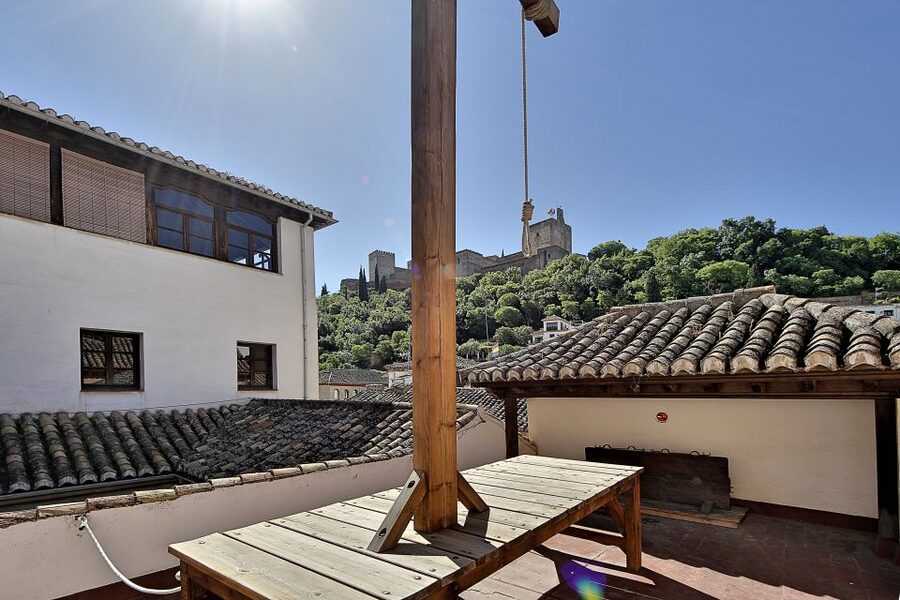
I would recommend the Palacio de los Olvidados to you if you like unusual small museums and want a subject that differs from Granada’s usual palace and church circuit. The combination of flamenco, Inquisition instruments, and city views gives the visit more variety than the title alone suggests.
It is also a good choice if you have limited time. Forty-five minutes is manageable, and the $8 cost keeps the risk low. You can add it to a day in the old quarter without rearranging your entire schedule.
History-minded adults will probably get the most from the second floor, especially if they are willing to read the descriptions and think beyond the visual shock of the objects. The bilingual notes make the displays easier to follow if you do not read Spanish.
Families may appreciate the short duration, but parents should consider the subject matter. A museum devoted to torture is not automatically suitable for young children, and the available information does not provide a recommended age range. Use your judgment based on your child’s comfort with disturbing historical material.
I would be less enthusiastic if you want a large palace interior, a long guided lecture, or a polished museum with extensive scholarly context. The experience is compact and somewhat direct. Its strength is the unusual collection and setting, not depth on every historical question.
My practical verdict on the $8 price
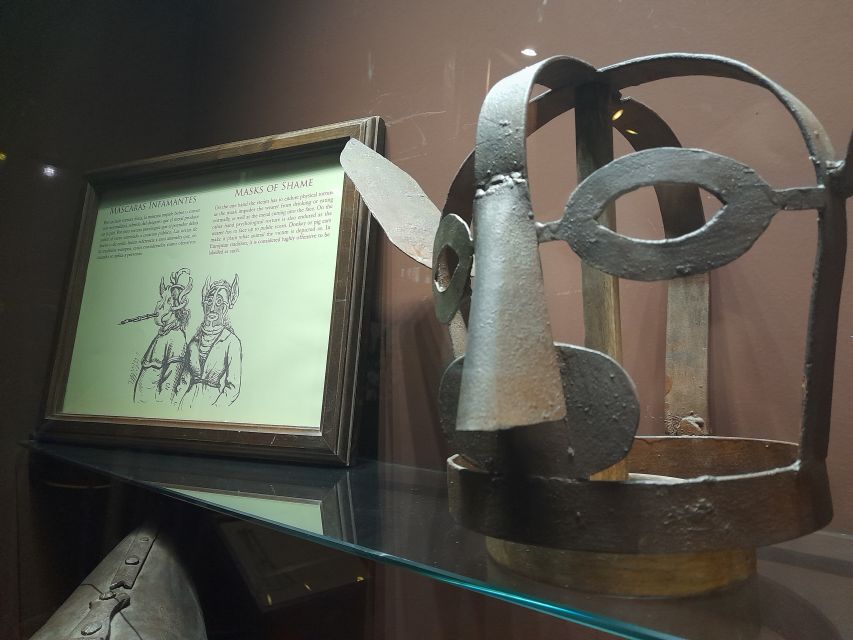
At $8 per person, the museum offers fair value. You receive access to three distinct floors, more than 70 instruments, an interactive flamenco display, and views toward the Alhambra and Albaicín. The visit also lasts long enough to feel like more than a quick photo stop if you read the notes.
The strongest value comes from the combination. A torture exhibition by itself might take less time, while the palace setting and views give the ticket extra weight. The flamenco floor adds another layer, even though it may not interest everyone equally.
The price feels less worthwhile if you expect a detailed history course. The museum can introduce the subject, but it may not answer every question. One concise visit cannot fully explain the Spanish Inquisition, the many courts involved, or the broader European use of torture.
My advice is simple: budget around an hour, read the English descriptions, and judge the museum as a small historical attraction rather than a major Granada landmark. That makes the cost easier to assess and the experience more rewarding.
Should you book the Palacio de los Olvidados?
Book it if you want an affordable, unusual stop near the Alhambra and you are comfortable with disturbing historical material. I especially like it for a flexible Granada itinerary because the visit is short, the cost is modest, and the final views add something beyond the displays.
Skip it if you need step-free access, dislike torture exhibitions, or want extensive expert explanation. The lack of an elevator is decisive for some people, and the compact format may feel thin if you expect a large museum.
For everyone else, the museum is a worthwhile small addition. Go for the 70-plus instruments, stay for the restored palace and flamenco section, then finish by looking across to the Alhambra. That is a good amount of Granada in 45 minutes.
FAQ
Where is the Palacio de los Olvidados?
It is at Cuesta de Sta. Inés, 6, 18010 Granada, Spain, at the foot of the Alhambra Palace.
How much does admission cost?
The listed price is $8 per person.
How long does the visit last?
The stated duration is 45 minutes. If you read the exhibit descriptions carefully, you may spend around an hour.
What is on the three floors?
The first floor has the Interactive Flamenco exhibition. The second floor contains more than 70 instruments of torture connected with Spanish and European inquisitorial courts. The third floor offers panoramic views of the Alhambra and Albaicín.
Are the descriptions available in English?
Most of the exhibits have descriptions in both Spanish and English.
Is the museum accessible to people with mobility impairments?
No. There is no elevator in the museum, and the experience is not suitable for people with mobility impairments.
Just added around Spain
- Palacio San Dionisio – Sherry Wine Museum★ 5.0 · 3 reviews
- Malaga: Granada Day Trip with Alhambra, Palaces and Gardens★ 4.5 · 197 reviews
- Royal Palace of Madrid Skip-the-Line and Retiro Park Tour★ 4.5 · 78 reviews
- Madrid: VIP Private visit to Royal Palace and Prado Museum★ 5.0 · 14 reviews
- Madrid: Royal Palace Private Tour with Entry Ticket★ 5.0 · 4 reviews
- Madrid: The Royal Palace Skip-the-line Guided Tour★ 4.7 · 21 reviews
- Madrid: Royal Palace Private Tour with Tickets★ 4.7 · 13 reviews
- Madrid: Royal Palace Tour, Flamenco Show, & Tapas with Drink★ 3.9 · 39 reviews
Museums, compared.

Venice’s Best: Basilica, Doge’s Palace, Gondola & History Gallery
Read our review →
Royal Palace & Prado Museum Skip the Line Guided Tour
Read our review →
City Pass with Museums including Doge’s Palace
Read our review →
Knossos Palace and Museum E-Tickets with Audio Guides
Read our review →
Venice Museum Pass & Doge’s Palace Entrance Ticket
Read our review →
Palace, Museum, Madrasa & Medina Highlights Tour
Read our review →
Browse the lists this tour appears in