
REVIEW · SOUTH HOLLAND, NETHERLANDS
The Hague: Escher in The Palace Museum Ticket
Escher makes ordinary reality misbehave. I like the museum’s 130-plus original prints, especially the huge seven-meter Metamorphosis III, and I like how the former Winter Palace keeps its royal interiors alongside the art. The hands-on exhibits give children and adults a reason to look twice.
The main consideration is space. Some rooms can feel small and dim, especially around the video presentation, so this is better approached as a focused one-to-two-hour museum visit than a full-day outing. Large bags and luggage are not allowed inside.
Key points to know before you go
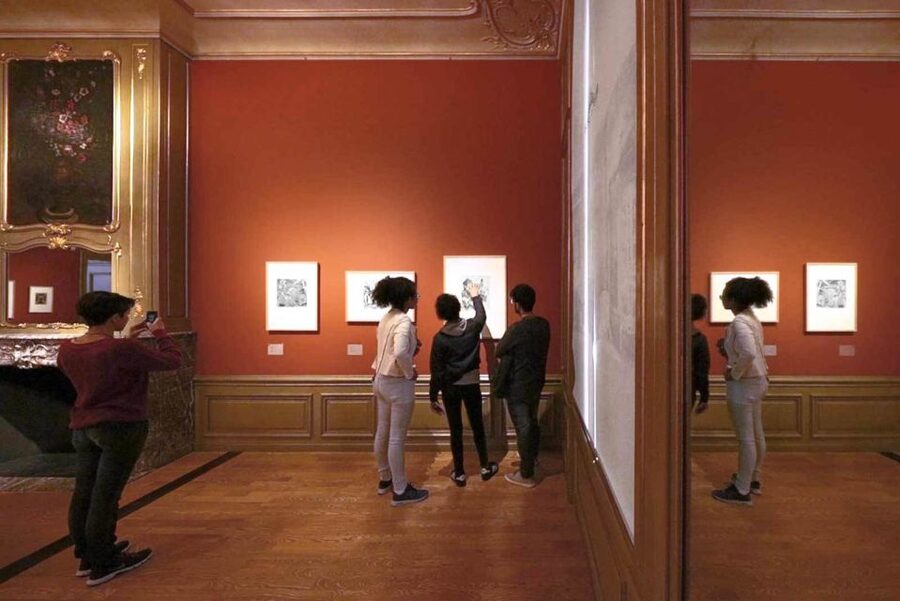
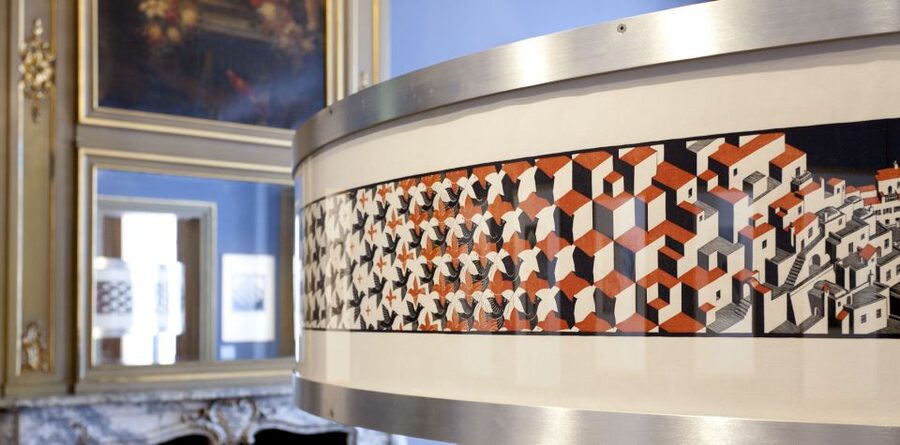
- The seven-meter Metamorphosis III is displayed in an unusual way that lets you follow Escher’s ideas across time and space.
- The former Winter Palace of Queen Mother Emma still has its original royal atmosphere, including eye-catching chandeliers and decorative details.
- The top-floor interactive section turns Escher’s visual tricks into puzzles for your eyes and hands.
- The collection covers more than famous optical illusions, showing how Escher’s style developed over time.
- The $15 ticket is good value for a compact museum visit, especially with the audio guide included.
- Families get useful extras, including a free children’s treasure hunt and free admission for children up to age six with a paying adult.
Entering Escher’s former royal setting
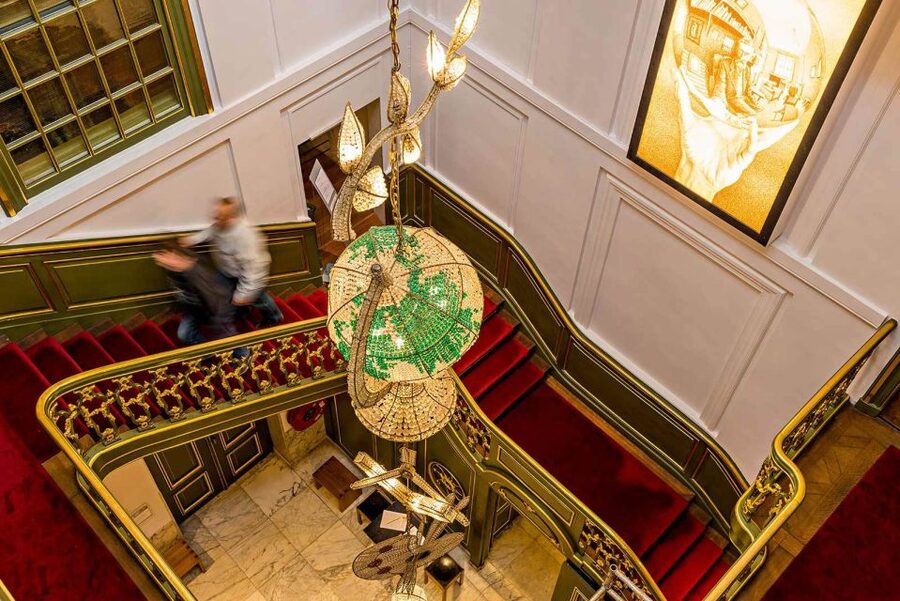
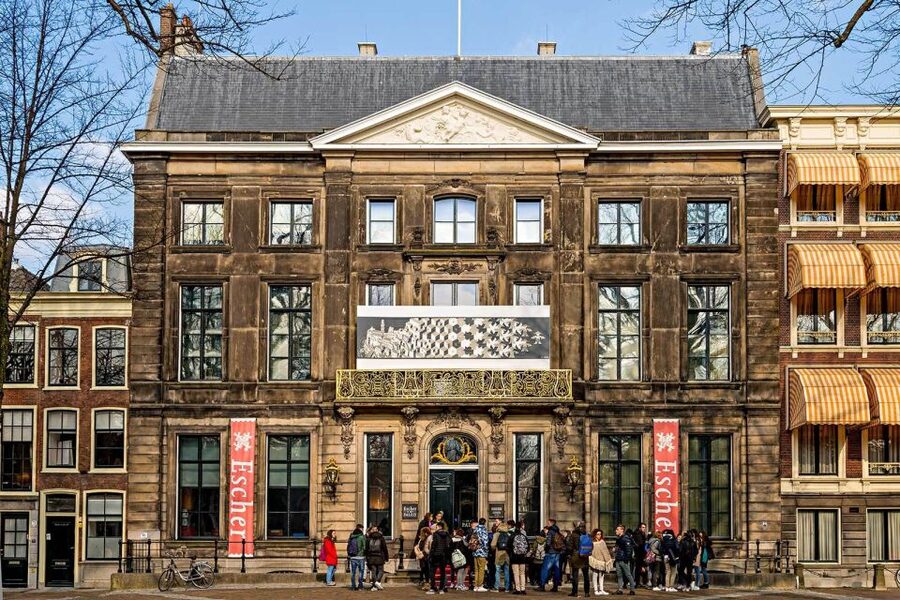
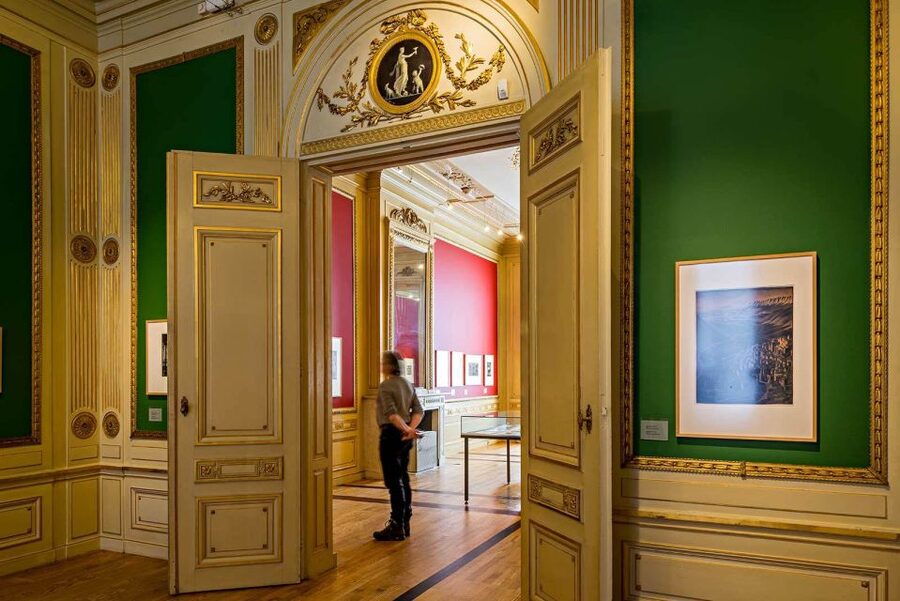
Escher in Het Paleis occupies the former Winter Palace of Queen Mother Emma of the Netherlands on Lange Voorhout. This setting matters. You are not walking into a plain white gallery. The art shares space with polished floors, grand rooms, chandeliers, and the atmosphere of a former royal residence.
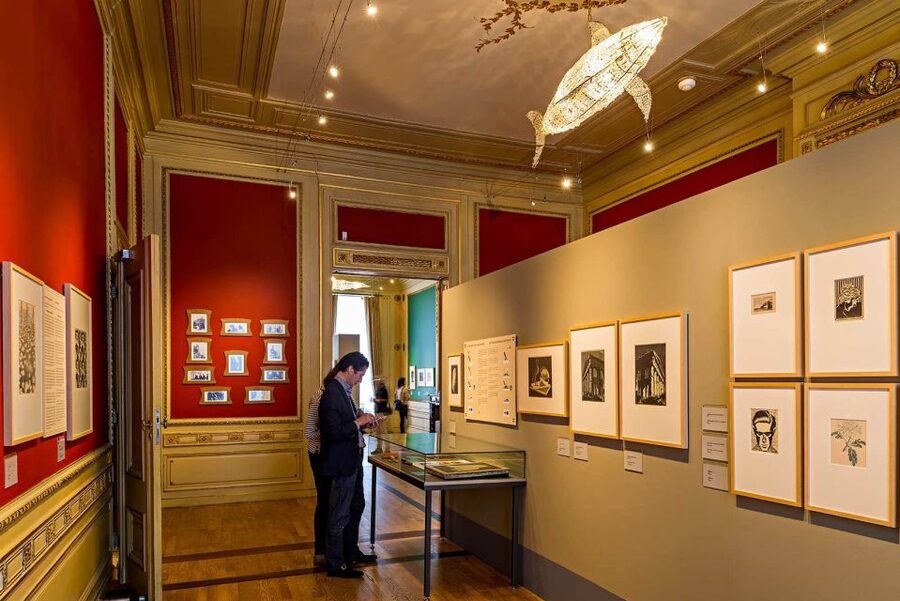
The result is a pleasing contrast. Escher’s precise black-and-white designs can feel cerebral and mathematical, while the palace rooms remind you that this was once a lived-in royal building. Look up as you move through the exhibits. The ceiling and lighting details deserve attention too, and Escher-inspired chandeliers are among the most memorable features.
The address is Lange Voorhout 74 in The Hague. From The Hague Central Station, take tram 9 to Korte Voorhout or tram 17 to Kneuterdijk. Both stops put you close to the museum, making this an easy addition to a day in central The Hague.
More Museum Visits in the world:
- Venice’s Best: Basilica, Doge’s Palace, Gondola & History Gallery
★ 4.5 · 2,478 reviews - Royal Palace & Prado Museum Skip the Line Guided Tour
★ 4.5 · 1,347 reviews - Venice: City Pass with Museums including Doge’s Palace
★ 4.1 · 1,020 reviews
Following Escher from early work to impossible worlds
The collection contains almost all of Escher’s work, with more than 130 prints on display. That gives you more than the familiar images seen on posters and book covers. You can follow his changing interests and see how repeated forms, reflections, geometry, and visual puzzles became central to his mature style.
This broad view is one of the museum’s strengths. If you know Escher mainly for staircases and impossible buildings, you may be surprised by the range of work here. The exhibition also shows his development as an artist and his growing interest in mathematics.
Start by looking at the works without trying to solve them. Escher’s pictures reward patience. A flock of birds may appear from a Dutch scene. A repeated pattern may gradually change from one creature into another. A building may seem stable at first, then reveal that its logic cannot work in the real world.
The famous Day and Night is a good example. A flat view of the Dutch countryside shifts into rows of birds, with one image feeding into the next. It is not simply an optical trick. It shows Escher’s interest in transformation, repetition, and the way the eye accepts a visual idea before the mind catches up.
Climbing and Descending offers another classic puzzle. Figures appear to move endlessly up and down a staircase, with no clear beginning or end. Take a moment to inspect the structure. The pleasure comes from spotting the impossible arrangement, then trying to understand how Escher made it look convincing.
Seeing Metamorphosis III at full scale
Metamorphosis III is the collection’s showpiece. At seven meters long, this enormous woodcut is much larger than most of the prints around it. Its unusual display allows you to follow the artwork as forms change and return, linking time and space in one continuous visual journey.
Give this piece time. It is easy to glance at the first section and move on, but the work is designed for sustained looking. Shapes shift into other shapes, and the connections become clearer as you travel along its length.
This is also where the museum setting helps. In a book or on a screen, Escher’s work can look clever but small. Here, scale changes your response. You can see how much planning is needed to make the transitions hold together across such a long composition.
The second-floor puzzles and interactive exhibits
The interactive exhibition Looking as Escher Does is on the second floor. This section changes the pace of the visit. Instead of only studying framed prints, you get ways to test Escher’s ideas with your own eyes and hands.
The activities help explain why his pictures work. You may find puzzles based on perspective, repetition, pattern, and visual confusion. These are not just children’s diversions. Adults who enjoy design, architecture, mathematics, or graphic art can get plenty from them too.
The hands-on section is especially useful if you are visiting with children. A free treasure hunt gives younger visitors a reason to keep looking closely rather than rushing through the rooms. Families have found this part particularly engaging, and the museum’s compact layout makes it manageable for a mixed-age group.
The interactive displays also give you a break from reading labels. Escher’s work can require concentration, and a visit made up entirely of small prints and explanatory text might feel heavy for some children. The top floor adds movement and play.
A few more palace visits around the world worth a look
- Venice: Doge’s Palace Reserved Entry Ticket
★ 4.6 · 42,716 reviews - Paris: Versailles Palace and Gardens Full Access Ticket
★ 4.6 · 41,579 reviews - Granada: Alhambra & Nasrid Palaces Tour with Tickets
★ 4.7 · 19,801 reviews - Sintra: Pena Palace and Park Entrance Ticket
★ 4.2 · 17,410 reviews
The film, audio guide, and written explanations
An introductory video helps set up Escher’s life and artistic interests. It is a useful first stop because it gives context before you face the more complicated pieces. A short biography can make the repeated patterns and mathematical ideas easier to follow.
An audio guide is included, with English, Dutch, German, French, Chinese, Japanese, Ukrainian, and Korean available. If you like background while looking, use it to connect the works to Escher’s development. If you prefer a quieter visit, the exhibit labels provide information in English and Dutch.
One practical point: the video area can feel small and stuffy when several people are watching at once. If it is crowded, you may be more comfortable viewing the displays around it first and returning later.
Why the palace matters as much as the art
The museum’s setting is not a decorative afterthought. It gives you a glimpse of how the Dutch royal family once lived while providing a strong frame for Escher’s unusual images.
The palace rooms are relatively intimate, not vast halls where you lose sight of the building. That can make the experience feel personal, though it also means some areas may feel tight during busy periods. The lighting is generally subdued, which suits the mood of the art but may make labels harder to read for some visitors.
Keep an eye on details outside the frames. The chandeliers are especially memorable, and the floor, ceilings, and room fittings add small visual surprises. One of the pleasures here is looking in two directions at once: at Escher’s impossible worlds and at the real palace around them.
How long to allow and what the ticket is worth
The ticket costs $15 per person. For a museum containing more than 130 prints, a film, an audio guide, palace interiors, and interactive exhibits, that is a fair price. The value is strongest if you take time with the collection rather than treating it as a quick stop for the famous images.
Plan on about an hour if you want a brisk look at the main works. Allow closer to two hours if you read the background material, watch the film, study Metamorphosis III, and spend time with the interactive exhibits. A longer visit is possible for dedicated Escher fans, but most people will find this a focused museum rather than an all-day attraction.
The ticket is valid for 365 days, with availability checked for starting times. That unusual period of validity gives you flexibility if your schedule changes or if you are planning ahead. Free cancellation is available up to 24 hours before the visit, and you can reserve now and pay later.
Children up to age six enter free when accompanied by a paying adult. For families, that improves the value, especially because the treasure hunt and interactive areas give younger children something specific to do.
Practical planning for a day in The Hague
The museum sits in a useful part of central The Hague. It is close to a park, lunch places, the lake, and the Parliament buildings, making it easy to combine with a wider city walk.
If you are coming from Amsterdam, this can work well as part of a day trip, particularly if you pair it with another museum. The tram connection from The Hague Central Station is straightforward, and the central location means you do not need to build a separate transport plan around the visit.
Do not arrive with a large suitcase or oversized bag. Luggage and large bags are not allowed inside. Small personal items are less of a concern, but the safest plan is to leave bulky belongings elsewhere before reaching the museum.
The Palace is closed on Christmas Day and January 1. It remains open on Easter, King’s Day, Ascension Thursday, Whitsun, and Whit Monday. Check the available time before setting out, especially around public holidays.
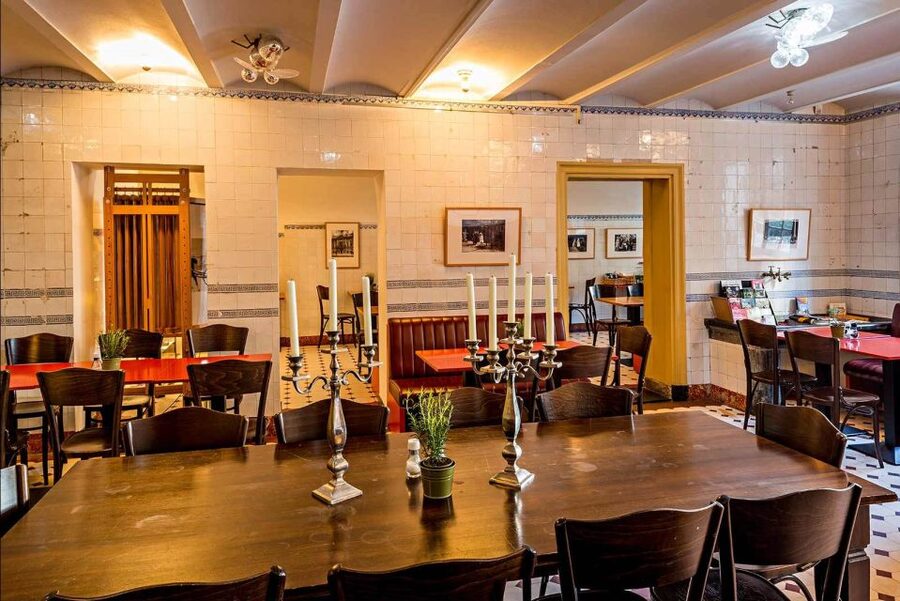
After the galleries, the museum café in the former palace kitchen offers a pleasant place to pause. The café adds to the sense that you are exploring a former home, not only a collection of framed prints.
Who will enjoy Escher in Het Paleis most
This is an easy choice for anyone already fascinated by Escher. You will see original versions of the images that made him famous, along with less familiar pieces that explain how his style evolved.
It also works well for people who are unsure about modern art. The visual puzzles offer an immediate way in. You do not need specialist knowledge to understand the basic pleasure of a staircase that cannot exist or a bird pattern turning into a countryside scene.
Families should make room for it, especially with the treasure hunt and hands-on displays. The museum is also a good match for graphic designers, illustrators, architects, mathematicians, and anyone interested in how visual patterns shape what we think we see.
It may be less satisfying if you want a large, spacious gallery with lots of natural light. Some rooms are small, and the darker presentation can feel tiring. The museum is best when you enjoy close looking and are willing to pause over details.
Should you book this museum ticket?
Yes, if you like Escher, optical illusions, graphic design, or unusual historic buildings. The $15 admission gives you a well-focused collection, a memorable palace setting, audio options in eight languages, and interactive exhibits that make the visit work for adults and children.
Book it as a one-to-two-hour stop in The Hague, not as the only reason to spend an entire day in the city. Choose it with confidence if you want original art and visual puzzles in an elegant setting. If you are sensitive to tight rooms or dim lighting, visit at a quieter time and give yourself permission to move through the video area quickly.
FAQ
Where is Escher in Het Paleis located?
The museum is at Het Paleis, Lange Voorhout 74, The Hague. From The Hague Central Station, take tram 9 to Korte Voorhout or tram 17 to Kneuterdijk.
How much does admission cost?
The listed price is $15 per person. Children up to age six enter free when accompanied by a paying adult.
How long is the ticket valid?
The ticket is valid for 365 days. You still need to check availability for the visit time you want.
Is an audio guide included?
Yes. Audio guide languages include English, Dutch, German, French, Chinese, Japanese, Ukrainian, and Korean.
Are large bags allowed inside?
No. Luggage and large bags are not allowed inside the museum.
Is the museum suitable for children?
Yes. The museum offers interactive puzzles in the Looking as Escher Does exhibition and a free treasure hunt for children.
Just added around the world
- Pena Palace, Moorish Castle,Quinta ad Regaleira:Walking tour★ 5.0 · 3 reviews
- Porto Bishop’s Palace Guided Tour★ 4.5 · 8 reviews
- Paris: Versailles Palace and Queen Hamlet E-Bike Tour★ 5.0 · 126 reviews
- Phnom Penh: Full-Day City Tour with Royal Palace & Killing …★ 4.7 · 2 reviews
- Petchaburi Temples & Royal Palace – small Join Group Tour★ 4.6 · 46 reviews
- Paris: Versailles Golf Cart & Bike Tour with Palace Entry★ 4.8 · 58 reviews
- Petit Palais Paris Museum of Fine Arts Tour with Tickets★ 4.2 · 3 reviews
- Paris: Palace of Versailles Private Tour with Transportation★ 5.0 · 2 reviews
Museums, compared.
Venice’s Best: Basilica, Doge’s Palace, Gondola & History Gallery
Read our review →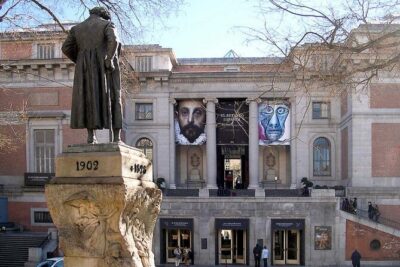
Royal Palace & Prado Museum Skip the Line Guided Tour
Read our review →
City Pass with Museums including Doge’s Palace
Read our review →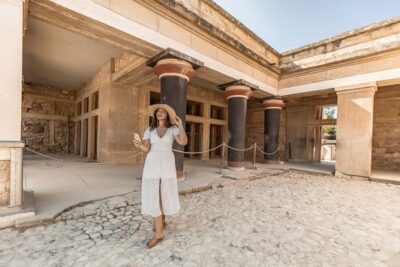
Knossos Palace and Museum E-Tickets with Audio Guides
Read our review →
Venice Museum Pass & Doge’s Palace Entrance Ticket
Read our review →
Palace, Museum, Madrasa & Medina Highlights Tour
Read our review →

Madrid in a Day Tour:Royal Palace, Historic Center & Prado Museum
Read our review →Browse the lists this tour appears in