
REVIEW · FRANCE
Chateau Gaillard Royal Domain Admission Ticket
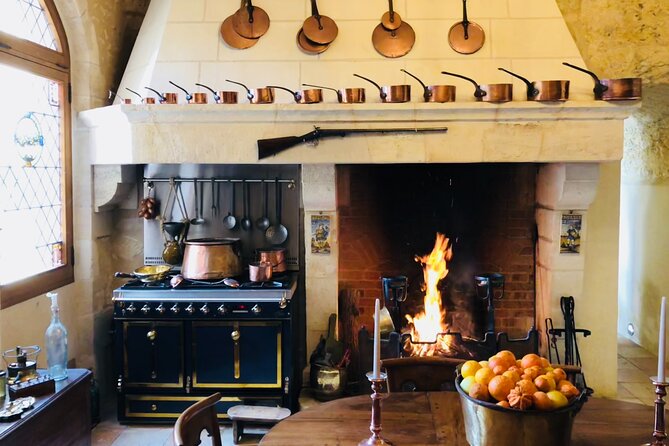
Small château, big story. Château Gaillard gives you a quieter Loire Valley visit, with Renaissance rooms, fragrant gardens, an early French orangery, and a relaxed two to three hours of exploring. I like the manageable size and the chance to wander at your own pace, and I like the unusual story of Dom Pacello da Mercoliano, the Italian monk who helped introduce orange trees to France. The main consideration is that the free guided tour is offered in French, so English speakers may get more from exploring independently.
This is not the grandest or most polished château in the Loire Valley. That is part of its appeal. The site feels more intimate and personal than the huge royal residences, although some people may find the restoration and displays less spectacular than expected for the admission price.
Key Points To Know Before You Go

- A small royal palazotto: Château Gaillard was commissioned by Charles VIII and later connected with Louis XII, Anne of Brittany, François I, Catherine de Medici, Mary Stuart, and other major figures of the French Renaissance.
- The gardens are central to the visit: Seven walking paths, mature trees, caves, citrus plants, and the royal orangery give the estate more to explore than the château rooms alone.
- A remarkable orange-tree story: Dom Pacello da Mercoliano developed the estate as a place for horticultural experiments after arriving from Naples in 1496.
- A quieter alternative in the Loire Valley: The grounds are described as calm and uncrowded, making this a good place to slow down.
- Food and drink finish the visit: You can try orange juice, homemade orange cake, orange blossom jelly, honey, and blood orange wine at the citrus bar.
- French guided tours are free: An art historian leads optional tours in French, while the admission ticket itself gives you access to the full site.
What You Are Paying For At Château Gaillard
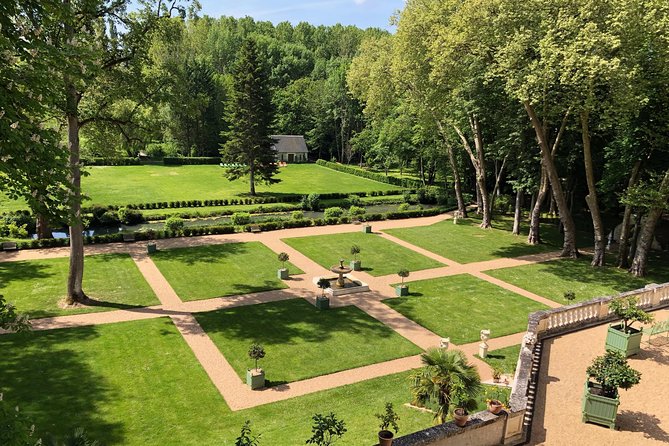
Admission costs about $24.14 per person. That is not a bargain-basement ticket, especially if you compare it with a simple garden entrance or a smaller local museum. Still, the price covers more than a single building. You are paying for access to the château, the gardens, the caves, the greenhouses, and the orangery, with enough material to fill roughly two to three hours.
I think the value depends on how you like to sightsee. If you want one monumental façade, vast ceremonial rooms, and a polished audio-visual presentation, another Loire Valley château may suit you better. If you enjoy smaller places with unusual stories, period objects, botanical details, and room to wander, Château Gaillard makes a stronger case.
Booking ahead is sensible because admission is limited and the experience is often reserved about 15 days in advance. Advance booking also guarantees your entry, which matters if you are fitting the estate between other stops around Amboise.
The ticket does not include transportation. You need to make your own way to 29 allée du Pont Moulin, 37400 Amboise. Access is on foot, and the site is near public transportation. Service animals are allowed, and most people can take part. The maximum group size is 40, though you may find the grounds feel less crowded than that limit suggests.
More Chateau and Wine Estate Tours in France
- From Paris: Full-Day Loire Valley Chateaux Tour
★ 4.4 · 1,269 reviews - Versailles Château and Gardens Walking Tour
★ 4.5 · 727 reviews - Versailles Château and Gardens Walking Tour from Paris by Train
★ 4.5 · 714 reviews
A Royal Retreat With An Unusual Scale
Château Gaillard was built as a palazotto, a smaller palace rather than a vast defensive castle. Charles VIII wanted the estate, and its later story includes some of the most recognizable names of the French Renaissance: Louis XII, Anne of Brittany, François I, Catherine de Medici, the Cardinal de Guise, and Mary Stuart.
That list can create expectations of a grand national monument. The reality is more modest. The château has a human scale, and that makes the visit easier to absorb. You can focus on details instead of spending half the day crossing enormous courtyards and state apartments.
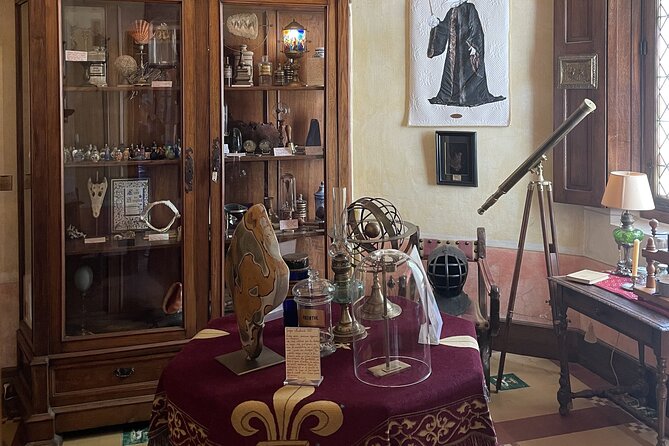
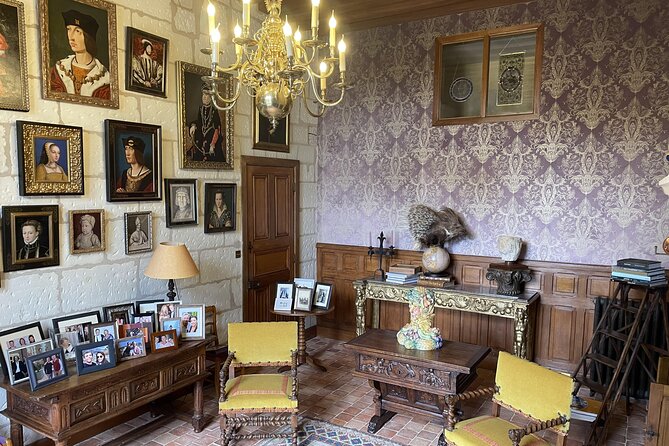
The interior combines furniture from different periods with Renaissance collections and art objects. One especially notable room is associated with Mary Stuart, who lived there for three weeks after her marriage to François II of Valois. If royal biographies interest you, this gives the visit a personal connection that goes beyond names on a timeline.
The building has undergone a full renovation carried out over five years by 300 Loire Valley craftspeople and Master of Art artisans. The work includes 8,000 handmade glass windows, along with restored rooms and decorative details. The result is not intended to feel like a completely untouched medieval shell. Instead, it presents a carefully renewed version of a Renaissance royal retreat.
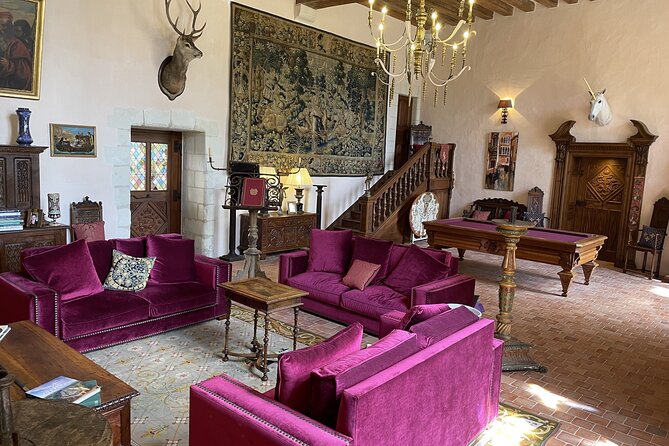
You may find the contrast between old objects and restored elements interesting. Furniture from different eras, paintings, Italian collections, and decorative pieces create a lived-in feel. At the same time, the interior may not satisfy you if you expect every room to be packed with original royal furnishings.
Inside The Château, From Mary Stuart To Italian Art
Allow time indoors before heading straight to the gardens. The rooms contain pieces connected with the sixteenth century, including Italian collections and works attributed to artists such as Rembrandt and Titian. The display also includes a Commedia dell’Arte tapestry.
The collection list is impressive, but the visit is best approached with curiosity rather than the expectations of a major art museum. The appeal comes from the mix: royal associations, historic furniture, paintings, glasswork, and decorative pieces in a compact setting.
The 8,000 handmade glass windows deserve attention. This is the kind of detail that can disappear if you simply walk from room to room, so look upward and around the frames. The restoration is part of the experience, not just background work. It helps explain why the château looks renewed while still retaining an older character.
The free guided tour is led by a professional art historian, but it is offered in French. If you understand French, this is likely the best way to connect the objects and royal figures. If you do not, you can still visit the rooms independently, but you should not assume that an English-language tour is included.
The available language is English for the booking experience, not necessarily for the guided commentary. That distinction matters. I would choose this site for the building, collections, gardens, and setting first, then treat the French tour as an optional bonus.
Dom Pacello And The First Orange Trees In France
The most original part of the visit is the story of Dom Pacello da Mercoliano. In 1496, Charles VIII brought this Neapolitan monk to France. He was known as a master gardener, and Château Gaillard became his working ground.
In 1500, the estate took on the name Les Jardins du Roy. Pacello reportedly inherited it in exchange for an annual bouquet of orange blossoms for the king. That small detail makes the royal connection feel surprisingly tangible. Instead of only reading about power and ceremony, you see how plants, gardens, gifts, and scientific experiments fitted into court life.
Pacello developed the 15-hectare park as a place for horticultural work. He helped shape early French-style gardens and developed a variety of plum known as the greengage. The estate also became connected with the acclimatization of France’s first orange trees.
For me, this is the strongest reason to choose Château Gaillard over another château if you have already seen the grand royal residences. The site tells a story about gardening and imported plants, not only kings and wars. It also explains why the orangery and greenhouses are not side attractions. They are the heart of the estate’s identity.
More Palace Entry Tickets in France
- Loire Valley: Château Royal d’Amboise Entrance Ticket
★ 4.6 · 476 reviews - Paris: Palais Garnier Mystery Game with Entry Ticket
★ 4.3 · 400 reviews - Paris: Château de Vincennes Entry Ticket
★ 4.5 · 342 reviews - Château of Azay-le-Rideau Entry Ticket
★ 4.7 · 227 reviews
Seven Paths, Caves, And A Fragrant Orangery
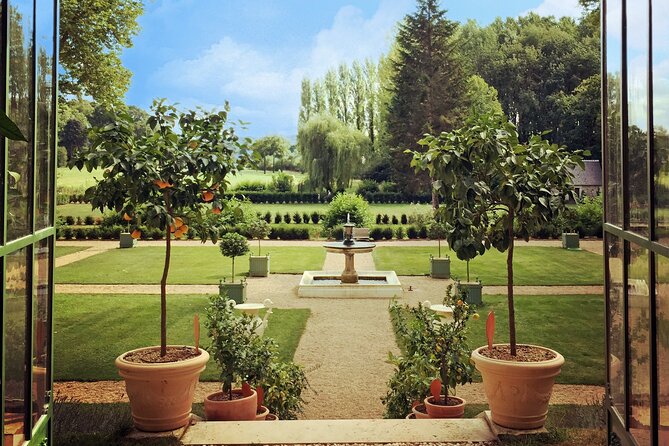
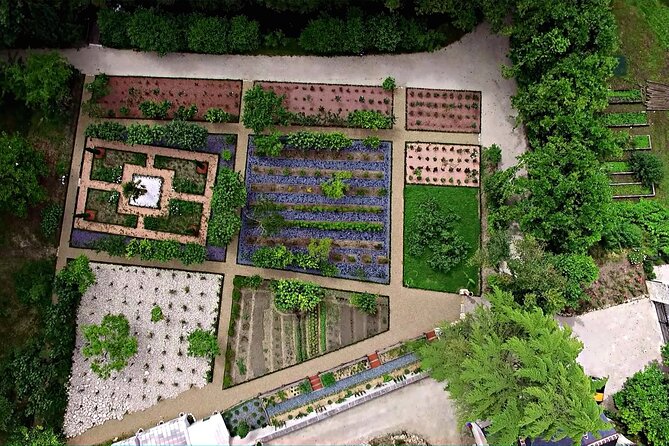
The grounds cover 15 hectares, giving the visit a broader feel than the small château might suggest. Seven walking paths, described as the paths of Paradise, lead you through the estate. You can take your time among mature trees, gardens, caves in the hillside, and citrus-growing areas.
The grounds are one of the most praised parts of the experience. They are described as lovely, calm, and easy to enjoy without a crowd pressing you along. That makes the site a good pause in a busy Loire Valley schedule. You can wander, stop for photographs, and sit with the gardens rather than treating the visit as a quick checklist stop.
The caves add variety. They break up the garden walk and remind you that this is not simply a formal flower garden attached to a house. The mix of hillside, paths, trees, and cultivated areas gives the estate different textures as you move through it.
The orangery and greenhouses are essential stops. You can smell the citrus plants and connect the physical setting with Pacello’s work. The experience is especially appealing if you enjoy gardens, fruit trees, historic foodways, or the practical side of royal life.
Do not rush outdoors just because the château rooms are finished. I would allow at least an hour for the grounds, and longer if you want the full two to three hours promised by the visit. The exact pace depends on how closely you look at the rooms and how long you spend at the citrus bar.
Orange Cake, Fresh Juice, And Blood Orange Wine
The final part of the visit has a strong food connection. At the citrus bar, you can taste honey from Heaven, orange blossom jelly, homemade orange cake, and freshly pressed orange juice. Blood orange wine is also available, and a bottle makes a distinctive souvenir if you enjoy fruit-based drinks.
These treats add real value because they continue the estate’s citrus story rather than feeling like a random café stop. The orange tree is part of the history, the garden, the greenhouse, and the food at the end.
The homemade orange cake receives particular praise for its flavor, as do the preserves and cake generally. I would plan a little time for this stop instead of treating it as an afterthought. The citrus bar gives you a chance to rest after the paths and caves, and it turns the horticultural history into something you can taste.
Keep your expectations practical. This is a small refreshment experience connected with the property, not a full meal or a dedicated food tour. If you need lunch, plan that separately. But for a cake, juice, jelly, honey, or a bottle of blood orange wine, it is a pleasant finish.
How The Visit Works For English Speakers
The experience is offered in English as a booking option, but the free guided tours are in French. You can still explore the estate without joining the tour, and the château, gardens, orangery, and citrus bar provide enough visual material to make an independent visit worthwhile.
If you speak French, join the art historian’s tour if the timing works. The connections between Charles VIII, Pacello, the later royal figures, the restoration, and the art collection are easier to follow with a guide.
If you do not speak French, spend more time reading whatever information is available on site and looking closely at the objects and architectural details. The Mary Stuart room, Italian pieces, glass windows, gardens, and greenhouses are all understandable without fluent commentary.
Because the experience is capped at 40 people, the site should remain manageable even when several parties arrive together. The grounds also help spread people out. Still, advance booking is wise, especially if your Loire Valley plans are fixed.
Who Will Enjoy Château Gaillard Most
I would recommend this admission to you if you enjoy:
- Smaller historic buildings with a personal scale
- Renaissance art, furniture, and royal connections
- Gardens, greenhouses, citrus trees, and horticultural history
- Quiet places where you can set your own pace
- Food and drink tied to the story of a place
- A two to three-hour stop near Amboise
Families may appreciate the caves, paths, gardens, and citrus treats, though the information is likely to appeal most to adults interested in history, art, or plants. The site is also a good choice if you have already seen several major Loire Valley châteaux and want something less formal.
I would be more cautious if you want a giant palace with sweeping ceremonial apartments or a fully English-language guided program. The admission price may feel high if you only glance at the rooms and skip the park. The value improves when you stay long enough to explore the seven paths, orangery, greenhouses, and citrus bar.
Practical Details That Matter
The listed duration is approximately two to three hours. I would reserve that amount of time rather than trying to squeeze the visit into a quick one-hour gap. The grounds reward a slow pace, and the food stop gives you another reason not to hurry.
Pedestrian access is available at 29 allée du Pont Moulin in Amboise. Transportation to and from the attraction is not included, so check your route before booking. The site is near public transportation, but your ticket does not arrange the journey for you.
Most people can participate, and service animals are allowed. The attraction has a maximum capacity of 40 people per activity. Confirmation arrives when you book.
You can cancel for a full refund up to 24 hours before the local start time. Cancellations or changes made less than 24 hours in advance are not accepted for a refund. That policy is fairly flexible, but it still requires attention if your Loire Valley plans are changing.
Should You Book Château Gaillard?
Book it if you want a quieter, smaller château with excellent gardens, an unusual orange-tree story, and a pleasant food finish. The strongest parts are the mature grounds, the orangery, the citrus bar, and the sense that you are visiting a working royal garden rather than just another grand façade.
Skip it if your priority is a monumental palace, extensive English commentary, or a low-cost admission for a very brief stop. The $24.14 price makes the most sense when you use the full two to three hours.
For me, the best plan is to treat Château Gaillard as a slow afternoon visit near Amboise. See the rooms, join the French tour if you can follow it, walk the seven paths, inspect the greenhouses, and finish with orange cake or fresh juice. That approach gives you the full character of the estate and makes the ticket easier to justify.
FAQ
Where is Château Gaillard located?
Château Gaillard is located at 29 allée du Pont Moulin, 37400 Amboise, in the Loire Valley area of France.
How long does a visit take?
The visit takes approximately two to three hours.
How much does admission cost?
The listed price is $24.14 per person.
Is a guided tour included?
A free guided tour led by a professional art historian is included, but the guided tours are offered in French.
Is the experience offered in English?
The experience is offered in English, but the free guided tours are in French. You can explore the site independently if you do not speak French.
What can you see at Château Gaillard?
You can see the château interiors, Renaissance collections, paintings, Italian pieces, furniture, handmade glass windows, gardens, caves, greenhouses, and the royal orangery.
Can you taste food or drinks during the visit?
Yes. At the citrus bar, you can find honey, orange blossom jelly, homemade orange cake, freshly pressed orange juice, and blood orange wine.
Is transportation included?
No. Transportation to and from the attraction is not included.
Can you cancel the ticket for a refund?
Yes. You can cancel at least 24 hours before the experience start time for a full refund. Changes or cancellations made less than 24 hours in advance are not accepted for a refund.
More Palace Entry Tickets in Tours
- Buckingham Palace Entrance Ticket & Changing of the Guard Tour
★ 4.0 · 1,720 reviews - London: Buckingham Palace Entry Ticket & Royal Walking Tour
★ 4.5 · 1,010 reviews - Beijing: Summer Palace Entry Ticket and Optional Guided Tour
★ 4.7 · 810 reviews - Madrid: Royal Palace Guided Tour with Entry Ticket
★ 4.3 · 640 reviews
More Chateau and Wine Estate Tours in Tours
- Fontainebleau & Vaux-le-Vicomte Châteaux Day Tour from Paris
★ 4.4 · 454 reviews - From Lisbon: Sintra, Pena Palace & Wine Tasting Small-Group Tour
★ 5.0 · 252 reviews - Lisbon: Sintra, Pena Palace & Wine Tasting Small-Group Tour
★ 4.9 · 156 reviews - Ottawa: Secrets of the Château Laurier – Guided Hotel Tour
★ 4.4 · 148 reviews
Just added around Tours
- Pena Palace, Moorish Castle,Quinta ad Regaleira:Walking tour★ 5.0 · 3 reviews
- Porto Bishop’s Palace Guided Tour★ 4.5 · 8 reviews
- Paris: Versailles Palace and Queen Hamlet E-Bike Tour★ 5.0 · 126 reviews
- Phnom Penh: Full-Day City Tour with Royal Palace & Killing …★ 4.7 · 2 reviews
- Petchaburi Temples & Royal Palace – small Join Group Tour★ 4.6 · 46 reviews
- Paris: Versailles Golf Cart & Bike Tour with Palace Entry★ 4.8 · 58 reviews
- Petit Palais Paris Museum of Fine Arts Tour with Tickets★ 4.2 · 3 reviews
- Paris: Royal Palais, Tuileries and D’Orsay Tour★ 4.8 · 3 reviews
Chateau and Wine Estate Tours, compared.

Medoc or Saint Emilion Wine Tasting and Chateau from Bordeaux
Read our review →
Versailles Château and Gardens Walking Tour from Paris by Train
Read our review →
Loire Valley: Château Royal d’Amboise Entrance Ticket
Read our review →
Fontainebleau & Vaux-le-Vicomte Châteaux Day Tour from Paris
Read our review →

Browse the lists this tour appears in