
REVIEW · SPLIT
Diocletian Palace and Split Old Town SMALL GROUP Walking Tour
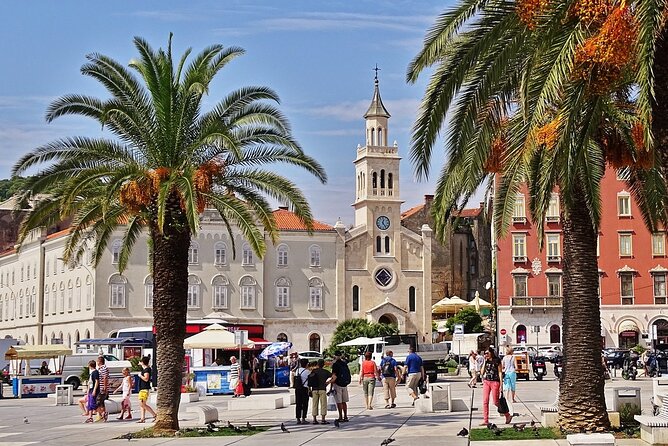
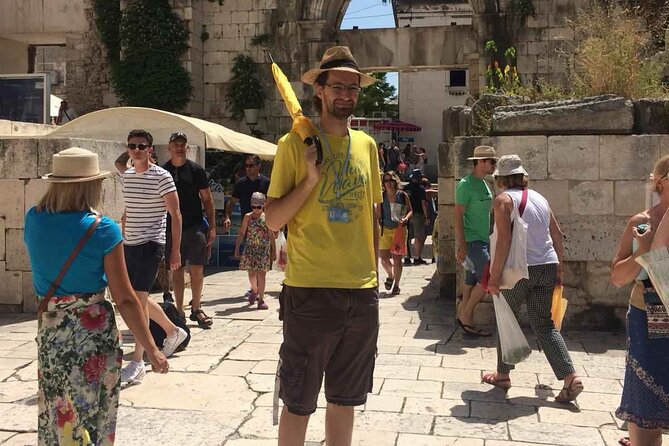
Split begins with a Roman palace. This 90-minute walk is a smart introduction to the city because Diocletian’s Palace is not a fenced-off monument. It is part of everyday Split, with homes, cafés, shops, lanes, and church bells built into its ancient walls. I especially like the short, focused route and the chance to connect Roman ruins with later Croatian life. The guides also add real personality. Slavko is praised for his humor and local recommendations, while Antonia, Marta, Ante, and Mia are noted for clear explanations and strong command of English.
The main caution is the crowded setting. Split’s Old Town can be noisy and packed, and one account describes a group larger than expected, with no headset and difficulty staying close to the guide. The advertised maximum is 15 people, but it is still worth confirming the group size if you want a quiet, intimate walk.
Five things to know before you book
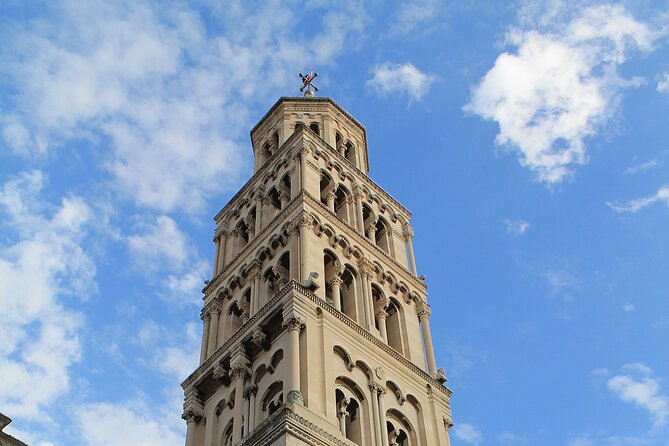
- Roman ruins are part of modern Split: You walk through active city streets rather than a sealed archaeological park.
- The tour lasts about 90 minutes: It covers the palace, several Old Town squares, the Riva, and major religious sites at a steady pace.
- The Golden Gate is both the meeting point and a major sight: This makes the tour fairly easy to find once you reach Dioklecijanova 7.
- Guides are the strongest part of the experience: Slavko, Ante, Antonia, Marta, Mia, and Alexandria all receive praise for humor, clarity, enthusiasm, and useful advice.
- The price is low for a guided introduction: At $16.94 per person, you pay mainly for context and orientation, not admission tickets.
- Weather matters: The route is outdoors, and poor weather can lead to a new date or a full refund.
Why this palace tour helps you understand Split
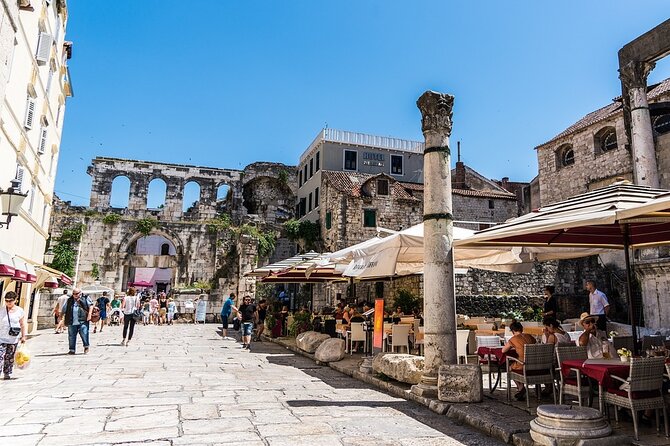
Diocletian’s Palace can be confusing on your own. You see fragments of columns, stone walls, narrow passages, and grand courtyards, but the story is not always obvious. This walk gives those pieces a sensible order.
You begin with Emperor Diocletian’s retirement palace, built around 1,700 years ago. Then you see how the old imperial complex became the core of a living city. That change is the key to enjoying Split. The palace is not simply an ancient building. It is a Roman framework reshaped by centuries of residents, rulers, religious communities, and modern businesses.
I like that the route does not stay inside one archaeological section. It moves from the palace’s underground substructures to the Peristyle, then out toward Narodni Trg and the Riva. You get a broader picture of Split instead of spending 90 minutes staring at one type of ruin.
The guides also seem to place Roman history within the larger story of Croatia. Ante is praised for discussing Roman life, Croatian culture, ancestral traditions, and even Game of Thrones. Another guide connected the city’s past with changing generations, religions, architecture, and rulers. That wider view is useful because Split cannot be understood through Roman history alone.
More Palace Walking Tours in Croatia
- Split: Old Town and Diocletian Palace Walking Tour
★ 4.9 · 4,727 reviews - Walking Tour of Split and Diocletian’s Palace
★ 5.0 · 2,588 reviews - Split & Diocletian’s Palace Walking Tour
★ 5.0 · 1,125 reviews
Starting at the Golden Gate
The walk begins at the Golden Gate, at Dioklecijanova 7. This was the palace’s main entrance and remains one of its most impressive visible features.
The gate gives you an immediate sense of scale. Instead of entering a normal Old Town street, you pass through a monumental Roman threshold and then find yourself in the middle of modern Split. That contrast is the first important lesson of the tour.
The Golden Gate also makes a practical meeting point. It is a clear landmark, and the tour ends back there. If you are arriving by public transportation or coming from another part of town, allow enough time to locate the entrance before the scheduled start. The address is specific, but busy streets and old stone lanes can still slow you down.
Because the tour is offered in English, you should be comfortable listening while standing in an open public space. Split’s center can be active, and nearby movement may create background noise. One guide was praised for speaking clearly, but a headset was not provided in at least one reported experience.
The palace substructures: seeing the Roman plan below ground
The first stop is the substructures, also called the cellars of Diocletian’s Palace. The visit here is listed as about five minutes, so expect an introduction rather than a long underground exploration.
This brief stop matters because the lower level helps explain the layout above it. Ancient builders used strong foundations and service areas beneath the palace. Once you understand that the palace had an organized plan, the scattered-looking remains elsewhere become easier to read.
The substructures also give you a useful sense of preservation. Some parts feel like archaeological remains, while other parts connect directly to the city above. That mixture is one reason a guide adds value. Without explanation, you might see old stone and move on. With context, you can begin to picture the palace as a working imperial residence.
Do not expect an admission-ticket experience here. The listed tour stops have no separate admission charge, and the guide’s interpretation is the main benefit.
The Peristyle, the palace’s great central space
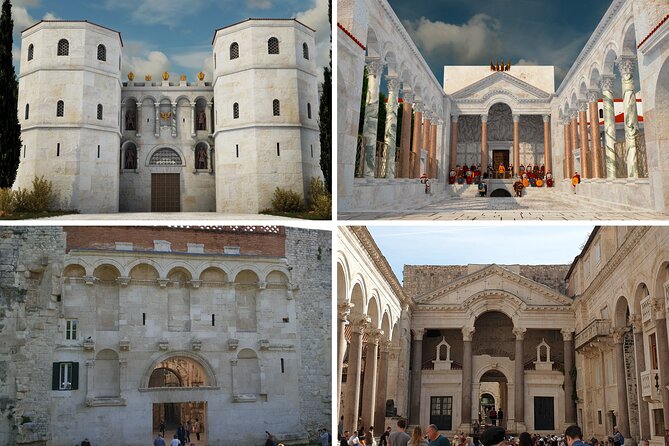
The Peristyle is the visual center of Diocletian’s Palace. The listed visit lasts about five minutes, but the space deserves your full attention.
This is where the Roman palace feels grandest. Columns, stone paving, and surrounding walls create a formal setting designed to impress. The Peristyle also shows how later Split adapted ancient architecture instead of clearing it away.
Your guide should help you distinguish original Roman elements from later additions and explain how the square functioned within the imperial complex. The short stop is enough for orientation, but it may feel quick if you want detailed architectural discussion or time for photographs.
Heat is another factor. One particularly useful detail from the guide experience is that Ante looked for shaded places during the walk. That kind of practical awareness matters in Split, especially when the stone reflects strong sunlight. If you are visiting in hot weather, bring water and a hat even though the walk is not long.
More Palace Walking Tours in Split
- Split: Diocletian Palace & Old Town Guided Walking Tour
★ 4.7 · 882 reviews - Diocletian’s Palace and Old Town SMALL GROUP Walking Tour
★ 5.0 · 502 reviews - SPLIT-PRIVATE Walking Tour of Diocletian’s Palace & Old Town
★ 5.0 · 467 reviews - 90-min Diocletian Palace Walking Tour
★ 5.0 · 323 reviews
Thirty minutes inside Diocletian’s Palace
The longest section, about 30 minutes, is devoted to Diocletian’s Palace itself. This is the heart of the experience.
You are not simply looking at one building. The palace complex includes gates, courtyards, underground areas, religious structures, and streets that now belong to the Old Town. A good guide helps you understand how those pieces fit together.
The most useful part is the transition from Roman imperial residence to medieval and modern town. The palace survived because it was reused. Homes, shops, churches, and public spaces took over parts of the old complex. You can therefore see the past and present in the same frame.
The guides praised most often are strong storytellers. Slavko is described as funny, patient, and able to keep the group interested while offering recommendations for the rest of a Split visit. Marta is praised for clear English and an easy walking pace. Mia is described as cheerful and efficient, with a helpful list of places to visit afterward. Those details suggest a tour that aims to orient you, not simply recite dates.
Still, guide quality can vary. One account describes a slow presentation, frequent interruptions, and repeated movement from one place to another. That experience ended early because the participant felt too little had been explained after more than an hour. A small group usually helps, but the quality of the walk depends on the guide’s pace and control of the crowd.
The Vestibule and Cathedral of Saint Domnius
The Vestibule is another short stop, listed at about five minutes. This circular entrance space once formed part of the palace’s ceremonial route.
It gives you another glimpse of Roman planning and imperial display. The form is compact but dramatic, and the guide can explain how it connected to the palace’s larger interior arrangement.
The Cathedral of Saint Domnius adds an important layer to the story. Split Cathedral occupies part of the former palace area, showing how a Roman imperial site later became a Christian center. The cathedral is closely tied to Diocletian’s mausoleum, making this stop especially useful for understanding the change from imperial Rome to medieval and Christian Split.
The scheduled time is short, so you should think of this as an outside explanation and orientation rather than a full cathedral visit. The information provided does not promise interior admission or an extended church tour.
The Temple of Jupiter and the palace’s changing beliefs
The Temple of Jupiter is another five-minute stop. It is a small but meaningful part of the route because it shows the religious side of the palace.
A Roman emperor’s palace was not only a home. It was also a place of ceremony, power, and worship. The temple helps you see how religion was built into the palace plan.
This stop also works well beside the cathedral. In only a few minutes, you move from a Roman temple to a Christian cathedral within the same ancient complex. That physical closeness tells the story more clearly than a long list of dates.
The walk does not appear to include an admission ticket for the temple or cathedral. If you want to enter paid interiors or explore them at length, plan additional time and check local opening conditions separately.
Narodni Trg and the changing Old Town
Narodni Trg, also known as Pjaca, takes you beyond the strictly Roman part of the route. This square once had an important civic role, and the guide explains why it mattered.
This is a good place to notice how Split grew around the palace. The city’s public life did not remain inside the original Roman plan. It spread into squares, lanes, and gathering places that changed function over time.
I like this part of the route because it keeps the tour from becoming a single-era history lesson. You learn about the emperor, but you also see how later communities used the space. That is the most authentic feature of the walk: the Old Town is still being used rather than preserved as a silent exhibit.
The stop is listed at about five minutes, so expect a concise explanation. If you enjoy street life and local architecture, you may want to return to Pjaca later for a slower look.
The Riva: Split’s public front porch
The tour also reaches the Riva, the famous waterfront promenade and one of Split’s busiest streets. The listed stop is about five minutes.
The Riva gives you a change of scale. Inside the palace, lanes can feel tight and enclosed. Along the harbor, you get a more open view of Split’s public life.
The guide uses the Riva to explain the city beyond the Roman walls. It is also a useful orientation point for the rest of your day. From here, you can better understand how the Old Town connects with the waterfront.
Do not expect a long harbor stroll. This is a short guided stop, not a full waterfront excursion. Still, it rounds out the tour and prevents the palace from feeling disconnected from modern Split.
How much value do you get for $16.94?
At $16.94 per person, this is inexpensive for a licensed guide and a 90-minute introduction in central Split. There are no separate admission costs included because the route focuses on outdoor spaces and listed sites with free admission during the tour.
The value comes from interpretation. You can walk through the palace without paying anything, but it is easy to miss what you are seeing. The tour gives you a framework, points out details, and helps you plan the rest of your stay.
The price also makes this a sensible first-day activity. You get your bearings, learn which places deserve a return visit, and receive local suggestions from guides such as Slavko, Ante, or Mia. One guide was especially praised for giving recommendations at the end, which can save you time later.
The low price does not guarantee a private experience. This is a group tour, with a stated maximum of 15 people. One account expected a private tour but encountered more than 20 people and found it hard to keep track without a headset. Read the product wording carefully and confirm the group arrangement if that point matters to you.
Who will enjoy this walk most?
I would choose this tour if you are visiting Split for the first time, want a clear introduction, and prefer a short walk to a full-day excursion. It also suits families, since one account describes four children and a mother enjoying the 90-minute route.
It works well for anyone interested in Roman architecture, Croatian culture, religious history, or the way old buildings remain part of daily life. The walk is described as easy, and most people can participate.
You may want something else if you need a private guide, a slow photography tour, detailed interior access, or guaranteed audio equipment. The route is also less appealing in heavy rain because many of the sites are outdoors. Poor weather can lead to a different date or a full refund, but the decision is based on the local conditions.
Free cancellation is available up to 24 hours before the start time. Changes or cancellations made inside that window are not refunded, and the cut-off uses Split’s local time.
Should you book the Diocletian Palace walking tour?
Book it if you want a useful first look at Split without spending much. The route covers the palace’s main landmarks, the cathedral, Temple of Jupiter, Pjaca, and the Riva in a manageable 90 minutes. The strongest reason to go is the guide. Slavko’s humor, Antonia’s passion, Marta’s clear English, Ante’s local insight, and Mia’s practical recommendations all add more than a self-guided walk can offer.
I would be more cautious if you dislike crowds or expect a private tour. Confirm the group size, arrive early at the Golden Gate, and bring water in warm weather. With those expectations in place, the 4.9 rating from 172 reviews and 97 percent recommendation rate make sense: this is a well-priced orientation to a remarkable part of Split, with enough history to make the stones speak.
FAQ
How long does the Diocletian Palace walking tour last?
The guided walk lasts approximately 90 minutes.
What is the price of the tour?
The listed price is $16.94 per person.
Where does the tour begin?
It begins at the Golden Gate, at Dioklecijanova 7, 21000 Split, Croatia.
Where does the tour end?
The tour ends back at the Golden Gate meeting point.
Is the tour offered in English?
Yes. The experience is offered in English.
What is included in the price?
The price includes a licensed guide and a 90-minute guided tour.
Are admission tickets included?
The listed stops have no separate admission ticket included or required during the tour.
How large is the group?
The stated maximum is 15 participants.
Is the tour suitable for most people?
Yes. Most people can participate, and the walking is described as easy. Service animals are allowed, and the meeting point is near public transportation.
Can I cancel for a refund?
You can cancel up to 24 hours before the start time for a full refund. Cancellations or changes made less than 24 hours before the start are not refunded. If poor weather cancels the experience, you are offered another date or a full refund.
More Diocletian's Palace Tours in Split
- Split Old Town and Diocletian’s Palace Tour
★ 4.8 · 716 reviews - Split: Game of Thrones Tour with Diocletian’s Palace Cellar
★ 4.8 · 545 reviews - Split: Diocletian’s Palace Virtual Reality Experience
★ 4.4 · 308 reviews - Split: 1.5-Hour Walking Tour and Diocletian’s Palace
★ 4.7 · 256 reviews
Just added around Split
- Wine Tasting in the Diocletian’s Palace★ 4.5 · 12 reviews
- Split & Diocletian Palace Historical Walking Tour★ 5.0 · 29 reviews
- Walking tour of Diocletian’s Palace in Split★ 5.0 · 60 reviews
- Split: Diocletian’s Palace Walking and Wine Tasting Tour★ 4.5 · 56 reviews
- SPLIT-History Tour of Diocletian’s Palace & Old Town with Daniela★ 5.0 · 76 reviews
- Diocletian Palace in Split and Trogir Private Heritage Tour★ 5.0 · 12 reviews
- Private Split: Visit Diocletian Palace & Taste Food at the Market★ 5.0 · 33 reviews
- Wonderful Split – Diocletian’s Palace Private Walking Tour★ 5.0 · 20 reviews
Diocletian's Palace Tours, compared.
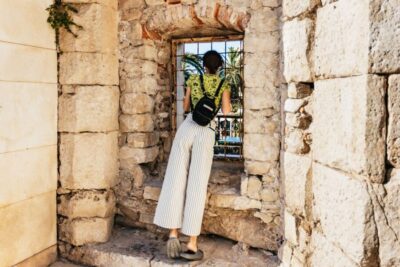

Walking Tour of Split and Diocletian’s Palace
Read our review →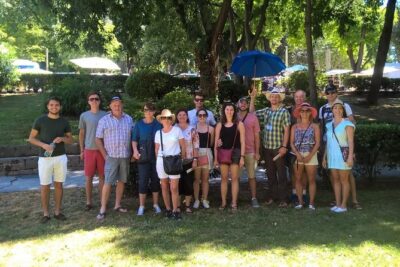

Diocletian Palace & Old Town Guided Walking Tour
Read our review →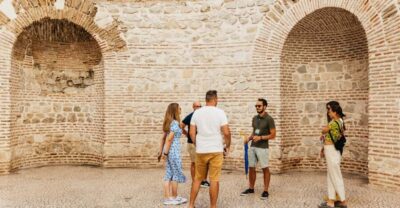

Game of Thrones Tour with Diocletian’s Palace Cellar
Read our review →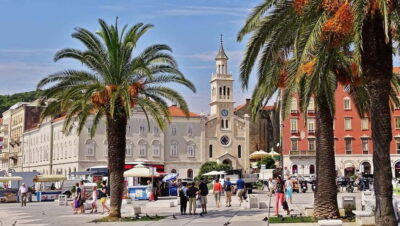
Diocletian’s Palace and Old Town SMALL GROUP Walking Tour
Read our review →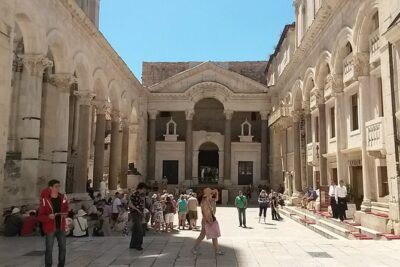
Browse the lists this tour appears in