
REVIEW · ROME
Roman Domus of Palazzo Valentini Ticket
Ancient Rome is hiding under a government palace. This one-hour guided visit to the Domus of Palazzo Valentini uses mosaics, projections, and light effects to show how wealthy Romans lived, turning quiet ruins into something you can picture. I like the clever visual storytelling, and I like that the small group is capped at 15 people. The main drawback is practical: the meeting information can be confusing, and the visit may last closer to 90 minutes than one hour.
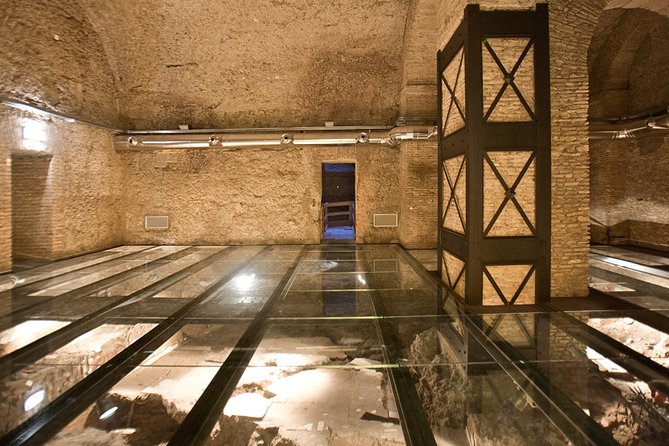
You will walk above excavated rooms on glass flooring, so you can look directly down at baths, mosaics, and old walls. I also appreciate that this is not just another walk past broken columns. The reconstructions explain what the rooms once meant, though some people may find the dark spaces, standing time, or transparent floor uncomfortable.
Key points to know before you go
- Ancient villas beneath a later palace: Palazzo Valentini was built over Roman residential remains, including rooms linked to wealthy families of the imperial age.
- Projections make the ruins easier to understand: Light, video, and graphics rebuild walls, furnishings, baths, kitchens, and decorated floors.
- Expect glass walkways: The transparent floor gives excellent views of the excavation but may take a little getting used to if you dislike heights.
- Plan for up to 90 minutes: The advertised duration is about one hour, while the actual visit can run longer.
- Small group, limited capacity: No more than 15 people are scheduled for the activity.
- Check the meeting details carefully: You are given a meeting point at Via delle Terme di Traiano 85, and reserved tickets must be collected at least 30 minutes before the confirmed time.
Why these Roman ruins are worth your time
Rome gives you ruins in every direction. That is both its gift and its problem. After a few temples and arches, it can become hard to imagine ordinary rooms, kitchens, private baths, or patterned floors beneath the rubble.
The Domus of Palazzo Valentini solves that problem with modern presentation. Instead of asking you to stare at low walls and guess what they were, the exhibition adds projected images and lighting to show the buildings as functioning homes. You can watch a bare space suggest a finished room, then return to the surviving masonry and mosaics with a better sense of what you are seeing.
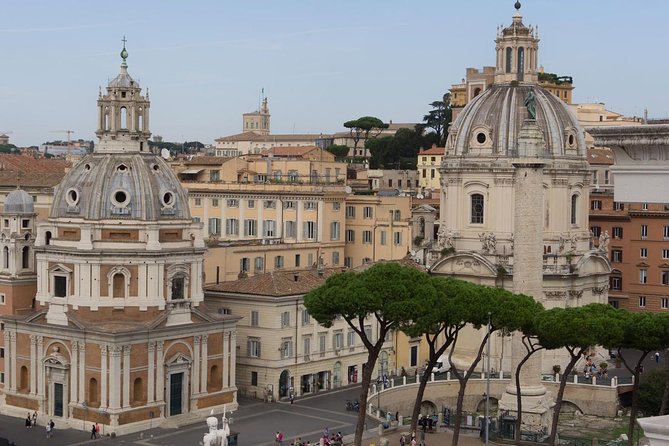
The site also gives you a useful lesson in Rome’s layers. The 16th-century Palazzo Valentini sits above Roman remains, showing how later buildings were repeatedly placed over older ones. The excavation helps explain parts of the ancient, medieval, and modern city at once.
I would not choose this visit only for the amount of original stone. The archaeological remains are important, but the presentation is the real reason to come. If you already know Roman architecture well, the projections may feel theatrical. If you want help forming a clear mental picture, they are extremely useful.
A few more palace visits around Rome worth a look
- Rome: Opera Concert at Palazzo Poli – Fontana di Trevi
★ 4.7 · 1,026 reviews - Rome: Colonna Palace Entry Ticket
★ 4.8 · 609 reviews - The Great Opera Arias Concert at Palazzo Poli – Trevi Fountain
★ 5.0 · 533 reviews
Entering Palazzo Valentini and finding the start
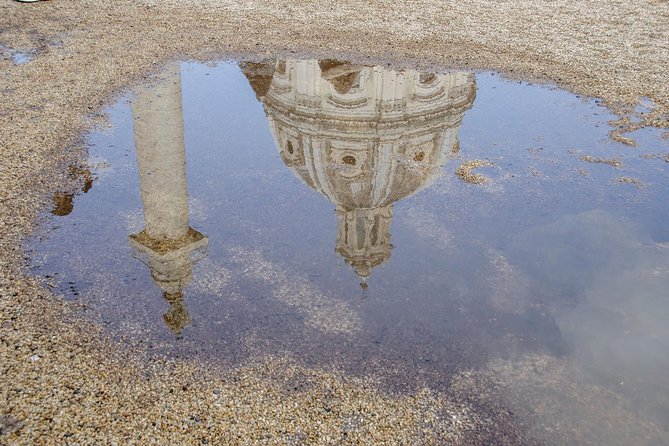
The exterior does not announce a major archaeological attraction. That can work in your favor, since the visit feels like a discovery inside an ordinary-looking palace rather than a stop at Rome’s most crowded monument.
The meeting information supplied for this experience gives Via delle Terme di Traiano 85, 00184 Rome, as the start point. The tour itself is described as a visit to Palazzo Valentini, and the address details can be confusing, so I would check the confirmed voucher carefully before setting out. Do not assume that the building entrance will be obvious or marked with a large tour sign.
You must print and present your confirmation voucher to redeem the tickets. Reserved tickets have to be picked up no later than 30 minutes before the confirmed time. Miss that cutoff and the reservation can be canceled, with no right to the tickets.
The selected time is also not always the final time. It is treated as a preferred time, and the closest available slot during opening hours may be confirmed if your first choice is full. That matters if you have a tight Rome schedule, especially one built around timed entries at other sights.
Two Roman homes beneath a 16th-century palace
The route takes you below Palazzo Valentini to the remains of patrician homes from the imperial period. These were not modest apartments. The rooms, mosaics, baths, wall decoration, and columned porches point to households with serious money and social power.
The excavation includes more than one residential complex. The presentation brings attention to two lavish Roman houses, one with a substantial bath area and another with an impressive mosaic floor. Seeing the homes together helps you understand that Roman domestic life could be organized around several distinct spaces, each serving a different purpose.
You may see:
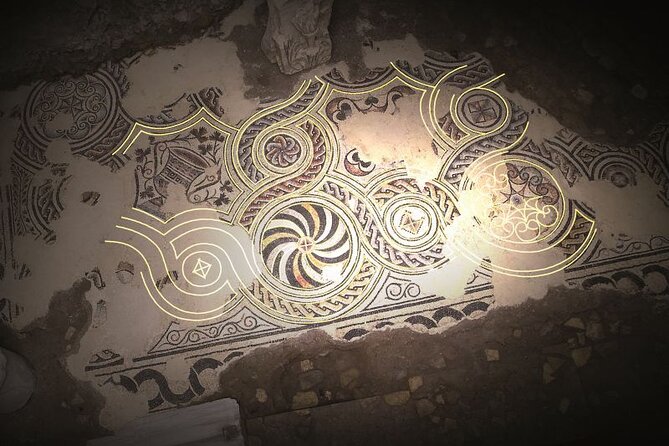
- Mosaics and polychrome floors
- Wall decoration and paving blocks
- Kitchens and bathing areas
- Peristyles, or columned porches
- Room layouts and surviving walls
- Furnishings and decorative details recreated through projection
The value is in the combination. A mosaic alone can be beautiful, but it tells you only part of the story. When light reveals a wall line, adds color to a room, or shows how a porch connected different areas, the floor plan begins to make sense.
The ruins were found during excavations that revealed parts of the city’s earlier topography. Some areas were not immediately visible to a casual passerby because the later palace had covered them. That layering is one of the strongest reasons to include this visit in a Rome itinerary.
How the projections change the experience
The exhibition uses virtual reconstruction, video, graphics, and lighting to rebuild the homes in stages. A wall may be illuminated first, followed by a suggestion of plaster, decoration, or furnishings. A floor can shift from a dark archaeological surface to an image of how its pattern may have looked when complete.
I like this approach because it gives you two views at once. You see what survives, then you see an interpretation of the missing parts. The distinction matters. The projections are not original Roman material, and you should treat them as a visual reconstruction rather than a perfectly certain record. Still, they offer a practical way to understand scale and function.
The presentation has been compared to a theatrical show, and that is fair. It is more dramatic than a traditional museum room. For some people, that makes ancient history memorable. For others, the lights and videos may feel slightly like a theme-park treatment of archaeology.
I find the method most effective when it stays close to the physical remains. Here, the projections are tied to actual walls, floors, rooms, and baths beneath you. The technology is not there only for spectacle. It helps answer basic questions: Where did people move? Which spaces were private? How did the house connect its rooms? What did wealth look like inside a Roman home?
Same place, a different set of state rooms:
- Colosseum Underground, Roman Forum & Cesar Palace Special Access
★ 4.5 · 421 reviews - Rome: Palazzo Barberini Galleria Corsini Ticket & Audioguide
★ 3.9 · 322 reviews - Rome: Vittoriano with Rooftop & Palazzo Venezia Hosted Entry
★ 4.2 · 306 reviews - Colosseum Special Access on Arena Floor, Roman Forum and Palaces
★ 4.5 · 260 reviews
The glass floor and the pace of the visit
Much of the route takes place on glass flooring above the excavation. This gives you direct views into the rooms and mosaics without walking across the fragile remains. It is a clever solution, but it changes how the visit feels.
If you are uneasy with heights, even a low glass walkway can feel strange at first. Some people need a moment before looking down. The floor is described as safe, but a nervous reaction is still possible. I would not let that stop you if you are mildly uncomfortable, yet you should know what to expect.
You will also spend a fair amount of time standing while the guide explains each section and the projections run. Wear comfortable shoes. The advertised duration is approximately one hour, but the route has also been described as lasting about an hour and a half. Allow 90 minutes rather than trying to squeeze it into a strict 60-minute gap.
The small-group limit of 15 people is helpful here. A large crowd would make it harder to see the floor below or follow the commentary in dark rooms. The group size should give you a better chance of staying near the guide, although the quality and energy of the spoken explanation can vary.
What the guided explanation adds
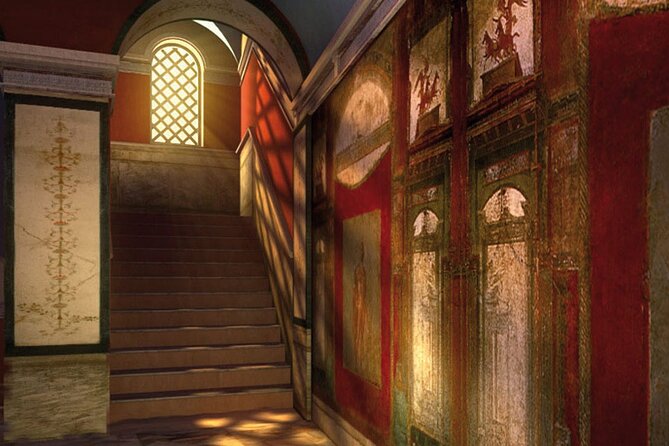
A guide helps connect the rooms to Roman social life. Without explanation, it can be difficult to tell a bath area from another chamber, or to understand why a courtyard with columns mattered. The commentary also places the palace above the ancient homes, giving the site a clear timeline.
The guided format is not always the same as a private archaeology lesson. Some sections may move quickly, and the presentation itself does much of the explaining. I would come ready to watch and listen rather than expecting long stops at every mosaic.
The strongest part of the commentary is likely to be the simple interpretation of the spaces. You can learn how the rooms, baths, kitchens, and peristyles fit together, then use that information at other Roman sites. After this visit, the remains of domestic buildings elsewhere in Rome may be easier to read.
The experience can work well for families because the lights and moving images add variety. Children who lose interest during a standard ruin visit may pay closer attention here. Still, the tour includes dark areas, standing, and a fairly concentrated historical explanation, so younger children may become restless.
The bonus connection to Trajan’s Column
A short film about Trajan’s Column may be included near the end of the program. This is a useful addition because the famous column is close to Palazzo Valentini and its carved scenes act almost like a stone picture story winding upward around the monument.
Even if the film is brief, it gives you another way to read a major Roman landmark. The column’s reliefs can seem too high and detailed to understand from street level. A visual explanation helps you notice how the scenes tell a military story as they climb.
I would treat this as a possible extra rather than the central reason to book. The Roman houses and their presentation are the main event.
Value, timing, and the booking question
The supplied price is shown as $0.00, but that figure should not be treated as proof that the visit is free. The booking details and comments indicate that third-party arrangements can involve a higher charge than buying through the official site. Check the final payment screen and compare it with the official Palazzo Valentini ticket option before committing.
That comparison matters because the visit itself may offer good value, but the booking service does not necessarily add a special experience beyond arranging admission. If you can buy directly at a lower official price, you may prefer that route. If your priority is securing a timed entry in advance, the added cost may feel worthwhile, but you should know what you are paying for.
There is no food, drink, or transportation included. You make your own way to the meeting point, and the activity ends back there. The site is near public transportation, so it can fit into a day of sightseeing without needing a separate vehicle.
The non-refundable policy makes timing especially important. You cannot cancel or change the booking for a refund, so confirm your day, preferred time, and route before paying.
Who should book the Domus of Palazzo Valentini?
I would choose this experience if you want ancient Rome explained through real domestic spaces rather than only through famous public monuments. It is especially good for you if mosaics, Roman architecture, and the daily life of wealthy households interest you.
It also suits families who need some visual energy to keep history moving. The projections and lighting give children something to watch, though the standing and dark rooms may test their patience.
You may want to skip it if you dislike theatrical presentations, glass floors, or guided movement at a set pace. If your Rome schedule is packed with the Colosseum, Forum, Palatine Hill, and Vatican Museums, the extra 60 to 90 minutes may require careful planning.
I would also hesitate if you are buying through a third party without checking the cost and confirmed time. The archaeology is worthwhile, but unclear arrangements can take the shine off a good visit.
Should you book this Roman house experience?
Yes, if you want a clear and memorable explanation of how wealthy Romans lived. The surviving mosaics and walls are valuable, but the projections do the hard work of turning fragments into rooms, homes, and human spaces.
Before booking, verify the final price, confirmed time, meeting address, and pickup deadline. Allow 90 minutes, wear comfortable shoes, and prepare for glass flooring. If those details suit your plans, the Domus of Palazzo Valentini offers one of Rome’s more unusual ways to see the ancient city.
FAQ
How long does the Domus of Palazzo Valentini visit last?
The overview gives an approximate duration of one hour, while the detailed schedule and visitor experience indicate that it can last about 90 minutes. Allow an hour and a half.
Where does the activity start?
The supplied meeting point is Via delle Terme di Traiano 85, 00184 Roma RM, Italy. Check your confirmed voucher because the visit itself takes place at Palazzo Valentini and the meeting information may require careful attention.
Is admission included?
Yes. The visit to Palazzo Valentini and booking fees are included in the activity details.
Do I need to arrange transportation?
No transportation to or from the attraction is included. You must make your own way there, although the meeting point is near public transportation.
How many people can join the group?
The activity has a maximum of 15 participants.
Do I need to print my confirmation?
Yes. You must print the confirmation voucher and present it to redeem your ticket.
When must I collect the reserved ticket?
You must pick up the reserved ticket at least 30 minutes before the confirmed time slot. After that point, the reservation can be canceled.
Is the selected time guaranteed?
The time chosen on the order form is your preferred time. If it is unavailable, the closest available time during opening hours on the selected date may be confirmed instead.
Can I cancel or change the booking?
No. The activity is non-refundable and cannot be changed. Cancellations or amendment requests do not receive a refund.
Just added around Rome
- Prince for a day, Colonna Palace complete tour, package price★ 5.0 · 5 reviews
- Skip-the-Lines Barberini Palace Museum and Gallery Private Tour★ 5.0 · 4 reviews
- The Colonna Palace Walking Tour★ 5.0 · 6 reviews
- Rome, Vittoriano Rooftop View and Palazzo Venezia Official Entry★ 4.0 · 12 reviews
- Paint & Sip in a 17th-Century Palazzo with Wine & Pizza★ 4.5 · 18 reviews
- Rome Barberini Palace Guided Tour★ 3.5 · 5 reviews
- Private Chauffeured Tour to Caserta Royal Palace from Rome and Designer Outlet★ 5.0 · 2 reviews
- Private Guided Day Tour to Pompeii and the Royal Palace of Caserta★ 5.0 · 5 reviews
Rome Palace Tours, compared.

Opera Concert at Palazzo Poli – Fontana di Trevi
Read our review →

The Great Opera Arias Concert at Palazzo Poli – Trevi Fountain
Read our review →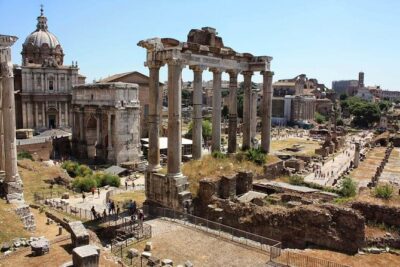
Colosseum Underground, Roman Forum & Cesar Palace Special Access
Read our review →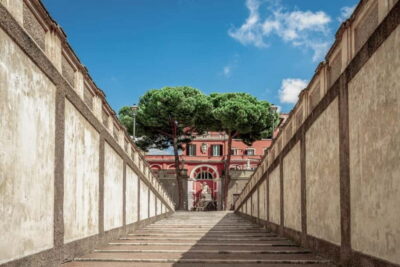
Palazzo Barberini Galleria Corsini Ticket & Audioguide
Read our review →
Vittoriano with Rooftop & Palazzo Venezia Hosted Entry
Read our review →
Colosseum Special Access on Arena Floor, Roman Forum and Palaces
Read our review →
Browse the lists this tour appears in