
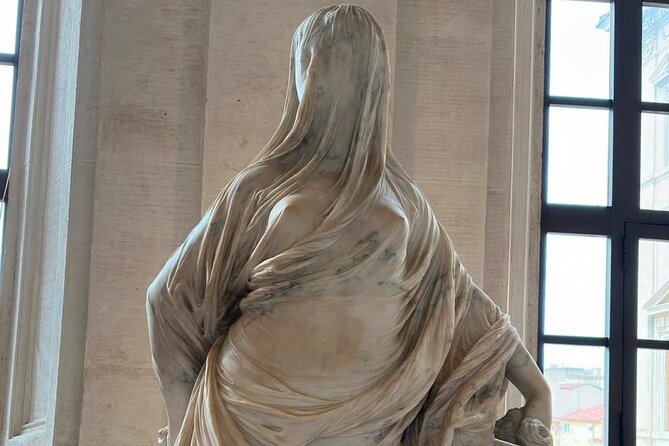
REVIEW · ROME
Rome Barberini Palace Guided Tour
Art gets grand at Barberini Palace. This two-hour guided visit brings you into one of Rome’s most important 17th-century buildings, where the Barberini family shaped politics, architecture, and painting. I like the chance to see Raphael, Caravaggio, Bernini, Borromini, and Pietro da Cortona in one compact tour, and I like that the guide, headset, and entrance ticket are handled for you.
The palace is also a treat for architecture fans. You can compare Bernini’s work with Borromini’s distinctive designs and look up at Cortona’s enormous ceiling fresco. The main caution is important: the Caravaggio display can change, and Judith Slaying Holofernes is scheduled to be away from September 4 until January 31, 2026.
Key points to know before booking
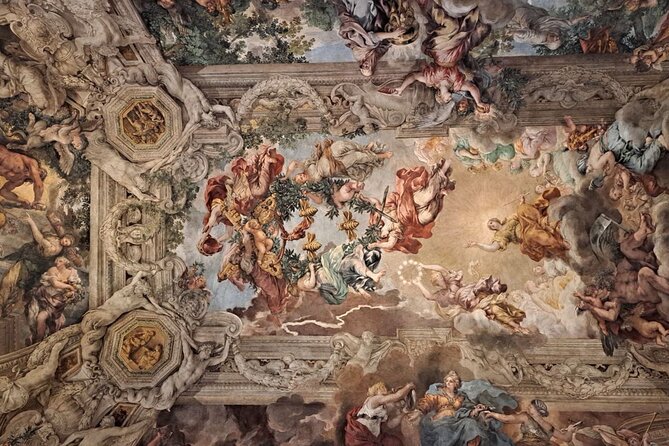
- Pietro da Cortona’s ceiling is the visual centerpiece: The Baroque Divina Provvidenza fresco turns the main ceiling into a theatrical scene of movement, illusion, and power.
- The art list is unusually strong for a two-hour visit: Raphael, Caravaggio, Holbein, Tintoretto, Bernini, and Borromini are all connected with the palace’s collection or design.
- The Barberini family is central to the story: You are not simply walking through rooms. You are seeing how one Roman family used art and architecture to display influence.
- The meeting point is easy to identify: Start at Gallerie Nazionali di Arte Antica, Palazzo Barberini, Via delle Quattro Fontane 13.
- The group can include up to 20 people: Headsets and radios may be provided, which matters in large rooms where a guide’s voice can otherwise get lost.
- The palace is changing during restoration and loans: The 18th-century rooms are scheduled to close from August 26 until October 21, and Caravaggio’s Judith Slaying Holofernes is scheduled to leave the collection temporarily.
Why Barberini Palace deserves two hours
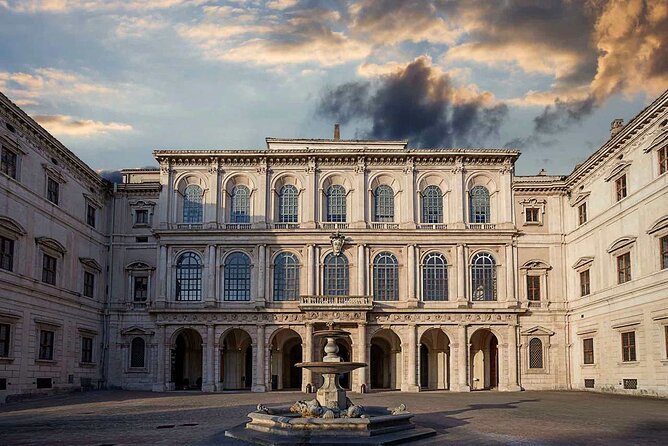
Palazzo Barberini is a useful stop for understanding how art worked in 17th-century Rome. The Barberini family did not treat painting and architecture as simple decoration. These were tools of prestige, family identity, and public influence.
That makes a guided visit more useful than a quick walk through the galleries. You can look at a famous canvas on your own, but it takes context to connect the paintings with the family that commissioned the palace and helped shape the city.
The tour lasts about two hours. That is long enough for a focused introduction without taking up an entire day. Rome has a habit of turning every museum visit into a half-day affair, especially when you stop for photographs, read every label, and lose track of time in a grand room. This experience keeps the visit contained.
I would treat it as a concentrated art and architecture tour rather than a complete survey of the museum. The palace contains major works, but two hours means the guide must choose what to emphasize. If you want to study every gallery at your own pace, you may want extra time after the guided portion, if museum access permits it.
A few more palace visits around Rome worth a look
- Rome: Opera Concert at Palazzo Poli – Fontana di Trevi
★ 4.7 · 1,026 reviews - Rome: Colonna Palace Entry Ticket
★ 4.8 · 609 reviews - The Great Opera Arias Concert at Palazzo Poli – Trevi Fountain
★ 5.0 · 533 reviews
Entering the Barberini family’s palace
The Barberini family’s role gives the visit its main thread. Their influence affected Roman art and culture during the 17th century, a period when wealthy families, church leaders, and powerful patrons competed through buildings and commissions.
As you move through the palace, notice how closely the family story is tied to visual spectacle. Large rooms, commanding ceilings, and prominent artists all help communicate authority. The building is not a neutral box for paintings. Its design is part of the message.
The guide’s job here is especially valuable. Names such as Raphael, Caravaggio, Bernini, Borromini, and Cortona can blur together when you are seeing them in quick succession. A well-organized explanation can show you how each artist fits into the palace’s wider story.
You should also expect the tone of the visit to change from room to room. Some spaces focus more on paintings, while others reward you for looking upward or studying the structure itself. Keep your eyes moving. Barberini Palace is best understood as a meeting point between collection and building.
The Baroque ceiling by Pietro da Cortona
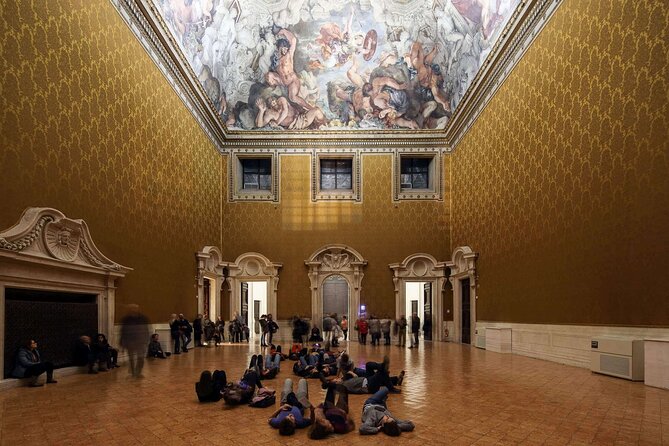
The ceiling fresco by Pietro da Cortona, commonly known as Divina Provvidenza, is one of the tour’s major rewards. It presents Baroque art at full volume: movement, illusion, symbolism, and a design meant to impress from below.
This is the point where a guide can save you from a sore neck and a confused reading of the scene. The ceiling is large and complex. Without some direction, you may notice only the color and motion. With an explanation, you can start to see how the composition supports the Barberini family’s public image.
Give yourself time to look from several positions. A grand ceiling is not a painting you view straight on. Step back when possible, scan the central figures, then follow the surrounding details. The experience is more rewarding when you resist the urge to take one quick photograph and move on.
Photography may be tempting here, but the camera cannot fully capture the scale. I would take a few pictures, then put the phone away for a minute. The real effect comes from standing beneath the fresco and seeing how the architecture frames it.
Raphael, Caravaggio, and the expectations game
Raphael’s La Fornarina is one of the clearest reasons art lovers choose this visit. Raphael needs little introduction, but seeing one of his works in the setting of a major Roman palace gives it a different weight than viewing an isolated image in a guidebook.
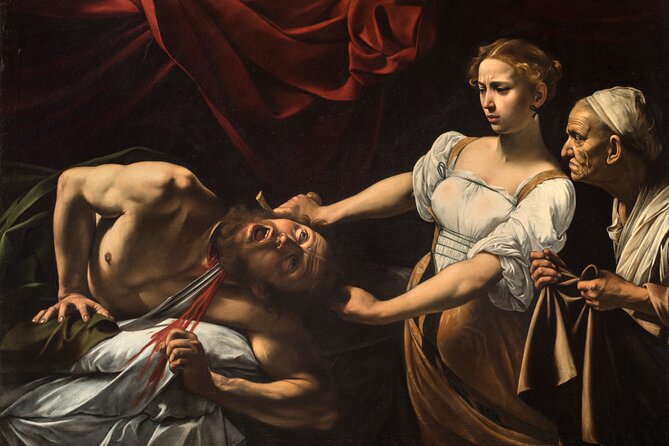
Caravaggio is another major draw, yet this is where you need to check the current display before paying. Judith Slaying Holofernes is scheduled to be on loan to the KAM Art Museum in Fort Worth, Texas, from September 4, 2025, through January 31, 2026. If this painting is your main reason for booking, the date matters.
The important lesson is simple: do not assume that every famous work named in the tour description will be visible on your visit. Museum displays change because of loans, restoration, and gallery closures. The palace has specifically warned about this Caravaggio change, so check your booking messages and the current information before you go.
This does not make the visit worthless if Caravaggio is unavailable. Raphael, Cortona, Bernini, Borromini, Holbein, and Tintoretto still give the tour serious artistic range. But at $113.74 per person, you should know exactly what you are paying to see.
The supplied experience has a middling overall rating of 3.4 out of 5 based on five assessments, and the strongest warning is the risk of feeling misled about Caravaggio. That is not a small detail. If your priority is one specific painting, confirm its status first or consider visiting the palace independently when the display better matches your goals.
Same place, a different set of state rooms:
- Colosseum Underground, Roman Forum & Cesar Palace Special Access
★ 4.5 · 421 reviews - Rome: Palazzo Barberini Galleria Corsini Ticket & Audioguide
★ 3.9 · 322 reviews - Rome: Vittoriano with Rooftop & Palazzo Venezia Hosted Entry
★ 4.2 · 306 reviews - Colosseum Special Access on Arena Floor, Roman Forum and Palaces
★ 4.5 · 260 reviews
Bernini and Borromini in the building itself
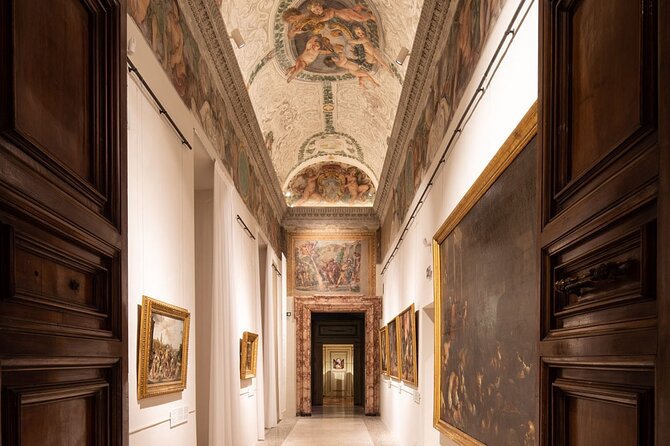
The architectural side of the tour may be the most distinctive part. Bernini and Borromini had very different design approaches, and the palace gives you a chance to compare their work rather than seeing each name as a separate item in a long Roman art list.
Bernini’s design language tends toward grandeur and controlled spectacle. Borromini’s work is known for a more restless and inventive quality. The contrast helps explain why Rome’s Baroque architecture feels so varied, even when two artists are working in the same broad period.
You do not need to arrive as an architecture specialist. Let the guide point out the shapes, lines, and spatial choices. Then look again on your own. A useful tour should give you a few visual clues that continue to work after the guide has moved on.
This is also where the palace earns its place beyond the paintings. If you had only wanted a list of famous canvases, another museum might serve you just as well. Here, the building and the collection support each other.
What the two-hour itinerary feels like
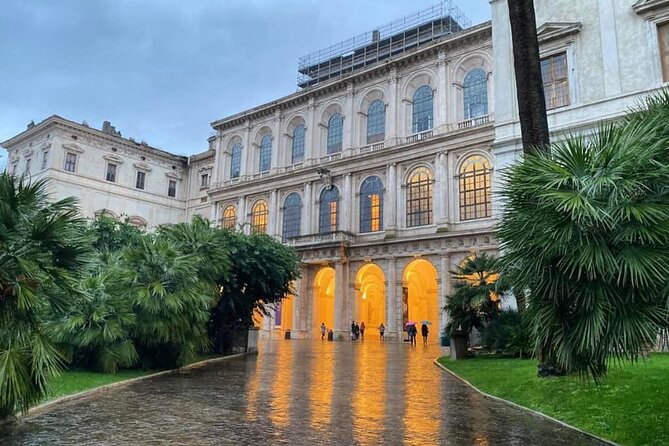
The listed itinerary has one main stop: Palazzo Barberini. That sounds simple, but it is a focused museum visit rather than a tour spread across several Roman monuments.
You meet at the Gallerie Nazionali di Arte Antica, Palazzo Barberini, at Via delle Quattro Fontane 13, 00184 Rome. The activity ends back at the meeting point, so you do not need to plan for a separate drop-off location.
Once inside, the guide leads you through the palace’s history, architecture, and major artworks. Expect the core attention to fall on the Barberini family, the major paintings, and the building’s famous Baroque design.
The approximate two-hour length suits you if your Rome schedule is tight. It also works well before or after nearby sightseeing, since you are not committing to a full day. The palace is near public transportation, which makes it practical to reach without arranging a private transfer.
The group may have up to 20 people. That is not a private tour, but it is small enough to remain manageable if the guide uses the radio system properly. Headsets and radios are included when required, a useful detail in echoing interiors and crowded galleries.
Is $113.74 a fair price?
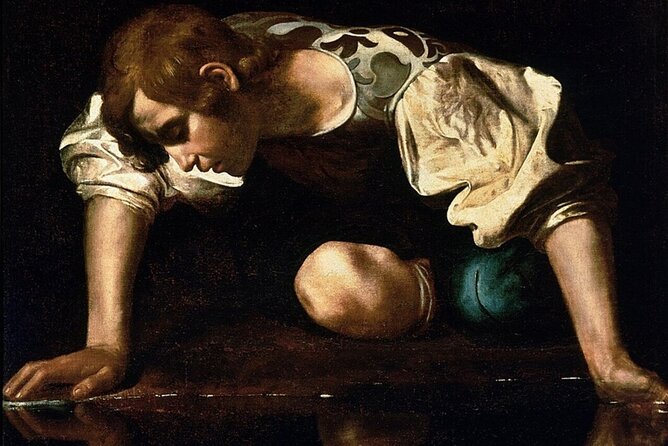
At $113.74 per person, this is not a cheap museum entrance with a short explanation. The price covers the entrance ticket, a guide, and skip-the-line access, with headsets or radios when needed.
The value depends on what you want from the visit. I can see the price making sense for someone who wants the palace’s major works explained in a short, organized session and who dislikes dealing with ticket lines. It is also easier to justify if the guide gives clear context about the Barberini family and connects the art to the architecture.
The value is weaker if you mainly want to enter the museum and wander independently. It is also harder to justify if you book specifically for Caravaggio without confirming that Judith Slaying Holofernes will be present.
Skip-the-line entry can save time, but the real benefit is focus. Rome offers endless art, and a guide helps you spend two hours on the works most likely to matter. Still, I would compare the cost with the museum’s available independent-entry options before booking, especially if you already know a great deal about Renaissance and Baroque art.
Tips are not included, but they are optional. Food, drinks, hotel pickup, and hotel drop-off are also not part of the price.
Closures, restoration, and changing displays
Rome is undergoing major work connected with the Jubilee, and access routes or monuments may change. You should check the messages sent before your visit instead of relying only on an old plan.
The 18th-century rooms of Palazzo Barberini are scheduled to close temporarily from August 26 and reopen on October 21. If those rooms are important to you, check that your date falls outside the closure period.
The Caravaggio loan is another date-sensitive issue. From September 4 until January 31, 2026, Judith Slaying Holofernes is scheduled to be at the KAM Art Museum in Fort Worth, Texas.
These changes do not erase the value of the palace, but they affect what you will see for the price. I would make a quick checklist before booking:
- Is Judith Slaying Holofernes on display on your date?
- Are the 18th-century rooms open?
- Has the meeting point or access route changed?
- Do your booking messages contain updated instructions?
That small amount of preparation can prevent the biggest disappointment.
Who will enjoy this guided visit most?
I would recommend the experience to you if you want a short, guided introduction to Roman Baroque art and architecture. It is particularly suitable if Raphael, Cortona, Bernini, and Borromini interest you, or if you want the Barberini family’s role explained instead of simply walking through the palace alone.
It also suits first-time visitors who want an organized museum stop without spending an entire day indoors. The headset option is helpful for a group of up to 20, especially when the building is busy or acoustics are poor.
You may want a different plan if your visit depends entirely on Caravaggio. Confirm the display before booking. If the painting is away, the tour still offers important works and architecture, but it may no longer match your main purpose.
Independent art lovers may also prefer to buy their own entrance and set their own pace. The guided format is most useful when you value interpretation, family history, and a clear route through the major rooms.
Booking advice and final verdict
I would book this tour when you want a compact, guided look at one of Rome’s grandest art palaces and when the displayed works match your priorities. The combination of Raphael, the Cortona ceiling, Baroque architecture, and the Barberini family story gives the visit a strong backbone.
I would not book it blindly at $113.74. Check the Caravaggio status, confirm the room closures, and read any updated access message before you commit. The main risk is not the palace itself. It is paying a premium for a particular masterpiece and finding that the painting is away on loan.
Free cancellation is available if you cancel at least 24 hours before the start time. Changes or cancellations made less than 24 hours before the start time are not accepted for a refund.
FAQ
Where does the Barberini Palace tour start?
It starts at Gallerie Nazionali di Arte Antica, Palazzo Barberini, Via delle Quattro Fontane 13, 00184 Rome, Italy.
Where does the tour end?
The activity ends back at the meeting point.
How long does the tour last?
The tour lasts approximately two hours.
What is included in the price?
The price includes entrance tickets, a tour guide, and headsets and radios when required.
Is hotel pickup included?
No. Hotel pickup and drop-off are not included.
Are food and drinks included?
No. Food and drinks are not included.
Is the tour near public transportation?
Yes. The meeting point is near public transportation.
How large can the group be?
The tour can have a maximum of 20 people.
Can I cancel for a full refund?
Yes. You can cancel for a full refund at least 24 hours before the experience start time. Cancellations made less than 24 hours before the start time are not refundable.
Just added around Rome
- Prince for a day, Colonna Palace complete tour, package price★ 5.0 · 5 reviews
- Skip-the-Lines Barberini Palace Museum and Gallery Private Tour★ 5.0 · 4 reviews
- The Colonna Palace Walking Tour★ 5.0 · 6 reviews
- Roman Domus of Palazzo Valentini Ticket★ 4.0 · 42 reviews
- Paint & Sip in a 17th-Century Palazzo with Wine & Pizza★ 4.5 · 18 reviews
- Rome, Vittoriano Rooftop View and Palazzo Venezia Official Entry★ 4.0 · 12 reviews
- Private Chauffeured Tour to Caserta Royal Palace from Rome and Designer Outlet★ 5.0 · 2 reviews
- Private Guided Day Tour to Pompeii and the Royal Palace of Caserta★ 5.0 · 5 reviews
Rome Palace Tours, compared.

Opera Concert at Palazzo Poli – Fontana di Trevi
Read our review →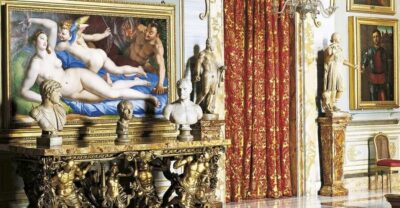

The Great Opera Arias Concert at Palazzo Poli – Trevi Fountain
Read our review →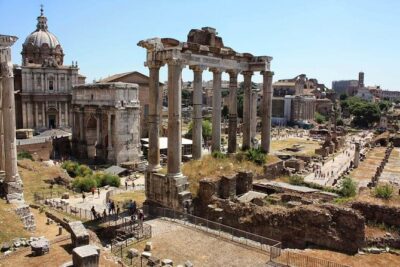
Colosseum Underground, Roman Forum & Cesar Palace Special Access
Read our review →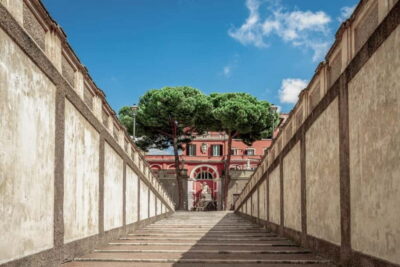
Palazzo Barberini Galleria Corsini Ticket & Audioguide
Read our review →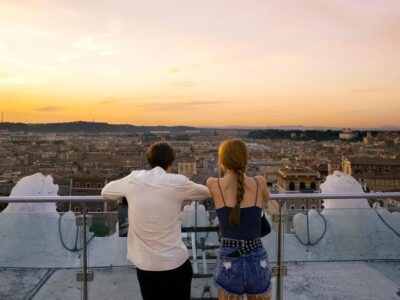
Vittoriano with Rooftop & Palazzo Venezia Hosted Entry
Read our review →
Colosseum Special Access on Arena Floor, Roman Forum and Palaces
Read our review →
Browse the lists this tour appears in